Poncer, OliverAntiquariat.de

58 résultats
réf. 26931(Hildesheim), Gerstenberg. Ein Bilderbuch für Auge, Ohr und Hand. Aus dem Französischen von Guido J. Braem. Mit zahlreichen Abbildungen nach Zeichnungen und blindgeprägten Bildteilen. 23/21 cm. 2,21,1 S. mit Klarsichtumschlag. Ringbindung. Titel und Rückseite mit Notiz, sonst schön. [3 Warenabbildungen]
réf. 78104-3Ring-bound. Fine. unknown
réf. 51432491like new. unknown
réf. 51432491-nnew. unknown
réf. ria9798823045162_inpPaperback. New. New Book; Fast Shipping from UK; Not signed; Not First Edition; The Nemeth Uniform Braille System NUBS is a comprehensive methodology for transcribing of Science Technology Engineering and Mathematics into braille for use by the blind. This system is an outgrowth of the Nemeth Code for Mathemat paperback
réf. ria9798823045186_inpHardcover. New. New Book; Fast Shipping from UK; Not signed; Not First Edition; The Nemeth Uniform Braille System NUBS is a comprehensive methodology for transcribing of Science Technology Engineering and Mathematics into braille for use by the blind. This system is an outgrowth of the Nemeth Code for Mathemat hardcover
réf. 3384450965.Ghardcover. Good. Access codes and supplements are not guaranteed with used items. May be an ex-library book. hardcover
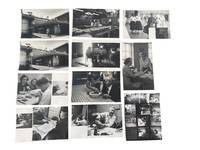
1960réf. 234021960. Disability RightsDisability Activism Braille Institute of America photo archive documenting blind and low-vision adults at the Institute's Los Angeles facility recording the everyday work of disability education before the Americans with Disabilities Act made access and public accommodation a national civil-rights mandate. J. Robert Atkinson founded the Universal Braille Press in Los Angeles in 1919 after losing his sight in 1912; the organization later became the Braille Institute of America moved to Vermont Avenue in 1939 and expanded into a new William Pereira designed facility that opened in 1974. The Institute's early work also helped shape national access to reading: Atkinson's lobbying preceded the 1931 Pratt-Smoot Act which placed federal funds under the Library of Congress to provide books for blind adult readers. The activities shown here matter because literacy handwork movement performance and social gathering were not secondary amenities; they were the practical means by which blind and low-vision people gained public presence skill confidence and community in a city built overwhelmingly for sighted people. Photo archive of 26 total images printed across 11 silver gelatin prints Los Angeles California circa 1960s to 1970s. Images show the outside of the building with the sign "Braille Institute of America Inc." while a man stands with a guide dog and later walks toward the entrance under the covered walkway. Interior scenes include adults reading braille at tables visitors talking together around tables and a smiling man sculpting clay at a worktable. Weaving instruction appears at a tabletop loom; other scenes show clay or tactile craft work and participants gathered around tables with guide dogs resting beside their handlers. Several images show black and white participants on a dance floor One sheet is a print of 12 enlarged film strip cells and four sheets contain two images printed on a single sheet. The archive belongs to a longer twentieth-century history in which blind Americans fought for access not only to books but to streets schools workrooms libraries and ordinary public life. White cane laws including early municipal ordinances in the 1930s and later state protections made the cane and guide dog public signals of mobility and right of way while federal braille and talking-book programs made reading a public responsibility rather than a private burden. The Braille Institute provided adults in the Los Angeles area a resource to read by touch shape clay work at looms dance with partners move with guide dogs and participate in many other activities where disability was not an obstacle for culture learning or socializing. All sheets complete with light handling wear only; overall in very good condition. unknown
réf. 3384450957.Gpaperback. Good. Access codes and supplements are not guaranteed with used items. May be an ex-library book. paperback
réf. 1397334215.Gpaperback. Good. Access codes and supplements are not guaranteed with used items. May be an ex-library book. paperback
réf. 1397334339.Ghardcover. Good. Access codes and supplements are not guaranteed with used items. May be an ex-library book. hardcover
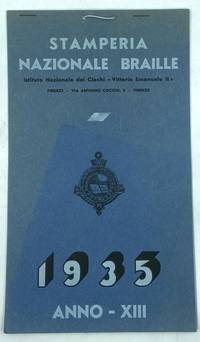
1934réf. 12765Firenze: Pieri 1934. Lieve scoloritura sul piatto anteriore ma ben conservato. Calendario pubblicitario cm 34x20 copertina in cartoncino e 12 pagine in carta azzurra stampate in nero e rosso con i giorni del mese e una piccola fotografia dell’istituto. Pieri unknown
réf. 0267050240.Ghardcover. Good. Access codes and supplements are not guaranteed with used items. May be an ex-library book. hardcover
réf. 0366375474.Ghardcover. Good. Access codes and supplements are not guaranteed with used items. May be an ex-library book. hardcover
1924réf. 2602200046Printed and bound by Universal Braille Press Los Angeles CA 1924. Hardcover. Very Good. The First Braille Edition of the Bible: This work was a pioneering publication for the blind produced by John Robert Atkinson 2 volume set. Large Bible; 35 cm. Bound in publisher's cloth. Hardcover. Good binding and cover. Clean unmarked pages. A rare early Bible printed entirely in Revised Braille Alphabet. For reference see the California Historical Society Collection CHS-41155. This is an oversized or heavy book which requires additional postage for international delivery outside the US. Printed and bound by Universal Braille Press, Los Angeles, CA hardcover
réf. 0838803687New. paperback. New. Satisfaction Guaranteed or your money back. paperback
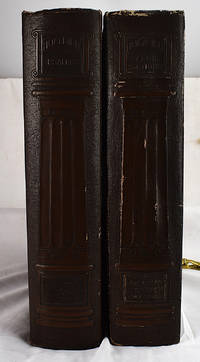
réf. a96145Louisville Kentucky. 1955 American Printing House for the Blind. Published in standard English Braille by "Service to the Sightless" of the Temple Israel Sisterhood New Rochelle NY. Newly Revised edition edited and publlshed by the Central Conference of American Rabbis New york. Two large thick 4to hardcover volumes. VG no hinges cracked. Text Near Fine clean and bright. Only light cover wear. Divider ribbons present. Quite hard-to-find. Pair: . hardcover
FIRENZE STAMPERIA NAZIONALE BRAILLE, 1960. (mm. 345 x 255). Brossura editoriale. cc. [16].
1907 - 1908. Due volumi. (cm. 36). Mezza tela dell'epoca. 82 fogli a volumi. Opera interamente impressa in caratteri braille, su carta azzurra, che si insegna a suonare l'organo.
Tela ed., cm13x19, pp (2) 161 (5); 19 tavole (illustrazioni e tabelle di caratteri). L'autrice (1837-1924), pittrice e viaggiatrice, pubblicò numerosi libri relativi ai suoi viaggi in Asia, Oceania e America; in Cina conobbe il missionario scozzese William Hill Murray, al cui metodo di alfabetizzazione cinese è dedicato questo libretto. Una nota manoscritta sull'indice, in calligrafia d'epoca, informa che “The yellow binding, which to some minds may be suggestive of the shilling novel, was selected as the shade sacred to the Emperor, and to the Buddhist and Lama priests, and therefore held in universal reverence in China”.
brossura Due i principali obiettivi di queste riflessioni sulla teoria del linguaggio e dei segni: 1) stabilire dove sia giunta oggi la ricerca semiotica, quale ne sia la sua attuale posizione; il che vuol dire chiedersi come si possa fare oggi un discorso sui segni che sia, criticamente, all'"altezza" delle attuali concezioni semiotiche; 2) considerare quale posto occupiamo noi, esseri umani - appartenenti a quella forma odierna di organizzazione sociale caratterizzabile come "comunicazione mondializzata" - rispetto al resto della vita, della semiosi (le due cose coincidono) sul pianeta: una domanda questa non soltanto di ordine teorico, gnoseologico, ma anche di ordine etico. Perché il riferimento all'intera vita sul pianeta riguarda anche la responsabilità che, nei suoi confronti, ha ciascun essere umano in quanto capace, una capacità specie-specifica, di usare segni per rendere i segni stessi oggetto di interpretazione. Il che significa poter deliberare, prendere posizione, progettare, innovare, in un rapporto dialogico e critico nei confronti di se stessi, degli altri e del mondo stesso che quei segni ci fornisce. Maggiormente questa responsabilità dovrebbe riguardare il semiotico, dato che il suo mestiere consiste proprio nel riflettere sui segni.
br. "Scrivo e leggo con i puntini" è un quaderno operativo di facile comprensione che presenta i simboli principali del codice "Braille": il sistema di letto-scrittura tattile utilizzato dalle persone non vedenti. Le illustrazioni e la semplicità delle attività rendono il percorso dell'apprendimento avvincente. Questo libro è un utile strumento di divulgazione del Braille tra i bambini, i ragazzi e per tutti coloro che vogliono acquisire le basi della segnografia ad un livello adatto a chiunque purché vedente. Se utilizzato in ambito scolastico diventa un valido sussidio didattico per insegnanti ed educatori impegnati nel complesso processo d'integrazione degli alunni non vedenti.
Questo quaderno operativo vuole proseguire il percorso di informazione e sensibilizzazione sul codice Braille iniziato con la pubblicazione di "Scrivo e leggo con i puntini". Come il volume precedente, il testo presenta sotto forma di attività ludiche e didattiche approfondimenti e curiosità inerenti al mondo della scrittura e della lettura dei non vedenti, ma ad un livello più avanzato. Autori: M. Clarice Bracci.
ill. Che cos'è la gestualità Quando la gente parla, fa gesti. Nonostante questo semplice fatto sia stato spesso ignorato negli studi sul linguaggio, oggi sappiamo che i gesti non sono solo un paralinguaggio utile a veicolare emozioni o ad "abbellire" l'esecuzione verbale, ma svolgono un ruolo fondamentale sia a livello linguistico sia a livello cognitivo. A partire dagli anni Ottanta del Novecento, infatti, gli studi sul gesto si sono moltiplicati fino ad assumere una dimensione interdisciplinare, che spazia dalla psicolinguistica all'antropologia, dalle neuroscienze alla semiotica e alla psicologia dello sviluppo. Tuttavia, i non specialisti ancora faticano a riconoscere uno status alla disciplina, continuando a considerare i gesti un fenomeno esotico o curiosità aneddotiche. Il volume fornisce un'introduzione all'argomento agile e allo stesso tempo dettagliata, per andare oltre gli stereotipi sui gesti e per aiutare chiunque voglia accostarsi all'argomento in modo scientifico.