104 results
1926ref. 403New York: The World Today Inc 1926. Boards. Very good. 4to; 112pp; green cloth over board with color illustrated paper onlay; illustrated endpapers; color comic illustrations; title printed on spine; scuffing to cover light soiling to cover and pages a few closed tears very good minus. The World Today, Inc unknown books
1979ref. 151011N.p.: N.p. 1979. Two vintage reference photographs with bottom margins from the 1979 film one of Catriona MacColl and Barry Stokes and one on the set photograph of MacColl Stokes and director Jacques Demy. One with with provenance stamp of film scholar and author "Jean-Pierre Berthome" and layout annotations in manuscript red pencil on verso. Based on the 1972-1973 Japanese manga series "The Rose of Versailles" by Riyoko Ikeda which was also made into a 40 episode anime series under the same name directed by Tadao Nagahama and Osamu Dezak and broadcast on Nippon Television from October 10 1979 to September 3 1980. Oscar Francois de Jarjayes captain of the guards at the Palace of Versailles under King Louis XVI and Marie Antoinette was born a girl and raised as a boy by her militant father. She now finds herself conflicted while in the maw of the French Revolution with the boy she loved in her youth Oscar on the opposite side of the struggle. Shot on location in Paris Seine-et-Marne Oise and Versailles France. 9.25 x 7 inches. Some faint creasing else Near Fine. N.p. unknown books
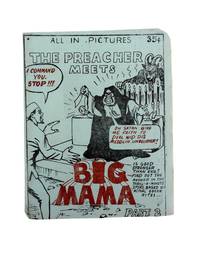
1967ref. 237191967. Black HistoryComics 1960s Guyanese comic book by an early influential Black cartoonist. Seymour Rudy. The Preacher Meets Big Mama: Part 2. Georgetown British Guyana: All in Pictures ca. 1967. First edition. Scarce. Illustrated throughout with black-and-white cartoon panels. Original pictorial wrappers printed in black and red on pale blue stock. A rare early work by Samuel Rudolph "Rudy" Seymour widely regarded as the father of Guyanese comics. This installment blends Christian moralism with Afro-Caribbean folklore in a visually arresting local comic format. Rudy Seymour was one of the earliest creators of locally produced comic books in Guyana whose illustrated narratives reflected and shaped mid-20th century Guyanese visual culture. In The Preacher Meets Big Mama Seymour depicts a confrontation between a Christian preacher and "Big Mama" a feared spiritualist figure with ties to Obeah a syncretic Afro-Caribbean spiritual system. The plot follows the preacher's attempt to rescue a boy from Big Mama's cult culminating in scenes of ritualistic sacrifice demonic invocation and divine intervention. The narrative unfolds in vernacular Guyanese Creole grounding the story in a distinctly local idiom. Seymour's stark expressive linework animates themes of good versus evil colonial Christianity versus ancestral spiritual knowledge and gendered power structures. While the portrayal of Big Mama leans into negative colonial stereotypes casting her as a devil-worshipper the comic simultaneously elevates Afro-Caribbean spiritual conflict to the central stage of popular print culture. Seymour's broader contributions to Caribbean arts extended beyond this title; his pioneering comics inspired future generations and played a foundational role in developing the graphic arts in Guyana. He continued illustrating through the 1970s and remained a cultural fixture until his passing in 2020. Minor wear to spine and covers; interior pages lightly toned but well-preserved and tightly bound. Overall very good condition. A mid-century Caribbean comic documenting a formative moment in Black diasporic graphic storytelling and the postcolonial negotiation of identity faith and resistance in Guyanese print media. unknown books
1936ref. 164557Universal City: Universal Pictures 1936. Vintage publicity photograph of Buster Crabbe from the 1936 serial film. From the archive of noted Hollywood still photographer Ray Jones. Born in Wisconsin on January 1 1901 Jones worked for Paramount Pictures in the early 1930s and went on to be the head of the still photography department at Universal Pictures in 1935 where he worked well into the 1950s. Based on the 1934 comic-strip character created by Alex Raymond. The first screen adaptation of "Flash Gordon" presented as a serial film in 13 chapters and starring Buster Crabbe in the titular role battling to thwart the evil schemes of Emperor Ming the Merciless portrayed by Charles B. Middleton. Followed by two sequels also in serial form "Flash Gordon's Trip to Mars" 1938 and "Flash Gordon Conquers the Universe" 1940. Remade in 1980 as a superhero space opera film directed by Mike Hodges and starring Sam J. Jones and Melony Anderson. Shot on location in Bronson Canyon California. 8 x 10 inches mounted onto a 8.25 x 10.25 inch black art board. Near Fine with even toning. National Film Registry. Universal Pictures unknown books
1966ref. 159648N.p.: N.p. 1966. Vintage reference photograph from the 1966 film showing director Joseph Losey with actress Monica Vitti on the set. Annotations in manuscript ink and pencil on the verso. Based on the British comic strip which originally appeared in 1963. Modesty Blaise a former criminal mastermind occasionally employed by the Secret Service must protect a shipment of diamonds en route to a small Middle Eastern kingdom from a crime syndicate. Monica Vitti's first English-speaking role. Nominated for the Palme d'Or. Shot on location throughout Italy the Netherlands and England. 8 x 10 inches. Near Fine. N.p. unknown books
1998ref. 162638Culver City CA: Adelaide Productions 1998. Two scripts for the pilot episode of the 1999-2000 primetime animated television series including one Pre-Table script and one Record Draft script. Based on the successful 1989-2023 comic strip by Scott Adams about the titular pessimistic white-collar engineer and his daily interactions with his idiotic boss and frustrated coworkers. In this episode Dilbert must name a product that has not yet been designed leading to a significant amount of mental duress. Originally aired on January 25 1999 on UPN. Pre-Table: Self wrappers dated April 6 1998 on the front wrapper noted as Pre-Table with credits for screenwriters Scott Adams and Larry Charles. Title page integral with the front wrapper as issued. 62 leaves with last page of text numbered 61. Xerographic duplication rectos only. Pages and wrapper Very Good plus with light dampstaining affecting the top edges of the front wrapper and first four leaves bound with two gold brads. Record Draft: Blue titled wrappers dated May 4 1998 on the front wrapper noted as Record Draft with credits for screenwriters Scott Adams and Larry Charles. Title page integral with the front wrapper as issued. 53 leaves with last page of text numbered 52. Xerographic duplication rectos only. Pages Near Fine wrapper Near Fine bound with two gold brads. Adelaide Productions unknown books
1972ref. 159697Bradford: W.E. Berry 1972. Vintage British quad poster for the 1972 Australian film. Based on the character originally created by cartoonist Barry Humphries a loutish beer-guzzling Australian named Barry "Bazza" McKenzie. The first Australian film to surpass one million dollars in Australian box office receipts. Shot on location in London. 40 x 30 inches folded. Near Fine. W.E. Berry unknown books
1861ref. 29932London: Longman Green Longman and Roberts 1861. First edition 2 volumes in 1 thick 8vo pp. xxviii 371 1; xiv 358 2 ads; 3 maps 2 hand-colored 1 folding 8 chromolithographs and 61 woodcuts 8 on plates the balance in the text; attractive copy in original green diaper cloth lettered in gilt on spine. The Rev. Edward Bradley 1827-1889 writing under the name of Cuthbert Bede wrote this extensive history and guide to the peninsula in the west of Scotland. The illustrations are made from sketches and watercolors by the author. Longman, Green, Longman, and Roberts unknown books
1966ref. 151220N.p.: N.p. 1966. Eight vintage borderless reference photographs from the 1966 film. Based on the British comic strip which originally appeared in 1963. Modesty Blaise a former criminal mastermind occasionally employed by the Secret Service must protect a shipment of diamonds en route to a small Middle Eastern kingdom from a crime syndicate. Monica Vitti's first English-speaking role. Nominated for the Palme d'Or. Shot on location throughout Italy the Netherlands and England. Approximately 10 x 8 inches. Very Good plus several lightly toned to the edges. N.p. unknown books
2006ref. 236882006. Memín Pinguín comic series issued during the renewed public scrutiny that followed Mexico's 2005 commemorative postage stamps depicting the character. Created by Yolanda Vargas Dulché in the 1940s Memín was presented in Mexico as a mischievous and sympathetic schoolboy but his exaggerated facial features and comic behavior drew criticism in the United States and from Afro Mexican activists as a continuation of racial caricature. Memín first appeared in 1943 in the comic serial Almas de Niño in the magazine Pepín. The stories drew partly on Vargas Dulché's childhood memories of Mexico City's Colonia Guerrero and peception of Cuban children during her travels. The series follows Memín and his school friends through comedy melodrama family hardship and moral lessons. Alberto Cabrera illustrated the strip during its early development and Sixto Valencia later became the artist most closely associated with the character; the original series was repeatedly republished and reworked across the second half of the twentieth century. These nine consecutive issues belong to Grupo Editorial Vid's Edición Homenaje and preserve the series immediately after the stamp dispute turned a long running domestic comic into a subject of transnational argument about blackness national identity and the cultural ownership of racial imagery. Memín Pinguín. Edición Homenaje. Mexico: Grupo Editorial Vid 2006. Nine consecutive Spanish language issues numbers 7 through 15. 1 Memín Pinguín No. 7 January 16 2006 "Chisme" 2 Memín Pinguín No. 8 January 23 2006 "Exámenes" 3 Memín Pinguín No. 9 January 30 2006 "La lavar" 4 Memín Pinguín No. 10 February 6 2006 "Secreto" 5 Memín Pinguín No. 11 February 13 2006 "Maracas" 6 Memín Pinguín No. 12 February 20 2006 "Hospital" 7 Memín Pinguín No. 13 February 27 2006 "Detenido" 8 Memín Pinguín No. 14 March 6 2006 "Fuga" 9 Memín Pinguín No. 15 March 13 2006 "Incomunicado" The run appeared less than a year after the Mexican postal service issued five Memín stamps in 2005. The stamps prompted criticism from the White House Jesse Jackson and other American commentators while Mexican officials and many domestic readers defended the character as a familiar cultural figure. Scholars have used the dispute to examine the different histories of racial classification in Mexico and the United States as well as the limited visibility of Afro Mexican communities within national narratives of mestizaje. The present sequence records how Grupo Editorial Vid continued to market Memín through slapstick school and domestic situations while the covers retained the blackface derived physiognomy at the center of the controversy. Moderate rubbing handling creases edge wear and occasional surface soiling; bindings intact and issues complete as examined. Overall good condition. A consecutive publishing record of how a midcentury Mexican comic stereotype remained commercially active after becoming the focus of a bilateral debate over race and representation. unknown books
1967ref. 152491Paris: Pier Luigi 1967. Vintage oversize borderless double weight reference photograph of director Roger Vadim actor Honey Autumm a crew member and an extra from the set of the 1968 film. Shot by still photographer Emilio Lari with his stamp on the verso as well layout annotations in manuscript pencil and stamps reading "Noir & Blanc" "APIS-PARIS." Based on the adult comic book by Jean-Claude Forest published in the French magazine "V" in 1962 and 1964. Likely the campiest space-opera sex comedy in film history. Though not popular upon its release it was re-released to greater acclaim in 1977 and has since influenced countless fashion designers films and musicians including Duran Duran whose name is a play on that of the main villain. Set in outer space and shot in Rome. 9.5 x 11.75 inches. Light edgewear else Near Fine. Vogel Film as a Subversive Art. Pier Luigi unknown books
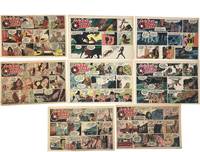
1972ref. 240501972. First the groundbreaking nationally syndicated comic featuring a Black female protagonist. Created by writer Jim Lawrence and Spanish illustrator Jorge Longarón in 1970 "Friday Foster" challenged the overwhelming whiteness of mainstream American newspaper comics by depicting an ambitious African American woman pursuing a career in photography fashion and journalism. Published during the Black Power and women's liberation movements the strip explored themes of race gender professional ambition and interracial relationships through the experiences of an independent Black woman navigating American society. Its fashionable characters contemporary urban settings and international adventures captured the cultural transformations of the early 1970s particularly the increasing visibility of African American women in popular media. The character later inspired the 1975 Blaxploitation film starring Pam Grier. Eight full-color cut Sunday newspaper comic strips from "Friday Foster" Archive of 8 original full-color Sunday newspaper comic strip clippings from the Chicago Tribune Illinois1972-1973 written by Jim Lawrence and illustrated by Jorge Longarón. Each strip measures 10 x 6.5 inches cut from a larger newspaper comics page with portions of other contemporary comic strips printed on the versos. The strips document several distinct storylines involving Friday's professional assignments and personal relationships. Notable episodes feature Friday and photographer Shawn North investigating a surveillance device concealed inside a ring photographing a supposedly haunted mansion and undertaking dangerous assignments in Africa. The African sequences introduce Tanzanian characters wildlife encounters and intrigue surrounding valuable jewels illustrating both the international scope of the series and the exoticized depictions of Africa characteristic of contemporary American popular entertainment. Other episodes explore professional rivalries romantic conflicts and Friday's independence within the competitive worlds of journalism and fashion. "Friday Foster" occupies an important place in Blaxploitation-era popular culture introducing a glamorous Black heroine to nationally syndicated newspaper comics before the genre's rise in American cinema. Combining fashion romantic intrigue and sensational adventure the strip challenged prevailing racial and gender conventions by centering an independent African American woman. Its cultural significance extended into film with the 1975 Blaxploitation adaptation starring Pam Grier. These original strips document the emergence of Black female protagonists in mainstream entertainment and the growing commercial influence of African American popular culture during the 1970s. Light toning to edges typical of period newsprint; some with light discoloration typical of newsprint. Small pencil annotation on one. Overall bright well preserved and in very good condition. unknown books
1999ref. 162695Culver City CA: Adelaide Productions 1999. Archive of material relating to Season 2 Episode 15 of the 1999-2000 primetime animated television series. Archive belonging to screenwriter and co-executive producer Stephen Sustarsic with his initials on the first leaf of the script. Archive includes on Table Draft script and four gatherings of xerographically duplicated draft materials relating to screenwriter meetings and story ideas dated variously between February 11 and 18 1999 as well as two gatherings of publicity material relating to ratings for the show. Based on the successful 1989-2023 comic strip by Scott Adams about the titular pessimistic white-collar engineer and his daily interactions with his idiotic boss and frustrated coworkers. In this episode Dilbert unhappily attends the company picnic where he must play in the annual softball game between the engineers and the marketing division. Originally aired on July 11 2000 on UPN. Script: Self wrappers dated July 1 1999 on the front wrapper noted as TABLE DRAFT and episode No. 211 with credits for screenwriters Ron Nelson Mark Steen Scott Adams and Larry Charles. Title page integral with the front wrapper. 54 leaves with last page of text numbered 52. Xerographic duplication rectos only. Pages Very Good plus bound with two gold brads. All other materials Near Fine. Adelaide Productions unknown books
1959ref. 170461959. Hergé Georges Remi. Original animation production drawing of Captain Haddock from Explorers on the Moon circa 1959 to early 1960s documents the translation of a major European comic character into televised animation during the early Cold War period of scientific and cultural interest in space exploration. Produced at Belvision Studios under the supervision of Hergé and collaborators including Ray Goossens and Greg the drawing reflects the application of the ligne claire style within a studio system that standardized character design for animated sequences. The material supports research into mid-twentieth-century animation practices the international expansion of Tintin as a media property and the visual culture of early space-themed storytelling. Hergé Georges Remi. Original animation production drawing of Captain Haddock. Belvision Studios circa 1959 to early 1960s. Pencil and red grease pencil on studio animation sheet measuring approximately 12" x 10.5" with the drawing itself approximately 3" to 5". The image depicts Captain Haddock in a space suit with a glass helmet rendered in graphite with red pencil corrections and contour adjustments. Handwritten production notations appear on the sheet including a stamped instruction reading "Held cels - trace carefully" consistent with animation workflow and cel transfer processes. The drawing represents an original working element used in the production of animated episodes adapting the Tintin lunar narrative. Created during the first television adaptations of Tintin which began production in 1959 and were broadcast internationally beginning in the early 1960s the drawing reflects the broader movement of European comics into global media circulation including distribution across North America and the United Kingdom. The lunar storyline developed in Destination Moon and Explorers on the Moon aligned with contemporary public interest in space travel prior to human lunar landing situating the animation within wider Cold War scientific imagination. Surviving production drawings from this process provide direct evidence of the labor and technical procedures behind early television animation. Light handling wear; annotations clear; overall in very good condition. unknown books
1959ref. 170471959. Hergé Georges Remi. Original animation production drawing of Professor Calculus from the Tintin series circa 1959 to early 1960s documents the adaptation of a central scientific character into early television animation during a period of heightened public interest in technological innovation and space exploration. Produced at Belvision Studios under the supervision of Hergé and collaborators including Ray Goossens and Greg the drawing reflects the translation of the professor figure-known in French as Tryphon Tournesol-into a standardized animated form. As the inventor of key narrative technologies such as the lunar rocket in Destination Moon the character embodies mid-twentieth-century cultural fascination with science and invention. The drawing supports research into animation history comic-to-screen adaptation and representations of scientific expertise in popular media. Hergé Georges Remi. Original animation production drawing of Professor Calculus. Belvision Studios circa 1959 to early 1960s. Pencil and red grease pencil on studio animation sheet measuring approximately 12" x 10.5" with the figure drawing approximately 3" to 5". The image depicts Professor Calculus in work overalls rendered in graphite with red pencil corrections and production annotations. A stamped instruction at the top reads "Held cels - trace carefully" consistent with cel animation workflow. Additional notations include "P1" at the lower right indicating character reference and a production code "T12 / 34" corresponding to studio filing and sequencing practices. The sheet represents an original working element used in the frame-by-frame construction of animated sequences. Created during the first wave of Tintin television adaptations initiated in 1959 and broadcast internationally beginning in the early 1960s the drawing reflects the expansion of European comic characters into global media circulation including distribution in North America and the United Kingdom. The inclusion of Professor Calculus as a central figure in these adaptations underscores the narrative emphasis on scientific invention during the era particularly in stories connected to space exploration. Surviving production drawings from this process provide material evidence of animation techniques including model standardization iterative correction and cross-studio collaboration involving European and American production teams. Light handling wear; annotations clear and legible; overall in very good condition. unknown books
1794ref. 215352London: Debrett; Longman; Debrett; Debrett 1794. All but the last title first editions. 80; 6 42; 4 61 3; 4 32 pp. 1 vols. 8vo. Three quarters blue polished calf gilt spine t.e.g. Upper cover detached. All but the last title first editions. 80; 6 42; 4 61 3; 4 32 pp. 1 vols. 8vo. Debrett; Longman; Debrett; Debrett unknown books
1966ref. 152873N.p.: N.p. 1966. Vintage oversize color reference photograph from the 1966 film showing actress Monica Vitti sipping a pastis next to the notable headdress wears in the film Based on the British comic strip which originally appeared in 1963. Modesty Blaise a former criminal mastermind occasionally employed by the Secret Service must protect a shipment of diamonds en route to a small Middle Eastern kingdom from a crime syndicate. Monica Vitti's first English-speaking role. Nominated for the Palme d'Or. Shot on location in Italy the Netherlands and England. 9.25 x 12 inches. Near Fine. N.p. unknown books
1959ref. 170451959. Hergé. Original animation production drawing 1959 created for the early animated adaptation of The Adventures of Tintin documenting mid twentieth century European animation practices and the translation of comic characters into television format. Produced under the supervision of Hergé and within the Belvision studio system the drawing reflects the development of animated serial production following a 1959 agreement with American producer Larry Harmon. The work contributes to research on comics to screen adaptation studio animation processes and the international circulation of European characters through broadcast media in the early television era. Hergé. The Adventures of Tintin. Belvision Studios 1959. Original pencil production drawing on animation paper depicting Tintin in a head and upper torso composition. The sheet includes handwritten production notations in red and black pencil indicating its function within the animation workflow. Such drawings were created as part of the sequential process used to produce animated episodes and were not intended for public distribution serving instead as internal studio materials. The scale of the figure is larger than many comparable production drawings offering a detailed rendering of the character's facial expression and posture. Produced at the outset of Tintin's animated adaptations which aired internationally beginning in the early 1960s on networks including the BBC and North American television this drawing situates itself within the expansion of television animation and the global dissemination of European graphic narratives. The collaboration between Belvision and American producers reflects broader patterns of transatlantic media exchange during this period. Original production drawings provide primary evidence of animation techniques including character modeling and frame development and are often preserved only in limited numbers due to their utilitarian use. Light handling wear with clear image and annotations; overall very good. A well preserved example of early Tintin animation production material. unknown books
1855ref. 1448131855. BEDE Cuthbert. Photographic Pleasures: Popularly Portrayed with Pen and Pencil. 52 pp. Illustrated with 23 etched plates. 8vo. 160 x 100 mm bound in original illustrated cloth-backed boards. London: Day and Son 1863. Cuthbert Bede was the pen name of Edward Bradley. This is a reissue of the first humorous treatment of the new art and craft of photography to be published in England. To the readers of its day it offered an up-to-the-minute commentary on the fads and foibles trials and tribulations of the photographic enthusiast. Piece missing from illustration on rear cover a repeat of the front cover. Some internal staining but still an exceptional copy of this fascinating book. hardcover books
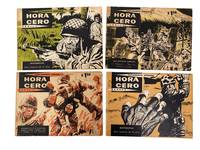
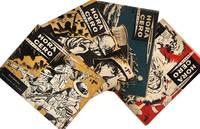
1957ref. 230261957. ComicsPolitical ActivismLatin America Archive of four issues of Argentine anti-authoritarian sci-fi comic El Eternauta by Héctor Germán Oesterheld printed in Hora Cero anthologies 1957-58. El Eternauta is a foundational work of Latin American science fiction created by writer Héctor Germán Oesterheld and artist Francisco Solano López. The story begins in Buenos Aires where a mysterious lethal snowfall kills most of the population. The protagonist Juan Salvo and his friends survive by using makeshift protective suits to find others. They eventually join a resistance group fighting against the alien invaders. El Eternauta is a potent political allegory which explores themes of solidarity resistance and the threat of authoritarianism. Its social and political messaging is considered part of its enduring legacy. Oesterheld's humanist script emphasizing collective heroism over individualism was recognized as a veiled critique of authoritarianism and the military rule a theme that became tragically prophetic when the author himself was kidnaped and "disappeared" along with his daughters for his anti authoritarian activities under the late 1970s military junta. This scarce archive includes: 1 Oesterheld Héctor Germán. Hora Cero. Suplemento Semanal. Buenos Aires: Editorial Frontera Marzo 5 1958. Panels depict the aftermath of the deadly snowfall over Buenos Aires and the consolidation of organized civilian defense centering collective survival over individual heroics. 2 Oesterheld Héctor Germán. Hora Cero. Suplemento Semanal. Buenos Aires: Editorial Frontera Abril 23 1958. Issue advertising "Una historieta completa y El Eternauta." The installment advances themes of coordinated resistance and hierarchical enemy command structures reinforcing its anti authoritarian interpretive framework. 3 Oesterheld Héctor Germán. Hora Cero. Suplemento Semanal. Buenos Aires: Editorial Frontera Marzo 4 1959. Issue featuring continuation of El Eternauta including scenes of organized defense at River Plate stadium and strategic debate among survivors deepening the allegory of resistance to opaque and distant power. 4 Oesterheld Héctor Germán. Hora Cero. Suplemento Semanal. Buenos Aires: Editorial Frontera Abril 1 1959. Issue with credited installment of El Eternauta depicting confrontation with intermediary invaders and reflection on the unseen "true" enemy sharpening the narrative's sustained critique of domination and enforced obedience. Edge wear and creasing to covers small closed tears at extremities age toning to paper consistent with newsprint of this age scattered surface abrasions and minor corner loss interiors evenly toned and legible. Overall good condition. unknown books
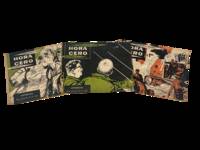
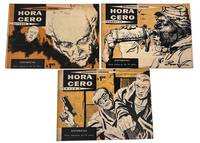
1958ref. 227751958. Latino Comics Oesterheld Héctor Germán Hora Cero Suplemento Semanal. Buenos Aires: Editorial Frontera 3 consecutive issues from November 12 to November 26 1958. Oblong 8vo. Original color pictorial wrappers. Text in Spanish. A consecutive three-issue run of Hora Cero Suplemento Semanal These 3 consecutive issues are part of the original first serialization of Héctor G. Oesterheld and Francisco Solano López's El Eternauta published by Editorial Frontera during the golden age of Argentine comics. El Eternauta is a foundational work of Latin American science fiction created by writer Héctor Germán Oesterheld and artist Francisco Solano López. The story begins in Buenos Aires where a mysterious lethal snowfall kills most of the population. The protagonist Juan Salvo and his friends survive by using makeshift protective suits to find others. They eventually join a resistance group fighting against the alien invaders. El Eternauta is a potent political allegory that explores themes of solidarity resistance and the threat of authoritarianism. Its social and political messaging is considered part of its enduring legacy First appearing in Hora Cero from 1957-1959 Oesterheld's humanist script emphasizing collective heroism over individualism was recognized as a veiled critique of authoritarianism and the military rule a theme that became tragically prophetic when the author himself was "disappeared" along with his two pregnant daughters under the late 1970s military junta. This archive includes 3 of the first appearance in print of Eternauta original story in the late 1950s including one of the few Hora Cero issues with an Eternauta related art cover. 1 Hora Cero Suplemento Semanal November 12 1958. Buenos Aires: Editorial Frontera. This issue continues the Eternauta's tense progression as Salvo's small group barricaded in suburban Buenos Aires confronts the toxic snow and constructs improvised protective suits. López's art fuses expressionist shading with cinematic framing to evoke claustrophobic dread. 2 Hora Cero Suplemento Semanal November 19 1958. Buenos Aires: Editorial Frontera. A scarce and highly sought issue notable for the iconic panel of Juan Salvo and Professor Favalli observing missiles streaking across the Buenos Aires skyline a visual metaphor for modern warfare and unseen domination. This image would become one of the most enduring in Argentine graphic art reproduced in later reprints and academic studies as emblematic of Cold War anxiety within Latin American modernity. 3 Hora Cero Suplemento Semanal November 26 1958. Buenos Aires: Editorial Frontera. Depicts the survivors' first direct engagement with the alien "cascarudos" revealing the invaders' mechanized terror and the beginnings of organized human resistance. Oesterheld's dialogue increasingly blurs the line between science fiction and existential parable while López's kinetic illustrations heighten the tragic momentum. Light toning and small edge chips; center staples firm covers fragile but intact interiors supple and complete. Overall very good condition. Sets preserving consecutive issues from Hora Cero's 1950s serialization are scarce as the fragile newsprint format led to low survival rates. unknown books
1957ref. 230271957. ComicsPolitical ActivismLatin America Archive of four issues of Argentine anti-authoritarian sci-fi comic El Eternauta by Héctor Germán Oesterheld printed in Hora Cero anthologies 1957-58. El Eternauta is a foundational work of Latin American science fiction created by writer Héctor Germán Oesterheld and artist Francisco Solano López. The story begins in Buenos Aires where a mysterious lethal snowfall kills most of the population. The protagonist Juan Salvo and his friends survive by using makeshift protective suits to find others. They eventually join a resistance group fighting against the alien invaders. El Eternauta is a potent political allegory which explores themes of solidarity resistance and the threat of authoritarianism. Its social and political messaging is considered part of its enduring legacy. Oesterheld's humanist script emphasizing collective heroism over individualism was recognized as a veiled critique of authoritarianism and the military rule a theme that became tragically prophetic when the author himself was kidnaped and "disappeared" along with his daughters for his anti authoritarian activities under the late 1970s military junta. This scarce archive includes: 1 Oesterheld Héctor G.; Solano López Francisco. Hora Cero. Suplemento Semanal. Buenos Aires: Editorial Frontera Julio 23 1958. Juan and his companions listening anxiously to a radio transmission learning that those in the Northern Hemisphere believe they have defeated the invader with atomic rockets while deadly snow continues to fall. Interior sequences emphasize radio communication strategic uncertainty and the persistence of the lethal nevada underscoring themes of misinformation and fragile hope. 2 Oesterheld Héctor G.; Solano López Francisco. Hora Cero. Suplemento Semanal. Buenos Aires: Editorial Frontera Julio 30 1958. The installment depicts advancing terrestrial forces and collapsing structures with sequential panels showing debris panic and attempted escape. 3 Oesterheld Héctor G.; Solano López Francisco. Hora Cero. Suplemento Semanal. Buenos Aires: Editorial Frontera Agosto 20 1958. Surviving forces have been ambushed and nearly destroyed as Juan Favalli and Franco hear a wounded soldier recount the destruction of key defensive apparatus. Interior pages depict Plaza Italia and regrouped fighters confronting defeat emphasizing exhaustion diminished numbers and continued resolve. 4 Oesterheld Héctor G.; Solano López Francisco. Hora Cero. Suplemento Semanal. Buenos Aires: Editorial Frontera Junio 10 1959. Issue includes installment of El Eternauta under episodic heading with interior summary text describing the discovery of enormous tracks suggesting the advance of an unknown enemy toward the city's center. Edge wear and creasing to covers small closed tears at extremities age toning to paper consistent with newsprint of this age scattered surface abrasions and minor corner loss interiors evenly toned and legible. Overall good condition. unknown books
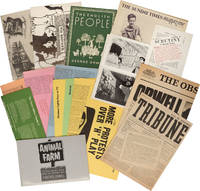
ref. 159701London: Times Newspapers 1970. First Edition. First Edition. The Times Authors series presented gatherings of resources relating to an author including newspaper reviews offprints of articles film stills and various ephemera created for use by students and available for purchase via mail order from the "Times Education Services" office in London. This edition noted as No. 2 focused on George Orwell. Other authors featured included Dylan Thomas Arnold Wesker and Allan Sillitoe. As noted on the folder on offer each issue in the series was "carefully selected and arranged but organised in a loose-leaf format with no imposed sequence. For individual study or group work this flexibility will be found especially helpful for there are numerous points of entry and the direction and centre of interest can depend on the book or books being studied." Among the resources in the edition are: Eight gatherings of reproductions of newspaper articles and reviews relating to Orwell with a number of newspapers represented including "The Observer" "Scrutiny" "The Daily Mirror" "The Times Literary Supplement" "Tribune" and "The Guardian." A reproduction of four articles written by Orwell originally published in "As I Please" his weekly column for the left-wing British newspaper "Tribune." A comic strip based on the 1954 animated film directed by John Halas and Joy Batchelor and created by the film's lead animator Harold Whitaker. A poster advertising Halas and Batchelor's film with a striking black-and-white drawing of charismatic swine leader Napoleon. A double-sided character and set design illustration and a booklet featuring ten black-and-white photographs from the 1954 film. An offprint of two of the five essays from Orwell's 1947 book "The English People" and reproducing the book's covers and title page. A bi-fold bibliography of Orwell's publications and critical works relating to Orwell. "The English People": Fine in staple-bound wrappers. Harold Whitaker strip: Small scratch on the front wrapper else Near Fine in side-stapled wrappers. Poster: 19.5 x 14.5 inches folded. About Fine. Newspaper reproductions bi-fold bibliography design illustration and stills booklet: Very Good plus to Near Fine with some faint offsetting along the top edges. All materials housed in a pictorial green folder measuring 12 x 9 inches. Folder and contents housed in publisher's original plastic envelope Near Fine. Times Newspapers unknown books
1958ref. 231031958. El Eternauta featured in three Hora Cero Suplemento Semanal issues placing them within the original weekly Frontera run that first introduced Héctor Germán Oesterheld and Francisco Solano López's landmark Argentine science fiction narrative. Hora Cero Suplemento Semanal. Buenos Aires: Editorial Frontera 1958 to 1959. Three oblong octavo weekly comics in original pictorial wrappers Spanish text. Illustrated throughout in black and white on newsprint with orange and black cover designs. Notably this archive includes one of the few Hora Cero issues with a cover illustration pertaining to El Eternauta. The cover image on the October 8 1958 issue depicts on of the "Manos" the enigmatic alien overseers of the invasion in El Eternauta rendered in the dramatic pulp style typical of Hora Cero covers. This scarce archive includes: 1 Hora Cero Suplemento Semanal. No. 45. Buenos Aires: Editorial Frontera Julio 9 1958. Cover price $1.80 with cover art featuring two men in a confrontation one holding a pistol. Interior includes serialized comic pages ending "continuará." 2 Hora Cero Suplemento Semanal. No. 58. Buenos Aires: Editorial Frontera Octubre 8 1958. Cover price $1.80 with cover imagery centered on a large skull form and a male head emerging against a dark ground. Interior pages include Sgt. Kirk credited to Oesterheld and H. Pratt with Native American and frontier conflict scenes. 3 Hora Cero Suplemento Semanal. No. 78. Buenos Aires: Editorial Frontera Febrero 25 1959. Cover price $2.50 with signed cover art of a Native American figure in profile holding a weapon. Interior includes Sgt. Kirk pages and other serialized adventure strips. Interior pages in these issues include installments of El Eternauta under the recurring banner "Una cita con el futuro" with Francisco Solano López's stark black and white artwork depicting armored survivors ruined urban infrastructure military engagements and alien invasion scenes unfolding across Buenos Aires. Serialized episodes preserve the strip's original weekly continuity including captions summarizing prior installments and concluding teasers directing readers to forthcoming Frontera Extra numbers documenting the story in its first mass-market publication context alongside Sgt. Kirk and other Frontera adventure series. Editorial Frontera founded by Héctor Germán Oesterheld with his brother Jorge became the central publishing site for the Argentine comics renaissance of the late 1950s bringing together Oesterheld Solano López Hugo Pratt Alberto Breccia and Arturo del Castillo. El Eternauta later became Oesterheld's defining work its Buenos Aires invasion plot and collective hero structure gaining deeper political resonance after Oesterheld's forced disappearance during Argentina's military dictatorship. Light toning edge wear and expected newsprint fragility; staples intact; interiors complete and legible. Overall good condition. unknown books
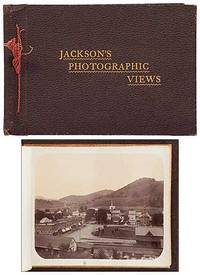
1901ref. 408888Grand Rapids Mich: B.D. Jackson 1901. Hardcover. Near Fine. Oblong 12mo. Silk cord-tied red cloth boards with "Jackson's Photographic Views" on front board in gilt. 32 sepia-toned albumen images each approximately 5.75" x 3.75". Each image is captioned by hand on two partially printed with Jackson's name and address contents pages in the front. After a few images et in Vermont the remainder are set in the Midwest particularly Michigan Missouri and Ohio. The Ohio-born Jackson was a professional photographer who started in Grand Rapids but moved to Pomona California in 1901 thus our attribution of the date where he was a success in both portraiture and where he eventually became well-known for landscape photography for the production of stereographs and postcards. His archives are at the Huntington Library. While this group displays some lovely landscapes this album seems more personal and perhaps half are of people several identified and at least one at the home of J.B.H. Jackson in Michigan very likely a relative. Among the images are several of camps and parks locations include Haslet Park Pine Lake and Harwick Michigan; several of Catalfa Grove in Missouri; and Lake Brady Cuyauga River and several of Maple Dell Ohio; as well as the first few set in Royalton Vermont. One image of two small black children is labeled "Chocolate Drops" Really exceptional quality images from the earlier part of Jackson's career. B.D. Jackson hardcover books