88,777 results
ref. TM 625MISCELLANY WITH ELEVEN IMPORTANT TEXTS REFLECTING THE SPIRITUALITY OF THE MODERN DEVOTION. In Latin Low German and Dutch decorated manuscript on paper Netherlands Southeastern or West Germany c. 1460-1480. Dimensions 244 x 143 222 folios on paper apparently complete written by at least four scribes in expert cursive gothic bookhands in 28-30 long lines seven ORIGINAL TABS or place-markers made from white leather strips blank spaces for 2-line initials guide notes for rubricator majuscules stroked with red 6- to 2-line red initials. BINDING:modern half-tawed leather and exposed wood two brass clasp-and-catch fastenings straps missing fastening back to front spine with four raised bands. TEXT:A carefully thought-out miscellany that reflects the spirituality of the Modern Devotion religious movement and includes the Imitation of Christ five visionary texts describing journeys to Heaven and Hell one copied twice and six texts on the Passion of Christ. PROVENANCE: Written in the Netherlands probably in the Southeastern region or in neighboring Western Germany c. 1460-80 as indicated by the languages in the manuscript and the watermarks. Later the manuscript belonged to Rev. A. d. Wagner 1824-1902 of Brighton a noted collector with a library of more than 12000 volumes his ink stamp on f. 4. The manuscript was later owned by Rev. Cecil Deedes 1843-1921 prebendary and librarian of Chichester Cathedral his note glued inside front cover. Later Edward Croft-Murray 1907-80 former keeper of prints and drawings at the British Museum owned the manuscript ownership note below Deedes's. It was then owned by Joost R. Ritman b. 1941 Dutch businessman and distinguished collector of art and books who acquired it from Maggs London in 1993. CONDITION:some water damage but text remains legible quires reinforced f. 198 tear occasional dirty smudges in the outer margins some soiling and very slight wear along joints of binding otherwise in very good condition. Full description and images available. TM 625 Netherlands (Southeastern?) or Western Germany, c. 1460-1480 books
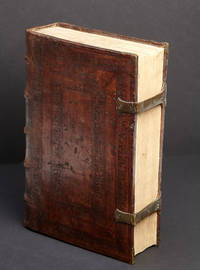
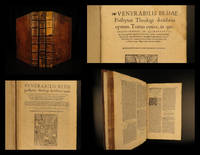
ref. 6759Numerous fine woodcut initials diagrams tables & maps in the text. Woodcut printer’s device at end. 14 p.l. 18 leaves 6 leaves 30 xxxi-cxxvi leaves 4 leaves. Folio cont. Flemish blindstamped calf binding over wooden boards rather well rebacked a few unimportant stains rolls of medallion heads & foliage forming a double panel orig. clasps and catches metal corner guards. Cologne: J. Prael for P. Quentel 1537. bound after: ANSELM ARCHBISHOP OF CANTERBURY. In Omnes Pauli Apostili Epistolas enarrationes. Title within fine woodcut border by Anton Woensam of Worms. Some fine large woodcut initials. 8 p.l. 531 pp. Folio. Cologne: E. Cervicornus for G. Hittorp 1533. A most attractive sammelband of two well-illustrated books in an attractive contemporary blind-stamped binding probably made at the Stavelot monastery in Belgium. I. First collected and illustrated edition of the scientific writings of the Venerable Bede including De Natura Rerum dealing with cosmology and natural history and De Temporum Ratione a work on chronology that still exercises a considerable influence over our daily life today. This edition was edited and commented upon by Joannes Noviomagus i.e. Jan van Bronchorst of Nijmegen 1494-1570 philosopher and mathematician then a professor of philosophy at the Collegium Montanum in Cologne. It would appear that he used the manuscript at the Dombibliothek no. 103 of Cologne to prepare this edition. The De Temporum Ratione is a significant book in several ways. Most notably “this book helped to establish the custom of counting years from the birth of Christ. When we say that Queen Elizabeth II was born in 1926 not ‘in the 16th year of the reign of George V’ or ‘in the year 2678 after the foundation of Rome’ or in the ‘2nd year of the 481st Olympiad’ we are indebted to the Venerable Bede.”–Printing & the Mind of Man 16n. “Bede’s greatest practical effect was on the Western calendar. His decisions beginning the year calculation of Easter names of days and months calculations of eras and so forth in most instances finally determined usage that was only refined not changed by Gregorian reform.”–D.S.B. I p. 565. “The De Ratione Temporum first published in 1505 is particularly important. It contains a remarkable theory of tides based upon Pliny but also upon personal observation; first mention of the establishment of a port i.e. the mean interval between the moon’s meridian passage and high water following; this interval is different in different ports.”–Sarton I p. 511. Pierre Duhem described Bede’s establishment of a port as the only original formulation of nature to be made in the West for some eight centuries. Also contained here is the De Natura Rerum 1st printing: 1529 which contains such physical science as was then known. It collects the wisdom of the ancient world on these subjects and has the special merit of referring phenomena to natural causes. It contains a particularly important section — the “De Comptu vel Loquela digitorum” — which is “our main almost our only source for the study of mediaeval finger reckoning or symbolism.”–Sarton I pp. 510-11. See also Smith History of Mathematics II p. 200. The rest of the book contains further treatises by Bede on arithmetic astronomy and the calendar and chronology. II. Very rare. PROVENANCE: Early inscription of “Antonius abbatis a Sancto Remaclo” on front flyleaf; Benedictine monastery of Stavelot Belgium inscription “Liber Monasterii Stabulensis” on title-page of Anselm; auction sale of the monastery library Catalogue d’une belle Collection de Livres et Manuscrits précieux sur vélin du VIIIe et du IXe siècle Ghent 26 April 1847 lot 42; Michel Chasles 1793-1880 the mathematician with bookplate his sale Paris 27 June-18 July 1881 lot 28; Robert B. Honeyman 1897-1987 his sale Sotheby’s 30 October 1978 lot 265. BINDING: Stavelot had its own bindery at this time and it is quite likely that this binding was executed there see Goldschmidt Gothic & Renaissance Bookbindings no. 90. Fine large copies preserved in a box. ⧠I. Adams B448–calling for two additional preliminary leaves but no other collation calls for them. Smith Rara Arithmetica p. 159n. Zinner 1657. II. Adams A1174. unknown
ref. 6759Numerous fine woodcut initials diagrams tables & maps in the text. Woodcut printer's device at end. 14 p.l. 18 leaves 6 leaves 30 xxxi-cxxvi leaves 4 leaves. Folio cont. Flemish blindstamped calf binding over wooden boards rather well rebacked a few unimportant stains rolls of medallion heads & foliage forming a double panel orig. clasps and catches metal corner guards. Cologne: J. Prael for P. Quentel 1537. bound after: ANSELM ARCHBISHOP OF CANTERBURY. In Omnes Pauli Apostili Epistolas enarrationes. Title within fine woodcut border by Anton Woensam of Worms. Some fine large woodcut initials. 8 p.l. 531 pp. Folio. Cologne: E. Cervicornus for G. Hittorp 1533. A most attractive sammelband of two well-illustrated books in an attractive contemporary blind-stamped binding probably made at the Stavelot monastery in Belgium. I. First collected and illustrated edition of the scientific writings of the Venerable Bede including De Natura Rerum dealing with cosmology and natural history and De Temporum Ratione a work on chronology that still exercises a considerable influence over our daily life today. This edition was edited and commented upon by Joannes Noviomagus i.e. Jan van Bronchorst of Nijmegen 1494-1570 philosopher and mathematician then a professor of philosophy at the Collegium Montanum in Cologne. It would appear that he used the manuscript at the Dombibliothek no. 103 of Cologne to prepare this edition. The De Temporum Ratione is a significant book in several ways. Most notably "this book helped to establish the custom of counting years from the birth of Christ. When we say that Queen Elizabeth II was born in 1926 not 'in the 16th year of the reign of George V' or 'in the year 2678 after the foundation of Rome' or in the '2nd year of the 481st Olympiad' we are indebted to the Venerable Bede."-Printing & the Mind of Man 16n. "Bede's greatest practical effect was on the Western calendar. His decisions beginning the year calculation of Easter names of days and months calculations of eras and so forth in most instances finally determined usage that was only refined not changed by Gregorian reform."-D.S.B. I p. 565. "The De Ratione Temporum first published in 1505 is particularly important. It contains a remarkable theory of tides based upon Pliny but also upon personal observation; first mention of the establishment of a port i.e. the mean interval between the moon's meridian passage and high water following; this interval is different in different ports."-Sarton I p. 511. Pierre Duhem described Bede's establishment of a port as the only original formulation of nature to be made in the West for some eight centuries. Also contained here is the De Natura Rerum 1st printing: 1529 which contains such physical science as was then known. It collects the wisdom of the ancient world on these subjects and has the special merit of referring phenomena to natural causes. It contains a particularly important section - the "De Comptu vel Loquela digitorum" - which is "our main almost our only source for the study of mediaeval finger reckoning or symbolism."-Sarton I pp. 510-11. See also Smith History of Mathematics II p. 200. The rest of the book contains further treatises by Bede on arithmetic astronomy and the calendar and chronology. II. Very rare. PROVENANCE: Early inscription of "Antonius abbatis a Sancto Remaclo" on front flyleaf; Benedictine monastery of Stavelot Belgium inscription "Liber Monasterii Stabulensis" on title-page of Anselm; auction sale of the monastery library Catalogue d'une belle Collection de Livres et Manuscrits précieux sur vélin du VIIIe et du IXe siècle Ghent 26 April 1847 lot 42; Michel Chasles 1793-1880 the mathematician with bookplate his sale Paris 27 June-18 July 1881 lot 28; Robert B. Honeyman 1897-1987 his sale Sotheby's 30 October 1978 lot 265. BINDING: Stavelot had its own bindery at this time and it is quite likely that this binding was executed there see Goldschmidt Gothic & Renaissance Bookbindings no. 90. Fine large copies preserved in a box. ❧ I. Adams B448-calling for two additional preliminary leaves but no other collation calls for them. Smith Rara Arithmetica p. 159n. Zinner 1657. II. Adams A1174. hardcover books
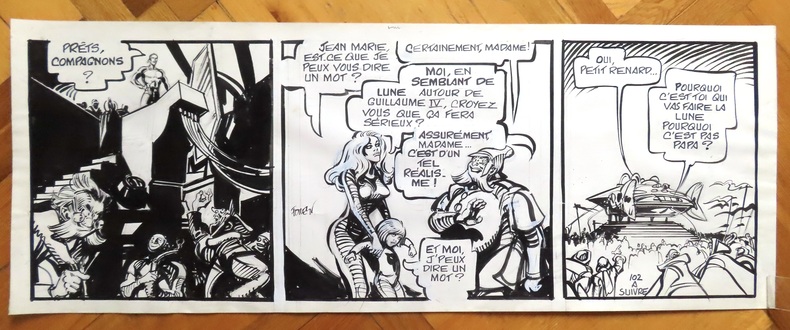
ref. 24400Encre de Chine, rehauts et corrections de gouache blanche. Au format imposant et atypique de 95 x 36 cm. (tout de même !). Vraisemblablement réalisé pour la prépublication dans France-Soir et, plus tard, pour la page 35 de l'album « Le Semble-Lune », publié en 1977 chez Pierre Horay. Présence centrale de Barbarella à la 2e case, dans son look iconique de combinaison moulante. Encrage dense et parfaitement lisible, papier légèrement gondolé par endroits (lié au grand format et à l'encrage), quelques traces ou frottements marginaux sans impact sur l'image.
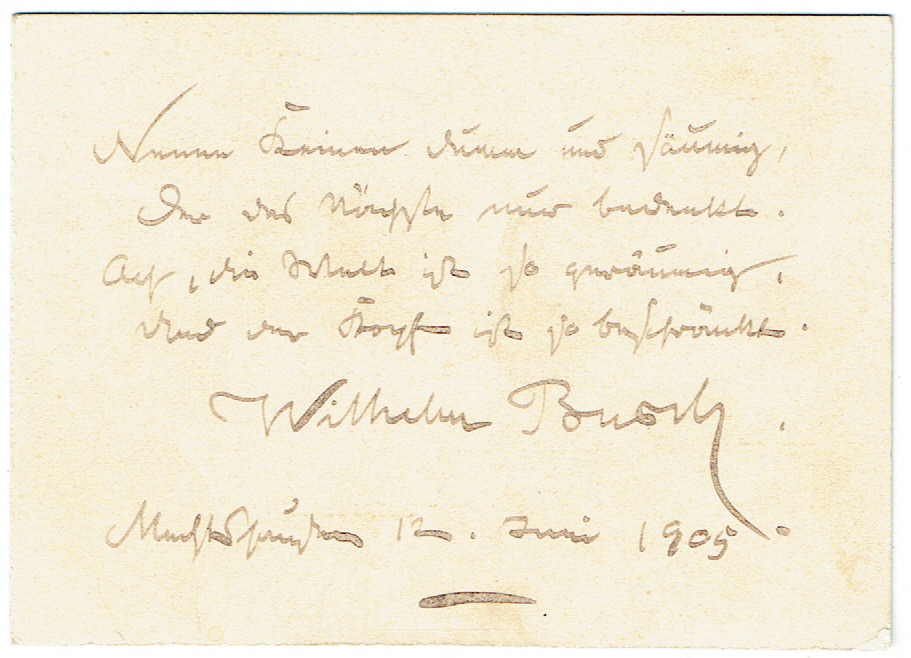
1905ref. 86269Mechtshausen, 12. VI. 1905. Kl.-quer-8vo. 1 p.
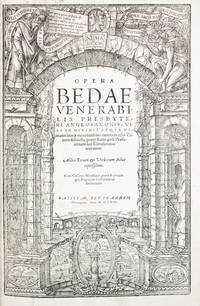
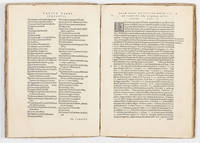
1563ref. 254015Basileae i.e. Basle: Per Joannem Hervagium 1563. First collected edition. Title within architectural border with device of Johann Herwagen. Profusely illustrated with iwoodcut maps music tables diagrams. Text in two columns; with Index. 4 vols. Folio. Contemporary calf rebacked new leather spine labels labels misnumbered later endpapers; covers worn but sound one joint starting but firm. Text show various degrees of slight worming and scattered light foxing but overall a very good sound set of this massive collected edition complete except for the final blank leaf of Volume VI. First collected edition. Title within architectural border with device of Johann Herwagen. Profusely illustrated with iwoodcut maps music tables diagrams. Text in two columns; with Index. 4 vols. Folio. This is the first of three continental editions of the works of Bede the others being from Cologne in 1612 and 1688. Johann Herwage a printer originally from Strassburg married the widow of the great Basel printer Johann Froben and for a while collaborated with his stepson Hieronymus Froben. From 1532 however he again started printing under his own name. RARE ON THE MARKET. Adams B-477 Per Joannem Hervagium unknown
1563ref. 254015Basileae i.e. Basle: Per Joannem Hervagium 1563. First collected edition. Title within architectural border with device of Johann Herwagen. Profusely illustrated with iwoodcut maps music tables diagrams. Text in two columns; with Index. 4 vols. Folio. Contemporary calf rebacked new leather spine labels labels misnumbered later endpapers; covers worn but sound one joint starting but firm. Text show various degrees of slight worming and scattered light foxing but overall a very good sound set of this massive collected edition complete except for the final blank leaf of Volume VI. First collected edition. Title within architectural border with device of Johann Herwagen. Profusely illustrated with iwoodcut maps music tables diagrams. Text in two columns; with Index. 4 vols. Folio. The Father of English History. This is the first of three continental editions of the works of Bede the others being from Cologne in 1612 and 1688. Johann Herwage a printer originally from Strassburg married the widow of the great Basel printer Johann Froben and for a while collaborated with his stepson Hieronymus Froben. From 1532 however he again started printing under his own name. RARE ON THE MARKET. Adams B-477 Per Joannem Hervagium unknown books
1612ref. 28124Coloniae Agrippinae (Köln), Sumptibus Anton. Hierati et Ioan. Gymnici, 1612. Folio. Bound in two contemporary, uniform full vellum bindings with remains of silk-ties on boards. Some traces of use to extremities. Some pages evenly browned, some brownspotted. First two volumes richly illustrated with woodcut diagrams, musical notes, earth- and heaven-maps etc. in the text, numerous woodcut initials throughout, engraved title-page. (10) pp, columns 1-168 (84 pp.), pp. 169 - 322, columns 323 - 452 (65 pp.) + (1) f., 238 pp. + (2) ff., columns 1 - 500 (250 pp.) + (2) ff., columns 1 - 916 (458 pp.) + (1) f., columns 1 - 816 (408 pp) + (1) f., columns 1 - 852 (426 pp.) + (2) ff., columns 1 - 485 (243 pp.) + (2) ff., columns 1 - 968 (484 pp.), 55 ff. (Index).
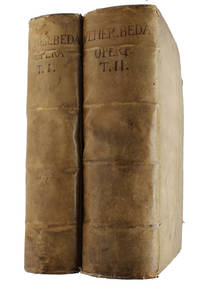
1612ref. 28124Coloniae Agrippinae Köln Sumptibus Anton. Hierati et Ioan. Gymnici 1612. Folio. Bound in two contemporary uniform full vellum bindings with remains of silk-ties on boards. Some traces of use to extremities. Some pages evenly browned some brownspotted. First two volumes richly illustrated with woodcut diagrams musical notes earth- and heaven-maps etc. in the text numerous woodcut initials throughout engraved title-page. 10 pp columns 1-168 84 pp. pp. 169 - 322 columns 323 - 452 65 pp. 1 f. 238 pp. 2 ff. columns 1 - 500 250 pp. 2 ff. columns 1 - 916 458 pp. 1 f. columns 1 - 816 408 pp 1 f. columns 1 - 852 426 pp. 2 ff. columns 1 - 485 243 pp. 2 ff. columns 1 - 968 484 pp. 55 ff. Index. Very rare early and apparently first complete edition of the seminal works by the "Father of English History" the venrable Bede. Bede’s most famous work his "An Ecclesiastical History of the English People" Historia Ecclesiastica Gentis Anglorum begins with the invasion of the British Isles by Roman forces and is considered one of the most important historical records documenting Roman rule Anglo-Saxon settlement and the evolution of the Church on the island. With its focus on Anglo-Saxon history the work is considered a key foundational text in the forming of a national English identity. The "Ecclesiastical History" contains stories that serve as the only source documenting the conversion to Christianity of the Anglo-Saxon tribes. It tells the story of Britons from Julius Caesar’s invasion to the time of Bede himself . He tells the story of battles conversions and miracles performed by monks and bishops and details Britain’s early history from the Roman invasion. He furthermore describes the organization and establishment of Christianity in the English church and covers the personal history of Holy Ethelwald and miracles of growth within the English church such as the development of the bishopric. "Bede’s works fall into three groups: grammatical and “scientific” scriptural commentary and historical and biographical. His earliest works included treatises on spelling hymns figures of speech verse and epigrams. His first treatise on chronology De temporibus “On Times” with a brief chronicle attached was written in 703. In 725 he completed a greatly amplified version De temporum ratione “On the Reckoning of Time” with a much longer chronicle. Both these books were mainly concerned with the reckoning of Easter. His earliest biblical commentary was probably that on the Revelation to John 703–709; in this and many similar works his aim was to transmit and explain relevant passages from the Fathers of the Church. Although his interpretations were mainly allegorical treating much of the biblical text as symbolic of deeper meanings he used some critical judgment and attempted to rationalize discrepancies. Among his most notable are his verse 705–716 and prose before 721 lives of St. Cuthbert bishop of Lindisfarne. These works are uncritical and abound with accounts of miracles; a more exclusively historical work is Historia abbatum c. 725; “Lives of the Abbots”. In 731/732 Bede completed his Historia ecclesiastica. Divided into five books it recorded events in Britain from the raids by Julius Caesar 55–54 BCE to the arrival in Kent 597 CE of St. Augustine of Canterbury. For his sources he claimed the authority of ancient letters the “traditions of our forefathers” and his own knowledge of contemporary events. Bede’s Historia ecclesiastica leaves gaps tantalizing to secular historians. Although overloaded with the miraculous it is the work of a scholar anxious to assess the accuracy of his sources and to record only what he regarded as trustworthy evidence. It remains an indispensable source for some of the facts and much of the feel of early Anglo-Saxon history." Encycl. Britt. Only three editions of Bede's Opera Omnia are known before Dr. Giles' edition from 1843 - 44. The first was printed in 1563 and the third in 1688. The 1688-edition constitutes the second edition of the present 1612-edition which is "According to Dr. Henry the only complete edition" Lowndes I:143. These three editions are also the only ones known to have been printed in folio though Lowndes mentions the 1688-edition as 4to. The 1612-edition is the rarest. Some of the works contained in this edition are said not to be Bede's own as some of the many scientific richly illustrated works on geography the heavens the universe music etc. bear small resemblance to his other works. Lowndes I:143 Brunet 1:731. hardcover
ref. 675816 p.l. 74 leaves. Folio later vellum-backed boards foot of spine defective occasional light soiling & dampstaining. Basel: H. Petri 1529. First edition of the two texts together. The De Temporum Ratione is a significant book in several ways. Most notably "this book helped to establish the custom of counting years from the birth of Christ. When we say that Queen Elizabeth II was born in 1926 not 'in the 16th year of the reign of George V' or 'in the year 2678 after the foundation of Rome' or in the '2nd year of the 481st Olympiad' we are indebted to the Venerable Bede."-Printing & the Mind of Man 16n. "Bede's greatest practical effect was on the Western calendar. His decisions beginning the year calculation of Easter names of days and months calculations of eras and so forth in most instances finally determined usage that was only refined not changed by Gregorian reform."-D.S.B. I p. 565. "The De Ratione Temporum first published in 1505 is particularly important. It contains a remarkable theory of tides based upon Pliny but also upon personal observation; first mention of the establishment of a port i.e. the mean interval between the moon's meridian passage and high water following; this interval is different in different ports."-Sarton I p. 511. Pierre Duhem described Bede's establishment of a port as the only original formulation of nature to be made in the West for some eight centuries. This is the first printing of De Natura Rerum which contains such physical science as was then known. It collects the wisdom of the ancient world on these subjects and has the special merit of referring phenomena to natural causes. It contains a particularly important section - the "De Comptu vel Loquela digitorum" - which is "our main almost our only source for the study of mediaeval finger reckoning or symbolism."-Sarton I pp. 510-11. See also Smith History of Mathematics II p. 200. This work was edited by Johannes Sichardt 1499-1552 professor of law who during the years 1526-30 lived in Basel and while teaching also edited and prepared for printing Latin manuscripts he had found in libraries in monasteries. He also served as adviser to the Basel printers Cratander Bebel and Henricus Petri. Good copy preserved in a box. Early signature of "Mallarii" on title with motto in Greek. Armorial bookplate dated 1915 of Bishop's College Cheshunt an Anglican theological college that closed in 1968. ❧ Sichardt: Bietenholz ed. Contemporaries of Erasmus Vol. III p. 247. hardcover books
ref. 5439Basel Switzerland: Johannes Herwagen 1563. 1st Edition. Pigskin binding. Very Good. 4 Folio Volumes bound in contemporary full blind-tooled tawed-alum pigskin Clasps missing. Title within architectural border with device of Johann Herwagen. Profusely illustrated with woodcut maps Astronomy music tables diagrams. Text in two columns; with Index. 4 vols. Folio. This is the first of three continental editions of the works of Bede the others being from Cologne in 1612 and 1688. Johann Herwage a printer originally from Strassburg married the widow of the great Basel printer Johann Froben and for a while collaborated with his stepson Hieronymus Froben. From 1532 however he again started printing under his own name. Johannes Herwagen unknown
1968ref. 62625Frankfurt a. M., Verlag Ars librorum, 1968. Gr.-Fol. (49 x 35,5 cm). Mit 12 sign. Orig.-Kaltnadel-Radierungen von Oskar Kokoschka. 2 Bll. (davon eines weiß), 98 S., 5 Bll. (davon 4 weiß), Rohe Bogen in illustr. OHLwd.-Decke u. OLdr.-Kassette mit blindgepr. Rückentitel.
1969ref. 163011969 Dessin original à la mine de plomb et à l'encre de Chine sur papier, collage dans la bulle , signé et daté au verso 1969, 35 x 25 cm., encadré.
1545ref. 117351545 Saint Venerable BEDE Bible & Commentary English Monk Church Cosmology Saint Venerable Bede was an English monk during the 7th- and 8th-centuries. He is most remembered for his ecclesiastical work on the history of English people in which he discusses the establishment and growth of the church throughout the known world. He also wrote important commentaries on the books of the Bible. This work explains relevant Biblical passages as well as describes the allegorical notes of Church Fathers. However he did not write exclusively of church theology. He also wrote on the development of time and ideas of cosmology. This 16th-century Latin edition was published in Paris by Roigny. An impressive three-volume folio set! Item number: #11735 Price: $3500 BEDE Saint Venerable Venerabilis Bedae presbyteri theologi doctissimi juxta ac sanctissimi commentationum in Sacras Literas tomus primus : in quo ea maximè quae Veteris Testamenti sunt ita perspicuè ac dilucidè enarrantur ut inter celeberrimos ejus argumenti tractatores… Parisiis : Apud Joannem Roigny 1545/44. 1st editions Details: · Collation: Complete with all pages; 3 volumes o Vol I – 16 272 o Vol II – 16 264 o Vol III – 12 260 · References: USTC 149316 · Language: Latin · Binding: Leather; tight & secure · Size: ~13in X 9in 33.5cm x 23cm · Exceedingly rare and desirable set Our Guarantee: Very Fast. Very Safe. Free Shipping Worldwide. Customer satisfaction is our priority! Notify us with 7 days of receiving and we will offer a full refund without reservation! 11735 Photos available upon request. Joannem Roigny hardcover
ref. 1850Magnifique planche originale en couleurs, signée, réalisé par Jan Bucquoy en 1992 pour sa BD parodique : La Vie Sexuelle de Tintin, d'après Hergé. Planche de 6 cases au format 48,5 x 33 cm, mettant en scène dans des actes sexuels, Tintin, Milou et Bianca Castafiore. Etat superbe. De toute rareté.
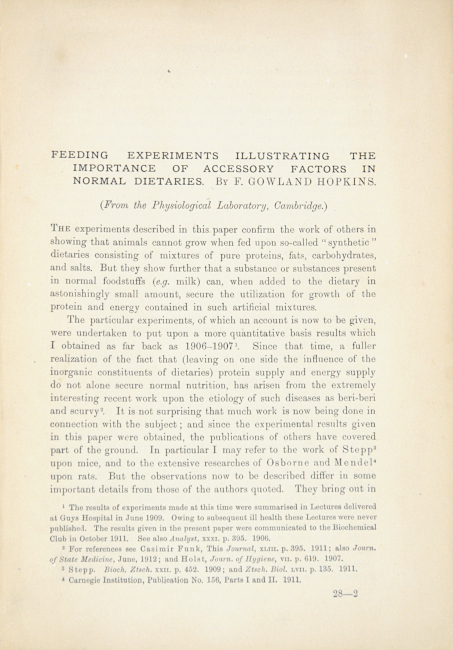
1912ref. 58474[London, Cambridge University Press, 1912]. Gr.-8°. S. (425-)460, Späterer OKart.-Bd.
1988ref. 198641988 1 Dessin à l'encre de Chine et réhauts de couleur verte, 1988, 20.5 x 13 cm., encadré.
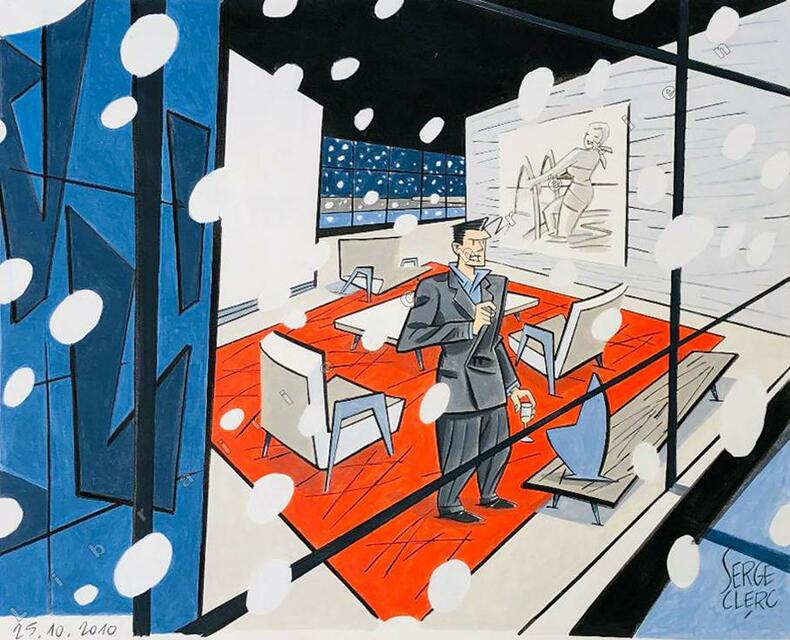
2010ref. 238252010 Encre et gouache signée en bas à droite, daté du 25.X.2010, 40 x 50 cm. (format du dessin), 50 x 65 cm. (format de la feuille), encadrée.
ref. 3793Tournai, Castermann, 1996; cartonnage illustré de l'éditeur, jaquette en couleurs.
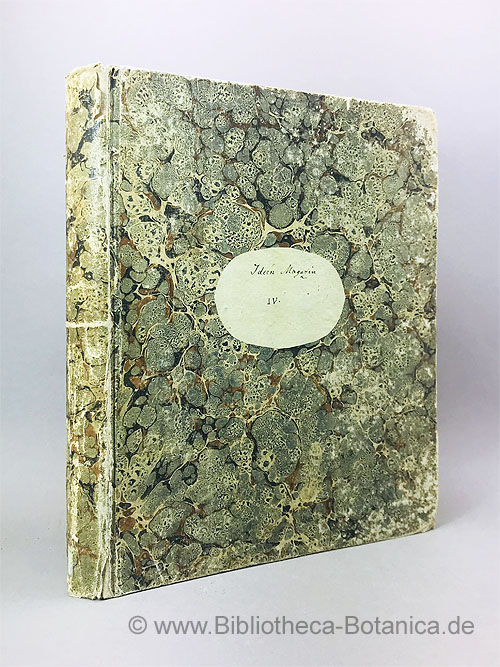
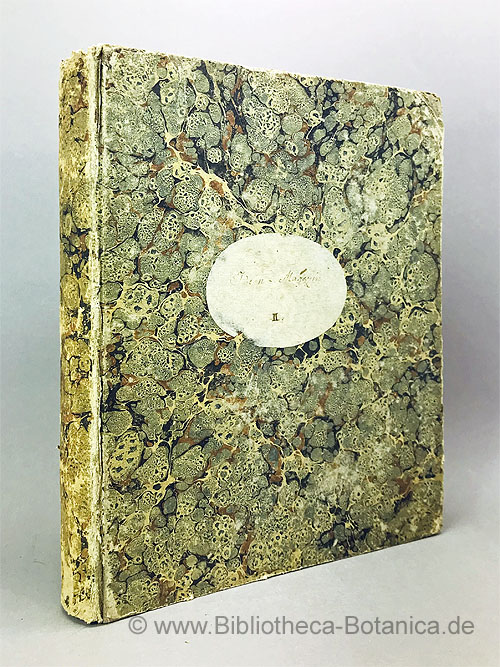
1802ref. 21182ABLeipzig, Baumgärtner, 1802-1806. 31,5 cm. Mit 105 Kupfertafeln. (So komplett) Marmorierter Pappband (Hardcover), Fadenheftung. Band 4 (Hefte 37 bis 48) Gutes unbeschnittenes Exemlar. Einband bestoßen, beschabt und berieben, Bezugspapier mit Fehlteilen. Seiten insgesamt etwas braunfleckig.
2012El capitán Trueno adalid de la justicia liberador del yugo de quienes profesan la esclavitud y desinteresado caballero andante es uno de los personajes más populares del a historieta española.
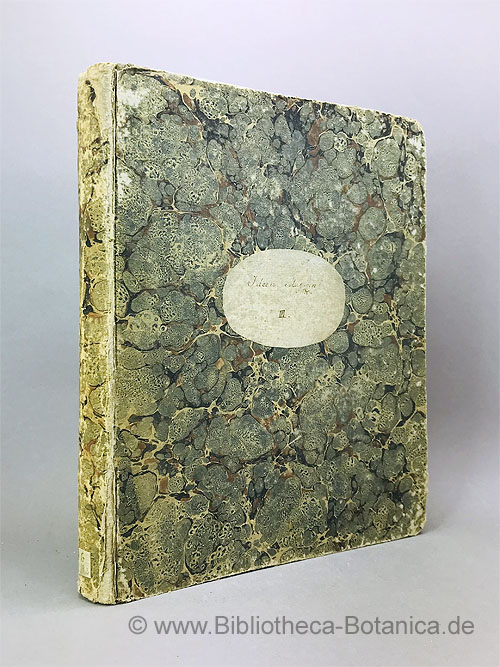
1799ref. 21140ABLeipzig, Baumgärtner, 1799-1802. 31,5 cm. Titelbl. deutsch, Titelbl. franz. mit 108 Kupfertafeln, davon 11 handkoloriert. Marmorierter Pappband der Zeit. Fadenheftung auf 3 Bändern. Band 3 (Hefte 25 bis 36). [12 Warenabbildungen] Gutes, unbeschnittenes Exemplar. Einband bestoßen, beschabt und berieben. Durchgehend braunfleckig. 1 Kupfer mit Abriss herausgetrennt, nur kurz den Plattenrand berührend. Zwischen den Tafeln Reste der herausgerissenen Seidenhemdchen.
1797ref. 21134ABLeipzig, Baumgärtner, 1797-98. 33 cm. Titelbl. deutsch, Titelbl. franz. mit 108 Kupfertafeln, davon 26 handkoloriert (so komplett). Marmorierter Pappband (Hardcover) der Zeit auf 3 echten Bändern geheftet. Band 2 (Hefte 13 bis 24). Schönes, unbeschnittenes Exemplar. Einband bestoßen, beschabt und berieben. Seiten zumeist randgedunkelt und etwas braun- und fingerfleckig. 1 Tafel mit einem langen Einriss. Die ersten 7 Blatt sowie das Vorsatzblatt restauratorisch aufgezogen und gereini
ref. 81318Coloniae Agrippinae : sumptibus Antonij Hieratus Gymnici, 1612, 8 tomes reliés en 4 volumes de 250x390 mm environ, Volume 1, tome I. (7) ff. (page de titre gravée, vie de Bède, table), 452 pages ; tome II. Philosophie, (1)f. (page de titre), 238 pages, (1)f., - Volume 2, tome III. Histoire, (3) ff. (titre, table, au Roi, au lecteur), 500 pages, (1) f. ; tome IV. Commentaires Ancien Testament, (2) ff. (titre, table), 916 pages, (1) f., - Volume 3, tome V. (1) f. (titre), 816 pages annoncées (erreurs de pagination, 855 pages) ; tome VI. (1) f. (titre), 852 pages, (1) f., - Volume 4, tome VII. (2) ff. (titre, table) 486 pages ; tome VIII. Ancien Testament, (2) ff. (titre, table), 968 pages, (64) ff. (index), (1) f., reliures plein cuir granité brun, dos à 6 nerfs portant titres et tomaisons dorés, sur pièces de titre en veau fauve, ornés de caissons à riches motifs dorés, tranches mouchetées de rouge. Avec de nombreuses figures, tableaux, diagrammes, calendriers. Ex-libris manuscrits sur les page de titre. Fréquentes erreurs de pagination, le nombre de pages annoncés est parfois erroné, mais ces volumes sont bien complet avec pagination des cahiers cohérente, rousseurs mouillures, des pages brunies, léger manque de papier sur la dernière page du tome II, épidermures, frottements, coiffes ébréchées avec début de fente sur les mors, des tampons de bibliothèque, bon état pour le reste.
1957ref. 232581957. ComicsPolitical ActivismLatin America Archive of five issues of Argentine anti-authoritarian sci-fi comic El Eternauta by Héctor Germán Oesterheld printed in Hora Cero anthologies 1957-59. El Eternauta is widely regarded as one of the most important works in Latin American comics combining speculative science fiction with social commentary and a distinctly Argentine setting. The story follows a small group of survivors navigating a mysterious extraterrestrial invasion that devastates Buenos Aires. Its narrative of collective resistance survival and moral responsibility became foundational to Argentine graphic storytelling and later assumed additional historical resonance through Oesterheld's political activism during Argentina's military dictatorship. The author was kidnapped and "disappeared" along with his daughters for his anti authoritarian activities under the late 1970s military junta. The December 1957 installment opens with five bombers over a city devastated by the deadly snowfall while the 1958 and 1959 installments move through Plaza del Congreso Calle Callao and the invaders' command structure under the running banner "Una cita con el futuro." . This scarce archive includes: 1 Oesterheld Héctor G.; Solano López Francisco. Hora Cero. Suplemento Semanal. No. 17. Buenos Aires: Editorial Frontera 25 de diciembre de 1957. A lethal transparent snowfall has annihilated life in Buenos Aires and that Juan and the surviving group witness five bombers after losing their truck and Pablo. 2 Oesterheld Héctor G.; Solano López Francisco. Hora Cero. Suplemento Semanal. No. 68. Buenos Aires: Editorial Frontera 17 de diciembre de 1958. Orange and black cover with soldiers advancing through smoke. Juan Favalli and Franco meet a young woman who says the invading force is concentrated in Plaza Congreso and that it can be destroyed if they reach it. 3 Oesterheld Héctor G.; Solano López Francisco. Hora Cero. Suplemento Semanal. No. 71. Buenos Aires: Editorial Frontera 7 de enero de 1959. Blue and black cover with helmeted troops approaching a bunker line. After witnessing the invaders' shock forces along Calle Callao and nearing Plaza del Congreso Franco halts Juan and Favalli and leads them through the interior of nearby houses. 4 Oesterheld Héctor G.; Solano López Francisco. Hora Cero. Suplemento Semanal. No. 74. Buenos Aires: Editorial Frontera 28 de enero de 1959. Pink and black cover with silhouetted soldiers and a large close profile of a sweating combatant. Bombers from other latitudes attack Plaza del Congreso to destroy the invaders' general headquarters bringing down many aircraft but also blasting the "manos" robots and gurbos below. 5 Oesterheld Héctor G.; Solano López Francisco. Hora Cero. Suplemento Semanal. No. 103. Buenos Aires: Editorial Frontera 19 de agosto de 1959. Lacking cover; the surviving issue retains the imprint panel "Hora Cero / Año III / Numero 103." The survivors find a way to strike decisively following a dark-eyed young woman toward the invasion's command post while counting on grenades and the panic of the "manos" once their internal terror gland is triggered. Oesterheld's narrative departs from traditional adventure comics by emphasizing collective action rather than a single heroic protagonist portraying ordinary civilians organizing survival and resistance. The later political charge attached to the serial after Oesterheld's kidnapping and disappearance under the last Argentine dictatorship gives added weight to these original printings but the story itself was already rooted in anti-Authoritarianism presenting military pressure and a collective struggle against greater power. Moderate toning and handling wear throughout; scattered creasing edge wear and small losses to covers; issue no. 103 lacking cover; several covers with penciled or inked prices and markings. Overall good condition. unknown