Varenne Alex:Livre Rare Book

92,420 results
1986ref. 3368Bruxelles, Pascal Grognard - Galerie 2016, 1986. Portfolio au format de 36 x 39 cm., pleine toile blanche avec titre frappé. Infime tache au premier plat, pour le reste en très belle condition. Bien complet des 20 sérigraphies érotiques et des deux feuillets de texte de Alex Varenne.
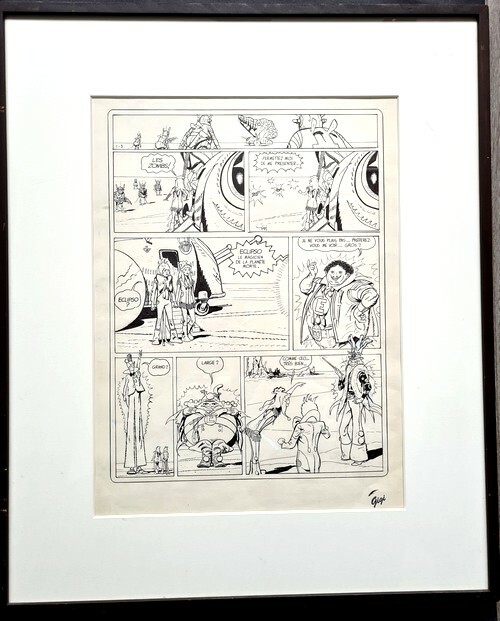
1966ref. 29192Planche originale, signée, réalisée à l'encre de Chine sur papier, en 1975 par Robert Gigi, au format 41 x 31 cm, pour l'album " Eclipso, le Magicien de la Planète Morte ", tome 3 de la série Agar, publié en 1976 chez Dargaud sur scénario de Claude Moliterni. Etat superbe. De toute rareté. Vendue encadrée.Robert Gigi est un des grands de la BD française. Elève de Raymond Poïvet, il a été professeur à Angoulême. Ses principales séries sont : comme Scarlett Dream, Ugaki le samourai, Orion le laveur de planètes et Agar. Il fut aussi illustrateur pour des magazines, comme : J'ai 15 ans, Salut les Copains, etc.
1989ref. 232801989 Aquarelle sur papier fort et collages, signée en bas à droite, légendée, 1989, 36.4 x 28 cm. (format à vue), 39 x 29.7 cm. (format de la feuille).
ref. 23252Maquette originale de la planche N°6, titrée "La Femme de Verre" et signée en bas au milieu, encre de Chine, gouache et aquarelle, 1994, texte imprimé collé sous les dessins , 38 x 28.5 cm.
ref. Z1-C-042-02328Bibliolife. Used - Like New. Used - Like New. This is a reproduction of an out of print title. This book may have occasional imperfections such as missing or blurred pages poor pictures errant marks etc. that were either part of the original artifact or were introduced by the scanning process. Ships from UK in 48 hours or less usually same day. Your purchase helps support Sri Lankan Children's Charity 'The Rainbow Centre'. 100% money back guarantee. We are a world class secondhand bookstore based in Hertfordshire United Kingdom and specialize in high quality textbooks across an enormous variety of subjects. We aim to provide a vast range of textbooks rare and collectible books at a great price. Our donations to The Rainbow Centre have helped provide an education and a safe haven to hundreds of children who live in appalling conditions. We provide a 100% money back guarantee and are dedicated to providing our customers with the highest standards of service in the bookselling industry. Bibliolife unknown
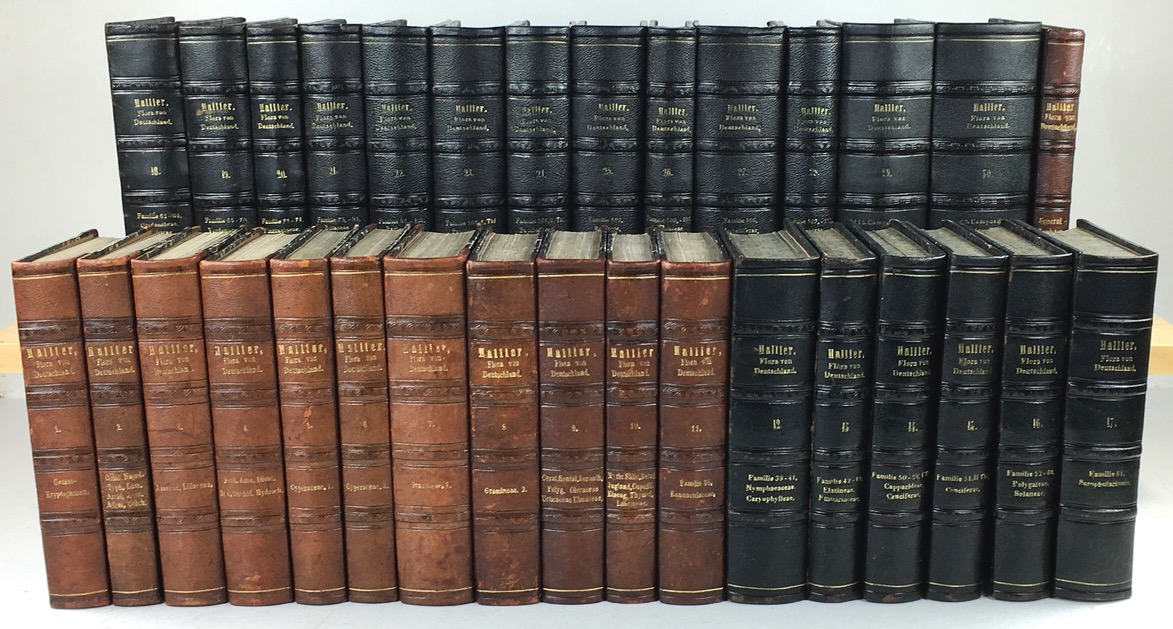
1888ref. 27769Gera-Untermhaus, Verlag von Fr. Eugen Köhler 1880 - 1888. Mit IX. s/w. Lithogr. u. 3364 (3283 gezählten) Farblithographien. 81 Taf. zusätzlich. 31 Orig.-Halblederbände mit Rückenvergoldung. = Hallier, Flora von Deutschland in 31 Bänden cplt. [5 Warenabbildungen] Sehr gut erhaltene Reihe. (Bände 1-11 in braunen, u. 12-30 in schwarzen Halblederbänden. Registerband (Bd.31) in braunem Halbleder). Druckseiten gelegentllich leicht stockfleckig. Die Tafeln sind nicht stockfleckig und sauber.
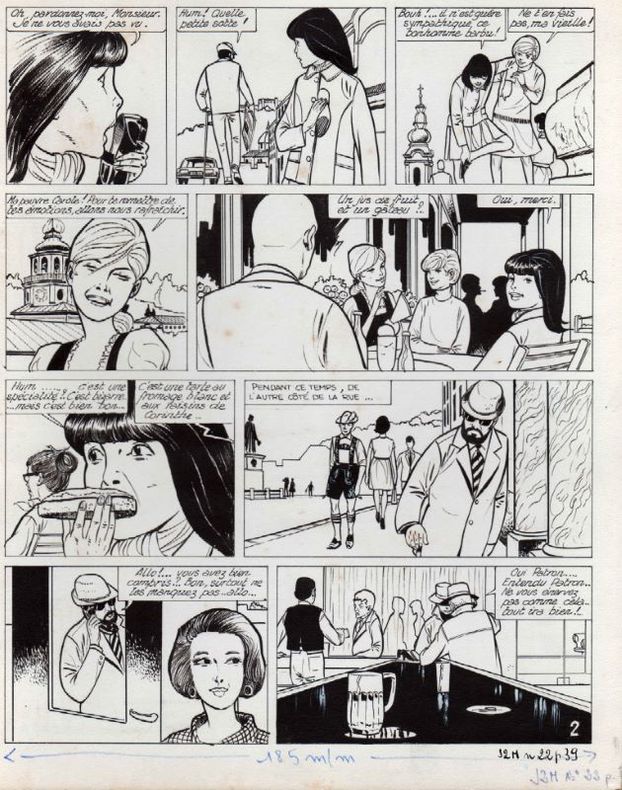
1967ref. 13592Paris 1967 1 Série de 18 planches sur carton et calques préparatoires à la mine de plomb, encre et crayons de couleurs, datées au dos, 1967, 30.5 x 27 cm.
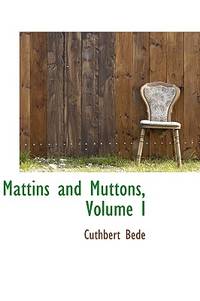
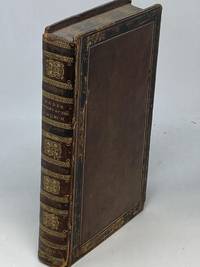
1814ref. 88015London England: Printed for the Translator and sold by Messrs. Keating Brown and Keating 38 Duke-street Grosvernor-squeare; Mr. Booker 61 New Bond -street; Mr. Jackson Duke-street Lincoln's-Inn Fields; Mr. Keys Coleman-street; Mr. Ryan 353 Oxford-street; Mr. Cooper 11 Dar5tmouth-street Golden-square; Mr. Field Somers' Town; Mr. T. Hadock Manchester &c &c 1814. First Edition. Hardcover. Good Plus. Octavo 8.8 in. x 5.2 in. pp. xxviii 556. Illustrated with frontispiece engraving. Contemporary brown light brown diced russia. Blind and dyed pointillé tooling and gilt roll and gilt to all edges of leather boards as well. Hand-tooled inner dentelles in slanted bar pattern each with its own pointillé tooling. Elaborate gilt designs to spine each non-raised hub separated by a gilt bar which echoes the stamped border to front and rear boards. Very basic "clouds and speckling" marbling to all edges. Engraved Frontispiece. Front hinge cracking but holding by cords. Rubbing to extremities with corners just showing. Black on decorative frame is well rubbed. Head and tail of spine worn. Marbled edges and endpapers.Light spotting to preliminary pages. Solid textblock with tight spine. Spine appears to have been repaired; book may have been rebacked. Rubbing and scuffing to extremities and boards corners showing. Lovely Stormont marbling to endpapers in salmon-pink and midnight blue. Previous owner's "Charles Walmesley Westwood" armorial bookplate to front pastedown and his name in manuscript near top of title page. The introduction i.e. in this work entitled "Advertisement" the translator Mr. Hurst cites two previous translations of Bede's History -- the first by Rev. Thos. Stapleton in 1565 which he says contains numerous obsolete and now 1814 "almost unintelligible". The second by Mr. John Stevens in 1723 he writes is "so literal as to appear in many places both very obscure and defective in the style." All in all Mr. Hurst claims ".this interesting and edifying history of the conversion of our own country to Christianity lies concealed from the knowledge of most people; who therefore are ignorant of the true nature of that religion which our ancestors professed." Beda Venerabilis lived from 673 to 736 and wrote this history several years before his death. Printed for the Translator, and sold by Messrs. Keating, Brown, and Keating, 38, Duke-street, Grosvernor-squeare; Mr. Booker, 61 hardcover
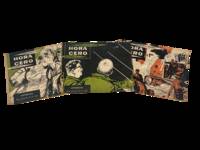
1958ref. 227751958. Latino Comics Oesterheld Héctor Germán Hora Cero Suplemento Semanal. Buenos Aires: Editorial Frontera 3 consecutive issues from November 12 to November 26 1958. Oblong 8vo. Original color pictorial wrappers. Text in Spanish. A consecutive three-issue run of Hora Cero Suplemento Semanal These 3 consecutive issues are part of the original first serialization of Héctor G. Oesterheld and Francisco Solano López's El Eternauta published by Editorial Frontera during the golden age of Argentine comics. El Eternauta is a foundational work of Latin American science fiction created by writer Héctor Germán Oesterheld and artist Francisco Solano López. The story begins in Buenos Aires where a mysterious lethal snowfall kills most of the population. The protagonist Juan Salvo and his friends survive by using makeshift protective suits to find others. They eventually join a resistance group fighting against the alien invaders. El Eternauta is a potent political allegory that explores themes of solidarity resistance and the threat of authoritarianism. Its social and political messaging is considered part of its enduring legacy First appearing in Hora Cero from 1957-1959 Oesterheld's humanist script emphasizing collective heroism over individualism was recognized as a veiled critique of authoritarianism and the military rule a theme that became tragically prophetic when the author himself was "disappeared" along with his two pregnant daughters under the late 1970s military junta. This archive includes 3 of the first appearance in print of Eternauta original story in the late 1950s including one of the few Hora Cero issues with an Eternauta related art cover. 1 Hora Cero Suplemento Semanal November 12 1958. Buenos Aires: Editorial Frontera. This issue continues the Eternauta's tense progression as Salvo's small group barricaded in suburban Buenos Aires confronts the toxic snow and constructs improvised protective suits. López's art fuses expressionist shading with cinematic framing to evoke claustrophobic dread. 2 Hora Cero Suplemento Semanal November 19 1958. Buenos Aires: Editorial Frontera. A scarce and highly sought issue notable for the iconic panel of Juan Salvo and Professor Favalli observing missiles streaking across the Buenos Aires skyline a visual metaphor for modern warfare and unseen domination. This image would become one of the most enduring in Argentine graphic art reproduced in later reprints and academic studies as emblematic of Cold War anxiety within Latin American modernity. 3 Hora Cero Suplemento Semanal November 26 1958. Buenos Aires: Editorial Frontera. Depicts the survivors' first direct engagement with the alien "cascarudos" revealing the invaders' mechanized terror and the beginnings of organized human resistance. Oesterheld's dialogue increasingly blurs the line between science fiction and existential parable while López's kinetic illustrations heighten the tragic momentum. Light toning and small edge chips; center staples firm covers fragile but intact interiors supple and complete. Overall very good condition. Sets preserving consecutive issues from Hora Cero's 1950s serialization are scarce as the fragile newsprint format led to low survival rates. unknown
1958ref. 227751958. Latino Comics Oesterheld Héctor Germán Hora Cero Suplemento Semanal. Buenos Aires: Editorial Frontera 3 consecutive issues from November 12 to November 26 1958. Oblong 8vo. Original color pictorial wrappers. Text in Spanish. A consecutive three-issue run of Hora Cero Suplemento Semanal These 3 consecutive issues are part of the original first serialization of Héctor G. Oesterheld and Francisco Solano López's El Eternauta published by Editorial Frontera during the golden age of Argentine comics. El Eternauta is a foundational work of Latin American science fiction created by writer Héctor Germán Oesterheld and artist Francisco Solano López. The story begins in Buenos Aires where a mysterious lethal snowfall kills most of the population. The protagonist Juan Salvo and his friends survive by using makeshift protective suits to find others. They eventually join a resistance group fighting against the alien invaders. El Eternauta is a potent political allegory that explores themes of solidarity resistance and the threat of authoritarianism. Its social and political messaging is considered part of its enduring legacy First appearing in Hora Cero from 1957-1959 Oesterheld's humanist script emphasizing collective heroism over individualism was recognized as a veiled critique of authoritarianism and the military rule a theme that became tragically prophetic when the author himself was "disappeared" along with his two pregnant daughters under the late 1970s military junta. This archive includes 3 of the first appearance in print of Eternauta original story in the late 1950s including one of the few Hora Cero issues with an Eternauta related art cover. 1 Hora Cero Suplemento Semanal November 12 1958. Buenos Aires: Editorial Frontera. This issue continues the Eternauta's tense progression as Salvo's small group barricaded in suburban Buenos Aires confronts the toxic snow and constructs improvised protective suits. López's art fuses expressionist shading with cinematic framing to evoke claustrophobic dread. 2 Hora Cero Suplemento Semanal November 19 1958. Buenos Aires: Editorial Frontera. A scarce and highly sought issue notable for the iconic panel of Juan Salvo and Professor Favalli observing missiles streaking across the Buenos Aires skyline a visual metaphor for modern warfare and unseen domination. This image would become one of the most enduring in Argentine graphic art reproduced in later reprints and academic studies as emblematic of Cold War anxiety within Latin American modernity. 3 Hora Cero Suplemento Semanal November 26 1958. Buenos Aires: Editorial Frontera. Depicts the survivors' first direct engagement with the alien "cascarudos" revealing the invaders' mechanized terror and the beginnings of organized human resistance. Oesterheld's dialogue increasingly blurs the line between science fiction and existential parable while López's kinetic illustrations heighten the tragic momentum. Light toning and small edge chips; center staples firm covers fragile but intact interiors supple and complete. Overall very good condition. Sets preserving consecutive issues from Hora Cero's 1950s serialization are scarce as the fragile newsprint format led to low survival rates. unknown books
1936ref. 1138331936 Éditions SPE - 1936-1941 - 39 x 55 cm ( du N° 1 au n° 183 - 8 pages) - 39 x 55 cm (du N° 184 au N° 241 - 4 pages) - 6 volumes en chemise renfermant des numéros dans l'ordre chronologique reliés ensemble par une baguette à relier en plastique noir – Chemise en carton de réalisation amateur avec dos renforcé en toile ou en plastique de couleur mais comportant sur le premier plat une planche de TARZAN sur toute la surface -
2010ref. 228662010 Paris, 2010, Les Francs Bibliophiles, Atelier Idem, in-4 oblong en feuilles sous chemise cartonnée toilée rouge, sous étui toilé bleu, 55 pages. Joints signés un dessin à la mine de plomb et une épreuve réhaussée.
ref. DADAX1847321283New unknown
1940ref. 9782845245672Ouvrage relié couverture cartonnée rigide 1,9X23X40 cm environ 380 pages 1524 grammes état satisfaisant: tranche décollée de la reliure mais bonne tenue des cahiers, couverture salie, roussie, bords et coins frottés, usés, tranches brunies (voir photos). envoi rapide et soigné album coté 1800 euros, cédé pour 1500 euros GAMAN 10364 | Etat : état correct (Ref.: GAMAN10364)
2009ref. 314418 Paris. Les Francs Bibliophiles 2010. In-4 à l'italienne, en feuilles, de 54 pages, au format 28,5 x 23 cm. Couverture muette. Livre glissé sous chemise en toile rouge et étui en toile bleue. Trente-cinquième ouvrage publié par la Société des Francs Bibliophiles, cet ouvrage a été réalisé par Jacques de Loustal en 2010 chez Idem. Olivier Dujol et Didier Sauvant étant Commissaires au Livre. Le texte de cet ouvrage a été composé en Times New Roman, corps 16, dans les ateliers Idem, 49 rue du Montparnasse à Paris et le tirage achevé au mois de Juin 2010. Les douze lithographies accompagnant la nouvelle de Tennessee Williams ont été tirées par Alberto Tommasi, Khindelvert Em et Erwann Galivel sur les presses de l'atelier Idem. L'emboîtage a été réalisé par l'atelier Paxion à Angerville. Il a été tiré 100 exemplaires sur BFK Rives tous numérotés de 1 à 100 réservés aux membres de la Société, plus 10 exemplaires réservés à l'Artiste, numérotés de I à X. Par ailleurs, il a été tiré 2 exemplaires de chapelle réservés aux collaborateurs. Il a été tiré en outre 15 exemplaires avec marges des lithographies extraites de ce livre sur BFK Rives, numérotées de 1 à 15. 27 x 35 cm. Tous les exemplaires sont signés au colophon par l'artiste. Notre exemplaire est l'un des 100 réservés aux membres de la Société des Francs Bibliophiles. Il porte le n° 88. Il est signé et dédicacé par Loustal. Rarissime édition originale en état superbe, comme neuf.
ref. 28108Dargaud / Collection Fort Navajo, une aventure du Lieutenant Blueberry n° 3 de 1967. In-4 cartonnage éditeur de 48 pages, au format 29,5 x 22,5 cm. Couverture illustrée. Dos carré avec titre imprimé. Plats et intérieur frais avec coins restés piquants. Couverture et illustrations en couleurs de Jean Giraud sur scénario de Jean-Michel Charlier. Pages de gardes vertes avec 5 personnages : Tanguy, Astérix, Barbe Rouge, Achille Talon et Blueberry. 4ème plat dit à " La Peau de Bison " avec 16 titres de 3 séries : Fort Navajo - Michel Tanguy et Barbe Rouge. Les derniers titres parus notés, étant : Tanguy " Cap Zéro " - Barbe-Rouge " Le Vaisseau Fantôme " et ce titre. Intérieur parfait sans ratures, ni inscriptions. Pas de photos de l'intérieur, car les cahiers étant collés, la manipulation peut désolidariser les feuillets. Les marques brunes sur le deuxième scan, sont dues au reflet de la lumière. Dépot légal 1er trimestre 1967 - N° 577 - Editeur n° 205. Magnifique état de fraicheur pour cette BD qui est extrêmement fragile. Rarissime édition originale française cartonnée, surtout dans un tel état de fraicheur.
1966ref. 31025Planche originale signée, réalisée à l'encre de Chine sur papier, avec trames pointillées, par Robert Gigi, au format 46 x 29,5 cm, pour un album de la série " Scarlett Dream " , sur scénario de Claude Moliterni. Annotations dans les marges. Petits défauts ( accentués par le scan ) dans les marge inférieure. Etat général superbe. De toute rareté. Scarlett Dream, Espionne Intergalactique " Sexy " fut inspirée par l’actrice Marlène Jobert, et créée en 1962 pour V Magazine.Robert Gigi est un des grands de la BD française. Elève de Raymond Poïvet, il a été professeur à Angoulême. Ses principales séries sont : comme Scarlett Dream, Ugaki le samourai, Orion le laveur de planètes et Agar. Il fut aussi illustrateur pour des magazines, comme : J'ai 15 ans, Salut les Copains, etc.
1970ref. 13351Editions Dupuis 1970. In-8 cartonnage éditeur de 64 pages au format 30 x 21,5 cm. Couvertures illustrée. Dos pincé rond avec titre. Plats et intérieur frais, malgré d'infimes frottis aux coins et des mors, ainsi qu'un cachet avec le nom de l'ancien propriétaire. Cahiers collés. Couverture, pages de gardes, dessins en couleurs et scénarios de Peyo, aidé par Yvan Delporte et Gos. Sixième album des Schtroumpfs en superbe état général. Edition originale, notée au 4ème plat : D.1970/0089/65. Sans ISBN. Précieux exemplaire enrichi par un superbe dessin original, dédicacé et signé, de Pierre Culliford dit Peyo, représentant un Schtroumpf chevelu.
ref. 200918977Charleroi, Dupuis, 1940 ; in-folio, cartonnage de l'éditeur (bon état) dos tissus. EO DU n°1 : du 4 janvier 1940 au n°19 : du 9 mai 1940 : album complet et rare - très bon état album coter 1800€ vendu 1500€.
ref. 200617447CHARLEROI, Dupuis, 1940 ; in-folio, cartonnage de l'éditeur (recolé à l'intérieur sinon bon état). Contient n° 1(04/01/1940) à 19 (09/05/1940) rare : album coter 1800€ vendu 1500€.
1987Lovely Scrooge-decorated bookplate inside front board bears Barks' hand-written signature and book number. Slipcase bears large excellent colour illustration of Scrooge posing in cowboy hat and red bandana with sack of gold, pick, canteen, ammunition belt, and rifle. Contents include: "Donald Duck's Christmas on Bear Mountain", "Dickens Redone" (two-page illustrated commentary, "The Storybook Scrooge" (one-page commentary), "Uncle Scrooge", "Uncle Scrooge's Christmas Carol", "The Triumph of Scrooge McDuck" (10 page colour illustrated commentary), "Uncle Scrooge the Lemonade King", and selected bibliography. Unpaginated. Book measures almost 12.5" high by 9.5" wide by 5/8" thick. Clean and glossy with negligible wear. Prior owner's signature and date neatly written upon bookplate on 'This Book Belongs To ______" line. Half-inch opening to back panel of dust jacket at edge of lower left corner seems to have resulted from the paper cracking rather than from wear. Very light wear to attractive slipcase. A premium copy. Book
1906ref. F3134Paris, The New York Herald, 1906/07. 30 issues of the weekly Comic Section with 4 (2 pages in colour) pages each fullside illustrated. European Edition. Halfcloth. condition: binding stained, corners and margins rubbed and scratched. Book block: some margins with small tears, paper yellowed, a few leaves stuporously restored. The New York Herald Comic Section. December 2, 1906 - December 29, 1907.
ref. AMO-1154s.d. (1991) - Version corrigée des planches pour la France. Ensemble complet des 91 planches originales (23 x 15 cm) à l'encre de Chine sur feuilles doubles bristol 35 x 25 cm pour la plupart (quelques planches simples). Bulles refaites pour textes français, corrections au blanc, retouches au feutre ou à l'encre. Planches prêtes pour être imprimées en France (version française adaptée). Les dessins originaux ne sont pas signés mais sont de l'artiste de Fumetti italien Stelio Fenzo. Cette histoire mélange le tout Paris de la Rue du Faubourg St Honoré de la mode avec scènes gay, lesbien etc. Stelio Fenzo (né à Venise le 3 septembre 1932) est un dessinateur et un scénariste italien de bande dessinée. Après avoir envisagé une carrière d'architecte, Stelio Fenzo se lance dans la bande dessinée en 1947 en rejoignant la revue l' Asso di Pischecréée par Mario Faustinelli et Alberto Ongaro, à laquelle collabore notamment Hugo Pratt dont il devient l'assistant et l'ami et ou il publie sa première histoire Indocina. Il entre au Giornale illustrato en 1948 4 puis au Vittorioso en 1950. En 1952, il part en Angleterre et travaille pendant une dizaine d'années avec les maisons d'éditions Fleetway et DC Thompson, dessinant principalement des histoires sentimentales et policières. En 1962, à son retour en Italie, il reprend plusieurs séries animées par Hugo Pratt, telles que Capitaine Cormorant et Kiwi. En 1968, il se tourne vers la bande dessinée érotique, créant notamment le personnage de Jungla pour les éditions Ediperiodici, qu'il dessine jusqu'en 1971, Mario Cubbino lui succédant alors. Il fournit un nombre impressionnant d'histoires pour magazines de bandes dessinées pour adultes dont beaucoup sont adaptées en français par Elvifrance pour ses diverses publications (Contes Satyriques, Culbutant, Histoires Sanglantes, Outre-Tombe…). Parallèlement à cette activité, Stelio Fenzo collabore à compter de 1971 au magazine catholique Giornalino destiné à la jeunesse. Pour ce public, il produit de nombreuses séries dans les genres les plus variés : le western avec I raconti di Saloon, les aventures exotiques avec Amar-Singh… et adapte en bande dessinée des classiques de la littérature tels que Kim ou Le Dernier des Mohicans. Fumetti est le nom donné en Italie à la bande dessinée. « Fumetti » signifie « petites fumées », en référence à l'aspect des bulles servant à faire parler les personnages. Les Fumetti italiens ont été popularisés en France par la maison d'édition ELVIFRANCE dans les années 70 et jusque dans les années 90. BEL EXEMPLAIRE COMPLET DE TOUTES LES PLANCHES DE CETTE HISTOIRE. Les exemplaires complets de toutes les planches originales d'une même histoire deviennent rarissime. La plupart ayant été lamentablement démantelés et vendus à la planche sans aucun scrupule. RARISSIME ENSEMBLE COMPLET EN 91 PLANCHES A L'ENCRE DE CHINE.
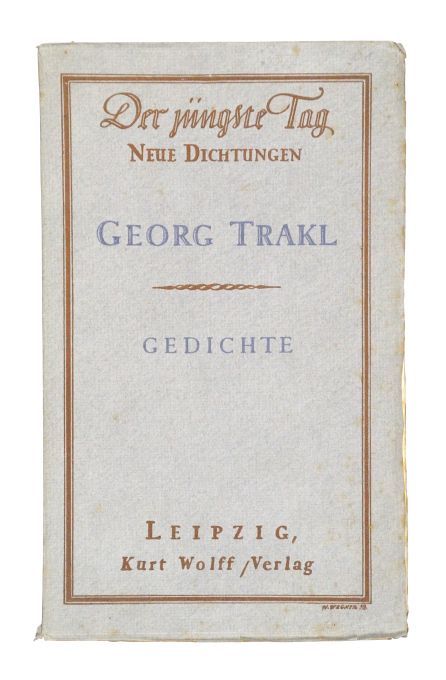
1913ref. 62040Leipzig, (Poeschel & Trepte für) Kurt Wolff Verlag, 1913. 8°. 65 (1) S., 1 Bl., Grauer OKart. (sign. W[ilhelm] Wagner).
1544ref. 21323Paris: Petrum Regnault 1544. First Edition. . Hardcover. Good. Folio. Vignette title not in British library 261pp Vellum Petrum Regnault hardcover