|
|
|
BALZAC Charles-Louis & DUTERTRE (delineavit) & REDOUTE (delineavit) & JOMARD Edme-François & TEXIER
DESCRIPTION DE L'EGYPTE. Vases, meubles et instruments. Tentes de mamelouk, Boiserie de fenêtre, Berceau, Chassemouche, Planchers en mosaïque, Carreaux en faïence, Coffret en nacre, Écritoire et détails, Serrure en bois, Cuillers en écaille, ornées d'ambre, de corail et de nacre. (ETAT MODERNE, volume II, planche GG)
- Imprimerie Impériale, Paris 1809-1829, 53,5x71cm, une feuille. - Original, unshaved, full-page etching from the "Imperial edition" of the Description de l'Égypte, or 'Recueil des observations et recherches faites en Égypte pendant l'expédition française, publié par les ordres de Sa Majesté l'Empereur Napoléon le Grand [A Collection of the observations and research carried out in Egypt during the French expedition, published on the orders of his Majesty the Emperor Napoleon the Great]'. Produced between February 1802 and 1830 on the orders of Naopleon Bonaparte and published between 1809 and 1828, 1,000 copies were printed and distributed to institutions, on vergé paper with an 'Égypte ancienne et moderne' watermark, visible when held up to the light. Light marginal spotting not touching image, otherwise in very fresh, fine condition. An engraving from the Description de l'Egypte, one of the masterpieces of French printing and the birth of a new field: Egyptology. A gigantic survey of Egypt at the time of Bonaparte's conquests in 1798 and 1799, the work is divided into 13 volumes of engravings making up 892 plates, of which 72 colored, as well as presenting the splendors of the Egypt of the Pharaohs in 9 volumes. The other volumes discuss natural history and present a fascinating portrait of Coptic and Islamic Egypt as it was seen by Bonaparte's Eastern Armies. The 'Egyptian campaign', militarily a disaster, demonstrates, through the engravings of the Description d'Egypte, the scientific success it nonetheless became thanks to the 167 expert members of the Commission of the Sciences and Arts of the Institut d'Egypte [Egyptian Institute] who followed Napoleon's army. The Institut gathered together in Egypt the mathematician Monge, the chemist Berthollet, the naturalist Geoffroy Saint-Hilaire as well as numerous artists, engineers, architects and doctors. They were tasked with re-discovering modern and ancient Egypt and displaying its natural treasures as well as the know-how of its inhabitants. This edition, the so-called "Imperial" edition of the plates for the Description de l'Egypte was printed in four large formats, two of which were specially created for it and christened "Moyen-Egypte" and "Grand-Egypte". A special press was built to print it, the process extending over 20 years, from 1809 to 1829. The "Imperial" edition proved so popular that a second edition, this time in black and white and without the "Egypte ancienne et moderne" watermark - known as the "Royal Edition" - was published during the Restoration by the printing house of C.-L.-F. Panckoucke (Paris). The engravings of the Description d'Egypte owe a great deal to Baron Dominique-Vivant Denon, illustrator, diplomat, collector and later Director of the Musée Napoléon (the Louvre). His exploration of the South of Egypt gave Bonaparte the idea of sending the experts of the Institut there, thus creating a faithful and complete portrait of the area. This was the research gathered together from 1802 in the mammoth Description de L'Egypte. Denon embarked on this story of archeological exploration at the age of 51, reaching first Alexandria and then Cairo before exploring Upper Egypt. Along with the members of the Institut d'Egypte, the Natural History Museum's painter H.J. Redouté (brother of Pierre-Joseph Redouté, author of Roses), the mineralogist Dolomiue, and the draughtsman Joly, Denon then explored the Nile Delta and Lower Egypt. When, however, he joined the 21st Light Infantry Regiment as it marched across Upper Egypt in pursuit of the retreating Mameluks in November 1798, he found himself the only civilian. In the very midst of the battle itself, he reeled off sketches of the works of art that peppered his path right up to the threshold of the Sudan. He said that he had crossed "a country that is, apart from its name, entirely unknown to Europeans, and therefore everything was worth describing" (Voyages dans la Basse et la Haute Egypte pendant

|
|
|
BALZAC Charles-Louis & JOMARD Edme-François & BALTARD Pierre-Louis
DESCRIPTION DE L'EGYPTE. Heptanomide. Vues de Gebel Abou Fedah et des environs, épures de chapiteaux tracées dans les hypogées de Gebel Abou Fedah, plans et détails de Gebel Cheykh el Harydy. (ANTIQUITES, volume IV, planche 62)
- Imprimerie Impériale, Paris 1809-1829, 70x51,5cm, une feuille. - Original, unshaved, full-page etching from the "Imperial edition" of the Description de l'Égypte, or 'Recueil des observations et recherches faites en Égypte pendant l'expédition française, publié par les ordres de Sa Majesté l'Empereur Napoléon le Grand [A Collection of the observations and research carried out in Egypt during the French expedition, published on the orders of his Majesty the Emperor Napoleon the Great]'. Produced between February 1802 and 1830 on the orders of Naopleon Bonaparte and published between 1809 and 1828, 1,000 copies were printed and distributed to institutions, on vergé paper with an 'Égypte ancienne et moderne' watermark, visible when held up to the light. Light marginal spotting not touching image, otherwise in very fresh, fine condition. An engraving from the Description de l'Egypte, one of the masterpieces of French printing and the birth of a new field: Egyptology. A gigantic survey of Egypt at the time of Bonaparte's conquests in 1798 and 1799, the work is divided into 13 volumes of engravings making up 892 plates, of which 72 colored, as well as presenting the splendors of the Egypt of the Pharaohs in 9 volumes. The other volumes discuss natural history and present a fascinating portrait of Coptic and Islamic Egypt as it was seen by Bonaparte's Eastern Armies. The 'Egyptian campaign', militarily a disaster, demonstrates, through the engravings of the Description d'Egypte, the scientific success it nonetheless became thanks to the 167 expert members of the Commission of the Sciences and Arts of the Institut d'Egypte [Egyptian Institute] who followed Napoleon's army. The Institut gathered together in Egypt the mathematician Monge, the chemist Berthollet, the naturalist Geoffroy Saint-Hilaire as well as numerous artists, engineers, architects and doctors. They were tasked with re-discovering modern and ancient Egypt and displaying its natural treasures as well as the know-how of its inhabitants. This edition, the so-called "Imperial" edition of the plates for the Description de l'Egypte was printed in four large formats, two of which were specially created for it and christened "Moyen-Egypte" and "Grand-Egypte". A special press was built to print it, the process extending over 20 years, from 1809 to 1829. The "Imperial" edition proved so popular that a second edition, this time in black and white and without the "Egypte ancienne et moderne" watermark - known as the "Royal Edition" - was published during the Restoration by the printing house of C.-L.-F. Panckoucke (Paris). The engravings of the Description d'Egypte owe a great deal to Baron Dominique-Vivant Denon, illustrator, diplomat, collector and later Director of the Musée Napoléon (the Louvre). His exploration of the South of Egypt gave Bonaparte the idea of sending the experts of the Institut there, thus creating a faithful and complete portrait of the area. This was the research gathered together from 1802 in the mammoth Description de L'Egypte. Denon embarked on this story of archeological exploration at the age of 51, reaching first Alexandria and then Cairo before exploring Upper Egypt. Along with the members of the Institut d'Egypte, the Natural History Museum's painter H.J. Redouté (brother of Pierre-Joseph Redouté, author of Roses), the mineralogist Dolomiue, and the draughtsman Joly, Denon then explored the Nile Delta and Lower Egypt. When, however, he joined the 21st Light Infantry Regiment as it marched across Upper Egypt in pursuit of the retreating Mameluks in November 1798, he found himself the only civilian. In the very midst of the battle itself, he reeled off sketches of the works of art that peppered his path right up to the threshold of the Sudan. He said that he had crossed "a country that is, apart from its name, entirely unknown to Europeans, and therefore everything was worth describing" (Voyages dans la Basse et la Haute Egypte pendant

|
|
|
BALZAC Charles-Louis & JOMARD Edme-François & PHELIPPEAUX (sculpsit)
DESCRIPTION DE L'EGYPTE. Esné (Latopolis). Bas-reliefs du portique. (ANTIQUITES, volume I, planche 82)
- Imprimerie Impériale, Paris 1809-1829, 54x71cm, une feuille. - Original, unshaved, full-page etching from the "Imperial edition" of the Description de l'Égypte, or 'Recueil des observations et recherches faites en Égypte pendant l'expédition française, publié par les ordres de Sa Majesté l'Empereur Napoléon le Grand [A Collection of the observations and research carried out in Egypt during the French expedition, published on the orders of his Majesty the Emperor Napoleon the Great]'. Produced between February 1802 and 1830 on the orders of Naopleon Bonaparte and published between 1809 and 1828, 1,000 copies were printed and distributed to institutions, on vergé paper with an 'Égypte ancienne et moderne' watermark, visible when held up to the light. Light marginal spotting not touching image, otherwise in very fresh, fine condition. An engraving from the Description de l'Egypte, one of the masterpieces of French printing and the birth of a new field: Egyptology. A gigantic survey of Egypt at the time of Bonaparte's conquests in 1798 and 1799, the work is divided into 13 volumes of engravings making up 892 plates, of which 72 colored, as well as presenting the splendors of the Egypt of the Pharaohs in 9 volumes. The other volumes discuss natural history and present a fascinating portrait of Coptic and Islamic Egypt as it was seen by Bonaparte's Eastern Armies. The 'Egyptian campaign', militarily a disaster, demonstrates, through the engravings of the Description d'Egypte, the scientific success it nonetheless became thanks to the 167 expert members of the Commission of the Sciences and Arts of the Institut d'Egypte [Egyptian Institute] who followed Napoleon's army. The Institut gathered together in Egypt the mathematician Monge, the chemist Berthollet, the naturalist Geoffroy Saint-Hilaire as well as numerous artists, engineers, architects and doctors. They were tasked with re-discovering modern and ancient Egypt and displaying its natural treasures as well as the know-how of its inhabitants. This edition, the so-called "Imperial" edition of the plates for the Description de l'Egypte was printed in four large formats, two of which were specially created for it and christened "Moyen-Egypte" and "Grand-Egypte". A special press was built to print it, the process extending over 20 years, from 1809 to 1829. The "Imperial" edition proved so popular that a second edition, this time in black and white and without the "Egypte ancienne et moderne" watermark - known as the "Royal Edition" - was published during the Restoration by the printing house of C.-L.-F. Panckoucke (Paris). The engravings of the Description d'Egypte owe a great deal to Baron Dominique-Vivant Denon, illustrator, diplomat, collector and later Director of the Musée Napoléon (the Louvre). His exploration of the South of Egypt gave Bonaparte the idea of sending the experts of the Institut there, thus creating a faithful and complete portrait of the area. This was the research gathered together from 1802 in the mammoth Description de L'Egypte. Denon embarked on this story of archeological exploration at the age of 51, reaching first Alexandria and then Cairo before exploring Upper Egypt. Along with the members of the Institut d'Egypte, the Natural History Museum's painter H.J. Redouté (brother of Pierre-Joseph Redouté, author of Roses), the mineralogist Dolomiue, and the draughtsman Joly, Denon then explored the Nile Delta and Lower Egypt. When, however, he joined the 21st Light Infantry Regiment as it marched across Upper Egypt in pursuit of the retreating Mameluks in November 1798, he found himself the only civilian. In the very midst of the battle itself, he reeled off sketches of the works of art that peppered his path right up to the threshold of the Sudan. He said that he had crossed "a country that is, apart from its name, entirely unknown to Europeans, and therefore everything was worth describing" (Voyages dans la Basse et la Haute Egypte pendant le

|
|
|
BALZAC Charles-Louis & JOMARD Edme-François & POMEL (sculpsit) & SMITH
DESCRIPTION DE L'EGYPTE. Environs de Babylone. Le Kaire [Le Caire]. Détails de quatre faces et d'un obélisque trouvé au Kaire. (ANTIQUITES, volume V, planche 21)
- Imprimerie Impériale, Paris 1809-1829, 53,5x71cm, une feuille. - Original, unshaved, full-page etching from the "Imperial edition" of the Description de l'Égypte, or 'Recueil des observations et recherches faites en Égypte pendant l'expédition française, publié par les ordres de Sa Majesté l'Empereur Napoléon le Grand [A Collection of the observations and research carried out in Egypt during the French expedition, published on the orders of his Majesty the Emperor Napoleon the Great]'. Produced between February 1802 and 1830 on the orders of Naopleon Bonaparte and published between 1809 and 1828, 1,000 copies were printed and distributed to institutions, on vergé paper with an 'Égypte ancienne et moderne' watermark, visible when held up to the light. Light marginal spotting not touching image, otherwise in very fresh, fine condition. An engraving from the Description de l'Egypte, one of the masterpieces of French printing and the birth of a new field: Egyptology. A gigantic survey of Egypt at the time of Bonaparte's conquests in 1798 and 1799, the work is divided into 13 volumes of engravings making up 892 plates, of which 72 colored, as well as presenting the splendors of the Egypt of the Pharaohs in 9 volumes. The other volumes discuss natural history and present a fascinating portrait of Coptic and Islamic Egypt as it was seen by Bonaparte's Eastern Armies. The 'Egyptian campaign', militarily a disaster, demonstrates, through the engravings of the Description d'Egypte, the scientific success it nonetheless became thanks to the 167 expert members of the Commission of the Sciences and Arts of the Institut d'Egypte [Egyptian Institute] who followed Napoleon's army. The Institut gathered together in Egypt the mathematician Monge, the chemist Berthollet, the naturalist Geoffroy Saint-Hilaire as well as numerous artists, engineers, architects and doctors. They were tasked with re-discovering modern and ancient Egypt and displaying its natural treasures as well as the know-how of its inhabitants. This edition, the so-called "Imperial" edition of the plates for the Description de l'Egypte was printed in four large formats, two of which were specially created for it and christened "Moyen-Egypte" and "Grand-Egypte". A special press was built to print it, the process extending over 20 years, from 1809 to 1829. The "Imperial" edition proved so popular that a second edition, this time in black and white and without the "Egypte ancienne et moderne" watermark - known as the "Royal Edition" - was published during the Restoration by the printing house of C.-L.-F. Panckoucke (Paris). The engravings of the Description d'Egypte owe a great deal to Baron Dominique-Vivant Denon, illustrator, diplomat, collector and later Director of the Musée Napoléon (the Louvre). His exploration of the South of Egypt gave Bonaparte the idea of sending the experts of the Institut there, thus creating a faithful and complete portrait of the area. This was the research gathered together from 1802 in the mammoth Description de L'Egypte. Denon embarked on this story of archeological exploration at the age of 51, reaching first Alexandria and then Cairo before exploring Upper Egypt. Along with the members of the Institut d'Egypte, the Natural History Museum's painter H.J. Redouté (brother of Pierre-Joseph Redouté, author of Roses), the mineralogist Dolomiue, and the draughtsman Joly, Denon then explored the Nile Delta and Lower Egypt. When, however, he joined the 21st Light Infantry Regiment as it marched across Upper Egypt in pursuit of the retreating Mameluks in November 1798, he found himself the only civilian. In the very midst of the battle itself, he reeled off sketches of the works of art that peppered his path right up to the threshold of the Sudan. He said that he had crossed "a country that is, apart from its name, entirely unknown to Europeans, and therefore everything was worth describing" (Voyages dans la Basse et la Haute Egypte pendant

|
|
|
BALZAC Charles-Louis & JOMARD Edme-François & POMEL (sculpsit) & SMITH
DESCRIPTION DE L'EGYPTE. Environs de Babylone. Le Kaire [Le Caire]. Détails des quatre faces d'un obélisque trouvé au Kaire. (ANTIQUITES, volume V, planche 22)
- Imprimerie Impériale, Paris 1809-1829, 53,5x71cm, une feuille. - Original, unshaved, full-page etching from the "Imperial edition" of the Description de l'Égypte, or 'Recueil des observations et recherches faites en Égypte pendant l'expédition française, publié par les ordres de Sa Majesté l'Empereur Napoléon le Grand [A Collection of the observations and research carried out in Egypt during the French expedition, published on the orders of his Majesty the Emperor Napoleon the Great]'. Produced between February 1802 and 1830 on the orders of Naopleon Bonaparte and published between 1809 and 1828, 1,000 copies were printed and distributed to institutions, on vergé paper with an 'Égypte ancienne et moderne' watermark, visible when held up to the light. Light marginal spotting not touching image, otherwise in very fresh, fine condition. An engraving from the Description de l'Egypte, one of the masterpieces of French printing and the birth of a new field: Egyptology. A gigantic survey of Egypt at the time of Bonaparte's conquests in 1798 and 1799, the work is divided into 13 volumes of engravings making up 892 plates, of which 72 colored, as well as presenting the splendors of the Egypt of the Pharaohs in 9 volumes. The other volumes discuss natural history and present a fascinating portrait of Coptic and Islamic Egypt as it was seen by Bonaparte's Eastern Armies. The 'Egyptian campaign', militarily a disaster, demonstrates, through the engravings of the Description d'Egypte, the scientific success it nonetheless became thanks to the 167 expert members of the Commission of the Sciences and Arts of the Institut d'Egypte [Egyptian Institute] who followed Napoleon's army. The Institut gathered together in Egypt the mathematician Monge, the chemist Berthollet, the naturalist Geoffroy Saint-Hilaire as well as numerous artists, engineers, architects and doctors. They were tasked with re-discovering modern and ancient Egypt and displaying its natural treasures as well as the know-how of its inhabitants. This edition, the so-called "Imperial" edition of the plates for the Description de l'Egypte was printed in four large formats, two of which were specially created for it and christened "Moyen-Egypte" and "Grand-Egypte". A special press was built to print it, the process extending over 20 years, from 1809 to 1829. The "Imperial" edition proved so popular that a second edition, this time in black and white and without the "Egypte ancienne et moderne" watermark - known as the "Royal Edition" - was published during the Restoration by the printing house of C.-L.-F. Panckoucke (Paris). The engravings of the Description d'Egypte owe a great deal to Baron Dominique-Vivant Denon, illustrator, diplomat, collector and later Director of the Musée Napoléon (the Louvre). His exploration of the South of Egypt gave Bonaparte the idea of sending the experts of the Institut there, thus creating a faithful and complete portrait of the area. This was the research gathered together from 1802 in the mammoth Description de L'Egypte. Denon embarked on this story of archeological exploration at the age of 51, reaching first Alexandria and then Cairo before exploring Upper Egypt. Along with the members of the Institut d'Egypte, the Natural History Museum's painter H.J. Redouté (brother of Pierre-Joseph Redouté, author of Roses), the mineralogist Dolomiue, and the draughtsman Joly, Denon then explored the Nile Delta and Lower Egypt. When, however, he joined the 21st Light Infantry Regiment as it marched across Upper Egypt in pursuit of the retreating Mameluks in November 1798, he found himself the only civilian. In the very midst of the battle itself, he reeled off sketches of the works of art that peppered his path right up to the threshold of the Sudan. He said that he had crossed "a country that is, apart from its name, entirely unknown to Europeans, and therefore everything was worth describing" (Voyages dans la Basse et la Haute Egypte pendant

|
|
|
BALZAC Charles-Louis & LANDELLE (sculpsit)
DESCRIPTION DE L'EGYPTE. Edfou (Apollinopolis magna). Frises et autres sculptures du petit temple.
- Imprimerie Impériale, Paris 1809-1829, 54x71cm, une feuille. - Original, unshaved, full-page etching from the "Imperial edition" of the Description de l'Égypte, or 'Recueil des observations et recherches faites en Égypte pendant l'expédition française, publié par les ordres de Sa Majesté l'Empereur Napoléon le Grand [A Collection of the observations and research carried out in Egypt during the French expedition, published on the orders of his Majesty the Emperor Napoleon the Great]'. Produced between February 1802 and 1830 on the orders of Naopleon Bonaparte and published between 1809 and 1828, 1,000 copies were printed and distributed to institutions, on vergé paper with an 'Égypte ancienne et moderne' watermark, visible when held up to the light. Light marginal spotting not touching image, otherwise in very fresh, fine condition. An engraving from the Description de l'Egypte, one of the masterpieces of French printing and the birth of a new field: Egyptology. A gigantic survey of Egypt at the time of Bonaparte's conquests in 1798 and 1799, the work is divided into 13 volumes of engravings making up 892 plates, of which 72 colored, as well as presenting the splendors of the Egypt of the Pharaohs in 9 volumes. The other volumes discuss natural history and present a fascinating portrait of Coptic and Islamic Egypt as it was seen by Bonaparte's Eastern Armies. The 'Egyptian campaign', militarily a disaster, demonstrates, through the engravings of the Description d'Egypte, the scientific success it nonetheless became thanks to the 167 expert members of the Commission of the Sciences and Arts of the Institut d'Egypte [Egyptian Institute] who followed Napoleon's army. The Institut gathered together in Egypt the mathematician Monge, the chemist Berthollet, the naturalist Geoffroy Saint-Hilaire as well as numerous artists, engineers, architects and doctors. They were tasked with re-discovering modern and ancient Egypt and displaying its natural treasures as well as the know-how of its inhabitants. This edition, the so-called "Imperial" edition of the plates for the Description de l'Egypte was printed in four large formats, two of which were specially created for it and christened "Moyen-Egypte" and "Grand-Egypte". A special press was built to print it, the process extending over 20 years, from 1809 to 1829. The "Imperial" edition proved so popular that a second edition, this time in black and white and without the "Egypte ancienne et moderne" watermark - known as the "Royal Edition" - was published during the Restoration by the printing house of C.-L.-F. Panckoucke (Paris). The engravings of the Description d'Egypte owe a great deal to Baron Dominique-Vivant Denon, illustrator, diplomat, collector and later Director of the Musée Napoléon (the Louvre). His exploration of the South of Egypt gave Bonaparte the idea of sending the experts of the Institut there, thus creating a faithful and complete portrait of the area. This was the research gathered together from 1802 in the mammoth Description de L'Egypte. Denon embarked on this story of archeological exploration at the age of 51, reaching first Alexandria and then Cairo before exploring Upper Egypt. Along with the members of the Institut d'Egypte, the Natural History Museum's painter H.J. Redouté (brother of Pierre-Joseph Redouté, author of Roses), the mineralogist Dolomiue, and the draughtsman Joly, Denon then explored the Nile Delta and Lower Egypt. When, however, he joined the 21st Light Infantry Regiment as it marched across Upper Egypt in pursuit of the retreating Mameluks in November 1798, he found himself the only civilian. In the very midst of the battle itself, he reeled off sketches of the works of art that peppered his path right up to the threshold of the Sudan. He said that he had crossed "a country that is, apart from its name, entirely unknown to Europeans, and therefore everything was worth describing" (Voyages dans la Basse et la Haute Egypte pendant les campa

|
|
|
BALZAC Charles-Louis & LE PERE Gratien & JOMARD Edme-François & PROTAIN (delineavit) & REVILLE (sculpsit)
DESCRIPTION DE L'EGYPTE. Alexandrie. Vue, profils et détails de la grande colonne appelée communément Colonne de Pompée. (ANTIQUITES, volume V, planche 34)
- Imprimerie Impériale, Paris 1809-1829, 71x53,5cm, une feuille. - Original, unshaved, full-page etching from the "Imperial edition" of the Description de l'Égypte, or 'Recueil des observations et recherches faites en Égypte pendant l'expédition française, publié par les ordres de Sa Majesté l'Empereur Napoléon le Grand [A Collection of the observations and research carried out in Egypt during the French expedition, published on the orders of his Majesty the Emperor Napoleon the Great]'. Produced between February 1802 and 1830 on the orders of Naopleon Bonaparte and published between 1809 and 1828, 1,000 copies were printed and distributed to institutions, on vergé paper with an 'Égypte ancienne et moderne' watermark, visible when held up to the light. Light marginal spotting not touching image, otherwise in very fresh, fine condition. An engraving from the Description de l'Egypte, one of the masterpieces of French printing and the birth of a new field: Egyptology. A gigantic survey of Egypt at the time of Bonaparte's conquests in 1798 and 1799, the work is divided into 13 volumes of engravings making up 892 plates, of which 72 colored, as well as presenting the splendors of the Egypt of the Pharaohs in 9 volumes. The other volumes discuss natural history and present a fascinating portrait of Coptic and Islamic Egypt as it was seen by Bonaparte's Eastern Armies. The 'Egyptian campaign', militarily a disaster, demonstrates, through the engravings of the Description d'Egypte, the scientific success it nonetheless became thanks to the 167 expert members of the Commission of the Sciences and Arts of the Institut d'Egypte [Egyptian Institute] who followed Napoleon's army. The Institut gathered together in Egypt the mathematician Monge, the chemist Berthollet, the naturalist Geoffroy Saint-Hilaire as well as numerous artists, engineers, architects and doctors. They were tasked with re-discovering modern and ancient Egypt and displaying its natural treasures as well as the know-how of its inhabitants. This edition, the so-called "Imperial" edition of the plates for the Description de l'Egypte was printed in four large formats, two of which were specially created for it and christened "Moyen-Egypte" and "Grand-Egypte". A special press was built to print it, the process extending over 20 years, from 1809 to 1829. The "Imperial" edition proved so popular that a second edition, this time in black and white and without the "Egypte ancienne et moderne" watermark - known as the "Royal Edition" - was published during the Restoration by the printing house of C.-L.-F. Panckoucke (Paris). The engravings of the Description d'Egypte owe a great deal to Baron Dominique-Vivant Denon, illustrator, diplomat, collector and later Director of the Musée Napoléon (the Louvre). His exploration of the South of Egypt gave Bonaparte the idea of sending the experts of the Institut there, thus creating a faithful and complete portrait of the area. This was the research gathered together from 1802 in the mammoth Description de L'Egypte. Denon embarked on this story of archeological exploration at the age of 51, reaching first Alexandria and then Cairo before exploring Upper Egypt. Along with the members of the Institut d'Egypte, the Natural History Museum's painter H.J. Redouté (brother of Pierre-Joseph Redouté, author of Roses), the mineralogist Dolomiue, and the draughtsman Joly, Denon then explored the Nile Delta and Lower Egypt. When, however, he joined the 21st Light Infantry Regiment as it marched across Upper Egypt in pursuit of the retreating Mameluks in November 1798, he found himself the only civilian. In the very midst of the battle itself, he reeled off sketches of the works of art that peppered his path right up to the threshold of the Sudan. He said that he had crossed "a country that is, apart from its name, entirely unknown to Europeans, and therefore everything was worth describing" (Voyages dans la Basse et la Haute Egypte pendant

|
|
|
BALZAC Charles-Louis & LEGRAND Hyacinthe(sculpsit)
DESCRIPTION DE L'EGYPTE. Environs du Kaire [Le Caire]. Vue de l'aqueduc situé près le Vieux Kaire, prise de l'Ile de Roudah. (ETAT MODERNE, volume I, planche 20)
- Imprimerie Impériale, Paris 1809-1829, 53,5x70,5cm, une feuille. - Original, unshaved, full-page etching from the "Imperial edition" of the Description de l'Égypte, or 'Recueil des observations et recherches faites en Égypte pendant l'expédition française, publié par les ordres de Sa Majesté l'Empereur Napoléon le Grand [A Collection of the observations and research carried out in Egypt during the French expedition, published on the orders of his Majesty the Emperor Napoleon the Great]'. Produced between February 1802 and 1830 on the orders of Naopleon Bonaparte and published between 1809 and 1828, 1,000 copies were printed and distributed to institutions, on vergé paper with an 'Égypte ancienne et moderne' watermark, visible when held up to the light. Light marginal spotting not touching image, otherwise in very fresh, fine condition. An engraving from the Description de l'Egypte, one of the masterpieces of French printing and the birth of a new field: Egyptology. A gigantic survey of Egypt at the time of Bonaparte's conquests in 1798 and 1799, the work is divided into 13 volumes of engravings making up 892 plates, of which 72 colored, as well as presenting the splendors of the Egypt of the Pharaohs in 9 volumes. The other volumes discuss natural history and present a fascinating portrait of Coptic and Islamic Egypt as it was seen by Bonaparte's Eastern Armies. The 'Egyptian campaign', militarily a disaster, demonstrates, through the engravings of the Description d'Egypte, the scientific success it nonetheless became thanks to the 167 expert members of the Commission of the Sciences and Arts of the Institut d'Egypte [Egyptian Institute] who followed Napoleon's army. The Institut gathered together in Egypt the mathematician Monge, the chemist Berthollet, the naturalist Geoffroy Saint-Hilaire as well as numerous artists, engineers, architects and doctors. They were tasked with re-discovering modern and ancient Egypt and displaying its natural treasures as well as the know-how of its inhabitants. This edition, the so-called "Imperial" edition of the plates for the Description de l'Egypte was printed in four large formats, two of which were specially created for it and christened "Moyen-Egypte" and "Grand-Egypte". A special press was built to print it, the process extending over 20 years, from 1809 to 1829. The "Imperial" edition proved so popular that a second edition, this time in black and white and without the "Egypte ancienne et moderne" watermark - known as the "Royal Edition" - was published during the Restoration by the printing house of C.-L.-F. Panckoucke (Paris). The engravings of the Description d'Egypte owe a great deal to Baron Dominique-Vivant Denon, illustrator, diplomat, collector and later Director of the Musée Napoléon (the Louvre). His exploration of the South of Egypt gave Bonaparte the idea of sending the experts of the Institut there, thus creating a faithful and complete portrait of the area. This was the research gathered together from 1802 in the mammoth Description de L'Egypte. Denon embarked on this story of archeological exploration at the age of 51, reaching first Alexandria and then Cairo before exploring Upper Egypt. Along with the members of the Institut d'Egypte, the Natural History Museum's painter H.J. Redouté (brother of Pierre-Joseph Redouté, author of Roses), the mineralogist Dolomiue, and the draughtsman Joly, Denon then explored the Nile Delta and Lower Egypt. When, however, he joined the 21st Light Infantry Regiment as it marched across Upper Egypt in pursuit of the retreating Mameluks in November 1798, he found himself the only civilian. In the very midst of the battle itself, he reeled off sketches of the works of art that peppered his path right up to the threshold of the Sudan. He said that he had crossed "a country that is, apart from its name, entirely unknown to Europeans, and therefore everything was worth describing" (Voyages dans la Basse et la Haute Egypte pendan

|
|
|
BALZAC Charles-Louis & REDOUTE (delineavit) & CECILE (delineavit) & JOMARD Edme-François & POMEL (sculpsit)
DESCRIPTION DE L'EGYPTE. Koum Omboû (Ombos). Bas-reliefs du petit temple. Coeffures symboliques. Bas-reliefs des grottes de Selseleh. (ANTIQUITES, volume I, planche 45)
- Imprimerie Impériale, Paris 1809-1829, 71x54cm, une feuille. - Original, unshaved, full-page etching from the "Imperial edition" of the Description de l'Égypte, or 'Recueil des observations et recherches faites en Égypte pendant l'expédition française, publié par les ordres de Sa Majesté l'Empereur Napoléon le Grand [A Collection of the observations and research carried out in Egypt during the French expedition, published on the orders of his Majesty the Emperor Napoleon the Great]'. Produced between February 1802 and 1830 on the orders of Naopleon Bonaparte and published between 1809 and 1828, 1,000 copies were printed and distributed to institutions, on vergé paper with an 'Égypte ancienne et moderne' watermark, visible when held up to the light. Light marginal spotting not touching image, otherwise in very fresh, fine condition. An engraving from the Description de l'Egypte, one of the masterpieces of French printing and the birth of a new field: Egyptology. A gigantic survey of Egypt at the time of Bonaparte's conquests in 1798 and 1799, the work is divided into 13 volumes of engravings making up 892 plates, of which 72 colored, as well as presenting the splendors of the Egypt of the Pharaohs in 9 volumes. The other volumes discuss natural history and present a fascinating portrait of Coptic and Islamic Egypt as it was seen by Bonaparte's Eastern Armies. The 'Egyptian campaign', militarily a disaster, demonstrates, through the engravings of the Description d'Egypte, the scientific success it nonetheless became thanks to the 167 expert members of the Commission of the Sciences and Arts of the Institut d'Egypte [Egyptian Institute] who followed Napoleon's army. The Institut gathered together in Egypt the mathematician Monge, the chemist Berthollet, the naturalist Geoffroy Saint-Hilaire as well as numerous artists, engineers, architects and doctors. They were tasked with re-discovering modern and ancient Egypt and displaying its natural treasures as well as the know-how of its inhabitants. This edition, the so-called "Imperial" edition of the plates for the Description de l'Egypte was printed in four large formats, two of which were specially created for it and christened "Moyen-Egypte" and "Grand-Egypte". A special press was built to print it, the process extending over 20 years, from 1809 to 1829. The "Imperial" edition proved so popular that a second edition, this time in black and white and without the "Egypte ancienne et moderne" watermark - known as the "Royal Edition" - was published during the Restoration by the printing house of C.-L.-F. Panckoucke (Paris). The engravings of the Description d'Egypte owe a great deal to Baron Dominique-Vivant Denon, illustrator, diplomat, collector and later Director of the Musée Napoléon (the Louvre). His exploration of the South of Egypt gave Bonaparte the idea of sending the experts of the Institut there, thus creating a faithful and complete portrait of the area. This was the research gathered together from 1802 in the mammoth Description de L'Egypte. Denon embarked on this story of archeological exploration at the age of 51, reaching first Alexandria and then Cairo before exploring Upper Egypt. Along with the members of the Institut d'Egypte, the Natural History Museum's painter H.J. Redouté (brother of Pierre-Joseph Redouté, author of Roses), the mineralogist Dolomiue, and the draughtsman Joly, Denon then explored the Nile Delta and Lower Egypt. When, however, he joined the 21st Light Infantry Regiment as it marched across Upper Egypt in pursuit of the retreating Mameluks in November 1798, he found himself the only civilian. In the very midst of the battle itself, he reeled off sketches of the works of art that peppered his path right up to the threshold of the Sudan. He said that he had crossed "a country that is, apart from its name, entirely unknown to Europeans, and therefore everything was worth describing" (Voyages dans la Basse et la Haute Egypte pendant le

|
|
|
BALZAC Charles-Louis & TESTARD (sculpsit)
DESCRIPTION DE L'EGYPTE. Thèbes. Karnak. Vue des propylées prise du sud. (ANTIQUITES, volume III, planche 44)
- Imprimerie Impériale, Paris 1809-1829, 71x54cm, une feuille. - Original, unshaved, full-page etching from the "Imperial edition" of the Description de l'Égypte, or 'Recueil des observations et recherches faites en Égypte pendant l'expédition française, publié par les ordres de Sa Majesté l'Empereur Napoléon le Grand [A Collection of the observations and research carried out in Egypt during the French expedition, published on the orders of his Majesty the Emperor Napoleon the Great]'. Produced between February 1802 and 1830 on the orders of Naopleon Bonaparte and published between 1809 and 1828, 1,000 copies were printed and distributed to institutions, on vergé paper with an 'Égypte ancienne et moderne' watermark, visible when held up to the light. Light marginal spotting not touching image, otherwise in very fresh, fine condition. An engraving from the Description de l'Egypte, one of the masterpieces of French printing and the birth of a new field: Egyptology. A gigantic survey of Egypt at the time of Bonaparte's conquests in 1798 and 1799, the work is divided into 13 volumes of engravings making up 892 plates, of which 72 colored, as well as presenting the splendors of the Egypt of the Pharaohs in 9 volumes. The other volumes discuss natural history and present a fascinating portrait of Coptic and Islamic Egypt as it was seen by Bonaparte's Eastern Armies. The 'Egyptian campaign', militarily a disaster, demonstrates, through the engravings of the Description d'Egypte, the scientific success it nonetheless became thanks to the 167 expert members of the Commission of the Sciences and Arts of the Institut d'Egypte [Egyptian Institute] who followed Napoleon's army. The Institut gathered together in Egypt the mathematician Monge, the chemist Berthollet, the naturalist Geoffroy Saint-Hilaire as well as numerous artists, engineers, architects and doctors. They were tasked with re-discovering modern and ancient Egypt and displaying its natural treasures as well as the know-how of its inhabitants. This edition, the so-called "Imperial" edition of the plates for the Description de l'Egypte was printed in four large formats, two of which were specially created for it and christened "Moyen-Egypte" and "Grand-Egypte". A special press was built to print it, the process extending over 20 years, from 1809 to 1829. The "Imperial" edition proved so popular that a second edition, this time in black and white and without the "Egypte ancienne et moderne" watermark - known as the "Royal Edition" - was published during the Restoration by the printing house of C.-L.-F. Panckoucke (Paris). The engravings of the Description d'Egypte owe a great deal to Baron Dominique-Vivant Denon, illustrator, diplomat, collector and later Director of the Musée Napoléon (the Louvre). His exploration of the South of Egypt gave Bonaparte the idea of sending the experts of the Institut there, thus creating a faithful and complete portrait of the area. This was the research gathered together from 1802 in the mammoth Description de L'Egypte. Denon embarked on this story of archeological exploration at the age of 51, reaching first Alexandria and then Cairo before exploring Upper Egypt. Along with the members of the Institut d'Egypte, the Natural History Museum's painter H.J. Redouté (brother of Pierre-Joseph Redouté, author of Roses), the mineralogist Dolomiue, and the draughtsman Joly, Denon then explored the Nile Delta and Lower Egypt. When, however, he joined the 21st Light Infantry Regiment as it marched across Upper Egypt in pursuit of the retreating Mameluks in November 1798, he found himself the only civilian. In the very midst of the battle itself, he reeled off sketches of the works of art that peppered his path right up to the threshold of the Sudan. He said that he had crossed "a country that is, apart from its name, entirely unknown to Europeans, and therefore everything was worth describing" (Voyages dans la Basse et la Haute Egypte pendant le

|
|
|
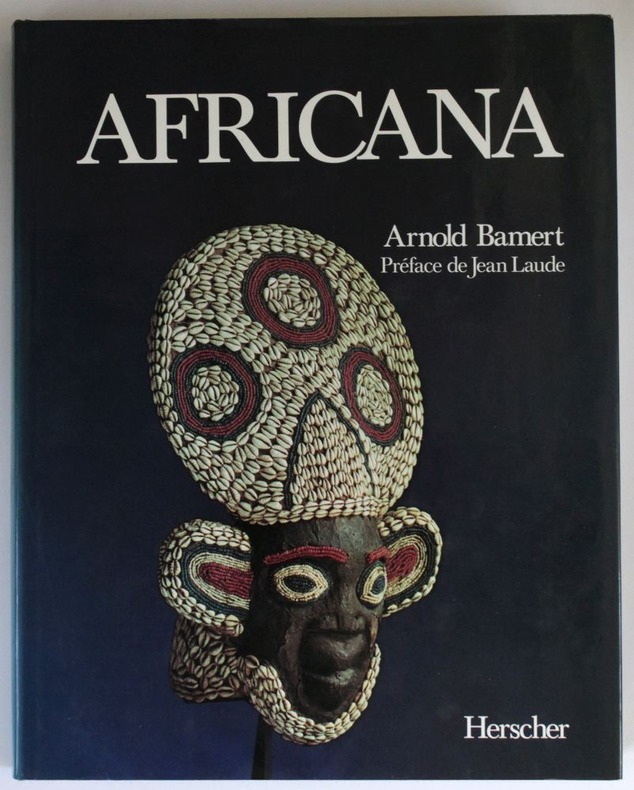
Bamert, Arnold
Africana, l'art tribal de la forêt vierge et de la savane. Préface de Jean Laude.
Sl Herscher 1980 in-4 relié sous jaquette Sl, Herscher, 1980. 33 x 25,5 cm, in-4, XIII - 329 (2) pp., nombreuses illustrations en couleurs, souvent à pleine page, 210 numéro décrits, cartonnage éditeur de pleine toile rouge, jaquette illustrée en couleurs.
Bookseller reference : 3941
|
|
|
BAMBOTE, Makombo (1932-)
Coup d'état nègre, récit
Montréal Humanitas - Nouvelle Optique 1987
Bookseller reference : 16453
|
|
|
BAMPS, P. - ROBSON, N. - VERDCOURT, B. - R.M. Polhill (editor)
Flora of tropical East Africa. Guttiferae.
1978 Published on behalf of the East African community by the crown agents for oversea governments and administrations - 1978 - Prepared at the Royal Botanic Gardens, kew with assistance from the East African Herbarium - In-8, broché - 34 p. - Planches d'illustrations hors texte en N&B- Ouvrage en anglais
Bookseller reference : 119526

|
|
|
BAMUNOBA Y. K. (Chanoine) - ADOUKONOU B.
La Mort dans la vie africaine
Présence africaine / UNESCO, 1979, 335 p., in-8 br., schémas, bon état
Bookseller reference : QWA-5238

|
|
|
BAMAKO
Mus?e National du Mali. Photos hors texte.
Broch?. 55 pages. 26x20 cm.
|
|
|
BAMAKO
Pays enclavés. Numéro 6. Bamako. Edité en 1993 par Le Centre de Recherches sur les espaces tropicaux, CRET, Institut de Géographie de Bordeaux III, Talence.
Broché. 308 pages.
|
|
|
Bambaataa, Afrika
Looking for the Perfect Beat 1980-1985
Tommy Boy 2001-03-20. audioCD. Like New. 5x4x0. Shrink wrap away from new Please email for photos. Tommy Boy unknown
Bookseller reference : 123485
|
|
|
Bamberger G
Anno Tobak
Berlin: Bode 1910. Gebunden. Bode unknown
Bookseller reference : 3597
|
|
|
Bamenda (Region / Westkamerun). -
4 Original-Photographien mit Bezug zur deutschen Kolonialzeit in Kamerun. Historische Photographien mit Ansichten einer Siedlung und landschaftlichen Umgebung.
Querformat. (ca. 9 x 11,9 cm). 4 Photographien. Original-Photographien mit weissem Bildrand, Rückseiten sämtlich mit Beschriftung. Photographien gut erhalten, leichte Gebrauchsspuren. Altersentsprechend guter Zustand. Die Aufnahmen haben sämtlich das selbe Format und fotografische Bildqualität, auch der Bildrand ist vergleichbar. Alle Aufnahmen enthalten auf der Rückseite ein identisches handschriftliches Notat (mit Bleistift verfasst). Dieses in Sütterlin geschriebene Wort sehen wir als "Bamenda" an, was auf eine Region im Westen von Kamerun verweist. Es handelt sich bei den Abbildungen um ein Dorf und seine landschaftliche Umgebung. Sehr wahrscheinlich handelt es sich um das sogenannte Bamenda-Hochland in den Jahren um 1930. Zur genaueren Prüfung offerieren wir neben den Abbildungen auch eine weitere Bilddatei auf der die Beschriftung nachvollzogen werden kann. Die historischen Aufnahmen stammen sehr wahrscheinlich aus der Zeit um 1930 und nicht aus der deutschen Kolonialzeit selbst. Zahlreiche einstige Kolonialfirmen konnten jedoch Jahre nach dem Verlust der Kolonien Gebiete zurück kaufen. Möglicherweise sind die Photographien auch in diesem Kontext entstanden. Das Photopapier weist die Kennzeichnung "Agfa Lupex" auf, welches seit den 1920er Jahren verfügbar war. Die interessanten Ansichten zeigen ein afrikanisches Dorf und mehrere Abbildungen der umliegenden, leicht hügeligen Landschaft. Historische Photographien aus dem heutigen Kamerun!
|
|
|
Bamert, Arnold
Afrika. Stammeskunst in Urwald und Savanne.
Olten, Freiburg im Breisgau: Walter, 1980. XII, 331 S. 210 Abb. (farb.). Mit zahlr. auch farb. Abb. Originalleinen mit Schutzumschlag in Schuber.
Bookseller reference : 925586

|
|
|
BANCEL Nicolas - BLANCHARD Pascal - DELABARRE Francis
Images D'Empire 1930 - 1960 Trente Ans De Photographies Officielles Sur L'afrique Française , Préface d'Albert Memmi
Paris Editions La Martinière / La Documentation Française 1997 in-4° 335 pp, très nombreuses photographies en noir et blanc
Bookseller reference : 29669 ISBN : 2110034262
|
|
|
Bancol / Blanchard
Images d'empire 1930 à 1960
La Martinière In-4 reliure éd. sous jaquette. Très bon état d’occasion.
Bookseller reference : 11184
|
|
|
BANTJE Han & GANSEMANS Jos
Kaonde song and ritual [by Bantje] & La musique et son rôle dans la vie sociale et rituelle luba [par Gansemans]
Tervuren, Musée royal de l'Afrique centrale 1978 vi + 121pp.+ 23 photos & 2 cartes, br.orig., bel état, 27x18cm., dans la série "Annales - série in-8, Sciences humaines" nr.95, [OCLC 5725250]
Bookseller reference : C39075
|
|
|
BANNERMAN (David A.)
The Birds of Tropical West Africa, with special reference to those of the Gambia, Sierra Leone, the Gold Coast and Nigeria.vol. 5, 6, 7, 8.
1939 toile bleue éditeur. (couvertures papiers salies). . in-8, illustrés, planches en couleurs, London 1939-1951
Bookseller reference : 17242

|
|
|
Bancel, Nicolas; Blanchard, Pascal; Delabarre, Francis
Images d'empire. 1930 - 1960. Trente ans de photographies officielles sur l'Afrique francaise.
Paris, Editions de la Martiniere, 1997. 4°. 32 cm. 335 Seiten. Original-Pappband. Original-Schutzumschlag.
Bookseller reference : 4116EB ISBN : 2110034262

|
|
|
BANCO DI ROMA, a cura del.
Vademecum economico per l'A.O.I.
in-8°, pp. 144 con 22 ill. da foto dell'epoca e una carta geografica ripiegata f.t. Bross. edit. figurato a colori al piatto ant. Dorso scolorito. Tracce del tempo su piatti.
|
|
|
Bancroft, Hubert Howe
THE WORKS OF HUBERT HOWE BANCROFT VOLUMES XXXVI AND XXXVII; POPULAR TRIBUNALS VOLS I AND II
San Francisco: History Company Publishers 1887. First edition. first printing First printing. Hardcover. Very Good. A two volume set 749 and 772 pages respectively volume 2 with index. Recent rebinding of tan half leather over marbled paper covered boards with paper title labels on the spine. New endpapers. Small library stamps on the title pages. An about very good set. <br/> <br/> History Company, Publishers hardcover
Bookseller reference : 44761
|
|
|
BANDINI FRANCO.
Gli Italiani in Africa. Storia delle guerre coloniali (1882-1943).
In 8°, tutta tela editoriale con sovracoperta illustrata, pp. 576, (6), collana "Il mondo nuovo. Volume 98", riccamente illustrato, lievi fioriture al taglio sup. delle pp. ma esemplare molto buono. (MAG ZE4) (spedizione standard SEMPRE tracciata con raccomandata-piego di libri, eventuale FATTURA da richiedere all'ordine)
|
|
|
BANFI MALAGUZZI Daria -
Marina civilizzatrice. L'Italia sui mari d'Africa.
Milano, 1930, 8vo stralcio con copertina posticcia muta, pp. 427/435 con 9 illustrazioni fotografiche. - !! ATTENZIONE !!: Con il termine estratto (o stralcio) intendiamo riferirci ad un fascicolo contenente un articolo, completo in se, sia che esso sia stato stampato a parte utilizzando la stessa composizione sia che provenga direttamente da una rivista. Le pagine sono indicate come "da/a", ad esempio: 229/231 significa che il testo è composto da tre pagine. Quando la rivista di provenienza non viene indicata é perché ci è sconosciuta. - !! ATTENTION !!: : NOT A BOOK : “extract” or “excerpt” means simply a few pages, original nonetheless, printed in a magazine. Pages are indicated as in "from” “to", for example: 229/231 means the text comprises three pages (229, 230 and 231). If the magazine that contained the pages is not mentioned, it is because it is unknown to us.

|
|
|
Bani Sadr
Il complotto di Teheran
bross. edit. ill. con bandelle, lievi tracce d'uso in cop., residuo di etichetta in quarta di cop. - prima edizione it. - trad. di Ilaria Magnani

|
|
|
Bankers Thomas, Edward Warren Blake, Alexander Cook
A new & accurate chart of the Western or Atlantic Ocean ... by Tho.s Bowen
Carta geografica nautica dell'Oceano Atlantico. Incisione inserita nell'opera "A New, Royal, Authentic and Complete System of Universal Geography, Ancient and Modern: Including All the Late Important Discoveries Made by the English, and Other Celebrated Navigators .. History and Description of the Whole World... Likewise the Essence of the Voyages of the Most Enterprising Navigators..." edita a Londra da J. Cooke nel gennaio del 1787

|
|
|
Bankers Thomas, Edward Warren Blake, Alexander Cook
A new and accurate Map of Africa ... by Tho.s Bowen
Carta geografica dell'Africa, inserita nell'opera "A New, Royal, Authentic and Complete System of Universal Geography, Ancient and Modern: Including All the Late Important Discoveries Made by the English, and Other Celebrated Navigators .. History and Description of the Whole World... Likewise the Essence of the Voyages of the Most Enterprising Navigators..." edita a Londra da J. Cooke nel gennaio del 1787. Pieghe editoriali

|
|
|
Bankers Thomas, Edward Warren Blake, Alexander Cook
Procession of the people of Whidah to present offerings to the Grand Snake - Ceremonies used at the coronation of the King of Whidah on the Slave Coast
Incisione inserita nell'opera "A New, Royal, Authentic and Complete System of Universal Geography, Ancient and Modern: Including All the Late Important Discoveries Made by the English, and Other Celebrated Navigators .. History and Description of the Whole World... Likewise the Essence of the Voyages of the Most Enterprising Navigators..." edita a Londra da J. Cooke nel gennaio del 1787

|
|
|
Bankers Thomas, Edward Warren Blake, Alexander Cook
View of the city of Morocco the capital of that Kingdom on the coast of Barbary - Habit of a horseman in Barbary and the manner in which the woman travel
Incisione inserita nell'opera "A New, Royal, Authentic and Complete System of Universal Geography, Ancient and Modern: Including All the Late Important Discoveries Made by the English, and Other Celebrated Navigators .. History and Description of the Whole World... Likewise the Essence of the Voyages of the Most Enterprising Navigators..." edita a Londra da J. Cooke nel gennaio del 1787

|
|
|
Bannack, Siegfried:
Klotzsche in Vergangenheit und Gegenwart. Chronik von Dresden-Klotzsche. Eine Chronik des Weges von der Slawensiedlung zur Stadt und zum Stadtteil von Dresden.
Selbstverlag Klotzsche 2001. Softcover Aktualisierte Neuauflage 2001. Unter Einbeziehung der 1933 herausgegebenen Chronik von Kurt und Helmut Kelling von Zeitungsberichten sowie Schilderungen von Zeitzeugen. Zustand: Keine Beschädigungen keine Eintragungen. Rücken Ecken Kanten sehr gut. Selbstverlag, Klotzsche, paperback
Bookseller reference : 298159
|
|
|
Bannerman Armitage David.
The birds of West and Equatorial Africa
Edinburgh, Oliver and Boyd, 1953. (mm. 230 x 145). Due volumi rilegati editorialmente in tela rossa con titoli dorati ai dorsi. 1 c. b, pp. xiii, 795, 2 c. b; 1 c. b, viii, pp. da 797 a 1526. Membro dello staff del Natural History Museum di Londra, pubblicò numerosi volumi di argomento ornitologo compresa questo, qui in prima edizione. L’opera è adornata di 54 tavole f.t., molte delle quali a colori, e di molte altre in b/n, nel testo.
|
|
|
BANNERMAN David Armitage
The Birds of West and Equitorial Africa. With a Foreword by Sir Alan Burns. NEAR FINE COPY IN UNCLIPPED DUSTWRAPPERS
2 vols., 8vo., First Edition, with 30 fine coloured plates, 24 plates in monochrome and over 430 illustrations in the text; original burgundy cloth, gilt backs, red tops, uncut, fore-edges mildly spotted else a near fine copy in unclipped dustwrapper, one wrapper chipped with minor loss at head and tail of backstrip. Bright, crisp copy of a standard reference. The set comprises Vol. I: Struthionidae to Picidae; Vol. II: Eurylaemidae to Ploceidae. Tate p.200.

|
|
|
Bano Leonzio
Mezzo secolo di storia Sudanese 1842 Ð 1898
Cm. 14x21.5, pp. 543, legato in piena tela con sovraccoperta illustrata. Ottimo.
|
|
|
BANQUE MONDIALE
Le d?veloppement acc?l?r? en Afrique, au sud du Sahara. Programme indicatif d'action.
Broch?. 223 pages. 20x27 cm.
|
|
|
Banse E
Buch der Laender
Berlin: Scherl 1929. Gebunden. Scherl unknown
Bookseller reference : 45310
|
|
|
Banse, E
Unsere großen Afrikaner. Das Leben deutscher Entdecker u. Kolonialpioniere. 2., stark erw. u. verb. Aufl.
Berlin, Paschke, 1942. M. 7 Ktn. u. 9 Abb. 324 S. OLwd.
Bookseller reference : 413625
|
|
|
BANTJE Han & GANSEMANS Jos
Kaonde song and ritual [by Bantje] & La musique et son rôle dans la vie sociale et rituelle luba [par Gansemans]
vi + 121pp.+ 23 photos & 2 cartes, br.orig., bel état, 27x18cm., dans la série "Annales - série in-8, Sciences humaines" nr.95, [OCLC 5725250]
|
|
|
BARATIER COLONEL
A TRAVERS L'AFRIQUE
Arthème Fayard & Cie. Non daté. In-8. Broché. Etat passable, Livré sans Couverture, Dos abîmé, Mouillures. 206 pages. Carte et photo-gravures en noir et blanc, en frontispice et en page de titre. Illustré de nombreux dessins et photo-gravures en noir et blanc, dans et hors texte. Dos très abîmé et annoté, avec manque dans sa partie inférieure.. . . . Classification Dewey : 967-Afrique centrale
Bookseller reference : RO40231747
|
|
|
BARATIER Lt. Colonel.
A travers l'Afrique.
Illustré de 8 portraits et de 6 cartes. P. Perrin, 1812. In 12, 350 pages. Broché.
Bookseller reference : 11543
|
|
|
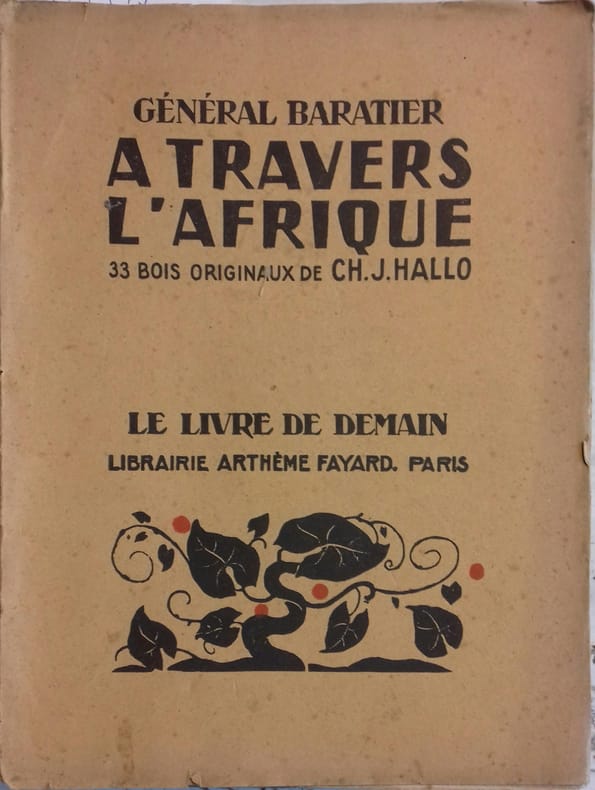
BARATIER Albert (Général) 33 bois originaux de Charles-Jean Hallo.
A travers l'Afrique.
Couverture souple. Broché. 19 x 24 cm. 126 pages. Couverture légèrement défraîchie. Papier bruni.
Bookseller reference : 134435
|
|
|
BARATIER Albert (Général)
A travers l'Afrique. Ouvrage inédit.
Couverture souple. Broché. 206 pages. 17 x 24 cm. Légèrement défraîchi. Dos réparé.
Bookseller reference : 136951
|
|
|
BARATIER Colonel Albert-Ernest-Augustin
A TRAVERS L'AFRIQUE. Illustré d'après les dessins de Gaston BURGGRAFF. Photographies, cartes et croquis de l'auteur.
Paris Fayard 1910 in-8 pleine percale un volume, reliure pleine percale bleu-marine grand in-octavo Editeur (19 x 28 cm) à plaques spéciales Editeur à froid pour le dos et les plats, titre frappé or, décorations à froid pour le dos et les plats (dos insolé), plaque spéciale or aux armes de la ville de paris : "Prix Municipal", toutes tranches lisses, Illustré d'après les dessins de Gaston BURGGRAFF. Photographies, cartes et croquis de l'auteur in et hjors-texte en noir, 206 pages, sans date (1910) Arthème Fayard et Cie Editeur,
Bookseller reference : 18538
|
|
|
BARATIER (Colonel);
A travers l’AFRIQUE.
Arthème Fayard et Cie Paris 1910 1 vol. In-4 de 206 pp. 1 f.n.ch. (table), pleine percaline de l'époque, dos lisse filetéé.
Bookseller reference : 15859
|
|
|
BARATIER LNT-COL
A Travers l'Afrique - Épopées Africaines - Au Congo ( Souvenirs De La Mission Marchand ) - Vers Le Nil , 4 Fascicules Reliés Ensemble
Paris Arthème FAYARD 1900 GRAND In-8 206 pp - 126 - 126 - 110 pp, toutes les couvertures en place, sauf la dernière 4 ème couverture , état d'usage pour la reliure ( nerfs frottés ) , rare réunion de ces fascicules dont 2 inédits
Bookseller reference : 31665
|
|
|
BARATIER, Colonel Albert-Ernest-Augustin.
A travers l'Afrique. Illustré d'après les dessins de Gaston de Burggraff, photographies, cartes et croquis de l'auteur.
Paris, Arthème Fayard &Cie, sans date (c1900), in-4 (20x29cm), demi-basane, pièces de titre, tête dorée, 206p. Edition originale. Ouvrage orné de 6 cartes et de nombreux dessins et photographies en noir. Bon état
Bookseller reference : 82443

|
|
|

 Receive by email
 Download as PDF document
 RSS feed
 Permanent link


