|
(Xt) Rabbiner-Seminars
JAHRES-BERICHT DES RABBINER-SEMINARS ZU BERLIN FUER 1925, 1926 & 1927 (5686-88) ERSTATTED VOM KURATORIUM
1st Edition. 4to. 42 + 39 pages, 23.5 cm. "Beigegeben is eine wisenschaftlich [sic] Abhandlung von Dozent Dr. M[oses] Auerbach: Die Erzaehlung von den vier Gefangenen. " In German. Title translates to Annual Report of the Rabbiner Seminar at Berlin for 1925, 1926, & 1927 (5686-88) Reported by the Curatorium. Includes several full-page black-and-white photographs of the seminary, each with a protective page of tissue paper. Slight toning. Moderate dampstaining. Minimal staining. Mild edgewear. Good condition. (GER-51-92)

|
|
|
, , , , Masayuki Mori (text) Tokyo Diary,
Comic Box No. 30 July 1986 cover illustration by Masaru Katsukawa <Japanese Version>
Fusion Product 1986. Soft Cover. Fine. Volume: 1 Fusion Product paperback
Bookseller reference : 2110502150410084
|
|
|
, , Sohachi Yamaoka, Yoshiharu Makino , Kazuo Shinomiya, Momoro Okura, Hiroshi Kikuchi, Hakuryu Kanda, Kokontei Journal, Hiroshi
Kodan Club May 1943 cover illustration by Masami Iwata First Battle <Japanese Version>
Great Japan Yutenkai Kodansha 1943. Soft Cover. Fine. Volume: 1 Great Japan Yutenkai Kodansha paperback
Bookseller reference : 2110502150413644
|
|
|
, Akio Yoshida Color Hiroko's Sex Diary, Susumu Gondo Contemporary Artist Retsuden (6) Kaiji Kawaguchi 'Return from 'Drama of De
Fusion Products merged in December 1981. Cover picture: Mamoru Masaki <Japanese Version>
Rapoto 1981. Soft Cover. Fine. Volume: 1 Rapoto paperback
Bookseller reference : 2110502150413878
|
|
|
, Tetsu Wakatsuki Gon-chan Sensei 12" 3 pages, Hiroo Terada "Tama-chan Baseball Diary 12" 2 colors 2 pages
Children's House Light - House Light December 1961 appendix - <Japanese Version>
Ie no hikari kyokai 1961. Soft Cover. Fine. Volume: 1 Ie no hikari kyokai paperback
Bookseller reference : 2110502150413688
|
|
|
, Tetsu Wakatsuki "Mr Gon-chan 11" Page 3, Hiroo Terada "Tama-chan Baseball Diary 11" Page 2
Children's House Light - House Light November 1961 Supplement - <Japanese Version>
Ie no hikari kyokai 1961. Soft Cover. Fine. Volume: 1 Ie no hikari kyokai paperback
Bookseller reference : 2110502150414503
|
|
|
, Tetsu Wakatsuki Mr Gon-chan 5 Page 3 , Hiroo Terada Tama-chan Baseball Diary 5 2 colors 2 pages
Children's House Light - House Light May 1961 Supplement - Cover Picture Hiroshi Kobayashi <Japanese Version>
Ie no hikari kyokai 1961. Soft Cover. Fine. Volume: 1 Ie no hikari kyokai paperback
Bookseller reference : 2110502150415135
|
|
|
, Tetsu Wakatsuki Gon-chan Sensei 9" 3 pages, Hiroo Terada "Tama-chan Baseball Diary 9" 2 colors 2 pages
Children's House Light -House Light September 1961 appendix- <Japanese Version>
Ie no hikari kyokai 1961. Soft Cover. Fine. Volume: 1 Ie no hikari kyokai paperback
Bookseller reference : 2110502150414504
|
|
|
-
Diario
in-8vo ril. carton. carta francese, carta uso mano (tutte le pagine sono bianche, naturalmente).

|
|
|
-
Diario Balilla. Diario scolastico 1966-67.
Roma, REC, 1966, 16mo brossura con copertina illustrata, pp. 230, alcune foto all'interno.

|
|
|
100-year history editorial committee of the same newspaper
Asahi Shimbun Company History Meiji Edition
Asahishinbunsha 1990. Soft Cover. Fine. Volume: 1 Asahishinbunsha paperback
Bookseller reference : 2080202104501467
|
|
|
10th Anniversary Commemorative Event Executive Committee Commemorative Journal Editorial Subcommittee
10-year history of Kochi University of Medicine
Kochi University of Medicine 1989. Soft Cover. Fine. Number of pages: 206 pages Size: B5 size Kochi University of Medicine paperback
Bookseller reference : 2082702114902901
|
|
|
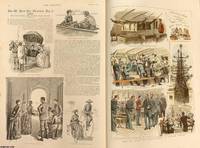
1887 THE GRAPHIC ILLUSTRATED WEEKLY NEWSPAPER VOLUME #36
1887 The Graphic An Illustrated Weekly Newspaper : Volume No. 36 ; Issue 918 July 2nd 1887 to Issue 944 December 31st 1887
Graphic Illustrated Weekly Newspaper London 1887. Half Leather. Good Condition. 734 pages. Bound in contemporary half leather. Gilt lettered spine with gilt ruled bands. Contents sound with no shaken or torn pages. The binding is firm with a very scuffed and rubbed spine and the boards are rubbed and discoloured. Some minor foxing. Given the relatively complex nature of The Graphic volumes and the weekly issues we believe this book is complete but we cannot be absolutely certain in regard to any fold out sections. Size: 29 x 42 cms. Category: Antiquarian & Rare; Graphic Illustrated Weekly Newspaper. This item may require more postage than the rates shown for delivery outside the UK. If extra postage is required we will contact you before processing your order and you will be given the details and option to decline the extra cost. Graphic Illustrated Weekly Newspaper hardcover
Bookseller reference : 374714
|
|
|
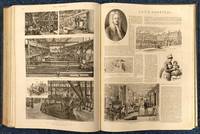
1887 THE GRAPHIC ILLUSTRATED WEEKLY NEWSPAPER VOLUME #35
1887 The Graphic An Illustrated Weekly Newspaper : Volume No. 35 ; Issue 892 January 1st 1887 to Issue 917 June 25th 1887 The Jubilee Celebration of Her Majesty the Queen
Graphic Illustrated Weekly Newspaper London 1887. Half Leather. Good Condition. 686 pages with index. Bound in contemporary green half leather. Gilt lettered spine with gilt ruled raised bands. Contents sound and the binding is firm with a scuffed and rubbed spine and the boards are mildly scuffed. Some minor foxing. Given the relatively complex nature of The Graphic volumes and the weekly issues we believe this book is complete but we cannot be absolutely certain in regard to any fold out sections. Size: 29 x 42 cms. Category: Antiquarian & Rare; Graphic Illustrated Weekly Newspaper. This item may require more postage than the rates shown for delivery outside the UK. If extra postage is required we will contact you before processing your order and you will be given the details and option to decline the extra cost. Graphic Illustrated Weekly Newspaper hardcover
Bookseller reference : 374712
|
|
|
18th Century Mathematics Puzzles The Ladies' Diary or Woman's Almanack
1777-1797 The Ladies' Diary: Or Woman's Almanack.Containing New Improvements in Arts and Sciences and Many Entertaining Particulars: Designed for the Use and Diversion of the Fair-Sex.
London England: Printed for the Company of Stationers 1777. Twenty-two issues of this yearly British almanac bound in one volume; consecutive and inclusive from the 1777 issue to 1797. These are printed in red & black have the tax stamps on the margins of the title pages and are of 32 pages' length with exceptions or notes as below: 1782: On page 31 the section "VI Rebus by Mr. R. Richardson of Frosterly" has been solved with the manuscript letters & names of clues neatly written at the margins. 1786: pgs 1-2 15-32; However another issue is bound after this incomplete issue that is entire in 48 pages. These almanacs are noted on the title pages as printed for the Company of Stationers; and this "extra" issue is noted on the title page as "Printed for T. Carnan in St. Paul's Church Yard; who after an expensive Suit in Law and Equity by the unanimous Opinion of the Judges of the Court of Common Please dispossessed the Stationers' Company of their pretended exclusive Privilege of Printing Almanacks which they had usurped for two Centuries; a convincing Proof that no unjust Monopoly will ever stand the Test of an English Court of Justice." 1788: pgs 1-2 15-32 only. 1793 Misbound pages out of order and complete 32 pages. 1795: A name of "Old Batholomew" has been added in ms. at the 4th Sept. in the monthly almanac pages section. 1797 pgs 1-16 only. "The existence of the Ladies' Diary or the Woman's Almanack an 18th century English magazine devoted largely to problems and puzzles in mathematics indicates that stereotypes about the inability of women to understand and enjoy mathematics were less strongly believed in the 18th century than they are today.The Ladies' Diary became one of the widely read 18th century magazines devoted to the popularization of science and mathematics; these were addressed mainly to readers with no specialized training in the subjectsThe Ladies' Diary differed from these others primarily in the language used in some of the problems--language which reminds the reader that the problems were addressed to women" from the excellent overview of the magazine its influence & impact by Teri Perl San Francisco State Univ. Historia Mathematica 6 1979 article on the 'Diary' Indecipherable by us previous owner name on back endpaper.Approx. 4" x 6 3/8" size; bound in marbled-paper covered boards leather corners edges tinted yellow; spine covering gone; wear to the edges tips of the binding; bottom cord of top board let go; the block still solidly sewn some edges trimmed close; contents generally clean and in good condition. . First Edition. Hard Cover. Good. Printed for the Company of Stationers hardcover books
Bookseller reference : 26884

|
|
|
1900 Diary Paris Exposition
Diary of a Wealthy American Woman Travelling in Europe July 1900 to June 1901
Autograph diary written in pencil signed by Miss Elizabeth Woods of Bowling Green Kentucky. 135 pp. Well educated wealthy American woman's account of seeing Europe; mostly Paris France. Her Southern sensibilities were shocked at seeing a white woman at the same table with a black man. Turns out he was a minister from Haiti and the lady was his wife. Miss Woods saw the Paris Exposition several times; saw Sarah Bernhardt perform; saw President Kruger of South Africa; saw a street where Jews were not allowed to come out after 6pm; describes fancy balls and dinners; shopping for clothes.much of interest. Worn oil cloth binding. Numerous accounts of "charming" or "lovely" people. <br/><br/> hardcover
Bookseller reference : D17552
|
|
|
1900 Diary Paris Exposition
Diary of a Wealthy American Woman Travelling in Europe July 1900 to June 1901
Autograph diary written in pencil signed by Miss Elizabeth Woods of Bowling Green Kentucky. 135 pp. Well educated wealthy American woman's account of seeing Europe; mostly Paris France. Her Southern sensibilities were shocked at seeing a white woman at the same table with a black man. Turns out he was a minister from Haiti and the lady was his wife. Miss Woods saw the Paris Exposition several times; saw Sarah Bernhardt perform; saw President Kruger of South Africa; saw a street where Jews were not allowed to come out after 6pm; describes fancy balls and dinners; shopping for clothes.much of interest. Worn oil cloth binding. Numerous accounts of "charming" or "lovely" people. <br/><br/> hardcover books
Bookseller reference : D17552
|
|
|
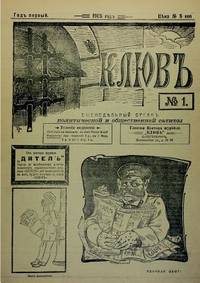
1905-1907, Satirical Journal
kliuv and dikar: satirical journals of the first russian revolution Russian Edition
pocket_book. Good. Access codes and supplements are not guaranteed with used items. May be an ex-library book. unknown
Bookseller reference : 2810628580.G ISBN : 2810628580 9782810628582
|
|
|
1944, RECOGNITION JOURNAL August
RECOGNITION JOURNALAugust 1944 Number 12
War Department 1944. Paperback. Very Good. Very Good Softcover. 1944 U.S. Navy. Recognition of Axis and Allied ships. Extremely faint cover mark. Text is flawless. Tight binding. War Department paperback
Bookseller reference : B002I56M3Y
|
|
|
1950 JAPAN DIARY & PHOTO ALBUM
The Diary Of An American Officer Stationed In Japan In 1950; It Includes Dozens Of Photographs Of Labor Protests And The Officer’s Comments About The Unrest And Communism
JAPAN. Diary. January 14 1950 to late 1954. Various places Philadelphia Japan Fort Meade. A lengthy diary of an American officer Lieutenant Louis T. Holtz who was stationed in Japan during the Korean War. It was written on dozens of sheets of loose-leaf notebook pages and it contains many black and white photographs with captions as well as newspaper and magazine cutouts and brochures from places he visited. The diary begins on January 14 1950 in Philadelphia and he discuses seeing shows and such but notes that “All in all this constituted a very enjoyable ten days of leave prior to going overseas. Sometimes I wish I could stay at home and live a normal routine life like everyone else. Other times I find myself eager to go…Almost two years ago who could forecast a war in Korea and the manner in which it would rip everyone’s life to shreds†He writes on January 2 1951 from Kurume Japan: “…perhaps 10 years from now it the diary will be of interest – if any of our civilization remains in 1961…I collapsed 28 June and spent 3 weeks in the hospital with excessive fatigue…I am the Officer-in-charge of the Kurume Office with an area of jurisdiction of approximately 1000 square miles…â€. In April 1951 he mentions “I am very busy in my position as OIC Officer In Charge. It’s a full 7-day-a-week job…The Korean mess has everyone guessing as to eh future of the Far East…being the senior official in an area of jurisdiction of nearly 10000 square miles with dozens of mayors and police chiefs constantly catching my every word as official.â€. The next couple dozen pages contain black and white photographs of protests in Japan and Holtz’s commentary about the images including “When people get hurt propaganda fills the air. The winner: the Kremlin – always!†“Demonstrations take planning and people. You can always be sure the plans were framed in red and the spectators sprinkled liberally with dye-hard communist stooges†“Demonstrations & rallies are usually fantastically well organized. And as often as not they can be unbelievably orderly†and “But orderly or violent you can always be sure there is a professional communist keeping the ‘sheep’ in line or arousing them to maximum fury.†In September 1951 Holtz writes from Sapporro “…life in the Armed Services has been a miserable one because of one bad experience after another…Kurume was one of the most pleasant and enjoyable assignments I ever held. The 45th was without doubt the most bitter and least enjoyable. I gave up so much for so little…â€. Holtz was in California’s Camp Stoneman in November 1951: “…with all the hundreds of officers here not particularly anxious to go overseas and with several actually fighting the assignment I was amazed to find that someone eager to return is sidetracked so abruptly…â€. He was back in Japan by December and then wrote a lengthy entry entitled “The Korean Story†starting with “Combat precautions make it mandatory that no diaries or personal papers be kept where they may fall into enemy hands†and he spends the next seven pages describing his experiences in the Korean War. Holtz wrote in part: “…Things had not gone well at all with Trubota’s unit prior to August 1951. After my arrival working results proved very satisfactory…Three other officers has also joined up in the interim between leaving Sapporo and going to Korea…When oriented in Tokyo they were told that the 45th Detachment would remain in Sapporo and they had already alerted their families to start to prepare to join them overseas…I had to fight Trubota in order to be able to fight the enemy. In one occasion I was reprimanded for going to a forward observation post and not being personally available to answer the telephone at my CP…†and the section finishes with a photograph of the USS Marine Lynx the ship that brought him home. The diary continues with his being stationed at Maryland’s Fort Meade. There are photographs of the mansion he occupied in Kyushu Japanese women at the beach his fellow soldiers after a bowling tournament etc. There are “Samples of United Nations propaganda leaflets dropped on North Korean positions early in the Korean conflict†that show Truman and MacArthur a December 7 1950 letter signed by the mayor of Kurume City Japan. The condition is fine to very fine. unknown books
Bookseller reference : 4696

|
|
|
19th c Journal Poetry and Poems
Early American Woman's Family Poetry and Prayer Journal 1820-1830
1820. Tuckerman H. P. Poetry and prayer journal 1820-1830 documents early nineteenth-century manuscript album culture within Anglo-American Protestant communities with particular attention to women's devotional writing moral instruction and shared literary practices. The volume supports research into gendered authorship religious education and the circulation of poetic and didactic texts in the early republic where handwritten albums functioned as spaces for communal inscription. The presence of multiple hands across dated entries demonstrates a participatory literary culture structured around kinship and social networks while recurring themes of childhood piety mortality and moral virtue situate the text within contemporary evangelical and didactic traditions.<br /> Tuckerman H. P. Poetry and prayer journal. Circa 1820-1830. Manuscript volume with 53 handwritten entries by multiple contributors including poems hymns and devotional reflections. Entries include a hymn composed for the British and Foreign School Society emphasizing education and moral uplift through the metaphor "Oh stream of knowledge when thy tides.Forget not then the flowers" alongside gendered moral instruction concluding "woman's Happiest destiny Is only - to be good." Biblical passages including references to Luke 2 appear throughout accompanied by original prayers such as an 1827 entry: "Heaven sees no sight so fair As happy childhood bowed in prayer." Several texts address mortality and impermanence including reflections such as "Life is but a scanty ledge.suspended o'er a fathomless abyss" and a memorial poem introduced as written by a young man shortly before death from consumption invoking Romantic-era associations with illness and artistic sensibility. Additional entries focus on natural landscapes including "Spring Mountain" 1828 which situates spiritual reflection within pastoral imagery. The volume includes an original drawing of a mother and child signed "S. Tuckerman" as well as two pencil drawings of forest scenes reinforcing the integration of visual and literary expression within album practices.<br /> This manuscript emerges from a period in which evangelical Protestantism moral education movements and literary cultivation intersected within domestic and semi-public spheres particularly among women and youth. The reference to the British and Foreign School Society situates the volume within transatlantic educational reform efforts emphasizing literacy and moral discipline. The collaborative nature of the entries aligns with early nineteenth-century album traditions where social exchange and authorship were intertwined. Such materials provide insight into how religious belief gender norms and literary expression were internalized and reproduced within everyday practice. Original red half morocco binding with owner's name "H. P. Tuckerman" in gilt on front cover; approximately 120 pages with writing on 76 pages; includes three original drawings; measures 9 x 7 1/2 inches. Light toning and minimal foxing throughout; very good condition. A substantive example of early American manuscript culture linking devotional life gendered authorship and communal literary exchange. unknown
Bookseller reference : 16585

|
|
|
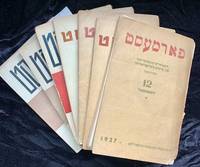
36 [A Rare Soviet Yiddish Literary Journal Edited by Itsik Fefer] Fefer, Itsik, editor; Alukraynisher Orgkomitet fun di Sovetish
FARMEST: LITERARISH KINSTLERISHER UN KRITISH-BIBLIOGRAFISHER ZSHURNAL. 1935: NOS. 11-12 NOV. DEC. ; 1936: NO. 2 FEB; 1937: NOS. 3-5 & 12 MARCH APRIL MAY DEC. 7 ISSUES TOTAL
Kharkov: Ukrmelukhenatsmindfarlag 1937. First edition. Original illustrated paper wrappers 8vo issues range from 129-196 pages each. Includes illustrations. 21-23 cm. In Yiddish. Title translates roughly as “Challenge: A Literary Artistic and Critical Bibliographical Journal.â€<br> At the time the only Yiddish literary periodical in Ukraine.<br> Farmest 1933–1937 was a monthly Yiddish literary magazine published in Kharkhiv Ukraine by the Ukrainian Committee for Soviet Writers. “Edited by the poet Itsik Fefer 1900–1952 it was continued in Sovetishe literatur: Literarish-kinstlerisher un kritish-bibliografisher zhurnal Soviet Literature: Literary-Artistic and Critical-Bibliographical Journal; 1938–1941.<br> In 1927 Fefer was a founding member of the Jewish Section of the All-Ukrainian Union of Proletarian Writers and from 1928 one of the editors of its Kharkov-based journal Prolit Proletarian Literature. He also coedited the nonproletarian Kharkov journal Di royte velt The Red World from 1929. From 1933 to 1937 he edited the Kiev periodical Farmest Challenge; known as Sovetishe literatur Soviet Literature between 1938 and 1941 which replaced Prolit and Di royte velt and was thereafter the only Yiddish literary periodical in Ukraine.†YIVO. Avrom Gontar was also involved in the collective and editorial committee. <br> The editor Itsik Fefer 1900–1952 “began writing poems in 1918 and in 1922 joined Vidervuks New Growth in Kiev a group of young Yiddish literati whose mentor was Dovid Hofshteyn. That same year the appearance of Fefer’s small collection Shpener Splinters established him as a rising literary star. His poetry amalgamated the Kultur-lige poets’ revolutionary romanticism with the propagandist objectives of the workers’ movement.<br> Fefer was known for his literary credo of proste reyd simple speech a concept he formulated in 1922. In the early 1920s poetry particularly avant-garde poetry swamped the literary pages of Soviet Yiddish periodicals. This phenomenon worried editors and critics who were wary of the fact that Yiddish readers usually could not identify with this style of literature. All Yiddish readers by contrast could understand Fefer’s proste reyd.<br> In 1927 Fefer was a founding member of the Jewish Section of the All-Ukrainian Union of Proletarian Writers and from 1928 one of the editors of its Kharkov-based journal Prolit Proletarian Literature. He also coedited the nonproletarian Kharkov journal Di royte velt The Red World from 1929†Gennady Estraikh.<br> For more see: Gennady Estraikh “The Kharkiv Yiddish Literary World 1920s–Mid-1930s†East European Jewish Affairs 32.2 2002: 70–88; Chone Shmeruk “Yiddish Literature in the U.S.S.R.†in The Jews in Soviet Russia since 1917 ed. Lionel Kochan pp. 242–280 London and New York 1970.<br> SUBJECTS: Yiddish literature -- Ukraine -- Periodicals. Yiddish literature. OCLC: 35051038.<br> Some pages brittle some wear to spines. Overall Good Condition. Rare. YID-46-2-LGG-’excc. Kharkov: Ukrmelukhenatsmindfarlag unknown
Bookseller reference : 43101
|
|
|
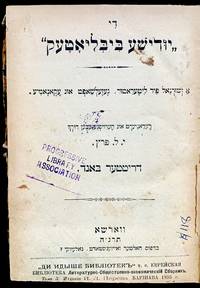
39 [A Yiddish Literary Journal Edited by IL Peretz] Peretz, Isaac Leib (editor) [IL; YL] I L I L Y L
DI YUDISHE BIBLIOTEK: A ZSHURNAL FIR LITERATUR GEZELLSHAFT UN EKONOMYE VOLUME 3 ONLY
Warsaw: Izdanie I.L. Perets 1895. First edition period boards 8vo 179 pages. 23 cm. In Yiddish. Title translates as “The Jewish Library: A Journal for Literature Society and Economics.â€<br> Third volume of semiannual publication edited by I.L. Peretz. Di Yudishe Bibliotek was published periodically between 1891 and 1904. This issue includes belle-lettres poetry and scientific essays.<br> “To encourage Jews toward a wider knowledge of secular subjects Peretz for several years wrote articles on physics chemistry economics and other subjects for Di yudishe bibliotek which he also edited.†Encyclopedia Britannica.<br> Yitskhok Leybush Peretz 1852-1915 is one the best known Yiddish and Hebrew authors of the 19th century. Peretz was one of the three classic Yiddish writers with S. Y. Abramovitsh and Sholem Aleichem and the founder of Yiddish modernism. In the first decade of the 20th century he was at the center of an active literary circle in Warsaw. <br> SUBJECTS: Yiddish literature -- Poland -- Periodicals. Jews -- Poland -- Periodicals. Jews. Yiddish literature. OCLC: 992802478. <br> Ex-library with usual markings and normal wear and age to pages but otherwise in good condition. Good Condition. YID-46-19-GGLEX-’cc. Warsaw: [Izdanie I.L. Perets] unknown
Bookseller reference : 43079
|
|
|
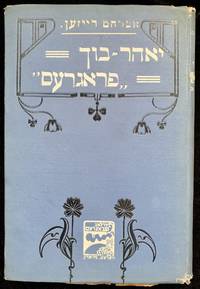
40 [A Yiddish Literary Journal Edted by Abraham Reisin] Reisen, Abraham
YOHR-BUKH "PROGRES": A ZSHURNAL FIR sic LITERATUR VISSENSHAFT UN KRITIK
Varsha Warsaw: Ferlag "Progress 1904. First edition. Original illustrated printed boards 8vo 162 32 pages plus 7 unnumbered leaves of plates with illustrations. 22 cm. In Yiddish. Title translates as “Yearbook ‘Progress’: A Journal for Literature Science and Criticism.â€<br> “Abraham Reisen was a Yiddish poet short-story writer playwright and editor…While he was still a teenager his talent was recognized by Shalom Aleichem and I.L. Peretz who arranged for the publication of his earliest poems. After some years in Minsk Warsaw Krakow and Berlin he settled permanently in New York in 1914. Influenced by Heinrich Heine whom he translated into Yiddish he was one of the first Yiddish poets to make use of folksong material. His poetry though mostly written in conventional quatrains is suffused by a refined sensibility that adumbrates the writing of Di Yunge.†Jewish Virtual Library<br> â€In 1900 Yakov Lidski founded "Progress" publishing house. Its name clearly communicated its goal. This publishing company considered to be the first to deal with modern Yiddish literature published a series of original and translated popular science books along with translated European literature and original Yiddish literature. The first editor of the publishing house was poet Avrom Reyzen.†Wikipedia. <br> SUBJECTS: Yiddish literature. Jews -- Poland -- Periodicals. OCLC: 21651882<br> Wear to spine some page separation toning and markings. About Good Condition. YID-46-28-GGLEX-’cc. Varsha [Warsaw]: Ferlag "Progress unknown
Bookseller reference : 43110
|
|
|
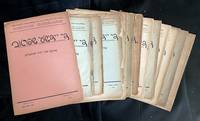
45 · [Impotant Yiddish Linguistics Journal from the USSR] Katedr far Yidisher Kultur ba der Ukr Visnshaftl Akademye, Filologishe
DI YIDISHE SHPRAKH. WHOLE NRS 1 MAR-APR 1927 2 3/4 5/6 7 8/9 10 16 17/18 19 21/22 23/24 & 25 NOV-DEC 1930 FINAL ISSUE NEARLY COMPLETE RUN OF 19 NRS. IN 13 ISSUES INCLUDING FIRST AND IMPORTANT FINAL ISSUE
Kiev: Katedr far Yidisher Kultur ba der Ukr. Visnshaftl. Akademye Filologishe Sektsye 1930. Paper Wrappers. 1st edition. Original printed publisher’s color paper wrappers 4to large ca 72-116 columns ca 36-58 pages per issue. 28 cm. In Yiddish. Title translates roughly as “The Yiddish Language.†Succeeded in 1931 by “Afn shprakhfront.â€Di Yidishe Shprakh was a “Yiddish linguistic journal published in Kiev from 1927 to 1930. A bimonthly journal Di yidishe shprakh The Yiddish Language was published by the cooperative publishing house Kultur-lige and was the main philological publication of the Kiev Yiddish academic center. Its editor was the veteran Yiddishist Nokhem Shtif a founder of YIVO who had returned to Kiev from Germany in 1926. The journal’s inaugural issue March–April 1927 was published under the auspices of the Central Yiddish Bureau of the Ukrainian Commissariat for Education. With the next issue Di yidishe shprakh was an organ of the Chair and from July to October 1929 it was an organ of the Institute for Jewish later Proletarian Jewish Culture at the Ukrainian Academy of Sciences. Initially defined as a 'journal for practical Yiddish linguistics' from May to June 1927 it appeared as simply a 'journal for Yiddish linguistics. 'Shtif distinguished three language registers: the vernacular of the old generation partly represented in the works of Sholem Aleichem and predecessors; the highbrow language of modern writers such as Dovid Bergelson; and the contemporary 'culture language' most notably of the press. Although Shtif sought to target speakers of the mass 'culture language' the journal’s circulation hovered around 500 copies read mainly by Yiddish teachers.Apart from Shtif who published articles on various language-planning problems the most active contributors to Di yidishe shprakh were Ber Slutski Ayzik Zaretski Elye Falkovitsh Lipe Reznik and Shimen Dobin. In early 1929 Moscow literary critic Aron Gurshteyn criticized the journal for its purist approach to language planning. In the July–October 1929 issue Shtif published his article 'Di sotsyale diferentsiatsye in yidish' The Social Differentiation in Yiddish heralding an intensification of Soviet linguists’ anti-Hebraist campaign. That issue of Di yidishe shprakh adopted completely reformed Soviet spelling omitting for example final consonant letters.Although the last—twenty-fifth—issue of the journal was dated November–December 1930 it included materials from the First All-Union Yiddish Language Conference convened in Kiev from 8 to 13 February 1931 that issue is present here. Published under the imprint of the Central Publishing House this issue also signaled the demise of the remaining vestiges of the Kiev Kultur-lige. Yoysef Liberberg’s article 'Far parteyishkayt in der yidisher visnshaft-arbet' For a Party Approach to Yiddish Linguistics marked a full break with YIVO scholars particularly with YIVO director Max Weinreich whom Liberberg ridiculed for presenting Yiddish as an emanation of the Ashkenazic Jews’ soul. The Yiddish Language Conference decided to change the name of the journal. Between 1931 and 1939 it appeared sporadically under the title Afn shprakhfront On the Language Front reflecting its new more aggressive and politically charged approach' Gennady Estraikh in YIVO Encyclopedia of Jews in Eastern Europe 2010. For more see David Shneer “Yiddish and the Creation of Soviet Jewish Culture 1918–1930†Cambridge and New York 2004. SUBJECTS: Yiddish language -- Periodicals. Title also listed on covers in Russian “Ievreis'ka Mova†and German “Jiddische Sprachâ€. OCLC: 22840298. Most holdings in OCLC appear to be fragmentary. Covers are browning and fragile as expected but are otherwise very well preserved with very little edgewear. Internal text pages are also toning but remain relatively strong as pulp paper. Very important journal scarce in this degree of completeness Note that Estraikh suggests a circulation of only 500!. B YID-43-5-E. Kiev: Katedr far Yidisher Kultur ba der Ukr. Visnshaftl. Akademye, Filologishe Sektsye unknown
Bookseller reference : 42139
|
|
|
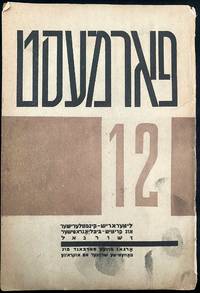
50 [A Rare Soviet Yiddish Literary Journal Edited by Itsik Fefer] Fefer, Itsik, editor; Alukraynisher Orgkomitet fun di Sovetish
FARMEST: LITERARISH KINSTLERISHER UN KRITISH-BIBLIOGRAFISHER ZSHURNAL. 1935: NO. 12 DECEMBER.
Kharkov: Ukrmelukhenatsmindfarlag 1935. First edition. Original illustrated paper wrappers 8vo 156 pages.Includes illustrations. 21-23 cm. In Yiddish. Title translates roughly as “Challenge: A Literary Artistic and Critical Bibliographical Journal.â€<br> At the time the only Yiddish literary periodical in Ukraine.<br> Farmest 1933–1937 was a monthly Yiddish literary magazine published in Kharkhiv Ukraine by the Ukrainian Committee for Soviet Writers.<br> “Edited by the poet Itsik Fefer 1900–1952 it was continued in Sovetishe literatur: Literarish-kinstlerisher un kritish-bibliografisher zhurnal Soviet Literature: Literary-Artistic and Critical-Bibliographical Journal; 1938–1941.<br> In 1927 Fefer was a founding member of the Jewish Section of the All-Ukrainian Union of Proletarian Writers and from 1928 one of the editors of its Kharkov-based journal Prolit Proletarian Literature. He also coedited the nonproletarian Kharkov journal Di royte velt The Red World from 1929. From 1933 to 1937 he edited the Kiev periodical Farmest Challenge; known as Sovetishe literatur Soviet Literature between 1938 and 1941 which replaced Prolit and Di royte velt and was thereafter the only Yiddish literary periodical in Ukraine.†YIVO. Avrom Gontar was also involved in the collective and editorial committee. <br> The editor Itsik Fefer 1900–1952 “began writing poems in 1918 and in 1922 joined Vidervuks New Growth in Kiev a group of young Yiddish literati whose mentor was Dovid Hofshteyn. That same year the appearance of Fefer’s small collection Shpener Splinters established him as a rising literary star. His poetry amalgamated the Kultur-lige poets’ revolutionary romanticism with the propagandist objectives of the workers’ movement.<br> Fefer was known for his literary credo of proste reyd simple speech a concept he formulated in 1922. In the early 1920s poetry particularly avant-garde poetry swamped the literary pages of Soviet Yiddish periodicals. This phenomenon worried editors and critics who were wary of the fact that Yiddish readers usually could not identify with this style of literature. All Yiddish readers by contrast could understand Fefer’s proste reyd.<br> In 1927 Fefer was a founding member of the Jewish Section of the All-Ukrainian Union of Proletarian Writers and from 1928 one of the editors of its Kharkov-based journal Prolit Proletarian Literature. He also coedited the nonproletarian Kharkov journal Di royte velt The Red World from 1929†Gennady Estraikh.<br> For more see: Gennady Estraikh “The Kharkiv Yiddish Literary World 1920s–Mid-1930s†East European Jewish Affairs 32.2 2002: 70–88; Chone Shmeruk “Yiddish Literature in the U.S.S.R.†in The Jews in Soviet Russia since 1917 ed. Lionel Kochan pp. 242–280 London and New York 1970.<br> SUBJECTS: Yiddish literature -- Ukraine -- Periodicals. Yiddish literature. OCLC: 35051038.<br> Pages toning as expected some sunning and stains to cover Good Condition. BYID-46-2A-LGG-’excc. Kharkov: Ukrmelukhenatsmindfarlag unknown
Bookseller reference : 43308
|
|
|
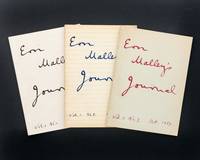
['Ern Malley's Journal']. HARRIS, Max, John REED and Barrie REID (editors)
Ern Malley's Journal. Volume 1 Number 1 November 1952; Number 2 March 1953; and Number 3 October 1953
Heidelberg: The Editors 1952. First Edition. Paperback. Heidelberg The Editors 1952 and 1953. Octavo three issues 48 53 and 48 pages with 2 full-page illustrations by Jean Langley in the first number and 2 pages of facsimile manuscript poetry by Joy Hester plus a plate in each number in the third one it reproduces 12 Charles Blackman paintings from his exhibition at the Bray Gallery in Melbourne in May of the previous year. A subscription form is loosely inserted in the third number. Wrappers with the titles in facsimile holograph on the front cover; the second number shows mild signs of use; overall an excellent run. 'Six years ago Ern Malley lived and died in Australia. Child of the unintended creative act of two other Australian poets he became overnight the most significant figure in the current literary scene. Alike as poet and as a symbol of creative living . Who can doubt that he did in fact live. And now we hope his spirit will live on in the pages of this Journal' introduction to the first number. The lengthy editorial in the third number indicates their hope is a little forlorn 'we cannot congratulate either our contributors our readers or ourselves' and it concludes with a half-page explanation - clearly called for - of 'Who was Ern Malley'. It was another thirteen months before Volume 1 Number 4 appeared; Volume 2 Numbers 1 and 2 followed at six-monthly intervals before the journal ceased publication for want of subscribers. 3 items. The Editors paperback
Bookseller reference : 118558
|
|
|
[... Eppur si muove ... ]
... Eppur si muove ...
«Foglio per l’organizzazione proletaria nella metropoli». Numero unico in attesa di autorizzazione. A cura degli Organismi Proletari della Barona.

|
|
|
[18th century newspaper with Weimar Relations] - [Wieland, Christoph Martin] Starnes, Thomas C
Der Teutsche Merkur - Ein Repertorium.
1994. Sigmaringen Thorbecke Verlag 1994. Gr.-8°. 694 Seiten. Hardcover / Originaler Ganzleinenband mit illustriertem Original-Umschlag in Brodart. Bis auf ein Eselsohr ist der Band in tadellosem neuwertigem Zustand. Kein Besitzervermerk! Keine Anstreichungen! Kein Mängelexemplar! Umschlag mit minimalen Gebrauchsspuren ansonsten ebenfalls in sehr gutem Zustand. Der Teutsche Merkur wurde von 1773 bis 1789 von Christoph Martin Wieland als Literaturzeitschrift und Rezensionsorgan in Weimar herausgegeben. Vorbild war nicht nur für den Titel der Mercure de France aber mit Einschränkungen. Wieland schreibt: "Uebrigens soll und kan der deutsche Merkur weder was die Ausführung noch was die Anzahl und Beschaffenheit der Artikel betrift völlig nach dem Französischen gemodelt werden. Selbst die wesentliche Verschiedenheit der Nationalverfassung läßt dies nicht zu. Wir haben keine Hauptstadt welche die allgemeine Akademie der Virtuosen der Nation und gleichsam die Gesetzgeberin des Geschmacks wäre. Wir haben kein feststehendes National-Theater; unsre besten Schauspieler so wie unsre besten Schriftsteller Dichter und Künstler sind durch alle Kreise des deutschen Reiches zerstreut und größtentheils der Vortheile eines nähern Umgangs und einer vertraulichen Mittheilung ihrer Einsichten Urtheile Entwürfe u. s. w. beraubt welche zur Vollkommenheit ihrer Werke so viel beytragen würde." Offenbar war es Wielands Ziel die genannten Nachteile der deutschen Kulturlandschaft durch Schaffung eines publizistischen Bindeglieds ausgleichen zu helfen und die Bildung eines literarischen National-Geschmacks durch Rezensionen zu fördern. Dementsprechend übten er und die Mitarbeiter eine ausgebreitete kritische Tätigkeit aus die sich lange Zeit hindurch auf fast alles erstreckte was für die literarische Welt von Bedeutung war. Darüber hinaus erschienen in der Zeitschrift zahlreiche dichterische Arbeiten Wielands im Erstdruck. Eine solche Publikation die September 1773 erschienenen Briefe über Alceste gaben Goethe und Herder Ärgernis und veranlassten Goethe zum Verfassen der Farce Götter Helden und Wieland. Wieland reagierte auf diesen Angriff mit heiterer Milde. Wikipedia hardcover
Bookseller reference : 21401AB ISBN : 3799520317 9783799520317

|
|
|
[28 maggio]
28 maggio ’74. La strage fascista
Edizione originale. Bell’esemplare. Supplemento al «Quotidiano dei lavoratori». Articolato dossier sulla strage di piazza della Loggia di Brescia e sui fascisti che la realizzarono, a cura di Democrazia proletaria.

|
|
|
[A noir, E blanc, I rouge, O vert, U bleu]; [AEIOU]; [Bruno Corà, direttore]
A noir, E blanc, I rouge, O vert, U bleu [AEIOU]
Numeri 1, 3, 4, 5, 10 - 11, 16, 19, 20 - 22. Esemplari in più che buone condizioni complessive. Conservata nel volume primo la cartelletta fuori testo con “Non Sol Antihertz”, opera di Marco Bagnoli. Il periodico trimestrale, che deve il titolo al celebre sonetto di Rimbaud, diretto da Bruno Corà, dedica ogni numero a un ventaglio di artisti diversi che partecipano alla pubblicazione con approfondimenti testuali, riproduzioni delle proprie opere e interventi artistici ideati ad hoc. Protagonisti della rivista sono spesso gli artisti dell’Arte Povera come è evidente fin dal primo numero che ospita tra gli altri: Jannis Kounellis, Mario Merz, Giulio Paolini e Luciano Fabro. La rivista fu pubblicata a partire dal settembre 1980.

|
|
|
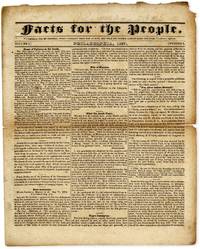
[ABOLITION NEWSPAPER] JONES, Benjamin S (ed)
Facts for the People. Vol. I no.3 ca. May-June1837
Philadelphia: Anti-slavery Society of the City and County of Philadelphia; printed by Merrihew & Gunn 1837. Single quarto issue 29cm x 23cm; ca. 11-1/2" x 9-1/4". Bifolium 4pp pages numbered 9-12. Issued monthly. Old horizontal fold at center as issued; small loss at upper margin away from printed area brief separations at folds without loss to text; complete and Good. <br /> <br /> Single issue of this very scarce presumably short-lived abolitionist newspaper published by Benjamin S. Jones under the auspices of the Anti-slavery Society of the City & County of Philadelphia. This copy with dated 1864 pencil ownership markings of "J.E. Jones" this possibly being the publisher's spouse the reformer abolitionist and suffragist Jane Elizabeth Jones née Hitchcock; 1816-1896. The paper's contents are devoted almost entirely to exposure of the injustices of the southern slave system with excerpts from Southern papers quoted and sharply rebuked by Jones' editorial comments. This issue also includes a brief notice of the progress of the recently-founded city of Houston Texas which now contained ".about 3000 people two hundred buildings four hotels thirteen retail stores and one wholesale establishment." The extracts quoted in this issue are generally dated from March April and May of 1837 leading us to suggest a May-June date for this issue.<br /> <br /> It is unclear how many issues of Facts for the People appeared. The only recorded example for a physical copy is at AAS which holds two unspecified issues with the annotation "sparse holdings." Not in LCP Afro-Americana. Not in Blockson. Anti-slavery Society of the City and County of Philadelphia; printed by Merrihew & Gunn unknown
Bookseller reference : 88394
|
|
|
[Acrobat mime parfait]
Acrobat mime parfait. Periodico d’arte
Tutto il pubblicato, ottobre 1980 e marzo 1981. Ottimi esemplari. Presente anche la rara brossura pubblicitaria, pubblicata prima che la rivista uscisse, che contiene interviste, tra gli altri, a Giovanni Anselmo, Alighieri Boetti, Pierpaolo Calzolari, Luciano Fabro, Mimmo Paladino e Gilberto Zorio. Periodico d’arte ricco di articoli su artisti accompagnati da riproduzioni delle loro opere, attento, secondo Maffei, «alle corrispettive tendenze poetiche e letterarie». Interventi, tra gli altri, su Fausto Melotti, Sandro Chia, Mimmo Paladino, Osvaldo Licini, Alighiero Boetti, Scipione, Meret Oppenheim. In appendice traduzioni in inglese e in tedesco degli articoli salienti in ciascun numero. G. Maffei, Libri e documenti. Arte povera 1966-1980, Corraini, 2007, p. 272.Bit. Arte oggi in Italia 2 voll.

|
|
|
[Agricoltura piemontese] [Avanguardia operaia]
Agricoltura piemontese. Dossier carovita
Edizione originale. Minimo foxing alla copertina, strappo al dorso, nel complesso un bell’esemplare.

|
|
|
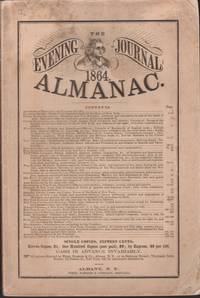
[Albany Evening Journal] [Civil War]
The Evening Journal Almanac 1864
Albany New York: Albany Evening Journal 1864. First Edition. Wraps. Good. Stitched wraps. 144 pages. Tan paper wraps with illustrated title top of the outer wrap. Contents printed on the front cover. Full page advertisement for the Albany Evening Journal printed on the back. Toning and light edge wear to the covers. Some corner creases to the pages. Much content on the Civil War. Almanac lists organization of the War Department and Navy Department; includes news of captured blockade runners; captures and losses in the Army; New York State volunteers; Rebel Government; and next to last on the bottom of the contents are two pages of Abraham Lincoln's Amnesty Proclamation. Albany Evening Journal unknown
Bookseller reference : 32462
|
|
|
[Alfabeta; Nanni Balestrini, Umberto Eco, Francesco Leonetti, Maria Corti, Antonio Porta, Paolo Volponi et alii]
Alfabeta
Collezione completa in edizione originale. Collezione completa di 114 numeri dal maggio 1979 al dicembre 1988 in ottimo stato di conservazione. Nel 1979 la casa editrice milanese Multhipla diretta da Gino Di Maggio decise di riprendere l’esperienza del periodico «AlfaBeta. Laboratorio di critica delle arti visive, di storia dell’arte e …» terminata nel marzo del 1976 dopo soli otto numeri, dando vita ad «Alfabeta. Mensile di informazione culturale». Rispetto alla rivista originaria, più strettamente legata all’ambito artistico, la nuova serie ha interessi - come del resto il sottotitolo dichiara – culturali in senso più ampio, concentrandosi in modo particolare nel campo letterario e in quello politico. Animatori del progetto furono, oltre allo stesso Di Maggio e a Gianni Sassi nella vesta di art director, Nanni Balestrini, Umberto Eco, Paolo Volponi, Antonio Porta, Maria Corti, Francesco Leonetti, Pier Aldo Rovatti e Mario Spinella. Più avanti, il comitato di redazione includerà anche Omar Calabrese, Carlo Formenti, Vincenzo Bonazza, Marisa Giuffra, Nino Trombetta e Maurizio Ferraris. Volontà di Nanni Balestrini – che a ragione può essere considerato come una delle figure fondamentali della rivista, se non la più importante – era quella di creare un gruppo caratterizzato da interessi culturali e posizionamenti politici diversi tra loro così da cogliere e restituire criticamente e nel modo più completo possibile i mutamenti in atto e i movimenti emergenti generando, seppur nella differenza, un fronte comune contro la crisi e il ritiro dalla scena pubblica degli intellettuali e contro il disimpegno politico venuti dopo la stagione del fermento culturale e delle lotte. L’avventura di «Alfabeta» terminerà nel 1988 con il numero 114. Solo nel 2010 Balestrini e Di Maggio cercheranno di recuperare il senso di quell’avventura tanto importante fondando «Alfabeta 2 - mensile di intervento culturale».

|
|
|
[AlfaBeta] [α - beta] [Gino Di Maggio, direttore]
AlfaBeta (α - beta). «Laboratorio di critica della cultura visiva, della storia dell’arte, e »
Collezione completa (8 numeri): marzo 1975 (n. 1); maggio 1975 (n. 2); ottobre 1975 (n. 3 - 4); gennaio-marzo 1976 (n. 5 - 6); autunno 1976 - gennaio 1977 (n. 7 - 8). Esemplari in ottimo stato. Numero 1 e numero 2 con qualche abrasione e piccoli strappi alla testa e al piede del dorso, per il resto usuali e lievi segni d’usura; carte e tagli puliti. La rivista AlfaBeta - «Laboratorio di critica della cultura visiva, della storia dell’arte, e » - nasce nel 1975 per volontà di Gino Di Maggio con l’intento di esplorare ed esporre campi diversi del sapere, come è evidente osservando il sommario del numero esordio del marzo 1975: agli interventi di Giuseppe Galante e Achille Bonito Oliva si affiancano traduzioni di Jacques Lacan e ripubblicazioni di articoli di Antonio Gramsci, passando ovviamente per l’estrema attenzione riservata alla sfera propriamente artistica con una grafica attenta e numeri riccamente illustrati (con illustrazioni non legate ai testi, a conferma della loro autonomia). Dall’esperienza della prima serie della rivista - composta da 8 numeri usciti tra il marzo 1975 e il gennaio 1977 - prenderà vita, a partire dal 1979, la seconda serie, più specificamente legata a interessi letterari e politici. G. Maffei, Libri e documenti. Arte povera 1966-1980, Corraini, 2007, p. 274.

|
|
|
[American Journal of the Medical Sciences]
The Medical News and Library MDCCCXLV and MDCCCXLVI: Volume III 3 Nos. 25-36 January-December 1845 and Volume IV 4 Nos. 37-48 January-December 1846
Philadelphia: Lea and Blanchard 1845 1846. Hardcover. Good. 8vo hardcover no dj. Binds together the 12 monthly issues for each of 1845 and 1846: 24 issues total. Good condition. Quarter leather over brown cloth boards gilt spine lettering. Moderate interior foxing contents otherwise clean no markings binding & hinges firm. Reconditioned leather supple & smooth with pea-sized scuff spot at front edge of spine; gilt title lettering bright. 98 & 118 pp. incl's Index for each volume. Philadelphia: Lea and Blanchard hardcover
Bookseller reference : 1160505.23
|
|
|
[Anarchia; Renzo Novatore] Senza limiti
[Raccolta completa della rivista anarchica edita dal gruppo “Senza limiti”:] Libertà... - Volere - Antitesi - Chiarezza - Fermezza
Collezione completa. In ottime condizioni. Serie completa dei numeri unici pubblicati dal gruppo anarchico “Senza limiti”, così dettagliati: «Libertà.... senza limiti, rivista anarchica edita dal gruppo giovani livornesi», agosto 1952; «Volere, rivista anarchica compilata dal gruppo editoriale ‘Senza limiti’», gennaio 1953; «Antitesi, rivista anarchica edita dal Gruppo ‘Senza limiti’», aprile 1953; «Chiarezza, numero unico edito dal Gruppo ‘Senza limiti’», settembre 1953; «Fermezza; Sociologia - Arte - Critica; Rivista Anarchica edita dal Gruppo ‘Senza limiti’», giugno 1954. -- Direttore responsabile Renzo Izzi. Tra i contributori originali Renzo Ferrari, Aldo Filippi, Rolando Barbò, Carriddi Di Domenico, Stelio Ferrari, Domenico Mirenghi, Angelo Destri, Giorgio Bartoli, Tito Eschini, Domenico Pastorello, Mario Barbani. Ripubblicati due articoli di Renzo Novatore: ‘Della donna e dell’amore’ (in «libertà», con indicazione tratto dalla rivista ‘Eresia’ pubblicata in America 1928-29), ‘L’espropriatore’ (in «Volere», con indicazione «dalla rivista ‘Iconoclasta’ n. 10). 5 voll.

|
|
|
[Archibras]
L’Archibras: Le Surréalisme
Collezione completa. Ottimo esemplare. 7 volumi dal n. 1 (aprile 1967) al n. 7 (marzo 1969). Tutto il pubblicato della rivista voluta da Breton ma che uscì dopo la sua morte.
|
|
|
[Arthur Griffiths, Arthur Joseph Griffith was an Irish writer, newspaper editor and politician who founded the political party S
Sinn Féin newspaper edited by Arthur Griffith Typewritten draft of circular letter
Undated c.1905. Typewritten draft of circular letter with corrections appealing for support for Griffith’s Sinn Féin newspaper and giving details concerning its foundation. Typescript 3pp 4to good condition. Author and recipient not stated. Undated but from the context written in 1906. It begins We desire to bring under your notice the following facts respecting the "Sinn Fein" daily newspaper’ and says that Griffith and the directors stated that ‘a sum of £8000 was required for the purpose’ but that the sum of £3300 only was subscribed in answer to the appeal. The Board decided to proceed with the establishment of the paper notwithstanding that the amount was so far short of that required. The paper commenced its tenth week on 1st corrected in manuscript from ‘2nd.’ November. The entire plant – exclusive of linotypes which are always hired is the property of the Company. The plant – in addition to the Linotupes sic includes a Victory machine which fortunately was acquired for a very small sum a fine stereo plant and type. The result is that the Company have now got a nice compact plant for the purposes required. . There are in England a large number of Irishmen of means who are interested in Ireland and who are anxious to do all in their power to financial support sic the new movements. To them it will be apparent that the principal support of the new movement will be a daily paper and who if the fats sic are brought before them would readily provide the monetary help required. It proposes a ‘Meeting in support of "Sinn Fein" paper’ and requesting that the reader subscribe directly ‘owing to the size of London’. From the Papers of Robert and Sylvia Lynd. Undated [c.1905]. unknown
Bookseller reference : 23561
|
|
|
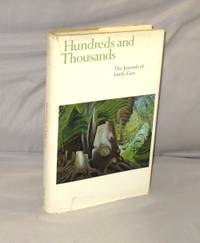
[Artist Journal] Emily Carr
Hundreds and Thousands. The Journals of Emily Carr.
Toronto:: Clarke Irwin 1966. First Printing of the First Canadian Edition. A Near Fine copy with previous owner name on flyleaf in a Near Fine dust jacket with modest edgewear. Emily Carr’s journals from 1927 to 1941 portray the happy productive period when she was able to resume painting after dismal years of raising dogs and renting out rooms to pay the bills. These revealing entries convey her passionate connection with nature her struggle to find her voice as a writer and her vision and philosophy as a painter. Clarke Irwin, unknown
Bookseller reference : 29144
|
|
|
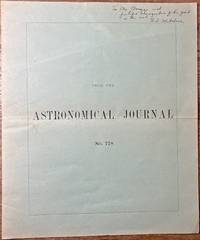
[Astronomy] [Astronomical Journal] Mitchell, S A
The Parallaxes of 261 Stars Determined by Photographs with the 26 inch McCormick Refractor
Albany New York: Leander McCormick Observatory University of Virginia 1920. Reprint. Wraps. Good. Green printed stapled wraps. Approx. 11.75" x 10". 8 pages. Folded in the middle. Light creases and toning to the covers. Inscribed and signed by the author on the front cover. <br /> <br /> From wikipedia: Samuel Alfred Mitchell April 29 1874 – February 22 1960 was a Canadian-American astronomer who studied solar eclipses and set up a program to use photographic techniques to determine the distance to stars at McCormick Observatory where he served as the director. Leander McCormick Observatory, University of Virginia unknown
Bookseller reference : 34817
|
|
|
[Aut aut]
Aut aut
Edizione originale. Ottimo esemplare. N. 104, marzo 1968, «Rivista di filosofia e di cultura». Celebre rivista, tuttora in pubblicazione, fondata da Enzo Paci.

|
|
|
[Aut; copertina di Renzo Vespignani]
Aut
Edizione originale. Minime ingialliture alla copertina, ma bell’esemplare. Anno I, numero 1. Copertina di Renzo Vespignani. All’interno: nella rubrica «Primavera nera», un approfondimento sull’omicidio di Giangiacomo Feltrinelli; una lunga intervista a Giorgio Amendola.

|
|
|
[Avanguardia operaia]
Avanguardia operaia. Giornale di agitazione comunista
Edizione originale. Qualche lieve fioritura alle copertine; una mancanza senza perdite di testo alla copertina del n. 19; nel complesso esemplari in condizioni più che buone, molto puliti all’interno. Disponiamo dei nn. 18 (lug.-ago. 1971) e 19 (set.-ott. ’71, completo di manifesto a piena pagina f.t. al centro del fascicolo). Proprietari Vinci e Forcolini, dir. resp. Silviero Corvisieri. Alcuni numeri titolano «Il giornale d’Avanguardia operaia». Dopo i due numeri unici del dicembre 1968 e del maggio 1969, nel 1970 prende a uscire con una certa frequenza (mensile, bimensile).

|
|
|
[Avanguardia operaia]
Bollettino interno riservato ai militanti e ai candidati dell’Organizzazione Comunista Avanguardia Operaia
Edizione originale. Begli esemplari. Disponiamo dei fascicoli: nn. 3 (nov. 1975), 5 (gen. 1976), 15 (dic. 1976), 16 (s.d.). Esce come supplemento al «Quotidiano dei lavoratori». Il prezzo si intende a fascicolo.

|
|
|
[Bandiera rossa - inserto]
Bandiera rossa. Quotidiano comunista [inserto]
Edizione originale. Usuali ingialliture marginali, ma bell’esemplare. Inserto del giornale «Bandiera rossa» che costituisce una curiosa sperimentazione politico-editoriale: «sarebbe un grave errore politico sottovalutare la grafica del giornale e considerarla nient’altro che un fatto estetico. La grafica del giornale ne condiziona la leggibilità e quindi la capacità di comunicazione. E non è poco. Perciò quello che avete in mano è solo un’ipotesi di lavoro, anzi due ipotesi di lavoro. All’intenro di questo inserto troverete infatti un’alternativa alle pagine 4 e 5 che presenta in modo completamente diverso gli stessi articoli».

|
|
|
[Bandiera Rossa] Gruppi comunisti rivoluzionari
Bandiera Rossa. Organo dei gruppi comunisti rivoluzionari sezione italiana della IV Internazionale.
Edizione originale. Ottimo esemplare. Disponiamo dell’Anno XIX n. 15, 1-15 nov. 1968 Primo anno di pubblicazione 1958, mensile, poi quindicinale, poi settimanale. Direttore responsabile L. Villone, poi E. Pellegrini.

|
|
|
[Baretti, Giuseppe]
La Frusta letteraria di Aristarco Scannabue
Celebre periodico pubblicato da Giuseppe Baretti dall’ottobre 1763 al 15 luglio 1765 per 33 fascicoli, con cadenza oscillante tra il quindicinale e il mensile. Nelle prime 396 pagine si trovano i fascicoli I-XXV pubblicati a Venezia con falso luogo Roveredo fino al gennaio 1765. Con propria numerazione seguono otto fascicoli con falso luogo di stampa, Trento, ma impressi ad Ancona per un totale di pagine 128. La «Frusta», nata con il proposito di essere il «flagello dei cattivi libri che si vanno da molti anni quotidianamente stampando in tutte le parti della nostra Italia» (tomo I p. I), è considerata oggi il primo esempio di moderna polemica giornalistica, critica letteraria militante e aggressiva revisione moralizzatrice, degno contraltare di periodici assai moderati come ad esempio l’«Osservatore» di Gasparo Gozzi, sorti nel secolo dei lumi sull’esempio della stampa inglese. Il giornale fu fermato dalla censura veneziana (da qui i falsi luoghi di stampa) in seguito al duro articolo anti-bembiano apparso nel fascicolo XXV (recensione all’edizione Lancellotti 1753 delle ‘Rime’): «… in quel Numero [XXV] io commisi l’atroce Delitto di provare, che un Gentiluomo di quella Città [Venezia], morto da più di due Secoli, fu uno dei più magri Poeti d’Italia.» (tomo III, p. 1). «[L]a proibizione di continuare la stampa del suo foglio [arrivò] col pretesto del giudizio severo da lui dato sull’opera poetica del Bembo patrizio veneziano, ma in realtà per por fine, come è detto in una comunicazione degli Inquisitori di Stato, alle “querele frequenti che giungevano d’ogni parte, ed anche dalla corte di Napoli, per li modi irriverenti e maledici dei suoi scritti”. In quel tempo stesso usciva contro di lui un libello, Bue pedagogo, del padre Appiano Buonafede dell’Ordine dei celestini […]: soprattutto per rispondere a quell’attacco Baretti proseguì con la falsa data di Trento il giornale, pubblicandovi otto discorsi contro il Buonafede in altrettanti fascicoli, oltre a un nono fascicolo con un articolo di altro argomento. Vi attese, lasciata Venezia e rifugiatosi sotto falso nome per qualche mese nei pressi di Ancona, bene accolto da quel vescovo, il cardinale F. Acciaiuoli […]. Ma ormai [Baretti] si era persuaso che non era più possibile per lui continuare in patria il suo “mestiere d’autore” e nel 1766 […] tornò a Londra.» (Fubini in DBI s.v.) Collezione completa mancante del solo fascicolo XXII
|
|

 Receive by email
 Download as PDF document
 RSS feed
 Permanent link


