|
|
|
[Jackson, Herbert J.].
[European Hand Firearms of the Sixteenth, Seventeenth & Eighteenth Century:] "Finely Chiselled Brescian Wheel-Lock, and a Wheel-Lock Sporting Gun, Dutch." [ORIGINAL COLLOTYPE PRINT].
Original single-sheet collotype print of fine quality. Overall size ca. 30 x 24 cm. Very good. First, limited edition, printed on heavy paper with very wide margins. Collotype is one of the most accurate and attractive methods of photomechanical tonal printing processes. Highly skilled and expensive process, it cannot produce more than a limited number of impressions. It has been used for single-sheet prints and luxury portfolios, and since the 1950s has been abandoned by all except a few small specialist firms. Preserved in pH-balanced, acid-free archival paper.
|
|
|
[Jackson, Herbert J.].
[European Hand Firearms of the Sixteenth, Seventeenth & Eighteenth Century:] "Brescian Wheel-Lock Pistol, Pierced and Chiselled Mounts." [ORIGINAL COLLOTYPE PRINT].
Original single-sheet collotype print of fine quality. Overall size ca. 30 x 24 cm. Very good. First, limited edition, printed on heavy paper with very wide margins. Collotype is one of the most accurate and attractive methods of photomechanical tonal printing processes. Highly skilled and expensive process, it cannot produce more than a limited number of impressions. It has been used for single-sheet prints and luxury portfolios, and since the 1950s has been abandoned by all except a few small specialist firms. Preserved in pH-balanced, acid-free archival paper.
|
|
|
[Jackson, Herbert J.].
[European Hand Firearms of the Sixteenth, Seventeenth & Eighteenth Century:] "Brescian Sporting Gun with Finely Chiselled and Pierced Mounts." [ORIGINAL COLLOTYPE PRINT].
Original single-sheet collotype print of fine quality. Overall size ca. 30 x 24 cm. Very good. First, limited edition, printed on heavy paper with very wide margins. Collotype is one of the most accurate and attractive methods of photomechanical tonal printing processes. Highly skilled and expensive process, it cannot produce more than a limited number of impressions. It has been used for single-sheet prints and luxury portfolios, and since the 1950s has been abandoned by all except a few small specialist firms. Preserved in pH-balanced, acid-free archival paper.
|
|
|
[Jackson, Herbert J.].
[European Hand Firearms of the Sixteenth, Seventeenth & Eighteenth Century:] "XVIth Century Wheel-Lock Pistols." [ORIGINAL COLLOTYPE PRINT].
Original single-sheet collotype print of fine quality. Overall size ca. 30 x 24 cm. Very good. (Small spot or two.) First, limited edition, printed on heavy paper with very wide margins. Collotype is one of the most accurate and attractive methods of photomechanical tonal printing processes. Highly skilled and expensive process, it cannot produce more than a limited number of impressions. It has been used for single-sheet prints and luxury portfolios, and since the 1950s has been abandoned by all except a few small specialist firms. Preserved in pH-balanced, acid-free archival paper.
|
|
|
[Jackson, Herbert J.].
[European Hand Firearms of the Sixteenth, Seventeenth & Eighteenth Century:] "Fine Example of Early Brescian Pistol with Flattened Butt." [ORIGINAL COLLOTYPE PRINT].
Original single-sheet collotype print of fine quality. Overall size ca. 30 x 24 cm. Very good. First, limited edition, printed on heavy paper with very wide margins. Collotype is one of the most accurate and attractive methods of photomechanical tonal printing processes. Highly skilled and expensive process, it cannot produce more than a limited number of impressions. It has been used for single-sheet prints and luxury portfolios, and since the 1950s has been abandoned by all except a few small specialist firms. Preserved in pH-balanced, acid-free archival paper.
|
|
|
[Jackson, Herbert J.].
[European Hand Firearms of the Sixteenth, Seventeenth & Eighteenth Century:] "Four-Barrel Revolving Pistol and Double-Barrel (Side by Side), Both Metal Butted." [ORIGINAL COLLOTYPE PRINT].
Original single-sheet collotype print of fine quality. Overall size ca. 30 x 24 cm. Very good. (Light marginal finger soiling.) First, limited edition, printed on heavy paper with very wide margins. Collotype is one of the most accurate and attractive methods of photomechanical tonal printing processes. Highly skilled and expensive process, it cannot produce more than a limited number of impressions. It has been used for single-sheet prints and luxury portfolios, and since the 1950s has been abandoned by all except a few small specialist firms. Preserved in pH-balanced, acid-free archival paper.
|
|
|
[Jackson, Herbert J.].
[European Hand Firearms of the Sixteenth, Seventeenth & Eighteenth Century:] "Metal-Butted Single- and Double-barrel (Under and Over) Pistols, and Pair of Metal-Butted Pistols with Barrels Chiselled, Each with Different Design." [ORIGINAL COLLOTYPE PRINT].
Original single-sheet collotype print of fine quality. Overall size ca. 30 x 24 cm. Very good. First, limited edition, printed on heavy paper with very wide margins. Collotype is one of the most accurate and attractive methods of photomechanical tonal printing processes. Highly skilled and expensive process, it cannot produce more than a limited number of impressions. It has been used for single-sheet prints and luxury portfolios, and since the 1950s has been abandoned by all except a few small specialist firms. Preserved in pH-balanced, acid-free archival paper.
|
|
|
[Jackson, Herbert J.].
[European Hand Firearms of the Sixteenth, Seventeenth & Eighteenth Century:] "Group of Four Metal-Butted Pistols, Single Barrels, Two with Secret Folding Triggers." [ORIGINAL COLLOTYPE PRINT].
Original single-sheet collotype print of fine quality. Overall size ca. 30 x 24 cm. Very good. First, limited edition, printed on heavy paper with very wide margins. Collotype is one of the most accurate and attractive methods of photomechanical tonal printing processes. Highly skilled and expensive process, it cannot produce more than a limited number of impressions. It has been used for single-sheet prints and luxury portfolios, and since the 1950s has been abandoned by all except a few small specialist firms. Preserved in pH-balanced, acid-free archival paper.
|
|
|
[Jackson, Herbert J.].
[European Hand Firearms of the Sixteenth, Seventeenth & Eighteenth Century:] "Cannon Barrel Holster Pistols, and Cannon Barrel Holster Pistols with Barrel Attached by Swivel Ring." [ORIGINAL COLLOTYPE PRINT].
Original single-sheet collotype print of fine quality. Overall size ca. 30 x 24 cm. Very good. First, limited edition, printed on heavy paper with very wide margins. Collotype is one of the most accurate and attractive methods of photomechanical tonal printing processes. Highly skilled and expensive process, it cannot produce more than a limited number of impressions. It has been used for single-sheet prints and luxury portfolios, and since the 1950s has been abandoned by all except a few small specialist firms. Preserved in pH-balanced, acid-free archival paper.
|
|
|
[Jackson, Herbert J.].
[European Hand Firearms of the Sixteenth, Seventeenth & Eighteenth Century:] "Single-Barrel Pistol of Unusual Length, and Group of Four Fine Pistols, Stocks Mounted and Inlaid with Silver." [ORIGINAL COLLOTYPE PRINT].
Original single-sheet collotype print of fine quality. Overall size ca. 30 x 24 cm. Very good. First, limited edition, printed on heavy paper with very wide margins. Collotype is one of the most accurate and attractive methods of photomechanical tonal printing processes. Highly skilled and expensive process, it cannot produce more than a limited number of impressions. It has been used for single-sheet prints and luxury portfolios, and since the 1950s has been abandoned by all except a few small specialist firms. Preserved in pH-balanced, acid-free archival paper.
|
|
|
[Jackson, Herbert J.].
[European Hand Firearms of the Sixteenth, Seventeenth & Eighteenth Century:] "Pair of Double-Barrel (Cannon) Pistols of Exceptional Length." [ORIGINAL COLLOTYPE PRINT].
Original single-sheet collotype print of fine quality. Overall size ca. 30 x 24 cm. Very good. (Minor marginal spotting.) First, limited edition, printed on heavy paper with very wide margins. Collotype is one of the most accurate and attractive methods of photomechanical tonal printing processes. Highly skilled and expensive process, it cannot produce more than a limited number of impressions. It has been used for single-sheet prints and luxury portfolios, and since the 1950s has been abandoned by all except a few small specialist firms. Preserved in pH-balanced, acid-free archival paper.
|
|
|
[Jackson, Herbert J.].
[European Hand Firearms of the Sixteenth, Seventeenth & Eighteenth Century:] "Two-Barrel Pistols, Under and Over, and Side by Side." [ORIGINAL COLLOTYPE PRINT].
Original single-sheet collotype print of fine quality. Overall size ca. 30 x 24 cm. Very good. First, limited edition, printed on heavy paper with very wide margins. Collotype is one of the most accurate and attractive methods of photomechanical tonal printing processes. Highly skilled and expensive process, it cannot produce more than a limited number of impressions. It has been used for single-sheet prints and luxury portfolios, and since the 1950s has been abandoned by all except a few small specialist firms. Preserved in pH-balanced, acid-free archival paper.
|
|
|
[Jackson, Herbert J.].
[European Hand Firearms of the Sixteenth, Seventeenth & Eighteenth Century:] "English Hunting Sword with Flint-Lock Pistol Attachment Finely Mounted in Silver, and English Seven-Barrel Flint-Lock [Flintlock] Revolving Pistol." [ORIGINAL COLLOTYPE PRINT].
Original single-sheet collotype print of fine quality. Overall size ca. 30 x 24 cm. Very good. First, limited edition, printed on heavy paper with very wide margins. Collotype is one of the most accurate and attractive methods of photomechanical tonal printing processes. Highly skilled and expensive process, it cannot produce more than a limited number of impressions. It has been used for single-sheet prints and luxury portfolios, and since the 1950s has been abandoned by all except a few small specialist firms. Preserved in pH-balanced, acid-free archival paper.
|
|
|
[Jackson, Herbert J.].
[European Hand Firearms of the Sixteenth, Seventeenth & Eighteenth Century:] "Pair of Single-Barrel Pistols, Well Mounted with Silver Medallions on Brass, and Pair of Spanish Pistols Fitted with Southern Italian Locks." [ORIGINAL COLLOTYPE PRINT].
Original single-sheet collotype print of fine quality. Overall size ca. 30 x 24 cm. Very good. First, limited edition, printed on heavy paper with very wide margins. Collotype is one of the most accurate and attractive methods of photomechanical tonal printing processes. Highly skilled and expensive process, it cannot produce more than a limited number of impressions. It has been used for single-sheet prints and luxury portfolios, and since the 1950s has been abandoned by all except a few small specialist firms. Preserved in pH-balanced, acid-free archival paper.
|
|
|
[Jackson, Herbert J.].
[European Hand Firearms of the Sixteenth, Seventeenth & Eighteenth Century:] "French Revolving Sporting Gun, Dated 1720." [ORIGINAL COLLOTYPE PRINT].
Original single-sheet collotype print of fine quality. Overall size ca. 30 x 24 cm. Very good. First, limited edition, printed on heavy paper with very wide margins. Collotype is one of the most accurate and attractive methods of photomechanical tonal printing processes. Highly skilled and expensive process, it cannot produce more than a limited number of impressions. It has been used for single-sheet prints and luxury portfolios, and since the 1950s has been abandoned by all except a few small specialist firms. Preserved in pH-balanced, acid-free archival paper.
|
|
|
[Jackson, Herbert J.].
[European Hand Firearms of the Sixteenth, Seventeenth & Eighteenth Century:] "Two Holster Pistols, One Well Mounted with Silver Medallions on Brass, the Other with Silver, and Hammerless Pistols, the Flint-Holder Contained within the Barrel." [ORIGINAL COLLOTYPE PRINT].
Original single-sheet collotype print of fine quality. Overall size ca. 30 x 24 cm. Very good. First, limited edition, printed on heavy paper with very wide margins. Collotype is one of the most accurate and attractive methods of photomechanical tonal printing processes. Highly skilled and expensive process, it cannot produce more than a limited number of impressions. It has been used for single-sheet prints and luxury portfolios, and since the 1950s has been abandoned by all except a few small specialist firms. Preserved in pH-balanced, acid-free archival paper.
|
|
|
[Jackson, Herbert J.].
[European Hand Firearms of the Sixteenth, Seventeenth & Eighteenth Century:] "Air Pistol, End of XVIIIth Century, and Pistol to Fire Four Charges from One Barrel." [ORIGINAL COLLOTYPE PRINT].
Original single-sheet collotype print of fine quality. Overall size ca. 30 x 24 cm. Very good. First, limited edition, printed on heavy paper with very wide margins. Collotype is one of the most accurate and attractive methods of photomechanical tonal printing processes. Highly skilled and expensive process, it cannot produce more than a limited number of impressions. It has been used for single-sheet prints and luxury portfolios, and since the 1950s has been abandoned by all except a few small specialist firms. Preserved in pH-balanced, acid-free archival paper.
|
|
|
[Jackson, Herbert J.].
[European Hand Firearms of the Sixteenth, Seventeenth & Eighteenth Century:] "Single Trigger Double-Barrel (Under and Over) Pistol with Bayonet Attached." [ORIGINAL COLLOTYPE PRINT].
Original single-sheet collotype print of fine quality. Overall size ca. 30 x 24 cm. Very good. First, limited edition, printed on heavy paper with very wide margins. Collotype is one of the most accurate and attractive methods of photomechanical tonal printing processes. Highly skilled and expensive process, it cannot produce more than a limited number of impressions. It has been used for single-sheet prints and luxury portfolios, and since the 1950s has been abandoned by all except a few small specialist firms. Preserved in pH-balanced, acid-free archival paper.
|
|
|
[Jackson, Herbert J.].
[European Hand Firearms of the Sixteenth, Seventeenth & Eighteenth Century:] "Flint-Lock Double-Barrel Sporting Gun, Early English Type, and Pair of Flint-Lock [Flintlock] Holster Pistols, English Military Type." [ORIGINAL COLLOTYPE PRINT].
Original single-sheet collotype print of fine quality. Overall size ca. 30 x 24 cm. Very good. (Light marginal finger soiling.) First, limited edition, printed on heavy paper with very wide margins. Collotype is one of the most accurate and attractive methods of photomechanical tonal printing processes. Highly skilled and expensive process, it cannot produce more than a limited number of impressions. It has been used for single-sheet prints and luxury portfolios, and since the 1950s has been abandoned by all except a few small specialist firms. Preserved in pH-balanced, acid-free archival paper.
|
|
|
[Jackson, Herbert J.].
[European Hand Firearms of the Sixteenth, Seventeenth & Eighteenth Century:] "Scottish Hand Firearms of the XVIth, XVIIth & XVIIIth Centuries." [ORIGINAL COLLOTYPE PRINT].
Original single-sheet collotype print of fine quality. Overall size ca. 30 x 24 cm. Very good. First, limited edition, printed on heavy paper with very wide margins. Collotype is one of the most accurate and attractive methods of photomechanical tonal printing processes. Highly skilled and expensive process, it cannot produce more than a limited number of impressions. It has been used for single-sheet prints and luxury portfolios, and since the 1950s has been abandoned by all except a few small specialist firms. Preserved in pH-balanced, acid-free archival paper.
|
|
|
[Jackson, Herbert J.].
[European Hand Firearms of the Sixteenth, Seventeenth & Eighteenth Century:] "Scottish Hand Firearms of the XVIth, XVIIth & XVIIIth Centuries." [ORIGINAL COLLOTYPE PRINT].
Original single-sheet collotype print of fine quality. Overall size ca. 30 x 24 cm. Very good. First, limited edition, printed on heavy paper with very wide margins. Collotype is one of the most accurate and attractive methods of photomechanical tonal printing processes. Highly skilled and expensive process, it cannot produce more than a limited number of impressions. It has been used for single-sheet prints and luxury portfolios, and since the 1950s has been abandoned by all except a few small specialist firms. Preserved in pH-balanced, acid-free archival paper.
|
|
|
[Jackson, Herbert J.].
[European Hand Firearms of the Sixteenth, Seventeenth & Eighteenth Century:] "Scottish Hand Firearms of the XVIth, XVIIth & XVIIIth Centuries." [ORIGINAL COLLOTYPE PRINT].
Original single-sheet collotype print of fine quality. Overall size ca. 30 x 24 cm. Very good. First, limited edition, printed on heavy paper with very wide margins. Collotype is one of the most accurate and attractive methods of photomechanical tonal printing processes. Highly skilled and expensive process, it cannot produce more than a limited number of impressions. It has been used for single-sheet prints and luxury portfolios, and since the 1950s has been abandoned by all except a few small specialist firms. Preserved in pH-balanced, acid-free archival paper.
|
|
|
[Jackson, Herbert J.].
[European Hand Firearms of the Sixteenth, Seventeenth & Eighteenth Century:] "Scottish Hand Firearms of the XVIth, XVIIth & XVIIIth Centuries." [ORIGINAL COLLOTYPE PRINT].
Original single-sheet collotype print of fine quality. Overall size ca. 30 x 24 cm. Very good. First, limited edition, printed on heavy paper with very wide margins. Collotype is one of the most accurate and attractive methods of photomechanical tonal printing processes. Highly skilled and expensive process, it cannot produce more than a limited number of impressions. It has been used for single-sheet prints and luxury portfolios, and since the 1950s has been abandoned by all except a few small specialist firms. Preserved in pH-balanced, acid-free archival paper.
|
|
|
[Jackson, Herbert J.].
[European Hand Firearms of the Sixteenth, Seventeenth & Eighteenth Century:] "Scottish Hand Firearms of the XVIth, XVIIth & XVIIIth Centuries." [ORIGINAL COLLOTYPE PRINT].
Original single-sheet collotype print of fine quality. Overall size ca. 30 x 24 cm. Very good. First, limited edition, printed on heavy paper with very wide margins. Collotype is one of the most accurate and attractive methods of photomechanical tonal printing processes. Highly skilled and expensive process, it cannot produce more than a limited number of impressions. It has been used for single-sheet prints and luxury portfolios, and since the 1950s has been abandoned by all except a few small specialist firms. Preserved in pH-balanced, acid-free archival paper.
|
|
|
[Jackson, Herbert J.].
[European Hand Firearms of the Sixteenth, Seventeenth & Eighteenth Century:] "Scottish Hand Firearms of the XVIth, XVIIth & XVIIIth Centuries." [ORIGINAL COLLOTYPE PRINT].
Original single-sheet collotype print of fine quality. Overall size ca. 30 x 24 cm. Very good. First, limited edition, printed on heavy paper with very wide margins. Collotype is one of the most accurate and attractive methods of photomechanical tonal printing processes. Highly skilled and expensive process, it cannot produce more than a limited number of impressions. It has been used for single-sheet prints and luxury portfolios, and since the 1950s has been abandoned by all except a few small specialist firms. Preserved in pH-balanced, acid-free archival paper.
|
|
|
[Jackson, Herbert J.].
[European Hand Firearms of the Sixteenth, Seventeenth & Eighteenth Century:] "Scottish Hand Firearms of the XVIth, XVIIth & XVIIIth Centuries." [ORIGINAL COLLOTYPE PRINT].
Original single-sheet collotype print of fine quality. Overall size ca. 30 x 24 cm. Very good. First, limited edition, printed on heavy paper with very wide margins. Collotype is one of the most accurate and attractive methods of photomechanical tonal printing processes. Highly skilled and expensive process, it cannot produce more than a limited number of impressions. It has been used for single-sheet prints and luxury portfolios, and since the 1950s has been abandoned by all except a few small specialist firms. Preserved in pH-balanced, acid-free archival paper.
|
|
|
[Jackson, Herbert J.].
[European Hand Firearms of the Sixteenth, Seventeenth & Eighteenth Century:] Pair of German Pistols, XVIIIth Century, and Pair of Dutch Pistols (Theodorus Coop). [ORIGINAL COLLOTYPE PRINT].
Original single-sheet collotype print of fine quality. Overall size ca. 30 x 24 cm. Very good. (Light marginal finger soiling.) First, limited edition, printed on heavy paper with very wide margins. Collotype is one of the most accurate and attractive methods of photomechanical tonal printing processes. Highly skilled and expensive process, it cannot produce more than a limited number of impressions. It has been used for single-sheet prints and luxury portfolios, and since the 1950s has been abandoned by all except a few small specialist firms. Preserved in pH-balanced, acid-free archival paper.
|
|
|
[Jackson, Herbert J.].
[European Hand Firearms of the Sixteenth, Seventeenth & Eighteenth Century:] XVIth century Double Wheel-Lock (Exterior and Interior). [ORIGINAL COLLOTYPE PRINT].
Original single-sheet collotype print of fine quality. Overall size ca. 30 x 24 cm. Very good. (Small light stain). First, limited edition, printed on heavy paper with very wide margins. Collotype is one of the most accurate and attractive methods of photomechanical tonal printing processes. Highly skilled and expensive process, it cannot produce more than a limited number of impressions. It has been used for single-sheet prints and luxury portfolios, and since the 1950s has been abandoned by all except a few small specialist firms. Preserved in pH-balanced, acid-free archival paper.
|
|
|
[Jackson, Herbert J.].
[European Hand Firearms of the Sixteenth, Seventeenth & Eighteenth Century:] Finely Engraved German Lock. [ORIGINAL COLLOTYPE PRINT].
Original single-sheet collotype print of fine quality. Overall size ca. 30 x 24 cm. Very good. First, limited edition, printed on heavy paper with very wide margins. Collotype is one of the most accurate and attractive methods of photomechanical tonal printing processes. Highly skilled and expensive process, it cannot produce more than a limited number of impressions. It has been used for single-sheet prints and luxury portfolios, and since the 1950s has been abandoned by all except a few small specialist firms. Preserved in pH-balanced, acid-free archival paper.
|
|
|
[Jackson, Herbert J.].
[European Hand Firearms of the Sixteenth, Seventeenth & Eighteenth Century:] Early Italian Flint-Lock Sporting Rifle, Stock Inlaid in Engraved Ivory and Mother-of-Pearl, and Early Flint-Lock [Flintlock] for a Brescian Two-Barrel Pistol (Under and Over). [ORIGINAL COLLOTYPE PRINT].
Original single-sheet collotype print of fine quality. Overall size ca. 30 x 24 cm. Very good. First, limited edition, printed on heavy paper with very wide margins. Collotype is one of the most accurate and attractive methods of photomechanical tonal printing processes. Highly skilled and expensive process, it cannot produce more than a limited number of impressions. It has been used for single-sheet prints and luxury portfolios, and since the 1950s has been abandoned by all except a few small specialist firms. Preserved in pH-balanced, acid-free archival paper.
|
|
|
[Jackson, Herbert J.].
[European Hand Firearms of the Sixteenth, Seventeenth & Eighteenth Century:] Brescian Flint-Lock [Flintlock] Pistol, and a Lock with Chiselling of Superb Quality. [ORIGINAL COLLOTYPE PRINT].
Original single-sheet collotype print of fine quality. Overall size ca. 30 x 24 cm. Very good. (Very light marginal finger soiling.) First, limited edition, printed on heavy paper with very wide margins. Collotype is one of the most accurate and attractive methods of photomechanical tonal printing processes. Highly skilled and expensive process, it cannot produce more than a limited number of impressions. It has been used for single-sheet prints and luxury portfolios, and since the 1950s has been abandoned by all except a few small specialist firms. Preserved in pH-balanced, acid-free archival paper.
|
|
|
[Jackson, Herbert J.].
[European Hand Firearms of the Sixteenth, Seventeenth & Eighteenth Century:] Pair of Brescian Pistols (1635). [ORIGINAL COLLOTYPE PRINT].
Original single-sheet collotype print of fine quality. Overall size ca. 30 x 24 cm. Very good. (Light marginal finger soiling.) First, limited edition, printed on heavy paper with very wide margins. Collotype is one of the most accurate and attractive methods of photomechanical tonal printing processes. Highly skilled and expensive process, it cannot produce more than a limited number of impressions. It has been used for single-sheet prints and luxury portfolios, and since the 1950s has been abandoned by all except a few small specialist firms. Preserved in pH-balanced, acid-free archival paper.
|
|
|
[Jackson, Herbert J.].
[European Hand Firearms of the Sixteenth, Seventeenth & Eighteenth Century:] Fine Pair of English Pistols of the Finest Workmanship and Finish. [ORIGINAL COLLOTYPE PRINT].
Original single-sheet collotype print of fine quality. Overall size ca. 30 x 24 cm. Very good. (Very light marginal finger soiling.) First, limited edition, printed on heavy paper with very wide margins. Collotype is one of the most accurate and attractive methods of photomechanical tonal printing processes. Highly skilled and expensive process, it cannot produce more than a limited number of impressions. It has been used for single-sheet prints and luxury portfolios, and since the 1950s has been abandoned by all except a few small specialist firms. Preserved in pH-balanced, acid-free archival paper.
|
|
|
[Jackson, Herbert J.].
[European Hand Firearms of the Sixteenth, Seventeenth & Eighteenth Century:] Two Metal-Butted Pistols of English Origin. [ORIGINAL COLLOTYPE PRINT].
Original single-sheet collotype print of fine quality. Overall size ca. 30 x 24 cm. Very good. First, limited edition, printed on heavy paper with very wide margins. Collotype is one of the most accurate and attractive methods of photomechanical tonal printing processes. Highly skilled and expensive process, it cannot produce more than a limited number of impressions. It has been used for single-sheet prints and luxury portfolios, and since the 1950s has been abandoned by all except a few small specialist firms. Preserved in pH-balanced, acid-free archival paper.
|
|
|
[Jackson, Herbert J.].
[European Hand Firearms of the Sixteenth, Seventeenth & Eighteenth Century:] Cannon-Barrel Pistol with Wooden Stock, and Pair of English Pocket Pistols. [ORIGINAL COLLOTYPE PRINT].
Original single-sheet collotype print of fine quality. Overall size ca. 30 x 24 cm. Very good. First, limited edition, printed on heavy paper with very wide margins. Collotype is one of the most accurate and attractive methods of photomechanical tonal printing processes. Highly skilled and expensive process, it cannot produce more than a limited number of impressions. It has been used for single-sheet prints and luxury portfolios, and since the 1950s has been abandoned by all except a few small specialist firms. Preserved in pH-balanced, acid-free archival paper.
|
|
|
[Jackson, Herbert J.].
[European Hand Firearms of the Sixteenth, Seventeenth & Eighteenth Century:] Fine Pairs of French Pistols of Early Period. [ORIGINAL COLLOTYPE PRINT].
Original single-sheet collotype print of fine quality. Overall size ca. 30 x 24 cm. Very good. First, limited edition, printed on heavy paper with very wide margins. Collotype is one of the most accurate and attractive methods of photomechanical tonal printing processes. Highly skilled and expensive process, it cannot produce more than a limited number of impressions. It has been used for single-sheet prints and luxury portfolios, and since the 1950s has been abandoned by all except a few small specialist firms. Preserved in pH-balanced, acid-free archival paper.
|
|
|
[Jackson, Herbert J.].
[European Hand Firearms of the Sixteenth, Seventeenth & Eighteenth Century:] Pair of Italian Magazine Pistols, XVIIIth Century. [ORIGINAL COLLOTYPE PRINT].
Original single-sheet collotype print of fine quality. Overall size ca. 30 x 24 cm. Very good. First, limited edition, printed on heavy paper with very wide margins. Collotype is one of the most accurate and attractive methods of photomechanical tonal printing processes. Highly skilled and expensive process, it cannot produce more than a limited number of impressions. It has been used for single-sheet prints and luxury portfolios, and since the 1950s has been abandoned by all except a few small specialist firms. Preserved in pH-balanced, acid-free archival paper.
|
|
|
[Jackson, Herbert J.].
[European Hand Firearms of the Sixteenth, Seventeenth & Eighteenth Century:] Pair of Four-Barrel Pistols, and Pair of Double-Barrel (Under and Over) Pistols, Inlaid with Silver. [ORIGINAL COLLOTYPE PRINT].
Original single-sheet collotype print of fine quality. Overall size ca. 30 x 24 cm. Very good. (Few light marginal spots.) First, limited edition, printed on heavy paper with very wide margins. Collotype is one of the most accurate and attractive methods of photomechanical tonal printing processes. Highly skilled and expensive process, it cannot produce more than a limited number of impressions. It has been used for single-sheet prints and luxury portfolios, and since the 1950s has been abandoned by all except a few small specialist firms. Preserved in pH-balanced, acid-free archival paper.
|
|
|
[Jackson, Herbert J.].
[European Hand Firearms of the Sixteenth, Seventeenth & Eighteenth Century:] Scottish Hand Firearms of the XVIth, XVIIth & XVIIIth Centuries. [ORIGINAL COLLOTYPE PRINT].
Original single-sheet collotype print of fine quality. Overall size ca. 30 x 24 cm. Very good. First, limited edition, printed on heavy paper with very wide margins. Collotype is one of the most accurate and attractive methods of photomechanical tonal printing processes. Highly skilled and expensive process, it cannot produce more than a limited number of impressions. It has been used for single-sheet prints and luxury portfolios, and since the 1950s has been abandoned by all except a few small specialist firms. Preserved in pH-balanced, acid-free archival paper.
|
|
|
[Jackson, Herbert J.].
[European Hand Firearms of the Sixteenth, Seventeenth & Eighteenth Century:] Fine Specimen of Italian Ivory Powder Flask, and Heavily Gilt Metal Flask (1573). [ORIGINAL COLLOTYPE PRINT].
Original single-sheet collotype print of fine quality. Overall size ca. 30 x 24 cm. Very good. First, limited edition, printed on heavy paper with very wide margins. Collotype is one of the most accurate and attractive methods of photomechanical tonal printing processes. Highly skilled and expensive process, it cannot produce more than a limited number of impressions. It has been used for single-sheet prints and luxury portfolios, and since the 1950s has been abandoned by all except a few small specialist firms. Preserved in pH-balanced, acid-free archival paper.
|
|
|
[JAPAN -- WOODBLOCK PRINTS]. MIRVISS, Joan B & CARPENTER, John T
The Frank Lloyd Wright collection of Surimono. Introduction by Bruce Brooks Pfeiffer. . . .
New York: Weatherhill/ Phoenix Art Museum 1995. Thick 4to. x 2 313 1 pp. 100s of colour and blk & wht plates illusts. some large folding. Brown cloth gilt lettrng w/ d.j. NF/NF. First edition of this beautifully illustrated catalogue of the deluxe Japanese woodblock prints owned by Frank Lloyd Wright which were only recently discovered in the 1980s. Weatherhill/ Phoenix Art Museum, hardcover
Riferimento per il libraio : 38028 ISBN : 0834803275 9780834803275
|
|
|
[JAPANESE PRINTS]. Newark Free Public Library
An Exhibition of Japanese Prints or Colored Wood Engravings.
Newark. N.J.:: The Library Printed by the Baker Printing Co. . Not illustrated; 23 pp. 8vo gray stiff wrappers front printed. OCLC shows 2 copies at the Newark Public Library.Page 4 contains a short quotation vy Edward Fairbrother Strange Keeper of Woodwork at the Victoria & Albert Museum in London; expert on Japanese and Chinese Art and author of Japanese Illustration; a History of the Arts of Wood-Cutting and Colour Printing in Japan. Pages 5–12 describes the process used and a brief history of the art; pages 13–19 contain a list of the prints; pages 20–23 has a list of books on the subject. [Newark. N.J.:: The Library, Printed by the Baker Printing Co.], ,. unknown
Riferimento per il libraio : 4011
|
|
|
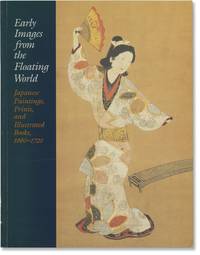
[Japanese Prints and Illustrated Books]
Early Images from the Floating World : Japanese Paintings Prints and Illustrated Books 1660-1720: Exhibition March 3 - April 5 2008
New York: Sebastian Izzard LLC 2008. First Edition. Softcover. First Edition. Near Fine in perfect-bound wrappers. Sebastian Izzard LLC unknown
Riferimento per il libraio : 165518
|
|
|
[Japon ; Shunga (estampes érotiques)]
Estampes érotiques japonaises [12 estampes aquarellées montées en 1 rouleau]
ére Meiji 1912 In-4 30 x 487 cm. 12 estampes montées en 1 rouleau. Chaque estampe aquarellée 30 x 48 cm. Ensemble en bon état.
Riferimento per il libraio : 123064

|
|
|
[Jean ARP] Hans ARP
Lithographie originale
Louis Broder | Paris s. d. [ca 1961] | 20 x 24.10 cm | une feuille
Riferimento per il libraio : 77681
|
|
|
[Jessen, Heinrich
Trachten aus Alt-Hamburg. Hamburg, B. S. Berendsohn, Wilhelm Jowien, and others, 1850].
With 50 hand-coloured full-page plates (c. 200 x 125 mm) heightened with egg-white, (44 lithographs, 3 engravings, 3 wood-engravings), of which 33 are after drawings by Heinrich Jessen. Contemporary blindstamped decorated red cloth, front cover with title lettered in gold. Charming colour plate book mainly with military costumes. Some of these plates were published earlier in F.G. Buek's "Album hambürgischer Costüme", 1843-1847. The plates depict messenger boys, maidservants, a police officer, several military men on horseback, etc. - Hinges weak, top and lower part of spine damaged. Coloured costumes in good condition. Colas 1547. Hiler 479. Lipperheide 809.
|
|
|
[Joseph II., Franz II.].
Zwei aufmontierte gestochene Wappen im Rund, spätes 18. Jh. O. O. u. D.
Ausgeschnittene Kupferstiche, jeweils ca. 72 mm Durchmesser. Auf Trägerpapier (ca. 218:306 mm). Die Wappen von Kaiser Joseph II. (1780er Jahre) sowie seines Neffen Franz II. (hier nicht als Kaiser, nur mit Erbtiteln: wohl 1792). - Das Trägerpapier etwas angestaubt.
|
|
|
[Karl August, Duke of Saxe-Weimar-Eisenach].
Portrait of Duke Karl August of Saxe-Weimar-Eisenach. [Weimar, after 1775].
590 x 460 mm. Pastel on vellum. Framed and glazed. Unsigned, undated half-length portrait of the Duke (1757-1828), Goethe's friend and patron, in his early twenties. This work by an unidentified Thuringian master strongly resembles the one at Dornburg castle listed as no. 19 in Hans Wahl's census ("Pastellgemälde von unbekannter Hand. 1775-80"). Goethe frequently stayed at this Ducal palace when in Dornburg on business. The painting is probably one of a small number of contemporary copies based on the oil painting by Johann Ernst Heinsius (Wahl no. 14), but with softer contours and brighter colours, as common for pastel crayons. - Two tears of about eight centimetres each near top and bottom edge of paper, professionally restored. Occasional rubbing to colours; some overpaintings and staining. Ownership of the anthroposophical physician Karl Hanno Matthiolius (1923-91), dated Solingen-Landwehr, 28 Nov. 1945, on the reverse. H. Wahl, "Die Bildnisse Carl Augusts von Weimar" (Weimar 1925), no. 19.
|
|
|
[Klimt, Gustav] - Geyling, Remigius, painter and stage designer (1878-1974).
Collection of 23 portrait drawings and caricatures, all drawn "from life" and signed, dated, and titled by Geyling (often citing the place of the sitting). Includes two T.L.S. by Arthur Schnitzler. Vienna, 1897-1935.
Royal folio. In later years mounted onto uniform backing boards by Geyling himself and laid into two simple portfolios, both of which contain his autogr. table of portraits. All leaves numbered throughout by the artist (1-24; Schnitzler's letters on their own backing are no. 23) and captioned with the name and dates of the person portrayed. The earliest portrait dates from 1897, the year in which the Vienna Secession and the artistic periodical "Ver Sacrum" were founded. According to his inscription, it was for the latter that Geyling drew the present portrait of the Secessionist sculptor Rudolf Bacher. Many of the pictures collected in these two portfolios were created several years later, in 1905, during the heyday of the Wiener Werkstätte (for which Geyling designed postcards) and a year after Geyling and his partner Otto Prutscher closed their joint studio for furnishings and décor. "Although a member of the conservative 'Künstlerhaus', Geyling always was close to the Vienna Secession" (cf. AKL LII, 462). For Geyling, "Klimt, Hoffmann, Roller, Olbrich were not only my colleagues, but also my friends, and many a night did we debate about the 'new and pure art'" (cf. Remigius Geyling erzählt, aufgezeichnet von Gerald Szyszkowitz. In: Nebehay/Krug, pp. 5-8, here: p. 7). These nights apparently offered numerous opportunities for Geyling's portrait studies: apart from the portraits of the aforesaid, the present collection contains a picture of the frequent Tivoli patron Egon Schiele (from the year of his death) as well as a portrait of Adolf Loos, drawn in the famous Café Museum. It was probably here where also Karl Kraus (entitled "Fackl-Kraus" by the artist) sat for Geyling. The great painter enjoyed an especially close relationship to Gustav Klimt: for many years he belonged to the circle of those who shared breakfast with Klimt at the Tivoli (cf. Nebehay/Krug, p. 3). In that legendary restaurant at the Green Hill in Vienna's Meidling district, he drew the two portraits of Klimt in May 1905. Together with Peter Altenberg and Otto Wagner, Klimt is one of the few persons whom Geyling sketched in more than one portrait only (all on a single page). It was upon Klimt's recommendation that Geyling was hired as head of decorations at the "Neue Wiener Bühnen" in 1910; his first production was the premiere of Schnitzler's "Undiscovered Country". It was during the rehearsals for this production, on 14 October 1911, that Geyling produced the present portrait of Schnitzler. Schnitzler's two letters to Geyling concern their joint project of a "Medardus movie". Geyling had worked as decorator for the most important Austrian film productions. So successfully had he transferred the stylistic devices of the Wiener Werkstätte into historical tragedy that in 1924 Fritz Lang used Geyling's designs for his great silent "Nibelungen" series (cf. AKL LII, 462). - Provenance: From a Viennese private collection, to which the artist himself sold both portfolios. Nos. 6-8 and 18, 21 and 22 are each illustrated in full-page size in: Ch. M. Nebehay & H. Krug (eds.). Remigius Geyling. Künstler und Literaten. Gezeichnet in Wien um 1900. Wien 1974. (= Jahresgabe der Wiener Bibliophilengesellschaft). This work does not describe the present collection; all other drawings are unpublished.
|
|
|
[Kupferplatte].
Pius VII. Wohl Rom, 1800.
Gestochene Kupferplatte (120:166 mm). Unsigniertes Portraitkupfer des Papstes Pius VII. (Graf Luigi Barnabà Niccolò Maria Chiaramonti; 1742-1823), wohl anläßlich seiner Papstkür am 21. März 1800 gestochen. Unter dem ovalen Brustbild das Wappen des Papstes.
|
|
|

 Ricevere i risultati per e-mail
 Scaricare i risultati in PDF
 RSS feed
 Link
Link


