|
|
|
[POILLY (François de)], [Perelle.]
VUES DE VERSAILLES
Un volume in f° : 24,5 x 34,5 cm Carton recouvert de papier vert ( usures) dos à nerfs avec fleurons dores ( restaurations). Titre manuscrit sur papier beige. Album composite de 33 gravures, réalisé fin XVII ème Siècle Début XVIII ème Siècle. Certaines des gravures signées POILLY ; monogramme "C P R" (Cum Privilegio Regis.)
Bookseller reference : ARC-114188

|
|
|
[Poster - Hans Neumann].
Advertisement for "Residenzmodenhaus Zwieback am Fleischmarkt". Vienna, c. 1925.
Colour print, measuring 125:93 cm. Folded. Large-format advertising poster by the Viennese studio Hans Neumann for the renowned fashion dealer Zwieback on the Fleischmarkt in central Vienna. Hans Neumann (1888-1960) studied at the Viennese Academy of Arts and then was mainly active in Berlin until WWI. After the war, he established one of Austria's largest advertising studios with numerous employees (cf. Bernhard Denscher, Österreichische Plakatkunst 1898-1938, Vienna 1992, p. 200). In 1938, emigrated to London and later to Australia, where he founded a very successful Atelier for Graphic Design in Melbourne.

|
|
|
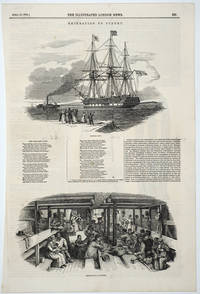
[Prints; Australia]
Australia Portrayed. Perceptions of Australia in 19th c. Foreign Periodicals
A valuable reference collection of images and articles that shaped perceptions of Australia to the wider world in the 19th century. This is a collection of over 800 woodcut illustrations and articles from the 19th century from the Illustrated London News The Graphic and The Illustrated Times & other less successful periodicals. The images of the ILN and Graphic are a comprehensive and systematic collection of Australian related images and articles from 1842 ILN and 1870 Graphic through the end of 1899. This collection was started in London in the late 1970s. It was our intention to create a comprehensive reference of every woodcut image of Australian interest in the two major British periodicals from their start date to 1900. We were living in North London not too far from Omniphil Limited a company based in Chesham Bucks. They were the preeminent dealers in woodcut images from British periodicals in the 1970s and 80s. We visited their premises repeatedly and sat and turned the pages of every single volume of their reference set noting the images related to Australia and purchasing a copy of those images. Another component of the collection is an assemblage of Australian images from lesser-known periodicals such as the Illustrated Times the Pictorial Times The Illustrated News of the World Gleason's Pictorial Drawing Room Companion Harper's Weekly Canadian Illustrated News and a few singletons from the Illustrated Family Paper l'Opinion Publique and the Australasian Sketcher. <br /> <br /> An important component of this collection is the associated Excel listing of the prints & text. These are indexed by year month & day image title print size associated text and folder number. <br /> <br /> The total collection is housed in nine A3 folders with fixed sleeves. Early years have 2 sheets per sleeve; later years are sometimes grouped together to fit into the available room in the album. The folders are approx. 12 ½" x 17" x 1". They were manufactured in England by Rexel Nyrex with the following label in the back inside cover "Rexel / Nyrex / PFV / A3 / 24 Made in Gt. Britain." The company still manufactures plastic products. We have not been able to ascertain if these are archival but the prints have been in the folders for at least 43 years and there has been no degradation. <br /> <br /> The only exception to the completeness of the collection is ship prints which were quite expensive at the time we assembled the collection. <br /> <br /> The collection is organized in three parts: <br /> Part I - The Illustrated London News 1842-1899; Part II - The Graphic 1870-1899; Part III - The Illustrated Times the Pictorial Times and other British & North American periodicals 1845-1883.<br /> <br /> Combined these original woodblock prints and articles are a valuable reference collection that shaped perceptions of Australia to the wider world in the 19th century a collection which would now be all but impossible to assemble. <br /> <br /> Part I<br /> Australian images from The Illustrated London News British periodical from its start in 1842 thru 1899. A comprehensive collection of Australian related images & articles from this groundbreaking periodical - the world's first illustrated weekly news magazine; the first periodical to employ special war correspondents and illustrators; the first to publish color supplements. The Australian material begins in the first publication on May 14 1842 and runs through the last article in the century in June 1899 and has approximately 467 images and 29 substantial articles. <br /> <br /> Australia is mentioned in the text of the first issue with an article "Sheep Farming in Australia" on p.15 about 4 column inches from the Inverness Courier. On the verso is an amusing illustration of a publicity stunt of the publishers. The founder Herbert Ingram paid hundreds of men to carry large sign boards in the streets reading "The Illustrated London News 30 Engravings Price 6D." The highly exaggerated drawing shows the sign bearers stretching as far as the eye can see on London footpaths. The caption reads "The 'Illustrated London News' Published Every Saturday. Thirty Engravings. Price Sixpence. The above engraving represents the public announcement of this paper on Friday last. Two hundred men paraded the streets of London to proclaim the advent of this important publication." Below the rule is printed "London: Printed by R. Palmer at the Office of Palmer & Clayton 10 Crane-court; and published by J. Clayton at 320 Strand. - Saturday May 14 1842." The first image of an Australian subject is in the December 23 1843 issue "New Government House Sydney" with text. The revenue stamp appears at the bottom left of the page. The discovery of gold in Australia is announced in a long article on the cover on Sept. 6 1851 entitled "Another El Dorado" in an article 15 column inches long. The last image is from June 1899 the Australian cricketeers in London- "The Australian Cricket Team / The Team up-river: leaving Boulter's Lock / The Test match at Lords Between England and Australia: Trumper and Hill at the Wickets". <br /> <br /> The ILN collection is housed in six A3 folders with fixed sleeves. Early years have 2 sheets per sleeve; later years are sometimes grouped together to fit into the available room in the album.<br /> <br /> Folder 1 - 1842-1852; 68 images & 12 articles<br /> Folder 2 - 1852-1854; 70 images & 13 articles<br /> Folder 3 - 1855-1861; 50 images & 1 article<br /> Folder 4 - 1862-1864; 55 images & 1 article<br /> Folder 5 - 1865-1884; 90 images & 2 articles<br /> Folder 6 - 1886-1899; 135 images<br /> <br /> Although Gale subscription service has a digitized resource titled the "Illustrated London News Historical Archive 1842-2003" this collection is invaluable as it is composed of the actual period woodblock prints and articles accessible in six A 3 folders. <br /> <br /> Part II<br /> Australian images from The Graphic British periodical from its start in 1869 thru 1899. Australian related images from The Graphic the British weekly illustrated newspaper first published on 4 Dec 1869 which was set up as a rival to the Illustrated London News. <br /> <br /> The Australian images begin in March 1870 and runs through 1899 approximately 242 images. There are 13 double page images 2 full weekly issues for the Sydney & Melbourne Exhibitions with the continuing supplements; 1 color Christmas issue; 74 full page and 39 half page illustrations. Highlights include images of bush and settlers' lives Tichborne case cricket Victorian gold the Kelly gang black trackers wool shipping ostriches a shearing dispute. <br /> <br /> The first Australian related image in The Graphic was published on the cover of the March 12th 1870 edition "Picnic in Australia To the Officers of the Flying Squadron." The last image for the 19th century is dated July 1899. The Graphic is housed in two folders are A3 approx. 12 ½" x 17" x 1". <br /> <br /> Part III<br /> Australian images from The Illustrated Times the Pictorial Times and other British periodicals as well as North American periodicals including Gleason's Pictorial Drawing Room Companion Harper's Weekly and others. London; New York; Boston; Canada: Various publishers 1845-1883. A collection of some of the scarcer woodcut images of Australian related images from various shorter-lived illustrated periodicals published in England and North America. These include The Pictorial Times The Illustrated Times The Illustrated News of the World Gleason's Pictorial Drawing Room Companion Harper's Weekly Canadian Illustrated News and a few singletons from the Illustrated Family Paper l'Opinion Publique and the Australasian Sketcher. These are scarcer publications than the market-dominating Illustrated London News & The Graphic. The collection starts in March 1870 and runs through 1899 approximately 107 images. <br /> <br /> Of particular interest is a series in the Illustrated Times entitled "England Versus Australia" illustrated by Florence Claxton. Claxton was an English artist who spent part of her adolescence in Sydney NSW in the 1850s. Throughout 1863 and early 1864 Miss Claxton drew imagined comparisons between the two environments not uniformly biased towards either country. In the first "Daughters Here" has a group of gentlewomen sitting in a lovely drawing room making lace playing piano or gazing in the mirror. "Sons There" shows the men doing the laundry mending and cooking. "Governesses Here" shows a gaggle of governesses seemingly subject to the whims of a butler; "Want of Governesses There" shows a home with the mother distraught the children causing absolute pandemonium & the father sitting and reading the paper. In another "Needlewomen Here" the seamstresses work themselves to exhaustion in a dark room with one light; "A Modiste There" shows a prosperous woman with many customers. <br /> <br /> We did not have access to a reference set for these smaller publications so these images are an assemblage not a comprehensive and consistent collection. <br /> <br /> The Pictorial Times. 1843-1848 Opened by Henry Vizetelly his brother and Andrew Spottiswoode. Eventually it was purchased by Ingram owner of the ILN and merged with The Lady's Newspaper. Unfortunately this newspaper did not date their issues but sometimes dates are to be found in text.<br /> <br /> The Illustrated Times. 1855-1862. A rival to the ILN edited by Henry Vizetelly who had left the ILN to open it. Vizetelly campaigned in the 1850s for the repeal of the Stamp Act. Its eventual repeal was a great boon allowing the new paper to be published at the low price of two pence.<br /> <br /> The Illustrated News of the World 1858-1864. This was published by John Tallis famed for his atlases with maps adorned with views. According to OCLC: 7091980 It started in Feb. 1858 and ceased in Aug. 1864<br /> .<br /> Gleason's Pictorial Drawing-Room Companion was a 19th-century illustrated periodical published in Boston Massachusetts. The magazine was founded by Frederick Gleason in 1851. According to OCLC: 10261386 it ran from 1851 - 1854. The publication name was changed to Ballou's Pictorial Drawing-Room Companion in 1855 after managing editor Maturin Murray Ballou bought out the interest of Gleason. Unfortunately this newspaper did not date their issues but sometimes dates are to be found in text.<br /> <br /> Harper's Weekly A Journal of Civilization was an American political magazine based in New York City. Published by Harper & Brothers from 1857 until 1916 it featured foreign and domestic news fiction essays on many subjects and humor alongside illustrations. It carried extensive coverage of the American Civil War including many illustrations of events from the war. During its most influential period it was the forum of the political cartoonist Thomas Nast. <br /> <br /> This collection is housed in one A3 folder approx. 12 ½ x 17" x 1" with fixed sleeves. The prints & text are indexed by newspaper and thence by year month & day image title print size & associated text including some artists and folder number. <br /> <br /> A collection of primary source documents revealing the perceptions and attitudes towards Australia in the 19th century. hardcover
Bookseller reference : 28182
|
|
|
[Prints]
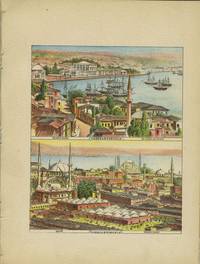
Constantinople 6 views
1886. Print. Otherwise very good condition. Multiple views in Constantinople in chromolithographs entitled Bridge of Galata Cemetery Street in Pera Sultan's Palaces Turkish Scissors Grinder Howling Dervish. Color chromolithographs. 6 plates 8 x 10.5" some marks in margins. unknown
Bookseller reference : 27836
|
|
|
[Prints]
Egypt
1886. Otherwise very good condition. Seven chromolithographic views in Egypt entitled Bazaar in Alexandria Fountain of Moses The Wife of Khedive Travelling Fellahs At a well in Cairo Return of Caravan from Mecca Port Said Sphinx Mehemet Ali's Mosque Ascending the Pyramids.<br /> <br /> 7 plates 8 x 10.5" some marks in margins. unknown
Bookseller reference : 27835
|
|
|
[Prints]
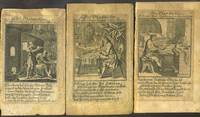
Glass Blowing engravings
Germany 1740. Good overall. 3 German copper plate engravings of glass blowing with German text. B&w approx. 6 x 4" toned mat burn where previously framed. unknown
Bookseller reference : 28414
|
|
|
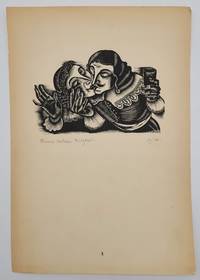
[Prints] [Hungarian] Molnar-C, Pal (Paul); [Edmond Rostand]
Cyrano de Bergerac
Limited Edition. Very Good. Slim quarto 28 cm Thirty loose woodcut plates on age-toned paper measuring 18.5 cm wide by 27 cm tall. No text or publication information present only the plates. Housed in a folder of 1/4 brown cloth with tan paper over boards and a gilt stamped title on the front board. The folder is toned and lightly rubbed at the edges. The first plate is signed by Molnár in pencil and numbered # 20 in an edition of only 36. <br /> <br /> The painter and graphic artist Pál Molnár-C. 1894-1981 born in Battonya Hungary lived and worked in a villa located in Ménesi Street on the hillside of Gellért Hill Budapest for 50 years. He held the surrealist style close to his heart throughout his life and he was also heavily inspired by the Symbolist works of Ferdinand Hodler. His illustrations of Shakespeare's Corialanus and Rostrand's Cyrano de Bergerac earned him gold medals at salons in Paris Milan and Warsaw. After his death his younger daughter Dr. Éva Csillag Pálné set up a family-owned private museum in 1984.<br /> <br /> “As a matter of fact all art is more or less surreal. The reality of everyday life differs from the reality of art which stands above reality.†- Pál Molnár-C. unknown
Bookseller reference : 68433
|
|
|
[Prodigal Son].
Four etchings intended as supraportes. Bassano del Grappa, Remondini, ca. 1750.
Ca. 676 x 480 mm to 755 x 523 mm. Coloured etchings on paper. Partly heightened in gold and silver. Two of the prints mounted on canvas. Rare supraporte prints from the famous publishing house Remondini, depicting four episodes from the biblical Parable of the Prodigal Son. In the sequence of the biblical narrative, the etchings with legends in Spanish and Latin show the Prodigal Son collecting his share of the inheritance from his father, the Prodigal Son leaving the parental home, the Prodigal Son being reduced to serve as a swineherd after he squandered his fortune, and the reconciliation with his father following his desperate return home. The beautiful coloured etchings are wholly Rococo in style, from the large ornamental frames to the opulent clothing of the protagonists and decor within the scenes. Embracing the timeless character of a parable, the 18th century viewers were supposed to identify with the protagonists and have their taste in Rococo ornaments met. - The house of Remondini was founded in Bassano del Grappa by the merchant Giovanni Antonio Remondini (1634-1711) and was successfully expanded by his son Giuseppe Remondini (1672-1742). Apart from prints and books, Remondini produced decorated papers for various uses and wallpapers. In the 18th and early 19th centuries, Remondini was among the largest print publishers of Italy. The supraportes with the Prodigal Son are a beautiful example of the large portfolio of the company and its international market. - With occasional stains and some foxing. The return scene shows old restorations due to water damage, leaving some areas brittle, especially in the lower margin, and causing minimal losses to the print. The departure scene shows two small defects.
|
|
|
[PROPAGANDA PRINTS - MOBILISATION].
提高警惕 保卫祖国. Tigao jingti baowei zuguo. Increase Vigilance and Defend our Motherland.
Anhui province.: 安徽省革命委员会出版发行局. Anhui Sheng geming weiyuanhui chuban faxingju. Circa1970s. 'Increase vigilance and defend the motherland' postcard-sized propaganda prints 16 in total 15 individual images 1 in duplicate 4 missing from the original set of 20. Most are designed by People's Arts Societies in various provinces and cities each with a different slogan. Prints have been well used some slightly soiled with pin marks. Interestingly two have pencil grid lines drawn on them probably with the plan to paint enlargements. The images are still bright with clear slogans front and back. 12.9 x 9.4cm These little prints warn about unspecified foreign enemies urging the people to get prepared to do battle. . 安徽省革命委员会出版发行局. [Anhui Sheng geming we unknown
Bookseller reference : 215882

|
|
|
[Ranftl, Johann Matthias, painter (1805-1854), ascribed].
Portrait of Ludwig (1784-1864), Archduke of Austria. N. p., [n. b. 1831].
Head-and-shoulders portrait, turned to the left. Watercolor on paper. 124:96 mm. A fine watercolor study, signed on the reverse by an unkown hand.

|
|
|
[Rare Prints - London 1689]
Beschrijving der Eepoorten in 's Graavenhaage opgerecht tegen d'overkomst van William den III. Koning van Engeland Schotland Vrankryk en Ierland.
Amsterdam: Carel Allard 1691. Hardcover. Very Good. Oblong broadsheets 295 x 380. Lacking title-page and without the 22 pp. accompanying text. 20 large unnumbered engraved plates one with 4 separate scenes etched plates by HUGO ALLARD 4 signed I. VANDEN AVELE 2 signed and JAN LUYKENone signedone with 2-inch tear repaired some minor marginal wear. Original marbled wrappers old paper cover label; cloth folding case. VERY RARE print series illustrating the history of the ascension to the throne of WILLIAM III 1650-1702 and MARY II 1662-1694. The series begins with the Seven Bishops being brought to the Tower of London with a view up the Thames followed by the birth of the Prince of Wales on 10 June 1688 through the entrance of William and Mary into The Hague on 5 February 1691. The series contains several scenes devoted to the festivities surrounding their coronation in London on 11 April 1689. This set of the engravings correspond to Landwehr and appear to have been issued in its original binding without the text; the title-page may have been removed or was not included. Muller considered the 20 plates as a series although he had not seen a bound set with title and the text. Landwehr Splendid Ceremonies 143; Muller 2692. <br/><br/> Carel Allard hardcover
Bookseller reference : D4443
|
|
|
[Red Howler Press] Zundenfel, Dieter | engravings by David Moyer
Father's Fathers. Six Poems with Six Wood Engravings
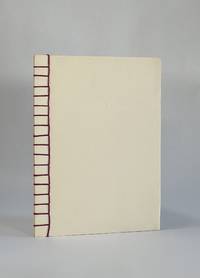
Lebanon PA: Red Howler Press 1989. Soft Cover. Near Fine binding. Octavo. 20 pp. plates. Limited edition numbered 22 of 50 copies signed by Zundenfel and Moyer on the colophon. As issued in Japanese stab-sewn stiff papers wrapper with blind-stamped title on the front cover; 6 striking prints were engraved on end grain maple blocks and printed on Kitakata Japanese paper. Each engraving is additionally signed by Moyer and numbered 22/75. A bright copy without wear. Uncommon and delightful. Red Howler Press unknown
Bookseller reference : 7372
|
|
|
[Reger, Max, Komponist und Pianist (1873-1916)].
Portraitphotographie. Wohl Leipzig, [nach 1903].
545:397 mm. Hinter Glas gerahmt. Schönes, großformatiges Portrait aus dem Atelier des Hofphotographen Ernst Hoenisch, dessen Atelier in Leipzig ab dem Jahre 1903 nachgewiesen ist. - Mit gepr. Signet von Hoenischs Atelier am linken unteren Rand.

|
|
|
[Relief prints in album]
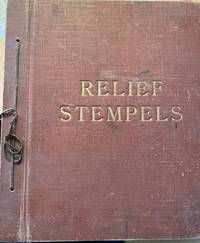
Relief stamp album Album with 20 pages with each 15 relief stamps.
Album 33 x 28 cm with 20 pages of relief stamps. The first 7 pages are filled with monograms stamps thereafter some names and French logo's in relief print. The last pges with address stamps in relief mainly Dutch and many in The Hague Den Haag.Unique collection.Unieke collectie van relief stempels frans en nederlands prachtige monogrammen. 20 pagina's gevuld met relief drukwerk. unknown
Bookseller reference : ZZ90526
|
|
|
[reliure - bibliophilie - calligraphie - Estampe]
Arts et métiers du livre - N° 217 - décembre-janvier-février 1999 sommaire: Dossier spécial: livres et religions -
Un fascicule in-4 de 96 pages - nombreuses photos en couleurs -
Bookseller reference : GF24252
|
|
|
[reliure - bibliophilie - calligraphie - Estampe]
Arts et métiers du livre - N°204 - juillet-aout 1997sommaire: Chan Ky-Yut - reliure : O. Drapeau - estampe : C. Raimbourg - bibliophilie: les autographes - les éditions Gonin -
Un fascicule in-4 de 64 pages - nombreuses photos en couleurs -
Bookseller reference : GF24250
|
|
|
[reliure - bibliophilie - calligraphie - Estampe]
Arts et métiers du livre - N°216 - Novembre 1999 -sommaire: livres d'équitation - Sem - Yves Yacoël - Bibliothèque Gennadus à Athénes - Léon Gruel, la reliure à Nantes - Els Baekelandt - estampes: Olivier Debré - B.-J. Baron - le fac-similé -
Un fascicule in-4 de 88 pages - nombreuses photos en couleurs -
Bookseller reference : GF24246
|
|
|
[reliure - bibliophilie - calligraphie - Estampe]
Arts et métiers du livre - N°219 -juin 2000 -sommaire:La Comtesse de Ségur et ses illustrateurs - Nicolas Cirier - Joel Leick - Jacky Vignon - L'enluminure médiévale - Patrick Aubert - L'estampe: définition - Didier Boursin - La bibliothèque de Versailles -
Un fascicule in-4 de 88 pages - nombreuses photos en couleurs -
Bookseller reference : GF24247
|
|
|
[reliure - bibliophilie - calligraphie - Estampe]
Arts et métiers du livre - N°225 - juillet - aout - septembre 2001sommaire:De sceau en ex-libris - De l'art postal à l'oeuvre de bibliophilie - La bibliothéca Wittockiana - Hervé Di Rosa - Jacques de Bellange - Franck Mouteault -
Un fascicule in-4 de 80 pages - nombreuses photos en couleurs -
Bookseller reference : GF24248
|
|
|
[reliure - bibliophilie - calligraphie - Estampe]
Arts et métiers du livre - N°226 - octobre-novembre 2001 sommaire: Claude Ribal - Les établissements Alivon - La reliure traditionnelle chinoise - Anna Romanello - Matteo Ripa - Iris Chen -
Un fascicule in-4 de 70 pages - nombreuses photos en couleurs -
Bookseller reference : GF24251
|
|
|
[Rembrandt] Gersaint (Edme-François ; 1696 ?-1750) :
Catalogue raisonné de toutes les pièces qui forment l'Œuvre de Rembrandt, composé par feu M. Gersaint, et mis au jour, avec des augmentations nécessaires, par les Sieurs Helle (P.C.A.) et Glomy (Jean-Baptiste).
Paris, Hochereau, 1751 ; in-12 ; plein veau marbré, dos lisse décoré "à la grotesque", pièce de titre grenat, roulette décorative d'intérieur (reliure de l'époque) ; XXXII, 326, (2) pp. de Privilège, portrait de Rembrandt gravé par J.B.G. en frontispice.
Bookseller reference : 15903
|
|
|
[Rentz, Michael Heinrich / Montalegre, Josef von.
Das Christliche Jahr. Schweidnitz, Joh. Christian Müllern, 1735?].
4to. 244 (instead of 248) partly numbered engraved plates. Slightly later full calf with giltstamped red title label to sparsely gilt spine. Very rare edition of "one of the most splendidly illustrated devotional books of the period" (Jantz), containing only the engraved plates and neither the text nor the music. The "Geistreiche Gesänge und Lieder auf alle Sonntags-Evangelien und Episteln so in dem Christlichen Jahre enthalten seyn [...]" were first issued in 1725-26, which saw a reissue under the title "Das Christliche Jahr" in 1735. This title is stamped on the spine label of this copy, suggesting that the present copy is of this latter edition. The plates "represent scenes from biblical history and the lives of the saints [...] exhibit[ing] a high point of Baroque illustration" (Faber du Faur) and are mostly presented within ornamental frames decorated by emblematic vignettes. - Wants title-page. Later handwritten bibliographical note in ink to flyleaf. Hinges a little worn, small flaw at the top margin of the plate showing St. Theresa (not touching image), but otherwise very well preserved. From the library of the Viennese collector Werner Habel, with his ownership stamp to flyleaf. Faber du Faur 1146. Jantz 2379. Bäumker III, 56, 138. Wolffheim 2202. Seebass 301. Nagler XIII, 36 and IX, 418.
|
|
|
[Revere Engravings] Ames, Nathaniel
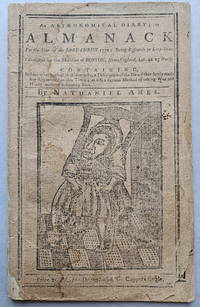
An astronomical diary; or almanack for the year of our Lord Christ 1772 : . Calculated for the meridian of Boston New-England lat. 42 25 north
<p>Three engravings by Paul Revere are certainly the most distinctive feature of this Boston almanac for 1772 namely:</p><p>Miss Emma Leach a dwarf born in Beverley Massachusetts on front cover.</p><p>The Patriotic American Farmer John Dickinson.</p><p>Mrs. Catharine M'Caulay.</p><p>Almanac making in colonial America was a rather unscrupulous affair at times. The notion of copyright was unknown among publishers. Indeed almanac piracy or perhaps liberal borrowing was the accepted industry practice.</p><p>The present almanac offers an excellent example of heavy borrowing. The Boston Ames <em>Almanack </em>for 1772 was published in two versions: one by Ezekiel Russell and the other a pirated version by an unnamed printer/publisher. The text and images of the two are very similar although the cuts of the three subjects differ very slightly between the two almanacs. Paul Revere's daybook for December 1771 identifies <strong>two</strong> purchasers of plates for a 1772 Ames almanac Ezekiel Russell and Edes & Gill. Within a matter of a week it's apparent that Revere produced two sets of plates of the same subjects for competing almanacs.</p><p>In an advertisement for Russell's version of the Ames almanac he "hopes that the publick with their usual impartiality will give him preference in buying of his Ames' genuine almanac before any pirated edition." Revere's contributions were in both the original and this pirated edition of the almanac.</p><p><strong>References: </strong> Evans: 11961; Drake <em>Almanacs of the U.S</em>.: 3205; Brigham <em>Paul Revere's Engravings</em>: pp. 202-203; Hamilton <em>Early American Book Illustrators and Wood Engravers</em>: 56; O'Neal <em>Early American Almanacs</em>: 115 mistakenly citing Russell as publisher.</p><p><strong>Condition:</strong> Disbound; leaves are separated with a later paper reinforcement in the gutter of two leaves. Chipping to lower corners of two leaves. Scattered mostly light staining and a few spots of foxing. Good.</p><p>ICN 7815.</p> [Printed by T. & J. Fleet and Edes & Gill. Price 2s. 8d. per dozen, and six coppers single. ]
Bookseller reference : 3835
|
|
|
[Revue Nouvelles de l'Estampe] - [Odilon Redon]
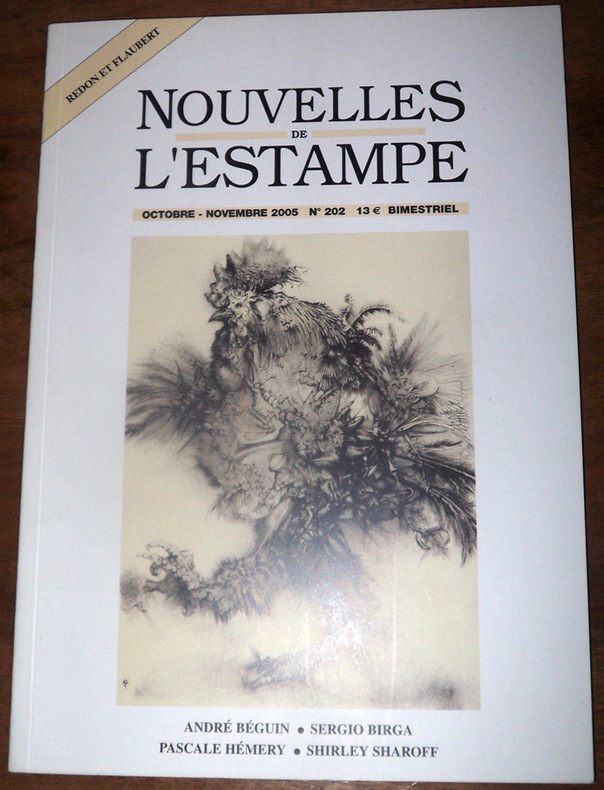
Nouvelles de l'Estampe. Octobre-novembre 2005. N° 202 : Redon et Flaubert, tentations croisées dans Saint Antoine par Denis Bruza Molino / Mon dictionnaire et mes gravures par André Béguin / Sergio Borga ou la gravure de manifeste / Janine Bailly Herzberg / Pascale Hémery / Shirley Sharoff, l'art des signes urbains.
2005 Paris, Comité national de la Gravure française, 2005. 30 x 21 cm, 76 pp., illustrations en noir et en couleurs, broché.
Bookseller reference : 2390
|
|
|
[REVUE]. [L'AMATEUR D'ESTAMPES].
L'AMATEUR D'ESTAMPES. " Organe de la Chambre syndicale des éditeurs et marchands d'estampes anciennes et modernes ".
Paris (38, rue de Châteaudun, puis - dès la 2e année - 27, rue Grégoire de Tours, puis - à partir de la 4e année - 39 bis, rue de Châteaudun). Rédacteur en chef : Eugène Bouvy. Gérant : Léo Delteil. La première année, le bulletin est mensuel (mais ne paraît pas en juillet et août) et compte donc 10 numéros en 10 livraisons, sous la forme d'in-4° agrafé. Dès la 2e année, le bulletin adopte son rythme de parution définitif : 6 numéros par an, en 6 livraisons, sous la forme de grand in-8° broché. La pagination est suivie d'un numéro au suivant (environ 200 pages par année + de nombreuses et intéressantes pages de publicité pour des galeries, des éditeurs d'estampes, des parutions d'ouvrages spécialisés, des ateliers d'imprimerie artistique, etc.). Le dernier numéro de chaque année comporte une " Table des matières " des articles et planches parus dans les numéros de l'année achevée. Le premier numéro a paru en décembre 1921 ; le dernier, en décembre 1934. Lors de la 13e et dernière année, le titre devient " L'Amateur d'estampes et de livres d'art ".
Bookseller reference : 10830
|
|
|
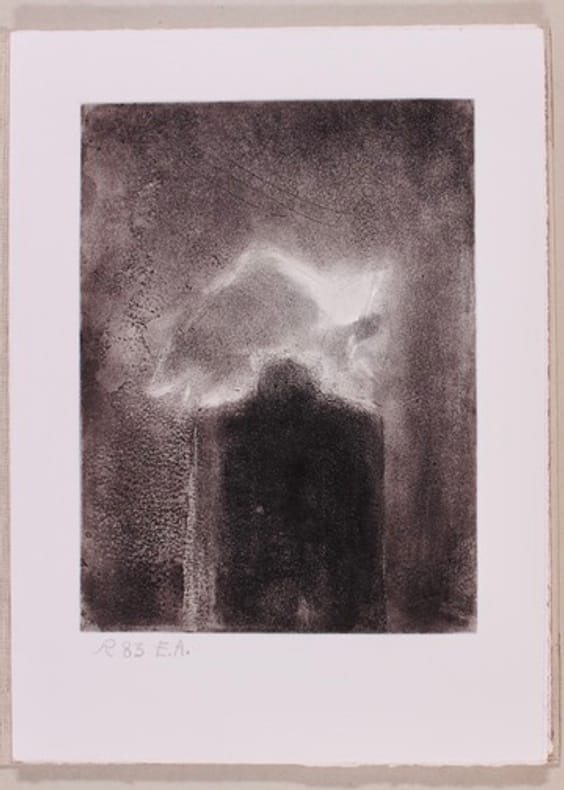
[RODARI Florian] SILBERTEIN Jil; RITSCHARD Claude; PACHE Jean:
[Pour Florian Rodari].
Sans lieu, sans nom, 1983. Portefeuille de [40] pages, cartable de carton et toile écrue avec coins, cordons de coton blanc.
Bookseller reference : 21838
|
|
|
[ROUBAUD (Benjamin)].
Les Romantiques chassés du temple. Album Théâtral, planche N°2.
1838 P., Chez Bauger, r. du Croissant, 16, Imp. dAubert & Cie, s.d. (1838), 1 planche encadrée (dimensions à vue : 280 x 230 mm), cadre du XIXe s. en placage de loupe (465 x 370 mm).Papier bruni, couleurs restées bien fraîches.
Bookseller reference : 14134

|
|
|
[Schmier, Johannes Franz]
[Jurisprudentia publica universalis ex jure tum naturali tum divino positivo nec non jure gentium nova et scientifica methodo derivata, et juris publici facta]
[Salzburg, Mayr 1722]. (28), 436 Seiten, 38 Seiten Index. Mit einigen Vignetten und Kopfstücken in Holzschnitt. 2° (33,5 x 22,5 cm). Schöner Pergamentband der Zeit mit durchgezogenen Bünden, spanischen Deckelkanten, handschriftlichem Rückentitel und rot gefärbten Schnitten.
Bookseller reference : 1045261

|
|
|
[Scoppa, Giuseppe, Neapolitan painter (fl. mid-19th century) - attrib.].
V[eduta] di Napoli da Mare. Naples, ca. 1860.
Gouache on paper, ca. 32 x 45 cm (sheet dimensions ca. 41.5 x 52 cm). Meticulous panoramic view of the bay, shoreline and city of Naples from Santa Lucia in the west to Mount Vesuvius in the east. The foreground shows fishing boats and other small vessels as well as a paddle steamer flying the French flag and a U.S. navy barque. - Margins tinted in grey wash, showing some light staining and a few tiny holes, caption title lettered in pink. The vividly coloured view is perfectly preserved. - Provenance: near-contemporary ink annotation on verso "Naples / Magasin de Beaux Arts / Place Cappella a Chiaja No. 6 / Sous le Palais Partanna / Tenú par Gaetano Calvi". Sold in 2015 through Holger Christoph, Bonn (sale 38, lot 411) to a German private collector and subsequently through Dobiaschofsky in Berne (2018) and Zisska in Munich (2021). A comparable, likewise unsigned example is held by the Bibliothèque nationale de France (dept. Estampes et photographie: "Napoli da Posilippo", Smith-Lesouëf 7277). For the painter Giuseppe Scoppa and his family cf. R. Rinaldi, Pittori a Napoli nell'Ottocento (2001), p. 247. See also Thieme/Becker XXX, 1936; Comanducci V (1974).
|
|
|
[Sri Lanka].
Album of watercolours. Sri Lanka, December 1895-February 1896.
Large 4to (180 x 255 mm). 24 watercolours on 22 ff. With several additional pencil sketches. Original black half leather with green cloth covers and pen holder. Impressive album of vibrant watercolours documenting the extensive Ceylonese journey of a female British artist, Frances de la Poer. The volume opens with a depiction of a "Madras Conjurer" in Kandy, performing the "great mango trick" with two cobras, wherein the performer gives the illusion of the sudden germination and growth of a mango tree (drawn from life and dated Kandy, 31 Dec. 1895). The second drawing shows a crowd gathered before a Buddhist temple in Kandy. - Setting out from Kandy, the artist explored the countryside, drawing landscapes in Yattawatta, the tea harvest on Coolbawn estate in Navalapitiya, a pandal in Bandarawala, the surroundings of Haldummulla, a verandah in Pelmadulla, two views of Adam's Peak, men riding elephants in Ratnapura, the famous Elephant Rock (Ethagala) of Kurunegala, and four impressions from the beaches of Bentota. The final watercolour in the album is a beautiful impression of a beach sunset, dated 18 February 1896. - Frances de la Poer (ca. 1850-1925) was the youngest daughter of the Irish nobleman John William de la Poer (1816-51). In 1881 she married Thomas William Gaston Monsell, 2nd Baron Emly, son of the liberal politician William Monsell. - Spine professionally restored; generally well preserved. Album bought from Roberson & Co., London, with his ticket to front pastedown.
|
|
|
[Steel Engravings]
Coronation of the King and Queen of the Sandwich Islands Hawaii
Unknown. Loose Leaf. Very Good. Very good. Folio sheet. 6 inch by 9 1/8 inch illustration on a page pulled from the News. No text accompanies it. > Language: English > Size: Folio > Media/Binding: Unbound Unknown unknown
Bookseller reference : CORV-BBP-14980
|
|
|
[Steel Engravings]
Emma Queen Dowager of the Sandwich Islands
Unknown. Loose Leaf. Very Good. Very good.Top half of folio sheet from the News featuring the illustration along with a single column on her visit to England and a bit of political/social background. 2pp. > Language: English > Size: 4to > Media/Binding: Unbound Unknown unknown
Bookseller reference : CORV-BBP-14981
|
|
|
[Steel Engravings]
Funeral of the King of the Sandwich Islands
Unknown. Loose Leaf. Very Good. Very good. 4to sheet. 9 1/4 inch by 6 inch illustration on a page pulled from the April 18 1874 issue of the Illustrated London News. Shows a carriage in procession with sailors and others lining the road in front of a small church. No text accompanies it. > Language: English > Size: 4to > Media/Binding: Unbound Unknown unknown
Bookseller reference : CORV-BBP-15859
|
|
|
[STEINLEN]. Collectif.
L'Estampe et L'Affiche.
Paris, Éditions d'Art, Édouard Pelletan, N° 2, 15 avril 1897. Une revue in-4 (22,5 x 29 cm), broché, couverture imprimée et illustrée, 68 pp. Sur le dos de la couverture Dessin de JOSSO.
Bookseller reference : 31101
|
|
|
[Strasbourg Cathedral].
In admirandam inclytae urbis Argentinae turrim. [Strasbourg, 1566].
52,8 x 37 cm. Woodcut on paper (two conjoined sheets). Rare pirated copy of the famous south-west view of the Strasbourg Cathedral by Daniel Specklin (1536-1589). A "Matthias Huebner" from Schneeberg in Saxony, who is presented as the author of the print in the modified text in the strapwork frame to the right ("Matthias Huebner Schnebergensis faciebat Argent. Cal. Ian M. D. LXVI"), has not been identified. The monumental view of the Cathedral, including the staffage figures and the strapwork cartouche with the date, correspond with the original published by Bernhard Jobin in Strasbourg (as depicted in Hollstein). - Trimmed, insignificant marginal damage, two restored tears on the left. Smoothed, slightly soiled, somewhat toned. Hollstein LXXIII, 67, 1 (with illustration on p. 66). Strauss, German single-leaf woodcut, III, S. 975, I (of II; with fig. II). Cf. Passavant III, p. 350f. Drugulin I, 290f. Bartsch IX, 303, 1.
|
|
|
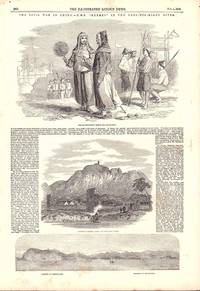
[TAIPING REBELLION- ANTIQUE PRINTS]
The Civil War in China. H.M.S. "Hermes" in the Yang-Tze-Kiang River. caption title
London.: Illustrated London News. November 5.1853. Eight engravings the two largest 12 and 13.5 x 23 cms complete descriptive text running oveleaf on two consecutive newspaper leaves the leaves spotted with a few small edge tears but in very good condition. Detailed coverage of the visit of the British vessel H.M.S. Hermes at the time of the Taiping rebellion by a sailor on board. The lengthy commentary includes excerpts of his diary notes and the engravings are after sketches by him. The two main engravings are of "Nankin Chiefs and insurgents" and "H.M.S. Hermes shelling the heights of Chin-Kiang-Foo". <br> <br>From the Estate of the late collector and scholar Arthur Hacker. . Illustrated London News unknown
Bookseller reference : 179541
|
|
|
[Tertiaren].
Terzo Ordine. Wohl Rom, um 1780.
Gestochene Kupferplatte (118:66 mm). Kupferplatte mit zwei Andachtsbildchen: das Minoritenwappen (ein bloßer und ein kuttentragender Arm mit Stigmata vor einem Kreuz, von einem Strick umkränzt) sowie der Hl. Franziskus, kniend und die Stigmata empfangend. Unter der letzteren Darstellung findet sich die Legende, die auf den schon 1221 begründeten Dritten Orden der Franziskaner hinweist.
|
|
|
[THIERRY, Augustin]
Histoire de la conquête de l'Angleterre par les Normands (Atlas de planches seul)
Couverture rigide Sans lieu, sans nom d'éditeur, sans date [Paris, Just Tessier, circa 1838]. Un volume d'atlas in-8 (22 x 15 cm), reliure demi-veau de l'époque, dos lisse orné de filets dorés, titre doré, papier marbré sur les plats, quelques frottements au dos. Recueil de 34 gravures sur bois hors-texte montées sur onglet, rousseurs éparses. Sont notamment représentées parme les scènes historiques et les portraits : "Prédication du moine Augustin devant le roi Ethelbert", "Portrait de Guillaume le conquérant", "Richard Coeur-de-Lion au Camp des Croisés" et "Richard II au milieu des paysans insurgés". Gravures d'après les dessins de Lefèvre, Jacques et Dufort, Charpentier, Cabasson, Lécurieux, T. Johannot, dans le style romantique de l'époque. Certaines ont été gravées par Orrin Smith. Bon exemplaire bien complet de sa suite d'illustrations historiques, en assez bon état.
Bookseller reference : 1843

|
|
|
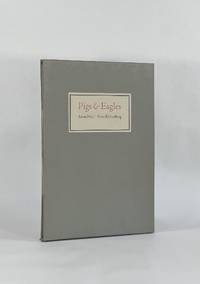
[Thistle Hill Press] Neal, Avon | engravings by Fritz Eichenberg
Pigs & Eagles: An Ecological Parable
North Brookfield MA: Thistle Hill Press 1978. Original Wrappers. Near Fine binding. Quarto. 24; 8 pp. frontis plate illus. Limited edition number 71 of 500 copies signed by Neal and Eichenberg at the colophon. As issued sewn into printed wrappers with full page wood engraving by Eichenberg serving as a frontispiece. Another similarly printed and sewn booklet with title page and colophon serves as a folder for a loose wood engraving of the frontispiece—this signed and numbered by Eichenberg on the bottom margin; all houses in publisher's slipcase with printed paper labels. Only light rubbing to the slipcase but the contents are nearly fine. A striking engraving portions of which have been employed to decorate the covers of each booklet as well as each colophon. This is an interesting allegory of the costs of excess. Thistle Hill Press unknown
Bookseller reference : 8969
|
|
|
[Trentsensky, Joseph].
Carawane nach Mecca. Vienna, Matthias Trentsensky (printed by E. Sieger), [ca. 1855].
Oblong folio (ca 370 x 240 mm). With 11 (of 24) numbered leaves containing 52 hand-coloured lithographic pen-drawings of people, animals, equipment & gear and goods, from a caravan travelling to Mecca, each drawing including a base for cutting out, mounting on card stock or wood, and arranging them upright in three-dimensional scenes. Lacking 12-24 (of 24). Loose leaves. The first eleven leaves of a very rare lithographic print series issued in parts. Most copies were probably cut up by children and destroyed in play. The human figures to be cut out include Turkish, Arabic, African and Middle Eastern men and women in Islamic costume, including both masters and servants, some of the men with a variety of firearms, spears, daggers, and various gear and goods. There are also camels, horses and donkeys, often with their gear for riding or for carrying loads. The series must have provided many children and adults with their first notion of Muslim society and culture and is rich in authentic details. "Kleine Welt des Bilderbogens" dates the series to ca. 1855, just after Sir Richard Burton's famous visit to Mecca disguised as an Afghan in 1853 (he was one of the few Europeans who had ever visited Mecca and lived to tell of it). The complete series of 24 leaves comprised four groups of leaves, each leaf with the title, relevant subtitle and imprint (without date) at the foot: 1-6: Die Ueberbringung des heiligen Teppich; 7-13: Die Reise durch die Wüste (not present here: 14-16: Das Lager in der Wüste; 17-24: Die Gefahren der Wüste). The artist is not named. The drawings are printed on unwatermarked wove paper. The paper is fairly thin and the drawn bases have no folding tabs, as the publisher intended the cut-outs to be pasted onto card stock with a folding tab at the foot of the base or wood so that they could stand without support. - Occasional pencil marks. Some edge flaws and duststains, waterstains and browning. Includes two uncoloured sheets (numbered 10 and 23) on somewhat later, stronger paper. Kleine Welt des Bilderbogens: der Wiener Verlag Trentsensky (1977), 111. Katharina Siefert, ed., Paläste, Panzer, Pop-up-Bücher: Papierwelten in 3D (2009), with a chapter, "Die Carawane nach Mecca", pp. 31-38. Not in KVK; WorldCat.
|
|
|
[Turniere].
Pergamentblatt mit vier turnierenden Rittern. O. O. u. D., [um 1880].
467:393 mm. Unter Passepartout. Sehr hübsch ausgeführte aquarellierte Federzeichnung des Historismus, in der Art ihrer Darstellung den Turnierbüchern der maximilianischen Zeit nachempfunden; links oben vier Wappen, darunter möglicherweise die der Familien Montfort, Stauf von Ehrenfels, Gemmingen oder Schellenberg; rechts unten monogrammiert "H.W.M.". - Einige kleine Einrisse im rechten weißen Rand, stellenweise leicht fleckig und angestaubt, im ganzen jedoch sehr ordentliches Blatt in kräftigen Farben.

|
|
|
[Ulbricht, Walter]. - Eltzner, Adolf.
Panorama von Leipzig in Niesens' Haus aufgenommen. Leipzig & Paris, Louis Rocca & Tessari et Comp., 1846.
1200 x 400 mm. Gerahmt hinter Glas. Schöne Ansicht von Leipzig, gestochen von Friedrich Salathé (1793-1858) nach der Zeichnung von Adolf Eltzner. Aus dem Besitz des gebürtigen Leipzigers Walter Ulbricht (1893-1973), rückseitig in Bleistift bezeichnet: "Geschenk an den Vorsitzenden des Staatsrates, Gen. Walter Ulbricht, anlässlich des 75. Geburtstages. 30.6.1966 [!] überreicht von Prof. Dr. Dieckmann". Händleretikett Erwin Paetzel, Berlin, Linienstraße 155.
|
|
|
[Vernet, Carle, French painter (1758-1836)].
Arabian cavalier. France, ca. 1810-1820.
325 x 280 mm. Ink and wash on drawing cardboard. Framed and glazed. This beautiful study, most likely for a lithograph, can be attributed to Carle Vernet, the youngest son of the painter Claude-Joseph Vernet. The monumental central motif of an Arabian cavalier on a dark Arabian stallion is elaborately executed, whereas the backdrop of a tent and a battle scene remain sketchy. - A passionate horseman himself, Carle Vernet is most famous for his cavalry scenes and other equestrian motifs. - Trimmed on the upper margin. Abrasions throughout, mostly affecting the background.
|
|
|
[VERTUE (George)]
Prints. King Charles I. and the Heads of the Noble Earls, Lords, and others, who suffered for their Loyalty in the Rebellion and Civil-Wars of England. With their Characters engraved under each Print, extracted from Lord Clarendon. Taken from Original Pictures of the greatest Masters, many of them Sir Anthony Vandyke's, and all the Heads accurately engraved by Mr Geo. Vertue...
First edition, large folio, [2], 2pp., without the list of subscribers, engraved frontispiece and 10 engraved plates with a total of 26 portraits of royalists, letter-press title and preface, some minor spotting and light browning but overall the plates are very clean and bright, expertly rebound in cont. style calf calf, marbled boards, red morocco spine label, an attractive copy. Rare: ESTC locates only three copy in the UK (all at Oxford) and four copies in North America. A reason for the scarcity of the complete volume may be found in a note on the title page, which advises that: "As these Prints are an agreeable Ornament for Rooms, they may be had of the Proprietors in neat black Frames and Glasses". Vertue's parents had served in the court of the exiled James II, and the publication of this volume in praise of loyal servants to the Stuart crown in the year of Culloden may well suggest Jacobite sympathies. This may be signalled by couplet from Pope quoted in the frontispiece: "Rich Industry Sat Smiling on the Plain | And Peace, and Plenty, told a Stuart's reign."
|
|
|
[Vienna - St. Stephen's Cathedral].
Templum Cathedral et Parochiale St. Stephani. No place, probably 1760.
Ca. 477 x 326 mm (neat line). Etching on paper. Only known specimen of an anonymous copy after Georg Daniel Heumann’s monumental 1735 copper print engraving based on a design by Salomon Kleiner, with additional portraits of Empress Maria Theresa and the later Emperor Joseph II and his wife. This faithful, though qualitatively inferior copy was probably made on the occasion of the wedding of Archduke Joseph of Austria and Princess Isabella of Parma on 6 October 1760 in Vienna. The couple is shown in a double portrait presented by a crowned eagle flying on the right side of the tower. They are opposed by a similarly presented profile portrait of Maria Theresa on the left side. Superimposed, the two medallion-bearing eagles would form the double-headed Habsburg eagle. - Joseph's first and happiest marriage lasted only three years, as Isabella died of smallpox on 27 November 1763 at the age of 21, leaving behind a devastated widower. 1763 is thus the latest possible date for the creation of this beautiful etching. - Good impression with some minor stains and a larger brown stain to the upper left margin.
|
|
|
[Viennese engravings].
Souvenirs de Vienne. [Vienna], 1830.
Oblong folio (400 x 320 mm). 93 pp. A privately compiled album comprising 138 engravings, either full-page or as four smaller engravings to one leaf, mostly hand-coloured. Includes one watercolour, signed "Fedor Comte Karaczay, Wien 1822". All mounted on brown paper with black borders, mostly with manuscript captions in French and watermarks to tissue guards. Contemporary red morocco, finely decorated with gilt borders; gilt title to upper cover, metal clasp fastening with key. Green silk guards. A charming album comprising numerous views of Vienna's grand buildings, palaces, and parks as well as landscapes of the surrounding areas. Notable sites of the Austrian capital are depicted in all their splendour, including Klosterneuburg monastery, the Kohlmarkt, St Stephen's Cathedral, and the Circus Gymnasticus in the Prater park. - Landscape views of Leopoldsberg, the route to Mariazell, and the nearby spa town of Baden are presented in all their idyllic majesty, as are lively social scenes of the Habsburg Empire's carnivals and café culture. The ensemble also includes 13 plates of professions and three military figures, one of which is a watercolour by Fedor Graf Karaczay (1787-1859), an Austrian colonel and dilettante artist, later in Persian services. The occupations include lantern lighter, laundry woman and hawkers selling brushes, apples and honey, straw hats, ribbons, carpets and laurel leaves. - Some minor staining. Tissue guards and covers somewhat worn, but otherwise a fine work.
|
|
|
[VILLON Jacques]:
Jacques Villon oeuvre gravé. Exposition chez Louis Carré, Paris, 1954.
Paris, Louis Carré, 1954. In-8 broché de 62-[4] pages, couverture illustrée rempliée, tiré à 1000 ex. sur vélin d’Arches à la forme.
Bookseller reference : 4533

|
|
|
[Weber, Carl Maria von]., Komponist (1786-1826).
Portrait. O. O. u. D.
Kupferstich. 300 x 205 mm. Brustbild Webers von Albert Henry Payne (1812-1902), umrahmt von Szenen aus seinem "Freischütz".
|
|
|
[Weigl, Joseph].
Portrait. O. O. u. D.
Kupferstich. 125 x 85 mm. Brustbild im Oval.
|
|
|
[Weigl, Joseph].
Portrait. Wien, Höfelich, 1846.
Lithographie. 355 x 276 mm. Lithographisches Portrait des österreichischen Komponisten und Dirigenten Joseph Weigl (1766-1846).
|
|
|

 Receive by email
 Download as PDF document
 RSS feed
 Permanent link


