|
Simler, Josias:
La Republique des Suisse. Comprinse deux livers, contenans le gouvernement des Suisse, l'estat public des treize Cantons & de leurs Confederez, en general & en particulier, Leurs bailliages & iurisdictions, l'origine & les conditions de toutes leurs alliances, leurs batailles, victoires, conquestes & autres gestes memorables, depuis l'Empereur Raoul d Habspourg insques à Charles le Quint...
Quatrième edition, reveve et augmentée à la fin de quelques particularitez. Genf, Gabriel Cartier, 1598. 8°. (16), 301, (17) S. Pergamentband der Zeit.
Riferimento per il libraio : 6064CB
|
|
|
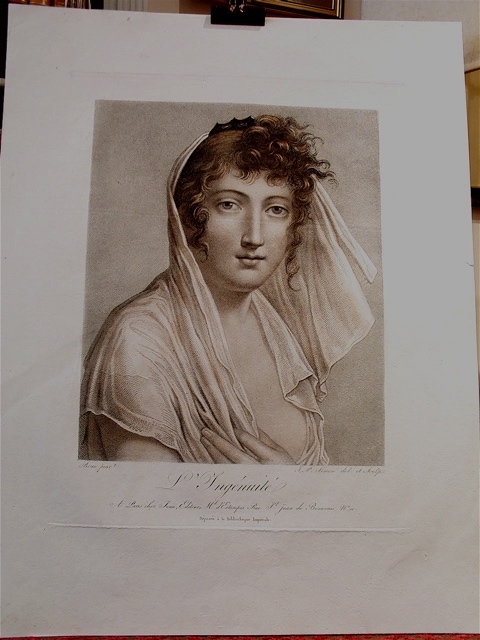
SIMON J.-P.
L’Ingénuité
D’après un tableau de Brun. Belle épreuve très légèrement coloriée. En feuille Très bon Avant 1815 37,5 x 29,5 (52 x 40)
Riferimento per il libraio : 5246
|
|
|
SIMON Lucien
Les Marguilliers
Belle épreuve parue dans le numéro 8 (décembre 1897) de l’Estampe Moderne. Notre épreuve porte le timbre sec de l’Estampe Moderne en bas à droite. L’Estampe Moderne a paru de mai 1897 à avril 1899. en feuille Très bon Paris L’Estampe Moderne. 1897 27 x 35 cm.
Riferimento per il libraio : 6124

|
|
|
SIMON Mario
Les Soeurs jumelles. Robes trois voiles (pl.34, La Gazette du Bon ton, 1922 n°5)
- Lucien Vogel éditeur, Paris 1922, 18x24cm, une feuille. - Original color print, printed on vergé paper, signed in the plate. An original print used to illustrate the Gazette du bon ton, one of the most attractive and influential 20th century fashion magazines, featuring the talents of French artists and other contributors from the burgeoning Art Deco movement. A celebrated fashion magazine established in 1912 by Lucien Vogel, La Gazette du bon ton appeared until 1925, with a hiatus from 1915 to 1920 due to the war (the editor-in-chief having been called up for service). It consisted of 69 issues printed in only 2,000 copies each and notably illustrated with 573 color plates and 148 sketches of the models of the great designers. Right from the start, this sumptuous publication "was aimed at bibliophiles and fashionable society," (Françoise Tétart-Vittu, "La Gazette du bon ton", in Dictionnaire de la mode, 2016) and was printed on fine vergé paper using a type cut specially for the magazine by Georges Peignot, known as Cochin, later used (in 1946) by Christian Dior. The prints were made using stencils, heightened in colors, some highlighted in gold or palladium. The story began in 1912, when Lucien Vogel, a man of the world involved in fashion (he had already been part of the fashion magazine Femina) decided, with his wife Cosette de Brunhoff - the sister of Jean, creator of Babar - to set up the Gazette du bon ton, subtitled at the time: "Art, fashion, frivolities." Georges Charensol noted the reasoning of the editor-in-chief: "'In 1910,' he observed, 'there was no really artistic fashion magazine, nothing representative of the spirit of the time. My dream was therefore to make a luxury magazine with truly modern artists...I was assured of success, because when it comes to fashion, no country on earth can compete with France.'" ("Un grand éditeur d'art. Lucien Vogel" in Les Nouvelles littéraires, no. 133, May 1925). The magazine was immediately successful, not only in France but also in the United States and Latin America. At first, Vogel put together a team of seven artists: André-Édouard Marty and Pierre Brissaud, followed by Georges Lepape and Dammicourt, as well as eventually his friends from school and the School of Fine Arts, like George Barbier, Bernard Boutet de Monvel and Charles Martin. Other talented people soon came flocking to join the team: Guy Arnoux, Léon Bakst, Benito, Boutet de Monvel, Umberto Brunelleschi, Chas Laborde, Jean-Gabriel Domergue, Raoul Dufy, Édouard Halouze, Alexandre Iacovleff, Jean Émile Laboureur, Charles Loupot, Chalres Martin, Maggie Salcedo. These artist, mostly unknown when Lucien Vogel sought them out, later became emblematic and sought-after artistic figures. It was also they who worked on the advertising drawings for the Gazette. The plates put the spotlight on, and celebrate, dresses by seven designers of the age: Lanvin, Doeuillet, Paquin, Poiret, Worth, Vionnet and Doucet. The designers provided exclusive models for each issue. Nonetheless, some of the illustrations are not based on real models, but simply on the illustrator's conception of the fashion of the day. The Gazette du bon ton was an important step in the history of fashion. Combining aesthetic demands with the physical whole, it brought together - for the first time - the great talents of the artistic, literary, and fashion worlds; and imposed, through this alchemy, a completely new image of women: slender, independent and daring, which was shared by the new generation of designers, including Coco Chanel, Jean Patou, Marcel Rochas, and so on... Taken over in 1920 by Condé Montrose Nast, the Gazette du bon ton was an important influence on the new layout and aesthetics of that "little dying paper" that Nast had bought a few years earlier: Vogue. [FRENCH VERSION FOLLOWS] Estampe originale en couleur, tirée sur papier vergé, signée en bas à droite de la planche. La Gazette du bon ton, l'une des plus belle

|
|
|
Simond Charles
Paris de 1800 à 1900 D'après les estampes et les mémoires du temps - TOME I : LE CONSULAT - LE PREMIER EMPIRE - LA RESTAURATION
E.Plon Nourrit et Cie, Rue garancière, 10. In-4°, forte reliure demi chagrin brun, tête dorée et dos à cinq nerfs, 4000 gravures reproduites en fac-similé dans le texte, d'après les documents des bibliothèques publiques, musées, collections particulières, portraits, caricatures, monuments, évènements...etc, 676 pages, bonne reliure et agréable tranche de titre , les coins supérieurs des plats sont cependant émoussés ainsi que les tranches des plats.
Riferimento per il libraio : 11106
|
|
|
SINGER, H.W
Das Kupferstichkabinet (der) Sammlung Lanna Prag. Wissenschaftliches Verzeichniss. Zweiter (u. letzter) Band.
(Prag, Selbstverlag, 1895. Gr.-8vo. Titel, 2 Bl., 517, (5) S., 16 Tafeln m. 26 Abbildungen in Lichtdruck auf aufgewalztem China. OHlwdbd m. goldgeprägtem Rückentitel (Einbd etwas berieben, Innengelenke gelockert, Bildstempel a. d. Vorsatz, Verlagsadresse überklebt mit "Joseph Baer & Co. Frankfurt am Main, Rossmarkt 18", darunter der Stempel "Bibliothek Allgemeine Zeitung, München", Titel leicht fingerfleckig, Tafeln gering braunfleckig).
Riferimento per il libraio : 1310520
|
|
|
SINGER, H.W
Die moderne Graphik. Eine Darstellung für deren Freunde und Sammler.
Leipzig, Seemann, 1914. 4to. 4 Bl., 547, (1) S. m. zahlr. Textabb. Olwd. (angestaubt, Rücken etwas fleckig).
Riferimento per il libraio : 1127245
|
|
|
Singer, Hans Wolfgang
Der Kupferstich. Hans W. Singer / Sammlung Illustrierter Monographien, Bd. 15.
Bielefeld ; Leipzig : Velhagen & Klasing 1904. 142 S. : Mit 107 Abb., darunter 6 farb. Einschaltb. ; 4°, Eigentümersignatur auf Vorsatzblatt Kart., Softcover/Paperback, Gebrauchsspuren am Einband, Papier etwas wellig, sonst guter Zustand
Riferimento per il libraio : 15664

|
|
|
SITWELL Pauline
Green Song. Poems and Wood Engravings 150 COPIES WERE PRINTED
Roy. 8vo., First Edition, with frontispiece and wood-engravings (a number full-page) in the text; rose boards, backstrip with printed paper label, uncut, a near fine copy. EDITION LIMITED TO 150 NUMBERED COPIES SIGNED BY THE AUTHOR (THIS COPY NO. 53).

|
|
|
Skira International / Skira Color Prints
Chinese Painting
Skira International / World Publishing Company. As New. Portfolio with 8 Loo. FREE UPGRADE to Courier/Priority Shipping Upon Request IN STOCK AND IMMEDIATELY AVAILABLE FOR SHIPMENT - 4 page brochure on Chinese paintings with notes on 6 of the 8 color plates included in the packet. -- with a bonus offer-- . Skira International / World Publishing Company unknown
Riferimento per il libraio : 37588
|
|
|
Sky Prints Corp
Sky Prints Aviation Enroute Atlas A Companion to Instrument Sectional or WAC Charts 1970
Sky Prints Corp 1970-01-01. Spiral-bound. Like New. 0x0x0. 1970-1979 and 1981 Like New inside and Out! Clean & Crisp Pages. Excellent book.Fast Shipping!11 books total Sky Prints Corp unknown
Riferimento per il libraio : 210213036
|
|
|
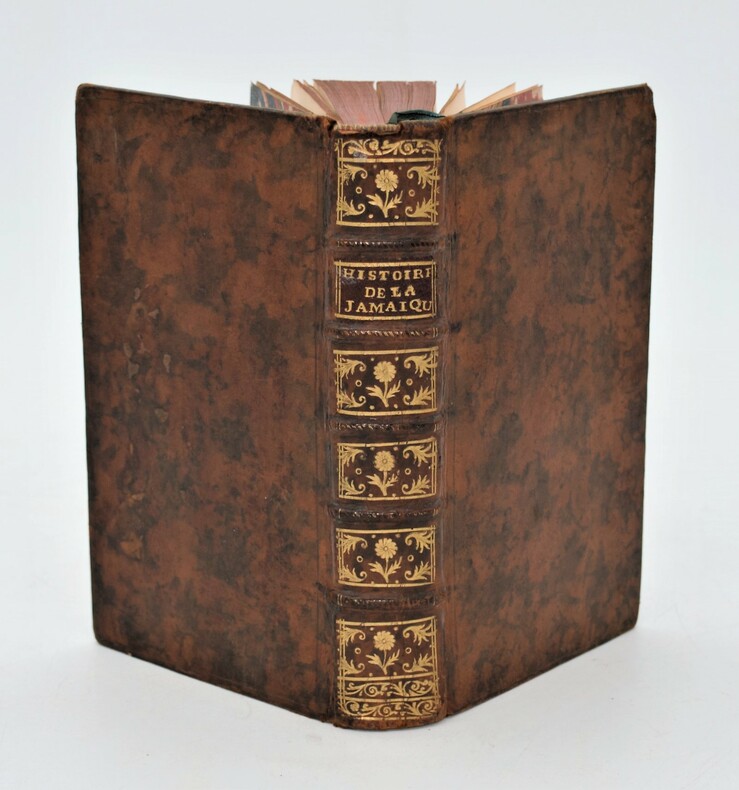
SLOANE HANS
Histoire de la Jamaïque, Traduite de l'Anglois. Par M. *** [Joseph Raulin], ancien Officier de Dragons.
LONDRES (CHEZ NOURSE) 1751 2 VOL. RELIES EN 1, IN-12°, 17 X 10 CMS, RELIÉ VEAU MOUCHETÉ, DOS A 5 NERFS ORNÉ DE FLEURONS DORÉS, TR. ROUGE. 2FF-285PPS; 1FF-148PPS. PREMIÈRE ÉDITION FRANÇAISE TRADUITE PAR RAULIN, ANCIEN OFFICIER DES DRAGONS.
Riferimento per il libraio : PHO-1273
|
|
|
SMEDT Marc de
L'érotisme chinois
Solar 1984, In-4 cartonnage éditeur sous jaquette illustrée, 96 pages. Reproductions couleur. Bon état
|
|
|
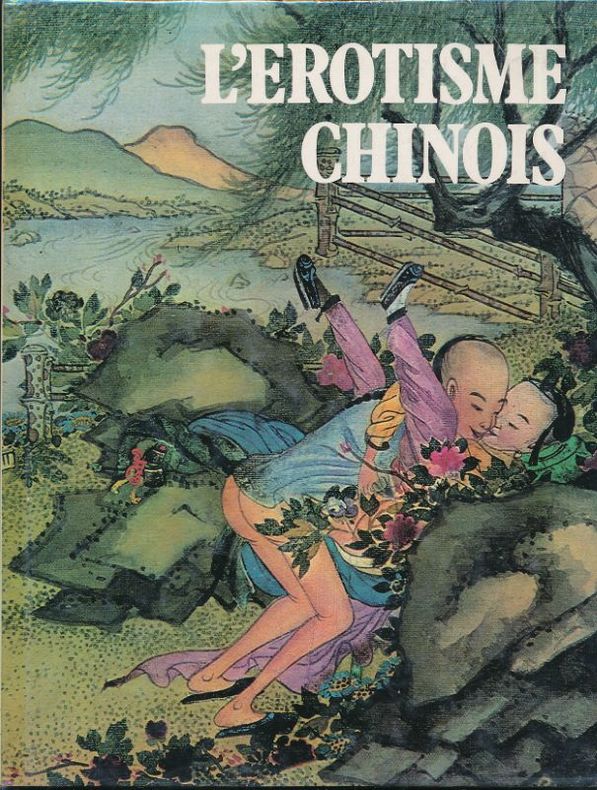
SMEDT Marc de
L'érotisme chinois
Solar Solar 1984, In-4 cartonnage éditeur sous jaquette illustrée, 96 pages. Reproductions couleur. Bon état
Riferimento per il libraio : 9993482
|
|
|
Smeth, Henrici
Prosodia quae sybillarum positione & diphtongis carentium quantitates. sola veterum Poetarum auctoritate, adductis, demonstrat. Editio decimaoctava (18. Auflage).
Frankfurt, Jona Rosa, 1660. 8 nnr. Blätter, 652 Seiten. Mit gestoch. Porträt und Wappen. Dekorativer Halbpergament-Einband der Zeit mit goldgeprägtem Rückentitel. Tadelsfrei.
Riferimento per il libraio : 702417
|
|
|
SMITH (John Russell)
A Catalogue of Twenty Thousand Engraved Portraits, chiefly of personages connected with the history and literature of Great Britain [With:] Supplement Catalogue.
232; 52pp., portrait frontis., some light foxing, orig. purple water-silk cloth, spine faded.
|
|
|
Smith, Aaron; Ravilious, Eric (Engravings)
THE ATROCITIES OF THE PIRATES
Waltham Saint Lawrence: Golden Cockerel Press 1929. Limited edition no. 3 of 500. Hardcover. Octavo; VG Hardcover; Black cloth spine with gilt lettering and red paper-covered boards; Light rubbing to head and tail of spine; Bookplate of Robert Mackenzie Waggaman to front pastedown; Text block lightly age-toned; Illustrated with numerous engravings by Eric Ravilious; v 156 pages. 1349922. FP New Rockville Stock. Golden Cockerel Press hardcover
Riferimento per il libraio : 1349922

|
|
|
Smith, Leon Polk
Collagen 1981-1983.
Berlin., Nationalgalerie Berlin., 1984. 30 x 21 cm. 39 S. Illustrierter OKarton., 68557B Erste Auflage. Kanten etwas berieben, Umschlag minimal angestaubt, sonst sehr gutes Exemplar.
Riferimento per il libraio : 68557BB

|
|
|
Smith, Matthew Hale; Engravings [Illustrator]
Sunshine and Shadow in New York
J. B. Burr and Company 1868-01-01. First Edition. Hardcover. Very Good. History of New York Bound in publisher's cloth. Hardcover. Good binding and cover. Spine image rubbed. 718 2 p. 12 leaves of plates : ill. ; 23 cm. "Rising immigration and increasing social stratification affected the development of American cities during the mid-nineteenth century. City guides delineating the mysteries of the metropolis as well as newspapers magazines and novels presented the East's industrializing cities—New York Philadelphia and Baltimore—as fractured societies. According to these publications each was really two cities: one orderly prosperous and bathed in "sunlight" the other menacing poor and steeped in "darkness" or "gaslight". In this frontispiece from the 1868 Sunshine and Shadow in New York the symbolic extremes of day and night were represented by a Fifth Avenue mansion and the Old Brewery an infamous "thieves' den" located in the Five Points slum district. J. B. Burr and Company hardcover
Riferimento per il libraio : 1911190004
|
|
|
Smith, William (Cornelius Visscher)
A Catalogue of the Works of Cornelius Visscher (catalogue raisonne of the prints)
First and only edition of this catalogue raisonne of Visscher's prints. 198 items described, almost all in many states. A presentation copy with an inscription by the author. Attractive armorial bookplate. 4to, publisher's cloth. Binding stained and very lightly worn. Rear endpapers soiled. Else internally fine, and structurally solid. Very scarce.
|
|
|
SOLENDO, Nunzio (Reggio Calabria 1937),
Metamorphosi di farfalla
Acquaforte ad un colore Firma a matita. Stampata da Alberto Caprini, Roma. Esemplare 11/150. mm 320 x 250 (Foglio 500 x 350). . . Ottimo (Fine). . 150 + XXX + 5 p.d.a.. .

|
|
|
SOLIS Y RIBADENEIRA Antonio de:
Historia de la conquista de Mexico, poblacion, y progresos de la America Septentrional, conocida por el Nombre de Nueva España. Dividida en dos tomos e ilustrada con Laminas finas.
Barcelona, Thomas Piferrer, 1771. 2 volumes petit in-8 de [24]-479 pages [16]-488 pages, plein veau moucheté brun, dos lisses ornés de filets et fleurons dorés, pièces de titre et de tomaison rouges et vertes. Petit manque à la coiffe supérieure du tome 1. Au tome 2, manque de peau à un coin et mouillure à un autre. Intérieur très frais, sans défaut.2 small in-8 volumes of [24] -479 pages and [16] -488 pages, full brown speckled calf, smooth backs decorated with gilt fillets and floral ornaments, red and green title and number label. Small wear in the turn in at the top of volume 1. In volume 2, wear of skin at one corner and waterstain at another. Very fresh interior, without defects.
Riferimento per il libraio : 6273

|
|
|
Solomon and Whitehead (Guild Prints) Ltd (Staffordshire)
Guild Prints Supplement 1982. Staffordshire.
Staffordshire UK: Solomon & Whitehead 1982. Dealer Catalogue. Quarto. 64 pp. Soft Covers. Very Good. Color plates. "The Artistic Touch" Art Gallery label affixed to cover.Prices handwritten in ink on plates throughout. Staffordshire, UK: Solomon & Whitehead, 1982. paperback
Riferimento per il libraio : 75-0308
|
|
|
Solomon and Whitehead (Guild Prints) ltd (Staffordshire)
Guild Prints Supplement 1982. Staffordshire.
Staffordshire UK: Solomon & Whitehead 1982. Dealer Catalogue. Quarto. 64 pp. Soft Covers. Very Good. Color plates. Alfred Schiftan Inc. label affixed to cover and price list loosely laid in. Staffordshire, UK: Solomon & Whitehead, 1982. paperback
Riferimento per il libraio : 75-0303
|
|
|
Solothurn.-
Wir Schultheiss und Rath des Kantons Solothurn thun kund (...) (Polizeiverordnung).
Solothurn, o. Vlg., 1805. 8°. 7 S. Moderne Broschur.
Riferimento per il libraio : 798DB
|
|
|
Somerset de Chair (Translator, Editor, Author of Introduction); Clifford Webb (Wood Engravings)
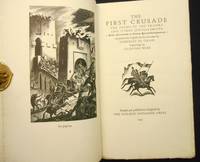
The First Crusade; The Deeds of the Franks and Other Jerusalemites.
Waltham Saint Lawrence: The Golden Cockerel Press 1945. Limited Edition. Hardcover. Very good. Webb Clifford. One of 500 copies folio size pp. The Golden Cockerel Press came together in autumn of 1920 at a time when post-World War I society was ushering in a renaissance of creative minds including another renaissance of the printing press as the artist's tool similar to that of William Morris and the arts and crafts printers of the previous century. The press worked with many notable artists including Eric Gill Blair Hughes-Stanton Robert Gibbings and the artist for this work Clifford Webb. <br /> <br /> Clifford Cyril Webb 1895-1972 studied art and is best known today for his wood engravings. He was a founder-member of the Society of Wood Engravers and "was a prominent figure in the group of engravers whobrought about the revival of wood engraving in the 1920s and benefited from the encouragement of Robert Gibbings and the Golden Cockerel Press" n.b. quote from Webb's entry in Horne "The Dictionary of 20th Century British Book Illustrators" p. 437. <br /> <br /> Per the bibliographical entry for this work "it is surprising that no complete translation of this unique eye-witness account of the First Crusade had ever been published in England before. What the pilgrims did in their fervour of blind fanaticism 'to the glory of God' makes astonishing reading!" <br /> <br /> ___DESCRIPTION: Bound by Sangorski & Sutcliffe in half vellum with orange buckram boards gilt vignette on the front board of crusaders on horseback by Clifford Webb top edge gilt frontis one of five full-page wood-engravings bound in throughout small title page wood-engraving also of crusaders on horseback wood-engraving of a cockerel holding a crusader pennant in its beak on p. 9; Poliphilus type on hand-made paper folio size 12 3/8" by 7 3/8" pagination: 1-4 5-92 1 colophon. <br /> <br /> ___CONDITION: A solid very good copy with clean boards the vellum smooth and without wear a strong square text block with solid hinges the interior is clean and bright and entirely free of prior owner markings; a small mark on the vellum on the back board light overall edgewear the corners bumped but not rubbed. <br /> <br /> ___CITATION: Cockalorum 168. <br /> <br /> ___POSTAGE: International customers please note that additional postage may apply as the standard does not always cover costs; please inquire for details. <br /> <br /> ___Swan's Fine Books is pleased to be a member of the ABAA ILAB and IOBA and we stand behind every book we sell. Please contact us with any questions you may have we are here to help. The Golden Cockerel Press hardcover
Riferimento per il libraio : 33330952
|
|
|
Somerville, William; Higginson, Henry A (Intro);Bewick, Thomas (Engravings).
The Chace: A Poem. One of 375 numbered copies with this being number 184.
Garden City NY: Doubleday Doran & Company Inc. 1929. 4to. 118 pp. Very Good. Hard Covers. Green cloth boards. Toning to Spine. No Slipcase. Pages fine. Several pages uncut. Illustrated throughout. Garden City, NY: Doubleday, Doran & Company, Inc. [1929]. hardcover
Riferimento per il libraio : 18-1952

|
|
|
Sopotsinsky, Oleg [Ed.]
Art in the Soviet Union: Painting, Sculpture, Graphic Arts.
303x260mm. 497 pages. Gilt hardcover with dust-jacket. Cover corners and spine edges slightly bumped. Else in good condition. PLEASE NOTE: This item is overweight. We may ask for extra shipping costs.
|
|
|
SORLIER, Charles
CHAGALL, LE PATRON
Paris Librairie Séguier 1989 in 8 (21x16) 1 volume broché, couverture illustrée, 250 pages [2]. Bel exemplaire ( Photographies sur demande / We can send pictures of this book on simple request )
Riferimento per il libraio : 45863
|
|
|
Sornique
Claude Fleury
Épreuve sur beau papier filigrané. en feuille Très bon Paris 14,5 x 10,5 cm
Riferimento per il libraio : 15157

|
|
|
Sornique
Jean Baptiste de Santeul
Épreuve sur beau papier filigrané. en feuille Très bon Paris 14,5 x 10,5 cm
Riferimento per il libraio : 15207

|
|
|
Sotheby & Co.
Sotheby & Co. Catalogue of Fine Nineteenth Century and Modern Prints - Auction Catalogue, 29 April 1975, London (TIBER)
68 pages. Printed upon glossy stock. Abundantly illustrated in black and white. 197 items. List of estimated prices laid-in. Clean and unmarked with light wear. Sunning to spine. A sound copy. Book

|
|
|
Sotheby & Co.
Sotheby & Co. Catalogue of Good Nineteenth Century and Modern Prints - Auction Catalogue, 21 January 1975, London (DANUBE)
36 pages. Printed upon glossy stock. Abundantly illustrated in black and white. 160 items. List of estimated prices laid-in. Clean and unmarked with light wear. Sunning to coverfold.. A quality copy. Book

|
|
|
Sotheby & Co.
Sotheby & Co. Sale of Contemporary and Modern Prints - Auction Catalogue, 26 June 1975, London (MERSEY)
44 pages. Printed upon glossy stock. Generously illustrated in black and white. List of estimated prices laid in. Includes works by David Hockney, R.B. Kitaj, Richard Hamilton, Dim Dine, Antoni Tapies and Roy Lichtenstein. Unmarked with moderate wear. A sound copy. Book

|
|
|
Sotheby's
Fine Japanese Prints and Works of Art: Sotheby's Auction Catalogue #5793, New York, December 8 and 9, 1988
Unpaginated. Illustrated in colour and black and white. Relatively large and heavy - over 0.5" thick. Auction results stapled inside back cover. Few markings to contents. Address label inside front cover. Moderate wear. Sound copy. Book

|
|
|
Sotheby's
Old Master, Modern and Contemporary Prints. London, 6 december 2001.
Somptueux catalogue. Nombreuses reproductions en couleurs. Liste des résultats jointe. Broché sous couverture illustrée. Très bon London Sotheby's 2001 1 volume in-4°
Riferimento per il libraio : 12767

|
|
|
Sotheby's Belgravia
Sotheby's Belgravia: Catalogue of Sporting Prints, Caricatures, Naval and Military Prints, Decorative Subjects and Views, Tuesday, 26th November, 1974 (CHRISTINA)
48 pages. Presents 290 lots. Printed upon glossy stock. Illustrated in black and white. Estimated price sheet laid-in. Clean and unmarked with light wear. A nice copy. Book

|
|
|
Sotheby's Belgravia
Sotheby's Belgravia: English Prints 1800-1940 Which Will be Sold By Auction on Tuesday, 24th June, 1975 (WESER)
36 pages. Presents 216 lots. Printed upon glossy stock. Illustrated in black and white. Estimated price list laid in. Clean and unmarked with light wear. A nice copy. Book

|
|
|
Sotheby's New York
The Estate of Peter Jay Sharp. Auction at Sotheby's New York, January 13, 1994. Sale 6523
Sotheby's, New York, 1994. 27,5 x 22 cm ; Leinen.
Riferimento per il libraio : 125793

|
|
|
SOULIER (Gustave) [dir] (ROPS, BOUTET DE MONVEL)
L'Art décoratif. Revue mensuelle d'art contemporain. 7me année, 2e semestre. Juillet 1905 - Décembre 1905
Paris, L'Art décoratif, 1905. In-4, 240 pp., jolie reliure éditeur de percaline bleu ardoise Art Nouveau.
Riferimento per il libraio : 16088

|
|
|
Southwell, Henry [Rev.]
The New Book of Martyrs; or Complete Christian Martyrology. Containing an authentic and genuine historical account of the many dreadful persecutions against the Church of Christ, in all parts of the world, by Pagans, Jews, Turks, Papists, and others, from the earliest ages of the Church, to the present period..
RARE richly illustrated book on Christian martyrs throughout the ages - from the sufferings and death of Jesus Christ to 18th-century Protestant Martyrs. Contains 40 fabulous woodcuts by engraved especially for this book. 375x250mm. 466 pages [+8]. 40 b&w plates. Brown leather rebound Hardcover with gilt ribbed spine. Cover worn/scratched and partly missing its edges and corners. Spine wrinkled and rubbed. Spine edges peeling. Spine hinges slightly cracked. Frontispiece edge slightly torn - NO damage to text. Plate 16 edge slightly torn - NO damage to text. Plate 22 verso taped - NO damage to text. Plate 10 edge water-stained - NO damage to text. Page 53/54 with small damage to one letter on each side of the text. Some pages and plates age-stained. Pages and plates yellowing, slightly age-stained and wavy. [SUMMARY]: This extremely rare and beautifully illustrated 18th-century Protestant martyrology is in good condition. PLEASE NOTE: This item is overweight. We may ask for extra shipping costs.
|
|
|
SOUTMAN Pieter
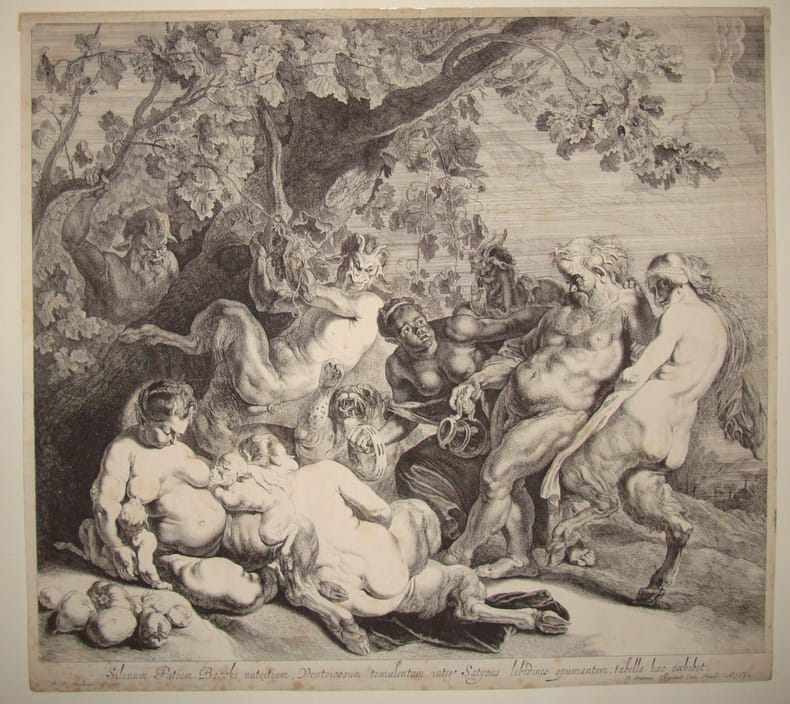
Silenum Patrem, Bacchi nutritium, Ventricosum temulentum, inter Satijras libidines spumantem, tabella haec exhibet
D’après P. P. Rubens. Silène sivre soutenu par une satyresse et par une femme noire. Il y a deux satyresses couchées, dont une allaite ses enfants; deux satyres montent sur un arbre. Gravure d’après la toile de Rubens conservée au musée Pouchkine à Moscou. En feuille Bon 1642 420 x 486 au trait carré + la tablette
Riferimento per il libraio : 5602
|
|
|
SPAGNULO, Giuseppe (Grottaglie, Taranto 1936),
Senza titolo
Puntasecca originale di Giuseppe Spagnulo, numerata e firmata dall'Artista. Opera allegata al volume di Mark Strand ''Pollo, Ombra, Luna e altro. Edizioni L'obliquo 2010 Puntasecca stampata a mano con torchio calcografico su carta Magnani Pescia nella stamperia Corrado Albicocco di Udine. Esemplare 32/50. Il volume di Strand viene fornito insieme al'incisione. Cm 17 x 14. . . Perfetto (Mint). . Tiratura di 50 esemplari. .

|
|
|
Spahn, Carl
Die Randenbahn.
Zürich, Arnold Bopp, 1913. 8°. 22 S. Orig.-Heft. + Wichtig: Für unsere Kunden in der EU erfolgt der Versand alle 14 Tage verzollt ab Deutschland / Postbank-Konto in Deutschland vorhanden +
Riferimento per il libraio : 2782DB
|
|
|
Spahn, Carl:
Die Randenbahn.
Zürich, Arnold Bopp, 1913. 8°. 22 S. Orig.-Heft.
Riferimento per il libraio : 2782DB
|
|
|
SPALLACCI, Piergiorgio,
Senza titolo
Acquaforte Firma e dedica a matita. Esemplare p.d.a.. Diametro cm 17,5 (Foglio 33,5x35,5). . . Ottimo (Fine). . . .

|
|
|
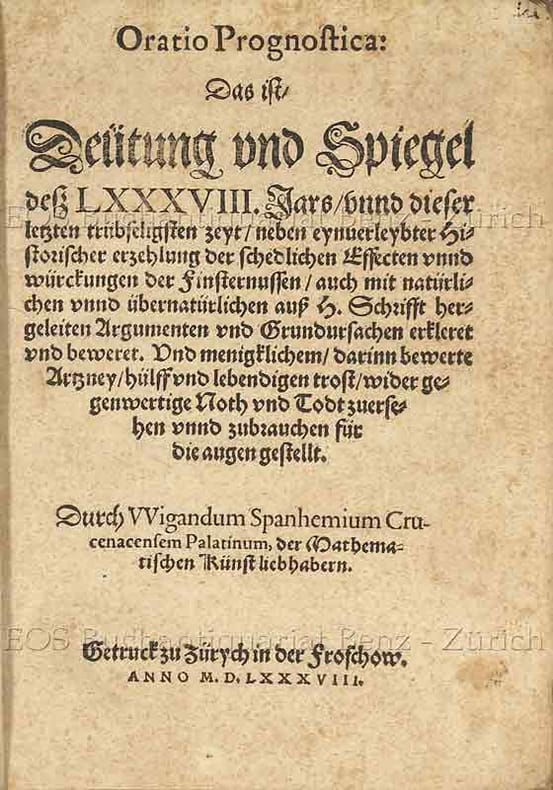
Spanheim, Wigand
Oratio Prognostica: Das ist Deutung und Spiegel dess LXXXVIII. Jars, unnd dieser letzten trübseligen zeyt, neben eynverleybter historischer Erzehlung der schedlichen Effecten unnd Würckungen der Finsternussen ... durch Wigandum Spanhemium Curcenacensem Palatinum, der mathematischen Künst Liebhabern.
Getruckt zu Züriych, in der Froschow, anno 1588. Kl.-4°. XXXI, (1) Bl. (letztes leer). Spätere schlichte Borschur. + Wichtig: Für unsere Kunden in der EU erfolgt der Versand alle 14 Tage verzollt ab Deutschland / Postbank-Konto in Deutschland vorhanden +, Titelblatt
Riferimento per il libraio : 5638CB

|
|
|
Spanheim, Wigand:
Oratio Prognostica: Das ist Deutung und Spiegel dess LXXXVIII. Jars, unnd dieser letzten trübseligen zeyt, neben eynverleybter historischer Erzehlung der schedlichen Effecten unnd Würckungen der Finsternussen ... durch Wigandum Spanhemium Curcenacensem Palatinum, der mathematischen Künst Liebhabern.
Getruckt zu Züriych, in der Froschow, anno 1588. Kl.-4°. XXXI, (1) Bl. (letztes leer). Spätere schlichte Borschur.
Riferimento per il libraio : 5638CB
|
|
|
Special Feature/Hiroshige Ando's Sketches of Eiji Yoshida Early Specimen Prints and Prints Eiji Yoshida
Quarterly Ukiyo-e No.5 Special Feature: Eight Views of Ukiyo by Choshun Miyagawa
Not Available N.A. Soft Cover. Fine. The book is in fine condition. Not Available paperback
Riferimento per il libraio : 2090502113702392
|
|
|
Speckmann, Sebastian - Brähler, Anja [Red.]
Zwielicht. Arbeiten 2005 - 2008.
Leipzig, Galerie Kleindienst, 2008. 4°. 27 x 20 cm. [28] Blatt. Original-Klappenbroschur mit Original-Schutzumschlag.
Riferimento per il libraio : 8588EB

|
|

 Ricevere i risultati per e-mail
 Scaricare i risultati in PDF
 RSS feed
 Link
Link


