4.497 Ergebnisse
2 vols. Elephant folio. 112 pp. 224 text illus. (some in colour), 204 plates (numbered 1-205, nos. 204-205 forming one double-page plate; 7 double-page; 2 coloured), showing photographs, measured drawings, ground plans, etc. Loose as issued in original board portfolio. First edition; rare. An important survey of the architecture of Constantinople, concentrating mainly on religious buildings. The extensive scope covers the major mosques of the Ottomans, as well as Topkapi Palace, the Hagia Sophia, Hagios Theodoros and the Byzantine land walls. The plates depict interior and exterior views, architectural details, street scenes, plans, and elevations. A panoramic and comprehensive overview of many centuries of architectural evolution in Istanbul. - Very scare, and virtually impossible to obtain: the last copy at Sotheby's sold for £13,150 in 2002. The only other copy available in the trade has library stamps on every plate. - Some plates evenly browned (as usual); a few plates a bit frayed. Spines repaired with tape. Atabey 545. The Ottoman World II, Cat. Sotheby's, 28 May 2002, lot 537. Not in Blackmer.
1983Best.-Nr. 003782Bonn, Europa Union Verlag, 1983. -- Broschiert -- 8°
8vo. VIII, 136; 22 pp. (appendix in a nashk Arabic type). Publisher's original printed wrappers (spine repaired). First and only early edition, in German, of an extraordinarily thorough documentation of scholarly academies in the early Islamic world, containing a biographical dictionary of early Arabic scholars and lists of their writings. This is one of the earliest and most important publications of the Göttingen orientalist Ferdinand Wüstenfeld, who based much of it on the ancient biographical dictionaries compiled by Abu-Bakr Ibn Qadi Shuhba and Ibn Khallikan. It covers the 5th to the 9th centuries AH (11th to 15th centuries CE), with accounts of 37 academies in Bagdad, Nishabur, Damascus, Jerusalem, and Cairo, and brief biographies of 254 scholars, 187 listed under the academies where they taught and 67 in a separate section at the end. For most he includes a list of their writings. The German text ends with a 2-page extract, in German translation, from the works of Ibn Khallikan. A 22-page appendix gives the original Arabic text of an extract from Ibn Shuhba, "Tabaqat al-shafi 'iyya", published here for the first time, with an Arabic title-page. - Ibn Qadi Shuhba (1377-1448 CE) was a leading jurist and chief Qadi in his native Damascus, best known for his biographical dictionary, completed ca. 1407. Ibn Khallikan (1211-82 CE), born in what is now Iraq, studied in Aleppo, Damascus, and Mosul before settling in Cairo, where he became a leading jurist in the Shafi'i school of Sunni Islamic law. He is best known for his biographical dictionary, completed ca. 1274. - The German orientalist and historian of Arabic literature H. F. Wüstenfeld (1808-99) studied theology and oriental languages at Göttingen and Berlin. He settled in Göttingen, taking a post at the University Library the year after the present publication, and taught at the University there from 1842, becoming professor of oriental languages in 1856. From 1835 to his death almost 65 years later, he published many important contributions to the study of early Arabic texts, covering the fields of medicine, language, topography and geography, often including the original Arabic texts of important works not previously published. - The Arabic type used for the excerpt from Ibn Qadi Shuhba is smaller than that of the Nies foundry, often used in Germany around this time, and quite different stylistically. It may have been produced for Wüstenfeld's works. - Minor browning, but altogether in very good condition, only slightly tattered at the edges. Original publisher's wrappers a little damaged along spine (professionally repaired; modern spine). Untrimmed copy, removed from the "Institut für Geschichte und Kultur des Nahen Orients an der Universität München" with their stamp on the title-page. Neue Jahrbücher für Philologie und Paedagogik VIII (1838), pp. 355f. Not in Blackmer or Gay.
1994Best.-Nr. 13561München Heyne, 1994. 190 S. 18 cm, Taschenbuch,Softcover
Best.-Nr. 86624aafFribourg, Office du Livre & München, Mosaik Verlag, 1987, in-4to, 224 S., illustr. mit zahlreichen farbigen Fotogr., Original-Pappband mit orig. illustr. Umschlag und orig. illustr. Schuber.
Best.-Nr. 87300aafMünchen, Mosaik Verlag, 1987, in-4to, 224 S., illustr. mit zahlreichen farbigen Fotogr., Verlags-Archiv Exemplar mit Stempel ‘Exemplaire d’Archive’, Original-Leinenband, OU, ill. Schuber. Neues Exemplar.
Large 4to. 2 vols. VII, (1), 461, (1) pp. (4), 435, (1) pp. Near-contemporary sprinkled gold-tooled tanned sheepskin, sewn on 4 recessed cords, gold-tooled board edges, shell-marbled endpapers and matching marbled edges. First edition, edited by Caussin de Percival. One of the first complete French-Arabic dictionaries. The Copt Ellious Bocthor (1784-1821) held a chair for Vulgar Arabic at the École des Langues Orientales in Paris. - Some foxing throughout, otherwise an excellent copy. From the library of the Ducs de Luynes at the Château de Dampierre: their bookplate reproducing the arms of Charles Marie d'Albert de Luynes (1783-1839), 7th Duc de Luynes, on pastedown in both vols. Fück 151. Vater/Jülg 457. OCLC 493558888. Cf. Gay 384 (1864 third ed.).
Large 4to (198 x 260 mm). (4), XV, (1), 227, (1) pp. Contemporary French half calf over papered boards with giltstamped red spine label. Only edition. The first dictionary of Arabic published in France: a unidirectional wordbook of more than 6,000 French terms translated into Arabic (in Arabic typeface), printed in large type and generously spaced, for the use of French merchants in the orient. - In the preface, the author anticipates the concept of linguistic relativity when he observes that Arabic lacks equivalent terms for a multitude of French words, especially such as relate to everyday life, culture, and the mechanical arts, and states that it would be impossible to translate the works of Newton, Montesquieu, or Lavoisier into Arabic, for "l'ignorance d'une chose entraîne nécessairement l'ignorance du mot qui sert à la désigner" (p. ix). With the practical needs of commercial travellers and secretaries in mind, he has thus aimed to pare down the vocabulary of his dictionary to the bare essentials, so as to offer to those who would wish to use Arabic nothing but the most widely used words (p. xiii). - Ruphy, a native of Greece born Iacovos Rouvis, emigrated to France as a young man and participated in Napoleon's Egyptian Campaign before becoming secretary of the Conseil des arts et du commerce du département de la Seine in 1801. - Binding rubbed; extremeties bumped. A fairly large waterstain throughout the lower third of the book. Rare in the trade; a single copy at auction in the past 40 years. Ersch/Gruber V, 53. OCLC 27402218. Spirgatis, Kat. 32: Grammatiken und Wörterbücher (Leipzig 1895), no. 309. Not in Zaunmüller or Vater/Jülg.
Royal 4to (31 x 27 cm). 2 vols. 439; 46, (2 blank) pp. (vol. II, pp. 1-2 blank). With 2 title-pages printed in red and black, each with the author's wood-engraved decorated GAV monogram and motto; vol. 1 with 2 folding lithographed maps (1 printed in black, brown and blue, with the route coloured by hand in red, of the Sinai Peninsula; the other in black and white, of the city of Petra); 40 mounted albumen prints after paintings by Emile Pierre Metzmacher (mainly 11.5 x 16 cm), individually mounted with letterpress captions on the mount; and 2 engraved plates; vol. 2 with 6 numbered engraved plates of molluscs and insects. Set in roman and italic types, with incidental Arabic, and sans-serif Greek and Latin capitals to render ancient inscriptions. The Diario in the original publisher's maroon cloth with the author's crowned monogram gold-blocked on the front board and spine, and blind-blocked on the back board, with the title in gold on the spine. The Atlante in the original publisher's blue cloth, with the author's crowned monogram and the title gold-blocked on the front board, and the monogram in a larger size blind-blocked on back board. Both volumes with gilt edges, orange endpapers and with tissue guard leaves tipped in, protecting the albumen prints and engraved plates. Rare first and only edition of an Italian account of an 1865 expedition through "Arabia Petrea", meaning the Sinai Peninsula and adjoining parts of what are now Israel and Jordan, including the ancient city of Petra, now in Jordan, where parts of "Raiders of the Lost Arc" were filmed (the spectacular ancient buildings are carved into the solid rock walls of the cliffs and probably date from the 5th century BC to the 2nd century AD). - The photographically reproduced paintings show the author on camelback, numerous Bedouins, Arabs, Egyptians and Ethiopians as well as archaeological sites, monuments and topographic views. The plates in the second volume depict molluscs and insects, reflecting the author’s own research interests in the field of natural history, in addition to archaeology. The typography has been designed to suit the antiquarian subject, with Louis Perrin's Augustaux roman capitals on the title-pages, the main text set in what would then have been considered an "antique" style (types influenced by pre-1800 models) and sans-serif capitals used to represent the ancient Greek and Latin inscriptions. The author quite literally put his stamp on the work, with his crowned monogram not only on the title-page and binding, but also embossed in the paper, where it serves as a sort of watermark. - The book does not indicate the size of the edition, but since most of the illustrations are original albumen prints, there cannot have been many copies produced. The present copy may be a more deluxe binding than the Blackmer copy, also inscribed by the author to a woman, for it was in green cloth with only Visconti's single initial "V" on the front board. The volume with the Diario is a presentation copy with the author’s presentation inscription to a woman named Josephine. - Bindings slightly worn, the blue cloth a little stained. First and last leaves of both volumes browned, some foxing, some fly-leaves with a tear (not affecting the plates), the map of Petra stained due to oxidation, with some browning caused by the albumen prints on the facing leaves, but overall in good condition. Blackmer 1742. Gay 3650 bis. Macro 2254 (not noting plates): Not in Howgego, Ibrahim-Hilmy, or Weber.
1845pp. v, (5)-217. Foxed. Wide margins. XLib bookplate and manuscript ownership of the Abington Friends Meeting Jenkintown, PA. 8vo. 205 mm. Original full cloth binding, decorated in blind. Front board decorated with flowers in gold gilt. Corners worn with slight loss. Slight loss at head of spine. First Edition. Hardbound. Very good. Interesting essay on the climates and seasons around the globe. NW48 FarRt
4to. 72, (14), VIII pp.; (2) ff. with engravings. Text set in roman, Hebrew, Greek and Arabic type. With a small Portuguese woodcut coat of arms on the title-page and 4 engraved plates on 2 leaves bound at the end of the book. Later blue paper wrappers. First and only edition of an instruction manual for the compositors of the Portuguese Impressão Regia on the proper setting of Greek, Hebrew and Arabic type. It was written by Custodio José de Oliveira (d. 1812), professor of Greek at the Colégio Real dos Nobres in Lisbon and one of the Directores Litterarios of the Impressão Regia, serving until 1807, for which he wrote the present work. The present work is identified as "very useful" by Innocencio and according to him, it was the only Portuguese manual on typesetting he knew so far ("Trabalho mui aproveitavel, para o tempo em que sahiu, e o unico que sobre o assumpto temos até agora escripto orginalmente em portuguez"). Oliveira shows in both the tables and inserts within the text the alphabets and numbers in Greek, Hebrew and Arabic with their roman equivalents. The last four plates (printed on both sides of two leaves) show common ligatures and abbreviations in Greek. The present copy of this very rare work is complete with all plates, the "Prefação aos compositores typograficos" (numbered I-VIII) and the seven-leaf dedication, all bound at the end of the book. An important work on the subject of typesetting and the only work on this topic known in Portuguese. - With the bookplate of Américo Cortez Pinto (1896-1979) on the front wrapper, a Portuguese physician, writer, poet and historian who also wrote some works on the art of printing. Front wrapper half loose and back wrapper loose, spine partly gone, wrappers a little frayed, discoloured and slightly stained. Paper edges slightly frayed as it is an untrimmed copy, sometimes with the bolts unopened. Some marginal staining, very minor foxing, but overall a very rare work on printing and typography which is still in fine condition. Bigmore/Wyman II, 90. Innocencio II, 461. The literature of printing: a catalogue of the library illustrative of the history and art of typography, calcography and lithography of Richard M. Hoe, p. 85. Not in Porbase.
Arabic manuscript on paper with somewhat wavy laid lines only (335 x 239 mm; text area 263 x 176 mm), 544 ff., written in a tidy nasta'liq, 35 lines to the page, text frame of red and blue rules, important words and phrases in red or in larger naskhi; chapter headings repeated in margins in a bold calligraphic script, several marginal annotations in various contemporary and later hands. Early 20th century brown roan preserving covers of contemporary morocco binding blind-stamped with a single tool to form a central motif of three interlocking lozenges, smaller lozenges above and below, blind-stamped corner-pieces. Very rare Arabic translation of Al-Jurjani's important medical compendium, the first major medical text written in the Persian language. - Al-Jurjani (d. 1136) "went to live in Khwarizm in 504/1110 and became attached to the Khwarizmshahs Kutb al-Din Muhammad, to whom he dedicated his 'Dhakirah', and Atsiz b. Muhammad [...] His 'Dhakirah Khwarizmshahi', probably the first medical Encyclopaedia written in Persian and containing about 450,000 words, is one of the most important works of its kind; it also exists in an Arabic version, and was translated into Turkish and (in an abbreviated form) into Hebrew" (Encyclopaedia of Islam). - Modelled on the Qanun of Ibn Sina (Avicenna), the "Dhakirah" is divided into ten books, covering: definition and utility of medicine, and the structure and powers of the human body; health and disease, in general, including causes and symptoms of disease, and accidents of the body; the preservation of health; diagnosis, crisis and prognosis; fevers and their treatment; local diseases and their treatment; tumours, ulcers and so forth; the care of the external parts of the body (hair, skin, nails, and so on); poisons and antidotes; and simple and compound drugs. - Binding stained and rubbed. Various seal impressions (some erased) on first and second leaves and at end of text. Paper shows some splashes, soiling and staining, first leaf re-attached and with loss of one or two words on verso (sense recoverable), margins of last few leaves strengthened, but generally in good, sound condition. Provenance: Abdul-Malik bin Mahmud al-Mausuli al-tabib ("the physician"), with his ownership inscription dated 5 Rajab 913 AH (10 Nov. 1507) at the Mu'ayiddi hospital in Mosul; the distinguished German ophthalmologist and Arabist Max Meyerhof (1874-1945), with his bookplate on the front pastedown. GAL I, 487 & S I, 889. Cf. Keshavarz, A descriptive and analytical catalogue of Persian manuscripts in the library of the Wellcome Institute for the History of Medicine, pp. 52-54 & p. 149. Fihrist records no copies of the Arabic translation.
985 x 645 mm. Scale 1:500,000. Key in English. Printed on cloth. Blueprint map of the Gulf, showing Saudi Arabia, Bahrain, and parts of Qatar. The map pays particular interest to oil and gas exploration, detailing the Trans-Arabian Pipeline, the old tapline survey route, and the offshore terminal and refinery at Ras Tanura, as well as the Jafurah basin, the largest natural gas field in the Kingdom stretching 170 by 100 kilometers. - Among the most notable places are Hofuf, Dhahran, and Abqaiq in Saudi Arabia, as well as Manama, Awali, and al-Muharraq in Bahrain. Labelled locations in the displayed portion of Qatar's coast include Hawar Island, Dukhan and Salwa. The map illustrates trails, roads, and airstrips, as well as topographical features such as dunes, sand and gravel patches, and sabkhas. - The sheet was prepared as a working document by Aramco and the U.S. Geological Survey to help them in the early stages of comprehensive nationwide mapping and exploration work for the Saudi Government. First published in May 1953, the present map was revised in February 1954. - Two minor brown spots; upper left edge a little toned and frayed.
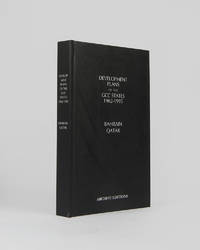
Best.-Nr. 121997Minneapolis East View 2026. . 8vo 25.5 x 17 cm; includes many maps tables graphs and charts text in English and Arabic; publisher's black cloth lettered white to board and spine a fine copy. The complete development plan of Bahrain in 1982-85 including the report of the same and the development plan of Qatar of 1977 as well as planning studies and long term plans. Minneapolis, East View, 2026. hardcover
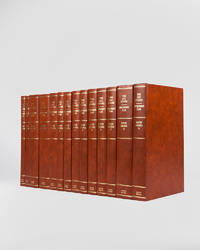
Best.-Nr. 121946London Archive Editions 1994. . 14 vols 8vo 25.5 x 16.5 cm; includes maps charts & diagrams; publisher's original orange-brown cloth gilt lettering to spines top edges gilt a fine set. The complete development plans of Saudi Arabia from 1970 to 1995 with supplementary documents and reports including the master plans for Jeddah. London, Archive Editions, 1994. hardcover
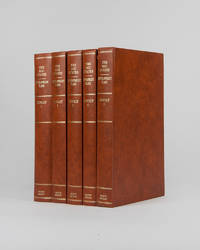
Best.-Nr. 121996London Archive Editions 1994. . 5 vols 8vo 25.5 x 16.5 cm; numerous charts maps plans graphs and tables; publisher's original orange-brown cloth gilt lettering to spines top edges gilt a fine set. The full development plan for Kuwait of 196/7-1971/2 as well as master plan for the city studies for the National Physical Plan and of urban development the statistics and figures for the years 1963-1988 and the statistical abstract for 1990-91. With numerous maps graphs and charts illustrating the reports as well as the full first five year plan reproduced in Arabic. London, Archive Editions, 1994. hardcover
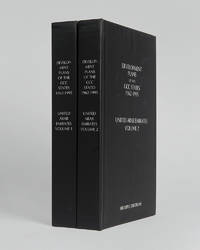
Best.-Nr. 121999Minneapolis East View 2026. . 2 vols 8vo 25.5 x 16.5 cm; includes maps charts & tables; publisher's black cloth lettered white to boards and spines a fine copy. The complete collection of planning documents for Abu Dhabi from 1962 to 1979 the development plan review for Dubai of 1971 and the Federal Economic and Social Development Plan 1975 to 1980. Minneapolis, East View, 2026. hardcover
Albumen print, 279 x 218 mm.
Oblong large folio (570 x 419 mm). Lithographed illustrated title, 2 ff. of text, 16 mostly coloured lithogr. plates showing horses (c. 33 x 45 cm, paper dimensions c. 40 x 55 cm; some with borders), 5 (instead of 6) ff. of descriptive letterpress text (the missing page supplied in ink). Contemporary half calf with giltstamped spine label. Extremely rare and early series of lithographs. The large and appealingly coloured plates depict important stallions and mares from the famous Danish Royal Stud at Frederiksborg (Pegasus, Flink, Zephir, Palnatoke, and Velskat, among others). All horses are branded with a monogram and often also with the crown. The publication was originally planned to comprise 12 issues of 4 plates each but no more than the first four were produced. - Two plates are trimmed and mounted on different backing paper (one with a repaired tear). Text shows foxing, but plates are generally clean. Binding somewhat rubbed and bumped at extremeties, with damage to spine. Nissen 1499. Not in Schwerdt or Mennessier de la Lance.
2007Best.-Nr. 37483ABMünchen, blv, 2007. 29 x 29 cm, 400 Seiten, mit zahlreichen farbigen Abbildungen, DVD fehlt, weißer illustrierter Pappband. 1. Auflage wenig gebraucht, gut erhalten.
2011As New English Paperback. Pbo. Mint. Cr. 8vo. (21 x 11 cm). In English. Color ills. 167, [1] p. Destination Cappadocia: Cappadocia outdoor sports guide.
Folio. 54 pp. Sewn. Military reports from the Mesopotamian theatre, issued by Generals W. S. Delamain, A. A. Barrett, and J. E. Nixon between 1914 and 1915, in the early months of the British Empire's Mesopotamian campaign against the Ottoman Empire. Includes the despatches regarding the Battle of Shaiba (12-14 April 1915), in which the British infantry successfully defended Basra from the Ottoman forces. Significantly, this was the last time the Ottomans would threaten Basra, and after the battle it would be the British who generally held the initiative in Mesopotamia. It also changed attitudes among the Arabs, who subsequently began to distance themselves from the Ottomans. - Perfectly preserved. OCLC 44868586.
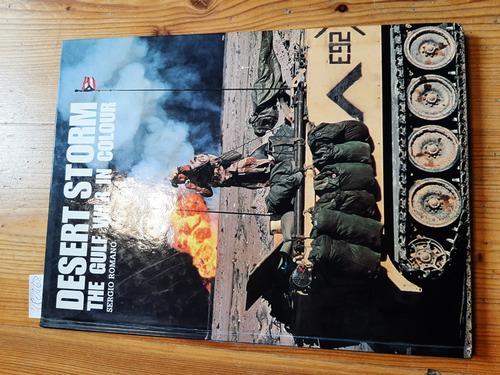
1991Best.-Nr. 490468London: Greenhill. 1991. Ca. 60. 33x24,5cm. Zustand: Sehr Gut, eher ungelesen (Innen); Einband (Außen) hat geringe Gebrauchsspuren; Untere Außenecken sind etwas bestoßen; Ppbd.
1999Best.-Nr. 8355Connecticut/London: Greenwood Press. Near Fine. 1999. First Edition. Hard Cover. 0313310246 . xxii 329pp; previous owner's inscription to front endpaper otherwise fine. Contributions in Military Science Number 175 ; 240 x 160mm . Greenwood Press hardcover
8vo. pp. 137-171 (entire volume: x, 137-262, (6) pp., with 28 photographic illustrations, numerous sketch maps in the text, and two folding maps, one in colour, loosely inserted). Original printed blue wrappers. The famous British explorer's extensive account of his expedition in the interior of Oman; much of the territory crossed now is part of the United Arab Emirates. Thesiger (1910-2003) set out from Abu Dhabi in 1948; the large and detailed colour map shows his journeys from 1945 to 1950. - Thesiger later expanded on the subject to produce his classic travelogue, "Arabian Sands" (1959). Thesiger's highly regarded photographs depict the desert of the Empty Quarter, a settlement at Liwa, sand vegetation after heavy rain, a falconer mounted on a camel, a peregrine falcon with a caught hare, peregrine falcons on the blocks, Sheikh Wahiba of Yahahif and a young Wahiba girl, a thoroughbred Batina camel, the Farai well in Wahib country, portraits of Musallim bin al-Kamam and Salim bin Kabina, and a view of Jabal Kaur from the wadi Saifam. The paper was read in the presence of the Second Secretary at the Saudi Arabian Embassy, H.E. Abdul Rahman Halassie. Not in Macro.