Multiple ContributorsMareMagnum

6,777 results
1926Telephone Talk was the glossy bimonthly publication of the British Columbia Telephone Company. It was written by employees for employees to present information of interest to those engaged in the plant, traffic, commercial, operating, accounting and other departments of the service. Each issue is replete with black and white photos and information on topics such as: company, industry and technological news, traffic levels, expansion plans, personnel announcements, publicity and social events, deaths, weddings, lists of exchanges, and more. As such, these issues serve as a vital preserve of rare and fascinating British Columbia history. This volume covers topics including: Great photo of cable-pulling gang; The progress of the phone in greater Vancouver; New record set by Vancouver installers; Cartridge fuses defend against foreign currents; Providing phone facilities is a co-operative task; New Kerrisdale exchange being equipped; How a switchboard lamp is made; William Buckle and Splicing; Construction/splicing in Vancouver; A Switchboard Plug and Cord Explains its troubles; Where the cables end when they crawl out of the sea; Chilliwack's first telephone agent, John McCutcheon, passes away; Nice photo of Granville and Hastings; Nice photo of Richmond Road and area near Victoria; Operator training - 8 pages with nice photos; Peter Grant helped equip Canada's first common battery office; Nanaimo and New West. offices to be expanded; Preparing the pay cheques; George P. Kelly - installed 80' poles; More trunks in Vancouver; Lightning damage on mainland; Repeaters aid voice currents on long journeys; automatic typewriters - chief repeaterman William Faulkes; New Kerrisdale office; Bar Graph of growth of the B.C. system; Statement of Development: # of phones in operation in towns across the province; Victoria and Vancouver to be united by new route; how the phone bill was paid 20 years ago; Kootenays get service; The service application; High tension hazards; draughting the system; Mr. C.E.S. Fisher; Operator Grant gets a phone in her home; Arithmetic is paramount in traffic man's life; Phone shattered by lightning strike; Kamloops now connected to coast; Despatching yellow cabs from 'seymour 4000'; New Carlton office; plant garage serves many cars; new Langley office; Long Kamloops feature with many photos; Grouse Mountain yields to phone's advance - long article with many photos; and more. Half-leather binding. Average wear overall with the exception of backstrip which shows significant wear and is loose along back edge. Ink stamp of company executive E.P. LaBelle upon top edge of text else unmarked. Binding intact. Book
1878ref. Arm1018Chambery Pierre Carron 1878 Ouvrage contenant 9 photographies exceptionnelles contre collées sur carton - In8 - broché - 148 pages - envoi autographe de l'auteur- 1 grand plan couleur in fine et 2 planches - les 9 photographies sont en bon état , légèrement passées sans gravité ce qui pour des photographies de 1878 justifie son prix .
1878ref. Arm1018Chambery Pierre Carron 1878 Ouvrage contenant 9 photographies exceptionnelles contre collées sur carton - In8 - broché - 148 pages - envoi autographe de l'auteur- 1 grand plan couleur in fine et 2 planches - les 9 photographies sont en bon état , légèrement passées sans gravité ce qui pour des photographies de 1878 justifie son prix .
ref. 141772aafWinterthur. bei C. Studer Lithograph, 1838, kl. in-8vo, mehrfach gef., 10 x gef. Leporello in Federlithographie, 12 x 232 cm. mit Randbild, exlibris Peter E. Obergfell, ill. Original-Pappband (Abb.: Eine Bäuerin und ein Bauer in Zürcher Tracht vor einem Getreidefeld). Auf Rücken: Ansicht des Dorfes Brütten.
ref. 141787aafLondon, by J. Connor, Wardour-Street for David Fowler (foot of title-page clipped off), not dated. (1791), sm. in-8vo, XII + 201 S. + 2 engraved plates (The ancient city of Auguste (= Augusta Raurica) + a view of the Lake of Bienne, (known also... by Rousseau), Heraldic bookplate: Basil Readman (devise: Ducitur ron Trahitur)/ + Peter E. Obergfell / + a hand written note: R. Robinson’s Book October 19. 1826, Contemporary calf, spine and front-hinge worn,
ref. ANAIS-1889105171Barrett Kendall Publishing Lt. other. Good. 0x0x0. Buy with confidence. Excellent Customer Service & Return policy. Barrett Kendall Publishing, Lt unknown
1909ref. 1100515.82The Cape Town Section South Africa 1909 - 1965. Hardcover. Very Good. 8vo hardcover. 22 bound hardcover volumes. Nearly complete run of the journal's annual volumes from the 1909/1910 issue to the 1965 issue but LACKING only the 1912 issue No. 15. Each volume bound in green or black cloth binding together original paperback issues two or three years in each volume original covers bound in. Incl's bound Cumulative Index volume covering 1894-1968 Nos. 1-71 plus additional unbound issues in paperback binding of: 1968 1969 1970 1971 1976 1977 1978 1979 1980 1981 1982 1985 1993 1994 last two issued in glossy hardcover. Vg condition overall. Volumes bound by the Appalachian Mountain Club each vol. bearing their name at lower spine w/ small "AMC" stamp on orig. paperback cover of each issue. Aside from missing 1912 issue contents complete clean interior bindings firm. Initially published as "The Mountain Club Annual": first 8 volumes show moderate exterior rubbing 2 with front & rear hinges cracked no loosening of pgs 2 others w/ very neatly cloth-tape-repaired hinge. Remaining later volumes quite bright & clean bindings tight gilt spine lettering bright. 22 bound hardcover volumes each appx. 300 pgs with b&w illustrations some fold-out; plus 14 individual issues in originally issued bindings. The Cape Town Section, South Africa hardcover
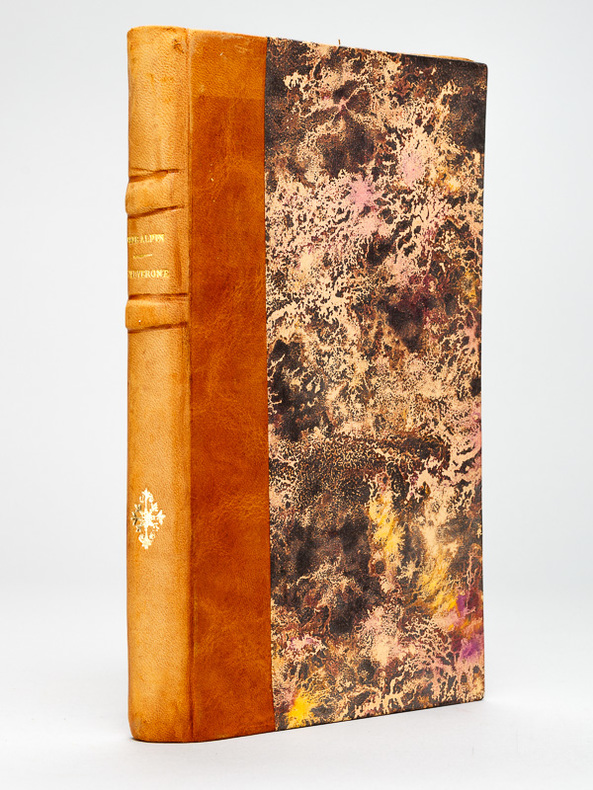
18961 vol. grand in-8 reliure demi-basane blonde, dos à 2 nerfs, Librairie P. Juliot, Clermont-Ferrand, 1896, VIII-340 pp. et 12 planches hors texte Le présent ouvrage fut "publié pour être offert aux membres du Club Alpin Français qui viendront à Clermont, à l'occasion du Congrès du mois d'août 1896. Il est l'oeuvre de la collaboration improvisée de plusieurs membres de la Section d'Auvergne. Quelques semaines avant la date du Congrès, le bureau de la Section avait décidé qu'un itinéraire des diverses excursions serait imprimé et distribué aux congressistes. On se partagea le travail de rédaction, et quand chacun eut apporté son contingent, il se trouva qu'au lieu d'un simple itinéraire, on avait presque un ouvrage d'ensemble sur l'Auvergne [ ... ]". Etat très satisfaisant (premier plat de couv. conservé mais sans faux -titre ni titre, petites restaurations marginales en couv. conservée et premier feuillet de texte et dans un f. en marge, reliure modeste mais bien solide) pour cet ouvrage très rare, qui propose un voyage très savant et érudit dans le Puy-de-Dôme (Clermont, Montferrand, Gergovie, la Limagne, le Puy-de-Dôme, de Royat à Randanne, du Mont-Dore au lac Chambon, à Marols et Saint-Nectaire, la Bourboule, les lacs de Besse,, etc...) mais également dans le Cantal. Français
1896ref. 558071 vol. grand in-8 reliure demi-basane blonde, dos à 2 nerfs, Librairie P. Juliot, Clermont-Ferrand, 1896, VIII-340 pp. et 12 planches hors texte
18601 vol. in-8 (20,5 x 14 cm à la reliure) format à l'italienne cartonnage éditeur pleine percaline rouge, R. Dickenmann Peintre, Zurich, s.d. (circa 1860 ?), avec 25 aquatintes en noir sous serpente : Genève et le Mont-Blanc pris depuis l'Hôtel des Bergues ; Genève prise depuis l'Hôtel de l'Ecu ; Hôtel Beau-Rivage près Lausanne Lac de Genève ; Lausanne ; Vevey ; Montreux ; Chillon ; Hospice du Simplon et le Mont Léone ; Berne prise de l'Observatoire ; Thoune. Vue générale prise de l'Eglise ; Interlaken ; Hôtel et Cascade du Giefsbach Lac de Brienz ; Brienz ; Glacier inférieur de Grindelwald et l'Eiger ; Wengernalp Hôtel de la Jungfrau ; Le Staubbach à Lauterbrunnen ; Lucerne ; Righi Kulm ; La Chappelle de Guillaume Tell au lac des IV Cantons ; Tunnel près de Fluelen ; Pont du Diable route du St Gothard ; Hospice du St Gothard ; Zurich prise de l'Eglise de St Pierre ; Chute du Rhin ; Bâle Superbe recueil, dans un état de conservation assez exceptionnel. Le cartonnage est en parfait état, les planches sont en général très fraîches, on relève quelques rouss. sur certaines (voir les photos). Français
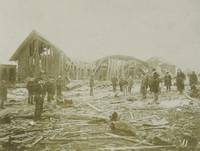
ref. FRE64Accordion-fold album containing twelve 12 original photographs each approximately 11.4 × 8.9 cm 4.5 × 3.5 in. mounted on heavy cloth leaves between dark brown cloth-covered boards; album when closed approximately 12.7 × 10.2 cm 5 × 4 in. Prints somewhat faded and with generally light contrast nevertheless retaining considerable detail. Some wear and fraying to the cloth mounts and extremities; overall good condition. The photographs form a coherent visual record of the aftermath of the January 15 1895 Butte explosion and fire one of the deadliest disasters in Montana history. The fire began in Butte’s warehouse district and had already become well established when the fire department arrived. A relatively small initial explosion was heard inside the Kenyon-Connell warehouse; believing it safe to continue fighting the blaze firefighters resumed pumping water before a much larger explosion occurred caused by a large quantity of dynamite stored inside the building without the fire department’s knowledge. Firemen and bystanders were killed and injured and the explosion drew additional people to the scene to assist in recovering the dead and wounded. During these efforts another major explosion occurred at the nearby Butte Hardware Company warehouse where dynamite was also being stored. The official death toll was 57 possibly higher and included thirteen paid and part-paid members of the Butte Fire Department. Only two paid firefighters survived together with “Jim” the horse pulling the hook-and-ladder wagon. In the aftermath Butte prohibited the storage of dynamite within the city. The album includes with two contemporary memorial composites of members of the Butte Fire Department. A substantial group of photographs records the immediate physical destruction. Broad sections of the warehouse district have been reduced to fields of splintered timber collapsed sheet material and structural debris with virtually nothing left standing in several views. Individual photographs show townsmen and recovery workers wondering around the ruins; groups of men gathered amid the wreckage; isolated figures crossing the devastated area; and the skeletal remains of large wooden structures. Another photograph shows men gathered beside a horse-drawn wagon within the disaster area apparently during the recovery and clearing of the site. The concluding photographs document the public mourning and funeral procession following the disaster. One shows an immense crowd filling and lining a Butte street; others photographed from elevated positions record the long procession passing through the city with pedestrians mourners and successive horse-drawn vehicles extending far into the distance. Taken together these views convey both the scale of the funeral and the extraordinary effect of the disaster upon the community. The explosions killed the majority of Butte’s professional firefighting force and devastated part of the warehouse district while the subsequent funeral became a major civic event. The album is particularly effective in its progression from memorial portraits of the firefighters through the almost completely flattened explosion site and contemporary recovery activity to the mass public mourning that followed. hardcover
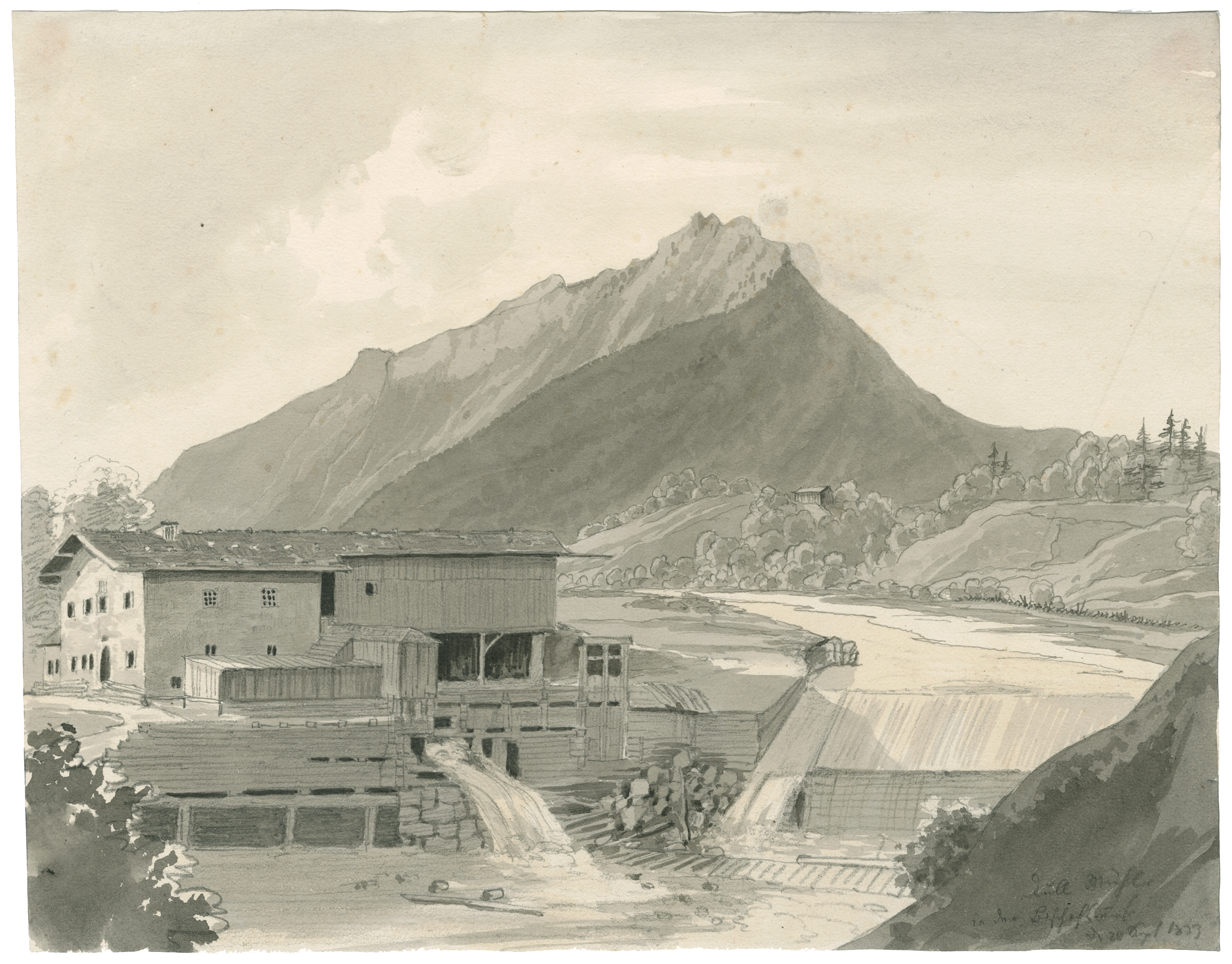
ref. 522-Eo.J. Pinsel und Feder in Grau, grau und gelblich laviert, über Bleistift, auf Velin, rechts unten betitelt und datiert ?Dull Mühle in der Bischofsmütze d 28 Sept 1833?. 19,9:25,3 cm. - Knickfalte rechts geglättet.
1923Telephone Talk was the glossy bimonthly publication of the British Columbia Telephone Company. It was written by employees for employees to present information of interest to those engaged in the plant, traffic, commercial, operating, accounting and other departments of the service. Each issue is replete with black and white photos and information on topics such as: company, industry and technological news, traffic levels, expansion plans, personnel announcements, publicity and social events, deaths, weddings, lists of exchanges, and more. As such, these issues serve as a vital preserve of rare and fascinating British Columbia history. This volume covers topics including: Photo of downton Nelson; Bird's-eye photo of Nelson from atop a mountain on north shore of west arm; Kootenay Feature 'The Romance of the 1890s - 8 pages of text and archival photos, including electric street cars in Nelson!; Table showing 'Exchanges in order of percent good toll calls; Cover advert. for Northern Electric Vacuum Cleaner!; Review of growth show steady expansion - 3 pages; Telephoning across Atlantic by AT&T Wireless continued for hours; When the Victoria and Esquimalt Telephone Company issued its own (one call) nickels; B.C. Industrial Review - statistics; Bar graph of # of phones operated from 1906 through 1923; the company's operator school; Issuing of monthly phone bills a work of magnitude - 4 page article with photos; photos of the halibut industry before 'the fish were scarcer in quantities and their habitats more scattered'; William Farrell- an appreciation of the former company president; 7 page article on B.C.'s deep sea fishing industry - great photos - halibut, herring, flounder; multiple photos from the Kootenays of snakes which have climbed up phone poles onto the wires!; photo of 25 year-old phone; Great full-page photo of the CIBC building at Hastings and Granville; 8 page article on the banks of vancouver with excellent photos; First interdepartmental football game; new power plant at Seymour office; A phone in B.C. for every 6 persons; Feature on Dams and the water-powers that turn the wheels of industry - photos of dams and various industries which use electricity, including the American Can factory and grain elevators; new power plant at Seymour office - illustrated; photos of productive farms and ideal homesites with super centerfold luxury Saanich home; Cover photo of U.S. President Harding in Stanley Park; Full-page photos of the U.S.S. Henderson entering the narrows and at dock with President Harding aboard; 13 page illustrated feature on the visit of President Harding - the first visit to Canada made by a President of the United States (President Harding died mere days later on August 2nd in San Francisco and this is reported as well); Photo of Crosland Bros. Farm in Duncan; 9 page illustrated feature on the seed growers of B.C.; photo of Duncan office under construction; Nice 8-page illustrated feature on Haney and area; photographing sound; Exploring Kootenay - Bill Skilling; 9 page illustrated feature on the Delta and Ladner district; Many miles of new long distance circuits; Improved inter-office trunk lines in Vancouver; and more. Half-leather binding. Average wear overall with the exception of the backstrip which is missing small chips and loose at back edge. Ink stamp of company executive E.P. LaBelle upon top edge else unmarked. Binding intact. Spine leaning moderately. Book
1938ref. 25505Edition chez l'auteur (Lausanne) 1938. In 4 (325 X 240 ) broché de 132 p. Ex.numéroté (1282) sur vélin 1/2000 d'un tirage de 1225
2 volumes In-4, XV-559-494p. Edition originale au tirage limité et numéroté 1/2400 exemplaires. Splendides ouvrages agrémentés de 657 illustrations en noir d'après des documents anciens. Une référence incontournable de la littérature montagnarde. Exemplaire de première fraicheur agréablement relié. [Perret 2031]
ref. 52203aafAarau und Thun, Christen, (später:) Aarau, Wirz, 1838-1918, in-8vo, 2-spaltiger Text, mit ca. 850 meist gestochenen Abbildungen, auf Vorsatz Stempel ‘Georg Zähnler, Furth’, auf Titel des 1863 Nummers hs. Besitzeintrag ‘Hulebrüch, Glettig, St. Peterzell. ’, spätere Halbleineneinbändehs. Titeletikette auf den Rücken.
ref. 142183aafMarseille, Barthelet et Cie., 1896, gr. in-8vo, 1 f. blanche + 27 p. + 3 pages d’illustration (carte du massif du Mont-Blanc; Vue du Mont-Blanc prise du Brévent avec l’indication des routes d’ascension; Coupe du massif du Mont-Blanc). envoi manuscrit de l’auteur sur couverture de la brochure / exlibris Peter E. Obergfell, reliure récente en demi-maroquin vert avec coins. Bel exemplaire avec la brochure orig, cons.
1928ref. 026420Boston MA U.S.A.: AMC 1928. Seventh Edition 1st Printing. Hardcover. Very Good. 16mo - over 5¾" - 6¾" tall. Assorted Maps. 7Th Edition 1928. Dark Mustard/Tan cloth. Black illustrated titles light wear. Includes The Original 1928 Mt. Washington Large Folding Map In About Fine Condition. Book Is In Near Fine Condition 'Field' Variant with the Flap. 528 pp With 4 All Clean 'Memoranda' Pages. Complete with all maps. AMC hardcover
1960ref. 231891960. Labor Industrial rock drilling photograph archive documenting Gardner Denver and drill carrier machinery in factory yard and field settings circa 1960s recording how specialized drilling equipment was designed serviced and operated in steep-cut and tunnel construction environments. The group centers on crawler-mounted drills compressor-fed hose systems and rail-mounted heavy equipment photographed both as machines and in use by work crews. Gardner Denver is identified directly by company stamps and visible signage while the field views place the machinery within active excavation and blasting work rather than isolated product display. Photo archive of 19 Large silver gelatin photographs all 8 x 10 inches Quincy Illinois and unidentified mountain construction sites circa 1960s. Views include operators seated or standing at tracked drill carriers on exposed rock faces; close mechanical studies of valves feed assemblies hoses and fittings; factory-yard portraits of articulated drill rigs parked on pavement; and a large rail-mounted drilling platform photographed on tracks with crew members standing above it. Several photographs show men in work clothes and caps monitoring or operating the machines on steep slopes with forested ridgelines behind them. One image records a tunnel portal marked BLUE MOUNTAIN with adjacent heavy construction equipment and rails leading into the opening. Blue Mountain Tunnel belonged to the original Pennsylvania Turnpike system opened in 1940 and by the 1960s it stood within a corridor undergoing major modernization as rising traffic as Americans in the postwar years increasingly relied on automobile ownership suburban commuting and highway expansion ultimately reshaping infrastructure construction and everyday mobility from the late 1940s through the 1960s. Advances in carrier-mounted rock drilling concentrated labor on machine operation positioning maintenance and coordinated blasting making work at Blue Mountain Tunnel faster more systematized and less dependent on earlier hand-held drilling methods. After World War II postwar conditions produced the demand capital and public-works agenda that made this machinery necessary: rising automobile traffic highway expansion tunnel widening and large earthmoving projects pushed contractors toward faster more powerful and more standardized drilling systems. Drilling was one of the mechanical developments that transformed rock excavation in the 1950s and 1960s and moved from more limited portable systems toward carrier-mounted equipment able to work faster more consistently and on more difficult terrain for highway cuts tunnel approaches and other large infrastructure projects. Because the group includes stamped manufacturer views shop and yard photographs working machine close-ups and field operation scenes it shows the full operating system of industrial drilling technology rather than a single machine in isolation. Light handling wear and minor curling at edges; one print with blueprint attached to verso; all images otherwise clean and in good condition. Depicting the industrial postwar boom and infrastructure investments carried out by mid-century American excavation technology manufacturer documentation and construction labor in practice. unknown
1960ref. 231891960. Labor Industrial rock drilling photograph archive documenting Gardner Denver and drill carrier machinery in factory yard and field settings circa 1960s recording how specialized drilling equipment was designed serviced and operated in steep-cut and tunnel construction environments. The group centers on crawler-mounted drills compressor-fed hose systems and rail-mounted heavy equipment photographed both as machines and in use by work crews. Gardner Denver is identified directly by company stamps and visible signage while the field views place the machinery within active excavation and blasting work rather than isolated product display. Photo archive of 19 Large silver gelatin photographs all 8 x 10 inches Quincy Illinois and unidentified mountain construction sites circa 1960s. Views include operators seated or standing at tracked drill carriers on exposed rock faces; close mechanical studies of valves feed assemblies hoses and fittings; factory-yard portraits of articulated drill rigs parked on pavement; and a large rail-mounted drilling platform photographed on tracks with crew members standing above it. Several photographs show men in work clothes and caps monitoring or operating the machines on steep slopes with forested ridgelines behind them. One image records a tunnel portal marked BLUE MOUNTAIN with adjacent heavy construction equipment and rails leading into the opening. Blue Mountain Tunnel belonged to the original Pennsylvania Turnpike system opened in 1940 and by the 1960s it stood within a corridor undergoing major modernization as rising traffic as Americans in the postwar years increasingly relied on automobile ownership suburban commuting and highway expansion ultimately reshaping infrastructure construction and everyday mobility from the late 1940s through the 1960s. Advances in carrier-mounted rock drilling concentrated labor on machine operation positioning maintenance and coordinated blasting making work at Blue Mountain Tunnel faster more systematized and less dependent on earlier hand-held drilling methods. After World War II postwar conditions produced the demand capital and public-works agenda that made this machinery necessary: rising automobile traffic highway expansion tunnel widening and large earthmoving projects pushed contractors toward faster more powerful and more standardized drilling systems. Drilling was one of the mechanical developments that transformed rock excavation in the 1950s and 1960s and moved from more limited portable systems toward carrier-mounted equipment able to work faster more consistently and on more difficult terrain for highway cuts tunnel approaches and other large infrastructure projects. Because the group includes stamped manufacturer views shop and yard photographs working machine close-ups and field operation scenes it shows the full operating system of industrial drilling technology rather than a single machine in isolation. Light handling wear and minor curling at edges; one print with blueprint attached to verso; all images otherwise clean and in good condition. Depicting the industrial postwar boom and infrastructure investments carried out by mid-century American excavation technology manufacturer documentation and construction labor in practice. unknown books
1899Pages 562-676. Features: In the Khalifa's Clutches - part IV of Charles Neufeld's ordeal; Impressions of Pekin - sensational photo-illustrated article; Two Loves Affairs, and How They Ended - Colonel Hervey Tryon falls headlong into a deep well of garbag; The Hook-Swinging Ceremony as I Saw It - Rev. Joshua Knowles describes a South Indian pagan festival in which devotees have hook placed in their flesh before they are swung into the air at the end of long poles - with photos; A Desperate Plight - travails of Captain H.V. Barclay in the arid Australian interior; The Great Grottos of Han - photo-illustrated article on the marvelous caverns near Han-sur-Lesse in the Belgian Ardennes; Held by An Octopus - Herbert Perkins explains how he was grabbed from out of the water; Shooting the Reversible Falls - photo-illustrated story from St. John, New Brunswick involving Xavier Francis and Louis Mitchell; Life in an Italian Village (near Pallanza); On the War-Path with Redskins - a retaliatory raid of natives is recounted by J.W. Schultz, a Rocky Mountain guide who was married to a Blackfoot and lived among them in Montana; The Fantastic Carnival at Pangau in a remote part of the Austrian Tyrol; Twenty-Seven Days in an Open Boat - Part II - the castaways are finally rescued, but in ghastly condition; Naia, The Witch of Rochefort-en-Terre, in Brittany - photo-illustrated article; Through Italy in Bedouin Dress - photo-illustrated account; One Thousand Miles on Mule-Back - Part I of this photo-illustrated article of the amazing journey of Mabel Penniman from New York to London via Central and South Amerca; The Bogus "Rush" at Coolgardie - photo-illustrated of a fake gold rush in Australia as told by John Marshalll of Kalgoorlie; Photo of women coal heavers in Dresden; Full-page photo from Kelsey Creek, California showing a river of fish three feet deep - with no water!; Photo of Tunisian camel fight; and more. Average external wear and soiling. Few pencil markings. Binding intact. A sound vintage copy of this excellent issue. Book
ref. 138585aafZürich, Orell, Gessner, Fuessli, 1793, Quer-8vo. 1 kalligraphischer radierter Titel mit Vignette + 2 Bl. + 75 S. (76 S., letzte S. leer) mit gestoch. Schlussvignette + 12 ganzseitigen Radierungen mit Ansichten, hs. Besitzverm. ‘M. Holzmann’ auf Vorsatzbl. / Ex libris Peter E. Obergfell. Hübscher späterer roter Leinenband. Titel vergoldet am Rücken.
ref. 140107aafZürich, Orell, Gessner, Fuessli, 1793, quer-8vo. gestoch. Titel mit Vign. + 2 Bl. + 75 S., mit gestoch. Schlussvign. (S. 3-4 mit kl. Eckabriss) + 12 radierte Tafeln, stellenw. leicht stockfl. am Rand, breitrandig, hs. Besitzverm. Hans Wismer auf Vorsatz, auf Titel hs. ,J. Wismer’ / Exlibris’ Peter E. Obergfell, Ppbd. mit grünem verg. Rsch., berieben u. etwas angestaubt, eine Ecke geknickt, Rotschnitt.
1867ref. 19750Paris et Genève, Victor Masson et filles, 1867. 3 volumes in-8 de XX-464 + [4]-437-[3] + [4]-587-[4]p. pour l'errata, demi-percaline prune, dos (passé) lisses.
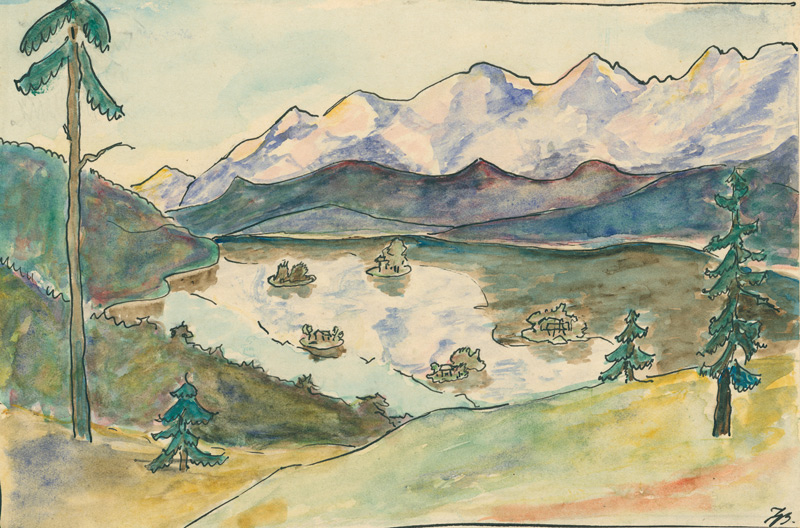
ref. 006-Wo.J. Aquarell und Feder in Schwarz, um 1926/1928, auf chamoisfarbenem Velin, auf Karton aufgezogen, rechts unten monogrammiert ?HB. (ligiert) ?. 13,2:20 cm.