20.214 risultati
rif. SONG0226341550Used: Good unknown
rif. SONG0873280997Used: Good unknown
rif. SONG0892363711Used: Good unknown
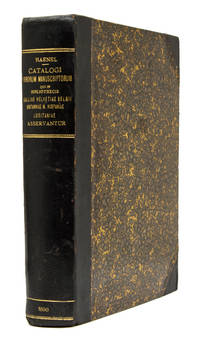
1830rif. 214546Lipsiae: J.C. Hinrichs 1830. First edition. x 2 pp. 1238 col. 3 pp. 1 vols. 4to. Contemporary half brown morocco and decorated paper boards. Binding a bit scuffed and rubbed but sound internally fine. First edition. x 2 pp. 1238 col. 3 pp. 1 vols. 4to. Massive and early catalogue of manuscripts in the libraries of France England Belgium Holland Spain and Portugal. The work is divided by country city and library and contains an essential Index of proper names at the end. J.C. Hinrichs unknown
rif. DADAX2503529003New unknown
rif. DADAX3484522771De Gruyter 1996-10-11. Reprint 2012. perfect. New. 6.14x0.50x9.21. Buy with confidence. Excellent Customer Service & Return policy. De Gruyter unknown
rif. SONG082544635XUsed: Good unknown
rif. DADAX1872501435New unknown
rif. DADAX0738763004New unknown
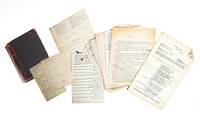
1915rif. 3528Philadelphia 1915. Collection of a total of 285 manuscript and typescript pages of prose poetry and dramatic material written and edited by suffragist Sarah Dickson Lowrie 1870-1957. Lowrie a columnist and editor at the Philadelphia Public Ledger was also an activist. Founder of the Philadelphia Women's Committee later Chairperson of the Philadelphia League of Women Voters she used her public platform to promote equality for women and the working poor. An exceptional collection of material capturing the range of Lowrie's work as an author and editor including three genres across a period of at least 15 years. Included are: Autograph Manuscript including 5 published and unpublished works 202 pages dated 1900-1903 Bound in half sheep over pebbled cloth measuring 7 x 8 inches and dated 1900-1903. The gift inscription in Lowrie's hand on the front endpaper "Mabel Norris Stewart April 1900" suggests that the notebook was a gift from her sister a major supporter of Sarah's career. Indeed the bulk of the manuscript documents Lowrie's composition and heavy revision of her story David the Hero from May 1900-August 1902 pages 1-35 59-175 with headings and notes for each section regarding dates of completion. The final entry states: "Finished these tales August 26 1902 - and dedicated them to Mary Mabel Norris Stewart with all my heart. Published Easter 1903." Interspersed within the notebook are other pieces of work by Lowrie. which appear to be unpublished. St. John of the Wilderness pages 35-56 is dated January-February 1901. The poem Away from You pages 57-58 is dated February 25 1901 and is accompanied by an original sketch. A story Peter the Fisherman pages 176-194 is dated August 25 1903. And the final piece dated November 25 1903 is on the death of her father pages 195-202 and appears to include a family history as well as a tribute to the man. Tucked loosely within the volume is a letter to Sarah from another female author identified only as J.S.C. regarding a short story. Also loosely inserted is a 1 page Autograph Poem unsigned in Lowrie's hand with content that ties together authorship and sex: ".Take my ovary Let me go Unapproached by further woe; But if you want What matters next Take o take my Appendix." Together the group shows her writing process and her ability to work on multiple projects during a highly creative period. Further research could link together the works based on religious themes Lowrie's work in activism and journalism and her own family's history. Autograph Playscript Signed for Me-Too 16 pages dated 1915 Unbound but with a contemporary straight pin holding the upper left corner. Written fully in pencil with Lowrie's notation that the play was "written on July 19th & played on August 26 1915." What appears to largely be a fair copy of the two-act play the manuscript does contain checklists and notes on the first page regarding materials and equipment needed for staging. The final page is detached and incomplete but similarly contains scratch notes for the performance. Typed Manuscript Unsigned and hand annotated for The Idol 52 pages undated Unbound with loose pages measuring 8.5 x 11 inches. A short story -- possibly authored by Lowrie but definitely edited and annotated in her hand. Here the attention to detail and hands-on approach Lowrie takes are apparent. Meticulously corrected in type and in pencil with extensive portions excised or changed the typescript has also been cut apart and pasted back together throughout. The result is mispagination and the creation of a very new version of the original story. Autograph Poem Unsigned 4 pages undated Tied with blue string at the header. Pages measuring 6.75 x 10.25 inches and cut unevenly. A largely fair copy with one correction to the final line. Lowrie here tackles the themes of war violence and pacifism asserting women's place within them. "If I had been a pacifist 2000 years ago I grant you I'd have been unique and ready for a show. For in those old bloody days men really did in truth Demand an eye for a lost eye and for a tooth a tooth.One thousand years ago indeed the world had changed in part; Men's fights were then adjusted - sometimes - by words in court.Now I've been watching how things change And how the old's reversed; I always like to look ahead instead of last be first." References to war and technology including cars suggest that the present poem post-dates WWI. Typed Playscript Unsigned for The Flower Garden 8 pages undated Unbound but with two contemporary straightpins at the upper right corner. On legal paper measuring 8.5 x 12 inches. Annotated throughout in pencil with stage directions casting notes and revised lines. A play in one act it does appear that the play was performed and the present manuscript was used in its unfolding. The rear page is annotated heavily with the names of various players almost all women. Further research could definitely be conducted on those names and on the potential performance. Research opportunities abound for scholars including but not limited to American community theater performances the history of publication in women's magazines the connection between literature and women's activism themes in a pacifist suffragist's writing methods of composition and annotation and the work of Sarah Lowrie herself. unknown
1941rif. 28256Croton-on-Hudson 1941. Brief 1-pp TNS on Eastman's personal Croton-On-Hudson notepaper addressed to a "Miss Mendham" dated March 30 1938. Old folds; holograph additions in Eastman's hand; Very Good. "I shall be delighted to have you use some of my poems in your Verse Speaking Festival.perhaps the poem called "Battle Fields" in my volume "Kinds of Love" would be appropriate." Adds three further suggestions in holograph beneath signature: "The Sing Sing Alarm" "Isadora Duncan" "To Live in Summer" unknown
1941rif. 28255Croton-on-Hudson 1941. Brief 1-pp TLS on Eastman's personal Croton-On-Hudson letterhead addressed to a "Mr. Simon" dated November 14 1941. Single holograph correction in Eastman's hand. Mailing folds; slightly toned at margins; Very Good. Regarding the recipient's letter to the Reader's Digest of September 24 Eastman had been hired as an editor for the conservative publication earlier in the same year. The subject appears to be the institution of the death penalty in the Soviet Union: ".Nobody questions the fact that the death penalty was decreed for theft of 'socialist property' and the extension of all penalties to children twelve years old automatically extends that one. I am sorry to say I can not tell you offhand when the previous decree was issued but I think it was the Spring of 1934. unknown
1945rif. 28254New York 1945. Brief TNS on Eastman's personal W. 13th St. letterhead addressed to "Josephine" dated November 25 1945. Old folds else Fine with bright clear autograph: "Dear Josephine: Thanks so much for the news -- sad as it all was -- in your letter. It was nice to hear from you. I hope the autobiography may live up to your expectations." The recipient is likely the American proletarian novelist and essayist Josephine Herbst 1892-1969; the "sad news" to which Eastman refers may well have been Herbst's ongoing battles with her former husband and fellow novelist John Herrmann. unknown
rif. DADAX2503515282New unknown
rif. SONG140883121XUsed: Good unknown
rif. DADAX0313275017New unknown
rif. DADAX0590476521New unknown
rif. DADAX0719080657New unknown
rif. DADAX0814794386New unknown
rif. DADAX0859913864New unknown
rif. DADAX0859915492New unknown
rif. SONG0789202166Used: Good unknown
rif. DADAX0720119987New unknown
rif. DADAX3484503270New unknown
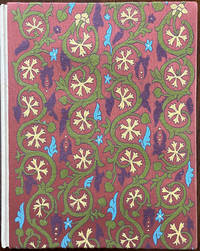
rif. 60625Prague Czechoslovakia: Sumptibus Pragopress 1970. Two vols. Folio. 1st - 12.75 x 16.75 in. 63 1 pp. text in Czech English French German & Russian. Title in purple & black. Faux vellum paper boards gilt lettering on spine; 2nd - 13.5 x 17 in. 222 pp of colour photo facsimile reproducing the entire manuscript. Quarter-vellum over embroidered Bohemian folk pattern cloth covers w/ original mylar protective cover ever-so-slight fraying in a couple fore-edges still NF/NF set preserved in original clamshell slipcase gilt lettering on spine hinges starting at foot of spine. Striking facsimile edition of the sumptuous Romanesque Codex of Vysehrad commissioned as one of four manuscripts produced by the same artists between 1080 and 1085 around the time of the coronation of Vratislav II 1061-1092 first king of Bohemia and includes the lection for the king’s coronation. They all probably originated in the scriptorium at the Monastery of St. Emmeram and this manuscript was declared a National Cultural Monument of the Czech Republic. The extensive cycle of images carefully rendered and detailed draw from the Regensburg School and Ottonian influences with a Christ’s genealogy on four divided pages. Within the 108 folios there are 26 pages depicting the gospels four of the Old Testament and 29 scenes from the life of Christ with large decorated illuminated initials. Originally the property of the Church of Vysehrad many scholars believe it was originally prepared for St. Vitus Cathedral in Prague Castle and Vratislav II had secured his title after negotiations with Holy Roman Emperor Henry IV at the time in conflict with Pope Gregory VII as he continued insisting on the retaining the Slavonic liturgy and wanted to appoint his own bishops. Sumptibus Pragopress, hardcover