Philippe DESPORTESBiblio.com
43 881 résultats
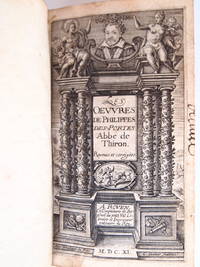
1611réf. 55315à Rouen: De l'imprimerie de Raphael Du Petit Val 1611. Fine. De l'imprimerie de Raphael Du Petit Val à Rouen 1611 8 x 14.50 cm relié New edition ornamented with an engraved title-frontispiece drawn by Léonard Gautier. Contemporary full brown sheep binding. Richly ornamented spine with raised bands. Red morocco title label. Top headcap torn with lacks to joints. Joints cracked at foot. 2 wormholes at foot and 2 others along the upper joint at foot. Corners slightly bumped. Yellowed paper. Desportes' poetry was durably influenced and shaped by Italian literature. The author indeed returns to France after a journey to Italy where he fell under the influence of Petrarch - his first poems were moreover criticized as neo-Petrarchism. His first book appeared in a collective volume and gathered his poems imitated from Ariosto. His clear frank mannerist and refined poetry a court poetry eclipsed that of Ronsard at the court of Henri III. It was in turn criticized and replaced by that of Malherbe. Desportes' literature nonetheless forms an important aspect of Renaissance poetry. This edition contains the loves of Diane the loves of Hyppolite Cleonice the elegies the poems imitated from Ariosto the new loves the epitaphs and various pieces. De l'imprimerie de Raphael Du Petit Val hardcover
1980réf. 86790s. l.: S. n. 1980. Fine. S. n. s. l. s. d. ca 1980 14.50 x 21 cm 1 page Manuscript note with crossed-out passages by Philippe Soupault 22 lines in purple ink on a sheet bearing at the top this inscription: ""B.P."" narrating Benjamin Péret's encounter with surrealism. The co-author with André Breton of the surrealist manifesto ""Les champs magnétiques"" tells us with a touch of nostalgia of Benjamin Péret's arrival in the surrealist adventure: ""André Breton fut bien étonné de recevoir la visite d'une 'dame' qui lui tendit un n° de la revue Littérature. Elle lui demanda d'aider son fils Benjamin qui voulait venir à Paris pour devenir écrivain. Quelques temps après cette démarche Benjamin Péret arriva à Paris et fut accueilli par Breton."" André Breton was quite astonished to receive a visit from a 'lady' who handed him an issue of the journal Littérature. She asked him to help her son Benjamin who wanted to come to Paris to become a writer. Some time after this approach Benjamin Péret arrived in Paris and was welcomed by Breton. He depicts the character of the newcomer: ""A cette époque Péret était timide inquiet et dévoué. Il admirait sans réserves et respectueusement André Breton et ses amis. Il était obéissant."" At that time Péret was shy anxious and devoted. He admired unreservedly and respectfully André Breton and his friends. He was obedient. and emphasizes his devotion to the group of disrespectful and disruptive surrealists: ""Lors du procès Maurice Barrès il accepta le rôle ingrat et dangereux du soldat inconnu venu témoigner en allemand."" During the Maurice Barrès trial he accepted the thankless and dangerous role of the unknown soldier who came to testify in German. Interesting recollections from the last living historical surrealist reminiscing tenderly about one of his former companions. S. n. unknown
1649réf. 138960Paris: Imprimerie Royale Sébastien Cramoisy 1649. full calfskin-covered boards seven raised bands gilt ornamentation on spine title in second compartment. folio 265 x 375 mm. full calfskin-covered boards seven raised bands gilt ornamentation on spine title in second compartment. 56-572 11 pages with two large genealogical tables printed on double-pages. Revues & corrigez sur divers manuscrits & anciennes impressions. Augmentez de plusieurs traistez contracts testaments autres actes & de diverses observations. Par Denys Godefroy Conseiller et Historiographe ordinaire du Roy. The Denys Godefroy edition with this copy being a somewhat larger paper copy 375 mm tall as opposed to the commonly found 350 mm tall. Small bookplate on front pastedown. Ownership name in ink on recto front free endpaper and ownership notes in ink on the verso of the front free endpaper. Front hinge cracked but firm. Loss of the leather spine in third compartment. Spine age-darkened. Rubbing to extremities. Minor foxing throughout. Dampstaining to title page. Philipe de Comines was a Statesman and one of the most interesting of the old French historians of the Middle Ages. Dibdin says that "no English Historical Collection can be complete without P. de Comines." A great visionary Comines 1447 - 1511 noticed and regretted the permanent antagonism between the European nations and aspired to a Europe united by Christianity. He advocated free trade the reform of the currency and the system of weights and measures as well as the consultation of the States General in order to avoid any despotism. After the first edition was produced by Denis Sauvage in 1552 which marked a notable progress this edition of 1649 produced by Théodore and Denis Godefroy was a great step forward. They printed at the prestigious Imprimerie Royale installed in the Louvre. In addition to the beautiful typographical quality it was established on two manuscripts and on the Sauvage edition. Many new lessons appear here for the first time and the editors attach to the text a valuable compendium of supporting material. this edition of 1649. Imprimerie Royale (Sébastien Cramoisy) unknown
1649réf. 138960Paris: Imprimerie Royale Sébastien Cramoisy 1649. full calfskin-covered boards seven raised bands gilt ornamentation on spine title in second compartment. folio 265 x 375 mm. full calfskin-covered boards seven raised bands gilt ornamentation on spine title in second compartment. 56-572 11 pages with two large genealogical tables printed on double-pages. Revues & corrigez sur divers manuscrits & anciennes impressions. Augmentez de plusieurs traistez contracts testaments autres actes & de diverses observations. Par Denys Godefroy Conseiller et Historiographe ordinaire du Roy. The Denys Godefroy edition with this copy being a somewhat larger paper copy 375 mm tall as opposed to the commonly found 350 mm tall. Small bookplate on front pastedown. Ownership name in ink on recto front free endpaper and ownership notes in ink on the verso of the front free endpaper. Front hinge cracked but firm. Loss of the leather spine in third compartment. Spine age-darkened. Rubbing to extremities. Minor foxing throughout. Dampstaining to title page. Philipe de Comines was a Statesman and one of the most interesting of the old French historians of the Middle Ages. Dibdin says that "no English Historical Collection can be complete without P. de Comines." A great visionary Comines 1447 - 1511 noticed and regretted the permanent antagonism between the European nations and aspired to a Europe united by Christianity. He advocated free trade the reform of the currency and the system of weights and measures as well as the consultation of the States General in order to avoid any despotism. After the first edition was produced by Denis Sauvage in 1552 which marked a notable progress this edition of 1649 produced by Théodore and Denis Godefroy was a great step forward. They printed at the prestigious Imprimerie Royale installed in the Louvre. In addition to the beautiful typographical quality it was established on two manuscripts and on the Sauvage edition. Many new lessons appear here for the first time and the editors attach to the text a valuable compendium of supporting material. this edition of 1649. Imprimerie Royale (Sébastien Cramoisy) unknown books
1864réf. 13458Paris: Dusacq & Cie. Editeurs 1864. Hand-coloured lithograph after a painting by Linder. Very good condition apart from some mild rippling a small loss in the top margin and a few skillfully repaired tears in the bottom margin. A beautifully coloured humorous plate that was most likely part of a series published by Dusacq of images by various artists depicting railway related scenes. During the mid-nineteenth century the technological advancement and financial prosperity of France under Napoleon III hastened the development of the railway and other modern modes of transportation such as the omnibus. These improvements brought about a culture of mass tourism as members of various classes flocked to the railroad to take day trips. An archetypal symbol of modern life the railway station became a popular subject during the period and was represented and parodied by artists such as Honoré Daumier and William Powell Frith. It was an ideal place to observe a varied cross-section of society and the idiosyncrasies of human behavior. In the tradition of Daumier's satiric railway scenes from the 1840s and 1850s Linder exploits the comic possibilities of this bustling modern subject in this charming print. The title 'Pleasure Train' was most likely intended as an ironic play on words since pleasure is the last thing enjoyed by the swelling crowd of people on the platform many of whom scream in frustration as they are pushed and prodded in an effort to exit and enter the train. A pupil of the celebrated artist Charles Gleyre Philippe Jacques Linder was a genre and portrait painter who regularly exhibited works at the Salon between 1857-1880. Cf. Benezit Dictionaire des Peintres Sculptteurs Dessinateurs et Graveurs vol. 8 p. 679. Dusacq & Cie. Editeurs unknown
1864réf. 13458Paris: Dusacq & Cie. Editeurs 1864. Hand-coloured lithograph after a painting by Linder. Very good condition apart from some mild rippling a small loss in the top margin and a few skillfully repaired tears in the bottom margin. A beautifully coloured humorous plate that was most likely part of a series published by Dusacq of images by various artists depicting railway related scenes. During the mid-nineteenth century the technological advancement and financial prosperity of France under Napoleon III hastened the development of the railway and other modern modes of transportation such as the omnibus. These improvements brought about a culture of mass tourism as members of various classes flocked to the railroad to take day trips. An archetypal symbol of modern life the railway station became a popular subject during the period and was represented and parodied by artists such as Honoré Daumier and William Powell Frith. It was an ideal place to observe a varied cross-section of society and the idiosyncrasies of human behavior. In the tradition of Daumier's satiric railway scenes from the 1840s and 1850s Linder exploits the comic possibilities of this bustling modern subject in this charming print. The title 'Pleasure Train' was most likely intended as an ironic play on words since pleasure is the last thing enjoyed by the swelling crowd of people on the platform many of whom scream in frustration as they are pushed and prodded in an effort to exit and enter the train. A pupil of the celebrated artist Charles Gleyre Philippe Jacques Linder was a genre and portrait painter who regularly exhibited works at the Salon between 1857-1880. Cf. Benezit Dictionaire des Peintres Sculptteurs Dessinateurs et Graveurs vol. 8 p. 679. Dusacq & Cie. Editeurs unknown books
1792réf. C3160166 pages Small octavo 7 1/2" x 4 3/4" bound in full leather with gilt decorations to spine and cover with red spine label lettered in gilt. Linden - N. 559; van der Linde I 417f Second printing. Van Zuylen van Nijevelt wrote a well-known treatise on the game of chess La Supériorité aux Échecs 1792. The book's full title was La Supériorité aux Échecs mise à la portée de tout le monde et particulierement des dames qui aiment cet amusement. It was reprinted several times and translated into several languages. The Dutch chess theorist Philippe Jules van Zuylen van Nyevelt was a civil servant general and published "La supériorité aux échecs .." The Great Game of Chess. in 1792. "The 'Volume de Planche' mentioned on the title page forms the second game for no other exists." van der Linde For a detailed discussion of the distinction between the first and second printings see van der Linde I 417 f. This edition is valued for its instructive examples on the management of pawns in the endgame. He was the first Dutchman to write a book on chess and probably also the first person to come up with the idea of random chess also known as shuffle chess a chess variant whereby the starting position of the main pieces is chosen at random. He wrote that he hated openings "with all those annoying constantly repeating patterns" and therefore thought of randomizing the starting positions of the chess pieces. "This produces a huge number of different situations so that no one can study them beforehand" according to Van Zuylen van Nijevelt Condition: The plates and errata page are missing. The interior is toned occasionally stained with a few notes in an old hand. A few pages are marginal. Cover slightly bumped and scratched else about very good. Chez J A de Chalmont hardcover
1819réf. elala968Paris: Garnery 1819-30. 1819. 9 Volumes bound in 8. 4to. with half-titles. text in double columns. contemporary quarter roan with arms of the Law Society of Upper Canada stamped in blind on front covers spines rubbed & extremities chipped institutional lettering on spines Vol. VIII rebacked embossed institutional stamps some foxing. Third Edition of Vols. I-II & IV-IX & Fifth Edition of Vol. III. Camus-Dupin 2557. cfBrunet III 1654. Hardcover. Paris: Garnery, 1819-30. Hardcover
réf. ABE-1405661012DESSIN SUR SOIE DE COULEUR JAUNE-DIMENSIONS 85 CM X 92 CM-LETTRAGE "THEATRE GRAMONT MARS 1952"-EN NOIR CARICATURES DES DIFFERENTS INTERVENANTS AVEC LEGENDES COULEUR ROUILLE-SCENE DE CAFE AU CENTRE-PHILIPPE LEMAIRE (JESUS LA CAILLE), HELENA BOSSIS (FERNANDE), CHARLES MOULIN (LE CORSE), DANIEL CAUCHY (LA PUCE), FRANCIS CARCO, LILA KEDROVA (BERTHA), RAYMOND FOURNIER (LOUPE), LEON LARIVE (LE PATRON DE BAR), JEAN DOVA (IER FLIC), PIERRE VALDE (METTEUR EN SCENE, 2EME FLIC), JEAN-JACQUES DELBO (PEPE LA VACHE), FREDERIC DARD (5 TABLEAUX)-SIGNATURE DE L'ILLUSTRATEUR EN MARGE (ILLISIBLE)-LEGERES ET DISCRETES TACHES DANS LA PARTIE INFERIEURE (ETACA)
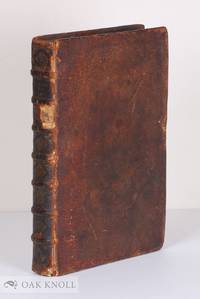
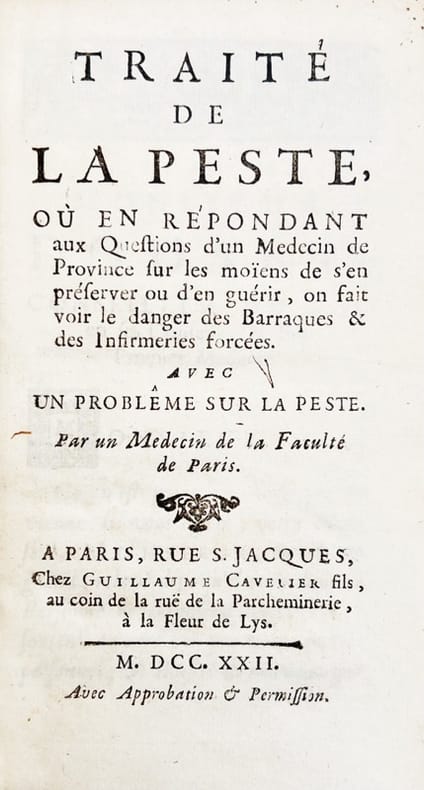
1722réf. 44613Paris, Guillaume Cavelier fils, 1722. In-12 de (8)-301-(14) pp., épître, table et privilège, veau brun, dos orné à nerfs, pièce de titre en maroquin (reliure de l'époque).
1998réf. 10955Paris, Les Bibliophiles de l'Automobile Club de France, 1998. 2680 g In-4, en feuilles sous couverture rempliée et étui, [2] ffb., 227-[1] pp., [1] fb., [2] ff., [1] fb.. Illustré de 13 eaux-fortes de Philippe Mohlitz. Ouvrage tiré à 115 exemplaires numérotés, celui-ci nominatif et portant la signature de l?artiste à la justification. . (Catégories : Livres illustrés, Littérature, )
1984réf. 26374Paris Philippe Bastien 1984 In-4, en feuilles, couverture illustre d'une composition gaufre. Chemise de rhodod. Etui.Edition originale, illustre par Philippe Bastien de 2 eaux-fortes originales en couleurs et d'un gaufrage sur la couverture. Tirage limit 90 exemplaires numrots sur vlin d'Arches. Exemplaire sign par l'auteur, accompagn d'une suite des illustrations sur auvergne Richard de Bas, d'un monotype et de 3 tats du frontispice sur japon nacr, justifis et signs par l'auteur.
1843réf. 42604Paris, Gihaut Frères, s.d. (1843). Titre et 36 planches lithographiées et teintées (20 x 28 cm) reliées en 1 vol. in-folio (29,5 x 44 cm), demi-chagrin prune à coins, dos lisse orné, filets dorés sur les plats, tranches dorées (reliure de l'époque).
1995réf. 48427(1995) 50 x 40 cm.Tirage limit 20 exemplaires numrots et signs.
réf. 057362Paris Lachenal & Ritter 1988 in 4 (33x24) 1 volume broché, portraits des auteurs par Francis Picabia, 256 pages [2], non coupé, étui. Introduction, descriptif et typographie par Lydie Lachenal. Avant-propos et notes de Serge Fauchereau. Portraits des auteurs par Francis Picabia au frontispice. Edition reproduisant le manuscrit original avec sa transcription de la première oeuvre surréaliste appliquant les principes de l'écriture automatique. Edition originale, tirée à 1300 exemplaires numérotés, celui-ci un des 60 exemplaires du tirage de tête numérotés sur papier pur chiffon vélin d'Arches. Bel exemplaire ( Photographies sur demande / We can send pictures of this book on simple request )
1872réf. 2696Paris, Imp. Lemercier et Cie, 1872. In-folio oblong (57 x 40 cm) d'(1) f. de table, 1 titre-frontispice et 20 planches numérotées, demi-chagrin rouge, dos à nerfs, titre doré en capitales sur le premier plat (reliure de l'époque).
réf. 209633Paris, Imprimerie Lemercier, 1872 in-folio oblong (39 x 58 cm), [2] ff. n. ch. (titre avec gande vignette lithographiée, table des planches), et 20 belles planches lithographiées, demi-toile verte, dos lisse muet, titre poussé en lettres dorées au centre du plat supérieur (reliure de l'éditeur). Mouillures claires à certaines planches, dos et coins un peu frottés.
1661réf. 208421661 Amstelodami, ex Officina Elzeviriana, 1661, petit in-12 de (12)-388-(71) pp., 1 titre-frontispice gravé, 1 grande planche dépliante explicative pour la compréhension de la géographie, 1 tableau dépliant, 40 cartes gravées sur 33 planches dépliantes hors-texte dont 1 mappemonde, reliure de l'époque très usagée de plein veau brun, les coiffes manquent, coins émoussés, plats tachés, mouillures, petit trou de ver sans gravité en fin de volume.
1787réf. 91319Veuve Ballard | Paris 1787 | 19.6 x 25.5 cm | Relié
1559réf. 12310Venetia: P. Gironimo Giglio 1559. 153x97mm. 6x3¾". Venetia P. Gironimo Giglio 1559. En 8º 153 x 97mm. 12 248 8 hojas la última blanca. Marca del impresor en portada y última hoja. Encuadernación de la época en pergamino. Primera edición italiana de la famosa historia de Francia entre 1466 y 1483 y en particular la rivalidad política entre Luis XI y Carlos el Temerario. Philippe de Commines 1447-1511 fue un escritor francés de origen flamenco y diplomático en la corte de Borgoña y Francia. Charles Sainte-Beuve le considera el primer escritor verdaderamente moderno y el primer crítico e historiador filosófico desde tiempos clásicos. Su análisis de las escena política lo convirtieron en un escritor único de su tiempo. P. Gironimo Giglio unknown
2018réf. 49680Paris Editions d'Art FMA 2018 In-16 oblong, en feuilles, couverture illustre (embotage de l'diteur).Edition originale, illustre par Bernard Alligand de 4 peintures originales en couleurs dont 2 excutes en partie sur des papiers mtalliss contrecolls, avec pratiquement toutes les pages des compositions abstraites obtenues par des estampages froid de sable. Tirage unique limit 49 exemplaires numrots sur vlin, signs par l'auteur et l'artiste.
réf. 21057Rouen, Raphaël du Petit Val, 1611. 1 tome relié en 2 vol. petit in-12, veau brun jaspé, dos à nerfs ornés de caissons dorés, pièces de titre en maroquin rouge, roulette dorée sur les coupes, tranches mouchetées de rouge. Reliures du début du XVIIIe s., une coiffe élimée. Agréable exemplaire. Titre-Frontispice gravé par Léonard Gaultier, 675 pp., (1) p., (15) ff., (1) f. blanc. Signatures : [A-Z]12 [Aa-Ff]12 Gg6. Frontispice rogné court en queue avec léger manque.
1685réf. 97327Lyon, Jean Girin & B. Rivière, 1685, in-12, [20]-445-[5] pp, 3 pl. (dont 1 comprise dans la pagination), Basane havane de l'époque, dos à nerfs, armes centrales sur les plats [de Montchal], Première édition complète de cet ouvrage, dont il a paru la même année une édition "suivant la copie de Lyon" à La Haye (Adrian Moetjens). Sans le titre-frontispice. Bien complet en revanche des trois planches gravées sur cuivre représentant des personnages en costumes : l'Arabe avec son ibrik pour préparer le café, le Chinois avec son pot de thé et l'Américain avec sa chocolatière et son gobelet. Les trois buveurs sont représentés ensemble sur le bandeau gravé par Ogier, répété en tête des trois traités (du café, du thé, du chocolat). L'auteur aborde ici les origines de chacune des substances, leurs usages ainsi que les préparations et traite des effets comme de comme des utilisations thérapeutiques. L'ouvrage fait sans doute suite à un autre, De l'usage du caphé, du thé et du chocolate que Girin et Rivière avaient publié sous l'anonymat en 1671. Philippe Sylvestre Dufour (1622-1687), riche apothicaire lyonnais, faisait commerce des produits d'Orient. Il possédait un cabinet de curiosités que son coreligionnaire et ami Jacob Spon décrit, en 1673, comme contenant des "Raretés du Levant, pièces de Tour, Médailles antiques d'or & d'argent" (Recherche des antiquités et curiosités de la ville de Lyon. Lyon, de l'imprimerie de Jaques Faeton, 1673. p. 205). Reliure aux armes de Charles-Louis de Montchal (mort en 1686) avocat à la cour des aides en 1645 et de Paris en 1680 : de gueules au chef d'or, chargé de trois molettes d'éperon d'azur, avec la devise "Je lay gaignée". Reliure usagée. Réparation ancienne à l'une des planches, petits trous de vers angulaire sur les premiers feuillets, sans toucher le texte, quelques salissures. Oberlé Fastes, n° 733. USTC n° 6154829. Vicaire, 293. OHR pl. 1434. Couverture rigide
1684réf. 57732Chez Etienne Michalet | à Paris 1684 | 9 x 16 cm | relié
réf. 30636S.l., 1626. 1 fort vol. in-4°, parchemin souple, titre écrit à la plume au dos. Reliure de l'époque, petit manque de vélin à l'angle sup. du premier plat, qq. cahiers déboîtés. Bon exemplaire. (4) ff., 678 pp., (8) ff. de table. Manque le dernier feuillet blanc, plusieurs passages soulignés à l'encre brune, qq. mouillures claires en tête, galerie de vers dans la marge int. sans atteinte au texte.