Livre Rare Book

6.358 resultados
1749ref. 42104Paris, Vaneck, 1749. Titre et 20 gravures sur cuivre (12 x 7,5 cm) frappées par 4 ou 5 sur 5 feuilles (24 x 38 cm).[CHEVILLARD (Jacques)]. Methode facile pour apprandre le blason, ou l'on joint les armes accollees, des Princes, et Princesses Ducs, et Duchesses, et celles des Maisons des plus considerables de France, avec les Explications des ornements exterieurs. Paris, Vanheck, 1749. 71 gravures sur cuivre (12 x 7,5 cm) frappées par 3 ou 4 sur 18 feuilles (24 x 38 cm).Ensemble 2 suites reliées en 1 vol. in-folio, demi-chagrin prune à coins, dos fleurdelisé à nerfs, double filet doré d'encadrement sur les plats (reliure du XIXe siècle).
1681ref. 42869La Correrie, per Laurentium Gilibert, typographum juratum apud Gratianopolim, 1681. In-4 de 348 pp. et (48) pp. d'index (sign. A-Z-Aa-Zz-Aaa-Ccc4, Ddd2), demi-veau havane, dos orné (reliure du XIXe siècle).
1589ref. 42498En Angolesme, par l'Aucteur [Olivier de Minières], 1589. Petit in-8 (164 x 105 mm) de 15 pp. (A-B4), caractères italiques, veau fauve glacé, dos lisse orné de fleurons, titre doré en long, triple filet doré d'encadrement sur les plats, tranches dorées (Koehler).
1936Edizione originale. A fine copy, issued for the Triestine agency MANN & ROSSI, complete with a couple of advertising sheets laid in. One of the most creative among advertising booklets designed by R+M, it involves also the format of the pages: «[…] besides the rationally structured photographic cover, [it] works on the graphic invention of punching out holes in the pages which makes it possible to bring together different coating finishes in two backgrounds designed in a simple, linear style» (Colizzi, Bruno Munari and the Invention of the Graphic Design in Italy, Leiden 2011, p. 161). -- VERY RARE. We found only one institutional holding, in Italy, at the «Raccolta Stampe “Achille Bertarelli”» in Milano. Not in Maffei's bibliography of Munari's artist books. Grafica italiana (Triennale Design Museum 5), Mantova 2012, pp. 222-228
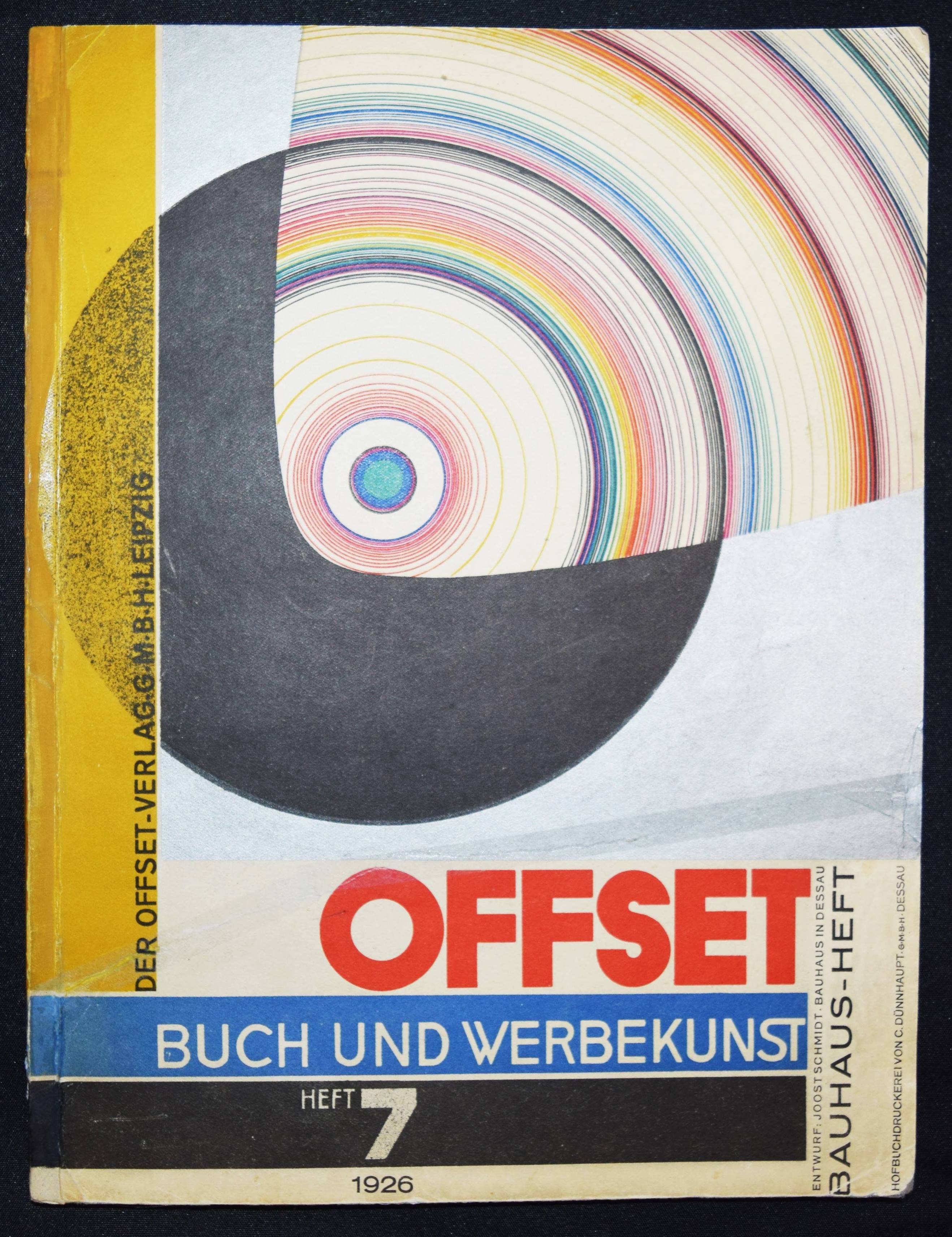
1926ref. 103604BBLeipzig, Offset-Verlag, 1926. 4°. [4], 353?428, [20] S. mit 18 teils farblithogr. Tafeln u. zahlr. Abb. Farbig illustr. OKart. (Entwurf: Joost Schmidt). [9 Warenabbildungen]
1859ref. 44591Paris, Librairie de France, 1859. In-12 de (4)-228 pp., portrait, maroquin rouge, dos à nerfs orné du bonnet phrygien répété quatre fois, double encadrement doré avec bonnets phrygiens dorés dans les angles, dentelle intérieure, tête dorée, non rogné, étui bordé (Thivet).
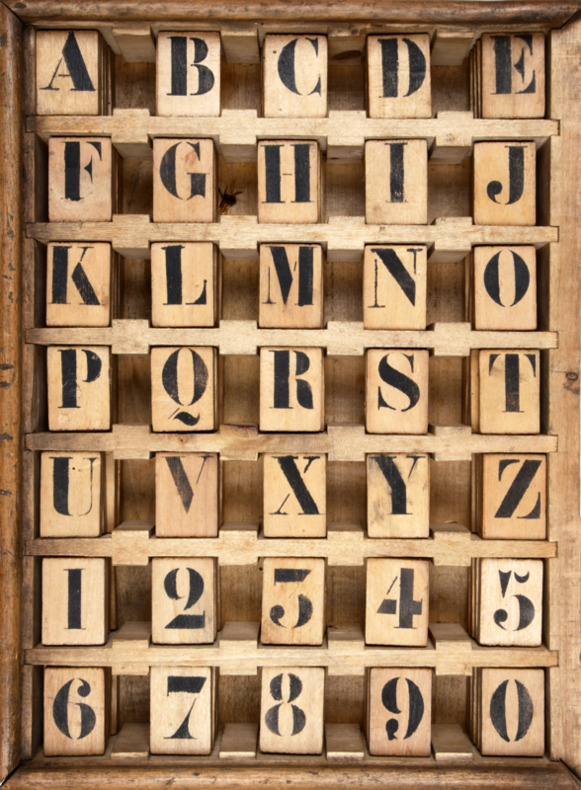
1859ref. 41414Vitry-le-François, , 1859. Casier en bois blanc (36 x 26,5 cm) de 35 compartiments contenant chacun 5 planchettes mobiles en bois (4 x 2,8 cm) peintes en noir au pochoir recto verso (lettres et chiffres), couvercle.
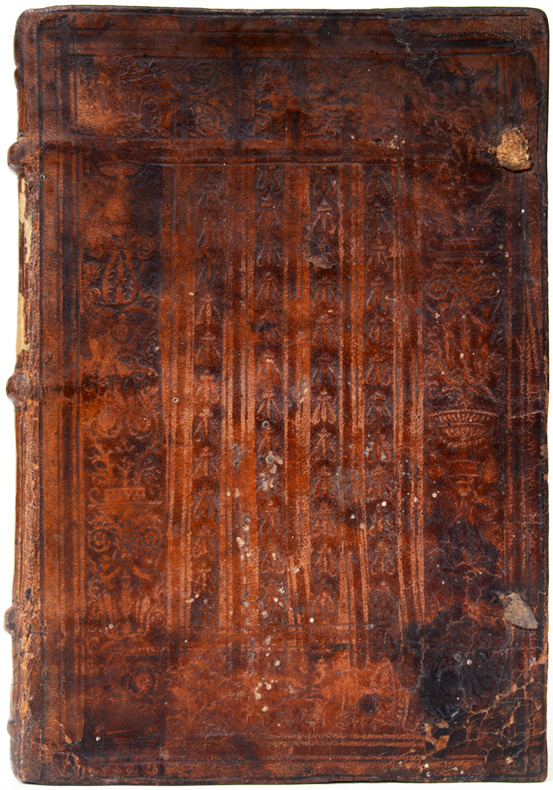
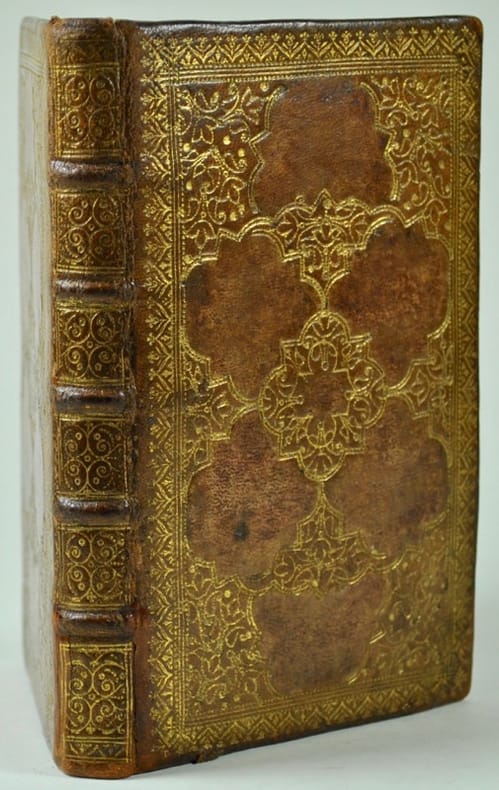
1519ref. 41377(Paris), Jehan Petit, sans date, (1519). Petit in-4 (136 x 199 mm) de (4)-CVIII ff. (sig. A B–T / ), caractères romains, veau brun estampé à froid composé de quatre colonnes d'abeilles dans un large encadrement floral, dos à cinq nerfs, traces de lacets (reliure de l'époque).
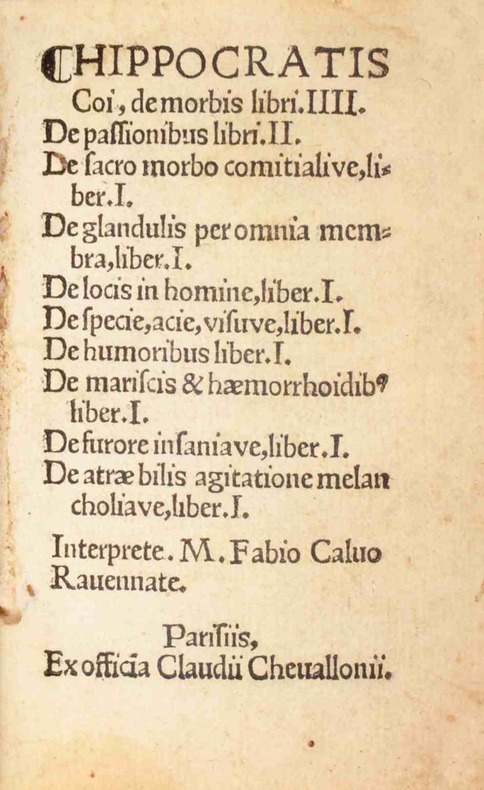
1529ref. 12206Paris, Claude Chevallon, 1529. In-16 de 232 ff., veau marbré, dos lisse orné, pièce de titre en maroquin rouge (reliure du XVIIIe siècle).
1924ref. 105142Berlin Der Sturm 1924 253x192mm Berlin, Der Sturm, décembre 1924, 253x192mm, 60p. numérotées de 177 à 233, , cousu sous couverture illustré d'un bois de Moholy Nagy. (105142)
1664ref. 44641La Haye, Chez Jean & Daniel Steucker, 1664. In-12 de (2)-252-(104) pp., galuchat, fermoirs et coins en argent (reliure de l'époque).
1669ref. 44642Se vendent à Charenton, Antoine Cellier, 1669. In-32 (88 x 55 mm) de (304) ff., musique notée, maroquin brun, grand décor doré de style fanfare avec fers filigranés, encadrement de roulette et filets dos à nerfs orné, tranches dorées (reliure de l'époque).
1649ref. 15312Paris, Jean Henault, 1649. In-12 (98 x 151 mm) de (106) ff. gravés recto-verso en taille-douce, maroquin fauve, plats ornés de compartiments de filets droits et courbes, fers filigranés et points dorés, dos orné de même, roulette sur les coupes, tranches dorées (reliure de l'époque).
1656ref. 42642A Paris, chez J. Hénault, 1656. In-12 (155 x 104 mm) de (106) ff. gravés recto-verso en taille-douce, maroquin rouge, dos orné à nerfs, triple filet doré et motifs d'angle sur les plats, tranches dorées, fermoirs (reliure de l'époque).
1745ref. 0030241745 Fontenoy [recueil A], Paris [recueils C à Y], Bruxelles [recueil Z], sans nom d'éditeur, 1745-1762. Vingt-quatre parties reliées en douze volumes in-12 (106 X 174 mm) basane fauve, dos cinq nerfs ornés, caissons dorés, dentelles dorées en queue et tête, pièce de titre maroquin ocre, coupes filetées, tranches rouges (reliure de l'époque). Tome I : titre imprimé en rouge, IV (avertissement), un feuillet de table, 224 pages - titre imprimé en rouge, un feuillet (avertissement et table), 222 pages ; Tome II : IV (dont titre imprimé en rouge & avertissement), 2 feuillets de table, 208 pages - titre imprimé en rouge, 247 pages, 2 feuillets de table ; Tome III : titre imprimé en rouge, 265 pages, 3 feuillets de table - titre imprimé en rouge, II (avertissement), un feuillet de table, 195 pages ; Tome IV : titre imprimé en rouge, 248 pages, 1 feuillet de table, (1) - titre imprimé en rouge, 236 pages, 1 feuillet de table ; Tome V : titre imprimé en rouge, 209 pages, 1 feuillet de table - titre imprimé en rouge, 210 pages, 3 feuillets de table ; Tome VI : titre imprimé en rouge, 235 pages, 2 feuillets de table & avertissement - titre imprimé en rouge, 235 pages, 2 feuillets de table ; Tome VII : titre imprimé en rouge, 227 pages, 5 pages non chiffrées (table) ; titre imprimé en rouge, 226 pages, 1 feuillet de table ; Tome VIII : titre imprimé en rouge, 219 pages, 2 feuillets de table - titre imprimé en rouge, 216 pages, 1 feuillet de table ; Tome IX : titre imprimé en rouge, 226 pages, 1 feuillet de table - titre imprimé en rouge, 214 pages, 1 feuillet de table ; Tome X : titre imprimé en rouge, 235 pages, 1 feuillet de table - titre imprimé en rouge, 256 pages, 2 feuillets de table ; Tome XI : titre imprimé en rouge, 239 pages, (1) page de table - titre imprimé en rouge, 219 pages, 4 pages de table non chiffrées ; Tome XII : titre imprimé en rouge, 210 pages, 3 feuillets de table - titre imprimé en rouge, 197 pages, (3) pages de table.
1928ref. 22835DEVAMBEZ 1928 1 Annuaire du luxe à Paris, Hommage des grandes maisons françaises, Paul Poiret fondateur. Paris, Devambez, 1928, in-4, reliure toile éditeur ocre titrée noir et argent, (Magnier Relieur).
ref. 26145A Paris, Chez la Veuve Estienne et Fils, 1741. With nice head- and tailpieces. 3 volumes. (8), xxvii, (1), 544 pp., (545)-1140 numbered columns; (4) pp., 1772 numbered columns; (4) pp., 1316, 684 numbered columns. Folio. Contemporary marbled calf, spines gilt with raised bands, red labels with gilt lettering, red edges, joints, head and foot of spine and some corners repaired. Kress 4584; Goldsmiths 7819; not in Einaudi; not in INED. Jacques Savary (1622-1690) was for some time director of the French Royal Domains, and later became general business agent to the Duke of Mantua. He had such sound notions about commerce and was so successful in his operations that Colbert appointed him in 1670 in the "Conseil de la Reforme", which was to reform and refine the rules of commercial practice. The "Commercial Code" of 1673 resulting from it was called after him "Code Savary". He was then also pressed to write down and publish all his commercial knowledge, which pressure led to the publication of the famous Le parfait Négociant (1675). It taught everything a merchant should know, but only his left papers revealed to the world the immense and universal knowledge on commerce Savary possessed. The dictionary was immensely successful and covers all aspects of commerce and trade as well as legal and historical matters. Deals among others with: trading cities throughout the world, their manufactures, operation of foreign trade, trading companies (including a short history of the South Sea Company), banking (including an account of John Law's Bank), bookkeeping, etc. etc. The dictionary was the first of its kind to appear in Europe, and has furnished the principal part of the material for most of the dictionaries that were to follow. The project was sponsored by the French government who justly considered that such a dictionary, if well executed, would be of national importance. Hence a considerable, and indeed the most valuable portion of the work is compiled from memoirs sent to the author, by order of government, by the inspectors of manufactures in France and by the French consuls in foreign countries (see: McCulloch, p. 61). The dictionary is preceded, in volume one, by an elaborate, long (upto column 544) separate essay on the "État général du commerce de l'Europe" (and followed by other essays on the continents of Africa, Asia and the Americas). Ooii -Vviv in volume three with a wormtrack in the upper outer blank margin.
ref. 18559A Paris, Chez la Veuve Estienne et Fils, 1741. 3 volumes. (8), xxvii, (1), 544 pp., (545)-1140 numbered columns; (4) pp., 1772 numbered columns; (4) pp., 1316, 684 numbered columns. Folio. Contemporary marbled calf, spines gilt with raised bands, red labels with gilt lettering. Kress 4584; Goldsmiths 7819; not in Einaudi; not in INED. Jacques Savary (1622-1690) was for some time director of the French Royal Domains, and later became general business agent to the Duke of Mantua. He had such sound notions about commerce and was so successful in his operations that Colbert appointed him in 1670 in the "Conseil de la Reforme", which was to reform and refine the rules of commercial practice. The "Commercial Code" of 1673 resulting from it was called after him "Code Savary". He was then also pressed to write down and publish all his commercial knowledge, which pressure led to the publication of the famous Le parfait Négociant (1675). It taught everything a merchant should know, but only his left papers revealed to the world the immense and universal knowledge on commerce Savary possessed. The dictionary was immensely successful and covers all aspects of commerce and trade as well as legal and historical matters. Deals among others with: trading cities throughout the world, their manufactures, operation of foreign trade, trading companies (including a short history of the South Sea Company), banking (including an account of John Law's Bank), bookkeeping, etc. etc. The dictionary was the first of its kind to appear in Europe, and has furnished the principal part of the material for most of the dictionaries that were to follow. The project was sponsored by the French government who justly considered that such a dictionary, if well executed, would be of national importance. Hence a considerable, and indeed the most valuable portion of the work is compiled from memoirs sent to the author, by order of government, by the inspectors of manufactures in France and by the French consuls in foreign countries (see: McCulloch, p. 61). The dictionary is preceded, in volume one, with an elaborate, long (upto column 544) separate essay on the "État général du commerce de l'Europe" (and followed by the other continents Africa, Asia and the Americas). - Very small damage to head of spines of volumes 1 and 2.
1574ref. 44648Anvers, Christophe Plantin, 1574. In-8, 392-99-(13) pp. (sign. A-Z a b , A-G ), index, vélin doré souple à recouvrement, double filet doré, cartouche central à motifs d'entrelacs, écoinçons, dos lisse orné de doubles filets formant caissons, tranches dorées, traces de lacet (reliure de l'époque).
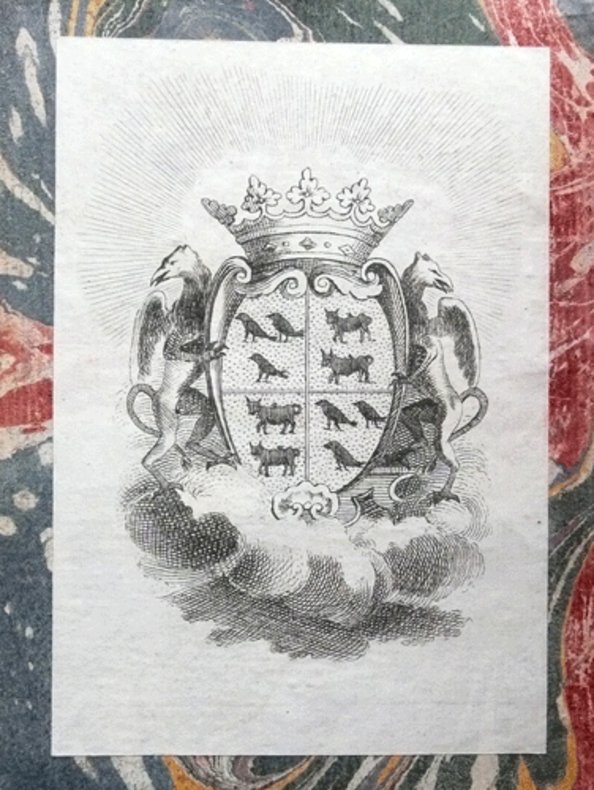
ref. 46400138, Paris, Les Marges, 1928; in-4, maroquin rouge, décor géométrique avec deux bandes mosaïq. de platine et un jeu de filets dorés, large encadr. int. de mar. rouge avec encadr. listel platine et fil; dor., doublé et gardes de faille argent, doubles gardes, tr. dor. sur témoins, couv., étui.(Marot-Rodde). Superbe réalisation typographique en rouge et noir. Ornements, bandeaux et culs-de-lampe dessinés par B. Grosser. Imprimé sur les presses de Ducros et Colas pour la Société de Bibliophilie Les Marges. Tirage limité à 359 exemplaires. Un des 51 exemplaires numérotés en romain sur vélin d'Arches, celui-ci spécialement imprimé pour Louis Barthou. Très élégante reliure de Madame Marot-Rodde qui exerça à Paris entre 1920 et 1936. Elle avait appris la reliure avec Ch. Chanat et P. Ruban. Fléty 121.- Voir aussi Crauzat III pp 137-139 qui consacre une importante notice à cette artiste d'une grande perfection technique.- Vrain. Catal. Reliures de femmes 54 à 61. Ex-libris L. Barthou.
1853ref. LL 603TYPOGRAPHIC SPECIMENS OF THE VATICAN PRINTING HOUSE. Folio 342x255 mm; original cloth with title impressed in gold on upper cover; half-title leaf title-page leaf printed in blue red and gold within a triple border as well printed in blue red and gold a leaf with the advice to reader pp. VIII 62 plates and 4 plates containing many samples of fonts text printed in Italian Latin Greek Copic French also with sample of numbers music typographical borders tailpieces etc. last 4 plates: " Campioni dei tratti di penna" so calligraphic samples. Francesco Salviucci belonging to a well-known family of Roman typographers director of the Typography of the "Reverenda Camera Apostolica" describes a vast sample of the printing characters present in the typography preceded by a brief excursus on typographic art in general. In addition to the characters there are various friezes and engravings including the image of a steamship probably the first of the Papal State. Maggs cat. n. 509; Books on Printing Part II Books From Famous Presses 15th To 20th Century. Tipografia della Rev. Camera Apostolica hardcover
1690in-8 (mm 204x145), ff. 4, bella cartonatura decorata settecentesca. Il primo foglio ha una bellissima xilografia a mezza pagina (mm 86x112) raffigurante probabilmente Carlo Magno in trono circondato dai suoi Paladini, il tutto entro bordura geometrica. Varie furono tra XVI e XVII secolo le versioni in versi della saga di Liombruno, alcune analoghe a questa, altre più estese. Questo testimone appartiene alla tradizione di quella in 48 ottave, che si apre con "Signori, intendo che per povertade / molti nel mondo son mal arrivati / hanno perduto la lor libertade / la povertá sí forte gli ha cacciati" e termina con l'ottava che inizia con "E cosí stettero insieme allegramente / infin che visson, con perfetto amore". Ma le varianti testuali sono notevoli rispetto ad altre reperite, non solo per il lessico ma anche per intere frasi sostituite. La probabile prima edizione di questo testo anonimo è del 1525. Esiste anche una versione in prosa di questa fiaba che ha per protagonista un pescatore con vari figli e madonna Aquilina, una fata con poteri magici. Forse l'unico esemplare noto di questa tarda ma preziosa edizione, che reca inusualmente un esplicito colophon sul frontespizio "In Palermo, per Pietro Coppula 1690". Il Coppola ebbe una stamperia prestigiosa e editò alcune tra le più ricche edizioni del Seicento palermitamo; stupisce che si sia dedicato ad imprimere questa effimera edizioncina popolare. Il bellissimo legno copia con fedeltà un'altra xilografia cinquecentesca già apparsa in alcune placchette precedenti, sicuramente ne "le valorose prove segli Arcibravi Paldini" del 1580. In buono stato di conservazione malgrado il margine inferiore sia rifilato, con perdita di mezza riga in A1r e di una intera riga in A8v. Le altre pagine invece sono complete anche del richiamo. L'angolo inferiore esterno di A8r non fu stampato a causa di un foglio piegatosi nel torchio. Sulla prima sguardia timbro della biblioteca del fondatore del British Institute di Firenze, Walter Ashburner (1864-1936), professore ad Oxford e grande bibliofilo. . Sander 3980-3991 descrive alcune edizioni con illustrazioni variate tra Cinquecento e Settecento..
First edition, 3 vols., 4to (270 x 185 mm), [6], vi, [2], ccxxv, [1], 410, [2]; [4], 535, [3]; [4], 544, [4]pp., with half-titles, ONE OF 50 LARGE PAPER COPIES, 37 engraved plates (without the 'Presentation in the Temple' plate which was not ready at publication and occurs in only a very few copies and the 'Portrait of Los Rios' which Windle & Pippin suggest is an extra-illustration), also without the engraved portrait of Dibdin by Henry Mayer, numerous woodcuts engraved vignettes, several printed in red or blue, some mounted, some light spotting and offsetting as usual, marbled endpapers, contemporary full blue-green morocco, decorated in gilt with interlacing geometrical design on the covers, richly tooled gilt morocco doublures, flat spines lettered in gilt direct, all edges gilt, spine slightly faded, corner of lower board of vol. II bumped, some slight edge-wear to bindings otherwise a handsome set. A fine copy of the rare large paper issue of the author's most lavish publication and the high water of Dibdinian Bibliomania. Jackson 40; Windle & Pippin A28.
1925ref. 15487ABBerlin, -, 1925. Kalligrafisch gestaltetes Doppelblatt in Ledermappe und Schuber., Abbildung 1|Abbildung 2|Abbildung 3
1931ref. 25353TOLMER 1931 1 Paris, Tolmer, 1931, petit in-4, broché, cartonnage éditeur noir et jaune sous étui, couverture en couleurs illustrée.