1528 resultados
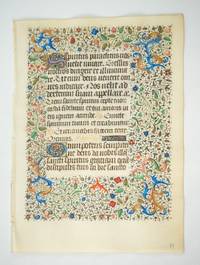
ref. ST20972dParis: Nicolas Vivien early 16th century. 197 x 130 mm. 7 3/4 x 5 1/8". Single column 28 lines gothic typeface. Ruled in red each leaf with several one- to three-line initials painted gold on red or blue ground and A LOVELY ANIMATED FULL BORDER DONE IN MANUSCRIPT with trompe-l'oeil flowers a moth a fly and a bird on painted gold ground. Light soiling and a couple small stains to vellum one initial a bit smudged but in excellent condition overall. This beautifully embellished leaf from a printed Book of Hours demonstrates the enduring demand for manuscript illumination in the incunabular period and beyond. While the text here was completed on a printing press the initials and border were done entirely by hand adding luxury and luster to an otherwise unadorned page. Although this leaf likely belonged to a Book of Hours printed in Paris possibly an edition printed for Nicolas Vivien in or around 1503 the trompe-l'oeil style seen in the border was particularly popular among Flemish and Netherlandish illuminators of the period. The large blossoms and acanthus here seem to pop off the page because of the artist's use of subtle shading to indicate shadows and there is additional pleasure to be found in the small creatures--a bird carrying a small flower a moth and a housefly--that share the space. Nicolas Vivien(?) unknown
ref. ST20972dParis: Nicolas Vivien early 16th century. 197 x 130 mm. 7 3/4 x 5 1/8". Single column 28 lines gothic typeface. Ruled in red each leaf with several one- to three-line initials painted gold on red or blue ground and A LOVELY ANIMATED FULL BORDER DONE IN MANUSCRIPT with trompe-l'oeil flowers a moth a fly and a bird on painted gold ground. Light soiling and a couple small stains to vellum one initial a bit smudged but in excellent condition overall. This beautifully embellished leaf from a printed Book of Hours demonstrates the enduring demand for manuscript illumination in the incunabular period and beyond. While the text here was completed on a printing press the initials and border were done entirely by hand adding luxury and luster to an otherwise unadorned page. Although this leaf likely belonged to a Book of Hours printed in Paris possibly an edition printed for Nicolas Vivien in or around 1503 the trompe-l'oeil style seen in the border was particularly popular among Flemish and Netherlandish illuminators of the period. The large blossoms and acanthus here seem to pop off the page because of the artist's use of subtle shading to indicate shadows and there is additional pleasure to be found in the small creatures--a bird carrying a small flower a moth and a housefly--that share the space. Nicolas Vivien(?) unknown books
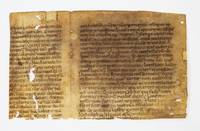
ref. ST18310cGermany ca. 1100. 130 x 204 mm. 5 1/8 x 8". Single column 13 extant lines in a late Caroline hand. Rubrics in red. ◆Recovered from a binding and thus noticeably browned stained and vaguely wavy one side somewhat faded several small holes just two touching any letters other imperfections but still a very presentable specimen the ink especially dark on one side and legible on both. This is an early fragment in a distinctive hand lacking the heaviness of other scripts of the period and with a feeling of the elongated grace of the humanistic. Despite having previously been used as a binding scrap the fragment remains definitely readable partly because of the clarity of the scribal hand. Elected pope in 590 Gregory I ca. 540-604 also known as Gregory the Great was one of the most influential pontiffs in the history of the Church. In addition to revising liturgical worship he wrote extensively on theology offering homespun wisdom rather than esoteric debates. His "Homilies on the Gospels" were intended to be preached to common people rather than a monastic audience and as a consequence were greatly admired for their straightforward language and pastoral relevance. unknown
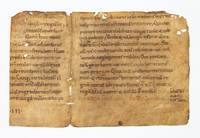
ref. ST18310bGermany ca. 1100. 120 x 200 mm. 4 3/4 x 8". Single column 21 extant lines in a late Caroline hand. ◆Recovered from a binding and thus noticeably browned and stained several small holes costing perhaps 30 letters other imperfections but still a very presentable specimen the ink dark and with loss of legibility in only one small place. This is an early fragment in a distinctive hand lacking the heaviness of other scripts of the period and with a feeling of the elongated grace of the humanistic. Despite having previously been used as a binding scrap the fragment remains extremely legible partly because of the clarity of the scribal hand. Elected pope in 590 Gregory I ca. 540-604 also known as Gregory the Great was one of the most influential pontiffs in the history of the Church. In addition to revising liturgical worship he wrote extensively on theology offering homespun wisdom rather than esoteric debates. His "Homilies on the Gospels" were intended to be preached to common people rather than a monastic audience and as a consequence were greatly admired for their straightforward language and pastoral relevance. unknown
ref. ST18310bGermany ca. 1100. 120 x 200 mm. 4 3/4 x 8". Single column 21 extant lines in a late Caroline hand. ◆Recovered from a binding and thus noticeably browned and stained several small holes costing perhaps 30 letters other imperfections but still a very presentable specimen the ink dark and with loss of legibility in only one small place. This is an early fragment in a distinctive hand lacking the heaviness of other scripts of the period and with a feeling of the elongated grace of the humanistic. Despite having previously been used as a binding scrap the fragment remains extremely legible partly because of the clarity of the scribal hand. Elected pope in 590 Gregory I ca. 540-604 also known as Gregory the Great was one of the most influential pontiffs in the history of the Church. In addition to revising liturgical worship he wrote extensively on theology offering homespun wisdom rather than esoteric debates. His "Homilies on the Gospels" were intended to be preached to common people rather than a monastic audience and as a consequence were greatly admired for their straightforward language and pastoral relevance. unknown books
ref. ST18310cGermany ca. 1100. 130 x 204 mm. 5 1/8 x 8". Single column 13 extant lines in a late Caroline hand. Rubrics in red. ◆Recovered from a binding and thus noticeably browned stained and vaguely wavy one side somewhat faded several small holes just two touching any letters other imperfections but still a very presentable specimen the ink especially dark on one side and legible on both. This is an early fragment in a distinctive hand lacking the heaviness of other scripts of the period and with a feeling of the elongated grace of the humanistic. Despite having previously been used as a binding scrap the fragment remains definitely readable partly because of the clarity of the scribal hand. Elected pope in 590 Gregory I ca. 540-604 also known as Gregory the Great was one of the most influential pontiffs in the history of the Church. In addition to revising liturgical worship he wrote extensively on theology offering homespun wisdom rather than esoteric debates. His "Homilies on the Gospels" were intended to be preached to common people rather than a monastic audience and as a consequence were greatly admired for their straightforward language and pastoral relevance. unknown books
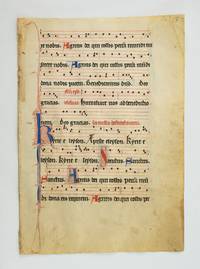
ref. ST21065ANortheastern France or Rhineland early 14th century. 345 x 239 mm. 13 1/2 x 9 3/8". Single column nine lines of music and text in a gothic hand. Rubrics and staves in red calligraphic initials in black some leaves with one-line initials in red or blue some with contrasting penwork each leaf with two or more large initials measuring a line of text plus a full stave in blue or red with blue and red penwork often extending several lines above or below. Later ink foliation in upper right corners; one leaf with marginal notations in later hands. See: de Hamel Christopher. "Medieval and Renaissance Manuscripts from the Library of Sir Sydney Cockerell" British Library Journal 13 1987. Trimmed a little close at the top occasionally cutting into penwork decoration light to moderate soiling to vellum some leaves with light creasing small stains and/or wormholes but still in very good presentable condition. From a manuscript fragment that once passed through the hands of Sir Sydney Cockerell the leaves in this group appear to come from a rarely seen liturgical text called a Sequentiary. Consisting of sung hymns called "sequences" performed between the Alleluia and Gospel readings during Mass a Sequentiary could be either a standalone volume or part of a longer work such as a Gradual or Missal. The script here is a neat and legible gothic book hand with simple but attractive lettering in blue and red with contrasting penwork; there are also some interesting calligraphic initials in black--some with little spikes or other flourishes--that might warrant further study. These leaves were previously bound into a later perhaps 18th century limp vellum binding the pastedown of which contained a tipped-on handwritten note from Cockerell 1867-1962 who was William Morris' private secretary and the director of the Fitzwilliam Museum for nearly 30 years. Cockerell attributed this manuscript to Northern France and suggested a date of ca. 1280 we believe it dates a little later noting that it was probably made for Dominican use based on the presence of the sequences for St. Peter Martyr and St. Dominic. It is unclear whether Cockerell actually owned this manuscript at one point or served as a consultant for a dealer or a private collector as he was known to do: in the words of de Hamel Cockerell became "the arbiter of quality before whom generations of collectors and scholars brought their acquisitions and attributions for judgement. . . . Dyson Perrins Yates Thompson Chester Beatty Pierpont Morgan St John Hornby Lord Kennet Francis Wormald Eric Millar J. R. Abbey and many others never felt that a manuscript acquisition was truly made until Sydney Cockerell had seen and approved it." De Hamel also notes that Cockerell "gave away sold or exchanged manuscripts on many occasions during his life of collecting" making it difficult to know exactly how this manuscript may have crossed his path or for how long it was in his possession. His appraisal does however suggest that this manuscript was in a defective state from at least the 1920s and probably a good deal earlier than that. Most of the choir book leaves that we've offered for sale over the years have come from 15th and early 16th century manuscripts typically Italian or Spanish in origin; the present leaves offer an uncommon opportunity to purchase earlier specimens of musical notation--and they are leaves from an unusual liturgical text with distinguished if uncertain ownership history and at an attainable price. The price given here is for a single leaf; for additional leaves from this same manuscript at various prices please see our website. unknown
ref. ST21065ANortheastern France or Rhineland early 14th century. 345 x 239 mm. 13 1/2 x 9 3/8". Single column nine lines of music and text in a gothic hand. Rubrics and staves in red calligraphic initials in black some leaves with one-line initials in red or blue some with contrasting penwork each leaf with two or more large initials measuring a line of text plus a full stave in blue or red with blue and red penwork often extending several lines above or below. Later ink foliation in upper right corners; one leaf with marginal notations in later hands. See: de Hamel Christopher. "Medieval and Renaissance Manuscripts from the Library of Sir Sydney Cockerell" British Library Journal 13 1987. Trimmed a little close at the top occasionally cutting into penwork decoration light to moderate soiling to vellum some leaves with light creasing small stains and/or wormholes but still in very good presentable condition. From a manuscript fragment that once passed through the hands of Sir Sydney Cockerell the leaves in this group appear to come from a rarely seen liturgical text called a Sequentiary. Consisting of sung hymns called "sequences" performed between the Alleluia and Gospel readings during Mass a Sequentiary could be either a standalone volume or part of a longer work such as a Gradual or Missal. The script here is a neat and legible gothic book hand with simple but attractive lettering in blue and red with contrasting penwork; there are also some interesting calligraphic initials in black--some with little spikes or other flourishes--that might warrant further study. These leaves were previously bound into a later perhaps 18th century limp vellum binding the pastedown of which contained a tipped-on handwritten note from Cockerell 1867-1962 who was William Morris' private secretary and the director of the Fitzwilliam Museum for nearly 30 years. Cockerell attributed this manuscript to Northern France and suggested a date of ca. 1280 we believe it dates a little later noting that it was probably made for Dominican use based on the presence of the sequences for St. Peter Martyr and St. Dominic. It is unclear whether Cockerell actually owned this manuscript at one point or served as a consultant for a dealer or a private collector as he was known to do: in the words of de Hamel Cockerell became "the arbiter of quality before whom generations of collectors and scholars brought their acquisitions and attributions for judgement. . . . Dyson Perrins Yates Thompson Chester Beatty Pierpont Morgan St John Hornby Lord Kennet Francis Wormald Eric Millar J. R. Abbey and many others never felt that a manuscript acquisition was truly made until Sydney Cockerell had seen and approved it." De Hamel also notes that Cockerell "gave away sold or exchanged manuscripts on many occasions during his life of collecting" making it difficult to know exactly how this manuscript may have crossed his path or for how long it was in his possession. His appraisal does however suggest that this manuscript was in a defective state from at least the 1920s and probably a good deal earlier than that. Most of the choir book leaves that we've offered for sale over the years have come from 15th and early 16th century manuscripts typically Italian or Spanish in origin; the present leaves offer an uncommon opportunity to purchase earlier specimens of musical notation--and they are leaves from an unusual liturgical text with distinguished if uncertain ownership history and at an attainable price. The price given here is for a single leaf; for additional leaves from this same manuscript at various prices please see our website. unknown books
1951ref. 012905Paris Galerie Louise Leiris 1951 en feuilles, couverture rempliée illustrée, chemise et étui éditeur
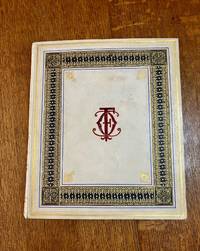
ref. 10997NP. ND. . FINE LARGE DECORATIVE VELLUM BINDING. Folio. 14.8 x 12.8 inches. A collection of 211 items of late 19th and early 20th century cards and ephemera including 26 rare 3-D movable lift-up Valentines and Christmas cards each mounted onto a white stiff card page and with multiple pieces of ephemera attached around the page. Attractive late nineteenth century binding of full white vellum. Spine with decorative gilt designs within double gilt ruled lines in compartments. Boards with triple gilt ruled borders to the very edges and elaborate dark brown morocco panels with highly decorative gilt tooling. A thin blue ink line inside and out of the brown panels. Four gilt corner pieces inside the middle panel. Red painted initials with gilt borders to the centre of the front panel. Board edges and turn-ins with decorative gilt rolls. Green and white patterned endpapers. All edges gilt. Inner hinges reinforced with buff cloth strip. A little marking and a couple of small splits to the binding but overall a fine and attractive vellum binding housing an interesting collection of rare unusual and highly decorative items. NP. ND. hardcover
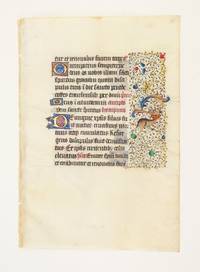
1430ref. ST20979bParis ca. 1430. 191 x 140 mm. 7 1/2 x 5 1/2". Single column 16 lines in an elegant gothic book hand. Rubrics in gold line-fillers with color foliate and geometric designs on burnished gold ground three two-line initials in blue or pink enclosing colored vines with foliage on gold ground BOTH SIDES WITH A DENSE RINCEAUX BORDER consisting of colorful acanthus flowers and many hairline vines terminating in gold leaves ivy and seed pods and with numerous gilt bezants. IN BRILLIANT CONDITION. This is an extraordinarily fine and opulently decorated leaf from a Book of Hours with glittering rinceaux borders delicate initials and luxurious gold rubrics. These sumptuous details and the high quality of the work indicate that this leaf was part of a costly manuscript commissioned by a wealthy patron. Other leaves from the same parent manuscript were sold at Bloomsbury on 6 December 2017 lots 63 and 64. One of those leaves showed St. Genèvieve leading the female saints in the Litany pointing to Paris as the place of origin. unknown
1430ref. ST20979bParis ca. 1430. 191 x 140 mm. 7 1/2 x 5 1/2". Single column 16 lines in an elegant gothic book hand. Rubrics in gold line-fillers with color foliate and geometric designs on burnished gold ground three two-line initials in blue or pink enclosing colored vines with foliage on gold ground BOTH SIDES WITH A DENSE RINCEAUX BORDER consisting of colorful acanthus flowers and many hairline vines terminating in gold leaves ivy and seed pods and with numerous gilt bezants. IN BRILLIANT CONDITION. This is an extraordinarily fine and opulently decorated leaf from a Book of Hours with glittering rinceaux borders delicate initials and luxurious gold rubrics. These sumptuous details and the high quality of the work indicate that this leaf was part of a costly manuscript commissioned by a wealthy patron. Other leaves from the same parent manuscript were sold at Bloomsbury on 6 December 2017 lots 63 and 64. One of those leaves showed St. Genèvieve leading the female saints in the Litany pointing to Paris as the place of origin. unknown books
1540ref. 6505Venetia (Venezia), Marchia Sessa, 1540 ; in-8 ; plein vélin vieil ivoire (reliure de l'époque) ; (32) ff., 224 ff., le dernier verso blanc ; grand bois gravé (88 x 78 mm) en page de titre représentant Sainte Catherine recevant les stigmates et marque d'imprimeur à la suite du collophon, achevé d'imprimer du 29 avril 1540, date anniversaire de la mort de la Sainte (29 avril 1380).
ref. 3252In 4 en feuillets,couverture rempliée,avec titre en bleu, au dos,et sur le premier plat.Titre illustré d’un dessin d’Albert MARQUET,143 pages,1 feuillet justificatif de tirage.7 illustrations d’Albert MARQUET.24 aquarelles et 23 dessins gravés sur bois.Jacques Klein éditions de la Cigogne 28 février 1950.Casablanca-Paris.Un des 185 exemplaires numérotés sur Rives à la forme,deuxième et dernier grand papier(tirage total 225 exemplaires plus 25 exemplaires réservés aux collaborateurs)chemise cartonnée, dos muet toile bleue, plats avec papier imitation paille tressée.emboîtage cartonné toilé bleu et papier imitation paille tressée;très bon état,proche de l’état de neuf,coloris très frais.
ref. awd-1117Lithographie originale en couleurs sur vélin, titrée essai et signée au crayon en marge (38,2/27,5 cm). Élégant encadrement (53,3/42,4 cm).
1977ref. 016067Paris Editions de l'Ermitage 1977 In-4 carré En feuilles, couverture à rabats, emboitage toilé éditeur
1678ref. (LCPCLIT-0027)(Une très rare comédie d'un suiveur de Molière, en édition originale, conservée dans son vélin de l'époque) HAUTEROCHE Noël LE BRETON (Sieur DE). (Paris, 1617-1707) "LES NOBLES DE PROVINCE, COMEDIE...". 1678, Lyon, T. Almaury. 1 volume in-16° (143x89 mm) (dimensions pages 141x86 mm) 126 pp. (y compris titre et avis), (1) f. (permission). (A8, B4, C8, D4, E8, F4, G8, H4, I8, K-L4) Reliure de l'époque en vélin souple. Edition Originale, rarissime. Petites brunissures éparses, mais bel exemplaire conservé dans son vélin strictement du temps. "Ceux qui liront cette Comedie, y verront une image de ces Gentils-hommes de campagne qui Souvent Se piquent plus de l'Antiquité de leur NobleSSe, que d'avoir de la raiSon. On y verra auSSi des caracteres qui leur Sont tout à fait oppoSez, & qu'on peut dire raiSonnables. Ie ne taScherai point icy, à prevenir le Lecteur, en faveur de cette Pièce, j'advoeray Seulement...". "Fils d'un huissier au Parlement, Hauteroche s'enfuit en Espagne pour échapper à un mariage qu'on voulait lui faire contracter malgré lui et se fit comédien à Valence (Espagne). Il joua en Allemagne et fonda sa propre troupe à Paris en 1654, puis entra au Théâtre du Marais la même année et passa à l'Hôtel de Bourgogne en 1660. En 1671, il succéda à Floridon comme directeur de la troupe". Il obtint de grands succès comme auteur dramatique et en même temps, émule de Molière, il composa des comédies. "Sans s'élever à la création des caractères ou à la peinture des moeurs, son talent consistait à nouer habilement une intrigue et à semer le dialogue de traits plaisants". (Wikipedia) Seuls 4 exemplaires dans les collections publiques françaises. Provenance : Ex libris manuscrit Blondeau sur la page de titre. (LCPCLIT-0027) (1.500,00 €)
1962ref. 010682Paris Tériade 1962 In-2 En feuilles, couverture rempliée, chemise et étui éditeur
ref. 16501I- Nouvelle édition revue et augmentée, illustrée de 124 dessins par Joannès Drevet, dont quinze grandes compositions hors-texte. Lyon, Dizain et Richard (Imprimerie Pitrat Ainé), 1889 (achevé d'imprimer le 8 décembre 1888) ; XV, 316 pp., (3) ff. dont 2 blancs, couverture et dos conservés. Un des 50 exemplaires (n°42) sur grand papier du Japon avec une suite sur Chine avant la lettre.II- Aux environs de Lyon. Edition illustrée de 250 dessins de J. Drevet dont trente-deux grandes compositions hors-texte et une gravure à l'eau-forte. Lyon, Dizain et Richard (Lyon, Imprimerie Rey), 1892 (achevé d'imprimer le 15 novembre 1891) ; IX, 358 pp., (2) pp. et couverture en couleurs. Exemplaire N°42 des 60 sur grand papier du Japon du tirage de tête, avec double épreuve, dont une avant la lettre, et l'autre sur Chine, des 32 compositions hors-texte et de l'eau-forte en frontispice.Deux tomes in-8 ; demi-chagrin à coins brun foncé, dos à nerfs orné de fleurons alternés fleur de lys, lion debout, titre doré, filet doré sur les plats, tête dorée sur témoins, couverture et dos conservés, non rognés, témoins à toutes marges (L. Guétant).
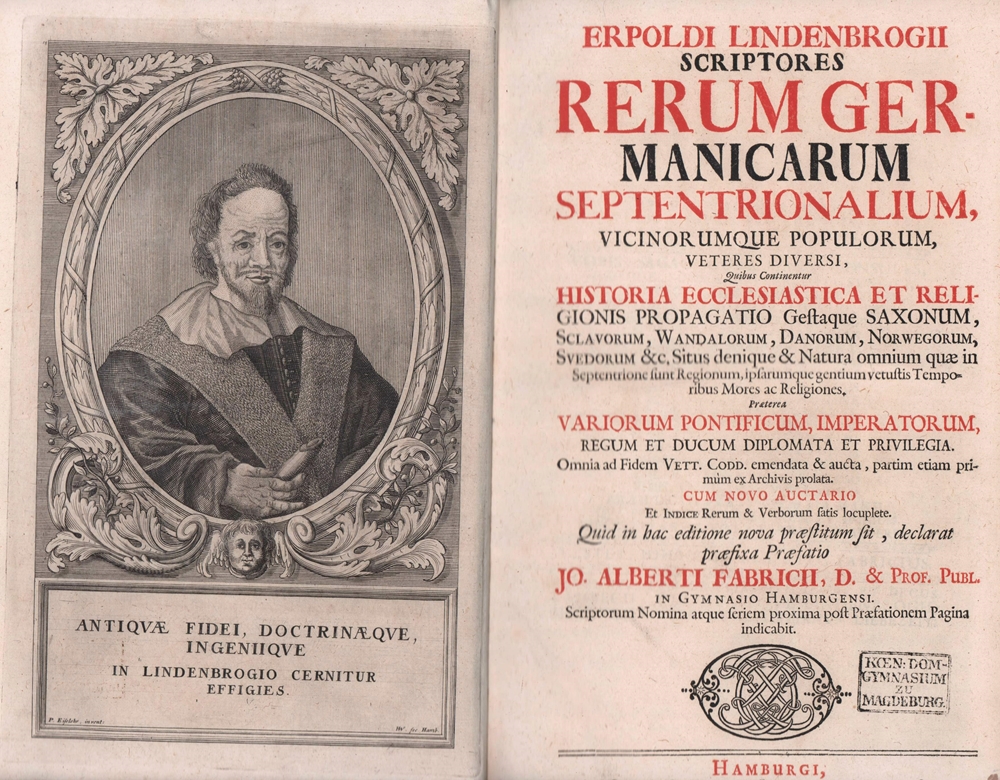
1706ref. 89001Alle Hamburg, Liebezeit, 1706. 4to. 33 cm. Pgt. d. Zt. mit hs. Rückentitel, Ganzfarbschnitt u. goldgeprägtes, figürliches Wappen-Supralibros.
1708ref. 000312Amstelaedami (Amsterdam) Ex Officina Wetsteniana (Wetstein) 1708
1893ref. 6663[Zürich, chez l'auteur, [1893]. In-folio de 1 feuillet pour les légendes et 50 planches sous chemise d'éditeur à rabats, en percaline rouge, premier plat richement orné (noir or et argent). Rare rousseurs sur les bords du vélin gris.
ref. 009682Aux Editions du Sagittaire, Chez Simon Kra 0 36 volumes in-12 brochés, couvertures rempliées
1931ref. 010380Paris Cahiers d'art 1931 In-4 Broché, couverture rempliée.
ref. ST17060NFrance probably Besançon 3rd quarter of 15th century. 239 x 165 mm. 9 3/8 x 6 1/2". Single column 15 lines in an elegant gothic book hand. Rubrics in dark pink line enders in pink and blue with white tracery and gold bezant one- and two-line initials painted gold on pink and blue ground with white tracery each side with a panel border decorated with hairline vines gold bezants and ivy and colorful flowers and acanthus RECTO BORDER INHABITED BY A CHARMING DOG-LIKE CREATURE. ◆A small light stain in border decoration largely masked by dense hairline vines but IN FINE CONDITION--bright clean and well preserved. From a large Book of Hours probably produced in Besançon this leaf features very pretty panel borders including one with a particularly charming inhabitant in the form of a dog-like creature with no front legs wearing an orange collar and emitting an acanthus leaf from its mouth. Imaginative touches like this and luxurious elements such as the several dozen gilt bezants and ivy leaves in each border and the unusually wide margins point to this manuscript having been quite a costly production. For additional leaves from this same manuscript at different price points please check our website. unknown