1528 resultados
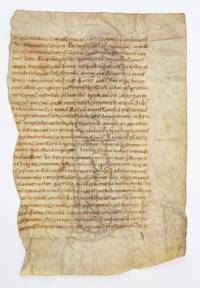
ref. ST19350-006Germany 12th century. 272 x 185 mm. 10 3/4 x 7 1/4". Single column 28 lines in a late Caroline hand. ◆Leaf trimmed irregularly along one side about 18 lines lacking a letter or two vellum a bit wrinkled and worn text a little faded in places but still very presentable and the text almost entirely legible. Penned in a pleasing and very legible late Caroline hand this leaf has sustained very little loss and is remarkably well preserved for having been previously reused as binding scrap. Although the text includes several abbreviations that are commonly found in proto-gothic scripts the hand also shares a number of similarities with the Caroline minuscule that dominated Western Europe scribal hands in earlier periods including a long "s" with the shaft on the line and the use of the ampersand as a general abbreviation for the letters "et" occurring anywhere in a word. The text here comes from Pope Gregory the Great's "Moralia" conceived as a commentary on the book of Job and begun when Gregory was just a young papal envoy to Constantinople. It is a guide to the Christian life written in simple direct language which transforms the thought of Augustine into a practical manual of behavior. unknown books
1801ref. 81154Hamburg, Carl Ernst Bohn, 1792-1801. [1] 9 Bll., 420 S. Mit gestoch. Titel-Vign. u. 2 gefalt. Kpfr.-Taf. / [2] 8 Bll., 480 S. Mit Titel-Vign. u. 1 Falttaf. / [3] 6 Bll., 510 S. Mit Titel-Vign., 8 (davon 3 gefalt.) Taf. u. 1 gefalt. Tab. / [4] 4 Bll., 460 S. Mit Titel-Vign. u. 6 Falttaf. / [5] 6 Bll., 524 S. Mit Titel-Vign. / [6] 6 Bll., 572 S. Mit Titel-Vign. u. 3 Taf. (20 x 12,5 cm). HALBPERGAMENT der Zeit mit RTiteln von alter Hand.
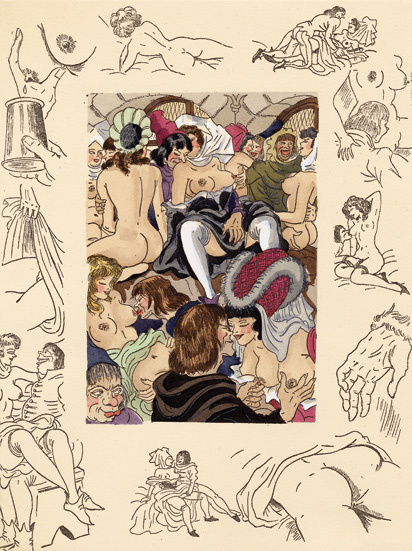
1956ref. 15543- VILLON (François) : LES REPEUES FRANCHES, SUIVIES DU MONOLOGUE. 1956 ; 152, [153], (3) pp., (1) f. blanc, couverture crème granitée rempliée, 12 miniatures hors-texte (prises dans la pagination) coloriées au pochoir.- RABELAIS (François) : PANTAGRUELINE PROGNOSTICATION, SUIVIE DE LA SCIOMACHIE. 1957 ; 149, [150], (8) pp., couverture crème granitée rempliée, 12 miniatures hors-texte coloriées à la main au pochoir.
1678ref. 2763Paris, André Pralard, 1678-1679 ; trois tomes in-12 reliés en deux volumes, plein vélin ivoire, titre manuscrit, armes dorées, au centre des deux plats, du comte de Nédonchel (reliure de l'époque) ; (14) ff., 416 pp., (5) ff. ; 497 pp., (5) pp., (1) f. blanc ; (8) ff., 238 pp., (5) ff. dont 2 blancs ; 8 planches hors-texte.
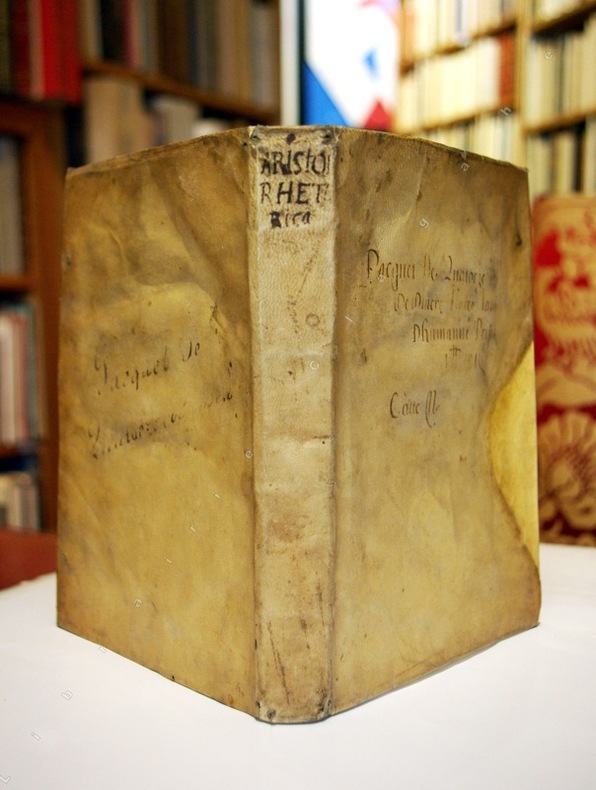
1584ref. 14506Francfort, Héritiers de André Wechel, 1584 ; in-4 ; plein vélin ivoire de l'époque, titre manuscrit au dos ; 341 pp., (1) p. corrigenda, (1) f. blanc. Texte grec jusqu'à la page 258 puis Annotations en latin sur deux colonnes et Index.
1946ref. 014521Paris Vrille éditions Pro Francia - Collection Le Quadrangle vrille 1946 In-8 Broché, couverture illustrée Ed. originale
ref. 13376La famille de DARIUS aux pieds d’ALEXANDRE. Estampe gravée au burin et à l’eau forte, en deux feuilles, d’après le tableau de Charles Le Brun. G. EDELINCK graveur. En marge inférieure : C. LE BRUN pinxit. G.EDELINCK sculptsit. 1661. Format 1030x705mm avec marges. ALEXANDRE ayant vaincu DARIUS prez la ville d’Isse entre dans une tente ou estoient la mère, la femme et les enfants de DARIUS, ou il donne un exemple singulier de retenüe et de clémence. Gravé par EDELINCK d’après le tableau qu’en a fait Charles LE BRUN premier peintre du Roy. Epreuve du troisième état avec GOYTON en pointillé. Marge inférieure, renforcée. Mouillure en marge inférieure, plus visible au versoRARE
ref. 13393AUDRAN Gérard le jeune Pyrrhus sauvé. Estampe d’après Nicolas POUSSIN gravée au burin, à l’eau forte et la pointe sèche, sur vélin fort, en deux feuilles. 946x730mm. AUDRAN 1674. Pliure renforcée. Mouillure en marge inférieure, surtout visible au recto. . Semble être une épreuve du deuxième état. Rare.
1948ref. 013808Paris Sagittaire 1948 In-12 Borché, couverture rempliée Ed. originale
1546ref. 11249Venise, Hieronymus Scotas, 1546 ; in-folio ; plein vélin ivoire en partie manuscrit (reliure de l'époque) ; (6) ff., 142 ff. recto-verso, (3) ff. le dernier, blanc, a été découpé.
1932ref. 012909Paris Editions des Cahiers Libres 1932 In-12 Broché, couverture rempliée Edition originale
1961ref. 014581Paris G. Girard 1961 In-12 Broché, couverture illustrée Edition originale
1929ref. 260431929. L'Edition d'Art H. Piazza, Paris. Mit 12 Farbtafeln und Abbildungen von Kay Nielsen. Originalbroschur im Originalschuber. 117, [3] Seiten.
1634ref. 19923In Firenza, Gio : Batista Landini, 1634 ; in 4°, vélin de l’époque, titre manuscrit au dos ; [16], 284, [4] pp. ; (signatures : †, ††, A-Z, Aa-Nn4).
1942ref. 013833Paris Gallimard NRF 1942 In-12 Broché Edition originale
1927ref. 013797Paris Henry Floury 1927 In-4 Broché, couverture illustrée rempliée
1664ref. 2940Amsterdam, ex officina Elzeviriana, 1664 ; in-16 ; plein vélin à recouvrements, titre manuscrit au dos, tranches mouchetées (reliure de l’époque) ; (20) ff. (titre gravé, lettre dédicatoire, index des chapitres et propositions), 748 pp., 4 tableaux dépliants et 1 planche dépliante.
ref. 13392AUDRAN Gérard PORUS blessé devant Alexandre. La prise de PORUS. SIC VICTUS ET VICTA PLACET La vertu plaît quoique vaincue, ou la magnanimité d’Alexandre. Estampe gravée au burin, à l’eau forte et la pointe sèche, épreuve sur vélin fort, signature de Gérard AUDRAN sculp. angle inférieur droit. 1678. Sur vélin fort, avec GOYTON en pointillé. 3 feuilles sur 4- 1060 x715mm marge inférieure et pliures renforcées. Mouillure en marge inférieure, plus visible au recto. Le milieu de la composition est occupé par PORUS blessé, que deux soldats amènent à ALEXANDRE,
1926ref. 11007Paris, L'Estampe Moderne, 1926 ; petit in-4, broché, chemise-étui de l'éditeur recouverts de papier simili-percaline à décor japonisant blanc et doré sur fond bleu-de-Prusse ; 207, (3) pp., couverture crème rempliée illustrée en couleurs et en tout 27 illustrations originales en couleurs dont 15 grandes têtes de chapitres gravées sur cuivre et toutes coloriées au pochoir, certaines rehaussées à l'or ou à l'argent, plus 14 petits dessins en noir et blanc.
1937ref. ST21066London: William Heinemann Limited 1937. FIRST EDITION. Book: 245 x 152 mm. 9 3/4 x 6"; Case: 330 x 235 mm. 13 x 9 1/4". 3 p.l. 34 pp. LOVELY CONTEMPORARY STIFF VELLUM GILT AND PAINTED covers with delicate gilt frame sprays of flower and leaves at each corner outlined in gilt and painted blue and green central lozenge outlined in gilt dots and framed by painted flowers and leaves a large initial "A" in gilt at center smooth spine divided into compartments with gilt and painted floral ornament turn-ins with gilt floral roll sky blue silk endleaves all edges gilt. Housed in a fine oversized blue morocco case designed to look like a book with gilt lettering on the upper cover raised bands gilt ruled compartments and lettering to spine the interior constructed and padded to hold the smaller book and lined with blue velvet spine of case a bit sunned corners a little rubbed clasp no longer functional. A FINE COPY clean and fresh internally in a pristine binding. With very considerable visual and tactile appeal this is a gracefully bound copy of the the final book of verse issued by Richard Aldington published before he turned exclusively to writing prose. A leading poet of the early 20th-century Imagist school Aldington né Edward Godfree Aldington 1892-1962 was a prolific writer whose 50-year career produced novels biographies translations and literary criticism as well as sharp minimalist free verse. He was part of the contemporary London avant-garde crowd being close friends with Ezra Pound T. S. Eliot Amy Lowell and D. H. Lawrence; and he was especially close to the poet H. D. Hilda Doolittle his first wife from 1913-38. As literary editor of the leading Modernist periodical "The Egoist" he was an integral part of the pre-World War I literary scene and his first largely autobiographical work "Death of a Hero" 1929 was considered by George Orwell and Lawrence Durrell to be the best of the English Great War novels. The poems here were written in the mid-1930s when Aldington had decamped to the United States after the woman he loved Netta Patmore rejected his proposal of marriage. While tracing his grief and longing the verses also build the image of a "crystal world" created by the love of an ardent couple concluding that "Only from the purity of extreme passion / And alas the purity of extreme pain / Can you build the crystal world." Happily Aldington's beloved Netta to whom the work is dedicated reversed her decision and agreed in 1938 to help him build their crystal world together. The present lovely binding is unsigned but the delicate precise tooling and elegant design indicate the work of very talented hands. The romantic contents and the rather feminine aspect of the binding suggest that this was a gift from one lover to another perhaps a recipient sharing the initial "A" with our author. And the oversized and extravagant custom case indicates how much this object was treasured. William Heinemann Limited unknown
1937ref. ST21066London: William Heinemann Limited 1937. FIRST EDITION. Book: 245 x 152 mm. 9 3/4 x 6"; Case: 330 x 235 mm. 13 x 9 1/4". 3 p.l. 34 pp. LOVELY CONTEMPORARY STIFF VELLUM GILT AND PAINTED covers with delicate gilt frame sprays of flower and leaves at each corner outlined in gilt and painted blue and green central lozenge outlined in gilt dots and framed by painted flowers and leaves a large initial "A" in gilt at center smooth spine divided into compartments with gilt and painted floral ornament turn-ins with gilt floral roll sky blue silk endleaves all edges gilt. Housed in a fine oversized blue morocco case designed to look like a book with gilt lettering on the upper cover raised bands gilt ruled compartments and lettering to spine the interior constructed and padded to hold the smaller book and lined with blue velvet spine of case a bit sunned corners a little rubbed clasp no longer functional. A FINE COPY clean and fresh internally in a pristine binding. With very considerable visual and tactile appeal this is a gracefully bound copy of the the final book of verse issued by Richard Aldington published before he turned exclusively to writing prose. A leading poet of the early 20th-century Imagist school Aldington né Edward Godfree Aldington 1892-1962 was a prolific writer whose 50-year career produced novels biographies translations and literary criticism as well as sharp minimalist free verse. He was part of the contemporary London avant-garde crowd being close friends with Ezra Pound T. S. Eliot Amy Lowell and D. H. Lawrence; and he was especially close to the poet H. D. Hilda Doolittle his first wife from 1913-38. As literary editor of the leading Modernist periodical "The Egoist" he was an integral part of the pre-World War I literary scene and his first largely autobiographical work "Death of a Hero" 1929 was considered by George Orwell and Lawrence Durrell to be the best of the English Great War novels. The poems here were written in the mid-1930s when Aldington had decamped to the United States after the woman he loved Netta Patmore rejected his proposal of marriage. While tracing his grief and longing the verses also build the image of a "crystal world" created by the love of an ardent couple concluding that "Only from the purity of extreme passion / And alas the purity of extreme pain / Can you build the crystal world." Happily Aldington's beloved Netta to whom the work is dedicated reversed her decision and agreed in 1938 to help him build their crystal world together. The present lovely binding is unsigned but the delicate precise tooling and elegant design indicate the work of very talented hands. The romantic contents and the rather feminine aspect of the binding suggest that this was a gift from one lover to another perhaps a recipient sharing the initial "A" with our author. And the oversized and extravagant custom case indicates how much this object was treasured. William Heinemann Limited unknown books
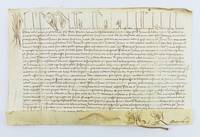
1622ref. ST12778-0281Rome 1622. 295 x 410 mm. 11 5/8 x 16 1/8". Single column 23 lines in a papal chancery hand. Elaborate lettering across top line of text. Lower margin with several signatures in ink; verso with brief notes in ink; lacking the original hemp tie and lead seal. Two tears at bottom of the document where ties were removed not affecting text vellum lightly soiled but in excellent condition overall. Addressed to the Archbishop of Naples this Papal Bull grants a marriage dispensation between Fabritio Virgopia and Judith Cuono. An online search finds nothing about the couple named here but the document reveals that they were petitioning for a dispensation because they fell into the second and third degrees of consanguinity meaning that they shared at least one common ancestor. Although marrying within four degrees of consanguinity was prohibited by the church it was not uncommon for the Holy See to issue dispensations as here allowing such marriages to take place—particularly for the privileged classes. The Papal Bull takes its name from the lead seals called "bullae" lacking in the present example that were issued with official documents of the papacy as a way of ensuring their authenticity. Apart from the very rare Solemn Privilege like Innocent III's famous granting of England in 1214 to his involuntary vassal King John there are three categories of Papal Bulls: Simple Privileges also called Solemn Letters Letters of Grace which confirm privileges and rights but are somewhat smaller and Mandates which are differentiated by their use of hemp ties as opposed to silk as would have been the case here. Pope Gregory XV born Alessandro Ludovisi 1554-1623 ruled for just over two years from 1621-23. His brief papacy was marked by efforts to support the Catholic Counter-Reformation including the establishment of the Congregation for the Propagation of the Faith to oversee missionary work. He also played a key role in the election of Holy Roman Emperor Ferdinand II canonized notable saints such as Ignatius of Loyola and Francis Xavier and issued the last papal mandate concerning witchcraft. Documents issued by Gregory XV are unsurprisingly rare given the shortness of his rein: we could trace just one sold at auction since 1995. unknown
1614ref. ST12778-0352Rome 1614. 203 x 319 mm. 8 x 12 5/8". Single column 25 lines in a papal chancery hand. With braided cloth tie for appended seal now gone. Elaborate lettering all across top line of text especially the first 8-line initial and at lower right corner. Lower margin with several signatures in ink behind the fold; verso with brief notes in ink; remains of hemp tie for appended seal which has been cut away. Three vertical and one horizontal fold creases faint overall yellowing to verso possible erasure correction in second line of text otherwise the page bright and the hand clear. Addressed to the Archbishop of Naples this Papal Bull grants a marriage dispensation between Pietro Palladino and Giovanna Cabalone. An online search finds nothing about the couple named in the present document but they were apparently high-ranking Neapolitan citizens who had the means to procure a Papal intercession. Likewise the particular impediment prohibiting the marriage is not apparent here. This type of document takes its name from the lead seals called "bullae" that were issued with official documents of the papacy as a way of ensuring their authenticity. Apart from the very rare Solemn Privilege like Innocent III's famous granting of England in 1214 to his involuntary vassal King John there are three categories of Papal Bulls: Simple Privileges also called Solemn Letters Letters of Grace which confirm privileges and rights but are somewhat smaller and Mandates which are differentiated by their use of hemp ties as opposed to silk as here. A member of the influential Borghese family Pope Paul V born Camillo Borghese 1550-1621 reigned as head of the Catholic Church for 16 years from 1605 until his death. As a staunch defender of the rights and privileges of the church he often came into conflict with secular leaders. He is perhaps best remembered for financing the completion of St. Peter's Basilica and for his involvement in the Galileo controversy in which he warned the scientist against advocating heliocentrism. unknown
1622ref. ST12778-0281Rome 1622. 295 x 410 mm. 11 5/8 x 16 1/8". Single column 23 lines in a papal chancery hand. Elaborate lettering across top line of text. Lower margin with several signatures in ink; verso with brief notes in ink; lacking the original hemp tie and lead seal. Two tears at bottom of the document where ties were removed not affecting text vellum lightly soiled but in excellent condition overall. Addressed to the Archbishop of Naples this Papal Bull grants a marriage dispensation between Fabritio Virgopia and Judith Cuono. An online search finds nothing about the couple named here but the document reveals that they were petitioning for a dispensation because they fell into the second and third degrees of consanguinity meaning that they shared at least one common ancestor. Although marrying within four degrees of consanguinity was prohibited by the church it was not uncommon for the Holy See to issue dispensations as here allowing such marriages to take place—particularly for the privileged classes. The Papal Bull takes its name from the lead seals called "bullae" lacking in the present example that were issued with official documents of the papacy as a way of ensuring their authenticity. Apart from the very rare Solemn Privilege like Innocent III's famous granting of England in 1214 to his involuntary vassal King John there are three categories of Papal Bulls: Simple Privileges also called Solemn Letters Letters of Grace which confirm privileges and rights but are somewhat smaller and Mandates which are differentiated by their use of hemp ties as opposed to silk as would have been the case here. Pope Gregory XV born Alessandro Ludovisi 1554-1623 ruled for just over two years from 1621-23. His brief papacy was marked by efforts to support the Catholic Counter-Reformation including the establishment of the Congregation for the Propagation of the Faith to oversee missionary work. He also played a key role in the election of Holy Roman Emperor Ferdinand II canonized notable saints such as Ignatius of Loyola and Francis Xavier and issued the last papal mandate concerning witchcraft. Documents issued by Gregory XV are unsurprisingly rare given the shortness of his rein: we could trace just one sold at auction since 1995. unknown books
1614ref. ST12778-0352Rome 1614. 203 x 319 mm. 8 x 12 5/8". Single column 25 lines in a papal chancery hand. With braided cloth tie for appended seal now gone. Elaborate lettering all across top line of text especially the first 8-line initial and at lower right corner. Lower margin with several signatures in ink behind the fold; verso with brief notes in ink; remains of hemp tie for appended seal which has been cut away. Three vertical and one horizontal fold creases faint overall yellowing to verso possible erasure correction in second line of text otherwise the page bright and the hand clear. Addressed to the Archbishop of Naples this Papal Bull grants a marriage dispensation between Pietro Palladino and Giovanna Cabalone. An online search finds nothing about the couple named in the present document but they were apparently high-ranking Neapolitan citizens who had the means to procure a Papal intercession. Likewise the particular impediment prohibiting the marriage is not apparent here. This type of document takes its name from the lead seals called "bullae" that were issued with official documents of the papacy as a way of ensuring their authenticity. Apart from the very rare Solemn Privilege like Innocent III's famous granting of England in 1214 to his involuntary vassal King John there are three categories of Papal Bulls: Simple Privileges also called Solemn Letters Letters of Grace which confirm privileges and rights but are somewhat smaller and Mandates which are differentiated by their use of hemp ties as opposed to silk as here. A member of the influential Borghese family Pope Paul V born Camillo Borghese 1550-1621 reigned as head of the Catholic Church for 16 years from 1605 until his death. As a staunch defender of the rights and privileges of the church he often came into conflict with secular leaders. He is perhaps best remembered for financing the completion of St. Peter's Basilica and for his involvement in the Galileo controversy in which he warned the scientist against advocating heliocentrism. unknown books