1484 resultados
1602ref. 82392In Venetia: Appresso Gio. Battista Ciotti 1602. Due parti in un volume di cm. 30 pp. 12 524; 395. Frontespizio in rosso e nero con marchio tipografico. Leg. del tempo in cart. alla rustica e dorso ricoperto posteriormente in carta marmorizzata. Esemplare genuino e ben conservato. Edizione originale di quest'opera considerata il più importante e fortunato dei vocabolarî italiani anteriori a quello della Crusca ed il primo dizionario europeo moderno fornito di definizioni. Nel corso del xvii secolo si ebbero tre ristampe ampliata. Cfr. Gamba 2757 che cita la successiva edizione del 1617. Edizione Originale. Appresso Gio. Battista Ciotti unknown
1597ref. ST12778-0365Rome 1597. 220 x 350 8 5/8 x 13 3/4". Single column 25 lines in a papal chancery hand. Elaborate lettering all across top line of text especially the first initial and at lower right corner. Lower margin with several signatures in ink; verso with brief notes in ink; remains of hemp tie for appended seal which has been cut away. Soft creases from folding four vertical one horizontal a handful of letters obscured apparently intentionally in the first and second lines very minor soiling to recto the verso being the hair side with overall darkening as usual but generally in excellent condition the script being done in a strong hand with intriguing scribal flourishes. This Papal Bull grants a marriage dispensation between Centio Balzani and Margarite Brancazze setting aside the impediment of consanguinity. Like others of its kind the document takes its name from the lead seals called "bullae" that were issued with official documents of the papacy lacking in the present example as a way of ensuring their authenticity. Apart from the very rare Solemn Privilege like Innocent III's famous granting of England in 1214 to his involuntary vassal King John there are three categories of Papal Bulls: Simple Privileges also called Solemn Letters Letters of Grace which confirm privileges and rights but are somewhat smaller and Mandates which are differentiated by their use of hemp ties as opposed to silk as is the case here. An online search finds nothing about the couple named in the bull but the document reveals that they were petitioning for a dispensation because they fell into the third and fourth degrees of consanguinity meaning that they shared at least one common ancestor. Although marrying within four degrees of consanguinity was prohibited by the church it was not uncommon for the Holy See to issue dispensations allowing such marriages to take place--particularly for the privileged classes. Two place names have been erased on this document obscuring both the name of the archbishop to whom the bull is addressed and the residence of Margarite. However we acquired this document along with two similar bulls relating to Naples and it would seem likely that the present item relates to the same city we can see that both obscured names begin with an "N". Pope Clement VIII born Ippolito Aldobrandini 1536-1605 led the Catholic Church from 1592 until his death. He is known for presiding over the final phase of the Counter-Reformation approving the revised Vulgate Bible and mediating peace between France and Spain including the reconciliation of King Henry IV of France with the Catholic Church. unknown

1597ref. ST12778-0365Rome 1597. 220 x 350 8 5/8 x 13 3/4". Single column 25 lines in a papal chancery hand. Elaborate lettering all across top line of text especially the first initial and at lower right corner. Lower margin with several signatures in ink; verso with brief notes in ink; remains of hemp tie for appended seal which has been cut away. Soft creases from folding four vertical one horizontal a handful of letters obscured apparently intentionally in the first and second lines very minor soiling to recto the verso being the hair side with overall darkening as usual but generally in excellent condition the script being done in a strong hand with intriguing scribal flourishes. This Papal Bull grants a marriage dispensation between Centio Balzani and Margarite Brancazze setting aside the impediment of consanguinity. Like others of its kind the document takes its name from the lead seals called "bullae" that were issued with official documents of the papacy lacking in the present example as a way of ensuring their authenticity. Apart from the very rare Solemn Privilege like Innocent III's famous granting of England in 1214 to his involuntary vassal King John there are three categories of Papal Bulls: Simple Privileges also called Solemn Letters Letters of Grace which confirm privileges and rights but are somewhat smaller and Mandates which are differentiated by their use of hemp ties as opposed to silk as is the case here. An online search finds nothing about the couple named in the bull but the document reveals that they were petitioning for a dispensation because they fell into the third and fourth degrees of consanguinity meaning that they shared at least one common ancestor. Although marrying within four degrees of consanguinity was prohibited by the church it was not uncommon for the Holy See to issue dispensations allowing such marriages to take place--particularly for the privileged classes. Two place names have been erased on this document obscuring both the name of the archbishop to whom the bull is addressed and the residence of Margarite. However we acquired this document along with two similar bulls relating to Naples and it would seem likely that the present item relates to the same city we can see that both obscured names begin with an "N". Pope Clement VIII born Ippolito Aldobrandini 1536-1605 led the Catholic Church from 1592 until his death. He is known for presiding over the final phase of the Counter-Reformation approving the revised Vulgate Bible and mediating peace between France and Spain including the reconciliation of King Henry IV of France with the Catholic Church. unknown books
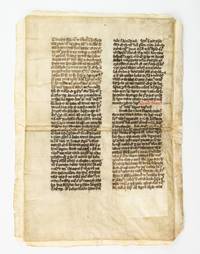
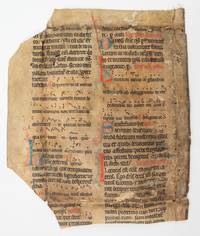
ref. ST20837eFrance mid-13th century. 321 x 230 mm. 12 5/8 x 9". Double column 39 lines in a dense gothic hand. Rubric in red. Recovered from a binding and so the vellum a bit creased and soiled though less soiled than is often seen some tiny remnants of later printed text from reuse but the text almost entirely legible and the leaf surprisingly well preserved overall with its very substantial margins fully intact. Once serving as a cover for a later book this leaf seems to come from an unpublished collection of sermons incorporating biblical excerpts such as Revelation 12:1 "A great sign appeared in heaven: A woman clothed with the sun and the moon under her feet and on her head a crown of twelve stars". The lack of decoration and simple rubrication suggest that the parent manuscript was made for utilitarian purposes at a time when a need for such books increased due in part to the rise of mendicant orders like the Franciscans and Dominicans. Members of these orders rejected traditional monastic isolation and instead settled in urban centers to preach and minister to the people. It is unusual and very lucky that this leaf survives completely intact as Medieval manuscripts used in later bindings were often cut down in size to make smaller covers or used as waste paper for pastedowns or other binding elements. Considerable rewarding research remains to be done to identify the content here along with its various religious and social contexts. unknown
ref. ST20837eFrance mid-13th century. 321 x 230 mm. 12 5/8 x 9". Double column 39 lines in a dense gothic hand. Rubric in red. Recovered from a binding and so the vellum a bit creased and soiled though less soiled than is often seen some tiny remnants of later printed text from reuse but the text almost entirely legible and the leaf surprisingly well preserved overall with its very substantial margins fully intact. Once serving as a cover for a later book this leaf seems to come from an unpublished collection of sermons incorporating biblical excerpts such as Revelation 12:1 "A great sign appeared in heaven: A woman clothed with the sun and the moon under her feet and on her head a crown of twelve stars". The lack of decoration and simple rubrication suggest that the parent manuscript was made for utilitarian purposes at a time when a need for such books increased due in part to the rise of mendicant orders like the Franciscans and Dominicans. Members of these orders rejected traditional monastic isolation and instead settled in urban centers to preach and minister to the people. It is unusual and very lucky that this leaf survives completely intact as Medieval manuscripts used in later bindings were often cut down in size to make smaller covers or used as waste paper for pastedowns or other binding elements. Considerable rewarding research remains to be done to identify the content here along with its various religious and social contexts. unknown books
ref. ST21124c-01France or Low Countries 14th century. 270 x 230 mm. 10 3/4 x 9". Double columns 32 lines in a gothic book hand. Rubrics and staves in red several initials measuring two or more lines in red or blue with contrasting penwork. Unevenly trimmed missing at most a line of text at the bottom of each column and several words or part-words at corners of outer columns vellum with soiling browning small holes and paper residue consistent with having been used in a binding one side quite darkened but the text there legible with effort nevertheless and entirely legible on the other side. From a noted Missal with numerous large penwork initials this leaf was once used as the cover for a binding yet remains substantially complete. The text here comes from the Temporale containing the cycle of moveable feasts in the Christian year and includes text for Tuesday and Wednesday Feria III and IV of Passion Week. The musical notation on this leaf is highly developed consisting of a four-line staff clef marker and square neumes. unknown
ref. ST21124c-01France or Low Countries 14th century. 270 x 230 mm. 10 3/4 x 9". Double columns 32 lines in a gothic book hand. Rubrics and staves in red several initials measuring two or more lines in red or blue with contrasting penwork. Unevenly trimmed missing at most a line of text at the bottom of each column and several words or part-words at corners of outer columns vellum with soiling browning small holes and paper residue consistent with having been used in a binding one side quite darkened but the text there legible with effort nevertheless and entirely legible on the other side. From a noted Missal with numerous large penwork initials this leaf was once used as the cover for a binding yet remains substantially complete. The text here comes from the Temporale containing the cycle of moveable feasts in the Christian year and includes text for Tuesday and Wednesday Feria III and IV of Passion Week. The musical notation on this leaf is highly developed consisting of a four-line staff clef marker and square neumes. unknown books
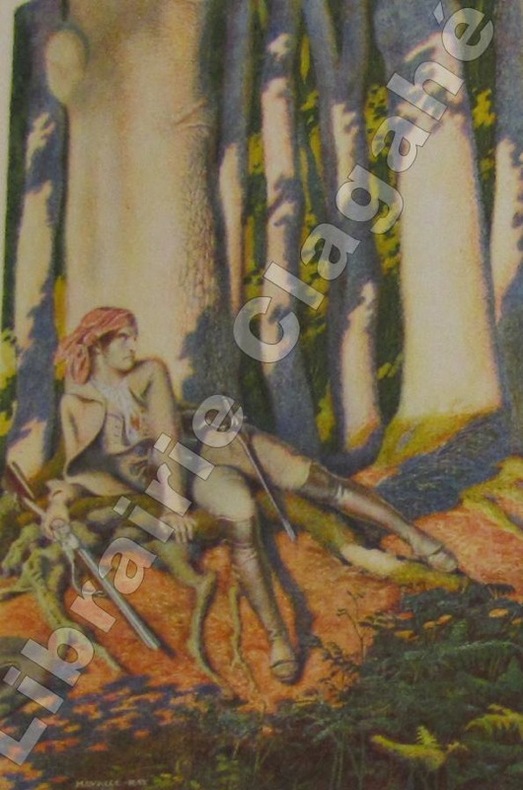
1912ref. 2165Paris, Société Normande du livre illustré, 1912, in-4; demi-chagrin maroquiné bordeaux à coins, dos à cinq nerfs, tête dorée, couv. et dos conservés, étui bordé; X-266 pp., (3) ff., 11 planches en couleurs de Maurice Ray gravées sur cuivre au repérage.
1980ref. 010059Paris Michèle Broutta 1980 In-4 carré En feuilles, sous emboitage toilé de l'éditeur
1953ref. 20364Paris, Editions Louis Conard, Jacques Lambert libraire-éditeur, 1953 ; 4 tomes in-8, brochés, ; I. 1830-1863 : XII, 343 pp. ; II. 1864-1871 : 319 pp. ; III. 1872-juin 1877 : 365 pp. ; IV. juillet 1877-mai 1880 : 362 pp. ; soit en tout 1278 lettres.
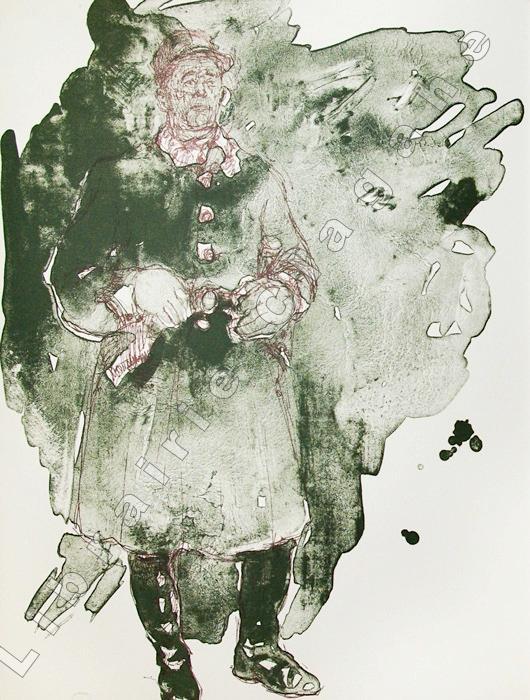
1966ref. 12447Paris - Bièvres, Pierre de Tartas, 1966 ; in-folio en feuilles sous couverture beige muette, coffret d'éditeur de tissu marron, titre lavande, intérieur de suédine grise ; (106) pp., (2) ff. blancs, 18 lithographies originales en couleurs, dont 7 à doubles pages et 3 en marge du livre par Jean Commère.
1956ref. 000420(Saint-Maurice d'Ételan) (Pierre Bettencourt) 1956 In-8 carré Broché Ed. originale
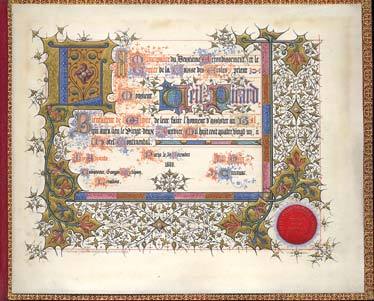
1881ref. 1235Un feuillet de vélin richement enluminé, cachet de cire rouge " Mairie de la Bourse " sous chemise en plein chagrin bordeaux, " A Monsieur Veil Picard " à froid, roulette dorée d’encadrement sur les plats intérieurs.
1914ref. 1221Paris, Crès et Cie, 1914, in-8, broché, frontispice portrait de l’auteur, XII-314 pages, (2) feuillets(Achevé d’imprimer à Niort et catalogue de l’éditeur), couverture imprimée sur vergé gris, rempliée.
1549ref. 1199Bâle, Jean Herwagen, 1549, in-folio ; plein vélin ivoire, dos à cinq nerfs soulignés de filets décoratifs à froid (reliure de l’époque) ; (6) feuillets (titre, préface, mensurae), 829 pages, (95) pages (annotations par L. Flori, Sigismond Gelenius et Beati Rhenani), (26) feuillets de chronologie par Glaeranum, (43) pages d’index, (1) page d’achevé d’imprimer, (2) feuillets (marque d’imprimeur, un blanc).Coiffe supérieure arrachée recollée, quelques lacunes sur les coupes, absence des lacets, milieu du volume légèrement déboîté mais l’ensemble reste solide et parfaitement manipulable.
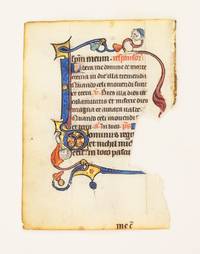
ref. ST16985GFrance first half of 14th century. 110 x 82 mm. 4 3/8 x 3 1/4". Single column 12 lines in a gothic book hand. Rubrics in red line enders in pink and blue with gold accents each leaf with one or more one-line initials in blue with red penwork or gold with blue penwork some leaves with one two-line initial painted blue filled with either decorative shapes or INHABITED BY A HUMAN HEAD all on a gold ground one side of each leaf WITH A FULL BORDER composed of pink and blue tendrils accompanied by spikey gold decoration and gold accents often terminating in ivy leaves and incorporating EXTRAORDINARILY CHARMING EXAMPLES OF MARGINALIA INCLUDING ANIMALS HUMANS AND HYBRIDS. ◆Vellum slightly soiled and with a few minor imperfections one leaf with a little offsetting in one corner each leaf with a small area excised by a former owner affecting marginalia and a few words of text but each leaf with at least two fully intact examples of marginalia and on the whole the leaves quite clean the colors very bright and the gold sparkling. Though diminutive in size these leaves contain enormously appealing marginal decoration in the form of humans animals and hybrid creatures inventively incorporated into the lively borders in manners that range from adorable to bizarre. Especially popular in Flanders Northern France and England during the 13th and 14th centuries marginalia such as these comprise some of the most memorable and entertaining images to be found in any Medieval manuscripts. Despite being found largely in religious books such as Psalters and Books of Hours the images are often strange humorous or even outrageous and they provide us with consistent delight. Being by definition outside of the central text or miniature the margins seem to have been a place where illuminators felt more at ease to experiment resulting in highly imaginative and unique artistic expressions. The present specimens come from a fragmentary manuscript with many leaves either missing or rendered defective where portions of the vellum were cut away as here. Fortunately these leaves each retain at least two excellent examples of marginalia including a very alert hare hybrids with the heads of humans and the bodies of two-legged beasts humans emerging from the border tendrils to help hold up initials a human head with a wizened beard and a stylized hat incorporated into the border and a trumpeter blowing into a long instrument accented with gold. Though fragmentary in appearance these leaves present an excellent opportunity to acquire fine examples of marginalia at an affordable price. For additional leaves from this same manuscript at different price points please check our website. unknown books
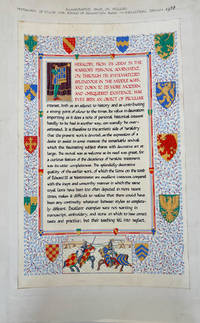
1928ref. 120551928. Original illuminated large manuscript page on vellum comprising a central panel of calligraphic text in red and black ink with a miniature of a young herald surrounded by a decorative border of larger armorial shields set within a stylised foliate background in blue red green and gilt with a fine miniature of a knight’s tournament at the foot. 41 x 25.5cm. Mounted on card with ink title to the head: “Illuminated page on vellum. / Testimony of study for Board of Education Exam in industrial design 1928.” In very good condition.WITH: Two further pencil drawings by the same artist the first of an elderly gentleman the second of a classical sculpture measuring 57.5 x 38cm and 56 x 39cm respectively each signed “Bate” and dated 1927. The pencil drawings have a few short tears to the edges otherwise they are in very good condition. A fine example of 1920s illumination hardcover
1610ref. 72551610 Francoforti, Nic. Hoffmanni1610 [16]-678-[2 bl.] pp. 237 gravures sur bois d'après Virgil Solis (1514-1562). Marque de gravure sur bois sur le titre. Imprimé en 2 col. avec les textes grecs et latins. Reliure en parchemin illustré d'un manuscrit d'époque avec enluminures !!! tres beau à regretter un petit manque sur la première de couverture, dos bon état , quatrième de couverture bon état . Première édition, "Wichtigste Anthologie der humanistischen und nachhumanistischen Sammlungen und Neuentdeckungen, mit einem umfangreichen Anmerkungsapparat des Neveletus ("Notae") in fünf Abschnitten als Anhang, in denen ausser den Fabeln des Abstemius jede Sammlung einzeln kommentiert wird." (Bodemann). (Bodemann). Neveletus est à l'origine de cette édition réimprimé la collection d'Accursius, qu'il enrichira de 136 fables . La Fontaine y puisera son univers ...
ref. 26563Paris, Ferroud, 1911 In-8? , 16.6x24.1 cm., 266 pp., belle edition illustree du classique de Balzac. Les 26 compositions d'Auguste Leroux - en texte et hors texte, dont un frontispice - ont ete gravees sur bois en couleurs par Florian, Froment et Duplesses. Relie demi-maroquin havane a coins, signee par Laurent Peeters - Anvers. Filet dore cernant les plats de pap., dos orne, dos a 4 nerfs et finnement fleuronnes dores (decor floral), tete doree, couverture imprimee d'editeur. Tirage limite. Tirage de 1200 exemplaires dont 1020 exemplaires sur velin d'Arches numerotes de 181 a 1200.
1965ref. 015774Veilhes G.P. [Gaston Puel] 1965 In-12 En feuilles, couverture à rabats <
ref. 14481Exposition sur la règle de Monsieur S. Augustin pour gens de religion composée passe plus de quattre cens ans par Hugues de S. Victor trèsrenommé docteur en la Sainte escripture chanoine régulier de Paris. Traduite de latin en nostre langue vulgaire par Sulpice Du Pré prestre et chanoine de l’église cathédrale de S. Aumer. A Douay de l’imprimerie de Jean BOGART l’an 1589. .In 32 reliure époque, plein vélin à recouvrement, titre manuscrit à la plume. Titre avec vignette d’imrimeur, LX, épistre-préface- table des chapitres. 137 pages, XXVIII Brief répertoire pour plus aysement trouver les sentences plus remarquables contenues dans cette exposition. Bel ex libris gravé. Bon exemplaire. Rare édition Douaisienne. Hugues de Saint Victor prestigieux professeur au XIIème siècle au sein de la congrégation de Saint Victor fondé par Guillaume de Champeaux. Il a donné une importante synthèse des règles de Saint Augustin sur la vie canonniale
2008ref. 016415Bernard-Gabriel Lafabrie 2008 In-4 En feuilles, couverture
1866ref. 6662Wien, H. Martin, 1866-1870. In-folio de[6]-40-[2]p., titre gravé et 68pl., en feuilles, non relié. Quelques feuillets salis (poussière) et rare rousseurs pour la partie texte, les illustrations sont très belles.
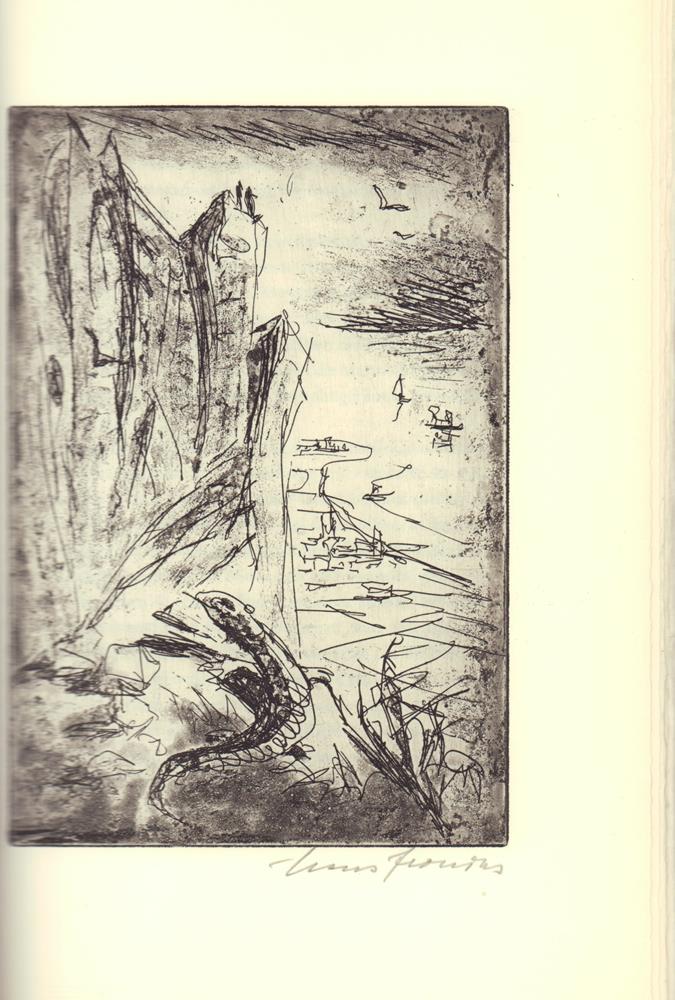
1968ref. 67812Stuttgart, Ernst Klett, (1968). 117 S., 1 Bll. Mit 10 ORIGINAL-RADIERUNGEN. 4to (27 x 19 cm). OHPgt. mit goldgeprägtem RTitel in OPp.-Schuber.
1712ref. 51528Frankfurt / Main, Ex Officina Zunneriana, apud Johannem Adamum Jungium, 1712. 1 w. Bl., Titel in Rot-Schwarz-Druck, 43 Bll. (Praefatio, Prodromus, Index decisionum), 1516 [i.e.1514] S., 74 Bll. (Index). Mit 1 Kupfer-Titel-Vign., gestochen von E. [Elias?] Müller. Folio. Pgt. d. Zt.