196 222 résultats
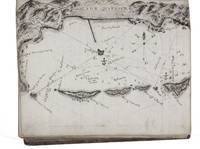
1831réf. F72I8N01U79Omostly on board the barque Sarah of London 1831. Contemporary sheepskin parchment sewn on 2 tapes. 4to 19.5 x 16.5 cm. The journal with an engraved view as frontispiece "Island of Saint Helena" engraved by Everingham in London 15 full-page 1 nearly full-page and 1 smaller manuscript maps and coastal profiles plus a small engraved view "Tomb of Napoleon" mounted on 1 page. The lecture notes with a matching pair of engravings of a scull one signed "A. East del" on and facing the title-page and 27 pencil and/or ink anatomical drawings including 2 full-page some also with red. Most are drawn on the album leaves a few on separate slips mounted on the leaves. Both the lecture notes and the journal are written in brown ink with occasional additions in pencil. Including: MANUSCRIPT - ANATOMICAL. MORSE Edward George.Lecture Book notes on anatomical lectures by Joseph Constantine Carpue.London November-December 1828. A manuscript ship's journal kept by Edward George Morse Bromyard 1805-Deal post 1850 who no doubt served among other functions as the ship's surgeon. Morse made his earliest dated entries in April 1831 at the island Mauritius in the Indian Ocean and others at Madagascar and its surrounding islands from May to August 1831. Morse provides extensive notes on the natural history topography and people of the Seychelles Madagascar and the neighbouring islands and provides detailed maps of many of the islands and coastal areas along with a few coastal profiles. The two manuscripts are written in a single album of laid paper. Morse used it 1828 to take notes when he attended the London lectures on anatomy and blood circulation by the innovative surgeon Joseph Constantine Carpue who had pioneered facial reconstructive surgery by introducing ancient Indian techniques. He was famous for illustrating his lectures with chalk drawings which no doubt served as the models for the anatomical illustrations in Morse's notes. A few clippings and hand-written notes have been inserted. unknown
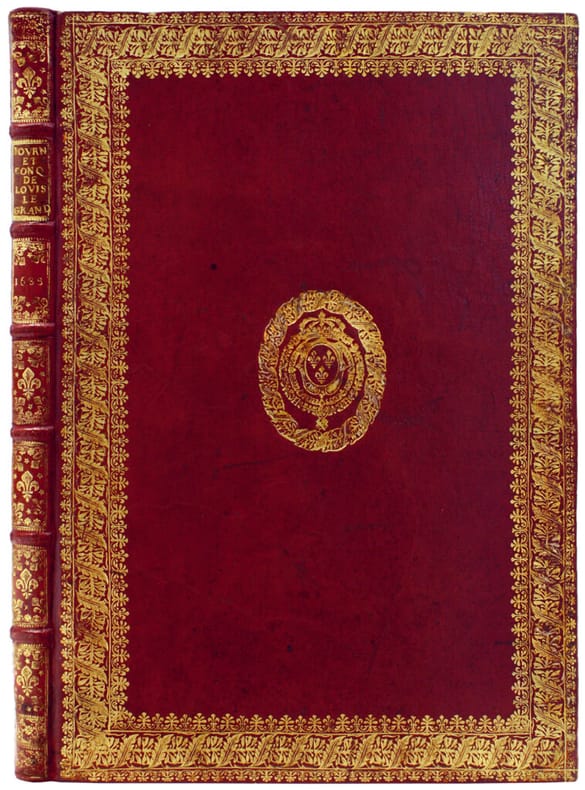
réf. LCS-18301Le journal manuscrit des évènements politiques et militaires, de l’année 1688. S. l. n. d. [Paris, vers 1715]. In-folio de (46) ff., 9 double-page aquarellées. Plein maroquin rouge, dentelle du Louvre encadrant les plats, armes royales frappées or au centre, dos à nerfs richement orné de fleurs-de-lys et étoiles dorées, roulette dorée sur les coupes, roulettes intérieure dorée, tranches dorées. Epidermures. Reliure de l’époque. 445 x 307 mm.
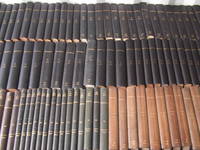
1866réf. 010620London: Office for Advertisments and Publications 1866. A near complete run from 1866 to 1994. 231 volumes. Lacking July-Decenber 1948 & January-June 1949. Books measure 36x26.5 last 31 volumes measure 30x21.5. Illustrated throughout. Most volume bound in modern black cloth with gilt lettering others bound in quarter calf. The calf volumes are faded on spines. Generally all bindings in very good clean firm condition. Internally very occasional library mark stamp. Pages and illustrations in very good clean condition. . Cloth. Very Good. Small Folio. Office for Advertisments and Publications Hardcover
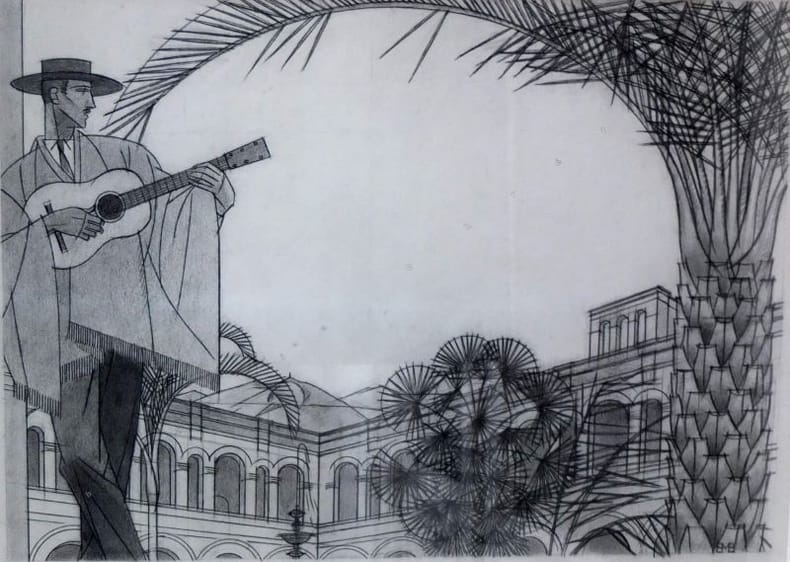
1930réf. 125381930 1 Mine de plomb signée du monogramme de l'artiste en bas à droite, 1930, 32 x 45 cm, encadrée.
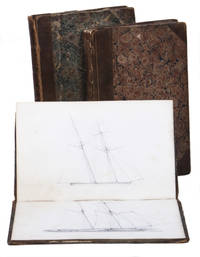
1822réf. ABC_49460Aboard the Winchelsea written and drawn at sea 1822. Contemporary half gold-tooled brown calf marbled paper sides each volume with a different marbled paper the journal volume with marbled endpapers. 8vo. The two sketchbooks contain a total of ca. 100 pages of sketches of ships done in pencil including 1 page containing signal flags in colour. 3 volumes. With: Two sketchbooks with pencil drawings of ships. A neatly-written and illustrated sea journal kept by James Dudman the second mate on board the East India Company's ship Winchelsea during a 1822-23 voyage to India. Launched in 1803 the Winchelsea was already a veteran East Indiaman this being her ninth voyage - she made a total of eleven voyages for the EIC before she was broken up in 1834. On the present voyage commanded by Captain William Adamson she carried 592 people including the 17th and 44th Regiments of Foot and detachments of the King's and EIC's soldiers and a number of women and children. The sea journal volume is accompanied by two additional volumes by Dudman containing pencil sketches of unidentified masted sailing vessels.The Winchelsea's journey from its departure at Blackwall Dock on April 24 1822 to its arrival in Bengal and eventual return to England via St. Helena and The Downs on May 24 1823 reflects the extensive maritime routes integral to British imperial dominance. The ship's role in transporting personnel and cargo exemplifies the strength of the EIC's logistical network sustaining Britain's colonial and economic interests in India. The journal with its careful record-keeping offers an intimate glimpse into the daily operations experiences and extraordinary events encountered by the second mate aboard an East Indiaman during Britain's height of imperial expansion.The journal written in Dudman's beautiful scribe-like handwriting opens with an entry dated 24 April 1822 at Blackwall Dock where the voyage started "bound for Bengal." The next few pages contain a detailed listing of the people on board beginning with the ship's company of 122 men with names followed by the troops on board: "List of a detachment of His Majesty's Troops belonging to the 44th Regt. of Foot on board the Honable. Company's Ship Wincelsea for Bengal" comprising name and rank of 367 men followed by the names of 42 women on board as well as the name and age of 57 children on board including 3 who died at sea plus 4 additional passengers.At Saugur meaning Sagar Island they took on board further passengers duly noted in an additional "List of H.M. 17th Regiment of Foot with the Women and Children accompanying them. Embarked on board the Honble. Company's ship Winchelsea at Saugur New Anchorage for England."Beyond the usual records of position winds weather and other ships Dudman includes interesting notes on unusual occurrences. Perhaps the most fascinating event was recorded on February 10 1823: a major earthquake off the coast of India experienced by the Winchelsea: "At 10 minutes past 1 PM every one on board was greatly alarmed at the singular feel of the ship which was in a violent trembling motion as if the ship was grazing over a rocky shoal and a loud rumbling noise similar to the roll.g! of a Bull quickly along the deck this very singular seuration lasted certainly not less than a minute those below ran on deck to enquire the cause and those below the poop below to ask the same question. I was in the round house at the time when it comen'd. The noise appeared to me as coming along the quarter deck and instantly over the poop the sea was smooth and the day clear. I looked out at the stern windows but saw no appearance of any shoal which I certainly would have done had such existed. The water being very clear and the ship not going more than 2 knots I cannot account for this very singular phenomenon in any other way than its being the shock of an Earthquake".The voyage journal of the Winchelsea during its 1822-23 journey to Bengal provides valuable insight into the maritime operations of the EIC its commercial and colonial reach and the strategic importance of British trade with India in the early 19th century. As a veteran East Indiaman the Winchelsea was part of the vast trading network that connected Britain with the Indian subcontinent transporting soldiers goods and passengers under the auspices of the EIC which functioned as both a commercial enterprise and a colonial governing force.The journal volume contains the typographic book plate of Mr. Jas. Dudman on the front pastedown and a manuscript inscription in ink on the first flyleaf by Lumsden Dudman who was married to Mary Anne Shirreff "Joseph H. Shirreff from L.S. Dudman Xmas 1892" one of the sketchbooks contains a manuscript inventory list in Greek of goods for sale on the first flyleaf and one of the sketchbooks with ownership signature "L: Dudman / Sept. 27 1836" likely Rev. Lumsden S. Dudman perhaps a brother of James Dudman. Some general wear to the leather spines and corners of the boards of the volumes occasionally foxed but overall internally clean. Overall in good condition. unknown
réf. LCS-A31Chacun des 6 volumes est frappé du Timbre royal rouge. 1817-1825. 6 in-8. Demi-basane époque.
1813réf. 19270Paris: L’Imprimerie de la Republique 1813. FIRST EDITIONS. Woodcut vignettes head- and tailpieces many with folding engraved plates. All volumes in original bindings uncut some unopened completely unsophisticated. Other than 2 volumes in the original calf-backed marbled boards all are bound in original plain or printed wrappers and preserved in half-calf slipcases with morocco spine labels. First editions of the Journal de l'Ecole Polytechnique one of the oldest scientific journals. It contains sections in mathematics physics chemistry geology astronomy and mechanics design and architecture. Here you find original contributions by the top French scientists of the time. A listing of each of the issues is set forth below with a sampling of the contributors. We offer Numbers 1-16 missing only Numbers 2 9 10. No. 1. viii 189 pp. Folding engraved plate. No binding.1 leaf of contemporary manuscript describing the plate laid in. Contributions from Monge Prony Barruel Hassenfratz Fourcroy Chaptal Berthollet Guyton etc. No. 3. iv xvi ii 209-444 pp. Original marbled wrappers. Contributions from Prony Guyton Berthollet Observations on the eudiometric properties of phosphorus. No. 4. ii xxviii 445-743 3 pp. including errata. With 9 folding engraved plates. Contemporary calf-backed marbled boards. Not in a folding case. Contributions from Fourcroy et Vauquelin Hassenfratz. Tom II No. 5. iv 208 iv pp. Original printed wrappers. Contributions from Fourcroy Lagrange Laplace Guyton Prony. Tom II No. 6. iv 209-456 pp. Original printed wrappers. Contributions from Fourcroy Lagrange Hassenfratz Laplace Monge. Tom III Nos. 7 and 8. iv vii I 477 2 pp. Original marbled paper-covered boards. Contribution from Prony Philosophical mechanics or reasoned analysis of the various parts of the science of balance and movement. Tome IV No. 11. ii 395 pp. With 9 folding engraved plates. Contemporary calf-backed marbled boards. Not in a folding case. Contributions from Monge Prony Hachette Poisson Biot Hassenfratz Buyton Berthollet Gauss a short report on his Disquisitiones arithmeticae Tom V No. 12. iv 324 pp. Original wrappers. Contribution from Lagrange Lecons sur le calcul des fonctions. Tom VI No. 13. ii 378 1 pp. Original wrappers. Contributions from Monge Poisson Ampere Biot Fourcroy et Thenard chemistry Hassenfratz chemistry. Tom VII No. 14. iv 400 4; ii 90 pp. Supplement. With 3 full-page engraved plates. Original wrappers. Contemporary signature on title. The Supplement is Lagrange Supplement aux lecons sur le calcul des fonctions. Also a contribution from Montgolfier On the possibility of substituting the hydraulic ram for the old Marly machine. Tom VIII No. 15. ii 358 pp. Original wrappers uncut and partially unopened. Contributions from Poisson Memoir on the secular inequalities of the means of movement of the planets Lagrange Clarification of a singular difficulty which is encountered in the calculation of the attraction of spheroids very little different from a sphere Monge Essay on the application of analysis to some questions of elementary geometry another from Monge Construction of the vibrating string equation a number of articles from Poisson Laplace Dissertation on various points of analysis. Tom IX No. 16. iv 354 2 pp. Original boards. Contributions from Cauchy Poisson. École Polytechnique was created in 1794 a politically and economically troubled time but also the culmination of the Enlightenment. The Journal commenced publication the following year and has since then maintained the highest reputation of published research. L’Imprimerie de la Republique unknown
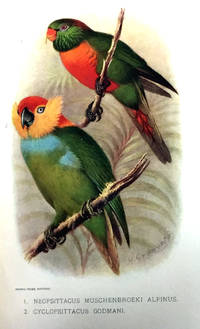
réf. 16386London: John van Voorst 1883-1886; Gurney and Jackson 1887-1903; R.H. Porter 1904-1913; British Ornithologists’ Union 1914-1932. FIRST EDITIONS. Hundreds of exquisite full-page lithographed plates many hand-colored after J.G. Keulemans J. Wolf J. Jennens H. Gronvold and others text illustrations distribution maps and tables. The first group of volumes also contain a list of members of the Union and the date of their election. The first six volumes bound in contemporary half-calf over marbled boards spine in compartments with the remaining volumes in library cloth and most have the original printed wrappers bound in where the journal was issued quarterly; interior excellent. Bookplate withdrawn of Trinity College Library on the paste-downs; a wonderful set. First printings of this famous journal of ornithology. Included are: Fifth series Volumes 1 1883 - 6 1888 Sixth series Volumes 1 1889 - 6 1894 Seventh series Volumes 1 1895 - 2 1896 Eighth series Volumes 2 1902 - 6 1906 Ninth series Volumes 1 1907 - 6 1912 Tenth series Volumes 1 1913 - 6 1918 Eleventh series Volumes 1 1919 - 6 1924 Twelfth series Volumes 1 1925 - 6 1930 Thirteenth series Volumes 1 1931 - 2 1932 Authors include G.E. Shelley Sclater John Henry Gurney Edward Hargitt William C. Tait Henry Seebohm Osbert Salvin O. Finsch W. L. Buller R. Bowdler Sharpe Scott B. Wilson; literally all of the great ornithologists throughout the publishing history of this journal. Sclater 1829-1913 a co-founder and editor of Ibis was a well-known and highly productive over 1400 publications ornithologist by trade. He is also remembered for his 1858 paper setting out the faunal regions classification of zoogeography later adopted by Alfred Russel Wallace. He was also secretary of the Zoological Society of London a member of more than forty professional societies at home and abroad and a council member of the Royal Society of London. Assisting him as co-editor of some of the issues was Howard Saunders or A.H. Evans until 1931 when C.B. Ticehurst took over as editor. Now subtitled the International Journal of Avian Science it is in its present form a peer-reviewed scientific journal which covers ecology conservation behavior palaeontology and taxonomy of birds. For it’s first nearly one hundred years however the journal focused on a more popularistic type of article often introducing species and images to the public for the first time. A group of friends mostly wealthy collectors of bird specimens founded the British Ornithologists' Union in 1858 with the primary intent of starting an ornithological journal. The first volume of the journal The Ibis appeared in 1859. Lists of species observed by traveling ornithologists and long catalogues of specimens obtained on expeditions filled the journal. “This random fact gathering on distribution persisted unchanged from 1859 to the 1940s.” In her article entitled “The Ibis: Transformations in a Twentieth Century British Natural History Journal” in Journal of the History of Biology October 2004 Volume 37 No. 3 pp. 515–555 Kristin Johnson points out in a much more complete and professional manner the difference between “popular” ornithology and “scientific” ornithology study of the living bird in its natural environment more on a biological aspect the transition of which occurred post-1940. Meanwhile the articles appearing in the Ibis were geared more toward the popularization of the science and the spread of knowledge of geographic distribution and the habits and patterns of the various bird species. John van Voorst (1883-1886); Gurney and Jackson (1887-1903); R.H. Porter (1904-1913); British Ornithologists’ Union (1914-1932 unknown
1944réf. 19029Los Angeles: Plantin Press 1944. FIRST EDITIONS. Each bound in the original publisher’s cloth-backed boards author and title in gilt on spine; uncut. Set number 22 of the 150 Subscriber’s editions printed and signed by the author on the colophon. Each volume is a superb copy like new. THE SIGNED AND LIMITED SUBSCRIBER’S EDITION 1. MANN Thomas. Thamar. Los Angeles: Pazifische Presse 1942. 2. WERFEL Franz. Die wahre Geschichte vom wiederhergestellten Kreuz. Los Angeles: Pazifische Presse 1942. 3. FRANK Bruno. Sechzehntausend Francs. Los Angeles: Pazifische Presse 1943. 4. FRANK Leonhard. Mathilde. Los Angeles: Pazifische Presse 1943. 5. NEUMANN Alfred. Giterwerk des Lebens. Los Angeles: Pazifische Presse 1943. 6. TORBERG Friedrich. Mein is die Rache. Los Angeles: Pazifische Presse 1943. 7. DÖBLIN Alfred. Nocturno. Los Angeles: Pazifische Presse 1944. Original editions of the first seven books published by the Pazifische Presse. The Pazifische Presse was the sole representative on the west coast of the United States of those publishers who left Germany and Austria following the rise to power of National Socialists in 1933. Many European refugees came to America and though most settled in New York a large number did go to Los Angeles which became an important center of German-speaking immigration. Artists authors and intellectuals such as Thomas Mann Theodore W. Adorno Bertolt Brecht Fritz Lang and Arnold Schoenberg were but a few who represented the community of Germans exiled from their native land and who produced major works to address the world crisis. The Pazifische Presse was founded by Ernst Gottlieb and Felix Guggenheim both of whom had emigrated to the west coast in around 1939. The publisher “afforded its participants an arena for presenting the best of Weimar culture not only for the emigree community but for their American friends and colleagues” Jaeger p. 9. They announced the initial publication of seven volumes by distinguished authors who themselves had immigrated to the United States. These included Thomas Mann the Nobel Laureate for literature in 1929 Franz Werfel Bruno Frank Leonhard Frank Alfred Neumann Fredrich Toberg Alfred Döblin and Lion Feuchtwanger. Many of these renowned writers continued to publish during their exile; some even went on to screen writing positions in Hollywood. Most of the authors were selected based upon a personal relationship between them and the publishers. Gottlieb and Guggenheim worked with Saul and Lillian Marks of the renowned Plantin Press of Los Angeles to print their material. Founded in 1931 and named after Christopher Plantin the famous sixteenth century printer from Antwerps the Marks built a strong reputation as printers of artistic and beautiful works. Each of the first seven volumes of a total of eleven books ultimately released were printed at the Plantin Press in a run of 250 copies; the first 150 copies were the “Subscriber editions” signed by the author and bound in half-leather. The remaining 100 copies were a more simply bound unsigned trade edition. 1. The novella Thamar is a partial pre-printing of the fifth section of Joseph der Ernährer Joseph the Provider later published in December 1943 in Stockholm. This excerpt depicts the story of the young woman Thamar and her education by Jacob. Thomas Mann 1875-1955 was probably Germany’s most influential author of the twentieth century receiving the Nobel Prize in Literature in 1929. He lived in Munich where he wrote some of his most successful novels like Buddenbrooks 1901 Death in Venice 1912 and The Magic Mountain 1924. He emigrated to Switzerland then to Princeton before settling in Southern California where he finished his great tetralogy Joseph and His Brothers in 1942. 2. First and only edition in German; an English version was published the following year. “The story is about the difficulties confronting the Christian and Jewish faiths in Austria after 1938 and about a rabbi who courageously reconstructs a Christian crucifix that had been desecrated by a Nazi swastika.” Franz Werfel 1890-1945 emigrated from Vienna in 1938 and moved to Los Angeles at the end of 1940 living in the Hollywood Hills where he completed his acclaimed novel Das Lied der Bernadette The song of Bernadette 1941 which was later made into a movie. 3. A reprint of the text which was first published in Amsterdam in 1940. The story of a young German who misappropriates the money of a fallen World War I French soldier and suffers the resulting guilt and his path leading to the rise of National Socialism. Bruno Frank 1887-1945 was a novelist lyricist and dramatist. He came to Los Angeles in 1938 where he worked as a scriptwriter in Hollywood. 4. A partial pre-printing the book includes two chapters of the novel by the same title published in 1948 in Amsterdam. The story of a young woman’s formative journey through reality and fantasy. Leonhard Frank 1882-1961 moved to Los Angeles to accept a contract at Warner Brothers later penning an autobiographical novel Links wo das Herz ist Heart on the left 1952. He returned to Germany in 1950. 5. Also a partial pre-printing of the first and third chapters of the novel Der Pakt published in 1949 in Amsterdam. The first part deals with the childhood of American idealist William Walker; the second part takes place in Southern California. The dramatist and historical novelist Alfred Neumann 1895-1952 wrote two works while living in Los Angeles as well as working for the film industry as a screenwriter. He moved to Italy in 1949. 6. First printing of this novella dealing with the sadistic cruelties in a concentration camp and with Jewish self-identity. Friedrich Torberg pseudonym of Friedrich Kantor-Berg 1908-1979 wrote the screenplay for Voice in the Wind Warner Brothers 1943. 7. A partial pre-printing from the novel trilogy November 1918 published in three volumes between 1948 and 1950 in Munich. This book deals with the political events in Germany during the November 1918 revolution. The physician Alfred Döblin 1878-1957 was best-known for his novel Berlin Alexanderplatz 1929. Jaeger New Weimar on the Pacific. The Pazifische Presse and German exile publishing in Los Angeles 1942-48 Los Angeles 2000. Plantin Press unknown
réf. 1573Paris Meurisse 390 photographies originales, format 13cm x 17cm, tirage argentique, couvrant la période de 1914 jusqu'en 1917, rassemblées en dix classeurs modernes.
Collection of 120 complete years of this rare and highly important academic Armenian periodical published since 1887 (making it the second oldest Armenian journal still in print) and mainly related to Armenian philology and history, most texts are in Armenian (though some of them are in English, French, German and Italian), together ca. 35.000 pp., 30cm., The volumes up till 1989 are bound in modern hardcovers in full red cloth in very good condition (most of the 44 physical volumes contain two years each), volumes 1990-2013 are in original softcovers, some of the older illustrated frontcovers are preserved and bound in, text and interior are clean and bright, very good set, weight: 90kg., [This is a list of the "physical" volumes contained in this set: 1890, 1891-1892, 1893-1894, 1895-1896, 1897-1898, 1899-1900, 1901-1902, 1903-1904, 1905-1906, 1907-1908, 1909-1910, 1911-1912, 1913-1914, 1915-1916-1917-1918-1919-1920, 1921-1922, 1923-1924, 1925-1926, 1927, 1928-1929, 1930-1931, 1932-1933, 1934-1935, 1936-1937-1938, 1939-1940-1941-1942-1943-1944-1945, 1946-1947-1948, 1949-1950, 1951-1952, 1953-1954, 1955-1956, 1957-58, 1959-1960, 1961, 1962-1963, 1964-1965, 1966-1967, 1968-1969, 1972-1973, 1974-1975, 1976-1977-1978, 1979-1980-1981, 1982-1983-1984, 1985-1986, 1987, 1988-1989, 1990, 1991, 1992, 1993, 1994, 1995, 1996, 1997, 1998, 1999, 2000, 2001, 2002, 2003, 2004, 2005, 2006, 2007, 2008, 2009, 2010, 2011, 2012 and 2013], X111626
1890réf. X111626Wien (Vienna), Mechitharisten-Kongregation (-Buchdruckerei) 1890-2013 Collection of 120 complete years of this rare and highly important academic Armenian periodical published since 1887 (making it the second oldest Armenian journal still in print) and mainly related to Armenian philology and history, most texts are in Armenian (though some of them are in English, French, German and Italian), together ca. 35.000 pp., 30cm., The volumes up till 1989 are bound in modern hardcovers in full red cloth in very good condition (most of the 44 physical volumes contain two years each), volumes 1990-2013 are in original softcovers, some of the older illustrated frontcovers are preserved and bound in, text and interior are clean and bright, very good set, weight: 90kg., [This is a list of the "physical" volumes contained in this set: 1890, 1891-1892, 1893-1894, 1895-1896, 1897-1898, 1899-1900, 1901-1902, 1903-1904, 1905-1906, 1907-1908, 1909-1910, 1911-1912, 1913-1914, 1915-1916-1917-1918-1919-1920, 1921-1922, 1923-1924, 1925-1926, 1927, 1928-1929, 1930-1931, 1932-1933, 1934-1935, 1936-1937-1938, 1939-1940-1941-1942-1943-1944-1945, 1946-1947-1948, 1949-1950, 1951-1952, 1953-1954, 1955-1956, 1957-58, 1959-1960, 1961, 1962-1963, 1964-1965, 1966-1967, 1968-1969, 1972-1973, 1974-1975, 1976-1977-1978, 1979-1980-1981, 1982-1983-1984, 1985-1986, 1987, 1988-1989, 1990, 1991, 1992, 1993, 1994, 1995, 1996, 1997, 1998, 1999, 2000, 2001, 2002, 2003, 2004, 2005, 2006, 2007, 2008, 2009, 2010, 2011, 2012 and 2013], X111626
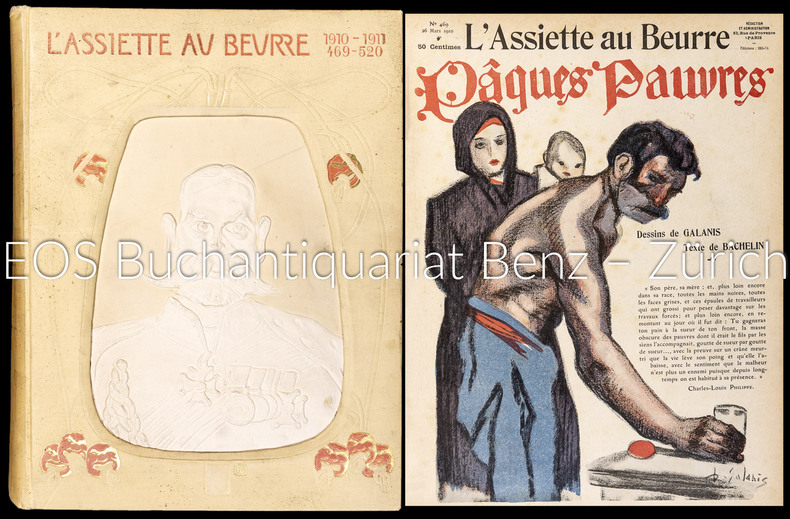
1901réf. 31051ABParis, Schwarz, S., 1901-1912. 4° (33,5 x 25 cm). Mit über 9600 meist farbigen, teils ganzseitigen oder doppelblattgrossen Lithographien von Steinlen, Vallotton, F. Kupka, K. van Dongen, Gris, Cheret, Redon, Jossot Willette und vielen anderen Künstlern. Inkl. die Almanche für die Jahre 1907, 1908 sowie 3 Sonderhefte "Les Masques de l'Assiette au Beurre" und alle Nummern "hors série". Orginal Jugendstil-Verlegereinbanddecken mit verschiedenen reliefartig blindgeprägten Pappintarsien von V. Preissig. + Wichtig: Für unsere Kunden in der EU erfolgt der Versand alle 14 Tage verzollt ab Deutschland / Postbank-Konto in Deutschland vorhanden +, A 11 Bände, 3 Sonderhefte.
2 vol. fort in-8 brochage d'attente de l'époque, avec couverture de la Troisième Année [ 1792 ] en tête du premier volume "Chez Les Frères Labottière & Pinard", Bordeaux, 235 numéros de 8 pages (soit environ 1880 pages). Détail : Journal de Bordeaux et du Département de la Gironde. [ Ensemble non suivi de 235 numéros, du Samedi 30 avril 1791 au Samedi 30 Juin 1792 [ Premier Volume, du Samedi 30 avril 1791 au 27 décembre 1791 : 116 numéros ] Avril 1791 : n° 69 ; Mai 1791 : n° 70, 71, 72, 73, 74, 75, 76, 77, 78, 79, 80, 82, 83, 84, 85 ; Juin 1791 : n° 88, 89, 90, 91, 92, 93, 94, 95, 96, 97, 98, 99, 100, 101, 102, 103, 104 : Juillet 1791 : n° 105, 106, 107, 108, 109, 110, 111, 112, 113, 114, 115, 116, 117, 118, 119, 120, 121 ; Août 1791 : n° 122, 123, 124, 125, 126, 127, 128, 129, 133, 139 [ Avec insertion du n° 219 du Courrier française du 7 août 1791 ] ; Septembre 1791 : n° 140, 141, 142, 143, 144, 145, 146, 147, 148, 149, 150, 151, 152, 153, 154, 155, 156 ; Octobre 1791 : n° 157, 158, 160, 161, 162, 163, 164, 165, 167, 168, 170, 173 ; Novembre 1791 : n° 174, 175, 176, 177, 178, 179, 180, 181, 182, 183, 184, 185, 190, 191 (en fin de recueil) ; Décembre 1791 : n° 193, 194, 195, 196, 197, 198, 200, 201, 202, 203, 204, 205, 206 ; [ Second volume, du Dimanche Premier Janvier 1792 au n° 30 du Samedi 30 Juin 1792 : 119 numéros ] Janvier 1792 : n° 1, 2, 3, 6, 8, 9, 10, 12, 13, 14, 15, 16, 17, 18, 19, 20, 21, 22, 23, 25, 27, 28, 29, 30, 31 ; Février 1792 : n° 1, 2, 3, 7, 9, 10, 11, 12, 13, 14, 15, 16, 18, 19, 22, 23, 24, 25, 27, 28, 29 ; Mars 1792 : n° 1, 2, 3, 4, 6, 7, 8, 9, 11, 14, 16, 17, 18, 19, 20, 21, 22, 24, 25, 26, 27, 31 ; Avril 1792 : n° 1, 3, 7, 11, 14, 15, 16, 17, 18, 20, 21, 23, 24, 25, 26, 27, 28, 30 ; Mai 1792 : n° 1, 2, 3, 4, 7, 8, 9, 10, 11, 12, 14, 15, 16, 17, 18, 19, 21, 22, 23 ; Juin 1792 : n° 2, 4, 13, 15, 17, 18, 19, 20, 21, 22, 23, 24, 26, 29, 30 Très rare réunion, non suivie, de 235 numéros de ce très important journal bordelais, publiés entre le 30 avril 1791 et le 20 juin 1792, période charnière dans l'Histoire de France mais également dans l'histoire de cette publication. Publié du 15 mai 1790 à septembre 1797, le "Journal de Bordeaux et du Département de la Gironde" devient quotidien à partir du 1er janvier 1792, la pagination et la numérotation continue faisant alors place à une pagination et à une numérotation mensuelle. Ce journal remplaçait le "Bulletin, Affiches et Annonces..." que les frères Labottière avaient créé en mars 1790 "et auquel ils voulurent donner plus d'importance en lui attribuant un nouveau titre". Marandon en demeura le rédacteur jusqu'à la fin 1791. Le journal donnait les nouvelles de France et de l'étranger, du commerce et du port de Bordeaux, proposait diverses annonces, mais il devient également l'organe de la "Société des Amis de la Constitution", dont les fondateurs devinrent les futurs girondins (Vergniaud, Guadet, Gensonné, Ducos, Boyer-Fonfrède, Furtado, Marandon, Troplong, etc.). A la fin de l'année 1791, la société changea de nom pour devenir la "Société des Amis de la Liberté et de l'Egalité", mais c'est alors que le Journal de Bordeaux cessa d'en être l'organe. "Les abonnés trouvaient probablement la politique du rédacteur Marandon trop sectaire et les propriétaires du Journal, les frères Labottière, le congédièrent". Le nouveau rédacteur, Cornu (" de son vrai nom Jean-François Cornu de Boissancourt") est un jeune avocat parisien de 25 ans, qui mourra guillotiné sous la Terreur, le 24 juin 1794. Les termes de son jugement feront allusion au journal qu'il rédigeait "avec autant de talent que de feuillantisme !" Girondin indéfectible, Marandon l'avait précédé sur l'échafaud bordelais le 27 octobre 1793... Les rares recueils disponibles sont presque toujours lacunaires, notre exemplaire ne fait pas exception avec pour cette période environ 74 numéros manquants d'après la numérotation (16 dans le premier volume, 58 dans le second, dont 26 pour les seuls mois de mai et juin 1792), mais il n'en demeure pas moins un ensemble tout à fait remarquable pour l'étude de la Révolution Française. Labadie, La Presse Bordelaise pendant la Révolution, 66 et s. Français
1792réf. 588552 vol. fort in-8 brochage d'attente de l'époque, avec couverture de la Troisième Année [ 1792 ] en tête du premier volume "Chez Les Frères Labottière & Pinard", Bordeaux, 235 numéros de 8 pages (soit environ 1880 pages). Détail : Journal de Bordeaux et du Département de la Gironde. [ Ensemble non suivi de 235 numéros, du Samedi 30 avril 1791 au Samedi 30 Juin 1792 [ Premier Volume, du Samedi 30 avril 1791 au 27 décembre 1791 : 116 numéros ] Avril 1791 : n° 69 ; Mai 1791 : n° 70, 71, 72, 73, 74, 75, 76, 77, 78, 79, 80, 82, 83, 84, 85 ; Juin 1791 : n° 88, 89, 90, 91, 92, 93, 94, 95, 96, 97, 98, 99, 100, 101, 102, 103, 104 : Juillet 1791 : n° 105, 106, 107, 108, 109, 110, 111, 112, 113, 114, 115, 116, 117, 118, 119, 120, 121 ; Août 1791 : n° 122, 123, 124, 125, 126, 127, 128, 129, 133, 139 [ Avec insertion du n° 219 du Courrier française du 7 août 1791 ] ; Septembre 1791 : n° 140, 141, 142, 143, 144, 145, 146, 147, 148, 149, 150, 151, 152, 153, 154, 155, 156 ; Octobre 1791 : n° 157, 158, 160, 161, 162, 163, 164, 165, 167, 168, 170, 173 ; Novembre 1791 : n° 174, 175, 176, 177, 178, 179, 180, 181, 182, 183, 184, 185, 190, 191 (en fin de recueil) ; Décembre 1791 : n° 193, 194, 195, 196, 197, 198, 200, 201, 202, 203, 204, 205, 206 ; [ Second volume, du Dimanche Premier Janvier 1792 au n° 30 du Samedi 30 Juin 1792 : 119 numéros ] Janvier 1792 : n° 1, 2, 3, 6, 8, 9, 10, 12, 13, 14, 15, 16, 17, 18, 19, 20, 21, 22, 23, 25, 27, 28, 29, 30, 31 ; Février 1792 : n° 1, 2, 3, 7, 9, 10, 11, 12, 13, 14, 15, 16, 18, 19, 22, 23, 24, 25, 27, 28, 29 ; Mars 1792 : n° 1, 2, 3, 4, 6, 7, 8, 9, 11, 14, 16, 17, 18, 19, 20, 21, 22, 24, 25, 26, 27, 31 ; Avril 1792 : n° 1, 3, 7, 11, 14, 15, 16, 17, 18, 20, 21, 23, 24, 25, 26, 27, 28, 30 ; Mai 1792 : n° 1, 2, 3, 4, 7, 8, 9, 10, 11, 12, 14, 15, 16, 17, 18, 19, 21, 22, 23 ; Juin 1792 : n° 2, 4, 13, 15, 17, 18, 19, 20, 21, 22, 23, 24, 26, 29, 30
1972réf. ZB394896London: Journal of Contemporary Asia 1972. volumes 3-5; 14; 18; 21-22; 24-30. 1972-2000. partly bound library markings textually clean & tight PRICE IS FOR THE LOT. - If you are reading this this item is actually physically in our stock and ready for shipment once ordered. We are not bookjackers. Buyer is responsible for any additional duties taxes or fees required by recipient's country. Photos available upon request. London: Journal of Contemporary Asia unknown
1901réf. 31051AB11 Bände, 3 Sonderhefte. Paris, Schwarz, S. 1901-1912 4° (33,5 x 25 cm). Mit über 9600 meist farbigen, teils ganzseitigen oder doppelblattgrossen Lithographien von Steinlen, Vallotton, F. Kupka, K. van Dongen, Gris, Cheret, Redon, Jossot Willette und vielen anderen Künstlern. Inkl. die Almanche für die Jahre 1907, 1908 sowie 3 Sonderhefte "Les Masques de l'Assiette au Beurre" und alle Nummern "hors série". Orginal Jugendstil-Verlegereinbanddecken mit verschiedenen reliefartig blindgeprägten Pappintarsien von V. Preissig.
1935réf. 6911935 - reliure - Sanjian Shuwu 三閒書屋 - Yinyu ji 引玉集 (« Recueil pour attirer le jade ») 木刻五十九幅 - Deuxième tirage, avril 1935 - In-8 (19,5 × 15,5 cm) reliure cartonnée de l'éditeur, dos noir, pièce de titre contrecollée sur le premier plat - 68 pages - 59 reproductions de gravures sur bois soviétiques imprimées au procédé collotype (珂羅版) d'après les tirages originaux fournis par les artistes - Comprend un texte de Chen Jie (陳節), traduction abrégée d'un essai de A. D. Chegodaev consacré à la gravure soviétique contemporaine - Tirage limité à 215 exemplaires, dont 15 exemplaires hors commerce - Diffusion assurée par la librairie Uchiyama (內山書店), Shanghai - Ouvrage en chinois - Avec des œuvres de Dmitri Isidorovich Mitrokhin, A. Kravchenko, N. Piskarev, Vladimir Andreevich Favorsky, P. Pavlinov, A. Goncharov, M. Pikov, Sergei Mikhalovich Mocharov, L. Khizhinsky, Nikolai Vasilievich Alekseev et Sergei Mikhailovich Pozharsky - A PROPOS : Rare anthologie consacrée à la gravure soviétique moderne, publiée à Shanghai par 三閒書屋 et diffusée par la librairie Uchiyama (內山書店). L'ouvrage réunit cinquante-neuf reproductions en collotype de gravures sur bois réalisées par plusieurs figures majeures de l'école russe et soviétique de la gravure des années 1920-1930, parmi lesquelles Vladimir Favorsky, Dmitri Mitrokhin, Alexei Kravchenko et Pavel Pavlinov. Accompagné d'une traduction abrégée par Chen Jie d'un essai de l'historien de l'art soviétique A. D. Chegodaev, ainsi que d'une préface, d'un catalogue des planches et d'une postface, le volume fut conçu comme une introduction à l'estampe contemporaine soviétique pour le public chinois. Témoignage remarquable des échanges artistiques sino-soviétiques dans le Shanghai républicain des années 1930, il s'inscrit dans le contexte du mouvement de la Nouvelle Gravure (新興木刻運動), alors en plein essor sous l'influence des milieux intellectuels de gauche et des réseaux culturels gravitant autour de la librairie Uchiyama et de la figure de Lu Xun. Les reproductions furent réunies à partir de documents et publications soviétiques découverts au début des années 1930, notamment par l'intermédiaire de la revue Graphika. /// ENGLISH: Sanjian Shuwu (三閒書屋) - Yinyu ji (引玉集, “Collection to Draw Forth Jade”): Fifty-Nine Woodcuts (木刻五十九幅) - Second printing, April 1935 - Octavo (19.5 × 15.5 cm), publisher's boards with black spine and mounted title label on upper cover - 68 pages - 59 collotype (珂羅版) reproductions of Soviet woodcuts printed from original impressions supplied by the artists - Includes a text by Chen Jie (陳節), an abridged translation of an essay by A. D. Chegodaev on contemporary Soviet printmaking - Limited edition of 215 copies, including 15 non-commercial presentation copies - Distributed by Uchiyama Bookstore (內山書店), Shanghai - Text in Chinese - Featuring works by Dmitri Isidorovich Mitrokhin, Alexei Kravchenko, Nikolai Piskarev, Vladimir Andreevich Favorsky, Pavel Pavlinov, Aleksandr Goncharov, Mikhail Pikov, Sergei Mikhailovich Mocharov, Leonid Khizhinsky, Nikolai Vasilievich Alekseev and Sergei Mikhailovich Pozharsky. ABOUT: Rare anthology devoted to modern Soviet wood engraving and printmaking, published in Shanghai by Sanjian Shuwu and distributed through Uchiyama Bookstore (內山書店). The volume gathers fifty-nine collotype reproductions of woodcuts by several leading figures of the Russian and Soviet printmaking revival of the 1920s and 1930s, including Vladimir Favorsky, Dmitri Mitrokhin, Alexei Kravchenko and Pavel Pavlinov. Accompanied by Chen Jie's abridged translation of an essay by Soviet art historian A. D. Chegodaev, as well as a preface, plate catalogue and postface, the work was conceived as an introduction to contemporary Soviet printmaking for Chinese readers. A remarkable testimony to Sino-Soviet artistic exchanges in Republican-era Shanghai, it belongs to the context of the New Woodcut Movement (新興木刻運動), then flourishing under the influence of left-wing intellectual circles and cultural networks associated with Uchiyama Bookstore and the figure of Lu Xun. The reproductions were assembled from Soviet books, periodicals and documentary sources discovered in the early 1930s, notably through the journal Graphika. /// 中文:三閒書屋出版 — 《引玉集:木刻五十九幅》 — 1935年4月再版 — 32開(19.5 × 15.5厘米)精裝本,黑色書脊,封面貼書名籤 — 68頁 — 收錄蘇聯木刻作品59幅,以珂羅版工藝依據藝術家提供之原拓本複製印製 — 附陳節摘譯 A. D. Chegodaev(契戈達耶夫)論蘇聯現代版畫藝術之文章 — 限印215部,其中15部為非賣贈送本 — 上海內山書店代售 — 中文版 — 收錄 Dmitri Isidorovich Mitrokhin、Alexei Kravchenko、Nikolai Piskarev、Vladimir Andreevich Favorsky、Pavel Pavlinov、Aleksandr Goncharov、Mikhail Pikov、Sergei Mikhailovich Mocharov、Leonid Khizhinsky、Nikolai Vasilievich Alekseev 及 Sergei Mikhailovich Pozharsky 等藝術家作品。關於本書:本書為三閒書屋於上海出版、由內山書店代售之珍稀蘇聯現代木刻版畫選集。全書收錄59幅以珂羅版精印之蘇聯木刻作品,作者均為1920至1930年代俄羅斯及蘇聯版畫復興運動的重要藝術家,其中包括弗拉基米爾·法沃爾斯基(Vladimir Favorsky)、德米特里·米特羅欣(Dmitri Mitrokhin)、阿列克謝·克拉夫琴科(Alexei Kravchenko)及帕維爾·帕夫利諾夫(Pavel Pavlinov)等人。書中除收錄陳節摘譯之蘇聯藝術史家 A. D. Chegodaev 論文外,尚附序言、圖版目錄及後記,旨在向中國讀者介紹蘇聯當代版畫藝術。本書不僅是研究俄蘇版畫的重要文獻,亦是1930年代上海中蘇藝術交流的珍貴見證。其出版背景與中國新興木刻運動(新興木刻運動)密切相關,反映了左翼知識界、內山書店文化網絡以及魯迅所倡導之版畫思想的深遠影響。書中圖版主要彙集自1930年代初傳入中國之蘇聯書籍、期刊及藝術資料,其中包括《Graphika》等重要出版物。
réf. 13765BRUNELLESCHI Les masques et les personnages de la Comédie Italienne. Expliqués par GERARD D’ HOUVILLE et interprêtés par BRUNELLESCHI en douze estampes coloriées. A Paris aux bureaux du journal DES DAMES ET DES MODES éditeur 1914. Edition numérotée :Un des Exemplaire sur vélin d'Arches, numéroté à la plume à la plume. Faux titre en rouge, au verso justification du tirage, titre 5 pages, dont 4 d’introduction par GERARD D’ HOUVILLE « celles dont le portait n’est pas là » et Suite de douze estampes superbement coloriées au pochoir d’après BRUNELLESCHI gravées par REIDEL. 1) Arlequin 2) le docteur Balanzone 3) Brighella 4) Coralline 5) Florindo 6) Giacometta 7) Mezzetin et colombine 8) Pantalon 9) Rosauro10) Scaramouche 11) Tartaglia 12) Trivellino. Chemise avec titre imprimé- portefeuille cartonné à rabats, l’ensemble dans un étui cartonné pièce de titre imprimée en long contrecollée. Fermoirs à rubans absents. 510x380mm fermé- 105x380 ouvert. Quelques traces d’usures à l’étui. Cet ouvrage a été chevé d’imprimer pour le Journal des Dames et des Modes le 10 mars 1914, par les soins de MM. BRAUN pour les estampes GRENIN Gaine Fils & Cie pour les coloris POZZOLI pour la typographies qui a été exécutée avec les caractères M OLDIER & Cie. Chef d’œuvre emblématique de BRUNELLESCHI.
1928réf. 104584BBKöln, DuMont, 1928. 8°. 111 S. u. 18-seitiges Foto-Leporello mit zahlr. mont. Abb. (20,5 x 235 cm.). Hellroter OKart. mit Deckeltitel. [8 Warenabbildungen]
1886réf. 6348127 vol. in-8 cartonnage pleine percaline vert, nom de la "Fondation Thiers" au dos en queue, Ministère de l'Instruction Publique et des Beaux-Arts, Comité des Travaux historiques et scientifiques, Ernest Leroux éditeur, puis Imprimerie Nationale, Année 1886, 382 pp. et 11 planches hors texte (dont cartes ethnographiques en couleurs de la Tunisie), parfois dépliantes ; 1887, 350 pp. et 11 planches hors texte, parfois dépliantes (dont nombreuses illustrant les "Principes de la Fortification antique depuis les temps préhistoriques jusqu'au Croisades", par le Lieutenant-Colonel G. de La Noë) ; 1888, 448 pp. 9 planches hors texte, parfois dépliantes (dont Oppidum du Mont-Beuvray par Bulliot, Densité de la Population dans le SE de la France, en couleurs, par Victor Turquan, Péninsule Malaise en couleurs, etc.) ; 1889, 334 pp. et 9 planches hors texte, souvent dépliantes (dont Embouchure la Loire, Saint-Nazaire, Kairouan, Fortifications romaines, etc...) ; 1890, 487 pp. et 6 planches hors texte, parfois dépliantes (dont Carte de l'Ile Formose au XVIIIe siècle, Carte de la Province de Touraine en 1766 par Chauvigné, Carte en couleurs du Tonkin, avec "Pays Montagneux inexploré occupé par les Pirates", "Carte du Pays des Mans-Tiens" par le Lieutenant Massy, Itinéraire de Catat et Maistre à Madagascar, etc...) ; 1891, 526 pp. et 12 planches hors texte, parfois dépliantes (dont "Le Darvaz et le Karatéguine", Carte des connaissances géographiques des Portugais en Indonésie vers 1519, Carte en couleurs du Véron (Touraine) avant 1789 par Chauvigné, Cartes anthropologiques en couleurs de la Khoumirie, etc...) ; 1892, 441 pp. et 7 planches hors texte, parfois dépliantes (dont Carte du Territoire de Hami, Extraite du K'in-ting Sin-Kiang tche-lio (Livre III), Carte de la Région du Thé d'après les itinéraires de la Mission Pavie, etc...) ; 1893, 449 pp. et 14 planches hors texte, parfois dépliantes (dont Nho-Quanphanphudo Région de Hoa-Lu dressée par G. Dumoutier, etc.) ; 1894, 464 pp. et 6 planches hors texte, parfois dépliantes (dont Detailed hydrographic and topographic Chart of the Itasca State Park by Browser, Itinéraires en Mongolie orientale par Bretschneider, Carte de la Brenne avant 1789 par Chauvigné, Copie d'une carte manuscrite de la Guiane dresée par les Jésuites en 1741 communiquée par M. Buache en 1787, Esquisse inédite de la Guyane par M. Buache, etc.) ; 1895, 499 pp. et 12 planches hors texte, parfois dépliantes (dont Itinéraire de Fes à Oudjda suive an 1891 par H. de La Martinière, Carte chinoise du Si-Yu ou Asie Centrale pour accompagner le Mémoire intitulé Récit officiel de la Conquête du Turkestan par les Chinois 1758-1760, Carte de Pho-Hien, Plan de la Forêt d'Arties au XVe siècle, etc...) ; 1896, 415 pp. et 25 planches hors texte, parfois dépliantes (dont fac-similé complet d'un Portulan annamite du XVe siècle par G. Dumoutier, en 24 cartes) ; 1897, 519-11 pp. et 8 planches hors texte, parfois dépliantes (dont Ile de Cayenne et ses environs d'après Bellin, Mappemonde Syriaque, Somal Harrar et Pays Gallas par Alfred Bardey, Carte du Territoire russe administré par la Chine, Itinéraire dans le Quang-Binh au Nord de Dong-Hoï, etc....) ; 1898, 420 pp. et 6 planches hors texte, parfois dépliantes (dont Carcasses flottantes de 1866 à 1893, Itinéraire dans le Quang-Binh au Nord de Dong-Hoï, Itinéraire dans le Quang-Tri, etc...) ; 1899, 505 pp. et 1 grande carte dépliante (El-Yemen et Partie de l'Hadramaut Arabie Méridionale dressés par Alfred Bardey...) ; 1900, 369 pp. et 2 planches dépliantes ; 1901, 423 pp. et planches dans le texte ; 1902, 423 pp. et planches dans le texte ; 1903, 539 pp. et 5 planches hors texte, dont une dépliante ; 1904, 491 pp. et 5 planches hors texte dont une dépliante ; 1905, 496 pp. et 6 planches hors texte, parfois dépliantes ou doubles (dont Schéma des Principales Migrations au Congo Français, etc...) ; 1906, 432 pp. et 3 planches hors texte (dont Distribution géographique des Races sur la Côte occidentale d'Afrique, de la Gambie à la Mellacorée) ; 1907, 497 pp. avec 1 planche dans le texte et 4 planches hors texte, parfois dépliantes ; 1908, 452 pp. avec 3 cartes sur une planche dépliante ; 1909, 420 pp. et 23 planches hors texte (dont reproduction d'un "Atlas inconnu de la dernière expédition de Drake, vues prises de son bord) ; 1910, 446 pp. et 3 planches hors texte ; 1911, 462 pp. avec 6 planches hors texte (dont mappemonde de Ripoll) ; 1912, 520 pp. avec 4 et 22 planches hors texte
réf. BAY_01_SH_042345Journal of Light Construction. Used - Like New. Text block wraps and binding are in like new condition without markings of any kind. Supporting Bay Area Friends of the Library since 2010. Well packaged and promptly shipped. Journal of Light Construction paperback
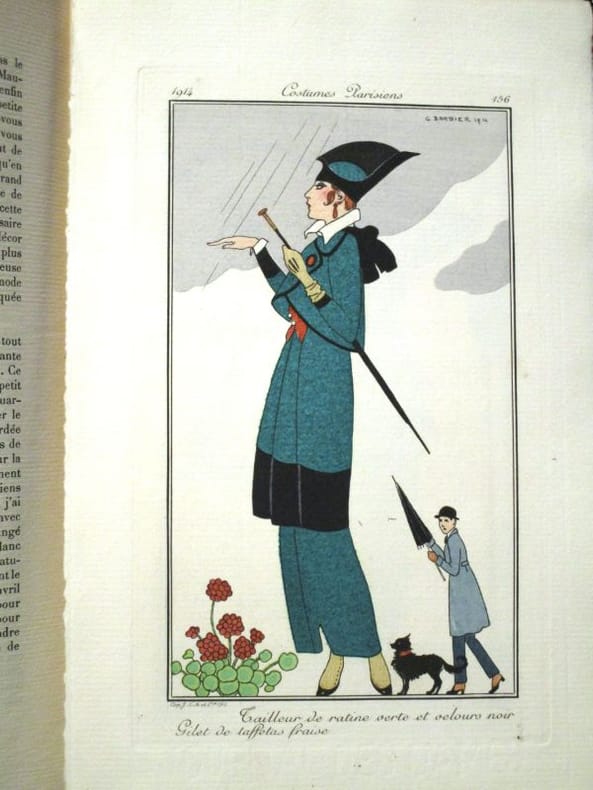
réf. 119437A Paris, Aux bureaux du Journal des Dames, de 1912 à 1914, 4 tomes in-8, contiennent les 79 numéros parus, complets des 186 planches gravées coloriées au pochoir (184 +2), menu illustré par Boscher au numéro du mois de décembre 1913, tirage à 1279 exemplaires numérotés, un des 1250 exemplaires numérotés sur papier de Hollande (n°1009). 79 fascicules aux cahiers non coupés, non cousus, sous leur couverture de livraison titrée bleue, bleu-vert, ou grise, regroupés sous 4 chemises éditeur papier bleues titrées (par année pour 1912, par semestre pour 1913 et 1914). Chaque numéro contient : 4 pages publicitaires en supplément, 8 pages de chroniques littéraires ou poèmes, 1 ou plusieurs planches hors-texte rehaussées au pochoir; le premier numéro contient en plus une préface de 8 pages et 1 feuillet fac-similé de la première page du Journal de mai 1812. Menus défauts aux chemises I et II (légères taches, petites déchirures), un numéro avec des traces de mouillures (n°73), de très rares rousseurs (pl.17 et 26), sinon intérieur en très bon état, les planches et les couleurs sont magnifiques, bon état général.
réf. 66451aafParis, Bourgogne & Martinet, 1833- 1902, in-4to, richement illustré de gravures sur bois, qqs rousseurs par ci par là, demi-toile / demi-cuir / demi- parchemin (reliures de bibl.) Le tout en bon état
1978réf. 66661978 Editions Le Jardin de Flore, illustrations de Fernand Pouillon, 1978, 145 p."Le 10 em ouvrage édité par le Jardin de Flore , tirage limité à 150 exemplaires sur vergé Richard de Bas avec une suite de gravures réservées à l'auteur" . Exemplaire no 74. Parfait état dans un coffret sous un emboitage cuir . Avec sa suite de gravures.