2314 risultati
1809rif. 50198Paris Mad. Ve Barnard 1809. Contemp. hcalf. Spine gilt. Wear to top of spine. A few scratches to binding. Small stamps on verso of titlepage.In: "Annales de Chimie ou Recueil de Mémoires concernant la Chemie" Tome 70. 336 pp. Entire volume offered. Davy's paper: pp. 189-254. First edition in French the first English 1808 of this importent historical paper in chemistry in which Davy shows that electricity is capable of decomposing some alkalies isolating two new substances and discovering potassium and sodium. Neville in his Historical Chemical Library vol. I p.340 writes about this paper "ONE OF THE GREAT CLASSIC RESEARCHES IN CHEMISTRY in which Davy announced in this his second Bakterian lecture the isloation of metallic potassium and sodium by the electrolytic decomposition of their fused oxides.""He Davy began his own electrical experiments.The results were spectacular. On October 6 1807 the current passing through molten potash liberated a metal which Davy called potassium. The little globules of shining metal tore the water molecule apart as it eagerly recombined with oxygen and the liberated hydrogen burst into lavender flame. Davy danced about in a delirium of joy. A week later he isolated sodium from soda."Asimow. The paper offered here describes these discoveries."Humphry Davy was one of the most brilliant chemists of the early nineteenth century. His early study of nitrous oxide brought him his first reputation but his later and most importent investigations were devoted to electrochemistry. Following Galvani's experiments and the discovery of the voltaic pile interest in galvanic electricity had become widespread. The first electrolysis by means of the pile was carried out in 1800 by Nicholson and Carisle who obtained oxygen and hydrogen from water. Davy began to examine the chemical effects of electricity in 1800 and his numerous discoveries were presented in his Bakerian lecture to the Royal Society on November 20 1806. A Source Book in Chemistry p. 243. unknown
2018rif. G082976853XI3N01Vida Publishers 2018. Unknown. Good. Missing dust jacket; Pages can have notes/highlighting. Spine may show signs of wear. ~ ThriftBooks: Read More Spend Less.Dust jacket quality is not guaranteed. Vida Publishers unknown
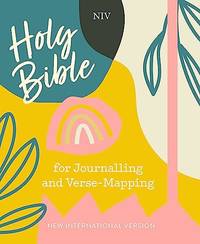
rif. DADAX1444786067Hodder & Stoughton 0000-00-00. hardcover. New. 4.96x0.87x7.64. Buy with confidence. Excellent Customer Service & Return policy. Hodder & Stoughton hardcover
1982rif. 580969Boston: Little Brown and Company 1982. Hardcover. Near Fine. First edition. Tall octavo. 203pp. Illustrated with plates. Blue cloth gilt in clothcovered slipcase as issued. Spine a bit sunned else fine in just about fine slipcase with a thin strip of light tanning on one panel. One of 1000 numbered and signed copies apparently different copies were signed by different members of the opera company. This copy Signed by General Manager of the Metropolitan Opera Company Anthony Bliss and one other person "Kim". Little, Brown and Company hardcover
1982rif. 580970Boston: Little Brown and Company 1982. Hardcover. Near Fine. First edition. Tall octavo. 203pp. Illustrated with plates. Blue cloth gilt in clothcovered slipcase as issued. Spine modestly sunned and a bit of light spotting on the rear board near fine in just about fine slipcase with a bit of light tanning. One of 1000 numbered and signed copies apparently different copies were signed by different members of the opera company. This copy Signed by Rise Stevens and another person. Little, Brown and Company hardcover
rif. GOR013234694Paperback. Very Good. paperback
1930rif. b30267Alamore Press 1930. First Edition . Hardcover. Near Fine. Rebound in cloth-covered boards with paper labels. The text is near fine with some minor creasing. A very uncommon item in any condition. Alamore Press hardcover
1950rif. b22548New York: ABC Television 1950. First Edition . Unbound. Near Fine. Complete original script for the Pulitzer Prize Playhouse production of the televised adaptation of Booth Tarkington's The Magnificent Ambersons broadcast on ABC Television on November 3 1950. The script is noted as "FINAL" and dated October 20 1950. This is director Alex Segal's copy and contains his numerous pencil both black and red notations and deletions throughout. IMDB states that the four primary actors in this production were Melvyn Douglas Ruth Hussey Florence Eldridge and Richard Hylton although it incorrectly lists the director. The script has 101 mimeographed pages. Most are in near fine condition. The title-page has a rust mark from a clip and brief wear page 61 is ruffled along the bottom edge and the final page also has a rust mark. Segal's extensive pencil notations appear on almost every page usually in multiples. ABC Television unknown
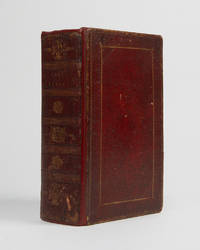
rif. 123536London Printed by George E. Eyre and William Spottiswoode 1854. . 4to 29 x 22.5 cm; excised bookplate from front pastedown; contemporary pebble-grain black morocco covers panelled in gilt gilt spine in 6 compartments all edges gilt a little rubbed very good. A well-preserved mid-Victorian King James Bible in the original black pebble-grain gilt-panelled morocco binding. London, Printed by George E. Eyre and William Spottiswoode, 1854. unknown
rif. 123842Cambridge Printed by J. Smith Printer to the University 1815. . Stereotype edition; large 8vo 23 x 15 cm; foxing to title moderate spotting throughout ownership inscription in pen to title MS notes in pen to free endpapers related family history notes loose to rear later endappers gutter-margins reinforced; contemporary straight-grained end morocco covers ruled in gilt and blind rebacked original gilt spine in 6-compartments laid down gauffered edges slightly rubbed with loss to corners and edges. A stereotype edition of the King James Bible bound in contemporary red morocco gilt. 'William Ged 1690-1749 the inventor of stereotyping obtained in 1731 a contract for printing Prayer Books and Bibles for Cambridge University. But he completed only two Prayer Books and surrendered his lease in 1738. Thwarted at every turn by trade jealousy he failed in all his attempts to establish a business. "Subsequently Andrew Wilson the Earl of Stanhope's practical man starting where Ged left off worked out the plaster-of-Paris plan that preceded the papier-mâché system which has established stereotyping in its present position"' Herbert. Cambridge, Printed by J. Smith, Printer to the University, 1815. unknown
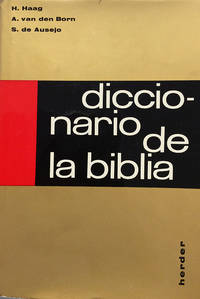
rif. 73789España: Herder 1963. 1ª Edición. Tapa Dura. Bien/Aceptable. 25x16. Basada en el Bibel-Lexikon de Herbert Haag y en Bijbels Woordenboek de A. van den Born y otros especialistas. Edición castellana preparada por Serafín de Ausejo. Tapa dura con sobrecubierta. Láminas fuera de texto. Sobrecubiertas algo rozadas en bordes. Texto a dos columnas. Dedicatoria No Autores en hoja de cortesía. Buen estado. Herder hardcover
rif. 123616London Imprinted at London by Robert Barker Printer to the Kings most Excellent Maiestie 1614-1613. . Four works in 1 vol.; 4to 23.5 x 18 cm; woodcut title-pages NT title dated 1613 with apocrypha Common Prayer with woodcut title and calendar printed in red and black early MS annotations in pen to margin of Bible 2H3 extensive MS family register to front endpapers the odd spot and area of toning final f. with closed tear to margin internally generally clean and crisp; contemporary blind-panelled calf later endpapers spine expertly restored edges sprinkled red a little rubbed very good or better. A superb example of the Geneva Bible well-preserved in contemporary blind-panelled calf and complete with the Book of Common Prayer Concordances and Psalms. The Geneva Bible was first published in 1560. The translation was primarily the work of English 'Marian exiles' on the continent who having fled England following the accession of Mary I in 1553 sought to create a version of the scriptures that emphasised clarity and promoted accessibility for the learned lay. It was the primary Bible of the evangelical movement and continued to be used by dissenting Protestants from Shakespeare to Oliver Cromwell well into the seventeenth century; it was one of the Bibles taken to America by the first pilgrims on the Mayflower. Notable innovations include the use of verse divisions which made it easier to locate specific passages and extensive study notes commentary and annotations that reflected the Reformed Calvinist theology of the time. As a result the translation proved unpopular with the Elizabethan regime which sought a more moderate religious settlement. The Archbishop of Canterbury Matthew Parker was duly authorised in 1568 to produce a more orthodox translation the Bishops' Bible which promoted the Anglican church and would go on to form the basis of the King James Version in 1611. Nevertheless the Geneva Bible remained popular until at least 1644 when the last known seventeenth-century edition was printed. ESTC S1399 S93850 & S121126 our copy a variant with 'Company' not 'Companie' in imprint; Herbert 330 our copy without Speed's Genealogies and map; DM 256; Griffith 16141. London, Imprinted at London by Robert Barker, Printer to the Kings most Excellent Maiestie, 1614-[1613]. unknown
rif. 123826Edinburgh Printed by James Watson one of Her Majesty's Printers. Sold at his shop next door to the Red-Lyon opposition to the Lucken-Booths 1714. . 12mo 15 x 9 cm; engraved title-page woodcut headpiece and ornaments; nineteenth-century purple calf covers with blind-tooled barbed-rectangle centrepiece within gilt roll border gilt spine contrasting black morocco lettering-piece all edges gilt slightly rubbed spine a little faded very good. A handsome pocket-edition of the King James Bible from the last year of the reign of Queen Anne 1665-1714 bound with a metrical psalms in a blind-tooled purple calf binding of the nineteenth-century. Edinburgh, Printed by James Watson, one of Her Majesty's Printers. Sold at his shop next door to the Red-Lyon, opposition to the unknown
rif. 122486Cambridge Printed by John Field Printer to the Universitie 1662. . 8vo 17 x 11.5 cm; ruled in red throughout woodcut device to title and initial final f. of text torn with loss to woodcut device and laid down trimmed close frayed with occasional minor loss in final few quires; contmporary blind ruled calf rebacked and corners repaired later endpapers a little rubbed with slight loss. The New Testament according to the King James Version printed shortly after the Restoration of Charles II. Cambridge, Printed by John Field, Printer to the Universitie, 1662. unknown
rif. 123861London Printed at London by Robert Barker Printer to the Kings most Excellent Majestie: and by the assignes of John Bill et al. 1639-1640. . Three works bound in 1 vol.; 8vo 19 x 12.5 cm; NT title dated 1639 ruled in red throughout woodcut general and NT titles to the Bible and Book of Common Prayer woodcut vignette of Adam and Eve before Genesis woodcut initials head and tailpieces 19th-century endpapers with extensive manuscript genealogy in pen dampstaining particularly affecting opening quire of the Bible and quires F through to I the occasional tear with minor loss to text; 19th century diced calf covers with flower and leaf gilt roll rebacked original spine laid down corners rubbed with loss very good. This edition marked a 'new form of octavo Bible in somewhat larger type with 72 lines to the full page' Herbert. A pleasing example of this mid-seventeenth-century octavo King James Bible ruled in red throughout with the biblical Apocrypha and bound with The Book of Common Prayer and The Whole Book of the Psalmes. ESTC S102186; Herbert 546; DM 423. London, Printed at London by Robert Barker, Printer to the Kings most Excellent Majestie: and by the assignes of John Bill et al unknown
rif. 124311London Printed at London by Robert Barker Printer to the Kings most excellent Majesttie and by the Assignes of John Bill 1632-1633. . Four works in 1 vol.; folio 35.5 x 23.5 cm; engraved general title signed 'Guilielmus Hole' partially burnished out as noted by ESTC with date in imprint altered to read '1633' on the plate engraved NT title dated 1632 full-page woodcut illustration of Adam & Eve to verso of A10 final f. of preliminaries note ff A7-8 with incorrect printed signatures as A6-7 woodcut initials head and tailpieces further illustrated with Speed's genealogies and double-page map of Canaan occasional toning final f. of Psalmes laid down title of Common Prayer affixed via stub Speed map with loss to central portion of design with final f. reinforced to verso at gutter margin and tape repair to margin A1 of Old Testament with closed tear crudely repaired lower margin of Adam & Eve woodcut with tape repair not affecting design some further closed repairs throughout later endpapers; contemporary calf gilt lozenge device to covers bisecting the initials 'I' and 'E' gilt faded upper brass clasp in working order remnants of the lower clasp joints and corners expertly restored very good. A very well preserved folio edition of the King James Bible complete in the original clasped calfskin binding with Speed's Genealogies including his double-page engraved map of Canaan The Book of Common Prayer and Sternhold & Hopkins' Psalmes. The elaborate title border is that engraved by William Hole d.1624 which had been used before in the folio Geneva Bible of 1607. 'As a copperplate-engraver Hole remained a specialist in engraving maps music and lettering. and he stands at the head of the seventeenth-century tradition of engravers who worked for writing-masters. He engraved the plates to Martin Billingsley's The Pens Excellencie or The Secretaries Delighte of 1618 the first important English engraved copybook dedicated to Charles as Prince of Wales and he was also responsible for the first engraved plates of music made outside Italy: the famous Parthenia of 161213 which contained music by William Byrd John Bull and Orlando Gibbons and Angelo Notari's Prime musiche nuove of 1613' ODNB. Our example a variant with the date in the imprint of the engraved general title altered on the plate to read '1633'. ESTC S122379 variant; Herbert 466; DM 359. London, Printed at London by Robert Barker, Printer to [the] Kings most excellent Ma[jes]ttie and by the Assignes of John Bill, unknown
rif. 124312London Printed by John Field 1648. . 4to 24 x 18 cm; without the Apocrypha engraved general title slightly cropped at foot of engraved area with the sculpture's signature just cut through and re-margined later inscriptions in pen to margins letterpress NT title text block toned with some damp-staining to gutter margin of first 6 quires occasional spotting; 17th century dark brown goatskin the covers panelled in gilt with filets and a roll between the panels tooled in blind with fern fronds adorned with engraved-silver centre and corner pieces and clasps in full working order the upper centrepiece with monogram 'AA' the lower with engraved armorial device of three mullets of six points all pierced within a lozenge border rebacked preserving the original gilt spine which has been laid down all edges gilt the lower spine-side corner piece of the lower board loose from fitting a little rubbed overall an excellent example. The King James Version splendidly preserved in an English Restoration binding of gilt panelled dark brown morocco furnished in silver with engraved centrepieces bearing the monogram 'AA' and the armorial device of three mullets or six points pierces cornerpieces and clasps in full working order. Binding 'furniture' originally served a functional purpose with bosses and cornerpieces helping to protect the covers from wear and tear and clasps employed to prevent the parchment leaves of manuscript books from warping. The advent of paper and the movement away from wood to pasteboard had largely made these features redundant by the end of the seventeenth century. Instead as here metalwork survived as a decorative feature which enhanced the binding of important devotional works whilst also helping to keep these texts which were more likely to be carried about secure see David Pearson English Bookbinding Styles 1450-1800 pp26-30. Our example is bound without the Apocrypha. Darlow and Moule note that the Apocrypha in their example no. 469 is possibly supplied from another edition and that a different copy is lacking the Apocrypha. ESTC R37304; Herbert 605; DM 469; Wing B2225A. London, Printed by Joh[n] Field, 1648. unknown
rif. 123903London Printed by Robert Barker Printer to the Kings most excellent Majestie and by the assignes of John Bill 1639. . Three works in 1 vol.; 4to 23.5 x 18 cm; woodcut general and NT titles woodcut initials head and tailpieces printed in ruled border ownership inscriptions in pen to verso of general title NT title A3 and 2Z1 recto later pen inscription to fore-edge margin of 3E1 and 3G8 verso slightly toned with occasional light dampstaining and the old small hole with minor loss to text of 3Z2-3 final f. of Book of Psalmes frayed with slight loss to corners and with small tear at gutter margin repaired in tape Book of Common Prayer defective lacking title-page and opening 2 preliminary ff later endpapers; contemporary calf gilt lozenge centrepiece to covers formed of floral tools rebacked slight rubbed and abraded with loss to gilt very good. A quarto edition of the King James Bible dating to the first year of the Wars of the Three Kingdoms the period of political and social instability that led ultimately to the execution of King Charles ten-years later in 1649 and the establishment of the republican Commonwealth of England in 1653. This edition with the Apocrypha and bound with Sternehold's Booke of Psalmes and a defective Book of Common Prayer lacking the title-page and two preliminary leaves all dating from the year 1639. A handsome copy in contemporary calf the covers with a gilt-tooled lozenge centrepiece formed of floral devices. ESTC S117092; Herbert 539; DM 417. London, Printed by Robert Barker, Printer to the Kings most excellent Majestie, and by the assignes of John Bill, 1639. unknown
2010rif. DADAX1169246699Kessinger Publishing 2010-09-10. hardcover. New. 7.00x0.31x10.00. Buy with confidence. Excellent Customer Service & Return policy. Kessinger Publishing hardcover
rif. 121306Oxford Printed at the Clarendon Press by Samuel Collingwood and Co. 1826. . Stereotype edition; 24mo 15 x 9 cm; a little browned; contemporary straight-grained red morocco spine lettered in gilt all edges gilt slightly rubbed with minor loss to extremities very good. A handsome Georgian stereotype King James Bible bound in contemporary red morocco gilt. 'William Ged 1690-1749 the inventor of stereotyping obtained in 1731 a contract for printing Prayer Books and Bibles for Cambridge University. But he completed only two Prayer Books and surrendered his lease in 1738. Thwarted at every turn by trade jealousy he failed in all his attempts to establish a business. "Subsequently Andrew Wilson the Earl of Stanhope's practical man starting where Ged left off worked out the plaster-of-Paris plan that preceded the papier-mâché system which has established stereotyping in its present position"' Herbert. Oxford, Printed at the Clarendon Press, by Samuel Collingwood and Co., 1826. unknown
rif. 121818Oxford Printed at the Clarendon Press by Dawson Bensley and Cooke Printers to the University 1800. . 8vo 21.5 x 14 cm; ownership inscriptions in pen to front endpapers light spotting 3I4 upper corner torn with slight loss to text and starting to detach at lower gutter margin small wormhole affecting title and preliminary ff; contemporary panelled calf rubbed with loss to corners and spine ends very good. A handsome King James Bible in a contemporary panelled calf binding. Herbert 1446. Oxford, Printed at the Clarendon Press, by Dawson, Bensley, and Cooke, Printers to the University, 1800. unknown
1979rif. R5337Québec: Comité du livre centenaire 1979 TRÈS TRÈS RARE! Bilingue : FRANÇAIS - ENGLISH. Ouvrage abondamment illustré de photographies et de fac-similés dans le texte ainsi que de reproductions de tableaux en couleurs contre-collés. « Situé au 97 rue Saint-Louis dans larrondissement historique du Vieux-Québec le Cercle de la Garnison de Québec est la propriété de Parcs Canada depuis 1992. Le lieu comprend lédifice du Cercle proprement dit logé au coin de la côte de la Citadelle de même que la maison du messager bâtie dans la cour le pavillon du puits une remise un jardin un boisé et des espaces de stationnement. Il comporte en outre plusieurs vestiges archéologiques de la cour des ingénieurs datant de la fin du 18e siècle et de la première moitié du 19e siècle dont plusieurs ont été mis au jour lors de fouilles effectuées en 1992-1993. Finalement une collection ethnologique fait également partie des composantes importantes du lieu historique national du Cercle-de-la-Garnison-de-Québec. Parmi les clubs privés de tradition britannique fondés à Québec depuis le 18e siècle le Club de la Garnison est le plus ancien à subsister.» Deux petites taches sur première garde volante. Couverture rigide. Très bon. Comité du livre centenaire hardcover
2006rif. DADAX1529391334Hodder & Stoughton 2020-06-11. flexibound. New. 6.77x1.42x9.76. Buy with confidence. Excellent Customer Service & Return policy. Hodder & Stoughton unknown
2010rif. DADAX116146008XKessinger Publishing 2010-05-23. hardcover. New. 7.00x0.31x10.00. Buy with confidence. Excellent Customer Service & Return policy. Kessinger Publishing hardcover
rif. DADAX1473656672Hodder & Stoughton 2017-04-20. hardcover. New. 9.53x1.26x6.50. Buy with confidence. Excellent Customer Service & Return policy. Hodder & Stoughton hardcover