2 313 résultats
réf. 8863P., Huquier fils, (fin du XVIIIème). (Petit trou de ver).
réf. 8864P., Daumont, (fin du XVIIIème).
réf. 8880(Trace de pliure au centre).
réf. 8849P., chez Daumont, (fin du XVIIIème).
réf. 8850P., chez Daumont, (fin du XVIIIème).
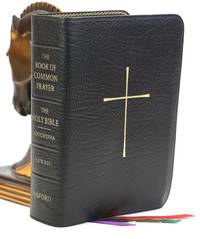
1990réf. 515107Oxford University Press 1990. First Edition. Leather. FINE. First printing of the combined Episcopal Book of Common Prayer with the newly published NRSV Bible with Apocrypha. Finely bound in supple Black Calfskin Leather with pronounced grain gilt stamped spine lettering and gilt stamped cross to front cover chain dentelle all edges gilt six multi-colored place ribbons. With only the most trivial scuffs to the edges this is a FINE copy with tight sound binding no markings and blank dedication pages. Although it has regularly appeared in subsequent Korean printings with bonded leather this first edition in genuine calfskin leather and printed in the U.S. has become quite scarce in trade. Oxford University Press unknown
réf. 8885P., Basset (mi XVIIIème). (Petit trou de ver).
2015réf. 21941Actes Sud / l'an 2, 2015. In-4, cartonnage couleurs. Coin supérieur du second plat très légèrement tapé, pour le reste à l'état de neuf.
réf. 001642Thew Folio Society. Hardcover. Very Good/Not relevant. Bielefeld Gebruckt und verlegt von Just. Nicolaus Süvern 1744; title page printed in red and black; pastedown at both the start and the end of the book block in old red yellow and blue marbled paper; no free pages present again at both ends but with no indication of specific loss so perhaps not ever present; 8vo 90 x 160mm;pp vi 397 v 96 112 114 8 14; later but still early black leather binding blind panelled and with no lettering spine with raised bands; all edges gilt and with all three edge surfaces decorated at each end with blind stamping; altogether a handsome but also restrained book with several handsome title pages clean and tight and generally in very good condition. . . . . . The book is more than simply a new testament after Luther's version containing also an informative Psalter the Psalms of David a catechism song book and other material; old ink ownership note W.B Gould neatly written on the title page. Thew Folio Society hardcover
réf. 8844P., chez Daumont, (fin du XVIIIème).
réf. 8840P., Huquier et fils, (fin XVIIIème).
réf. 88431760.
réf. 8845P., chez Daumont, (fin du XVIIIème).
réf. 8846P., chez Daumont, (fin du XVIIIème).
réf. 8847P., chez Daumont, (fin du XVIIIème).
1978réf. LFA008e8N° 85 - Janvier 1978 Une revue d'environ 140 pages, format 295 x 220 mm, brochée, illustrée
1939réf. 505760Concordia Publishing House 1939. Leather. VERY GOOD. Undated printing but with owner's gilt-embossed name to front cover d. 1941. Full pebble-grained black leather with gilt stamped spine lettering and sixe blind-ruled spine panels all edges art gilt. With color litho maps dictionary concordance and various other helps. Dual-column self-pronouncing with center-column references. Covers show moderate wear gilt somewhat dulled but edges still fairly sharp some dogeared pages and a few short tears otherwise a clean text with no markings and tight Smyth-sewn binding. Concordia Publishing House unknown
1922réf. 509114Oxford University Press 1922. Leather. VERY GOOD. Church Hymnary d. 1922 Bible and Psalms undated but assumably therabouts. 2323 pp. Metric Psalms and Hymns. Small-format 32mo bound in full-yapp black cowhide leather with pronounced grain gilt stamped lettering to spine and front cover all edges art gilt black place ribbon color maps. Some modest rubbing to the leather around the tips binding remains entirely sound inscription to FFEP verso otherwise text clean and unmarked with little sign of use or wear. Oxford University Press unknown
réf. 123536London Printed by George E. Eyre and William Spottiswoode 1854. . 4to 29 x 22.5 cm; excised bookplate from front pastedown; contemporary pebble-grain black morocco covers panelled in gilt gilt spine in 6 compartments all edges gilt a little rubbed very good. A well-preserved mid-Victorian King James Bible in the original black pebble-grain gilt-panelled morocco binding. London, Printed by George E. Eyre and William Spottiswoode, 1854. unknown
réf. 123842Cambridge Printed by J. Smith Printer to the University 1815. . Stereotype edition; large 8vo 23 x 15 cm; foxing to title moderate spotting throughout ownership inscription in pen to title MS notes in pen to free endpapers related family history notes loose to rear later endappers gutter-margins reinforced; contemporary straight-grained end morocco covers ruled in gilt and blind rebacked original gilt spine in 6-compartments laid down gauffered edges slightly rubbed with loss to corners and edges. A stereotype edition of the King James Bible bound in contemporary red morocco gilt. 'William Ged 1690-1749 the inventor of stereotyping obtained in 1731 a contract for printing Prayer Books and Bibles for Cambridge University. But he completed only two Prayer Books and surrendered his lease in 1738. Thwarted at every turn by trade jealousy he failed in all his attempts to establish a business. "Subsequently Andrew Wilson the Earl of Stanhope's practical man starting where Ged left off worked out the plaster-of-Paris plan that preceded the papier-mâché system which has established stereotyping in its present position"' Herbert. Cambridge, Printed by J. Smith, Printer to the University, 1815. unknown
1920réf. 514000Cambridge University Press / James Pott and Co 1920. Leather. NEAR FINE. Undated but ca. 1920 -- title page states Printed by J. B. Peace whose term as Printer at Cambridge lasted from 1916-1922. 4x5.25' Amethyst setting dual columns with center refs. Smyth-sewn binding with overcast stitching in Black 'French Morocco' leather with 3/4 yapp all edges Art Gilt. 4 1119 153 Concordance pp. 12 color lithograph maps. Some trivial wear to the edges with a few short tears some separation at both outer gatherings--an 'inherent vice' kind of flaw with overcast-stitching bindings. Otherwise an exceedingly clean and sharp copy with crisp fresh pages and nice supple leather. Cambridge University Press / James Pott and Co unknown
réf. 123826Edinburgh Printed by James Watson one of Her Majesty's Printers. Sold at his shop next door to the Red-Lyon opposition to the Lucken-Booths 1714. . 12mo 15 x 9 cm; engraved title-page woodcut headpiece and ornaments; nineteenth-century purple calf covers with blind-tooled barbed-rectangle centrepiece within gilt roll border gilt spine contrasting black morocco lettering-piece all edges gilt slightly rubbed spine a little faded very good. A handsome pocket-edition of the King James Bible from the last year of the reign of Queen Anne 1665-1714 bound with a metrical psalms in a blind-tooled purple calf binding of the nineteenth-century. Edinburgh, Printed by James Watson, one of Her Majesty's Printers. Sold at his shop next door to the Red-Lyon, opposition to the unknown
réf. 123861London Printed at London by Robert Barker Printer to the Kings most Excellent Majestie: and by the assignes of John Bill et al. 1639-1640. . Three works bound in 1 vol.; 8vo 19 x 12.5 cm; NT title dated 1639 ruled in red throughout woodcut general and NT titles to the Bible and Book of Common Prayer woodcut vignette of Adam and Eve before Genesis woodcut initials head and tailpieces 19th-century endpapers with extensive manuscript genealogy in pen dampstaining particularly affecting opening quire of the Bible and quires F through to I the occasional tear with minor loss to text; 19th century diced calf covers with flower and leaf gilt roll rebacked original spine laid down corners rubbed with loss very good. This edition marked a 'new form of octavo Bible in somewhat larger type with 72 lines to the full page' Herbert. A pleasing example of this mid-seventeenth-century octavo King James Bible ruled in red throughout with the biblical Apocrypha and bound with The Book of Common Prayer and The Whole Book of the Psalmes. ESTC S102186; Herbert 546; DM 423. London, Printed at London by Robert Barker, Printer to the Kings most Excellent Majestie: and by the assignes of John Bill et al unknown
réf. 124311London Printed at London by Robert Barker Printer to the Kings most excellent Majesttie and by the Assignes of John Bill 1632-1633. . Four works in 1 vol.; folio 35.5 x 23.5 cm; engraved general title signed 'Guilielmus Hole' partially burnished out as noted by ESTC with date in imprint altered to read '1633' on the plate engraved NT title dated 1632 full-page woodcut illustration of Adam & Eve to verso of A10 final f. of preliminaries note ff A7-8 with incorrect printed signatures as A6-7 woodcut initials head and tailpieces further illustrated with Speed's genealogies and double-page map of Canaan occasional toning final f. of Psalmes laid down title of Common Prayer affixed via stub Speed map with loss to central portion of design with final f. reinforced to verso at gutter margin and tape repair to margin A1 of Old Testament with closed tear crudely repaired lower margin of Adam & Eve woodcut with tape repair not affecting design some further closed repairs throughout later endpapers; contemporary calf gilt lozenge device to covers bisecting the initials 'I' and 'E' gilt faded upper brass clasp in working order remnants of the lower clasp joints and corners expertly restored very good. A very well preserved folio edition of the King James Bible complete in the original clasped calfskin binding with Speed's Genealogies including his double-page engraved map of Canaan The Book of Common Prayer and Sternhold & Hopkins' Psalmes. The elaborate title border is that engraved by William Hole d.1624 which had been used before in the folio Geneva Bible of 1607. 'As a copperplate-engraver Hole remained a specialist in engraving maps music and lettering. and he stands at the head of the seventeenth-century tradition of engravers who worked for writing-masters. He engraved the plates to Martin Billingsley's The Pens Excellencie or The Secretaries Delighte of 1618 the first important English engraved copybook dedicated to Charles as Prince of Wales and he was also responsible for the first engraved plates of music made outside Italy: the famous Parthenia of 161213 which contained music by William Byrd John Bull and Orlando Gibbons and Angelo Notari's Prime musiche nuove of 1613' ODNB. Our example a variant with the date in the imprint of the engraved general title altered on the plate to read '1633'. ESTC S122379 variant; Herbert 466; DM 359. London, Printed at London by Robert Barker, Printer to [the] Kings most excellent Ma[jes]ttie and by the Assignes of John Bill, unknown
réf. 124312London Printed by John Field 1648. . 4to 24 x 18 cm; without the Apocrypha engraved general title slightly cropped at foot of engraved area with the sculpture's signature just cut through and re-margined later inscriptions in pen to margins letterpress NT title text block toned with some damp-staining to gutter margin of first 6 quires occasional spotting; 17th century dark brown goatskin the covers panelled in gilt with filets and a roll between the panels tooled in blind with fern fronds adorned with engraved-silver centre and corner pieces and clasps in full working order the upper centrepiece with monogram 'AA' the lower with engraved armorial device of three mullets of six points all pierced within a lozenge border rebacked preserving the original gilt spine which has been laid down all edges gilt the lower spine-side corner piece of the lower board loose from fitting a little rubbed overall an excellent example. The King James Version splendidly preserved in an English Restoration binding of gilt panelled dark brown morocco furnished in silver with engraved centrepieces bearing the monogram 'AA' and the armorial device of three mullets or six points pierces cornerpieces and clasps in full working order. Binding 'furniture' originally served a functional purpose with bosses and cornerpieces helping to protect the covers from wear and tear and clasps employed to prevent the parchment leaves of manuscript books from warping. The advent of paper and the movement away from wood to pasteboard had largely made these features redundant by the end of the seventeenth century. Instead as here metalwork survived as a decorative feature which enhanced the binding of important devotional works whilst also helping to keep these texts which were more likely to be carried about secure see David Pearson English Bookbinding Styles 1450-1800 pp26-30. Our example is bound without the Apocrypha. Darlow and Moule note that the Apocrypha in their example no. 469 is possibly supplied from another edition and that a different copy is lacking the Apocrypha. ESTC R37304; Herbert 605; DM 469; Wing B2225A. London, Printed by Joh[n] Field, 1648. unknown