8 244 résultats
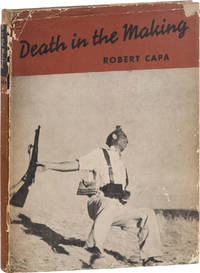
1938réf. 81496New York: Covici-Friede 1938. First Edition. First Printing. Quarto 28cm; taupe cloth blocked and titled in black on spine and front cover; dustjacket; unpaginated 96pp; photographically illustrated. Gently spine-sunned lightly shelfworn with foxing to spine joints board edges and upper edge of textblock; pronounced offsetting to gutters at endpapers from binder's glue though text and illustrations are mostly clean; triangular loss to upper right corner of p.50-51 3.5" x 3.25" x 1 5/8" with the torn corner loosely laid in; just Very Good. Dustjacket is unclipped priced $2.50 spine-sunned showing moderate wear several chips tears and attendant creases with a half-dozen or so tears archivally reinforced on verso; Good or better. One of the definitive photobooks of the 20th century and an essential title in any collection of books on the Spanish Civil War. The untitled jacket image capturing the moment of death of a militiaman on the Cordoba front established Capa's reputation as one of the great battlefield photographers of all time and remains one of the most recognizable photographs of the Twentieth Century. PARR-BADGER I:139. 81496. Covici-Friede unknown books
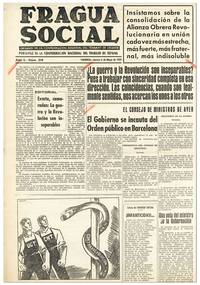
1937réf. 82175Madrid: Confederación Nacional del Trabajo 1937. First Editions. Four folio issues 59.75cm; original newsprint wrappers; 4pp per issue; illus.; text is entirely in Spanish. Publication sequence as follows: Año VI Nos. 625 22 May 737 3 November 740 6 November 741 7 November. Each issue horizontally folded with light wear with varying degrees of mild toning and dust-soil to extremities; two issues show some old underlining or circling in red and blue pencil; two faint marginal stains and some smudging to the text in a few spots on No.625; two old shallow ink stains to No.737; overall Very Good. A small group of well-preserved issues of a daily newspaper published by the CNT Confederacion Nacional de Trabajo a Spanish anarcho-syndicalist labor union founded in 1910 and still active today. Contents include coverage and photographs from the various fronts during the Spanish Civil War toward the second year of the conflict. 82175. [Confederación Nacional del Trabajo] unknown books
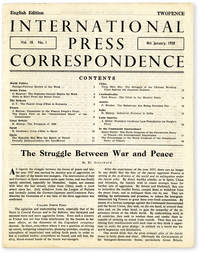
1934réf. 52881London: H.R.G. Jefferson et al 1934-1939. NOTE: Other identified publishers all London include: Unthanks Bookshop; R. Bishop; William Massey. Beginning in July 1938 title changes to "World News and Views." Collection of two hundred forty-nine quarto issues in original staple-bound self-wrappers. Each issue 27cm x 21cm; most issues ca 20pp numbered sequentially. General wear occasional creasing or small losses; some copies marked as "File Copies;" some with red pencil annotations presumably for publication; a few issues with ink pressure stamp of the Los Angeles Workers Library. With the exception of a few issues in 1934 the journal was printed on high-quality newsprint; the run is well-preserved Very Good overall and fully readable. The periodical was issued irregularly from one to as many as three issues per week; our run collates as follows: Vol. 14 1934: 28-14161719-232629-3234-3638-4043-455760-63 32 issues Vol. 15 1935: 1-58-3136383944474850555658596163646668-72 49 issues Vol. 16 1936: 1246-3032-384042-58 53 issues Vol. 17 1937: 248-242642444547-5355-57 47 issues Vol. 18 1938: 1-35-81012-2325273031333436-4044-47525456-60 38 issues Vol. 19 1939: 2-91415181920-2628-3235-4155 30 issues. Beginning in 1918 immediately following the Russian Revolution International Press Correspondence usually called by its acronym INPRECOR became the Communist International's principal international organ for distributing "official" news of the global spread of Marxist ideology. The paper was issued in four languages English French Spanish and German and at its height no fewer than one and as many as three issues per week appeared. The chief audience was the editorial staffs of COMINTERN-aligned newspapers where many of INPRECOR's articles would be republished verbatim. Thus INPRECOR served as a de facto press service for the left-wing media in Europe North and Latin America. In our experience cohesive runs of INPRECOR in any size are unusual; this collection represents a veritable treasure-trove of official COMINTERN policy during the Popular Front period especially valuable for its day-by-day coverage and interpretation of events in Spain before during and after the Civil War and for documenting the rise of fascism across the European continent. Our run ends in August 1939 on the eve of Germany's invasion of Poland and the outbreak of the Second World War. Between that date and 1934 despite occasional lacunae the issues offered here provide a clear and compelling narrative of the sweep of world events leading to the World War and an intimate view of the communist left's response to those events. Even individual issues are somewhat scarce in commerce. Earlier issues of INPRECOR have been digitized by the Marxist Internet Archive ending in 1934. Much of the run is available in microfiche produced by the Communist Party of Great Britain but the imaging is of legendarily poor quality basically illegible in many places. Holdings for physical issues are spotty per WorldCat with many institutions holding small samples or partial runs. H.R.G. Jefferson [et al] unknown books
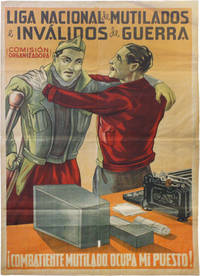
1938réf. 52890Madrid: Gráficas Reunidas U.H.P. 1938. Original illustrated poser offset printed in colors on beige stock measuring 68.5cm x 100cm 27" x 39.25". Light wear and toning to extremities a few old folds smoothed-out with several tiny nicks and small edge tears a few tiny splits at intersection of folds and a small loss toward lower margin just above the lettering; an unrestored Very Good example unbacked. The first in a series of four propaganda posters produced by Gráficas Reunidas for the Liga Nacional de Mutilados e Inválidos de Guerra LNMIG the National League of War Wounded and Invalids founded in Madrid in 1937. "The creation of this association was the first tangible outcome of the organizational efforts made by wounded Republican veterans. According to their provisional programme their key concern was to remain 'useful' útiles to the war effort and provide 'unconditional help to the government'. It was stated that the association should 'educate and re-educate the disabled veterans in physical and cultural terms. As a consequence of the efforts made by the LNMIG on behalf of disabled veterans the government gave preference to the war wounded to fill vacant menial jobs such as janitors messengers and the like" cf.Matthews James. Spain at War: Society Culture and Mobilization 1936-44. The poster created by an anonymous artist depicts a wounded soldier supporting himself with a crutch being embraced by a typist above text reading "Wounded soldier take my place!" translation mine. OCLC notes a single holding at the Biblioteca Universitat de Barcelona. CARULLA 1.268. Gráficas Reunidas U.H.P. unknown books
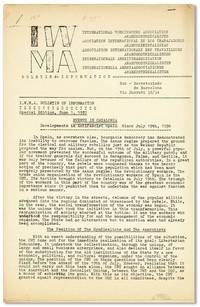
1937réf. 33100Barcelona: IWMA 1937. Folio 33.5cm.; staplebound self-wrappers printed mimeograph; 14 leaves printed rectos only. Minor wear from handling light toning to extremities else Very Good and sound. Special issue of the Bulletin issued by the IMWA most likely in conjunction with the anarcho-syndicalist Civil War-era libertarian movement headed by the Confederación Nacional del Trabajo and the Federación Anarchista Ibérica. Contents comprised of a single article "Events in Catalonia: Developments in Antifascist Spain Since July 19th 1936. IWMA unknown books
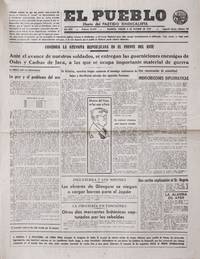
1937réf. 30146Valencia: S.i. 1937. Six tabloid issues 58cm; newsprint wrappers; 4pp per issue; occasional illus; text entirely in Spanish. Publication sequence as follows: Año XLIV Nos.15.394 15.409 15.411 15.413 15.424 15.435 October 8272931; November 1326 1937. All six issues horizontally folded at center occasional creasing to extremities with a few scattered passages underlined in red and blue colored pencil; one with mild toning along folds else paper is still supple and quite fresh; Very Good overall. Nicely-preserved selection of issues of this Republican daily newspaper the official organ of the Partido Sindicalista one of the smaller Spanish left-wing workers' parties that would eventually become affiliated with the United Front. The paper was founded in 1896 by the popular Spanish novelist and journalist Vicente Blasco Ibañez. During the Second Republic under the management of Ibañez's nephew Sigfrido the paper became more politically aligned eventually becoming the organ of the Syndicalists in 1932; it ceased publication with the end of the Republic in 1939. Rare; OCLC finds 2 locations holding any issues Biblioteca Universitat de Barcelona Universidad de Valencia none in the U.S. S.i. unknown books
1937réf. 26237Valencia: CNT 1937. 49 tabloid issues ca.48cm with publication seqence as follows: Año II Nos. 219 224-225 227-228 233-234 241-243 245 327-329 331-332 334-340 342 347-349 351-352 356 358-363 365-378. Printed offset on newsprint ca.8pp per issue; illus. Issues show light overall wear and toning creases and small tears with underlining and marginalia in red and blue colored-pencil to most issues; overall Very Good. Substantial run of this Spanish Civil War newspaper the official organ of the anarcho-syndicalist group Confederación Nacional del Trabajo. Published in Valencia between 1936-1939 the paper provided daily coverage of the Republican struggle with articles by Jesus Muro Felix Paredes Enrique Lopez Alarcon Gaston Leval and Juan Lopez et al. Illustrated with political cartoons and caricatures throughout. Large runs extremely uncommon in the trade; OCLC shows just 5 American institutions holding any issues. [CNT] unknown books
1936réf. 17499Barcelona: Edicions del Comissariat de Propaganda de la Generalitat de Catalunya ca 1936. First Limited Edition. One of 150 copies in the "regular" issue from a total edition of 175. Folio 40cm. Illustrated card portfolio containing 12 loose lithographic plates and a single sheet of letterpress as issued. Portfolio has shelf-wear and soil sticker to front wrapper with 2" tear to lower edge 0.5" nick to rear flap fold and creases and tiny tears to extremities; contents clean and fresh; Good. Suite of twelve lithographs by the Catalan painter Pere Créixams 1893-1965 all depicting Catalonian children against the backdrop of various scenes from the Civil War. Each image is accompanied by a brief patriotic slogan in Catalan with English translation printed beneath. The one-page text introduction is signed "C.A. Jordana." A rather uncommon collection of Spanish Civil War propaganda images exceptionally well-preserved. 017499. Edicions del Comissariat de Propaganda de la Generalitat de Catalunya unknown books
1968réf. 6927Indianapolis: The Bobbs-Merrill Company 1968. Hardcover. xiii 277p. two line maps very good condition in like dj. A Republican Escobal was imprisoned by the Nationalists early in the conflict. He describes the conditions of imprisonment and executions suffered by the Republican inmates. The Bobbs-Merrill Company hardcover books
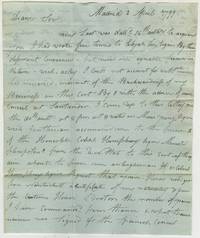
1799réf. BK0181Ribadesella Santander and Madrid Spain 1799. Three autograph letters signed by William Riddell to Elijah Dix of Boston each with integral address leaf and contemporary postal markings. Each 2 pp measuring appx 7 ¼ x 9 inches. Preserved on three later philatelic album leaves with typed transcriptions and detailed annotations concerning postal routes rates and contemporary shipping records. Original folds with some minor toning and handling wear. A group of three letters written from Spain by American sea captain William Riddell concerning the seizure of the brig Minerva by Spanish privateers in 1798 and his subsequent efforts to recover the vessel and its cargo. Writing to Boston merchant Elijah Dix over a period of two months in early 1799 Riddell describes the slow progress of his case through Spanish courts. He describes efforts to secure the assistance of American diplomats and the difficulties of establishing his nationality and the legitimacy of his vessel's papers. The letters follow Riddell from the northern Spanish coast to Madrid where he eventually secured an audience with American minister David Humphreys. In the first letter written February 3 from Ribadesella Riddell expresses frustration with the Spanish authorities and describes the intervention of the American consul in Madrid Moses Young who had been corresponding with Spanish officials concerning the detention of the Minerva. Riddell writes that Young had received assurances that justice would be administered according to the treaty between the United States and Spain but that the Spanish government was proceeding so slowly that he could not predict when the case would be resolved: "Your Brig the Minerva is in as good order as the natier of time & our condition will admit." By March 15 Riddell was in Santander where he continued to seek the release of his vessel. He complains that he has written five letters to Dix without receiving a reply and describes the progress of the case through the American consulate in Madrid. Young had received the vessel's papers and obtained an additional thirty days from the Spanish government for their examination. Riddell had also corresponded with the London firm of H. & G. Johnston & Co. the underwriters of the cargo who proposed that he proceed to Dublin once the vessel was released. He was concerned that the cargo might instead have to be sold in Spain. The March letter also contains an interesting account of two sailors who had apparently given false testimony concerning the seizure: "I am heare to apprehend two my Sailors that came back in the privateer that tooke me for gaving a false oath in a diclaration however thay aire of no use to any perty thay now have told the trewth." The final letter dated April 2 from Madrid describes Riddell's journey to the Spanish capital and his meeting with Colonel David Humphreys the American minister plenipotentiary. Humphreys had advised that the captain secure documentation from Nantucket and Boston establishing his American nationality and record of service apparently because the Spanish authorities had questioned whether he was British. Riddell writes: "It is Colonel Humphreys Esquire request that youre Honer wold get from Nantucket a Certificate of my nativity & from the Custom House Boston the number of years I have Commanded from thance & what thaire names was signed pr the Spanish Consul & dispatch thame to me to the Care of his Honer without los of time. By wich means we Expect to Recover Every dimerrage damaeges & Sura." David Humphreys 1752-1818 a former aide-de-camp to George Washington served as United States minister to Spain from 1797 to 1801. Moses Young the American consul in Madrid was likewise involved in diplomatic disputes over privateering and the capture of American merchant vessels during this period. The correspondence dates from the Quasi-War with France when American merchant vessels faced seizures and interference with their trade by European belligerents. Spain then allied with France and at war with Britain was formally at peace with the United States under the Treaty of San Lorenzo of 1795. That treaty provided protections for neutral shipping and established requirements for maritime passports identifying the ownership and nationality of vessels and their commanders. Riddell's need to establish his birthplace and demonstrate his American maritime service was therefore directly relevant to the legal arguments surrounding the Minerva's detention. The recipient Dr. Elijah Dix 1747-1809 was a prominent Boston physician merchant and importer who had established an extensive commercial business after moving from Worcester to Boston in 1795. He was also the grandfather of the reformer Dorothea Lynde Dix. His involvement in transatlantic commerce is consistent with the ownership interests and shipping arrangements discussed in Riddell's correspondence. The three letters are accompanied by detailed postal documentation. The February letter traveled from Ribadesella by way of Gijón to Marblehead Massachusetts arriving March 30 where it was rated ten cents. The March letter traveled from Santander aboard the schooner Hawke Captain Lovett arriving at Beverly Massachusetts May 16 and bears an eighteen-cent rating. The April letter traveled overland to Bilbao where it was forwarded by Ventura Gomez de la Torre & Grand Sons aboard the brig Hannah Captain Harris arriving at New York July 24. It bears a New York clamshell postmark and a nineteen-cent rate. The accompanying annotations cite contemporary shipping notices from the Salem Gazette and New York Commercial Advertiser documenting the arrivals of the vessels that carried the correspondence. Together the letters preserve a sustained account of an American captain's attempts to obtain restitution for a privateer seizure including the involvement of consular officials cargo insurers and the American minister to Spain. The three different postal routes provide an additional record of the means by which correspondence traveled between Spain and New England in the late eighteenth century. . unknown books
réf. 371476Amsterdam: Joseph Jacob and Abraham the sons of Solomon Proops 5522. Titled printed in red and black. 2 178 2 179-332 10 Introduction etc. 2 160 2 161-350pp. Publisher's introduction and other preliminaries misbound preceding the later Prophets. Folio 15-7/8x10 inches. Nineteenth or early 20th century half morocco and marbled paper boards rear joint splitting worn at joints and head and tail of spine. Foxing principally to the title tear to the final text leaf. Provenance: General Theological Seminary bookplate. Titled printed in red and black. 2 178 2 179-332 10 Introduction etc. 2 160 2 161-350pp. Publisher's introduction and other preliminaries misbound preceding the later Prophets. Folio 15-7/8x10 inches. Besides being the first bi-lingual edition in Hebrew and Spanish this edition is the first Hebrew book whose publication was financed by an American - Abraham Mendes de Castro 1689-1762 of Curaçao - intended for use in the West Indies with the sale proceeds to benefit the Jewish communities of Jerusalem and Hebron. Cowley 102; Darlow & Moule 5156; Zedner 102; not in Steinschneider or Roest Joseph, Jacob and Abraham, the sons of Solomon Proops unknown books
1900réf. 20112Washington: Government Printing Office 1900. Folding maps. 8vo. Half burgundy morocco with original maroon spine laid down. Tightly bound else a very good copy. Folding maps. 8vo. Contains among the various reports "Government reports on the Battles and Capitulation of Santiago de Cuba" "Comments of Rear-Admiral Plüddemann on the Main features of the War with Spain" and "Sketches from the Spanish American War."¶ Senate Document 388 with the yellow slip preceeding title regarding the contents. Government Printing Office unknown books
réf. 57306Se vend à Augsbourg au Negoce comun de l'Academie Imperiale d'Empire des Arts libereaux avec Privilege de Sa Majesté Imperiale et avec Defense ni d'en faire ni de vendre les Copies Second half of the 18th C. 12 x 16 inches. Bordered by green paper. Edges rubbed small area of wrinkling else Fine. 12 x 16 inches. Se vend à Augsbourg au Negoce comun de l'Academie Imperiale d'Empire des Arts libereaux avec Privilege de Sa Majesté Imperiale unknown books
1937réf. 91429Paris: Association Hispanophile de France 1937. First edition. 28 pp. Near fine in illustrated wrappers. First edition in French probably simultaneous with editions from the same publisher in at least two other languages Spanish and Catalan. Paris: Association Hispanophile de France, unknown books
1937réf. 91443Paris: Societe Generale D’imprimerie et E’dition 1937. First edition. 103 pp. “Information Espagnole Bruxelles” stamp on the front panel else near fine in illustrated wrappers with light wear to spine. Paris: Societe Generale D’imprimerie et E’dition, unknown books
1937réf. 91438Buenos Aires: Editorial Difusión 1937. First edition. 59 pp. A few short tears and tiny chips to edges else very good plus in illustrated wrappers. Acidic text paper slightly darkened as always though not at all brittle. Buenos Aires: Editorial Difusión, unknown books
1936réf. 91428Brussels: Imprimerie coop Lucifer 1936. First edition. 87 pp. Near fine in printed wrappers with two small corner creases. First edition of this anti-fascist essay published during the first few months of the Spanish Civil War. The book concludes with “Les Esclavagistes” a powerful three-page poem received by González “d'un de nos meilleurs amis belges enthousiaste defenseur de l'Espagne libre et républicaine et des libertés humaines.” Brussels: Imprimerie coop Lucifer, unknown books
1937réf. 91419Mexico City: Editorial Lumen 1937. First edition. 150 pp. Several tears and a center hole to the rear cover else very good in illustrated wrappers with a previous owner’s name inked to the first leaf. Mexico City: Editorial Lumen, unknown books
2012réf. vot844Osprey Florida: Historic Spanish Point 2012. Produced by Gulf Coast Heritage Association Inc. Octavo softbound stiff full-color photo. illustrated stapled slick wrappers 26 pp. Fine. Illustrations throughout. This is a history of the Webb family. Their story is taken from the letters they wrote about their pioneer days on the Florida frontier. Their story is significant in many ways. We study history to discovery the lessons of the past. Historic Spanish Point, (2012). Produced by Gulf Coast Heritage Association, Inc. paperback books
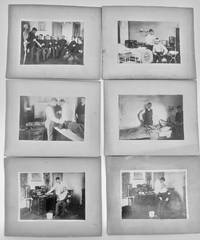
1899réf. 66627Washington D.C. 1899. A collection of photos several showing the medical training or treatment of service men. Ten of the images 5 x 7 in. are mounted on stiff card stock the other five 4 3/4 x 6 1/2 in. are not mounted. All the photos are very good clear. In twelve of the images the same Army medical doctor Frank G. Atwood is shown: using a skeleton to teach anatomy to a group of privates 1; bandaging the head of an injured soldier who sits beside a bed with a blanket belonging to the "U.S.A. Med. Dept. 1887" 1; attending a bed-ridden patient 3 or a patient in his office 1; examining the teeth of other service men 3; listening to the heart of another soldier using his ear 1; preparing medicines 1; and with his horse and medical bag presumably on the grounds of a post hospital 1. The remaining photos show another man bandaging the ankle of an officer 1; an examination table on a swivel base 1; and a troop of soldiers standing at attention with their rifles on a parade ground 1. These photos are likely all from Atwood's time at the U.S. Army medical department in Washington D.C. Dr. Frank G. Atwood was born in Woodbury Connecticut in 1875. He studied veterinary science at the University of Toronto graduating in 1896. He also took post-graduate courses at Yale Medical School and at Johns Hopkins University studying general medicine and surgery. At the outbreak of the Spanish American War he served with the Medical Department of the U.S. Army in Cuba caring for the sick and injured soldiers there. Following the conflict he returned to Washington D.C. "where he was stationed at the General Hospital in the medical department of the United States army caring for the sick and wounded in the capital city for ten months when he returned to New Haven and resumed the practice of the veterinary science." see: "Modern History of New Haven and Eastern New Haven County" by Everett G. Hill NY: 1918 Vol. II pp. 704-5 . Dr. Frank G. Atwood advertised his services as a veterinarian in a W.C.T.U. community cookbook publication "Proved Receipts" from Clinton Madison and Guilford Connecticut 1904 and included his photograph which helped to identify him as the physician in these photos. His obituary published in the New York Times on Sept. 15 1936 states that as a "pioneer research student under Dr. Osler he was active in the Spanish War in the work to stamp out yellow fever." He also operated a large veterinary hospital in New Haven Connecticut for a quarter century. unknown books
1898réf. 238901898. Spanish American War glass lantern slide set circa 1898 to 1905 depicting the conflict through a numbered sequence of military portraits United States warships naval engagements troop movements artillery and fighting on land. Produced during the period when the war became a major subject of projected entertainment and illustrated lectures the set belongs to an early visual culture in which distant warfare was reconstructed for audiences through photographs reproduced illustrations portraits and views of military technology. Contemporary dealers marketed Spanish American War lantern programs almost immediately after the 1898 conflict including sets organized around President William McKinley the destruction of the Maine American and Spanish commanders the campaigns in Cuba and the naval war. Photo archive of 36 black and white photographic and reproduced illustrative images on nine numbered glass lantern sheets each approximately 7 1/8 x 2 1/8 inches United States and Cuba circa 1898 to 1905. Each sheet contains four circular images with the surviving sequence numbered 1 through 36. The naval material is particularly extensive with multiple American warships appearing broadside or at anchor and underway accompanied by portraits of uniformed naval officers and scenes of vessels under fire or in rough water. Other images depict sailors or troops gathered around artillery a landing or embarkation crowded with men field guns and their crews soldiers advancing across open ground men fighting from improvised positions mounted troops and battle scenes reproduced from contemporary illustrations. The later numbers shift between portraits of civilian or military figures and active campaign imagery including armed men in tropical vegetation an artillery crew maneuvering a field piece troops moving across broken terrain and mounted soldiers in the field. The Spanish American War lasted only from April to August 1898 but it's cultural impact allowed for photo studios to market the conflict to the American public. The conflict was the first American war in which motion picture cameras played a substantial role and contemporary exhibitors combined films and lantern slides to construct extended accounts from actualities portraits drawings reenactments and views of military sites. The present sheets show minor scratches rubbing and edge wear; no chips or cracks the images remain substantially legible. Overall in very good condition. A compact numbered visual narrative of the Spanish American War showing how commanders modern naval power battlefield action and American military participation were translated into projected history at the turn of the twentieth century. unknown books
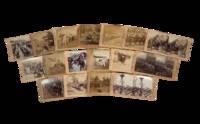
1898réf. 239361898. Spanish American War stereoview archive depicting American mobilization naval power embarkation and combat across the United States and the Philippines 1898 to 1899 documenting a war that carried the United States from intervention in Cuba into sustained overseas military rule. The views move from volunteer camps in Virginia and Florida and troops departing San Francisco to the wreck of the USS Maine American warships and fighting in the Philippines. Several Philippine views extend beyond the Spanish American War itself into the Philippine American War which began in 1899 after the United States took sovereignty over the Philippines under the Treaty of Paris and Filipino forces resisted American rule. Contemporary Underwood & Underwood negatives preserved by the Smithsonian confirm that the firm's Philippine series included combat and occupation subjects from 1899 including American troops at Pasig and battle sites around Manila. Smithsonian Institution Photo archive of 17 stereographic photographs approximately 7 x 3.5 inches each United States and Philippines circa 1898 to 1899. The cards show the Army of Volunteers assembled at Camp Alger Virginia; the Third New York Volunteers standing in formation there; Troop B of the Third U.S. Cavalry at Camp Alger preparing for the Cuban invasion; Troop I of the Sixth U.S. Cavalry mounted at Camp Tampa Florida; U.S. Regulars eating their last meal at Fortress Monroe before leaving for Cuba; and a large formation captioned "Reinforcements for Dewey leaving San Francisco Cal. U.S.A." Naval subjects include the battleship Oregon captioned "Old Glory flies proudly on the noble 'Oregon'"; a "General view of the wrecked battleship Maine"; and sailors beside the aft turret and 12 inch guns of the double turret monitor Puritan. The Philippine material includes Washington Volunteers firing from a defensive position cavalry and field formations and soldiers lying prone along a wooded firing line in a view captioned "On the firing line at dead man's bend Imus road P.I." The latter subjects belong to the transition from war against Spain to armed conflict between the United States and the Philippine Republic. Smithsonian holdings document Underwood & Underwood photographing American troops Filipino prisoners ruined positions military encampments and battle sites in the Philippines during 1899. Smithsonian Institution Printed captions appear on the rectos and substantial descriptive texts on several versos including multilingual explanations of Camp Alger and the departure from Fortress Monroe. A verso devoted to the Maine recounts its destruction in Havana harbor on February 15 1898 and lists the ship's dimensions armament complement and cost while another supplies technical specifications for the Puritan. The Spanish American War began in April 1898 amid the Cuban struggle for independence from Spain and mounting American intervention with the February destruction of the Maine becoming one of the defining public events preceding the declaration of war. The conflict lasted only months but its territorial consequences placed Puerto Rico Guam and the Philippines under American control and established the United States as an overseas imperial power. After Spain ceded the islands to the United States fighting between American and Filipino forces began in February 1899. The surviving 1899 negatives include subjects under the Philippine American War among them trenches captured Filipino soldiers American military positions and the aftermath of fighting around Manila and Malolos. Smithsonian Institution The archive therefore records both the mobilization for the short war with Spain and the longer colonial conflict that followed it while the publishers' captions preserve the language through which American viewers were taught to understand troops battlefields conquered territory and overseas rule. Mounts show moderate toning edge and corner wear scattered staining and rubbing some images faded but sharp and legible. Overall in very good condition. A concentrated visual record of the military mobilization and popular photographic culture that accompanied the United States' emergence as an overseas imperial power in 1898 and its subsequent war in the Philippines. unknown books
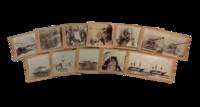
1898réf. 239371898. Spanish American War stereoview archive depicting American commanders naval power coastal defenses combat in Cuba and the extension of U.S. warfare into the Philippines 1898 to 1899. The group includes General Nelson A. Miles imagery of the assault at San Juan American warships and naval personnel heavy coastal artillery and Washington Volunteers firing from stone defenses at Taguig in the Philippines. Miles then commanding general of the U.S. Army directed the American invasion of Puerto Rico in July 1898 while the Taguig photograph belongs to the Philippine American War that followed the United States' acquisition of the Philippines from Spain. The photos extend beyond commemoration of the short war with Spain into the military expansion that followed the Treaty of Paris. Photo archive of 11 stereographic photographs each approximately 7 x 3.5 inches each circa 1898 to 1899. The group includes cards issued as "Spanish American War Stereoscopic Gems" as well as a view of Washington Volunteers firing rifles from a stone wall at Taguig Philippines. The latter is captioned "Fighting from stone wall defenses Washington Volunteers Taguig Philippines" and carries the same caption on the verso in six languages; artillery and troops advancing in a view captioned "Storming of the Hill at San Juan"; a large "12 inch coast defense gun"; the U.S. cruiser Baltimore at sea; the old ship of the line New Hampshire; sailors assembled on the deck of a naval vessel; a torpedo boat or destroyer underway; and additional shipboard and military subjects. The concentration on ships guns commanders and battle imagery corresponds to the broader contemporary stereographic treatment of the conflict. The war with Spain lasted from April to August 1898 but these cards document the larger military transformation surrounding it. Battles around Santiago including the fighting at San Juan Heights became central episodes in the American visual narrative of the Cuban campaign while Miles's subsequent expedition to Puerto Rico opened another theater of U.S. occupation. The Philippine subject records the consequences that continued after Spain's defeat. Some toning and scattered surface wear; photos and captions remain legible. Overall in very good condition. A compact visual record of the military imagery through which American audiences encountered the war with Spain and the country's almost immediate transition into colonial warfare in the Philippines. unknown books
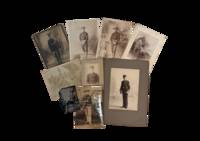
1898réf. 239381898. Spanish American War soldier photo archive depicting American servicemen in uniform campaign clothing armed field equipment and camp settings circa 1898 to 1900 recording the appearance and conditions of service during the rapid wartime expansion of the United States Army. The men appear at different points between enlistment and active service: formally uniformed for studio portraits dressed in campaign hats and leggings armed with a rifle and cartridge belt and seated amid the temporary furnishings of military encampment. In 1898 the United States mobilized a large volunteer force alongside its Regular Army funneling state volunteer regiments through camps before deployment to Cuba Puerto Rico and the Philippines; the Army's Cuba expedition alone embarked approximately 17000 men from the congested staging area around Tampa. Army Historical Program These photographs preserve the individual scale of that mobilization showing soldiers not as distant formations or published battle scenes but as men equipped clothed and housed for wartime service. Photo archive of 9 silver gelatin photographs including one tintype Various sizes ranging from approximately 3.25 x 2.5 to 6.25 x 9 inches circa 1898 to 1900. Several are full length portraits of soldiers wearing the broad brimmed campaign hat dark pullover shirt trousers tucked or fastened into leggings and waist belts associated with field service. One soldier stands before a thatched structure holding a long rifle across his body with a loaded cartridge belt around his waist; another sits outside a tent in campaign clothing his boots and leggings visible. A camp photograph shows a uniformed soldier seated among folding chairs with other servicemen behind him recording the improvised domestic environment in which mobilized troops spent much of their service. The tintype portrays a seated soldier in campaign clothing and hat. Other photographs show men in more formal military dress including a large Brenner Studios Chicago portrait of a soldier standing in a dark buttoned uniform with chevrons visible on his sleeve and another full length portrait of a serviceman in a dark dress coat with contrasting piping and cords. Handwritten versos preserve partial evidence of identity and unit affiliation. One appears to identify a soldier with "Co. K 2nd . Vol. Reg."; another is inscribed to "Mrs. Alice . at Bat Cave N.C."; and another carries a presentation inscription from "Ed. A. Schlesinger." The photographs belong to a military mobilization whose daily realities were often defined less by battlefield action than by mustering training waiting for transportation camp routine illness and preparation for service overseas. Volunteer regiments arrived at large temporary encampments in 1898 with uneven levels of training and equipment while the Army struggled to absorb and transport the sudden influx of personnel. At the Presidio of San Francisco for example volunteers from across the country trained before embarkation for the Philippines and approximately 80000 men passed through the post between the beginning of the Spanish American War and 1900; temporary camps became crowded and sickness repeatedly spread among the troops. The conflict with Spain ended in 1898 but American soldiers remained abroad as occupation duties in former Spanish possessions developed into a prolonged war against the Philippine Republic extending the experience of mobilization and overseas service well beyond the original campaign. The shifts visible here between dress uniforms field clothing weapons tents and camp surroundings record the practical transition from civilian volunteer to wartime soldier at the level of individual servicemen. Some toning fading staining surface wear and edge and corner wear to mounts; several mounts with creasing or small losses with handwritten inscriptions remaining partially legible. Overall in very good condition. A personal photographic record of the uniforms equipment encampment and individual experience of American military service during the mobilization of 1898 and its overseas aftermath. unknown books
1898réf. 239391898. Spanish American War soldier photo archive depicting the 18th U.S. Infantry Regiment and the camp environment of American military service circa 1898 to 1899 during the transformation of the Regular Army from scattered peacetime garrisons into an expeditionary force operating overseas. The largest photograph shows two long ranks identified as soldiers of the 18th U.S. Infantry a Regular Army regiment serving within an institution that entered 1898 with only twenty five infantry regiments generally dispersed in small detachments across western posts. Army Historical Program The photographs record the practical world surrounding that transition: formations and small groups of enlisted men officers tents and makeshift quarters mounted personnel horses and wagons flags and the dirt streets of a military encampment. The 1898 war carried the Army across both the Caribbean and Pacific culminating in the occupation of Manila on August 13 and the subsequent conflict between American forces and the Philippine Republic beginning in February 1899. Photo archive of 14 photographs including a large albumen print and smaller silver gelatin photographs Various sizes ranging from approximately 3.5 x 3.5 to large 8 x 10 inches circa 1898 to 1899. The largest albumen photograph depicts two extended lines identified as the 18th U.S. Infantry Regiment standing in uniform along a broad camp street with officers at the head of the formation and rows of tents extending behind them. Other photographs show soldiers in mixed campaign and dark uniform coats before tents; another group stands before an open military tent; mounted soldiers gather in the field; a horse drawn wagon and driver appear along a rough road; soldiers stand beside camp buildings; and an individual serviceman poses in uniform. One photograph records an American flag displayed beside an organizational flag while another shows soldiers and horses near wagons and camp equipment. A photograph of temporary quarters carries the archive's only substantial manuscript caption on the verso provisionally reading: "This is a picture of our shack. Ben Robinson is standing in the doorway and the fellow walking down the street is Mc. Monahan. You can get an idea how we live. There is twelve of us . in it." The final words are difficult to resolve but the writer's phrase "how we live" identifies the structure as soldiers' quarters and turns an otherwise uncaptioned camp photograph into direct evidence of the housing conditions experienced by its occupants. The photographs belong to a period when overseas war forced a Regular Army organized around small frontier posts to adapt rapidly to expeditionary operations. In the Philippines approximately 11300 American troops had reached Manila under Maj. Gen. Wesley Merritt by July 25 1898 and American forces occupied the city after the August campaign against Spain. The Treaty of Paris transferred the Philippines from Spain to the United States in December; armed conflict with the Philippine Republic began on February 4 1899 and the Army subsequently organized forces across Luzon and the Visayas. Official Army correspondence places the 18th U.S. Infantry in the Visayan Military District by November 1899 alongside the 6th 19th and elements of the 23rd Infantry. The camp scenes document the infrastructure behind service with canvas tents and improvised quarters horses and wagons for movement and supply and small temporary military settlements. Some fading and toning with scattered surface stains creases edge wear and some loss to several mounts; the large albumen print shows substantial fading and surface abrasion but retains the photo clearly. Overall in very good condition. A field level photographic record of the 18th U.S. Infantry and the camps transportation quarters uniforms and formations that defined Regular Army service during the United States' transition from war with Spain to sustained military operations in the Philippines. unknown books