9 532 résultats
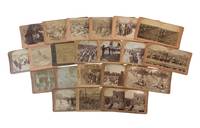
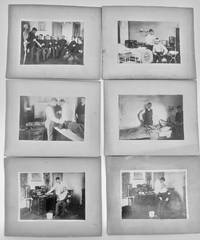
1899réf. 66627Washington D.C. 1899. A collection of photos several showing the medical training or treatment of service men. Ten of the images 5 x 7 in. are mounted on stiff card stock the other five 4 3/4 x 6 1/2 in. are not mounted. All the photos are very good clear. In twelve of the images the same Army medical doctor Frank G. Atwood is shown: using a skeleton to teach anatomy to a group of privates 1; bandaging the head of an injured soldier who sits beside a bed with a blanket belonging to the "U.S.A. Med. Dept. 1887" 1; attending a bed-ridden patient 3 or a patient in his office 1; examining the teeth of other service men 3; listening to the heart of another soldier using his ear 1; preparing medicines 1; and with his horse and medical bag presumably on the grounds of a post hospital 1. The remaining photos show another man bandaging the ankle of an officer 1; an examination table on a swivel base 1; and a troop of soldiers standing at attention with their rifles on a parade ground 1. These photos are likely all from Atwood's time at the U.S. Army medical department in Washington D.C. Dr. Frank G. Atwood was born in Woodbury Connecticut in 1875. He studied veterinary science at the University of Toronto graduating in 1896. He also took post-graduate courses at Yale Medical School and at Johns Hopkins University studying general medicine and surgery. At the outbreak of the Spanish American War he served with the Medical Department of the U.S. Army in Cuba caring for the sick and injured soldiers there. Following the conflict he returned to Washington D.C. "where he was stationed at the General Hospital in the medical department of the United States army caring for the sick and wounded in the capital city for ten months when he returned to New Haven and resumed the practice of the veterinary science." see: "Modern History of New Haven and Eastern New Haven County" by Everett G. Hill NY: 1918 Vol. II pp. 704-5 . Dr. Frank G. Atwood advertised his services as a veterinarian in a W.C.T.U. community cookbook publication "Proved Receipts" from Clinton Madison and Guilford Connecticut 1904 and included his photograph which helped to identify him as the physician in these photos. His obituary published in the New York Times on Sept. 15 1936 states that as a "pioneer research student under Dr. Osler he was active in the Spanish War in the work to stamp out yellow fever." He also operated a large veterinary hospital in New Haven Connecticut for a quarter century. unknown books
1898réf. 231301898. Spanish-American War stereoview archive circa 1898-1899 documenting how the war was pictured through mass-produced photographic views that followed U.S. mobilization battlefield action occupation and military life across both Cuba and the Philippines. These stereoviews preserves the visual system by which the war was circulated to American audiences showcasing camp organization troop movement burial hospital care naval power and overseas deployment. Particularly notable is the archive's coverage of the Rough Riders the Santiago campaign in Cuba and U.S. presence in Manila and Malate showing how stereoview photography helped normalize the war's expansion from anti-Spanish conflict into a broader American imperial presence. Archive of 21 stereoviews Various publishers. Spanish-American War stereoview archive. Cuba the Philippines and the United States circa 1898-1899. each measuring 3" x 7". The views are drawn from multiple phases and theaters of the war including camp and drill scenes in the United States embarkation and troop arrivals at Tampa battlefield and occupation imagery from Cuba and extensive and some grisly scenes from Manila and surrounding areas in the Philippines. Captions and images show soldiers in formation cavalry drill military reviews naval artillery hospital interiors encampments burial grounds and troops in active position. Cuban views include Morro Castle after bombardment dead and wounded on the battlefield of Santiago U.S. soldiers preparing to invade Cuba and troops dining near Cabañas Fortress. Philippine views include a departure for Manila American pickets routing a Filipino reconnoitering party the 18th Infantry engaged by Filipino outposts volunteers awaiting orders under the tropical sun Army Hospital Manila and "Our Boys in Camp at Malate P.I." One stereoview identifies Roosevelt's Rough Riders in the mobilization phase linking the archive to one of the war's most publicly mythologized units. As a group the stereoviews demonstrate the process by which the Spanish-American War was framed not simply as a short military victory over Spain but as a sustained structure of U.S. troop deployment and occupation extending from Cuba into the Philippines. The Manila and Malate scenes are especially important in this regard since they place American soldiers within the opening phase of the Philippine conflict where U.S. military presence quickly moved beyond liberation rhetoric into imperial control. The archive's mixture of battlefield casualties camp routine naval spectacle and celebratory review scenes shows how stereoscopic publishing converted war into a domestic viewing experience while reinforcing the legitimacy of American expansion abroad. Wear to mounts some toning; overall very good condition. A strong cross-theater visual archive of the Spanish-American War and the emergence of U.S. imperial power in Cuba and the Philippines. unknown books
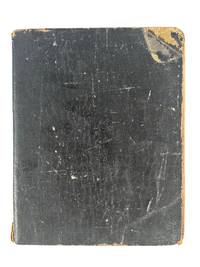
1906réf. 218101906. Manuscript medical remedy book from Devonport England compiled between 1903 and 1915 and preserving a striking record of everyday therapeutic practice in the years immediately preceding the global influenza pandemic that would soon devastate Europe. Written in ink in a clear and highly legible hand across 36 pages of a ruled notebook measuring 7.75" x 6.5" the volume gathers dozens of medicinal formulas for ailments ranging from bronchitis neuralgia rheumatism and digestive complaints to deep ulcers eye conditions sore throats winter coughs and childhood illnesses. Particularly notable are repeated entries for "influenza" appearing years before the outbreak retrospectively termed the Spanish Flu revealing how influenza already existed as a familiar and recurring medical threat within Edwardian Britain long before the catastrophic pandemic wave of 1918-1920 transformed it into one of the deadliest public health disasters of the modern era. The notebook therefore captures an important transitional moment in the history of epidemic disease: a period when influenza was treated as a common but serious seasonal illness through localized mixtures tonics expectorants and domestic pharmaceutical preparations rather than through coordinated state medicine or modern antiviral therapies. These entries provide unusually direct evidence of how ordinary practitioners dispensers or caretakers approached influenza treatment in the years immediately before the Spanish Flu pandemic altered both public consciousness and medical infrastructure surrounding contagious respiratory disease. The remedies themselves demonstrate the hybrid world of early twentieth-century medicine where domestic caregiving folk therapeutics and increasingly professionalized pharmacy overlapped. Familiar household substances such as witch hazel and paregoric appear beside pharmaceutical compounds later restricted or abandoned by mid-century medicine. Several preparations include age-specific dosages for children while others focus on strengthening mixtures cough remedies liniments lotions and wound treatments. A handful of entries are dated including one reading "June 29 1903" and another attributed to an individual identified as "A. Wilson." Accompanied by three inserted paper ephemera pieces including an index of herbs and chemicals and two additional recipe slips one bearing a postage stamp from the "Plymouth . Society Dispensing Dept. Fore St. Devonport." The overall character strongly suggests compilation by someone with regular access to a dispensary or chemist environment though not necessarily a formally licensed pharmacist operating instead within the fluid boundary between domestic medical care and industrialized pharmaceutical practice in prewar England. Well rubbed with losses to spine and extremities; interior remains clear and legible with minor foxing. Good overall condition. unknown books
1967réf. 219201967. The aftermath of the Puerto Rican civil unrest in East Harlem New York City during the summer of 1967. Two silver gelatin press release photographs dated July 25 and August 1 1967. Verso captions from the Associated Press AP identify the location as Spanish Harlem and note the events as part of the broader wave of urban uprisings that swept the U.S. in the mid-1960s. Each measure 7" x 11" and 8" x 8.5". One image shows a Puerto Rican man hauling a charred bed frame through the courtyard of a burned-out tenement building remnants of the arson and destruction that spread during the riot. In the background another figure walks past scorched debris and cracked brick walls. The second photo shows a family-including a young girl clutching a doll in a box-standing amidst broken storefronts and twisted metal grates a poignant contrast of innocence amid devastation. Both images underscore the human cost of systemic neglect and urban disinvestment in New York's working-class Puerto Rican neighborhoods. The 1967 East Harlem riot broke out on July 23 sparked by deep frustrations over racism poverty inadequate housing and police brutality-conditions that mirrored unrest in other urban centers like Newark and Detroit the same summer. In Spanish Harlem tensions boiled over after a series of confrontations between Puerto Rican youth and police igniting days of violence looting and arson. Though the mainstream press often depicted these events as senseless riots Puerto Rican activists and scholars later framed them as acts of resistance against colonial-style governance and systemic disenfranchisement. As historian Johanna Fernández notes the period was marked by the emergence of a radical Puerto Rican consciousness which would soon fuel movements like the Young Lords Party founded in 1969 that demanded community control police accountability and dignity for working-class Boricuas. Both photos are in very good condition with minor edge wear and light editorial markings and stamps on verso. Typewritten AP captions and editorial hand-annotations remain intact and legible. A rare and powerful visual document of Puerto Rican resistance during one of the most turbulent periods of 20th-century American urban history these images offer primary evidence of the socioeconomic injustices that fueled revolt and the resilience of New York's Puerto Rican community in the face of abandonment and repression. unknown books
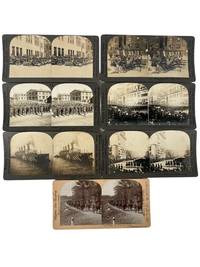
1918réf. 205021918. Buffalo Soldier regiments depicted in stereoview photographs from the World War I era document African American cavalrymen and infantry units serving in segregated formations of the United States Army during the early twentieth century. These images record soldiers from several historically significant Black military units including the 9th U.S. Cavalry the 10th Cavalry and the 369th Infantry Regiment. African American soldiers served in large numbers during World War I despite segregation in the armed forces and the war marked a turning point in public recognition of Black military service. The photographs capture cavalry movement machine gun training and celebratory returns from the European front preserving visual evidence of the military presence and public visibility of Buffalo Soldiers during the conflict. Archive consists of seven stereoview photographs published by the Keystone View Company during the World War I period. The views depict soldiers from the 9th U.S. Cavalry the 8th Regiment of Colored Troops the 10th Cavalry the Chicago Regiment of Colored Troops and the 15th Regiment of the 369th Infantry. Two stereoviews show Black machine gun companies operating Lewis guns one of the principal light machine guns used on the Western Front during the war. Another view shows Troop K of the 10th Cavalry moving on horseback at Camp Chickamauga in Georgia. Additional stereoviews depict African American soldiers returning from European service and marching in public celebrations including scenes of troops parading along major boulevards such as Fifth Avenue in New York. The Buffalo Soldier regiments had already established a long military record before the First World War. Units such as the 10th Cavalry formed part of the segregated Regular Army created after the Civil War and served in campaigns across the western United States during the Indian Wars later participating in the Spanish American War the Philippine American War and operations during the Mexican Revolution. World War I marked one of the final periods in which cavalry units remained visible in American military organization as mechanized armor and motorized vehicles soon replaced mounted troops. At the same time Black soldiers who returned from service were celebrated in wartime parades yet continued to face segregation and racial discrimination within American society. Stereoview cards remain well preserved with light age wear typical of early twentieth century photographic prints. Very good condition overall and a visually compelling record of Buffalo Soldiers during the World War I era. unknown books
1936réf. 190131936. Lot of 2 Large vintage Photographs: One Large photo shows graves outside a mausoleum that had been disinterred by the communists in the Spanish Civil War. Captioned in French. Several caskets are opened on its steps and even stood up some of the skeletons against the columns at its entrance. This grisly shot shows the vicious nature of the Spanish Civil War which saw both the Nationalists led by Franco and the communist and anarchist militants commit extreme acts to instill terror in the opposition. The communists charged with this violation had an enemy not only in Franco but in the Church which they considered a powerful reactionary and oppressive force within Spain. This kind of sacrilegious deed likely took place during the Red Terror which was a bloody period after Franco's 1936 coup when the leftist factions exacted ruthless anticlerical and class-based violence within their domain. Comes with another photo of a Russian Orthodox church that has been requisitioned by the Soviets and turned into a store for among other things a large plaque of Lenin and shelves full of supplies. Captioned in French. Several of the paintings and altarpieces have been taken down and placed alongside a large metal plaque of Bolshevik leader Lenin. In this photo we see the largely atheist Bolsheviks make a statement by turning a grand Orthodox into a repository for some supplies and also the arrival of a new guiding ideology as represented by the plaque of Bolshevik leader Lenin and the communist ideal he embodied. Both images are rolled with some imperfections on edges but in very good condition overall. unknown books
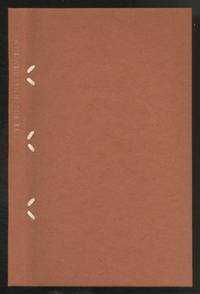
1992réf. 544178Austin: W. Thomas Taylor 1992. Softcover. Fine. First edition. Tied flexible pale red paper over flexible boards. One of 100 copies. Fine. Translated from Spanish versions of the original Arabic. An attractive volume. W. Thomas Taylor unknown books
1956réf. 28090New York: Alfred A. Knopf. Very Good in Very Good dj. 1956. One Volume Edition Second Printing. Hardcover. price-clipped bumped at top rear corner otherwise a nice clean copy with just light shelfwear; the jacket is a bit age-toned along the edges with a few tiny nicks along the top and bottom edges one addtional nick at the right edge of the front panel and a 2.5-inch split at the bottom rear foldover. Epic novel set in the Catalonian city of Gerona during the period immediately preceding the Spanish Civil War. "This is the story of a Spanish family and of the people of Gerona caught up in an onrushing historical crisis. Representing in themselves the splitting forces that brought on the Civil War the family is torn and puzzled and even destroyed. But they never cease to assert heart-warmingly the human estate." Originally published in Spain as "Los cipreses creen en Dios" in 1953 and in the U.S. in a 2-volume edition in 1955 it was the first book in a tetralogy about the Spanish conflict. This is the second printing of the subsequent one-volume American edition. Per Wikipedia it was "written from a Roman Catholic viewpoint by its Catholic author who had been educated in a seminary -- but who attempted to approach the many nuances and subtleties among all the factions on the eve of war in a fair even-handed manner." NOTE that additional postage charges will be assessed for international shipping of this moderately heavy book; if this concerns you please contact us for a shipping quote before placing your order. . Alfred A. Knopf hardcover books
1945réf. 549598New York: Alfred A. Knopf 1945. Hardcover. Very Good/Very Good. First American edition. Octavo. xvi 246pp. Light offsetting on endpapers from jacket flaps small bump in center on rear board spine lightly cocked very good in a very good dust jacket with short tears on edges. Alfred A. Knopf hardcover books
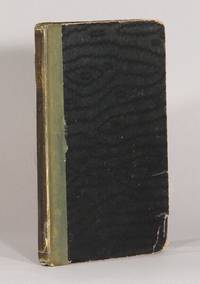
1928réf. 73064Hongkong: printed at the Millan Printing Co. 25 Lee Tung Street Wanchi 1928. Sixth edition title page verso 8vo pp. viii 263 1; text in Chinese Spanish and English; frontispiece portrait not present in the edition of 1916; a second portrait pasted in on the verso of the first leaf which is loose but present and obscuring what appears to be an index; title page with pressure stamp of the 'Hong Kong General Agency' 'Alfabeto mayusculo de imprenta' pasted to front pastedown 'Cilabas de dos letras' pasted to rear pastedown; contemporary black moiré cloth backed in green cloth gilt-stamped spine; spine faded and darkened edges rubbed and worn and the text toned but still a good sound copy. A tri-lingual dictionary and phrase book and a section on letter-writing at the back with two sample letters in all three languages dated Panama 1922 and Mexico City 1916 evidence for this edition being after one likely unrecorded in 1922 or 1923. Apparently rare. The only other edition listed in OCLC is that of 1916 - of this earlier edition I find 2 in OCLC: Hong Kong and Georgetown; of the 1928 only 2 in OCLC at the BL and one in Sweden. printed at the Millan Printing Co. 25 Lee Tung Street, Wanchi unknown books
1916réf. 73065Hongkong: printed by the Chinese Printing and Publishing Co. . No. 51 Gough Street 1916. First edition 8vo pp. viii 264; text in Chinese Spanish and English; mid-20th century black cloth gilt lettering on spine; light toning else a very good sound copy. "Relations between the then Empire of China and the Republic of Costa Rica began in 1911 with the arrival of the Chinese diplomat Tam Pui-Shum on Costa Rican coasts where he was received by the president of the country government authorities and representatives of the Chinese colony. Tam was the author of a Chinese-Spanish dictionary and a translation of Don Quixote into Chinese . introducing Spanish literature to the Chinese-speaking world . He had been China's representative to Spain and Mexico and was introduced as Special Commissioner of the Chinese Empire for Central America" es.Wikipedia. A tri-lingual dictionary and phrase book and a section on letter-writing at the back with two sample letters in all three languages dated Panama and Mexico City 1916 evidence for this edition being first. Apparently rare. The only other edition listed in OCLC is that of 1928 - of which only the BL and one in Sweden is noted. Of this earlier edition the earliest noted HongKong and Georgetown only in OCLC. printed by the Chinese Printing and Publishing Co. ... No. 51, Gough Street unknown books
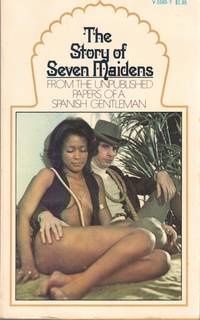
1972réf. 73154np: Venus Library 1972. Mass market paperback. Very good. Mass market paperback. First Printing. Wraps just slightly darkened else very good with a flat uncreased spine. Venus Library unknown books
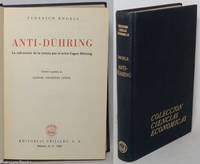
1968réf. 350753Mexico City: Editorial Grijalbo 1968. Hardcover. xxxix 347p. blue cloth boards with gilt titling no dustjacket 8.5x6 inches appendices and index; two tiny stains on front pastedown and free endpaper paper lightly toned otherwise in very good condition. Second Spanish language edition stated. Colección Ciencias Económicas. Editorial Grijalbo hardcover books
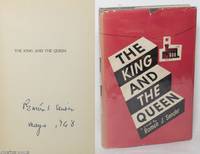
1948réf. 41362New York: The Vanguard Press 1948. Hardcover. 231p. first US edition previous owner's name penned on free front endpaper ex-library with ownership stamp and large sticker scar on free rear endpaper and "withdrawn" label on rear pastedown endpaper else good condition in a price-clipped and chipped dj with a sunned spine panel; signed by Sender on the half-title. Novel set against the background of the civil war. The Vanguard Press hardcover books
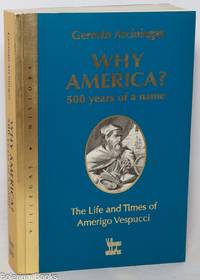
2002réf. 350758Bogata: Veillegas Editores 2002. 509p. text in English illustrations footnotes second English language edition trade paperback in Frenchfold wraps. Very good condition. Veillegas Editores unknown books
1715réf. 21226London 1715. Broadsheet. 1p. plus printed docket title on verso. Ornamental initial. Disbound. Small folio. Early folds and early stab holes in left margin. Some foxing. A rare political leaflet petitioning Parliament for relief of warrant officers who had fought in the recent War of the Spanish Succession. In March 1715 the House of Commons ordered that a list of all the regimental and warrant officers be drawn up but by the time of this document's printing numerous warrant officers had not been entered into the list and rumors had begun to circulate that they would therefore not be receiving expected compensation for their service. "Besides the Nature of several of the Warrant Officers Posts was such as they could not be put on a Regimental List viz. Directors of Hospitals Commissaries Officers who have lost their Limbs and many other Officers whose particular Hardships Pretensions and Disappointments are more at large set forth and specify'd in their several Warrants. So that their Condition is very deplorable." This is among the earliest examples of lobbying literature which first began proliferating in the lobby of the House of Commons at the time of the accession of King George I and the British general election of 1715. ESTC lists only two copies at Oxford and the University of Missouri. Hanson 2212. unknown books
1715réf. 21225London 1715. A petition to Parliament by the officers of Lieutenant General George Hamilton's Regiment of Foot seeking pay due for services abroad in the War of the Spanish Succession. Lord George Douglas-Hamilton 1666-1737 was a Scottish Williamite officer during the Glorious Revolution who later married William III's mistress Elizabeth Villiers became a confidant of William was created Earl of Orkney in 1696 was appointed Governor of Virginia in 1714 and in 1736 was the first British general promoted to the rank of Field Marshal. In 1701 at the beginning of the War of the Spanish Succession Hamilton led the First Regiment of Foot the Royal Scots to the Netherlands where the regiment fought for the remainder of the war. Despite their long service and the high position of Hamilton the officers suggest in the present petition that having been so long overseas they had been forgotten by the British government and charge that they had not received their pay even after frequent petitions. The document is an early example of lobbying literature which first began proliferating in the lobby of the House of Commons at the time of the accession of King George I and the British general election of 1715. ESTC records four copies two at the British Library one at Oxford and one at the National Library of Scotland. unknown books
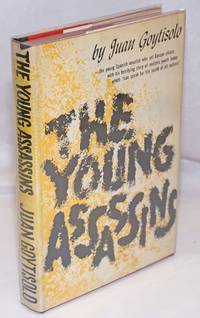
1959réf. 247946New York: Knopf 1959. Hardcover. viii 273p/. note on the characters lightly-worn first US edition stated in red boards with black cloth spine decorated in gilt topstain purple unclipped lightly-edgeworn but bright dj. The author's first novel and his first appearance in the US. A story of bored bourgie kids in postwar Madrid who decide to assassinate a Fascist politician. Goytisolo was bisexual. Knopf hardcover books
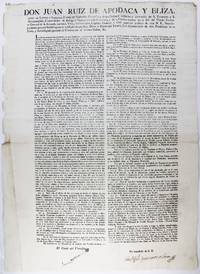
1820réf. 3330Mexico City: July 11 1820. About very good. Large double-sheet broadside approximately 23.5 x 17 inches. Two sheets joined at central horizontal fold. Five chips at left edge not affecting text and some additional minor edge wear; otherwise light toning and dust soiling. Two contemporary manuscript signatures at foot; contemporary duty stamps on blank verso. Fascinating and otherwise unrecorded broadside that dictates the organization and process for the 1820 election of Mexican deputies to the Spanish Cortes during the second and last period of constitutional monarchy in Mexico. Colonial Mexico first achieved some representation in the Spanish government under the liberal Constitution of 1812 which lasted for two years before being revoked by Ferdinand VII upon his return to power in 1814. The reinstatement of the liberal constitution and the Cortes of Cadiz in 1820 however was not enough to prevent Mexico from obtaining full independence one year later. This broadside promulgated in Mexico on July 11 1820 by the colonial Viceroy Juan Ruiz de Apodaca y Eliza announces the renewed representation via regional elections to select Provincial Deputies for the Cortes and contains eight articles delineating the process by which these elections are to be held. In brief these articles order representation be apportioned according to the population as approximated from the 1792 census; divides Mexico into provinces for the purposes of the election; and places parameters on representation for each province. In all a very interesting window onto the formation of the brief final period of Spanish colonial rule in Mexico. July 11 unknown books
1940réf. 5984New York: Alfred A. Knopf 1940. Hardcover. xix 381p. viii foldout map first American edition very good condition in an unclipped and lightly edgeworn dj. Alfred A. Knopf hardcover books
1821réf. 21164Berlin: Ferdinand Dummler 1821. First Edition. Century old linen library cloth dating to 1921; some pencil marking; barely perceptible miniature perforation stamp to blank area of the title page; small faint transfer stamp to the verso of the title page; gum label to the edge of the front cover. Very good. 4to viii 1 - 192 pp. The first important book written by the noted philologist. The book traces the origin of the Basque language through Spain France and into northern Africa. This was his first attempt to " . trace a connexion between the character and evolution of the Basque peoples and the style and content of their language PMM #301." It was the first effort to plot the development of individual languages to the broad history of a people. A rare and important treatise. See Printing and the Mind of Man #301; Sebeok Portraits of Linguists I 71-120. Ferdinand Dummler hardcover books
1938réf. 34569Boston: Houghton Mifflin Company 1938. Hardcover. 367p. British plates first US edition cloth boards in overlapped brick-red and grey small stain on front board else very good condition. No dj. Houghton Mifflin Company hardcover books
1947réf. 26792New York: The Dial Press. Very Good in Very Good dj. 1947. First American Edition. Hardcover. modest shelfwear age-toning to edges of text block cheap pulpy paper; the jacket shows wear at edges and extremities a bit of soiling and light foxing on the rear panel various tiny nicks and small tears along the top and bottom edges. Originally published in Mexico in 1944 "Yo cómo pobre"; trans. "I Eat Poor" this novel "concerns the lives and loves of a group of outcasts who live in the slums of La Morena where hunger and poverty are always paramount." The author 1913-1989 began her career as a journalist in the 1920s in her home town of Torreón and after establishing herself as a columnist and a correspondent for various newspapers in Mexico and the U.S. including La Opinión de los Angeles she moved to Mexico City in 1935 joining La Prensa first as a police reporter the first woman to occupy such a position. She remained with the publication for thirty years and in 1950 was named editor of La Prensa Grafica not to be confused with the El Salvadoran publication of the same name another first for a woman in Mexico. She wrote a number of other novels and non-fiction works as well as some poetry but this book doesn't seem to have made much of a splash in its American edition and it became the only one of her books to ever be published in this country. . The Dial Press hardcover books
1953réf. M13602Spain: 1953 1953. SIGNED BY Henry M. Turner Lawson Wilkins Ernesto Salgado Octobre 19-24 1953. See: Claude J. Migeon 'Elizabeth Wilkins McMaster Remembering Doctor Lawson Wilkins: A Pioneer of Pediatric Endocrinology North Charleston South Carolina: CreateSpace Independent Publishing Platform 2014. 'In the second part of the book Claude Jean Migeon MD recollects meeting with the Wilkins family in Paris as a pediatric student who had been accepted to work under Dr. Wilkins's tutelage at Johns Hopkins Hospital in Baltimore. ' Wilkins founded the first pediatric endocrine clinic in the world at Johns Hopkins in 1935. 1953 unknown books
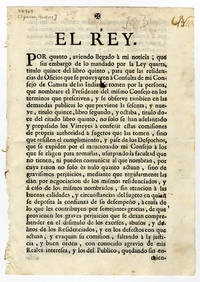
1758réf. 37969Madrid. 1758. A rare proclamation by Ferdinand VI King of Spain demanding that earlier laws regarding the appointment of judges in the Spanish Indies be observed. The decree states that disregard of these laws and guidelines in the past has been a great injustice causing injury to royal interests and to the general population. This proclamation was to be sent to the viceroys and audiencias throughout the Spanish Indies. This copy accomplished in manuscript at Aranjuez Spain on August 20 1758 is signed by Juan Emanuel Crespo with the inscription "Yo El Rey" and the annotation "Por mandado del Reyno exo. señor." A manuscript inscription on the blank verso of the final printed page dated December 4 1759 confirms that the decree had been reviewed by the President the fiscal and other high-ranking officials in Santiago de Chile. Not in OCLC Medina BHA or Palau. Folio. Dbd. Maltese cross at head of title. Contemporary and later manuscript annotations in ink and later pencil annotation on first page. Accomplished in manuscript with additional manuscript annotations. Manuscript inscription on blank verso of final printed page. Extremely light dampstaining in margins occasional minor soiling and ink stains the latter touching a few letters. Very good. unknown books