2999 resultados
1703ref. PHO-1998Ienae : sumptibus Bielckianis, 1703, in-4 (19,5x16cm), 10ff.-96pp., demi toile postérieure, titre au dos, titre renforcé, rousseur, papier uniformément bruni, mouillure. Texte en hébreu et latin en regard, imprimé sur deux colonnes.
1705In -4°, pp. (24), 152, (2); marca editoriale al frontespizio, testo in ebraico e latino; piena pergamena con tasselli e titolo al dorso. Testo a fronte su due colonne, in ebraico e latino. Prima edizione di queste due opere di Maimonide nella traduzione fatta dal vescovo inglese Robert Clavering: le due opere riguardano nello specifico l’educazione dei giovani e la natura e dottrina delle condanne legali. The first edition of these two Maimonides’ works, in the english translation of the Bishop Robert Clavering. M
1621ref. 1162551621 Lutetiae. Ex officina & Typis Gulielmi Lebe - CI . I C. XXI (1621) - In-12, demi-basane brune (reliure postérieure), faux-nerfs, filets et titre en doré au dos - 247 pp. - Ouvrage en latin
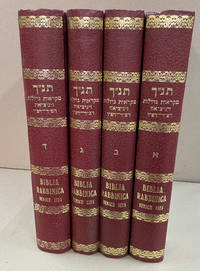
ref. N4183fJerusalem: Makor 1972. Original Half Leather. Near Fine. Folio. 4 volumes 20pp separate Introduction brochure in English by Moshe Goschen-Gottstein." THE FIRST AND THE MOST IMPORTANT EDITION OF THE BIBLE Mikraot Gedolot which includes the Targum the traditional commentaries and the Massora as published by the renowned press of DANIEL BOMBERG. Based on manuscripts partly lost this is the prototype of all later Rabbinic Bibles." - A SUPERB FACSIMILE EDITION. Truly minimal wear on head of spine of vol.1. A FINE AND CLEAN COPY IN THE ORIGINAL HAND BOUND HALF LEATHER. - Due to the heavy weight of these four big volumes additional shipping cost above the indicated fees will apply $ 100 to Europe $ 180 to the USA - shipping with EMS airmail courier Makor hardcover
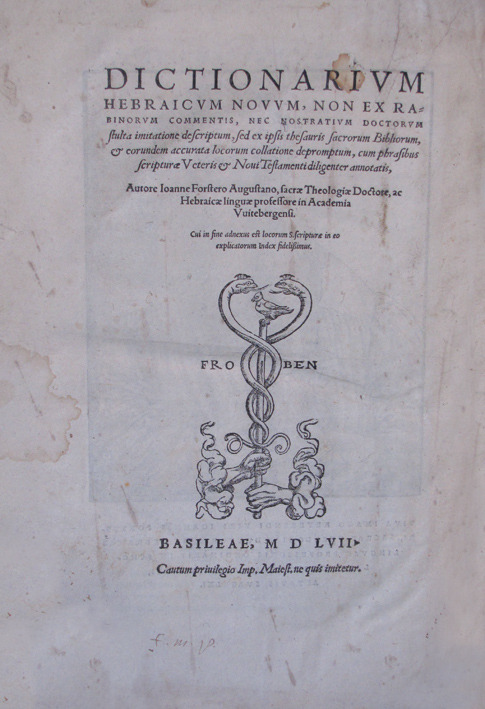
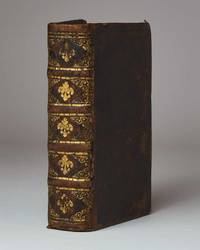
1557ref. 16334Basilae (Bâle, Froben) apud Hieronymus Frobenium et Nicolaus Episcopius, 1557; in-folio ; veau granité foncé, dos à nerfs très décoré et doré, nombreuses fleurs de lys (reliure du XVIIIe siècle); (12) ff., le dernier blanc, 912 pp., (12) ff., marque de Froben à la dernière page ; (alpha-beta ; a-z ; A-Z ; Aa-Zz ; AA-II, 6) ; portrait gravé sur bois de Johannes Forster daté de 1556, dans sa 61e année, signé HBW.
1583ref. 11101Lyon, s.n. (François Conrard), 1583 ; in-8 ; demi-vélin à petits coins, étiquette orange titre manuscrit (reliure probablement de la mi-XIXe) ; (32), 362, (10) pp., *-2*-8 A-Z8 [croix]2 ; marque 2 au titre.
1990ref. 52029New York: Oxford University Press. New. Hardcover. FREE UPGRADE to Courier/Priority Shipping Upon Request – – IN STOCK AND IMMEDIATELY AVAILABLE FOR SHIPMENT - Text pristine clean & unmarked tight to spine - 808 pages. -- with a bonus offer-- . 1990. 019504522X . Oxford University Press hardcover
ref. 2125727Geneva: Kefa Elon i.e. Pierre de la Rouviere. 5377 i.e. 1616 or 1617. with:--. Samuel. SHmvAl.Geneva: Kefa Elon i.e. Pierre de la Rouviere. 5377 i.e. 1616 or 1617. Two parts in one volume 16mo. Eighteenth-century sheep spine richly gilt in compartments board-edges roll-tooled in gilt red gilt brocade endpapers; Joshua and Judges: ff. 3 blank 130 3 blank with part-title to Judges; Samuel: ff. 3 blank 151 6 blank; titles within architectural woodcut borders and start of text within woodcut cartouches; hinges starting boards lightly rubbed with a few minor abrasions worming to upper joint with small loss; internally clean and bright; a very good copy.Two portions comprising Joshua and Judges as well as Samuel of the handsome eighteen-part pocket-sized Hebrew Bible printed in Geneva by Pierre de la Rouviere sold as individual fascicles which could be bound together as here or in sets of four volumes.The Christian printer Pierre de la Rouviere 1574-1622 fl. 159-1622 is here listed on the title-page as 'Kefa Elon' a literal translation of his name 'Rock Oak'; he is elsewhere known as Cephas/Cafa Elon or Petrus Quercetanus and was the printer of the first bilingual Josephus 1611 as well as a Hebrew-Greek Bible 1609. The two discrete parts bound together here form part of what Steinschneider calls the Biblia Eliana - known also as the Petrus Bibles - issued shortly after the 4to Hebrew edition also published in 8vo with interlinear Latin translation. All are based largely on earlier Venetian Hebrew Bibles especially those printed by Giustiniani in the sixteenth century to which they are typographically related. The present work evidently makes use of Picard's square Sephardic Hebrew typeface Lubell's Hb27 first used by Robert Estienne in 1543 and 'most probably the first complete Hebrew type specimen ever recorded' Lubell p. 258. De la Rouviere had used the same type for his 1614 Thesaurus linguae sanctae distinguished by the 'lamed with its distinctive flagged ascender the shin with the squared termination on the middle stroke and the gimmel with the bent middle stroke and calligraphic termination to the baseline . The attributions for this Picard typeface show a very wide distribution: Geneva Giessen Frankfurt and Hanau in Germany' and were likely spread by Andre Wechel who re-established his business in Frankfurt in the aftermath of the St Bartholomew's Day Massacre and likely 'managed to have some of his type brought to Frankfurt by Denis du Val his associate in Paris' or by Robert Estienne who brought much of his type to Geneva after 1549 ibid. pp. 259-60. Geneva gnvvA is often mistaken in the imprint as Genova. The title-page to each fascicle gives the date of 5377 i.e. 1617 but the colophon of the last portion Chronicles gives the date of 13 Av 5318 i.e. 28 July 1618 and the name of 'the German Johann Caspar from Oeder' trans. whose name also appears at the end of the Book of Esther. We have been un-able to identify the handsome gilt brocade endpapers depicting acanthus leaves and flowerpots and signed 'B.L.sC' although the interlacing geometric borders bear a resemblance to motifs employed by Georg Christoph Stoy cf. Kopylov 38.BM STC p. 99; Darlow & Moule 5121 dividing the work into fourteen parts rather than eighteen; Roest I p. 168; Steinschneider 420b. See Heller The Seventeenth Century Hebrew Book I pp. 380-81; cf. Vinograd Geneva 9 calling for 8vo and 4to only ; endpapers not in Kopylov. hardcover
ref. 67122Berlin, Ferdinand Osertag Verlag,, 1923 Original hardcover binding,(1) 50 pages (1), 27x20cm. illustrated with 20 b/w illustrations (woodcuts) *fine condition.
1584ref. 665155Ex officina Christophori Plantini / Christopher Plantin 1584. Leather Binding. Near Fine. A near fine copy austerely but attractively bound in full 19th-century dark aubergine morocco spine with raised bands and gilt titling inner dentelles tooled win gilt with a repeating floral scroll all edges gilt covers bordered in blind minor wear corners show some wear; an old inscription on the New Testament title page has been removed with slight loss and paper restoration; some minor occasional marginal stains. An attractive intact copy of this 16th-century Plantin polyglot Bible. N.T. first in volume. O.T. starts at back of volume Title page of Greek N.T. reads:'Novum Testamentum Græcum cum Vulgata interpretatione Latina Græci contextus lineis inserta: quæ quidem interpretatio cùm à Græcarum dictionum proprietate discedit sensum videlicet magis quàm verba exprimens in margine libri est collocata: atque alia Ben. Ariæ Montani Hispalensis operâ è verbo reddita ac diuerso characterum genere distincta in eius est substituta locum. Accesserunt & huic editioni libri Græcè scripti quos Ecclesia Orthodoxa Hebræorum Canonum secuta inter Apocryphos recenset; cum interlineari interpretatione Latina ex Bibliis Complutensibus deprompta.' The Greek N.T. Novum testamentum graecum cum vulgata interpretatione Latina Graeci contextus lineis inserta is at the beginning of the vol. with the Hebrew O.T. at the end with the Greek Apocrypha 128 p. between. Each Testament has its own title page and the mention of the Apocrypha on both suggests that it was intended to form an appendix to either of the Testaments if they were issued separately Reprinted from the 1569-72 Antwerp Polyglot. PROVENANCE: With the ownership inscription of auhtor Archibald Douglas Fox on verso of front endpaper: 'Archibald Douglas Fox 1901 / belonged to my father and grandfather.'. Ex officina Christophori Plantini / Christopher Plantin unknown
1765ref. N4664Frankfurt & Berlin: J.J. Speier 1765. First Edition . Half Leather. Very Good. 4to. 1. Theil und 2. Theil bound together. 124pp123pp.First part called "'Ir Heshbon" on Arithmetic and Algebra; the second part : "Berure Middot" on Geometry. MODERN HALF LEATHER BINDING WITH MARBLED BOARDS. Title page with stamp some old handwriting and markings. Upper corner of title page some 3 cm missing and replaced with old repair. Pages with some browning and occasional minor soiling. First pages of the second part trimmrd to text. Last page of the second part with repair to edges End papers with some old writing and minor soiling . OTHERWISE VERY GOOD.AN EXTREMELY RARE AND INTERESTING WORK of MATHEMATICS in HEBREW. this work is mentioned in Zeitlkin Bibliotheca Hebraica.- Elijah ben Moses Gershon Zahalon was a Jewish Talmudist mathematician and physician living in Pinczcow Russian Poland. J.J. Speier hardcover
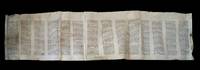
ref. 69604Italy. HEBREW MANUSCRIPT. Italy n.d. ca 18th Century. Sefer Torah parchment manuscript fragments taken from Exodus. With a total of fourteen columns of Hebrew manuscript in 42 lines. Four sections sewn together with thin cords and the whole piece is rolled up as a scroll. The verso is reinforced with tabs along edges and seam. The whole fragments measures approximately 20 x 78 inches; 500 x 1900 mm. Some minor creasing and soiling along edges and margins. A few light stains. Repairs to a few holes most of which are marginal and just a couple that are affecting a few letters. Still overall a very good example. The scroll contain a passages from the Book of Exodus 7:1-12:36 which recounts the "Plagues of Egypt" namely the transformation of the river water into blood; the plague of frogs; the swarm of gnats; the invasion of flies; the lethal pestilence affecting livestock; the boils afflicting both livestock and people; the rain of fire and hail; the plague of locusts; the three consecutive days of darkness over the land of Egypt; and finally the death of the Egyptian firstborns. HBS 69604. $2500. [Italy] unknown
ref. 69604Italy. HEBREW MANUSCRIPT. Italy n.d. ca 18th Century. Sefer Torah parchment manuscript fragments taken from Exodus. With a total of fourteen columns of Hebrew manuscript in 42 lines. Four sections sewn together with thin cords and the whole piece is rolled up as a scroll. The verso is reinforced with tabs along edges and seam. The whole fragments measures approximately 20 x 78 inches; 500 x 1900 mm. Some minor creasing and soiling along edges and margins. A few light stains. Repairs to a few holes most of which are marginal and just a couple that are affecting a few letters. Still overall a very good example. The scroll contain a passages from the Book of Exodus 7:1-12:36 which recounts the "Plagues of Egypt" namely the transformation of the river water into blood; the plague of frogs; the swarm of gnats; the invasion of flies; the lethal pestilence affecting livestock; the boils afflicting both livestock and people; the rain of fire and hail; the plague of locusts; the three consecutive days of darkness over the land of Egypt; and finally the death of the Egyptian firstborns. HBS 69604. $2500. [Italy] unknown books
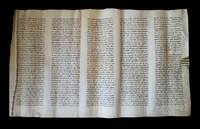
ref. 69603Italy. HEBREW MANUSCRIPT. Italy n.d. ca 18th Century. Two Sefer Torah parchment manuscript fragment scrolls taken from Genesis. Each with five columns of Hebrew manuscript. The columns contain 42 lines. The first fragment measures 23 x 15 3/4 inches; 400 x 560 mm and the second measures 24 1/2 x 14 inches; 360 x 600 mm. Some creasing from being rolled and a bit of minor soiling along edges and margins. A few light stains. Still overall very good examples. Both scrolls contain passages from the Book of Genesis. The first scroll contains verses Gen. 9:11-14:14 which begins by describing the promise God made to mankind through Abraham that there would not be a second Great Flood and concludes with Abraham's tribulations during the wars against neighboring tribes. The second scroll contains verses Gen. 29:15- 32:10 which recounts the events involving Laban Jacob and Esau. HBS 69603. $3000. [Italy] unknown
ref. 69603Italy. HEBREW MANUSCRIPT. Italy n.d. ca 18th Century. Two Sefer Torah parchment manuscript fragment scrolls taken from Genesis. Each with five columns of Hebrew manuscript. The columns contain 42 lines. The first fragment measures 23 x 15 3/4 inches; 400 x 560 mm and the second measures 24 1/2 x 14 inches; 360 x 600 mm. Some creasing from being rolled and a bit of minor soiling along edges and margins. A few light stains. Still overall very good examples. Both scrolls contain passages from the Book of Genesis. The first scroll contains verses Gen. 9:11-14:14 which begins by describing the promise God made to mankind through Abraham that there would not be a second Great Flood and concludes with Abraham's tribulations during the wars against neighboring tribes. The second scroll contains verses Gen. 29:15- 32:10 which recounts the events involving Laban Jacob and Esau. HBS 69603. $3000. [Italy] unknown books
1867ref. N4568Vilna 1867. First Edition . Half Leather. Very Good. 8vo. 1867 for the first volume and 1876 for the other 3 volumes. First volume printed by S.I. Fin & a. Zvi Rosenkrantz. 3 other volumes at the printing house of the Widow and Brothers Rom. Some 1200pp for the 4 volumes. THE VOLUMES ARE: 1-LEHRE DER STATIK DYNAMIK MASCHINENKUNDE UND AKUSTIK. 2- BUCH DER CHEMIE 3-BUCH DER WÄRME UND DAMPFKRAFT. 4- BUCH DES MAGNETISMUS- ALL 4 BOOKS IN HEBREW WITH TITLE PAGES IN HEBREW RUSSIAN AND GERMAN. PROFUSELY ILLUSTRATED WITH MANY HUNDREDS OF ENGRAVINGS. ALL VOLUMES BOUND IN MODERN HALF LEATHER BINDINGS WITH MARBLED BOARDS. AN EXTREMELY RARE COMPLETE SET WITH MARVELOUS ILLUSTRATIONS. A VERY GOOD SET hardcover
ref. 99104Oxford Clarendon Press 1750. . First edition; two volumes in one; 4to 24 x 19.5 cm; text in Hebrew; contemporary calf boards with gilt borders spine with raised bands leather label joints and spine cracked. A non-vocalised edition of the Pentateuch based on E. van der Hooght's text Darlow & Moule 5141. It is the earliest edition of the Hebrew Bible apart from the London Polyglot to be printed in England. The editor Nathaniel Forster D. D. 17181757 was an English cleric and biblical scholar. Son of a minister he was educated at Eton and at the Corpus Christi College in Oxford. In 1750 he became domestic chaplain to Bishop Joseph Butler who died in his arms two years later in Bath Somerset. ESTC T147721; Darlow & Moule 5151. Oxford, Clarendon Press, 1750. hardcover
ref. 1502JC008Contenant les grands & hauts poincts desquels elle traite tant pour les choses Morales & Naturelles que pour les diuines & supernatureles. Traduite dItalien en François par le Seigneur du Parc Champenois. A LYON PAR BENOIST RIGAUD. M. D. XCV. 1595. In 8º. 12x8 cm. 816 47 págs. Encadernação em pergaminho flexível do século XVIII com título 2 vezes manuscrito na lombada uma vez ao alto e desvanecido e outra vez na coifa superior. Ilustrado com uma vinheta tipográfica com o retrato do autor no centro da folha de rosto. Reedição da versão original em francês traduzida por Denis Sauvage Sieur du Parc e impressa inicialmente por Guillaume Rouillé em 1551. Exemplar com leves picos de traça marginais sem afectar a leitura do texto. Principal obra deste autor Diálogos de Amor é um diálogo entre dois amantes: Fílon - o amor - e Sofia - a sabedoria. Aí expõe a sua doutrina segundo a qual o amor é o fundamento ontológico do real concebido não apenas como sentimental mas também como intelectual. Deste modo pretende unificar fé e razão embora deixando clara a prevalência da primeira. Pelo amor Deus criou e pelo amor a criatura regressa a Deus. É então o amor que a tudo anima e a tudo harmoniza. Neste sentido Leão Hebreu defende uma conceção cosmológica que à maneira neoplatónica estabelece uma hierarquia de seres que vai do puro espírito - Deus - à matéria. O mundo é visto como um ser vivo composto de superior e inferior respetivamente alma e corpo. O regresso do homem a Deus realiza-se pelo amor na medida em que este é um amor intelectual. Esta visão idealizada e mística do amor exerceu um impacto profundo na literatura ocidental servindo de base direta para a poesia lírica de Luís de Camões e influenciando profundamente autores como Miguel de Cervantes e Baruch Espinoza. A expressão Leão Hebreu refere-se a Judá Abravanel Lisboa c. 1460 Nápoles c. 1530 um influente filósofo médico e poeta judeu sefardita português. O termo também pode estar relacionado à tradução da palavra leão para o hebraico Aryeh ou ao símbolo bíblico do "Leão da Tribo de Judá. Filho do célebre estadista teólogo e financeiro Isaac Abravanel Judá recebeu uma educação excecional que aliou a tradição talmúdica e a Cabala aos estudos de medicina astrologia e filosofia clássica. A sua vida foi profundamente marcada pela instabilidade geopolítica da época: em 1483 a sua família foi forçada a fugir para o Reino de Castela devido a tensões políticas com o rei D. João II de Portugal. Anos mais tarde em 1492 o Decreto de Alhambra promulgado pelos Reis Católicos obrigou-os a um novo exílio desta vez para a península itálica onde Judá enfrentou a dolorosa perda do seu filho primogénito raptado e batizado à força por ordem real. Estabelecido em Itália Judá Abravanel viveu em cidades como Nápoles Génova e Veneza onde exerceu a medicina com grande prestígio chegando a servir como médico pessoal do capitão espanhol Gonzalo Fernández de Córdoba. Foi neste ambiente vibrante do humanismo italiano que conviveu com importantes intelectuais da época e redigiu por volta de 1502 a sua obra-prima os Diálogos de Amor publicados postumamente em 1535. O filósofo faleceu em Nápoles por volta de 1530 deixando um legado intelectual duradouro que fundiu a mística judaica com o neoplatonismo cristão quebrando barreiras religiosas e moldando o pensamento de grandes vultos da cultura ocidental. EN In octavo. 12 × 8 cm. 816 47 pp. 18th-century flexible parchment binding with the title handwritten twice on the spine once at the top where it has faded and once on the upper cap. Illustrated with a typographic vignette featuring the authors portrait in the centre of the title page. A reprint of the original French version translated by Denis Sauvage Sieur du Parc and first printed by Guillaume Rouillé in 1551. Copy with slight marginal moth work that does not affect the readability of the text. This authors main work Diálogos de Amor Dialogues on Love is a dialogue between two lovers: Philo love and Sophia wisdom. In it he sets out his doctrine according to which love is the ontological foundation of reality conceived not only as emotional but also as intellectual. In this way he seeks to unify faith and reason whilst making clear the primacy of the former. Through love God created and through love the creature returns to God. It is therefore love that animates and harmonises all things. Leo the Hebrew advocates a cosmological conception which in the Neoplatonic manner establishes a hierarchy of beings ranging from pure spirit God to matter. The world is viewed as a living being composed of a higher and a lower part namely the soul and the body. Mans return to God is achieved through love insofar as this is an intellectual love. This idealised and mystical vision of love had a profound impact on Western literature serving as a direct basis for the lyric poetry of Luís de Camões and profoundly influencing authors such as Miguel de Cervantes and Baruch Spinoza. The term Hebrew Lion refers to Judah Abravanel Lisbon c. 1460 Naples c. 1530 an influential Portuguese Sephardic Jewish philosopher physician and poet. The term may also be related to the Hebrew translation of the word lion Aryeh or to the biblical symbol of the Lion of the Tribe of Judah. The son of the celebrated statesman theologian and financier Isaac Abravanel Judah received an exceptional education that combined Talmudic tradition and Kabbalah with studies in medicine astrology and classical philosophy. His life was profoundly shaped by the geopolitical instability of the time: in 1483 his family was forced to flee to the Kingdom of Castile due to political tensions with King John II of Portugal. Years later in 1492 the Decree of the Alhambra issued by the Catholic Monarchs forced them into a new exile this time to the Italian peninsula where Judah faced the painful loss of his eldest son who was abducted and forcibly baptised by royal decree. Having settled in Italy Judah Abravanel lived in cities such as Naples Genoa and Venice where he practised medicine with great distinction even serving as personal physician to the Spanish captain Gonzalo Fernández de Córdoba. It was within this vibrant milieu of Italian humanism that he rubbed shoulders with leading intellectuals of the time and around 1502 penned his masterpiece the Dialogues on Love published posthumously in 1535. The philosopher died in Naples around 1530 leaving behind an enduring intellectual legacy that fused Jewish mysticism with Christian Neoplatonism breaking down religious barriers and shaping the thinking of major figures in Western culture. Ref:. Baudrier Bibliogr. lyon. III p. 441. SACO NMANNO1-01 unknown
1701In-folio, (25cc), 2-1155 col, (80cc); legatura in piena pergamena coeva con nervi e titolo al dorso. Sui piatti anteriore e posteriore sigillo di Minerva Dordracena. Seconda edizione 1. Dedicato a Urbano VIII Barberini, con occhiello, antiporta frontespizio , stampato in rosso e nero. Nel testo numerose incisioni su rame raffiguranti svariate tipologie di lumi e lucerne ad olio di varie epoche, oltre a strumenti tipo piccoli imbuti per il riempimento di questi, a candelabri ebraici e a monete. 2. Dedicato al Cardinale Francesco Barberini, numerose illustrazioni su legno nel testo che rappresentano oggetti cultuali ebraici, cristiani e pagani. 3. Dedicato al Cardinale Antonio Barberini, in cui si tratta diffusamente delle cerimonie pubbliche israelitiche, le adorazioni e le acclamazioni. Fortunato Scacchi, dotto filologo e antiquario, nacque intorno al 1573 a Fano, dove morì nel 1643. La sua opera più importante è proprio la presente, un trattato di profonda erudizione, in cui l’autore raccoglie le notizie e i dati storici sugli aromi impiegati dagli ebrei antichi negli unguenti e nei profumi e sulla loro composizione e utilizzo nelle cerimonie sacre. Il testo è ricco di riferimenti ai libri dell’Antico Testamento e a quelli degli autori del mondo greco e romano antico, ma anche all’Arca Santa e alla ‘menorah’ e alle suppellettili per il culto divino. Scacchi parla di ogni sorta di unzione menzionata nelle Sacre Scritture, dalle lampade degli antichi, all’imbalsamazione, ai bagni. Dal cap. XXX al XXXIV del libro I si tratta diffusamente dei Balnea, delle tipologie degli edifici, distinti tra quelli pubblici e quelli privati, degli effetti benefici sul corpo, dei tipi di acque consigliate per i diversi scopi; il bagno preludeva in particolare, per gli atleti, al rituale dell’unzione del corpo, prima della lotta nella sabbia delle arene, ma in genere era anche praticato dopo ogni tipo di attività fisica, sia il gioco della palla che la corsa, per defatigare il corpo ed eliminare il sudore. Nel libro si trova anche ampio spazio dato ai tipi di essenze e alle fasi della composizione vera e propria di questi olii ed unguenti utilizzati dagli atleti. L’autore riporta a proposito l’abitudine di uomini e giovani di stare nudi nelle palestre e nei ginnasi, alcuni passi in cui si sosteneva che questo fosse un incitamento all’amore omosessuale e un preludio al lupanare. Brunet 662 In-folio, (25cc), 2-1155 col, (80cc); coeval full vellum binding with bands and title on the spine. On the upper and back covers seal of Minerva Dordracena. Second edition. 1. Dedicated to Urban VIII Barberini, with half-title, title page with elegant allegorical border engraved in copper, printed in red and black. In the text, numerous copper engravings depicting various types of lamps and oil lamps of various eras, as well as instruments such as small funnels for filling these, with Jewish candlesticks and coins. 2. Dedicated to Cardinal Francesco Barberini, numerous illustrations on wood in the text representing Jewish, Christian and pagan cult objects. 3. Dedicated to Cardinal Antonio Barberini, in which it deals widely with Jewish public ceremonies, adorations and cheers. Fortunato Scacchi, a expert philologist and antiquarian, was born around 1573 in Fano, where he died in 1643. His most important work is the present one, a treatise of profound erudition, in which the author collects news and historical data on the aromas used by ancient Jews in ointments and perfumes and on their composition and use in sacred ceremonies. The text is full of references to the books of the Old Testament and to those of the authors of the ancient Greek and Roman world, but also to the Holy Ark and the 'menorah' and furnishings for divine worship. Scacchi speaks of all sorts of anointments mentioned in the Holy Scriptures, from the lamps of the ancients, to embalming, to the baths. From chap. XXX to XXXIV of book I, the author deals widely with the Balneas, the types of buildings, distinguished between public and private ones, the beneficial effects on the body, the types of water recommended for the various purposes; the bath preluded in particular, for the athletes, to the body anointing ritual, before the fight in the sand of the arenas, but in general it was also practiced after any type of physical activity, both the game of the ball and the races, to defatigate the body and eliminate the sweat. In the book there is also ample space given to the types of essences and the phases of the actual composition of these oils and ointments used by athletes. By the way, the author reports the habit of men and young people to be naked in gyms and gymnasiums, which was claimed as an incitement to homosexual relations and a prelude to brothels. Brunet 662
1797ref. T22Octavo approx. 7" x 4.5". 5 vols. Eighteenth century Pentateuch vocalized. Text in Hebrew in single column format. Commentary by Rashi. Title pages within borders. Occasional headpieces and ornaments. Collation: Genesis: 1 title 1-194 1-41 13 1-72 1-32; Exodus: lacks title 1-182 1-52 13 1-72 12 24 1-62; Leviticus: 1 title 1-124 1-42 51 13 1-72 1-54 62 72 84 91; Numbers: 1 title1-154 11-3113 1-72 12 24 32; Deuteronomy: 1 title 1-143 1-32 13 1-72 1-31. Exodus lacks title otherwise complete. Binding: Rebound in quarter calf. Spines lettered in gilt. Marbled endpapers. Accompanied by slipcase. Condition: Clean and bright. The second volume chipped at head and with some staining to lower gutter impacting up to five lines of text. Provenance: "Sara van Gelder Loewenstamm" to front endpaper of first volume. Collection of Tim Lutz. Note: The Proops family were a notable dynasty of Hebrew printers publishers and booksellers in Amsterdam. Solomon ben Yosef d. 1734 likely son of a printer began as a bookseller and in 1704 founded a Hebrew press producing liturgical works as well as texts on halakhah Kabbalah ethics and history. From 1715 his books carried advertisements and in 1730 he issued the first Hebrew sales catalogue. After his death guardians and later his sons continued the press using his name until 1751. In 1785 Joseph Proops sold most stock to Kurzbeck of Vienna; his widow and sons printed on a smaller scale until 1812. Solomon ben Abraham Proops his grandson split in 1797 and worked independently until 1827. Proops family of printers hardcover
1797ref. T22Octavo approx. 7" x 4.5". 5 vols. Eighteenth century Pentateuch vocalized. Text in Hebrew in single column format. Commentary by Rashi. Title pages within borders. Occasional headpieces and ornaments. Collation: Genesis: 1 title 1-194 1-41 13 1-72 1-32; Exodus: lacks title 1-182 1-52 13 1-72 12 24 1-62; Leviticus: 1 title 1-124 1-42 51 13 1-72 1-54 62 72 84 91; Numbers: 1 title1-154 11-3113 1-72 12 24 32; Deuteronomy: 1 title 1-143 1-32 13 1-72 1-31. Exodus lacks title otherwise complete. Binding: Rebound in quarter calf. Spines lettered in gilt. Marbled endpapers. Accompanied by slipcase. Condition: Clean and bright. The second volume chipped at head and with some staining to lower gutter impacting up to five lines of text. Provenance: "Sara van Gelder Loewenstamm" to front endpaper of first volume. Collection of Tim Lutz. Note: The Proops family were a notable dynasty of Hebrew printers publishers and booksellers in Amsterdam. Solomon ben Yosef d. 1734 likely son of a printer began as a bookseller and in 1704 founded a Hebrew press producing liturgical works as well as texts on halakhah Kabbalah ethics and history. From 1715 his books carried advertisements and in 1730 he issued the first Hebrew sales catalogue. After his death guardians and later his sons continued the press using his name until 1751. In 1785 Joseph Proops sold most stock to Kurzbeck of Vienna; his widow and sons printed on a smaller scale until 1812. Solomon ben Abraham Proops his grandson split in 1797 and worked independently until 1827. Proops family of printers hardcover books
1873ref. 140948037Vienna: L. C. Zamarski & C. Dittmarsch 1873. The Babylonian Talmud complete in 24 books bound in 12 volumes. The title page to the first volume is undated but typically dated 1864 in institutional catalogs; the second volume is dated 1866 the last volume is dated 1872 but the last page of the Taharot Vol. XXIV is dated 1873. Tall quarto each volume measuring 14" x 10". Bound in half cloth and paper-covered boards leather spine labels with gilt lettering. Title pages printed in red black yellow and gilt. Very Good overall lots of edge wear with exposed boards chipping toning and wear to spines. Cloth of volume 7 appears to have been inexpertly repaired; binding tape repair to rear hinge. Other than that the bindings are sturdy; contents have a little foxing with age. Occasional marginal notes presumably from either Ernest or Walter Jacob; a few pages of notes in Hebrew laid in as well. This set has a very distinguished provenance: it came from the estate of Walter Jacob a significant leader in Reform Judaism in America author of 43 books and the chief rabbi at Rodef Shalom in Pittsburgh. His father Ernest Israel Jacob 1899-1974 was district rabbi of Augsburg and was deported to Dachau concentration camp for several months after Kristallnacht in 1938; he eventually emigrated to the US. Walter's grandfather Benno Jacob was considered one of the great biblical commentators of liberal Judaism. Ernest Jacob has written a note on the front pastedown of the first volume: "The textual corrections and marginal annotations in this Vienna edition of the Babylonian Talmud are by the late orientalist Samuel Landauer a great Aramaic scholar formally librarian of the University library at Strasbourg Alsace from whose estate I bought this work. Ernest I. Jacob." A lovely 19th century Hebrew edition of the central text of Rabbinic Judaism and the source of Jewish law and theology compiled in the 3rd to 6th centuries in Mesopotamia. International buyers please note: shipping this set outside the United States will require extra charges due to its weight and size. L. C. Zamarski & C. Dittmarsch unknown
1873ref. 140948037Vienna: L. C. Zamarski & C. Dittmarsch 1873. The Babylonian Talmud complete in 24 books bound in 12 volumes. The title page to the first volume is undated but typically dated 1864 in institutional catalogs; the second volume is dated 1866 the last volume is dated 1872 but the last page of the Taharot Vol. XXIV is dated 1873. Tall quarto each volume measuring 14" x 10". Bound in half cloth and paper-covered boards leather spine labels with gilt lettering. Title pages printed in red black yellow and gilt. Very Good overall lots of edge wear with exposed boards chipping toning and wear to spines. Cloth of volume 7 appears to have been inexpertly repaired; binding tape repair to rear hinge. Other than that the bindings are sturdy; contents have a little foxing with age. Occasional marginal notes presumably from either Ernest or Walter Jacob; a few pages of notes in Hebrew laid in as well. This set has a very distinguished provenance: it came from the estate of Walter Jacob a significant leader in Reform Judaism in America author of 43 books and the chief rabbi at Rodef Shalom in Pittsburgh. His father Ernest Israel Jacob 1899-1974 was district rabbi of Augsburg and was deported to Dachau concentration camp for several months after Kristallnacht in 1938; he eventually emigrated to the US. Walter's grandfather Benno Jacob was considered one of the great biblical commentators of liberal Judaism. Ernest Jacob has written a note on the front pastedown of the first volume: "The textual corrections and marginal annotations in this Vienna edition of the Babylonian Talmud are by the late orientalist Samuel Landauer a great Aramaic scholar formally librarian of the University library at Strasbourg Alsace from whose estate I bought this work. Ernest I. Jacob." A lovely 19th century Hebrew edition of the central text of Rabbinic Judaism and the source of Jewish law and theology compiled in the 3rd to 6th centuries in Mesopotamia. International buyers please note: shipping this set outside the United States will require extra charges due to its weight and size. L. C. Zamarski & C. Dittmarsch unknown books
1609ref. 371891Geneva: Pierre de la Rouière 1609. In two columns. 28 184 283 1 84 203 1; 8 186 2 134 2pp. Folio 15 x 9-1/2 inches. Contemporary pigskin covers blocked in gilt and blind remnants of paper label on the spine gauffered edges lacks bosses and hinges and clasps worn at extremities and bottom of spine. Provenance: Johann Georg Feuchter of Jura-Weickersroda inscription on pastedown that the bible was purchased at an August 6 1728 auction for 4 florins and 30 groschen; General Theological Seminary blindstamp. In two columns. 28 184 283 1 84 203 1; 8 186 2 134 2pp. Folio 15 x 9-1/2 inches. Edited with introduction by Benito Arias Montanus 1527-1598 Spanish orientalist and editor of the Antwerp Polyglot a reprint of Plantin's similar edition. Darlow & Moole 5113 OT and 4662 NT Pierre de la Rouière unknown
1609ref. 371891Geneva: Pierre de la Rouière 1609. In two columns. 28 184 283 1 84 203 1; 8 186 2 134 2pp. Folio 15 x 9-1/2 inches. Contemporary pigskin covers blocked in gilt and blind remnants of paper label on the spine gauffered edges lacks bosses and hinges and clasps worn at extremities and bottom of spine. Provenance: Johann Georg Feuchter of Jura-Weickersroda inscription on pastedown that the bible was purchased at an August 6 1728 auction for 4 florins and 30 groschen; General Theological Seminary blindstamp. In two columns. 28 184 283 1 84 203 1; 8 186 2 134 2pp. Folio 15 x 9-1/2 inches. Edited with introduction by Benito Arias Montanus 1527-1598 Spanish orientalist and editor of the Antwerp Polyglot a reprint of Plantin's similar edition. Darlow & Moole 5113 OT and 4662 NT Pierre de la Rouière unknown books