CALASIO (F. Mario de)Livre Rare Book

2896 risultati
1747rif. PHO-1817Londini, Jacobum Hodges, 1747-1749, 4 tomes en 4 vols in folio avec 4 grandes vignettes, gravées d’après Louis Chéron, aux titres ; texte hébreu-latin en 4 colonnes. Reliure plein veau époque, dos à nerfs orné. Petits accrocs et frottis (une déchirure du cuir à un plat avec manque), des coiffes absentes, cachets, corps d’ouvrage en excellente condition.
1842In -4°, pp. 22.
1908VOLUMES 1-9, 14-15 ONLY OUT OF 17. FIRST EDITION. IN HEBREW. Volumes 4, 8 & 14 belonged to Prof. David Yellin and contains a stamp and ex-libris with his name. The publishing dates are as follows: on Vols.1-5 the years stated are counted from the destruction of the Second Temple; Vols.6-9 from the Balfour Declaration; Vols. 14-15 from the establishment of the State of Israel. [ALL VOLUMES]: 27x19cm. Hardcover with gilt lettering on spine. Text-block edges dyed red. Most volumes contain previous ownership marks (stamps and pen inscriptions on title page) - NO damage to text. [VOLS.1,5-7,8]: Marker-pen marks and sticker residues on spine. [VOL.8]: Spine upper part slightly torn. [VOLS.10&15]: Spine slightly faded. [SUMMARY]: Else all volumes in good condition. PLEASE NOTE: This item is overweight. We may ask for extra shipping costs.
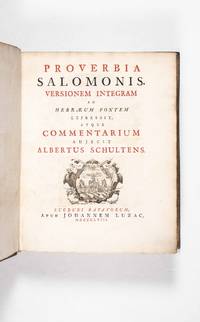
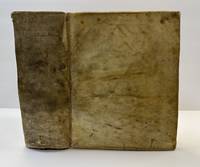
1748rif. 49255Leiden: Jean Luzac 1748. First edition. Hardcover. Very Good. Quarto. 8 cviii 522 60 indices & corrigendapp. Text in two columns with Hebrew text and facing Latin translation interspersed with commentary. Title in red and black with engraved vignette; woodcut ornaments. Contemporary Dutch paneled vellum with blind-stamped vignettes and ruled borders; manuscript title at spine. Covers lightly soiled. Occasional touches of soiling and some leaves with mild embrowning. A very good copy generally crisp and clean. First edition of this comprehensive commentary to the biblical Book of Proverbs by the Dutch semitic language scholar Albert Schultens 1686-1750 who maintained "that the true nature of the Hebrew language and the meaning of many of its words and idioms are to be found chiefly in the Arabic" Orme. Forty-one pages of the indices constitute a brief lexicon and provide Latin as well as Arabic equivalents for more than 1000 Hebrew words. Schultens studied theology and eastern languages at Groningen where he received his degree in theology in 1709. After a brief career as a preacher in Wassenaar he was nominated professor of Hebrew and Jewish antiquities at Franeker in 1713. In 1729 he decamped for Leiden were he was first appointed reader in eastern languages and finally full professor in 1732. At this time a chief concern of Calvinist theologians was to liberate Old Testament exegesis from Jewish Rabbinic as well as Catholic traditions. Schultens' influential and controversial solution was revealed as early as 1706 in his first public thesis Disputatio theologico philologica de utilitate linguae Arabicae in interpretanda S. Scriptura A Theologico-Philosophical Dissertation on the Utility of the Arabic Language for the Interpretation of the Holy Scriptures "a forceful attack" Brugman & Schröder on the Protestant sola scriptura methodology of Biblical exegesis. "With the help of Jacobus Golius' Arabic dictionary he perused with zeal and fervour the Old Testament and wrote prolifically. The lexical superiority of Arabic had led him to a reconsideration of the position of Hebrew: at first he had called Arabic 'the most splendid daughter of mother Hebrew' but in his oration of 1729 he proclaimed Hebrew and Arabic cognate twin sisters. This shocked conservative theologians as an outright profanation of God's Word" Brugman & Schröder. Like his earlier commentary on the Biblical Book of Job one here finds that the "Hebrew text and the Latin translation are all but totally submerged by the extensive commentary in which Schultens draws abundantly on Arabic texts such as the Hamasa an anthology of early Arabic poetry by the ninth-century poet Abu Tammam" Vrolijk & van Leeuwen. Schultens was not without his critics and by 1824 William Orme notes a turning of the tide: "Different opinions are entertained of the correctness of his views and also of his success in applying them; but it is now generally admitted that he carries his notions of the advantage of Arabic learning to the interpretation of the Scriptures too far." Jean Luzac 1728-1777 was a member of a well-known Huguenot family of printers; he published many works for the University of Leiden including three Hebrew books of Albert Schultens. Isaac van der Mijn is noted as the printer at the colophon of the second volume. Provenance: bookplate of the Crozer Theological Seminary - Bucknell Library; bookseller's ticket of Librairie Ancienne et Moderne de Frederik Muller Amsterdam at the front paste-down. References: J. Brugman & F. Schröder Arabic Studies in the Netherlands Leiden: E.J. Brill 1979 p.26f. Fuks/Fuks-Mansfeld 78. Orme Bibl. Biblica p. 390. A. Vrolijk & R. van Leeuwen Arabic Studies in the Netherlands a Short History in Portraits 1580-1950 Leiden: E.J. Brill 2014 pp. 73-79. Jean Luzac hardcover
1748rif. 49255Leiden: Jean Luzac 1748. First edition. Hardcover. Very Good. Quarto. 8 cviii 522 60 indices & corrigendapp. Text in two columns with Hebrew text and facing Latin translation interspersed with commentary. Title in red and black with engraved vignette; woodcut ornaments. Contemporary Dutch paneled vellum with blind-stamped vignettes and ruled borders; manuscript title at spine. Covers lightly soiled. Occasional touches of soiling and some leaves with mild embrowning. A very good copy generally crisp and clean. First edition of this comprehensive commentary to the biblical Book of Proverbs by the Dutch semitic language scholar Albert Schultens 1686-1750 who maintained "that the true nature of the Hebrew language and the meaning of many of its words and idioms are to be found chiefly in the Arabic" Orme. Forty-one pages of the indices constitute a brief lexicon and provide Latin as well as Arabic equivalents for more than 1000 Hebrew words. Schultens studied theology and eastern languages at Groningen where he received his degree in theology in 1709. After a brief career as a preacher in Wassenaar he was nominated professor of Hebrew and Jewish antiquities at Franeker in 1713. In 1729 he decamped for Leiden were he was first appointed reader in eastern languages and finally full professor in 1732. At this time a chief concern of Calvinist theologians was to liberate Old Testament exegesis from Jewish Rabbinic as well as Catholic traditions. Schultens' influential and controversial solution was revealed as early as 1706 in his first public thesis Disputatio theologico philologica de utilitate linguae Arabicae in interpretanda S. Scriptura A Theologico-Philosophical Dissertation on the Utility of the Arabic Language for the Interpretation of the Holy Scriptures "a forceful attack" Brugman & Schröder on the Protestant sola scriptura methodology of Biblical exegesis. "With the help of Jacobus Golius' Arabic dictionary he perused with zeal and fervour the Old Testament and wrote prolifically. The lexical superiority of Arabic had led him to a reconsideration of the position of Hebrew: at first he had called Arabic 'the most splendid daughter of mother Hebrew' but in his oration of 1729 he proclaimed Hebrew and Arabic cognate twin sisters. This shocked conservative theologians as an outright profanation of God's Word" Brugman & Schröder. Like his earlier commentary on the Biblical Book of Job one here finds that the "Hebrew text and the Latin translation are all but totally submerged by the extensive commentary in which Schultens draws abundantly on Arabic texts such as the Hamasa an anthology of early Arabic poetry by the ninth-century poet Abu Tammam" Vrolijk & van Leeuwen. Schultens was not without his critics and by 1824 William Orme notes a turning of the tide: "Different opinions are entertained of the correctness of his views and also of his success in applying them; but it is now generally admitted that he carries his notions of the advantage of Arabic learning to the interpretation of the Scriptures too far." Jean Luzac 1728-1777 was a member of a well-known Huguenot family of printers; he published many works for the University of Leiden including three Hebrew books of Albert Schultens. Isaac van der Mijn is noted as the printer at the colophon of the second volume. Provenance: bookplate of the Crozer Theological Seminary - Bucknell Library; bookseller's ticket of Librairie Ancienne et Moderne de Frederik Muller Amsterdam at the front paste-down. References: J. Brugman & F. Schröder Arabic Studies in the Netherlands Leiden: E.J. Brill 1979 p.26f. Fuks/Fuks-Mansfeld 78. Orme Bibl. Biblica p. 390. A. Vrolijk & R. van Leeuwen Arabic Studies in the Netherlands a Short History in Portraits 1580-1950 Leiden: E.J. Brill 2014 pp. 73-79. Jean Luzac hardcover books
1692rif. 1327694Lipsiae: Johannis Casparis Meyeri/Gottfried Liebezeit 1692. Fifth Revised edition. Hardcover. Two works of Judaica bound together in a single volume: Henrico Opitio Heinrich Opitz with B. Wasmuthi. Hazer leshon ha-qodesh: Hoc est atrium linguae sanctae. Lipsiae: Johannis Casparis Meyeri 1692. Fifth Revised edition. 156 pages. Henrico Opitio Heinrich Opitz. Novum Lexicon Hebraeo-Chaldaeo-Biblicum. Lipsiae: Gottfried Liebezeit 1692. 1095 pp. Hebrew 62 pp. Chaldaean. Square quarto in full vellum binding with faded hand-written titles on spine. All edges tinted blue. Pagination restarts with each part. Text in Hebrew and Latin. Condition: Very Good. The binding is shaken with some shelf-wear and bumping. The spine and boards are sunned and somewhat warped and there are some splits at hinges and gutter. Medium age-toning and some foxing. Scattered marginalia some of which are in Hebrew and some of which appear to be lists of occurrences of particular Hebrew words in the Hebrew Scriptures. Dimensions 7 x 8.125 x 3.125 shelved case 4. 1327694. Shelved Dupont Bookstore. Johannis Casparis Meyeri/Gottfried Liebezeit hardcover
1692rif. 1327694Lipsiae: Johannis Casparis Meyeri/Gottfried Liebezeit 1692. Fifth Revised edition. Hardcover. Two works of Judaica bound together in a single volume: Henrico Opitio Heinrich Opitz with B. Wasmuthi. Hazer leshon ha-qodesh: Hoc est atrium linguae sanctae. Lipsiae: Johannis Casparis Meyeri 1692. Fifth Revised edition. 156 pages. Henrico Opitio Heinrich Opitz. Novum Lexicon Hebraeo-Chaldaeo-Biblicum. Lipsiae: Gottfried Liebezeit 1692. 1095 pp. Hebrew 62 pp. Chaldaean. Square quarto in full vellum binding with faded hand-written titles on spine. All edges tinted blue. Pagination restarts with each part. Text in Hebrew and Latin. Condition: Very Good. The binding is shaken with some shelf-wear and bumping. The spine and boards are sunned and somewhat warped and there are some splits at hinges and gutter. Medium age-toning and some foxing. Scattered marginalia some of which are in Hebrew and some of which appear to be lists of occurrences of particular Hebrew words in the Hebrew Scriptures. Dimensions 7 x 8.125 x 3.125 shelved case 4. 1327694. Shelved Dupont Bookstore. Johannis Casparis Meyeri/Gottfried Liebezeit hardcover books
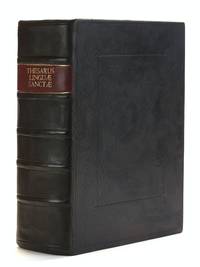
1570RARE 16th-century edition of the "Thesaurus Linguae Sanctae", a Hebrew-Latin dictionary for Catholic ministers, originally composed during the early 16th century by the Dominican Bible scholar St.Pagnini. The dictionary appended a list of nominalization patterns and a list of irregular nouns. This edition was printed by the famous Dutch publisher Christopher Plantin at 1570, during the first years of the religious strife that came to be known as the Eighty Years' War. The book features the publisher's elaborate emblem on the title page, a decorative first capital letter on the first text page, and floral title bars in several places throughout the book. The book ends with a royal privilege from Emperor Maximilian II. 115x165mm. Unpaginated preface and appendix. 380 pages (irregular pagination: [188] + [193-380], but the text is COMPLETE. Rebound in black cloth Hardcover. Gilt lettering on spine. Ex libris and binder's stickers on endpaper. Pen inscriptions (dated 1752) on title page, and outside the text on few other pages. Last text page upper edge slightly torn - NO damage to text. Pages yellowing. [SUMMARY]: This 16th-century old Plantin dictionary is surprisingly preserved in very good condition.
1610rif. 34057A Paris Chez David Le Clerc et chez Jean de Hugueville Heuqueville 1610 In-4 illustré d’un frontispice, portrait, pagination multiple.
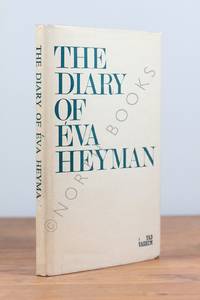
1974rif. H304Jerusalem: Yad Vashem 1974. Hardcover. First Edition First Printing in English. 5.5 x 8in. 124pp. Publisher's cloth boards. NEAR FINE in Very Good dust jacket protected in a removable archival cover. The book itself shows the slightest hint of shelf rubbing at the extremities else Fine/As New. The dust jacket shows marginal shelf rubbing along the edges a very short closed tear at the bottom edge a small chip at a corner a surface abrasion at the bottommost of the spine from a store sticker otherwise remains bright and distinct. As pictured. Yad Vashem hardcover
1930rif. 389977Boston Massachusetts: The South Boston Hebrew Juniors 1930. Softcover. Very Good. Typed magazine and accompanying holograph essay. Quartos. The magazine consists of six sheets typed on the rectos stapled together with two additional blank sheets serving as front and rear covers. The front cover is detached very good. A “special paper” published by the members of the South Boston Hebrew Juniors as part of a fundraising effort. Made-up of various short pieces relating to the club including an original poem and a jest about how to become an American citizen. With an accompanying holograph essay: “Anti-Semitism the Scourge of Israel; and Palestine the Hope of Israel.” written in ink on the rectos only of six notebook sheets presumably by one of the club's younger members. References are made to: “the thousands who are homeless in the Mississippi Valley …” “war and desolation in China” and to “the millions in Eastern Europe whose spirit has been broken .” Some toning and a few scattered tiny tears to the right edges very good. There are no known copies of the magazine which is quite probably a lone survivor. The South Boston Hebrew Juniors unknown
1930rif. 389977Boston Massachusetts: The South Boston Hebrew Juniors 1930. Softcover. Very Good. Typed magazine and accompanying holograph essay. Quartos. The magazine consists of six sheets typed on the rectos stapled together with two additional blank sheets serving as front and rear covers. The front cover is detached very good. A “special paper” published by the members of the South Boston Hebrew Juniors as part of a fundraising effort. Made-up of various short pieces relating to the club including an original poem and a jest about how to become an American citizen. With an accompanying holograph essay: “Anti-Semitism the Scourge of Israel; and Palestine the Hope of Israel.” written in ink on the rectos only of six notebook sheets presumably by one of the club's younger members. References are made to: “the thousands who are homeless in the Mississippi Valley …” “war and desolation in China” and to “the millions in Eastern Europe whose spirit has been broken .” Some toning and a few scattered tiny tears to the right edges very good. There are no known copies of the magazine which is quite probably a lone survivor. The South Boston Hebrew Juniors unknown books
1834rif. 16722BBPrag, Landau, 1834. 2°, Folio, 73 S., 82 S., plus sieben Blatt mit Korrekturen und Anmerkungen von verschiedenen Rabbinern und Gelehrten, Text: hebräisch, Ledereinband der Zeit, original Ausgabe Lederbezug am Rücken, hinterer Buchdeckel und Titelei des Baba Kama fehlen, sonst ein gutes, sauberes, bindungsstabiles und kollationiertes Exemplar.
1886rif. 71901886 Paris ED. Monnier, De Brunhoff et cie éditeur 1886 In4 format 32cmX22cm relié pleine toile bleue marine incrustée de bandes de toile beige et papier liège. reliure signée Armelle Guégant 114 pages nombreuses illustrations in et hors texte.
1928rif. 38185Palestine Art Distributors New York Copyright By Miller-Lynn Publishing Co. New York Jerusalem 1928. First edition. Original blue publisher’s cloth large square. 8vo 16 leaves with 15 tipped in plates. Text in Hebrew. Each leaf contains a tipped in color print by Raban in the classic style with English text in a gilt Bezalel style “frame” on the facing page. Title translates as "Chagaynu. Our Holidays: A Picture Book. Drawn by Z Raban of the Bezalel Art school Jerusalem." Chagaynu meaning Our Holidays includes 14 plates featuring gorgeous color illustrations by Raban all showing Jewish holidays throughout the year. Each illustration includes with it a poem by Israeli children's author and poet Levin Kipnis "Avi-Shai". Each color plate is protect by tissue guards. Raban the artist is regarded as a leading member of the Bezalel school art style in which artists portrayed both Biblical and Zionist themes in a style influenced by the European Jugendstil similar to Art Nouveau and by traditional Persian and Syrian styles. Israel Museum Catalogue Bezalel number 1348; Yeshiva University Museum Catalogue Raban Remembered number 78. OCLC: 254162436. Dime-sized stain on front end papers bookplate no other markings. Light wear to boards Very Good Condition. art-21-8. Palestine Art Distributors New York Copyright By Miller-Lynn Publishing Co. , New York, Jerusalem unknown
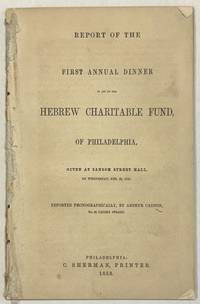
1853rif. 40496Philadelphia: C. Sherman Printer 1853. 39 1 blank pp. Disbound tiny corner chip at head of title page. Good. Housed in a modern slipcase old bookplate on its front pastedown. Philadelphia's Jewish elite supported this organization. Abraham S. Wolf Isaac Leeser Solomon Solis H. Polack and others were the Committee of Arrangements. Funds are desperately required to meet "the many demands caused by the vast number of emigrants who annually land on our shores." The list of donors is 6-1/2 pages. Non-Jewish participation was substantial. For example former Vice President George Dallas was a conspicuous presence. Toasts patriotic addresses music and overall good cheer characterize the gathering. Singerman 1302. OCLC 78367144 3- LCP Princeton AJHS 57761577 1- Yeshiva as of October 2024. C. Sherman, Printer unknown
1853rif. 40496Philadelphia: C. Sherman Printer 1853. 39 1 blank pp. Disbound tiny corner chip at head of title page. Good. Housed in a modern slipcase old bookplate on its front pastedown. Philadelphia's Jewish elite supported this organization. Abraham S. Wolf Isaac Leeser Solomon Solis H. Polack and others were the Committee of Arrangements. Funds are desperately required to meet "the many demands caused by the vast number of emigrants who annually land on our shores." The list of donors is 6-1/2 pages. Non-Jewish participation was substantial. For example former Vice President George Dallas was a conspicuous presence. Toasts patriotic addresses music and overall good cheer characterize the gathering. Singerman 1302. OCLC 78367144 3- LCP Princeton AJHS 57761577 1- Yeshiva as of October 2024. C. Sherman, Printer unknown books
1981rif. N4288aJerusalem: Makor 1981. Limited Edition . Original Half Leather. Fine. 4to. 4 tick volumes. Complete. Hebrew language. Facsimile of the original manuscript Leiden MS Scal 3 written in 1289 by Yehiel ben Yequtiel ben Benjamin Ha-Rofe the only complete extant manuscript of the Talmud Yerushalmi =Palestinian Talmud.-Limited edition according to the publisher only 240 copies were printed. A FINE SET. Makor hardcover
rif. R160224010Imprimerie L.Beresniak. non daté. In-8. Broché. Etat d'usage, Couv. légèrement passée, Coiffe en pied abîmée, Papier jauni. 333 pages + paginé de 334 à 619 - ouvrages en hébreu et en yiddish - sens de lecture inversé - texte sur deux colonnes - coiffe en tête absente et dos fendu sur le 1er volume - coiffe en pied abimée sur le 2ème volume.. . . . Classification Dewey : 492.4-Hébreu
1977rif. 24391977 Bièvres (Moulin de Vauboyen), Pierre de Tartas, 1977. 38,5 x 28,5 cm, in-folio, 1 f. bl. - 46 ff. n. ch. - 1 f. bl., 17 grandes lithographies originales en couleurs dans le texte dont 8 sur feuilles pliées en 4 (triptyques), en feuilles sous couverture de tissu bleu marine rempliée et illustrée en blanc cassé, boîtier de l'éditeur portant au premier plat la signature imprimée de Chapelain-Midy et le titre en hébreu au dos.
1822In-8°, 2 volumi in uno, XXXIV, (2), pp. 240, 2 carte di tav. ripiegate, pp241-575 (1), legatura in mezza pelle con titolo al dorso in oro. Intonso.Professore di liturgia nell’Università Gregoriana, il Lazzarini compose quest’opera per diletto, ma ne risultò comunque un trattato di grande completezza ed erudizione, andando a ricercare chi fosse stato il primo inventore ad usare i Tintinnabula e quale uso si facesse di essi nei vestiti e nelle liturgie presso i popoli più antichi. In-8 °, 2 volumes in one, XXXIV, (2), pp. 240, 2 folded leafs; pp241-575 (1), half leather binding with title at the spine in gold. Uncut. Professor of liturgy at the Gregorian University, Lazzarini composed this work for pleasure, but it still resulted in a treatise of great completeness and erudition, going to look for who was the first inventor to use the Tintinnabula and what use was made of them in clothes and liturgies among the most ancient peoples.
1922rif. N4540aBerlin: Rimon Publ. House 1922. First Edition . Original Half Cloth. Very Good. 4to. 1922-1924. SOME 250pp .FOR THE 6 PARTS OF THIS IMPORTANT PERIODICAL OF JEWISH ART published in Hebrew language in Berlin. With some contenc p and explantory ages in English PROFUSELY ILLUSTRATED WITH MANY PLATES IN COLOUR. EACH PART WITH THE ORIGINAL VERY DECORATIVE WRAPPERS PRESERVED. ARTICLES BY CHAGALL BIALIK AGNON AND OTHERS. Illustrated by Jewish artist many of the Jewish Russian Avantgarde PUBLISHER'S ORIGINAL HALF CLOTH BINDING. Some truly insignificant outside markings. A VERY CLEAN AND FRESH COPY .---The editors MARK and -RACHEL BERNSTEIN-WISCHNITZER had joined a group of Russian-Jewish intellectuals immigrants in Berlin with multi-lingual literary needs.RARELY FOUND IN THIS BEAUTIFUL FRESH CONDITION.------ERSTE ORIGINAL -AUSGABE 1- 6 alles erschienen. Ca. 250 S. für die 6 Teile zusammengebunden in dem Original-Halbleinen des Herausgebers. Jede einzelne der 6 Ausgaben hat ein eindrucksvolles dekoratives Umschlagsblatt alle sind erhalten. Reich illustriert teils farbig. Mit Beiträgen von Ch.N. Bialik Marc Chagall Nathan Altman u.a. viele Vertreter der JÜDISCH- RUSSISCHEN AVANTGARDE. Dieses hebräische Journal wurde in Berlin zwischen 1922 -und 1924 veröffentlicht und war der jüdischen Kunst und Literatur gewidmet. Es erschien parallel zu der jiddischen Edition genannt "Milgroim" hatte aber einen anderen literarischen Inhalt. Text in Hebräisch mit Ausnahme der zusätzlichen Inhaltsgabe der jeweiligen der 6 Ausgaben beim ersten Heft in deutsch bei Heft 2- 6 in englisch.Die Initiatoren dieser herausragenden Produktion in herausragender Druckqualität waren Dr. Mark Wischnitzer und seine Frau die berühmte Kunsthistorikerin Rachel Bernstein-Wischitzer.Beide hatten sich einer Gruppe von russisch-jüdischen Intellektuellen in Berlin angeschlossen. Ein sehr sauberes und frisches Exemplar. SELTEN! Rimon Publ. House hardcover
1680rif. 506930Samuel Roycroft 1680. Leather. NEAR FINE. 16 1328pp. 4to recently and finely rebound in brown calf with burgundy morocco label with tissue repairs by the same binder to a few outer leaves and an earlier tape-backing to the title page by an earlier and less-skilled hand; pen markings to a few pages of the preface original trim with petina to edges entirely sound and clean internally. Samuel Roycroft unknown
1857Very Good Hebrew Contemporary 1/4 leather bdg. Demy 8vo. (21 x 14 cm). In Hebrew with interspersed with Arabic; a preface in French. [xvi], 144 p. Goldenthal was an Austrian Orientalist; born at Brody, Galicia, April 16, 1815; died at Vienna Dec. 28, 1868; educated at the University of Leipsic. In June, 1843, he became principal of the Jewish school at Kishinef, Bessarabia, and held the office for some years. He was appointed professor of rabbinical and Oriental languages at the University of Vienna in Sept. 1849, and held the chair until his death. Upon the nomination of Hammer-Purgstall, he was elected a corresponding member of the Vienna Academy of Sciences, and member of the Asiatic Societies of Germany, of Paris, and of London. His chief literary activity consisted in editing the following manuscripts: "Mozene ?ede?," a treatise on philosóphical ethics by Al-Ghazali, translated into Hebrew by Abraham ibn ?asdai, with an introduction on the lives and works of Al-Ghazali and Ibn ?asdai, 1838. "Bi'ur ibn Roshd," Todrosi's Hebrew translation of Averroes' commentary on Aristotle's "Rhetorica," with a historical and philosophical introduction, 1842. "Mesharet Mosheh," commentary by Kalonymus on Maimonides' system of Divine Providence, with his explanation of Ps. xix. and xxxvii., 1845. "Maftea?," methodology of the Talmud by Nissim ben Jacob of Kairwan, with an introduction, notes, and references, 1847. "Mi?dash Me'a?," Moses Rieti's didactic poem on ancient philosophy and the history of Jewish literature, with an Italian and Hebrew preface, 1851 (see "Allg. Zeit. des Jud." 1859, p. 124). Goldenthal further published a catalog of Hebrew manuscripts in the Imperial Library of Vienna, 1854, and an Arabic grammar in Hebrew for the use of the Oriental Jews, with a French preface, 1857. Volume i. of the "Denkschriften" of the Vienna Academy of Sciences contains his "Beiträge zu einem Sprachvergleichenden Rabbinisch-Philosophischen Wörterbuche." He issued "Das Neue Zion," a monthly periodical, Leipsic, Nisan, 1845, of which only one number appeared. Another periodical which he edited, "Das Morgenland," was also short-lived. (Jewish Encyclopedia). In his Hebrew preface, Goldenthal notes that knowledge of Arabic is particularly important for Talmudists, illustrating his point by a passage from Rabbenu Nissim's commentary to Tractate Shabbat found in a manuscript in the Palatine Library of Vienna. (Source: K&C). First Edition. OCLC 40972030.; Friedberg M-2669.
1609rif. 112554geneve roviere 1609 Aureliae Allobrogum (Genève), Petrus de la Roviere (Pierre de la Rovière), 1609, 1 volume grand in-folio de 240 x 370 mm environ, (14) ff. (Page de titre, Praefatio) - 183 - 283 - 84 - 203 pages; [suivi de] (4) ff. (Page de titre, Praefatio) - 186 - 134 pages. Complet dans le canon catholique. Demi-chagrin brun postérieur, dos à 5 nerfs portant titre doré. Exemplaire solide mais en modeste condition : reliure abimée (débuts de fente sur les mors externes, mors internes fendus, manques de cuir, plats tachés, coins dénudés), nombreuses rousseurs et pages brunies, des traces de mouillures, quelques déchirures sans manque, travail de vers sur une dizaine de pages du Nouveau testament.