Balfour, The Earl of [Arthur James]; Cohen,Israel [Editor]; Samuel, Sir Herbert [Foreword]MareMagnum

2992 risultati
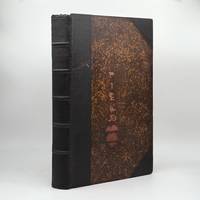
1928"Whatever place its author may ultimately occupy in future histories of England, one thing is certain, that in the history of the Jewish people the name of Balfour will enjoy unchallenged immortality, evoking comparison with that of Cyrus, for the issue of the Balfour Declaration marked the opening of a new epoch in the annals of Jewry which will be recognised as such even in the remotest centuries to come. In this little book have been gathered together all the utterances of Lord Balfour on the interpretation and implications of his Declaration, on its political aspects and its practical realisation, made during the last ten years." - Preface. [4], 5-128 pp. 7" x 4.75". Original spine label present and intact. Front free endpaper professionaly replaced. Tanning to central portion of half-title. Prior owner's ink stamp upon title page. Duplicate spine label bound at p.128. Average external wear. Binding intact with moderate forward lean. No dust jacket, presumably as issued. Quarter inch notch from top of backstrip. A sound copy of this jewel of Zionist history. EMANUEL p.48. [ASIN B000852UV4] Book
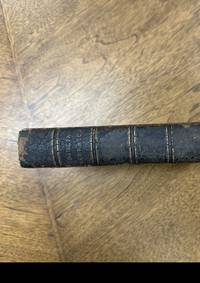
rif. 371476Amsterdam: Joseph Jacob and Abraham the sons of Solomon Proops 5522. Titled printed in red and black. 2 178 2 179-332 10 Introduction etc. 2 160 2 161-350pp. Publisher's introduction and other preliminaries misbound preceding the later Prophets. Folio 15-7/8x10 inches. Nineteenth or early 20th century half morocco and marbled paper boards rear joint splitting worn at joints and head and tail of spine. Foxing principally to the title tear to the final text leaf. Provenance: General Theological Seminary bookplate. Titled printed in red and black. 2 178 2 179-332 10 Introduction etc. 2 160 2 161-350pp. Publisher's introduction and other preliminaries misbound preceding the later Prophets. Folio 15-7/8x10 inches. Besides being the first bi-lingual edition in Hebrew and Spanish this edition is the first Hebrew book whose publication was financed by an American - Abraham Mendes de Castro 1689-1762 of Curaçao - intended for use in the West Indies with the sale proceeds to benefit the Jewish communities of Jerusalem and Hebron. Cowley 102; Darlow & Moule 5156; Zedner 102; not in Steinschneider or Roest Joseph, Jacob and Abraham, the sons of Solomon Proops unknown
rif. 371476Amsterdam: Joseph Jacob and Abraham the sons of Solomon Proops 5522. Titled printed in red and black. 2 178 2 179-332 10 Introduction etc. 2 160 2 161-350pp. Publisher's introduction and other preliminaries misbound preceding the later Prophets. Folio 15-7/8x10 inches. Nineteenth or early 20th century half morocco and marbled paper boards rear joint splitting worn at joints and head and tail of spine. Foxing principally to the title tear to the final text leaf. Provenance: General Theological Seminary bookplate. Titled printed in red and black. 2 178 2 179-332 10 Introduction etc. 2 160 2 161-350pp. Publisher's introduction and other preliminaries misbound preceding the later Prophets. Folio 15-7/8x10 inches. Besides being the first bi-lingual edition in Hebrew and Spanish this edition is the first Hebrew book whose publication was financed by an American - Abraham Mendes de Castro 1689-1762 of Curaçao - intended for use in the West Indies with the sale proceeds to benefit the Jewish communities of Jerusalem and Hebron. Cowley 102; Darlow & Moule 5156; Zedner 102; not in Steinschneider or Roest Joseph, Jacob and Abraham, the sons of Solomon Proops unknown books
1839rif. 52150Philadelphia: Bagster & Marshall 1839. First American edition. Hardcover. Good . Octavo. 6 10 778pp. Pointed Hebrew text in two columns the New Testament with only vocal marks. Continuous pagination in Arabic numerals; but separate Hebrew pagination for the Old and New Testaments. Contemporary three-quarter calf over pebbled cloth boards; spine with raised bands ruled and lettered in gilt. Decorative endleaves. Covers rubbed with wear at spine caps and corners. Library pressure stamp at title bookplate and pocket at paste-downs. A good ex-library copy with very clean fresh text throughout. First American edition of this Hebrew Bible earlier published by Samuel Bagster at London in 1835; it contains the first printing of the New Testament in Hebrew translation to appear in the United States. That translation was prepared by the philologist William Greenfield 1799-1831 the editorial superintendent of the British and Foreign Bible Society and first published by Samuel Bagster at London in 1831 D&M no. 5186. In preparing his revised Hebrew version Greenfield was allowed to utilise the London Jews' Society Hebrew New Testament published at London between 1813 and 1817 D&M no. 5170. Among the earliest publications of the society founded in 1809 this version was itself based upon Elias Hutter's Hebrew translation of the New Testament published at Nuremberg in 1599 D&M no. 5111. Prepared by a group of scholars under the supervision of Thomas Fry and William Bengo Collyer this London Jews' Society edition employed only biblical words and translated Old Testament quotations from the Greek not citing them directly from the Hebrew Scriptures. The editor of the New Testament version in the present work appears to have had a notable gift for languages. William Greenfield began his Hebrew studies as a young man while apprenticed to a bookbinder taking lessons from one of his co-workers a Jew with some learning who had been described as "a reader of the law in the synagogue" ODNB. Greenfield subsequently left the business in 1824 in order to devote himself to languages and biblical criticism. His defence of the Serampore Mahratta version of the New Testament in response to an 1829 article in the Asiatic Journal brought him to the attention of the British and Foreign Bible Society who then hired him to superintend their editiorial department. "During his nineteen months in the society's service Greenfield wrote on twelve European five Asiatic one African and three American languages and acquired considerable knowledge of Peruvian African-English Chippeway and Berber" ODNB. His revision of the Hebrew New Testament earlier published by the London Jews' Society was among the last works he undertook for the British and Foreign Bible Society along with the revision of the Modern Greek Psalter as it went through the press. Provenance: Bookplate and other markings including withdrawal stamp of the Library of the Garrett Theological Seminary Evanston Illinois. Full title in Hebrew: ספר הקדש ×•×”×•× תורה × ×‘×™××™× ×•×›×ª×•×‘×™× ×’× כתבי ברית החדשה נעתק מלשון יונית ×ל לשון עברית Philadelphiae: Sumptibus Bagster et Marshall in via vulgo dicta Chestnut Street ad Repositorium Bibliorum Sacrorum etc. quae in linguis antiquis et hodiernis edita sunt. Anno erae Judaicae I rev. C; rev. C DXCIX. References: Goldman Hebrew Printing in America no. 6: "This was the first New Testament published in Hebrew in America." ODNB: "Greenfield William" Gordon Goodwin revised by H. C. G. Matthew. J. R. Marcus "Jewish Americana a Supplement to A. S. W. Rosenbach An American Jewish Bibliography" in: Monographs of the American Jewish Archives 1954 no. 1 no. 164. Cf. Darlow & Moule nos. 5111; 5170; 5186. Bagster & Marshall hardcover
1839rif. 52150Philadelphia: Bagster & Marshall 1839. First American edition. Hardcover. Good . Octavo. 6 10 778pp. Pointed Hebrew text in two columns the New Testament with only vocal marks. Continuous pagination in Arabic numerals; but separate Hebrew pagination for the Old and New Testaments. Contemporary three-quarter calf over pebbled cloth boards; spine with raised bands ruled and lettered in gilt. Decorative endleaves. Covers rubbed with wear at spine caps and corners. Library pressure stamp at title bookplate and pocket at paste-downs. A good ex-library copy with very clean fresh text throughout. First American edition of this Hebrew Bible earlier published by Samuel Bagster at London in 1835; it contains the first printing of the New Testament in Hebrew translation to appear in the United States. That translation was prepared by the philologist William Greenfield 1799-1831 the editorial superintendent of the British and Foreign Bible Society and first published by Samuel Bagster at London in 1831 D&M no. 5186. In preparing his revised Hebrew version Greenfield was allowed to utilise the London Jews' Society Hebrew New Testament published at London between 1813 and 1817 D&M no. 5170. Among the earliest publications of the society founded in 1809 this version was itself based upon Elias Hutter's Hebrew translation of the New Testament published at Nuremberg in 1599 D&M no. 5111. Prepared by a group of scholars under the supervision of Thomas Fry and William Bengo Collyer this London Jews' Society edition employed only biblical words and translated Old Testament quotations from the Greek not citing them directly from the Hebrew Scriptures. The editor of the New Testament version in the present work appears to have had a notable gift for languages. William Greenfield began his Hebrew studies as a young man while apprenticed to a bookbinder taking lessons from one of his co-workers a Jew with some learning who had been described as "a reader of the law in the synagogue" ODNB. Greenfield subsequently left the business in 1824 in order to devote himself to languages and biblical criticism. His defence of the Serampore Mahratta version of the New Testament in response to an 1829 article in the Asiatic Journal brought him to the attention of the British and Foreign Bible Society who then hired him to superintend their editiorial department. "During his nineteen months in the society's service Greenfield wrote on twelve European five Asiatic one African and three American languages and acquired considerable knowledge of Peruvian African-English Chippeway and Berber" ODNB. His revision of the Hebrew New Testament earlier published by the London Jews' Society was among the last works he undertook for the British and Foreign Bible Society along with the revision of the Modern Greek Psalter as it went through the press. Provenance: Bookplate and other markings including withdrawal stamp of the Library of the Garrett Theological Seminary Evanston Illinois. Full title in Hebrew: ספר הקדש ×•×”×•× תורה × ×‘×™××™× ×•×›×ª×•×‘×™× ×’× כתבי ברית החדשה נעתק מלשון יונית ×ל לשון עברית Philadelphiae: Sumptibus Bagster et Marshall in via vulgo dicta Chestnut Street ad Repositorium Bibliorum Sacrorum etc. quae in linguis antiquis et hodiernis edita sunt. Anno erae Judaicae I rev. C; rev. C DXCIX. References: Goldman Hebrew Printing in America no. 6: "This was the first New Testament published in Hebrew in America." ODNB: "Greenfield William" Gordon Goodwin revised by H. C. G. Matthew. J. R. Marcus "Jewish Americana a Supplement to A. S. W. Rosenbach An American Jewish Bibliography" in: Monographs of the American Jewish Archives 1954 no. 1 no. 164. Cf. Darlow & Moule nos. 5111; 5170; 5186. Bagster & Marshall hardcover books
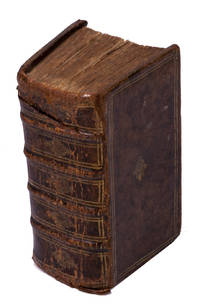
1610rif. 18174Leiden 1610. 24mo in 8s 11 x 6 cm. Franciscus II Raphelengius Gold-tooled mottled calf ca. 1720 sewn on 4 cords each board with a small central flower ornament and a frame of double fillets the spine with a lozenge ornament in each of the 5 compartments a roll on each raised band and at the head and foot and further double fillets gold-tooled board edges mottled edges. With 4 letterpress title-pages for the Pentateuch early prophets major and minor prophets and Psalms etc. and decorations built up from arabesque typographic ornaments. Set in sephardic meruba Hebrew types unpointed with the imprints in semi-cursive rabbinical but the place of publication in meruba. 4 volumes bound as 1. 264; 227 1 blank; 238 2 blank; 287 1 blank pp. vols. 1-2 with arabic numerals 3-4 with Hebrew. A pocket-sized edition of the Hebrew Old Testament in four volumes volume 1 containing the Pentateuch or Torah volume 2 the early prophets Joshua Judges Samuel Kings volume 3 the later major Isaiah Jeremiah Ezekiel and minor prophets and volume 4 the Psalms Job Song of songs Ruth Lamentations Ecclesiastes Esther Daniel Ezra and Chronicles. It was produced by Franciscus II Raphelengius grandson of Christoffel Plantin and son of one of Europe's first great Hebrew scholars Plantin's son-in-law Franciscus I Raphelengius 1539-1597 who helped prepare Plantin's magnificent 1572 Polyglot Bible succeeded to the Leiden branch of Plantin's printing office and became professor of Hebrew at Leiden University. Plantin himself had produced the Dutch Republic's first Hebrew book there in 1585 and Raphelengius produced many more beginning in 1588.With occasional very minor foxing or faint discolouration but otherwise in very good condition. The spine and joints are worn with superficial cracks a repair at the head and a small tear at the foot and the sewing is slightly loose. A charming little Hebrew Bible from the first Dutch printing office to produce Hebrew books.l aleph.nli.org.il 001366023 4 copies; Darlow & Moule 5114; Fuks 25 2 copies; Steinschneider 386; WorldCat 8 or 9 copies. ABE CAT Bibles Sermons & Psalmbooks RELIGION & DEVOTION Bibles Liturgy & Devotional Works Judaica unknown
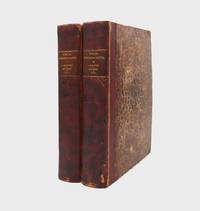
1535rif. 372715Basel: Bebel Isengrin and Petri 1535. Text in two columns in Hebrew and Latin. 2 vols. Folio. Nineteenth century half calf and marbled boards. Old ink notation at top of front pastedowns: Duplum. Very good plus some rubbing. Text in two columns in Hebrew and Latin. 2 vols. Folio. First edition of the new Latin translation by Sebastian Münster. Copinger 243; Darlow & Moule 5087 6115; VD 16 B2881. Provenance: W. A. Copinger bookplate; General Theological Seminary [Bebel, Isengrin, and Petri] unknown
1535rif. 372715Basel: Bebel Isengrin and Petri 1535. Text in two columns in Hebrew and Latin. 2 vols. Folio. Nineteenth century half calf and marbled boards. Old ink notation at top of front pastedowns: Duplum. Very good plus some rubbing. Text in two columns in Hebrew and Latin. 2 vols. Folio. First edition of the new Latin translation by Sebastian Münster. Copinger 243; Darlow & Moule 5087 6115; VD 16 B2881. Provenance: W. A. Copinger bookplate; General Theological Seminary [Bebel, Isengrin, and Petri] unknown books
18535614 [185354]. 1st edition. Original period deluxe tooled leather, 4to, [iv], 1011, [v] pages [1020 pages total]. COPY BELONGING TO JEWISH COMMUNAL LEADER AND DIPLOMAT BENJAMIN FRANKLIN PEIXOTTO (18341890), WITH HIS OWNERSHIP SIGNATURE ON THE FRONT ENDPAPER ("B.F. Peixotto, Cleveland, O. 1865"). Beautiful original period leather binding with tooled leather boards and board edges and raised bands. All Edges Gilt. The first edition of the first translation of the full Hebrew bible (Old Testament) into English by a Jew. Deinard 847; Singerman 1271; Goldman 12. Vinograd, Philadelphia 21. Very important work, Isaac Leesers magnum opus. In the preface, Leeser here writes of a life-long ambition to do for his fellow Hebrews who use the English as their vernacular, what had been done for the Germans by some of the most eminent minds That is, to present an Old Testament Bible in the peoples tongue which was unprejudiced against Jews. This task took Rabbi Leeser more than 15 years to complete. The Twenty-Four Books..., has remained Leeser's literary magnum opus and his most lasting contribution to Judaism in America. Printed in 1854, complete with "short explanatory notes, " his efforts at biblical translation had actually developed in stages, beginning almost two decades earlier. Leeser's first biblical translation was The Law of God, a Pentateuch (Five Books of Moses) in five volumes, published in 1845. According to Leesers biographer Lance Sussman, one factor convincing Leeser of the need for a Jewish-translated bible into English was the opening of Rebecca Gratz's Sunday School in March 1838, in Philadelphia. The school was desperately in need of appropriate study material, with students using the King James Bible for want of a Jewish alternative: religiously objectionable passages in other texts provided by Protestant organizations were either pasted over or torn out by Gratz's staff. Leeser, who supported the Sunday School and was its chief academic resource person, felt compelled to find more suitable texts for the students. Leeser's Bible, as it has come to be known, quickly became the standard Bible for English-speaking Jews, especially in America. The impetus for Leeser throughout was always his desire to provide the Jews of America with an English text of the Bible that was produced by one of their own and was not tainted by conversionist motivations. In his preface to the present volume, Leeser characterizes this culmination of his long years of endeavor as having finally provided for his fellow Jews "a version of the Bible which has not been made by the authority of churches in which they have no confidence." Benjamin Franklin Peixotto (18341890), the owner of this bible, was a lawyer, diplomat, and important Jewish communal leader. His mother, Rachel Seixas, and his paternal grandfather, Moses Levi Maduro Peixotto (Hazzan of New York's Congregation Shearith Israel from 1820-1828) were both members of important early New York Jewish families. Young Benjamin settled in Cleveland during 184766, writing frequent editorials for the daily Cleveland Plain Dealer. In 1855, Peixotto and [George A.] Davis founded the Hebrew Benevolent Society; Peixotto was its secretary. In 1863 Peixotto helped found the first Cleveland lodge of B'nai B'rith. In 1860, he founded the Young Men's Hebrew Literary Society, four years later convincing it to affiliate with B'nai B'rith as Montefiore Lodge (Ency Cleveland History, 2020). In addition, Peixotto was a follower of Democratic Senator Stephen A. Douglas of Illinois [Abraham Lincolns famous sparring partner in the Great Debates of 1858], under whose guidance Peixotto studied law. A trustee and founder of the Sunday School at Congregation Tifereth Israel (now The Temple), he served as Grand Sar (president) of B'nai B'rith during 186364 and was the prime mover for its Jewish Orphan Asylum (now Bellefaire) established in Cleveland in 1869 .Early in 1870, moved by the Romanian persecution of Jews, Peixotto succeeded in becoming the first U.S. consul in Bucharest, appointed by President Grant through the intervention of the Seligmans. His financial needs in the unpaid position, as well as political support, were provided, not always reliably, by a group of wealthy U.S. Jews, along with the B'nai B'rith, the Board of Delegates of American Israelites, and prominent French and English Jews led by Sir Francis Goldsmid. In Bucharest Peixotto pressed vigorously for Jewish emancipation, to which Romanian Jews were legally entitled by the Treaty of Paris of 1856, and also took the initiative in founding Jewish schools, cultural societies, and Romanian B'nai B'rith, as part of his plan to modernize Jewish life in that country .his well-publicized presence inhibited new antisemitic legislation and avoided or mitigated several pogroms .he continued to endorse emigration privately while serving in Bucharest until 1876. From 1877 to 1885 Peixotto was U.S. consul in Lyons .His son was George Da Maduro Peixotto (18591937), a painter .He became a notable portrait painter, executing portraits from life of Cardinal Manning, President McKinley, Chief Justice Waite, and John Hay, among others .Peixotto's portrait of Sir Moses Montefiore at the latter's centenary in 1884 hung in the Corcoran Gallery, and his painting of [Rabbi] Julius Bien hangs in the National Museum, Washington, D.C. (JewishVirtualLibrary). For more on this work, see: Israel Abrahams, Isaac Leesers Bible," By-Paths in Hebraic Bookland (Philadelphia: The Jewish Publication Society of America, 1920), 254-259. Ephraim Deinard, Kohelet america: yakhil reshimat kol ha-sefarim asher nidpesu ba-america mi-shenat [5]495 (1735) ad shenat [5]686 (1926) u-bikkoret ketsarah kimat al kol sefer, vol. 2 (St. Louis: Moinester Printing Company, 1926), 133 (no. 847). Yosef Goldman, Hebrew Printing in America 1735-1926: A History and Annotated Bibliography, vol. 1 (Brooklyn: Yosef Goldman, 2006), 12-13 (no. 12). Jonathan D. Sarna and Nahum M. Sarna, Jewish Bible Scholarship and Translations in the United States," in Ernest S. Frerichs (ed.), The Bible and Bibles in America (Atlanta: Scholars Press, 1988), 83-116, at pp. 84-92. Lance J. Sussman, Another Look at Isaac Leeser and the First Jewish Translation of the Bible in the United States," Modern Judaism 5,2 (1985): 159-190. Lance J. Sussman, Isaac Leeser and the Making of American Judaism (Detroit: Wayne State University Press, 1995), 150-151, 185-193. The most recent sale of any copy of this work at auction (2018) was for over $16,000 (with premium). Original tooled black leather binding expertly repaired, with some light wear and loss of gilt to boards and edges. Rubbing to lemon endpapers and small repairs to outer margins of some leaves. A beautiful copy of this landmark of American Jewish scholarship with important provenance. Very Good Condition (AMR-39-53-BD)
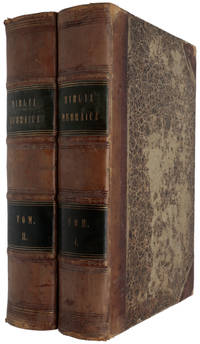
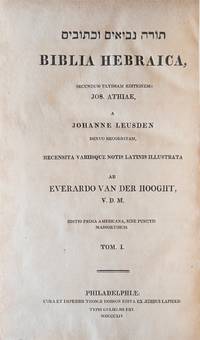
1814rif. 6255Philadelphia: Printed by William Fry for Thomas Dobson 1814. First edition. First edition of the first Hebrew Bible printed in America - this copy with the extremely rare inserted publisher's notice of February 1814 explaining the genesis of the edition a leaf that Goldman's bibliography of American Hebrew printing records in the Jewish Theological Seminary copy alone. Proposed in 1812 by Jonathan Horwitz an émigré newly arrived from Amsterdam with a font of Hebrew type the project passed early in 1813 to the publisher Thomas Dobson - already famous for the first American encyclopaedia - and the printer William Fry. The text reprints the great Amsterdam tradition of Athias Leusden and Van der Hooght whose 1705 edition was the received Hebrew text of the age printed here without vowel points and aimed at the Christian Hebraists of Harvard and Andover; American Jews continued to import pointed Bibles. It remained the only Hebrew Bible printed in America until Leeser's pointed edition of 1848. Bookseller's ticket of Talbot Watts New York dated March 1847. . The Hebrew Bible Comes to America. First edition of the first Hebrew Bible printed in America - this copy preserving the publisher's inserted notice of February 1814 recounting the genesis of the edition a leaf so rarely retained that Goldman's standard bibliography of American Hebrew printing records it in the Jewish Theological Seminary copy alone and treats it as no constituent of the edition. Until these two volumes appeared no complete biblical text in Hebrew had ever issued from an American press: congregations and colleges alike read from Bibles carried or ordered across the Atlantic. Their publication was the most ambitious Hebrew typesetting yet attempted in the United States and a measure of the standing Hebrew learning held in the early republic - a symbolic weight out of all proportion to the number of its readers. Abraham Karp surveying the Judaic treasures of the Library of Congress singled out the inserted notice as the key document of the edition's history found 'in some of the first copies of the first volume off the press'. The present set is one of the very few in which that first-state leaf escaped the binder's discard. Only one other copy described with the notice has been traced at auction Philadelphia 2024. The notice itself dated February 1814 and printed on a single inserted leaf compresses the whole story of the enterprise into four paragraphs. In 1812 Jonathan Horwitz had proposed an edition of the Hebrew Bible 'the first proposal of the kind ever offered in the United States'; clergymen of standing endorsed the undertaking and subscriptions were gathered. Early in 1813 Horwitz transferred his rights and his subscriber list to Thomas Dobson who now reported the first volume published and the second well advanced. The publisher then turned his readers into proof-correctors: gentlemen of learning into whose hands the volume might come were entreated to note typographical errors and transmit their lists to Dobson in Philadelphia so that an accurate table of errata might be printed at the close of the work - a table which the collations of recorded copies suggest was never executed. A final line explains both the leaf's function and its disappearance: the title pages and preface would be furnished with the second volume. The earliest purchasers therefore received volume one as a bare text block this notice standing in for the missing preliminaries; when the second volume appeared with the title leaves and Van der Hooght's preface binders bound the proper preliminaries in and discarded the now-superfluous notice. The variable placement of those preliminaries among recorded copies - the four preface leaves stand at the front of the second volume in another documented set at the front of the first in the present one - is itself evidence of this two-stage issue. The notice's survival here bound after the first title with the prefatory selections following marks the present set as one assembled from the first copies issued and fixes a terminus for its earliest American owner. Behind the notice lies a publishing race conducted in the newspapers of two cities. Jonathan Horwitz d. 1852 a Jewish émigré recently arrived from Amsterdam brought with him a font of Hebrew type and the conviction that the United States was ready for its own Hebrew Bible. He was nearly right and nearly first: the New York theological booksellers Whiting & Watson announced a rival Hebrew Bible under the patronage of the Theological Seminary at Andover; the missionary leaders John M. Mason and James McFarlane stood ready to enter the field; and in London Joseph Samuel C. F. Frey - the converted president of the London Society for Promoting Christianity Amongst the Jews - had in 1812 already published the first volume of a vocalized Hebrew Bible for the English-speaking world with rumours that he would cross the Atlantic to distribute it. Horwitz counter-attacked in the New York Evening Post of 16 January 1813 declaring that Harvard College and the Andover Theological Institution patronised his edition and had subscribed for forty copies each. Within weeks however he chose security over glory: he sold his Hebrew type to the printer William Fry made over his publication rights and subscriber list to Dobson and enrolled in the medical department of the University of Pennsylvania taking his M.D. in 1815. He practised medicine for the rest of his life marrying into the family of Haym Salomon the Jewish financier of the Revolution; his son Phineas rose to head the United States Navy's Bureau of Medicine. The Whiting & Watson Bible never appeared. The men who carried the project to completion were two of the most substantial figures in the Philadelphia book trade. Thomas Dobson 1751-1823 Scottish-born and Philadelphia-established from 1785 had already accomplished the most audacious publishing feat of the young republic: Dobson's Encyclopaedia 1789-1798 the first encyclopaedia published in the United States eighteen quarto volumes re-edited from the third Encyclopaedia Britannica with George Washington among the subscribers. His shop at 41 South Second Street was known simply as the Stone House and the Bible's title page Latinises the address into the imprint: edita ex aedibus lapideis. William Fry a printer praised for the accuracy of his presswork - his former partnership of Fry & Kammerer had printed the elegant 1809 specimen of Binny & Ronaldson the first permanent type foundry in the United States - executed the Hebrew text with the font acquired from Horwitz. Horwitz's prospectus had promised a new pica Hebrew to be cast for the purpose at the Binny & Ronaldson foundry but the type Fry actually employed appears to have been the Amsterdam font Horwitz had carried across the Atlantic: the foundry's surviving papers record only the freight on a parcel of Hebrew type shipped into Philadelphia in 1813 and every contemporary account of the project has Horwitz selling his own font to Fry. The Hebrew of the first American Bible was thus Dutch metal - cast in the same typographic culture that had produced the very editions the text reproduces. The choice of so compact a programme - the bare consonantal text without the apparatus of points and accents - kept the undertaking within the powers of a shop that had never before set a Hebrew book and the result is remarkably clean: the printer allowed himself a single flourish closing the first volume with the note Placuit Typographo has Deo agere gratias in fine hujus Tomi ex Jes. 40:29 - it pleased the typographer to give thanks to God at the end of the volume in the words of Isaiah. The text the Philadelphians chose was the most authoritative available anywhere: the Amsterdam tradition running from Joseph Athias through Everardus van der Hooght. Athias c. 1635-1700 the great Sephardic printer of Amsterdam produced in 1659-61 the first Hebrew Bible with numbered verses its proofs read by Johannes Leusden professor of Hebrew at Utrecht; on its completion Athias was admitted to the Amsterdam printers' guild an unprecedented honour for a Jew and the improved second edition of 1667 won him a gold chain and medal from the States General of the Dutch Republic. Long regarded as the most accurate Hebrew text in print the Athias-Leusden Bible became the foundation of virtually all subsequent editions. Everardus van der Hooght 1642-1716 a Dutch Reformed minister - the V.D.M. of the title page - corrected it once more for his Amsterdam and Utrecht edition of 1705 working not from manuscripts but from the printed tradition checked against the Masorah and prized above all for the exceptional clarity of its type. Van der Hooght's became the de facto received text of the Hebrew Bible for a century and a half: Houbigant Kennicott Hahn and Letteris all took it as their base as did the Bible Society editions of the nineteenth century. The 1814 Philadelphia edition declares this lineage on its title page and retains the essentials of Van der Hooght's apparatus in selection: four preliminary leaves headed Everardi van der Hooght ex praefatione selectae in hac editione retentae the Latin marginal annotations keyed to the text and the Masoretic verse-count summaries at the close of each biblical book with their mnemonic signs expounded in Latin notes. The two volumes carry the traditional tripartite Bible whole. The retained preface opens by expounding the division the volumes follow: the Torah or Law in its five books; the Prophets former and latter from Joshua to the Twelve; and the Hagiographa Psalms to Chronicles with the five scrolls read publicly at the festivals of the synagogue year. Divisional titles in Hebrew and Latin mark the great sections - Prophetae Posteriores announces Isaiah Jeremiah Ezekiel and the Twelve on a separate leaf - and each book runs under bilingual headlines the chapters numbered in roman and in Hebrew letters the text set in single column with Van der Hooght's Latin apparatus in the margins. At the end of each book the Masoretic colophons are reproduced and explicated: the close of Kings gives the count of 1534 verses with its mnemonic the close of Chronicles - and of the whole Bible - the count of 1656 each Hebrew letter-numeral resolved into figures in the Latin notes. These terminal apparatus pages easy to mistake for printer's ornament are in fact the working machinery of textual integrity that the Masoretes had built and Van der Hooght transmitted: a self-auditing text carried intact into the New World. One deliberate omission defined the edition's audience and its fate. As the title page announces the text is printed sine punctis Masorethicis - without the vowel points and cantillation marks of the Masoretic apparatus. Pointed Hebrew composition in which every consonant carries superimposed and subjacent sorts was beyond the capacity and the budget of the project; the unpointed text halved the difficulty of the typesetting at the cost of presupposing readers who could vocalise Hebrew for themselves - for the points are not ornament but the entire vocalisation tradition of the text fixed by the Masoretes of Tiberias and a bare consonantal page demands that the reader supply from memory what the apparatus would otherwise dictate. The practical consequence was that the first American Hebrew Bible was of limited use to American Jews: a text without points cannot serve the synagogue lectern or the elementary schoolroom and Jewish communities continued to import pointed Bibles from Europe. The book was aimed instead at the Gentile scholars ministers and seminarians whose institutions had subscribed for it - the constituency of the great religious revival then transforming American Protestantism which had made the recovery of the biblical languages an urgent devotional project. The edition thus occupies a position in Jewish book history: a Hebrew Bible produced in a land of Jewish refuge initiated by a Jewish immigrant and yet calculated for Christian use - a precise mirror of the state of Hebrew learning in the early republic. American Hebraism had deep roots but before 1814 almost no Hebrew press to show for it. Judah Monis's Grammar of the Hebrew Tongue Boston 1735 the first book printed in America with substantial Hebrew text had required type procured from London; Monis taught Hebrew at Harvard for nearly forty years and his grammar served as the College's required text. Hebrew figured in commencement exercises at Harvard Yale and Columbia; Ezra Stiles president of Yale made it a personal devotion. The founding of the Theological Seminary at Andover in 1808 institutionalised the revival of biblical philology and in 1813 the year Horwitz surrendered his project Andover's Moses Stuart published the first Hebrew grammar of the independent United States - finding no compositor equal to the task he set much of the Hebrew himself. A legend that the revolutionary generation had considered replacing English with Hebrew as the national language - traced by Shalom Goldman to a passing remark of the Marquis de Chastellux inflated by mocking British reviewers - has no documentary basis but its long circulation testifies to the symbolic standing the sacred tongue enjoyed in a republic that read itself as a new Israel. It was this climate - colleges teaching Hebrew seminaries multiplying a reading clergy hungry for the text in its original - that made a two-volume Hebrew Bible a plausible commercial venture in a country of perhaps three thousand Jews. Contemporary reception bore out both the promise and the irony. Karp observed that the appearance of a Hebrew work bearing the approbation of leading Christian clergymen and leading Jews alike marked the beginning of a friendlier intellectual discourse between the two communities - a discourse conducted warily since several of the divines most active in promoting Hebrew study were also active missionaries and Frey's conversionist society stood behind the rival London Bible. The standing of the edition among Jewish readers is caught a generation later in the letter of Rabbi Sabato Morais of Philadelphia printed by John Wright in Early Bibles of America: the edition was good the annotations helpful and copious. Morais Leeser's successor at Mikveh Israel was a founder of the Jewish Theological Seminary the institution in whose library the one leaf-bearing copy recorded by Goldman now rests. At the time of printing fewer than half of the original states extended full political equality to their Jewish citizens. The first Hebrew Bible printed in America thus appeared into a republic that honoured the language of Israel while still hedging the rights of Israelites - and the book itself passing between Jewish projector and Gentile publisher between seminary subscribers and synagogue importers embodies that unresolved moment. The edition kept its primacy for a generation. No second printing followed; Fry's Hebrew font surfaced only in smaller Philadelphia work; and the next complete Hebrew Bible printed in America - the first with vowel points - came only in 1848 when Isaac Leeser hazzan of Mikveh Israel in Philadelphia and the dominant figure of antebellum American Jewish letters produced his pointed Biblia Hebraica with the Episcopalian Hebraist Joseph Jaquett its Latin introduction dated September of that year. For thirty-four years the Dobson-Fry edition stood alone the only Hebrew Bible printed in America; every American who studied the Scriptures in their original from an American-printed book studied it from these sheets. Bibliographically the edition is anchored in every standard apparatus of the field - Rosenbach's pioneering American Jewish Bibliography Singerman's Judaica Americana Goldman's Hebrew Printing in America Darlow & Moule's catalogue of printed Scripture - and it is one of the few American books of its decade to have earned a separate bibliographical study Vaxer's account in the Journal of Jewish Bibliography for 1940. Sets of the Bible itself though held by the major Judaica collections - the Library of Congress and the Jewish Theological Seminary among them - appear on the market only at intervals: a recent cataloguer could count just five sets at auction in the preceding decade. The February 1814 notice is of another order of rarity altogether. The leaf was ephemeral by design superseded by the very preliminaries it promised and the bibliographers' collations treat it as a supernumerary survival rather than a constituent of the edition: Goldman's census-level note - locating the leaf in the Jewish Theological Seminary's Karp copy alone among the copies he recorded - remains the standard statement of its scarcity and the single auction copy described with the notice together with the present set brings the number of traceable examples to a small handful. With the notice the set is not merely the first Hebrew Bible printed in America but a first-state copy carrying the document from which every account of the book's genesis from Wright in 1894 to Karp in 1991 ultimately derives. Provenance: printed ticket of the bookseller Talbot Watts 'The Cheapest Store in the World' for books prints and oil paintings at 102 Nassau Street New York dated March 1847 on the front pastedown of the first volume. Doggett's city directory for 1846-47 lists Watts as an agent for books and paintings at that address in the heart of the Nassau Street quarter that was already New York's second-hand book row; his ticket places the volumes in the New York trade barely a generation after publication circulating among the city's collectors and curiosity buyers while Leeser's pointed Bible was still in preparation. The two volumes close a circle in the history of the Hebrew book: a text perfected in seventeenth-century Amsterdam by Athias and Van der Hooght carried across the Atlantic in a font of type by an Amsterdam Jew and reborn in Philadelphia as the young republic's first Scripture printed in the original tongue. The line they opened runs forward through Leeser's pointed Biblia Hebraica of 1848 to the whole subsequent tradition of American Jewish Bible publishing and backward to Monis's lonely Harvard grammar of 1735 - the two poles between which this edition stands as the decisive event. References: Goldman Hebrew Printing in America 4 - Rosenbach An American Jewish Bibliography 171 - Singerman Judaica Americana 236 - Darlow & Moule 5168a - Shaw & Shoemaker 30857 - O'Callaghan American Bibles 1814:8 - Wright Early Bibles of America 3rd ed. 1894 pp. 122-24 - Wolf & Whiteman The History of the Jews of Philadelphia p. 306 - M. Vaxer 'The First Hebrew Bible Printed in America' Journal of Jewish Bibliography II 1940 pp. 20-26 - A.J. Karp From the Ends of the Earth: Judaic Treasures of the Library of Congress Washington 1991 pp. 291-92 - S. Goldman God's Sacred Tongue: Hebrew and the American Imagination Chapel Hill 2004 - R.D. Arner Dobson's Encyclopaedia Philadelphia 1991. Two vols. 8vo 221 × 139 mm ff. 6 296; 2 312 titles to both volumes dated 1814; the first volume with the inserted publisher's notice dated February 1814 and the four leaves of selections from Van der Hooght's Latin preface bound after the title. Contemporary American half calf over marbled boards smooth spines ruled in gilt with black lettering-pieces 'Biblia Hebraica' 'Tom. I'/'Tom. II'; binding moderately rubbed with loss of leather at the corners and some chipping at the spine ends; scattered foxing and some marginal staining the text generally clean. Printed ticket of Talbot Watts bookseller 102 Nassau Street New York dated March 1847 on the front pastedown of vol. I. Preserved in a custom cloth case with gilt-lettered morocco back. . Printed by William Fry for Thomas Dobson unknown
1814rif. 372931Philadelphia: Cura et Impensis Thomae Dobson edita ex aedibus Lapideis. Typis Gulielmi Fry 1814. First American edition. Text in Hebrew with notes in Latin. 6 296; 2 312 leaves. Half titles present in each volume. Uncut. 2 vols. 8vo. Original blue paper boards rebacked with plain paper. Provenance: Hugh Blair Grigsby booklabels. In a blue cloth folding box. First American edition. Text in Hebrew with notes in Latin. 6 296; 2 312 leaves. Half titles present in each volume. Uncut. 2 vols. 8vo. The first complete Hebrew Bible printed in America. Hebrew type was first used in the North American colonies in the Bay Psalm Book printed in 1640 in Cambridge. Over the next ninety-five years Hebrew type appeared in a handful of American imprints usually in brief examples of single words or short sentences. Paucity of appropriate type would continue to be a problem over the years that followed. The first Jewish Psalter was finally published in 1809 followed by this complete Bible five years later. "In 1812 Mr. Horwitz had proposed the publication of this edition of the Hebrew Bible the first proposal of the kind in the United States; early in 1813 be transferred his right and list of subscribers to Mr. Thos. Dobson who published soon afterwards the 1st volume" O'Callaghan. The title page indicates that this work is a reprinting of the second edition of the Joseph Athias Bible edited by Leusden with Latin notes by Everardo Van der Hought and that the Hebrew is printed without vowels. An important piece of American printing and of Jewish Americana. Darlow and Moule 5168a; Goldman 4; Rosenbach 171; Shaw and Shoemaker 30857; Singerman 236; M. Vaxer "The First Hebrew Bible Printed in America" Journal of Jewish Bib. 1940 vol. 2 pp. 20-26 Cura et Impensis Thomae Dobson edita ex aedibus Lapideis. Typis Gulielmi Fry unknown
1814rif. 372931Philadelphia: Cura et Impensis Thomae Dobson edita ex aedibus Lapideis. Typis Gulielmi Fry 1814. First American edition. Text in Hebrew with notes in Latin. 6 296; 2 312 leaves. Half titles present in each volume. Uncut. 2 vols. 8vo. Original blue paper boards rebacked with plain paper. Provenance: Hugh Blair Grigsby booklabels. In a blue cloth folding box. First American edition. Text in Hebrew with notes in Latin. 6 296; 2 312 leaves. Half titles present in each volume. Uncut. 2 vols. 8vo. The first complete Hebrew Bible printed in America. Hebrew type was first used in the North American colonies in the Bay Psalm Book printed in 1640 in Cambridge. Over the next ninety-five years Hebrew type appeared in a handful of American imprints usually in brief examples of single words or short sentences. Paucity of appropriate type would continue to be a problem over the years that followed. The first Jewish Psalter was finally published in 1809 followed by this complete Bible five years later. "In 1812 Mr. Horwitz had proposed the publication of this edition of the Hebrew Bible the first proposal of the kind in the United States; early in 1813 be transferred his right and list of subscribers to Mr. Thos. Dobson who published soon afterwards the 1st volume" O'Callaghan. The title page indicates that this work is a reprinting of the second edition of the Joseph Athias Bible edited by Leusden with Latin notes by Everardo Van der Hought and that the Hebrew is printed without vowels. An important piece of American printing and of Jewish Americana. Darlow and Moule 5168a; Goldman 4; Rosenbach 171; Shaw and Shoemaker 30857; Singerman 236; M. Vaxer "The First Hebrew Bible Printed in America" Journal of Jewish Bib. 1940 vol. 2 pp. 20-26 Cura et Impensis Thomae Dobson edita ex aedibus Lapideis. Typis Gulielmi Fry unknown books
rif. 39481Philadelphia: Printed by C. Sherman 5605. 8vo 5 volumes. 8 7/8 x 5 1/2 inches. Hebrew and English text on facing pages. Each volume inscribed at the head of the English-language title "To my beloved wife from her affectionate husband" the first volume with a later family annotation. Contemporary purple morocco spine in six compartments with raised bands lettered in gilt in the second and fourth repeating gilt decoration in others marbled edges marbled endpapers. Provenance: Solomon Nunes Carvalho each cover stamped in gilt Rare large-paper association copy of the first Jewish translation of the Pentateuch into English. More than any other person of his time Isaac Leeser 1806-1868 envisioned the development of a major center of Jewish culture and religious activity in the United States. He single-handedly provided American Jews with many of the basic religious texts institutions and conceptual tools they needed to construct the cultural foundation of what would later emerge as the largest Jewish community in the history of the Jewish people. Printed in 1845 this edition of the Pentateuch in five volumes included a vocalized Hebrew text of each of the Five Books of Moses together with an English translation and notes as well as the haftarot prophetic readings. Leeser actually began working on The Law of God in 1838. Among the factors involved in his decision to begin systematically working on a translation was the recent opening of Rebecca Gratz's Sunday School which met for the first time in March 1838 in Philadelphia and was desperately in need of appropriate study material. Students were compelled to use the King James Bible for want of a Jewish alternative. Religiously objectionable passages in other texts provided by Protestant organizations were either pasted over or torn out by Gratz's staff. Leeser who supported the Sunday School and was its chief academic resource person felt compelled to find more suitable texts for the students. The impetus for Leeser throughout was always his desire to provide the Jews of America with an English text of the Bible that was produced by one of their own and was not tainted by conversionist motivations. This copy with provenance to Solomon Nunes Carvalho who was a noted American painter photographer writer and inventor best known for traveling with John C. Fremont on his fifth expedition through Kansas Colorado and Utah. He published an account of that journey titled "Incidents of Travel and Adventure in the Far West; with Colonel Fremont's Last Expedition" 1860 and was considered a pioneer in travel photography. Isaac Leeser the hazzan of Congregation K.K. Mikveh Israel married Carvalho and his wife Sarah Miriam Solis on October 15 1845 in Philadelphia where Carvalho's father had a workshop. Rosenbach 569; Singerman 884; Goldman 7; Lance J. Sussman "Another Look at Isaac Leeser and the First Jewish Translation of the Bible in the United States" Modern Judaism Vol. 5 No. 2 Gershom Scholem Memorial Issue. May 1985 pp. 159-190. Printed by C. Sherman unknown
rif. 39481Philadelphia: Printed by C. Sherman 5605. 8vo 5 volumes. 8 7/8 x 5 1/2 inches. Hebrew and English text on facing pages. Each volume inscribed at the head of the English-language title "To my beloved wife from her affectionate husband" the first volume with a later family annotation. Contemporary purple morocco spine in six compartments with raised bands lettered in gilt in the second and fourth repeating gilt decoration in others marbled edges marbled endpapers. Provenance: Solomon Nunes Carvalho each cover stamped in gilt Rare large-paper association copy of the first Jewish translation of the Pentateuch into English. More than any other person of his time Isaac Leeser 1806-1868 envisioned the development of a major center of Jewish culture and religious activity in the United States. He single-handedly provided American Jews with many of the basic religious texts institutions and conceptual tools they needed to construct the cultural foundation of what would later emerge as the largest Jewish community in the history of the Jewish people. Printed in 1845 this edition of the Pentateuch in five volumes included a vocalized Hebrew text of each of the Five Books of Moses together with an English translation and notes as well as the haftarot prophetic readings. Leeser actually began working on The Law of God in 1838. Among the factors involved in his decision to begin systematically working on a translation was the recent opening of Rebecca Gratz's Sunday School which met for the first time in March 1838 in Philadelphia and was desperately in need of appropriate study material. Students were compelled to use the King James Bible for want of a Jewish alternative. Religiously objectionable passages in other texts provided by Protestant organizations were either pasted over or torn out by Gratz's staff. Leeser who supported the Sunday School and was its chief academic resource person felt compelled to find more suitable texts for the students. The impetus for Leeser throughout was always his desire to provide the Jews of America with an English text of the Bible that was produced by one of their own and was not tainted by conversionist motivations. This copy with provenance to Solomon Nunes Carvalho who was a noted American painter photographer writer and inventor best known for traveling with John C. Fremont on his fifth expedition through Kansas Colorado and Utah. He published an account of that journey titled "Incidents of Travel and Adventure in the Far West; with Colonel Fremont's Last Expedition" 1860 and was considered a pioneer in travel photography. Isaac Leeser the hazzan of Congregation K.K. Mikveh Israel married Carvalho and his wife Sarah Miriam Solis on October 15 1845 in Philadelphia where Carvalho's father had a workshop. Rosenbach 569; Singerman 884; Goldman 7; Lance J. Sussman "Another Look at Isaac Leeser and the First Jewish Translation of the Bible in the United States" Modern Judaism Vol. 5 No. 2 Gershom Scholem Memorial Issue. May 1985 pp. 159-190. Printed by C. Sherman unknown books
1790rif. 52510New York: John Fenno no. 41 Broad-Street near the Exchange 1790. First edtion. Softcover. Fine. Two leaves folio 16.25 by 10 in. Edges slightly trimmed; a touch of mild foxing else a fine crisp copy. Housed in linen clamshell box with gilt paper label at spine and previous owner's dediction pasted to inside cover. The first known published appearance of Jewish support for the newly elected president of the United States George Washington. One week after Washinton's inauguration Levi Sheftall on behalf of the newly reorganized Savannah Hebrew Congregation wrote him an elegant and effusive letter of congratulation. This letter along with Washington's reply was published for the first time by the United States Gazette: "Sir We have long been anxious of congratulating you on your appointment. and of testifying our unbounded confidence in your integrity and unblemished virtue. Your unexampled liberality and extensive philanthropy have dispelled that cloud of bigotry and superstition which has long as a veil shaded religion -- unrivetted the fetters of enthusiasm -- enfranchised us with all the privileges and immunities of free citizens and initiated us into the grand mass of legislative mechanism. May the great Author of worlds grant you all happiness and a continuance of guardianship to that freedom which under the auspices of heaven your magnanimity and wisdom have given these States." Washington's reply is undated but addressed "To the Hebrew Congregation of the City of Savannah." After accepting their congratulations he extends this hope: "May the same wonder-working Deity who long since delivering the Hebrews from their Egyptian Oppressors planted them in the promised land -- whose providential agency has lately been conspicuous in established these United States as an independent nation -- still continue to water them with the dews of Heaven and to make the inhabitants of every denomination participate in the temporal and spiritual blessings of that people whose God is Jehovah. George Washington." Provenance: old entry of . Hopkins at top margin first leaf trimmed. Six weeks later References: Enc. Jud. first ed. 1972 vol. 16; Evans Amer. Bibl. vol. 8; From the Ends of the Earth Judaica Treasures of the Library of Congress. John Fenno, no. 41 Broad-Street, near the Exchange unknown
1790rif. 52510New York: John Fenno no. 41 Broad-Street near the Exchange 1790. First edtion. Softcover. Fine. Two leaves folio 16.25 by 10 in. Edges slightly trimmed; a touch of mild foxing else a fine crisp copy. Housed in linen clamshell box with gilt paper label at spine and previous owner's dediction pasted to inside cover. The first known published appearance of Jewish support for the newly elected president of the United States George Washington. One week after Washinton's inauguration Levi Sheftall on behalf of the newly reorganized Savannah Hebrew Congregation wrote him an elegant and effusive letter of congratulation. This letter along with Washington's reply was published for the first time by the United States Gazette: "Sir We have long been anxious of congratulating you on your appointment. and of testifying our unbounded confidence in your integrity and unblemished virtue. Your unexampled liberality and extensive philanthropy have dispelled that cloud of bigotry and superstition which has long as a veil shaded religion -- unrivetted the fetters of enthusiasm -- enfranchised us with all the privileges and immunities of free citizens and initiated us into the grand mass of legislative mechanism. May the great Author of worlds grant you all happiness and a continuance of guardianship to that freedom which under the auspices of heaven your magnanimity and wisdom have given these States." Washington's reply is undated but addressed "To the Hebrew Congregation of the City of Savannah." After accepting their congratulations he extends this hope: "May the same wonder-working Deity who long since delivering the Hebrews from their Egyptian Oppressors planted them in the promised land -- whose providential agency has lately been conspicuous in established these United States as an independent nation -- still continue to water them with the dews of Heaven and to make the inhabitants of every denomination participate in the temporal and spiritual blessings of that people whose God is Jehovah. George Washington." Provenance: old entry of . Hopkins at top margin first leaf trimmed. Six weeks later References: Enc. Jud. first ed. 1972 vol. 16; Evans Amer. Bibl. vol. 8; From the Ends of the Earth Judaica Treasures of the Library of Congress. John Fenno, no. 41 Broad-Street, near the Exchange unknown books
564pp, recto blanc Marque typographique au tit, Lettrinesavec bois gravé pour chaque changement de lettre.