52 résultats
1983réf. 9845Arkady 1983. 1st Edition . Hardcover. Very Good/Fair. Scarce large-format cloth hardcover fully bilingual parallel text Polish & English 474 pages illustrated throughout 56 colour 497 b&w illustrations pictorial endpapers NOT ex-library. Weight over 1.6kg. Clean untanned pages with unmarked text free of inscriptions and stamps firmly bound; some internal age-dicolourations affecting the edges; clean outer page edges. Gently dulled board edges with dusty storage marks. Shelfworn and edgeworn dust jacket tearing areas of loss scuffing. -- The book explores the rich and innovative world of Polish theatre highlighting the creativity and impact of Polish set designers. It presents a comprehensive look at stage design including set lighting and costume design illustrated with numerous photographs and sketches. It celebrates the work of key Polish stage designers and their collaborations with directors demonstrating how their designs contribute to the storytelling and overall theatrical experience. -- The book presents the works of contemporary Polish scenographers created in the 20th century; the author also discusses the trends and conditions behind the development of stagecraft in Poland. The copious images of set designs from the interwar period and after the year 1946 post-WWII are accompanied by a 12-page introduction in Polish and English. In the main part of the book illustrations are arranged by names of artists-designers in alphabetical order. -- Contents: Introduction Heritage of the Past; Old Polish Drama in Folk and Period Formulae; From the Great to the Open Theatre; Painting Poetry and Music; Room for Pegasus Composition of the Interior and Costume; Painter's Theatre; Catalogue of Illustrations Stanislaw Wyspianski; Karol Frycz; Wincenty Drabik; Andrzej Pronaszko; Wladyslaw Daszewski; Szymon Syrkus; Iwo Gall; Stanislaw Ignacy Witkiewicz Witkacy; Otto Axer; Jan Banucha; Stanislaw Bakowski; Zbigniew Bednarowicz; Jan Berdyszak; Lukasz Burnat; Andrzej Cybulski; Wladyslaw Daszewski; Jan Dorman; Wanda Fik-Palkowa; Urszula Gogulska; Jerzy Grzegorzewski; Jerzy Gurawski; Wladyslaw Hasior; Zofia de Ines Lewczuk; Barbara Jankowska; Liliana Jankowska; Jerzy Jelenski; Aleksander Jedrzejewski; Tadeusz Kantor; Adam Kilian; Marian Kolodziej; Waclaw Kondek; Jan Kosinski; Lucja Kossakowska; Jerzy Kowarski Juk; Wojciech Krakowski; Wieslaw Lange; Jerzy Lawacz; Andrzej Majewski; Leszek Madzik; Kazimierz Mikulski; Krzysztof Pankiewicz; Zofia Pietrusinska; Jan Polewka; Teresa Poninska; Piotr Potworowski; Henryk Poulain; Jadwiga Pozakowska; Andrzej Pronaszko; J zef Rachwalski; Henryk Regimowicz; Teresa Roszkowska; Andrzej Sadowski; Leokadia Serafinowicz; Wojciech Siecinski; Lidia & Jerzy Skarzynscy; Zygmunt Smandzik; Marian Stanczak; Ewa Starowieyska; Franciszek Starowieyski; Andrzej Stopka; Barbara Stopka; Zenobiusz Strzelecki; Konrad Swinarski; J zef Szajna; Teatr Stu / Stu Theatre; Franciszka Themerson; Antoni Tosta; Kazimierz Urbanski; Andrzej Wajda; Janusz Warpechowski; Marcin Wenzel; Zofia Wierchowicz; Wladyslaw Wigura; Ryszard Winiarski; Kazimierz Wisniak; Iwona Zaborowska; Krystyna Zachwatowicz; Xymena Zaniewska; Jerzy Zitzman Arkady hardcover
2009réf. 12770Oversized cloth hardcover xxxiv 494 pages numerous illustrations in text NOT ex-library. Shipping weight 1.5kg. Book is clean and bright with unmarked text free of inscriptions and stamps firmly bound. Minor handling wear only. Dust jacket with a couple of edge-nicks to the lower spine minor creases dark handling marks. -- "The History of Chinese Printing covers in great detail the history of more than 1000 years since the invention of printing in China. The book is divided into three parts: the invention and development of block printing the invention and development of movable type printing and the influence of Chinese printing on Asia Africa and Europe. It thoroughly discusses all aspects of Chinese printing including locations of printers contents of woodblock printed books features of various editions and different methods of printing. It also includes such non-book materials as New Year pictures newspapers paper currency as well as the materials used in printing including paper and ink. The History of Chinese Printing is the most comprehensive systematic and authoritative work in this field hitherto. This book is regarded by scholars both in and outside of China as an epoch-making masterpiece in the study of Chinese printing history and it lays a solid foundation for research work on the entire Chinese cultural history." Homa & Sekey Books hardcover
2003réf. 12747Hardcover fully bilingual German & English 240 pages copiously illustrated with b&w images NOT ex-library. Book is clean and bright with unmarked text free of inscriptions and stamps firmly bound. Untorn dust jacket shows extensive faint staining on the inner panels. -- Contents: Preface; Introduction; -- Locomotive profiles -- 1900-1909: - 1903 World speed record - 1905 Seebach-Wettingen experimental locomotive No. 2 - 1906 Electric services through the Simplon Tunnel; 1910-1919: - 1911 Prussia's ES 2 high speed locomotive - 1913 Be 5/7 high speed Alpine locomotive - 1914 Prussia's EG 511-537 articulated freight locomotives - 1915 Sweden's Oa and Ob iron ore locomotives; 1920-1929: - 1920 The legendary Swiss 'Crocodile' - 1921 Switzerland's Ae 3/6 and Ae 4/7 express locomotives - 1926 Germany's E 21 express locomotive - 1926 Class D Da-Ds Sweden's great 'all-rounder' - 1928 Italy's E 625 heavy-duty freight locomotive; 1930-1939: - 1933 Germany's E 44 universal electric locomotive - 1935 The streamlined E 18 express locomotive - 1936 Germany's first electric locomotive for 50 Hz - 1938 E 19 high performance express locomotive - 1939 Swiss giant: Ae 8/14 twin-unit locomotive - 1939 Swedish Class Bk bogie locomotive - 1939 'Tunnel worm' for open-cast lignite mines; 1940-1949: - 1940 E 94: the German 'Crocodile' - 1944 Ae 4/4 locomotive with no trailing wheelsets - 1944 Re 4/4 lightweight express locomotive; 1950-1959: - 1952 E 10 004 and E 10 005 prototype locomotives - 1955 Ae 6/6 heavy-duty Gotthard locomotive - 1955 Heavy-duty open-cast mining locomotive for 6 kV AC 50 Hz - 1955 Sweden's Class Ra lightweight express locomotive - 1956 Germany's E 41 lightweight locomotive; 1960-1969: - 1965 E 03 express locomotive - 1966 E 410 four-system locomotive - 1967 Success story: Sweden's Rc 1 thyristor-controlled locomotive - 1967 EL 10 and EL 20: 'Jumbos' for open-cast ore mines; 1970-1979: - 1974 Re 6/6 heavy-duty multi-purpose locomotive - 1975 Italy's E 444 005 'Tortoise' with chopper - 1976 E 1200 ground-breaking industrial locomotive - 1979 Breakthrough: BR 120 with three-phase propulsion technology; 1980-1989: - 1983 EL 17 and EA 3000 export hits - 1984 11 E heavy-duty freight locomotive for Africa - 1985 ICE: Germany's first high speed trainset; 1990-1999: - 1990 Power car for Sweden's X2 high speed tilting train - 1990 The 'Loco 2000' family - 1994 12X high-performance universal locomotive - 1994 ESL 9000 Eurotunnel shuttle locomotive - 1996 Germany's Class 101 high-performance locomotive - 1997 The Class 145 146 and 185 locomotive family; 2000-2003: - 2000 The heavy-duty IORE twin-unit ore railway locomotive - 2001 ALP 46 multi-system locomotive for the USA; Timetable; Acknowledgements and Sources. BWV Berliner Wissenschafts Verlag hardcover
2012réf. 11178Palgrave Macmillan 2012. 1st Edition . Hardcover. Very Good. Hardcover viii 329 pages NOT ex-library. A short corner crease to a portion of leaves. Book is clean and bright with unmarked text free of inscriptions and stamps firmly bound. Issued without a dust jacket. -- "This is the first volume in the trilogy 'Many Peaces' on transrational peace and elicitive conflict transformation. It proposes an innovative analysis of peace interpretations in global history and contemporary cultures of peace the so-called five families of energetic moral modern post-modern and transrational." -- Contents: Foreword / Christopher Mitchell; 1. Introduction 2. Energetic Interpretations of Peace 3. Moral Interpretations of Peace 4. Modern Interpretations of Peace 5. Postmodern Interpretations of Peace 6. Transrational Interpretations of Peace 7. Conclusion of the First Volume; Notes; Bibliography; Index Palgrave Macmillan hardcover
1979réf. 5053Varsovie: PWN Editions scientifiques de Pologne & Centre d'Arch ologie m diterran enne de l'Acad mie polonaise des Sciences 1979. 1st Edition . Hardcover. Very Good/Good. Scarce oversized cloth hardcover no ISBN 133 pages 2 4 folded sheets in rear pocket Carte de la Nubie chr tienne & Les types de baptist res nubiens & Les types et l' volution des bassins & Gen se des baptist res nubiens copiously illustrated with b&w images NOT ex-library. Weight: 582g / 1.29lb. Gently age-yellowed endpapers else book is untanned free of foxing and age-spotting; pages show limited signs of light wear remain clean and bright with unmarked text; no stamps no inscriptions. Firm secure binding. Age-toned dust jacket with an approx. 1-inch tear scuffing to edges moderate shelfwear. -- Ce volume comporte une monographie consacr e aux baptist res chr tiens en Nubie. L'essor en fut donn par les d couvertes de la Mission Arch ologique Polonaise Faras puis Dongola. L'analyse englobe aussi bien les salles de bapt mes leur situation par rapport l' glise et leur orientation que les fonts baptismaux leur structure et volution. Les conclusions tir es de cette tude permettent de suivre la gen se et l' volution des baptist res en Nubie et permettent galement de reconstituer la c r monie du bapt me et le rite auquel il ob issait. L'auteur a particip plusieurs campagnes des fouilles polonaises Dongola et analysa sur place les ensembles baptismaux d couverts sur ce site et qui sont d'une importance primordiale pour l'histoire de cette forme architectonique dans la Nubie. -- Table des mati res: Introduction; I. Caract res g n raux des baptist res nubiens; II. La localisation des baptist res; III. Les baptist res; IV. Les fonts baptismaux; V. La d coration des baptist res nubiens; VI. La c r monie du bapt me; Catalogue -- Liste des baptist res nubiens tudi s: I. Baptist res certains: -- Abou Oda - glise; Arminna Ouest - glise; Faras - Cath drale de Paulos; Ikhmindi - glise Centrale; Kasr el Wizz - glise; Meinarti - glise; Old Dongola - Vieille glise; Old Dongola - glise au Dallage de Pierre; Old Dongola - glise aux Colonnes de Granit; Ouadi es Seboua - glise; Qasr Ibrim - Cath drale; Ar Ramal - glise; Seih Bedawi - glise; / II. Baptist res probables: -- Aksha - glise; Sonqi Tino - glise; / III. Baptist res hypoth tiques: -- Abdallah Nirqi - glise Centrale; 2. Abdallah Nirqi - glise Nord; Debeira Ouest - glise; Faras - Premi re Cath drale; Faras - 'Rivergate Church'; Faras - glise inconnue; Ghazali - glise; Kalabsha - glise; Musawwarat es Sufra - glise; Naga Abdallah - glise; Naga el Oqba - glise; Naga es Seima - glise; Shellal - glise PWN Editions scientifiques de Pologne & Centre d'Archéologie méditerranéenne de l'Académie polonaise des Sciences hardcover
2000réf. 9134Bogot Colombia: Villegas Editores 2000. 1st Edition . Hardcover. Very Good/Dust Jacket Included. Large format cloth hardcover 343 pages illustrated throughout glossy paper NOT ex-library. Weight over 3kg please note: extra shipping will be required. Light handling wear only. Book is clean and bright throughout with unmarked text free of inscriptions and stamps firmly bound. Bright untorn dust jacket shows shelfwear. -- Mestizo America offers a general panorama of what it calls Our America that is Latin America as seen by one of its outstanding writers. It provides detailed analysis of its development transformations history and defining social forces. But it is also the evocation of a utopia of the possibility of creating a supra-national society that ignores the restrictions of frontiers and thanks to its millenary traditions creates a common space with a privileged identity that may change the future of the continent. A shared heritage historical links and a pat that creates solidarity among its nations are the keys to this visionary ideal. Original and wide-ranging poetical yet scrupulously accurate the book demonstrates with a wealth of detail that the countries of Latin America have a common identity strong enough to redefine the destiny of the region above all because they share a profound and all-embracing culture whose influence is now being felt throughout the world. This culture couold be the basis for creating a coordinated and balanced economic community a federated political body and a commonwealth of nations with a dynamic social interchange. The great challenge for the next century argues the author revolves around getting the continent to formulate and establish a political and economic order that is in harmony with the global trends of the modern world. And while the many provinces of Latin America should not lose sight of their peoples' roots and local cultures the continent must also create optimum strategies for the development of its competitiveness an indispensable condition for achieving prosperity in a world heading towards integration--an integration that not only requires institutional reforms but also a commitment to Latin American culture as a whole. This book approaches its subject matter from different angles but all of them converge on a single purpose: to create and strengthen our awareness of the possibilities of a Latin America that is mestizo that is "ours." It does this through a rigorous and panoramic description of the history of Latin America which not only covers politics and economics but also its natural setting and geography literature and art social and intellectual movements ethnic groups and local traditions as well as the achievements of its great men. From the multiple examples given by the author it is easy to understand that the conditions which may lead to the unification of Latin America do exist and reflect its potential and wealth: there is a new awareness that its inhabitants belong to an authentic world. One of the key arguments developed in the final chapter is that any unification of Latin America must be based on an equilibrium between material prosperity and humanism which in turn depends on obtaining a higher level of education and greater degree of democracy for its people as well as a recognition of their innate dignity. Villegas Editores hardcover
2000réf. 9740Springer 2000. Hardcover. Near Fine/Good. Large-format cloth hardcover 36 x 26 cm 195 pages 157 colour illustrations pictorial endpapers NOT ex-library. Weight 2410g please note: extra shipping will be required. No slipcase. Minor light wear book is crisp clean and bright with unmarked text free of inscriptions and stamps firmly bound. Good dust jacket sunned spine corners and spine ends rubbed white with short creases and edge-nicks. -- Contents: Buddhist Buildings: Photographs North China; Central China; Western Localities; Formation and Development of Chinese Buddhism: Explaining Buddhism by Mysticism and Supplementing Mysticism with Buddhism Initial Spread of Buddhism; Beginnings and the Translation of Scripture; Establishment and Prosperity of the Buddhist Sect; Tibetan Buddhism Lamaism; Founding and Evolution of the Buddhist Monastery in China: From the Establishment of the Baima Temple to the Forest-like Buddhist Monasteries of the Sui and Tang Dynasties Origin of the Monastery; Structural Evolution of the Chinese Monastery; Transformation and Evolution of the Pagoda; Stone Cave Monastery; Building of the Lamasery; Artistic Characteristics of Buddhist Architecture in China: The Blending of Western Buddhist Culture and Chinese Innate Culture Varied Natural Settings Chosen for the Location of the Buddhist Monastery; Treatment of Space in the Buddhist Monastery on Han Territory; Characteristics of the Architectural Art of the Lamasery; Decoration Artistic Creation etc.; Appendices General Plan and Section of the Nan-Chan Monastery and Restored Elevation and Section of the Great Hall; General Plan and Section of the Foguang Monastery and Front Elevation and Section of the Great Hall; Schematic Drawing of the Beam Structure of the Great Hall in the Foguang Monastery; Elevation and Section of the Mahayana Pavilion in the Puning Monastery; General Plan of the Putuozongsheng Monastery and Plan Elevation and Section of the Dahong Platform; Drawings of the Great Hall in the Lower Guangsheng Monastery and Its Framework Structure; Illustration of the Principal Features of the Chinese Buddhist Pagoda; A Comparison of the Different Plans of Chinese Buddhist Pagodas; Sketch of Grotto Plan and Comparison with Cave Style Evolution; Plan Elevation and Section of the Tianlongshan Grotto 16; Imaginary Sketch of the Original State of the 4th Maijishan Grotto; Sketch of Stone-Sculptured Tang Dynasty Buddhist Building and Buddhist Monastery; Dougong Bracket Inner Lintel and Square Pillar; Glossary; Notes on the Photographs; Map and Chronology Map of Distribution of Buddhist Buildings; Tourist Map of Buddhist Buildings in Northern Shanxi; Chronology of Major Events in the History of Chinese Architecture -- From the end of the Han Dynasty onwards Buddhism took root in China spreading and developing over a period of more than 1000 years. The original teachings from India became imbued with native Chinese thought on heaven and man; a foreign religion therefore with Chinese modifications. As far as its architecture was concerned is gradually integrated with that of China in style hardly differing from that stipulated by central government law. In addition to the wooden or brick and stone temple gate the main hall and other Buddhist buildings the Buddhist pagoda or tomb pagoda often took on various forms in the monasteries. Unique forms including those to be found in the stone cave and the lamasery are also to be seen chiefly in Northern China and western localities. To facilitate identification the monasteries and their location in what is a vast land have roughly been arranged into three regions: Northern China Central China and the western localities. Not only is their appearance described but the reader is also given an insight into their internal structure their fittings as well as the exquisitely sculptured statues all an expression of the dignified beauty of Buddhist architecture. Springer hardcover
1999réf. 6190Schnell & Steiner 1999. 1st Edition . Hardcover. Very Good/Very Good. Oversized cloth hardcover 207 pages a large-format folded map in back pocket "Monumentos paleocristianos de Roma y suburbio siglos III-VI" illustrated throughout glossy paper NOT ex-library. Weight: 1.28kg / 2.82lbs. Mild handling wear book is clean and bright with unmarked text free of inscriptions and stamps firmly bound. Untorn dust jacket shows faint shelfworn marks non-sticky residue of a small sticker gentle edgewear. -- El volumen aborda todas las cuestiones relativas al origen desarrollo decoraci n y producci n epigr fica de las catacumbas cristianas de Roma a la luz de los m s recientes avances de la cr tica cient fica. La obra consta de tres cap tulos a cargo de especialistas en las distintas materias que tienen como objeto de estudio los monumentos catacumbales: la topograf a la iconograf a y la epigraf a. El texto se acompa a de un aparato ilustrativo completamente nuevo que a menudo da cuenta de las ltimas restauraciones y excavaciones llevadas a cabo en las catacumbas romanas. -- Indice: Introducci n / Mons. Francesco Marchisano; I. Origen y desarrollo de las catacumbas romanas / Vincenzo Fiocchi Nicolai -- 1. El t rmino "catacumba" 2. Historia de la investigaci n 3. Origen de las catacumbas 4. El desarrollo de los cementerios subterr neos en la segunda mitad del siglo III 5. La revalorizaci n de las catacumbas durante el reinado de Constantino y los pontificados de Julio 337-352 y Liberio 352-366 6. El periodo damasiano y el culto a los santos 7. ltima frecuentaci n y abandono de las catacumbas; II. La decoraci n de las catacumbas romanas / Fabrizio Bisconti -- 1. El ambiente 2. El contexto 3. Los temas 4. La investigaci n; III. La producci n epigr fica de las catacumbas romanas / Danilo Mazzoleni -- 1. Las inscripciones cristianas de las catacumbas 2. Los or genes de la epigraf a cristiana. La evoluci n de los formularios 3. La onom stica de los cristianos 4. La sociedad cristiana y las inscripciones funerarias 5. Los representantes del clero 6. Las transformaciones del lenguaje 7. Los afectos y sentimientos 8. La fe y la religiosidad 9. El culto a los m rtires a trav s de las inscripciones; Bibliograf a; Fuente de las ilustraciones -- "El 'palmero' suspira ilegar a pisar y contemplar la tierra de Nuestro Se or. El 'romero' se acerca a Roma para visitar las Tumbas de Pedro y Pablo y de los innumerables m rtires y para encontrarse con el Papa sucesor del principe de los ap stoles. El 'peregrino' dirige sus pasos hasta Santiago de Compostela para venerar los restos del primer ap stol m rtir. A todos ellos peregrinos cristianos a lugares santos mucho les ayuda el recibir informaciones verdaderas sobre la Meta en la que han depositado tantas esperanzas. El peregrino tiene derecho a recibir la verdad acerca del Camino y de la Nieta de su peregrinaci n. El que tenga la gracia de poder llegar recorren ver y admirar la Ciudad Eterna no puede dejar de traer a la memoria los testimonios y los lugares de los primeros pasos de la Iglesia. Roma no se agota en el recuerdo del paganismo sino que nos regala la impronta del m s temprano cristianismo e incontables huellas de los primeros seguidores y testigos de Jesucristo. Numerosos son los espacios que el tiempo ha conservado hasta nuestros d as en la ciudad de Roma pero entre otros muchos nadie niega la primac a a las Catacumbas. Son lugares que imprimen al visitante un sello imborrable sorprende a quienes religiosamente abren ojos y coraz n e impresionan siempre porque nos introducen en lo m s hondo de la existencia cristiana y de su forma de expresi n m s eminente: la del martirio. El misterio de la muerte y resurrecci n del Se or y el de la comuni n de los Santos se evoca con una fuerza singular." del Prefacio Schnell & Steiner hardcover
2017réf. 8338Sassi 2017. Hardcover. Very Good/Very Good. Large-format hardcover bilingual 176 pages copiously illustrated with colour photos and paintings many full-page images pictorial endpapers NOT ex-library. Weight 1760g. Gentle wear book is clean and bright with unmarked text free of inscriptions and stamps firmly bound. Boards show creases to edges a touch of rubbing. In a bright untorn dust jacket price blacked-out on the back. -- Contents: Introduzione / Introduction; Verona: -- Villa Della Torre - Villa Allegri Arvedi - Villa Serego - Villa Pompei Carlotti; Vicenza: -- Villa Porto Colleoni - Villa Godi Malinverni - Villa Caldogno - Villa Almerico Capra detta 'La Rotonda' - Villa Valmarana detta 'Ai Nani' - Villa Loschi Zileri Dal Verme - Villa Cordellina Lombardi; Padova / Padua: -- Villa Contarini - Villa Cornaro - Villa Marcello - Villa Grimani Vendramin Calergi; Venezia / Venice: -- Villa Pisani - Villa Foscarini Negrelli Rossi - Villa Foscari detta 'La Malcontenta' - Villa Widmann; Treviso: -- Villa Emo - Villa Barbaro - Villa Spineda Gasparini Loredan - Villa Zenobio; Rovigo: -- Villa Badoer; Belluno: -- Villa Vescovile al Belvedere Sassi hardcover
2002réf. 8671Bokforlaget Prisma 2002. 1st Edition . Hardcover. Very Good/Very Good. Large format hardcover 224 pages illustrated throughout glossy paper NOT ex-library. Weight 1.37kg. Gentle handling wear. Book is clean and bright with unmarked text free of inscriptions and stamps firmly bound. Dust jacket shows regular shelfwear light edgewear. -- Join Uuve Snidare as she visits Swedish homes from the last 100 years! We meet architects artists wholesalers and families with children. In homes adapted for town life or for summer sojourns from large villas and apartments to small flats. In all the author describes over thirty homes created during the 20th century and at the start of the 21st. Each decade has an introductory history of its designers housing policies and trends. 1960s chipboard furniture 1940s Bruno Mathsson armchairs Myran chairs Stig Lindberg cups and the teenager's favourite from the 1950s - the bat chair - are all here. As too repainted second-hand designed and minimalistic homes. Each has ideas for homemakers of the 21st century. Be inspired by this generously illustrated book which mirrors the entire 20th century in Scandinavian design - a book full of contemporary history nostalgia and Swedish design history. -- Contents: Preface; Turn of the Century 1900 Stucco Craftsman's House; Captain J nsson's Home in Viken; 1900-1910 Gr newald's White Drawing Room; 1910s; 1920s; 1930s White Houses in South ngby; 42 Square Metres of Heaven; Josef Frank's House in Falsterbo; 1940s; Summer Home Sports Cottage at Arsta; Rebuilding an 'Old Hovel'; Modern Life in an 18th Century House; Black House in the Meadow; 1950s Two-room Flats From the 1950s; Architect's Flat; 1960s Glass House at Kungs r ; 1970s A Young Cheap Way of Living; With Lake M laren Outside the Window; Artist's Homes Old Barn; From Small Studio to a Home; House on the Island; 1980s "My Home is My Hotel"; Design Journalist's Kitchen; 1990-2000 H99 Summarises the Decade; Environmentally Approved Living; Terraced House on the Roof; Converted 1940s Three-room Flat; Travelling Light Into the 21st Century; Bibliography; Index Bokforlaget Prisma hardcover
2000réf. 9041Moscow Russia: Interbook-Business 2000. 1st Edition . Hardcover. Very Good/Near Fine. Large format hardcover 136 pages illustrated throughout pictorial endpapers glossy paper NOT ex-library. Weight 1.3kg. Book is clean and bright with unmarked text free of inscriptions and stamps firmly bound. Bright untorn dust jacket shows minor wear. Interbook-Business hardcover
1997réf. 5542Faridabad Harayana India: Jiva Institute 1997. Hardcover. Good. Scarce hardcover x 262 pages NOT ex-library. No ISBN. Book is undamaged in overall good condition clean with unmarked text and firm secure binding free of inscriptions and stamps however the manufacturing quality of paper and binding is somehow not on par with Western standards: boards are a bit crooked with creases and uneven wrinkly texture; there is also slight wrinkling of pastedowns and some of the pages book is not moisture-damaged. -- "Hitopadesa or 'Good instructions' is famous for its wisdom and is one of the most popular books on ethics and polity from Niti-sastra. Many verses can be traced to the Puranas and Itihasas. It uses the story-within-a-story-format with animals as the main characters. The first book Mitralabha 'Acquisition of Friends' defines the characteristics of real friends and shows the importance of having them. Hitopadesa is an especially helpful tool in decision-making as it teaches one the valuable art of discrimination. During moments of decision fate is written. In movements of indecision and doubt Hitopadesa can illuminate one's intelligence inspire one to face problems as well as help one overcome obstacles on the path o enlightenment." "About 1500 vears ago the King of Iran got a book with the secret of how to raise the dead by means of a rasayana an elixir of life. The book explained how the elixir was extracted from herbs and trees growing on the high mountains of India. Eager to sample this elixir the King sent his chief minister on a quest for the prescribed herbs and trees. In India the minister was well-received and aided by sages he scoured the mountains for the herbs and trees to make the elixir. No mixture they made however could bring the dead back to life. Finally the disappointed minister concluded that the information was false. Greatly distressed about returning empty-handed and disappointing his king the minister asked his hosts what he should do. They led him to a famous philosopher who once searched in vain for the same elixir and in the end discovered hat the elixir was actually a book. The philosopher explained that the story about the elixir was allegorical. The high mountains in the story represented the wise and learned men of lofty intellect; the trees and herbs which are products of the mountains indicated the various writings of those sages; the elixir indicated the wisdom extracted from the sages' writings which revived the dead intelligence and buried thoughts of ignorant materialistic men. Relieved and elated the minister begged a copy of the book from the philosopher translated it and returned to his king. That book we know today as the Pancatantra of Visnu Sarma; it is the basis of the Hitopadesa. As Visnu Sarma is the narrator in both books he was thought the author of Hitopadesa. Study of old hand-written manuscripts reveal however that Narayana Pandit who lived in 14th-century Bengal wrote the book on the request of King Dhavalacandra drawing heavily from Pancatantra. It is common knowledge that beginning students learn more effectively by singing rhymes since this evokes emotions and aids memorization. Though this method is employed today using nursery rhymes these are generally inane and of no practical value. In contrast ancient Vedic teachers taught simple melodious Sanskrit verses. These hold invaluable wisdom which blossomed as the child matured; indeed as the years passed the verses became more meaningful. It should be noted that Sri Narayana Pandita uses a dialectic technique called purva-paksa-presenting a piece of conventional wisdom which is actually detrimental to spiritual progress and is the antithesis to what he wants to establish. After giving the antithesis he systematically refutes it and presents the actual conclusion siddhanta. This method is used in the Srimad-Bhagavatam and other Vedic literatures." from the Introduction Jiva Institute hardcover
1997réf. 7135Robert B. Vurm 1997. Hardcover. Very Good. Hardcover 136pp 16 pages of glossy colour plates text copiously illustrated with b&w images NOT ex-library. Interior is clean and bright throughout with unmarked text free of inscriptions and stamps firmly bound. Boards show shelfwear and faint handling wear. Issued without a dust jacket. -- Contents: Introduction; 1. Brief Description of the Period 1550-1650 Habsburgs on the Czech Throne; Emperor Rudolf and Prague; Rudolf's Collection and Its Occult Character; Rudolf's Curse; Rosicrucian Dream and Prague; Thirty Years' War; Heroes Martyrs and Opportunists; 2. Old Town Old Town Square; Old Town Hall; Church of Our Lady Before Tyn; Place of Execution of 27 Czech and Moravian Nobles; Krocin's Fountain; House of the Minute; House on the Golden Corner; House of the Three Holy Kings: Teyfel's House; House of the Two Golden Bears; House of the Golden Jug; Memorial Plaque in Melantrichova Street; Sixt's House; Church of St. James; House of the Three Plumes; Church of Our Lady of the Snows; Clementinum Klementinum; Italian Chapel of the Assumption of the Virgin Mary; Church of the Holy Saviour St. Salvator; Karlova Charles' Street; Golden Well; White Pony; Marian Square; Green Frog; Platais House; Bethlehem Chapel; Halanek House; Hibernian House; Imperial Glassworks; 3. Jewish Ghetto Josefov Old-New Synagogue; High Synagogue; Klausen Synagogue; Jewish Cemetery; 4. New Town National Museum; Faust's House; Customs House in Vyton; 5. Lesser Quarter Mala Strana Charles Bridge; Old Town Bridge Tower; Brunswick's Statue; House of the Three Ostriches; Wallenstein Palace; Gardens of Wallenstein Palace; Church of Saint Mary the Victorious; Michna's Palace; Church of Mary Magdalene; Petrin Pavilion; White Pony House; Lesser Quarter Town Hall; Liechtenstein Palace; Church of St. Thomas; Italian Hospital; Palace of the Hradec Nobility; House of the Golden Ship; Straka Academy; 6. Prague Castle Construction of the New Palace; St. Vitus Cathedral; Royal Crypt / Colin's Mausoleum; St. Wenceslas Chapel; Crown Jewels Chamber; Chapels; Great South Tower; Old Royal Palace; Vladislav Hall; Bohemian Chancellery; Imperial Court Council; Church/Chapel of All Saints; Exit Door From the Old Royal Palace; St. George and the Dragon; Golden Lane; White Tower; Spanish Hall; Rudolf Gallery; Wide Corridor; New Stables; Picture Gallery; Imperial Stables; Matthias' Arch; Garden of Paradise; Obelisks of the Defenestrated; Royal Gardens; Orangery; Royal Summer Palace; Singing Fountain; Ball-game Hall; Lions' Court; Deer Moat; Powder Tower; Pond; Lobkowicz Palace; Schwarzenberg Palace; Sternberg Palace; Hradshin Town Hall; Loreta; Strahov Monastery; Tycho Brahe's House; 7. White Mountain Bila Hora Letna Liben White Mountain; Star Villa; Royal Park; Royal Summer Palace; Rudolf's Tunnel; Imperial Mill; Liben Chateau; 8. Vysehrad; 9. Prague Environs; 10. Family of Rudolf II; 11. Important Personalities of the Rudolfine Era; Chronology; Bibliography Robert B. Vurm hardcover
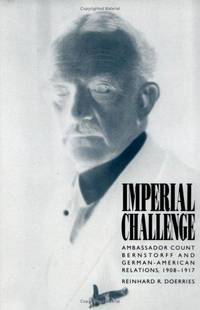
1989réf. 12827Oversized cloth hardcover xix 442 pages NOT ex-library. Shipping weight over 1kg. Pencil underlining and/or annotations / marginalia on 175 pages. Else light wear only book is clean untanned free of any foxing and age-spotting. Untorn dust jacket shows minor edgewear straightened creases on the flaps a touch of sunning on the spine. -- A scholarly study of the deteriorating diplomatic relationship between Germany and the United States in the decade leading up to America's entry into World War I. The book focuses on the tragic role of Count Johann Heinrich von Bernstorff the Imperial German Ambassador to Washington from 1908 to 1917. It portrays Bernstorff as a seasoned liberal diplomat who found himself caught between his personal desire for peace and the aggressive directives of his government in Berlin. Bernstorff is depicted as one of the few high-ranking German officials who understood American power. He repeatedly warned Berlin that unrestricted submarine warfare would inevitably force the U.S. into the war. In his desperation to prevent conflict Bernstorff frequently overstepped his instructions or ignored them entirely to appease the American administration and President Woodrow Wilson. Ultimately his conciliatory advice was ignored by the German military command and the Kaiser who overestimated German power and underestimated the United States. A significant portion of the English edition expanded from the original 1975 German version focuses on the "shadow war" conducted on American soil. The book details German activities in the U.S. between 1914 and 1917 including espionage propaganda and physical sabotage aimed at preventing American munitions from reaching the Allies. Doerries examines the extent to which Bernstorff was aware of these clandestine operations noting the "tricky position" he occupied as both an ambassador and a nominal supervisor of secret service agents like Franz von Papen. Critics and historians consider this work the most comprehensive treatment of German-American diplomatic relations during this critical era. The book utilizes documentary evidence that became available only after World War II providing fresh insight into the internal conflicts within the German Imperial government. University of North Carolina Press hardcover
1999réf. 9825Belmont MA: Ford & Bailie 1999. Soft cover. Good. Paperback xxxv 387 pages b&w illustrations NOT ex-library. Interior is clean and bright untanned with unmarked text and firm binding free of inscriptions and stamps. Faint dusty and handling marks on page edges externally. A touch of wear to tips of corners. -- Contents: Preface; Introduction; Origins of Poets The Boyhood Deeds of Finn; The Story of Gwion Who Became Taliesin; Athirne and Amairgen; The Spirit of Poetry; Sinann: The Shannon River; Imbas Forosnai: Illuminating Inspiration; Poets on Tour Athirne the Insistent; Lomna Finn's Fool; The Battle of Allen; Llywelyn and the Fool; The Siege of Howth; Guaire's Greedy Guests; The Vision of Mac Con Glinne; Satire on Rhys Meigen; -- Welsh Poems: -- Summertime / Anonymous; Taliesin: - Cynan Garwyn son of Brochfael - The Battle of Gwen Ystrad - In Praise of Llwyfenydd; The Gododdin: selections / Aneirin; Llywarch Hen: - The Sick One of Aber Cuawg - Song of the Old Man - On Urien and the Gogledd - The Desolation of Erechwydd - Gnomes; -- The Poets of the Princes: -- Elegy for Gruffudd ap Cynan / Meilyr Brydydd; Elegy for Llywelyn de Gruffudd / Bleddyn Fardd; Elegy for Llywelyn de Gruffudd / Gruffudd ab yr Ynad Coch; Hywel's Boast / Hywel ab Owain Gwynedd; Gwalchmai's Boast / Gwalchmai ap Meilyr; Ieuan's Boast / Ieuan ap Rhydderch; Prydydd y Moch: - To Gwenlliant - A Threat to Dafydd ab Owain Gwynedd - A Threat to Gruffudd ap Cynan ab Owain - In Praise of Gruffudd ap Cynan ab Owain - An Elegy for Gruffudd ap Cynan ab Owain - In Praise of Llywelyn ap Iorwerth 1 - In Praise of Llywelyn ap Iorwerth 2 - A Prayer for the Health of Madog ap Gruffudd - The White-hot Iron; Dafydd ap Gwilym: - To Ifor Hael 1 - To Ifor Hael 2 - Basaleg - Elegy for Ifor and Nest - In Praise of Summer - May - Summer - The Holly Grove - The Woodland Mass - A House All of Leaves - The Ruin - Secret Love - The Seagull - The Star - Under the Eaves - The Girls of Llanbadarn - The Minor - The Sunshine Girl - Trouble in a Tavern - A Reluctant Girl - Looking for a Nun - The Magpie's Advice - The Poet and the Gray Friar - The Poet's Shadow; Complaint against Dafydd / Gruffudd Gryg; Reply to Gruffudd Gryg / Dafydd ap Gwilym; -- Irish Poems: -- Irish Bardic Poetry: -- Giolla Brighde Mac Con Midhe: - A Vision of Emain Macha - A Response to a Threat against Poetry; Tadhg Dall hUiginn: - Christmas in Creeve - Longing for Enniskillen; Laments: I-X / Gormlaith Daughter of Flann Sinna; Bibliography Ford & Bailie paperback
1929réf. 019940London Bombay and Sydney: George G. Harrap & Co. Ltd 1929. Book. Illus. by Monro S Orr. Very Good . Hardcover. 1st Edition. First UK Edition THUS Third print of this edition. pp. 294. Original blue boards complete with eight full colour illustrations by Monro S Orr. Original pictorial jacket present same design as boards. Light wear and a touch of chipping to spine. Clean tightly bound copy gift inscription to front end page. . George G. Harrap & Co. Ltd Hardcover
2011réf. 12902Limited edition of 570 hand-numbered copies this is no. 565. Bilingual German & English large format hardcover 99 pages colour plates pp 35-87 NOT ex-library. Gentle handling wear book is clean and bright with unmarked text and firm binding free of inscriptions and stamps. Issued without a dust jacket. -- Austria has a remarkably rich artistic landscape. Within it Monika Pichler - an artist with a deep love of fabric in every sense - often finds her surroundings too comfortable even a little complacent. To challenge herself she has spent the past fifteen years exploring the idea of women travellers in literature drawing inspiration from writers like Ida Pfeiffer and Annemarie Schwarzenbach. Rather than staying within familiar settings Pichler treats the wider world as her classroom for the art of living. Her work both digital and tangible turns toward far off places and imagined worlds inviting her to see her own story from a new outsider's perspective - as if becoming a guest in her own life. By travelling to what is foreign she discovers that this 'otherness' is in fact part of herself. -- "Österreichs Kulturlandschaft ist durchaus reichhaltig. Als eine im doppelten Wortsinn in Stoffe verliebte Person bewegt sich Monika Pichler in dieser Szenerie nicht ohne deren Ruhebettcharakter als wenig herausfordernd zu erleben. Deshalb widmet sich die Künstlerin seit 15 Jahren dem Thema "Reisende Frauen" in der Literatur wie sich dies durch die Bücher von Ida Pfeiffer oder Annemarie Schwarzenbach vermittelt. Statt heimischer Gefilde dient Pichler die Welt an sich als Schule der Lebenskunst. Ihr künstlerisches Denken und Handeln widmet sich - virtuell und real - exotischen Welten und europäischen Phantasien um dabei zu erleben wie die eigene Biografie als "Andere" als Gast zu sich selbst zurückkehrt. Das bedeutet fremde Gegenden aufzusuchen um das "Andere" als Teil der eigenen Identität zu empfinden." Bibliothek der Provinz hardcover
1937réf. 018590Baile Atha Cliath Dublin: Oifig Diolta Foillseachain Rialtais 1937. Book. Good. Hardcover. 1st Edition. First Edition First Printing. First edition in Gaelic A good copy in original jacket with wear and chipping. Original green cloth gilt title to the front panel and spine uneven fade to the boards tight binding.A Rare anthology of translation containing Miceal Breatnac M.A. translation of A.M Burrage 'The Waxwork' Padraic Og O Conaire translation of Frank O'Connor 'The Sisters'. Padraic O Domnallain translation of William Gilmore Sims 'Murder Will Out' Sean Mac Giollarnat translation of H.G. Wells 'The Country of the Blind' Padraic O Mograin M.A. translation of O. Henry 'The Gift of the Magi' Tomas O Ragaillig translation of Anton Tchehov 'The Bet' Sean O Ruadain translation of Lynn Doyle 'Dear Ducks' Mairtin O Cadain translation of Lynn Doyle 'A short suit' An Tatair O Beirn translation of Lynn Doyle 'A bit of land' and a piece in Irish by Padraic O Conaire . Oifig Diolta Foillseachain Rialtais Hardcover
1990réf. 75200AB1990. Second Edition. Barcelona Fundacio Joan Miro 1990. 20.5 cm x 29.5 cm. 112 pages. Original Softcover. Excellent condition with only very minor signs of external wear. Includes for example the following essays: The Joan Miro Foundation and its collections Origins and Aims The Building Plan of the Foundation Illustrations - Paintings Sculptures and Drawings and a Biography Chronology of Joan Miro. Illustrated throughout. paperback
1848réf. 28035Dublin: Celtic Society 1848. modern rebinding in green cloth-covered boards new endpapers binding sound and strong some wear and scuffing to outer leaves book was disbound when I acquired it a few marks in pencil by previous scholarly owner pp xvi 515. Apart from Kelly's introduction Lynch's text is in Latin and English on facing pages. First Edition. Hard Cover. Good/No Jacket. 8vo - over 7¾" - 9¾" tall. Celtic Society Hardcover
2012réf. 8617Encyclopedia of China Publishing House 2012. 1st Edition . Soft cover. Very Good. Scarce English-language paperback vi 400 pages NOT ex-library. Light wear book is clean and bright with unmarked text free of inscriptions and stamps firmly bound. Encyclopedia of China Publishing House paperback
2020réf. 10993Peter Lang 2020. 1st Edition . Hardcover. Very Good. Hardcover 475 pages copiously illustrated with colour and b&w photos maps plans and drawings NOT ex-library. Limited gentle wear. Book is clean and bright with unmarked text free of inscriptions and stamps firmly bound. Issued without a dust jacket. -- The book presents the discoveries made by the Polish archaeological mission in Saqqara the central part of the largest ancient Egyptian royal necropolis. The area adjacent to the Pyramid of King Djoser on the monument's west side so far neglected by archaeologists turned out to be an important burial place of the Egyptian nobility from two periods of Pharaonic history: the Old Kingdom the late third millennium BC and the Ptolemaic Period the late first millennium BC. The earlier lower cemetery yielded rock-hewn tombs with splendid wall decoration in relief and painting. The book also describes methods of conservation applied to the discovered artefacts and episodes from the mission's life. -- Contents: Introduction; Bibliography; Chronological table; 1 History and archaeology: Saqqara in Egyptian history 2 From Edfu to Saqqara: Polish archaeology in the Nile Valley 3 First steps 4 The vizier's revenge 5 A testimony to stormy times 6 In the realm of Osiris 7 Cult of the dead 8 The vizier's posthumous neighbour 9 Behind the scenes of family bliss 10 Renaissance of the necropolis after two thousand years 11 Primum non nocere or the medicine of artefacts 12 The rest is silence; Extroduction; Glossary of deities; Glossary of archaeological terms; Glossary of foreign expressions and words; List of figures; Illustrations; Photographs; Figures Authors of the drawings; Authors of the photographs; Deities Peter Lang hardcover
1970réf. 454986Oxford University Press ; Cambridge University Press 1970. First Edition. Hardcover. Fine cloth copy in an equally fine dust-wrapper. Not price-clipped. Well-preserved overall; tight bright clean and especially sharp-cornered. Series; The Bible: a new English translation. Physical description; xiv 362 pages ; 23 cm. Notes; Prepared by the Joint Committee on the New Translation of the Bible. Subjects; Bible. Apocrypha. English. New English Bible 1970. Apocryphal books Old Testament English Versions. Deuterocanonical literature. Biblical studies English translations. Oxford University Press ; Cambridge University Press hardcover
1961réf. 455030Oxford University Press 1961. First Edition. Hardcover. Near fine cloth copy in a very good if slightly edge-nicked and dust-dulled dust-wrapper now mylar-sleeved. Remains well-preserved overall. Not price-clipped. Series; Penguin books ; 2000. Physical description; xiii 446 pages ; 24 cm. Notes; Translated under the supervision of the Joint Committee on the New Translation of the Bible. Subjects; Bible. New Testament. English. New English Bible 1961. Bible Versions English. New Testament Texts. Biblical studies English translations. Oxford University Press hardcover
1961réf. 455365Cambridge England ; Oxford : at the University Press 1961. First Edition. Softcover. Near fine copy in a flexible gilt-blocked leatherette semi-yapp binding with all gilt edges. Remains well-preserved overall; tight bright clean and strong. Physical description; xiii 446 pages ; 24 cm. Notes; Translated under the supervision of the Joint Committee on the New Translation of the Bible. Includes bibliographical references. Subjects; Bible. New Testament. English. New English - 1961 Bible - Versions - English. Cambridge, England ; Oxford : at the University Press paperback