[Oireachtas - Translation Bureau]Biblio.com

52 résultats
1945réf. 101342AB1945. Baile átha Cliath Oifig Diolta Foillseacháin Rialtais 1945. 22 cm. 62 pages. Softcover. Very good condition with only minor signs of external wear. paperback
1993réf. 75317AB1993. London The Folio Society 1993. 18.5 cm x 27.5 cm. 96 pages. With 8 illustrations. Original Hardcover cloth-bound. With slipcase. Excellent condition with only very minor signs of external wear. Includes the text of The Art of Love divided into three books and an introduction to the text by James Michie translator. The text is accompanied with full-colour page illustrations titled for example:- 'A Man and a Woman in the Wood one day' 'Each man's on his own.' and 'While I was writing this I saw Apollo coming Towards me with his golden lyre'. hardcover
2005réf. 12895Large-format hardcover 30 x 28 cm 309 pages copiously illustrated NOT ex-library. Catalan language English text pages 275-309. Weight 2.5kg. Very good clean condition with unmarked text free of inscriptions and stamps firmly bound. Limited signs of gentle handling wear. -- Catalogue of the exhibition held from November 18 2005 to March 19 2006 at the Museum of the History of the City of Barcelona. -- Co-authored by Albert García Espuche a prominent Catalan architect and urban historian who previously directed exhibitions at the Centre de Cultura Contemporània de Barcelona CCCB this volume examines the historical evolution of the city through the lens of documentary photography. Lunwerg Editores hardcover
2023réf. 11168Intervalles 2023. 1st Edition . Soft cover. Very Good. Bulky paperback 20x15x4cm weight over 1kg 592 pages illustrated throughout with b&w photos NOT ex-library. Mild wear a gently bumped corner of the rear cover a bit of rubbing to cover edges. Book is clean and bright with unmarked text free of inscriptions and stamps firmly bound. -- "Tribes represent 350 million persons on our planet. They populate our continents and while very different they are all united around the love of their earth and a strong attachment to their ancestors. The relationship of their hands and their gestures with nature is exemplary. The passing on of their cultural knowledge is unique. They are the last sentinels of the Earth. Through her photographic work Anne de Vandi re shows the fragility and the beauty of these peoples who for centuries even millennia have made the choice of being self-sufficient in their environment. They only take what they need from surrounding nature. The greedy race for natural resources is the greatest danger threatening them but they are resilient. Especially since they live in the only areas where biodiversity is respected. Their intuitive and ancestral ecology commands respect. Photographer Anne de Vandi re has gathered with great care the images and testimonies of these populations on the edge of the world. Preface by rik Orsenna texts by Priscilla Telmon Jean-Patrick Razon Florent Maubert Serge Bahuchet Anne de Vandi re." -- "From Australia to Senegal from Peru to Quebec from Laos to Ethiopia from Greenland to Ladakh from Lapland to Malaysia Anne de Vandi re has met skills philosophies harmonious and altruistic lifestyles all of which are based on an affinity between men and the Earth and lead to the future as much as others. The faces she's met the outstretched hands she's captured let us hear singular voices ancient wisdoms a humanism that we could all learn from. Driven by an insatiable curiosity by a willingness to learn and to understand the other Anne de Vandi re makes these small endangered peoples - at the edge of the world often misunderstood tribes and ethnic groups - the sanctuary of our planet. In other words she makes them our invaluable treasure." Intervalles paperback
1993réf. 7728Cambridge UK: Polity Press 1993. Hardcover. Very Good/Very Good. Hardcover ix 168 pages b&w illustrations in text NOT ex-library. Limited mild wear book is clean and tight with unmarked text free of inscriptions and stamps. A tiny nick to the upper edge of a few leaves. Dust jacket is gently shelfworn with sunning to the spine and flap edges light creasing to edges a touch of rubbing. -- This book is a concise history of the use and interpretation of time written by one of the foremost historians in Europe today. Arno Borst examines the various ways that time has been calculated by numbers and measured by instruments through the ages from the "computus" - an ancient method of determining times and dates - to the present-day computer. In a wide-ranging discussion he analyses the classical Greek concepts of divine natural and human time; the universal time of ancient Rome; the Easter cycle of the Middle Ages; the development of the mechanical clock in the fourteenth and fifteenth centuries; early modern chronology; and twentieth-century data processing. Borst argues that although many centuries and countless different instruments - sundials horologia abaci astrolabes calendars and calculating machines - separate the "computus" from the modern computer each generation throughout the ages has had to answer the same question: how can we make the best use of our available time to improve our lives The computer he suggests is merely a new instrument employed for an ancient purpose. Lively and accessible The Ordering of Time will be welcomed by students and researchers in social and cultural history the history of science and mathematics as well as anyone interested in the history of time and numbers. Polity Press hardcover
2018réf. 12884English-language edition weight over 1kg. Clean and bright condition with unmarked text free of inscriptions and stamps firmly bound. Minor handling wear only. Issue without a dust jacket. -- Between 1964 and 1967 the artist Erró embarked on a unique project asking artists musicians poets gallery owners critics and curators to spontaneously pull a face for his camera. The recordings ranged from a few seconds to two minutes often ending only when the camera operator was overcome with laughter causing the image to shake. In 1967 editor Denise de Casabianca skillfully assembled 173 of these recordings into a 40-minute film titled Grimace - an experimental work described as both anarchic and subjective. This book presents 133 stills taken directly from the film. It provides deeper insight into the project offering explanations of individual shots the film's concept and the many notable figures who participated among them Marcel Duchamp Robert Filliou Ted Joans Taylor Mead Claes Oldenburg Lil Picard Man Ray Carolee Schneemann Marjorie Strider and Andy Warhol. Ernest Rathenau Verlag hardcover
1992réf. 10352Hurst & Company / St. Martin's Press 1992. 1st Edition . Hardcover. Near Fine/Good. Hardcover xx 236 pages numerous b&w photos and maps in text NOT ex-library. Book is clean and bright throughout untanned with unmarked text free of inscriptions and stamps firmly bound. A touch of rubbing to board edges. Bright dust jacket with a couple of tears treated with transparent tape. -- Sweden a neutral state since early in the nineteenth century has made an active contribution with forces and observers to most of the United Nations peacekeeping operations. The benefit has been mutual: for the UN the commitment of a prosperous state with a tradition of military preparedness despite its neutrality and for Sweden the opportunity to practise military leadership and test its soldiers in in complex situations often involving actual fighting. Sweden's important activity in this field has been little documented and hardly at all in languages other than Swedish. This is now remedied with a comprehensive case-study of a model UN operation which directly affected the political result - which was the transformation of Sinai a classic theatre of war into a peace front. The study is in two parts. The first is chronological and begins with the establishment of the UN Emergency Force UNEF II after the October War of 1973; the political antecedents involving the Secretary-General the Security Council and the countries approached for contributions; the interposition of "mini-battalions" between the Egyptian and Israeli front lines; the UNEF build-up the complex separation of forces the establishment of the blue helmets in the buffer-zones routine activities and incidents and finally after a peace treaty the winding-up of the UN force. The despatch of a Swedish advance guard to a new peacekeeping force in Lebanon in 1978 is also described. The three levels and locations of command - UN headquarters in New York UNEF headquarters and the fourteen successive Swedish contingents are all given their due weight. The second part is analytical looking not only at the course of events but at the different concerns of the military staff: operational logistical and personal. The final chapter sums up the essential experience and lessons of the operation with some proposals for improvements. -- Contents: Chronology of UN interventions in the Middle East; UNEF II: basic data; Part I. Course of Events 1. Background of war Palestine Suez June Wars; War of Attrition & October War 2. UN intervention 3. "Fire brigade" from Cyprus 4. Battalion from Sweden Interrupted training; Two battalions in co-operation; Baptism of fire & transfer of responsibility; Fragile armistice; Assignments in Alexandria and Suez 5. Troop separation Change of scene to Geneva; Peace conference & Military Working Group; Strength & weakness of UNEF; Sinai I becomes Operation Calendar; What did they do at battalion level 6. First buffer-zone 7. Further into Sinai 8. Lebanon calling 9. Peace and winding-up Sadat-Begin-Carter; Tottering mandate; Changed task; Last UNEF contingent but; A new peace force underway Part II. Functional Analyses 10. Operational functions Flexible organization fixed rotation; Violations by the parties. UN reactions; Intelligence: a dirty word in the UN; Communications: everybody's business; Command at different levels; Relations negotiations co-operation 11. Logistics & finance Procedure & terminology; Weapons clogs "candy mountain"; Health & hygiene go together; Mail & money; Air safer than road; Financing the operation 12. Personnel: the primary resource Planning & results; Welfare in a desert environment; Broadcasting newsletter & magazine; Physical training & field sports; Crime & punishment 13. Odd functions 14. Conclusions and suggestions The need for speed; Better equipment and logistics; Despite motley structure despite delays; Appendixes I. Places and Events II. Egyptian-Israeli agreement on disengagement of forces in pursuance of the Geneva Peace Conference; Sources and literature; Index Hurst & Company / St. Martin's Press hardcover
2017réf. 11095Hart Publishing 2017. 1st Edition . Hardcover. Very Good. Hardcover x 169 pages NOT ex-library. Limited signs of minor wear book is clean and bright throughout with unmarked text free of inscriptions and stamps firmly bound. Issued without a dust jacket. -- "In international relations IR some states often deny the legal status of others stigmatising their practices or even their culture. Such acts of deliberate humiliation at the diplomatic level are common occurrences in modern diplomacy. In the period following the breakup of the famous 'Concert of Europe' many kinds of club-based diplomacy have been tried all falling short of anything like inclusive multilateralism. Examples of this effort include the G7 G8 G20 and even the P5. Such 'contact groups' are put forward as if they were actual ruling institutions endowed with the power to exclude and marginalise. Today the effect of such acts of humiliation is to reveal the international system's limits and its lack of diplomatic effectiveness. The use of humiliation as a regular diplomatic action steadily erodes the power of the international system. These actions appear to be the result of a botched mixture of a colonial past a failed decolonisation a mistaken vision of globalisation and a very dangerous post-bipolar reconstruction. Although this book primarily takes a social psychology approach to IR it also mobilizes the resources of the French sociological tradition mainly inspired by Emile Durkheim." -- Contents: Introduction; Part One: Humiliation in the History of International Relations: The Discovery of a New Form of Social Pathology 1. Pitfalls of the Ordinary Lives of People Tectonics of Societies; Lack of Integration; The Uncertainties of Status; The End of the Cold War and Beyond 2. Humiliation or Power without RulesPower Against Humiliation; How Power Goes Wrong 3. Types of Humiliation and their Diplomacies Constructing a Typology; Type 1: Humiliation by Lowering of Status; Type 2: Humiliation through Denial of Equality; Type 3: Humiliation by Relegation; Type 4: Humiliation through Stigmatisation; Part Two: An International System Fed by Humiliation 4. Constitutive Inequality: The Colonial Past Exceptions and Outrages; Pathways of Humiliation; New forms of Patronage 5. Structural Inequality: To be Outside the Elite The Broken Dream of the 'Middle Powers'; Emergent Powers and the Bonds of Past Humiliations; Small Countries' Narrow Range of Action 6. Functional Inequality: Being Excluded from Governance Minilateralism; Oligarchic Pressure; A Certain Diplomatic Paternalism; Part Three: The Dangerous Repercussions that Follow Humiliation: Towards an Anti-System 7. The Mediating Role of Societies The International Mobilisation of Societies; Neo-Nationalism and Fundamentalism; The Insoluble Contradictions of the Arab Spring 8. Are there Anti-System Diplomacies Oppositional Diplomacies; Diplomacies of Deviance 9. Uncontrolled Violence New Conflicts New Violence; Violence and Social Integration; Conclusion Hart Publishing hardcover
1976réf. 10367Hardcover 246 pages. A foreign stamp on the title page. Interior in great shape clean and bright with unmarked text free of inscriptions firmly bound. Gently age-toned upper outer page edges a touch of minor yellowing on endpapers only. Dust jacket with a tear to the upper front edge. -- "This book needs no introduction. It is the authentic story of my brother-in-law a Polish officer of the reserve son of the composer and the well beloved conductor of the Warsaw Opera Emil Mlynarski captured at the end of the Polish-German Campaign in 1939 by the invading Red Army and detained in a Soviet camp for officers. Most of the inmates of these camps disappeared mysteriously and bodies of over 4000 of them were later found in the Katyn Woods near Smolensk. They were identified and it was established that the victims had been inmates of one camp only namely that of Kozyelsk Kozelsk. A similar fate befell officers in the two other camps most of whom disappeared without trace. Mlynarski was held at the camp of Starobyelsk and for reasons unknown with 78 other Polish officers was allowed to survive and to tell his story. It is a tragic one. First came the treacherous and brutal blow struck by the Red Army in the back of the retreating and unsuspecting Polish troops belonging to a country with whom the Soviet Union not only was not in a state of war but bound by a non-aggression pact. Then came the no less brutal manner by which the prisoners were driven into Central Russia first on foot later in box-cars more apt for transporting cattle than human beings. And finally the sojourn in the Starobyelsk Starobielsk Camp. The author's account of his ghastly ordeal is not only gripping but offers an incisive insight into the workings of the secret police known then as the NKVD which ran the camp. The way in which as one can assume the decision of the ultimate annihilation of the Polish prisoners of war was slowly maturing in Stalin's mind has the makings of a Greek tragedy of unsurpassed dimensions." Arthur Rubinstein -- Contents: 1 Warsaw September 1939; 2 Direction - East; 3 A knife in our backs; 4 Deadly ambush; 5 Eye to eye with the enemy; 6 In Soviet captivity; 7 To the East in stages; 8 Our first contacts with Soviet reality; 9 Camp Starobyelsk; 10 A delegate from Moscow; 11 Everyday camp life; 12 Prisoners from Shepetovka; 13 Lavotchka the green box; 14 Roubles; 15 My first interrogation; 16 The new barracks; 17 "Thank you my friends"; 18 Dogs; Epilogue by Witold Kaczkowski -- "Prompted by a sense of evil foreboding a handful of officers who had been closely united through brotherhood through suffering and distress gave each other a solemn vow that if one of them should live to see freedom he would remember the others. This proved to be our parting. For Providence chose to spare me only and to restore freedom to me alone." This book is the fulfilment of Mlynarski's promise to those friends. He was one of the 79 officers out of nearly 4000 whose life was spared by the NKVD when they liquidated the Starobyelsk "special" prisoner-of-war camp in 1940. Caught between the German and Red Armies at the beginning of the ww2 some Poles hoped against hope that the Red Army was crossing the border to fight side by side with them against the Germans. Reality brought an invaded Poland a defeated and imprisoned army and 3 special pow camps for the leaders of Polish society. In 1943 in the Katyn Woods the Germans dug up the corpses of the unlucky 4254 Poles from one of the special camps. The bodies of the "other 10000" from the other two camps have never been found. This is a tragic yet poetic story of a true patriot imbued with a deep love for human beings who also felt sympathy for the ordinary Russian people themselves victims of the inhuman Stalin regime. It is also one of the most important contributions to a chapter in history which has been shrouded in secrecy hidden behind an iron curtain of conspiracy. Bachman & Turner hardcover
1985réf. 75554AB1985. Reprint. London Darton Longman and Todd 1985. 14 cm x 22 cm. 154 pages. Original Softcover. Excellent condition with only very minor signs of external wear. Includes for example the following essays: Experience of God - Evil What Does Not Exist - Chance Experience of the Church - A Taboo to Be Rid Of 'Mercy I Desire Not Sacrifice' and Farewell. paperback
2003réf. 8557Korea Democracy Foundation 2003. Soft cover. Good. Scarce paperback 432 pages NOT ex-library. Moderate internal creasing a small indentation in the lower outer corner of rear cover and last pages; book is clean and bright with unmarked text free of inscriptions and stamps firmly bound. Gentle external handling wear. Korea Democracy Foundation paperback
2009réf. 8352Barcelona: Lunwerg 2009. 1st Edition . Hardcover. Near Fine/Near Fine. Large-format hardcover 229 pages copiously illustrated NOT ex-library. Weight 1635g. Book looks unread minor handling wear: clean and bright throughout with unmarked text free of inscriptions and stamps firmly bound. In a bright untorn dust jacket. -- English translation of the essays on pages 199-227. All captions in bilingual format Spanish & English. -- Contents: Presentaci n / Ibercaja; El Palacio sede del Museo / Carmen G mez Urd ez La historia m s reciente; La casa del infanz n Jer nimo C sida en el siglo XVI; La remodelaci n del Museo Ibercaja Cam n Aznar / Antonio-Ignacio Mel ndez Alonso; Renacimiento y Barroco / Jes s Ferm n Criado Mainar Entre los siglos XV y XVI; El renacimiento ; El barroco; Pintura y Arte de la poca de la Ilustraci n: Goya / Arturo Ans n Navarro; Arte Contempor neo en le Museo Ibercaja Cam n Aznar / Manuel Garc a Guatas; Presentation; Museum Building / Carmen G mez Urd ez Recent History; House of Jer nimo C sida in the 19th Century; Refurbishment of the Ibercaja Cam n Aznar Museum / Antonio-Ignacio Mel ndez Alonso; Renaissance and the Baroque / Jes s Criado Mainar Between the 15th and 16th Centuries; Renaissance; Baroque; Enlightenment Art and Painting: Goya / Arturo Ans n Navarro; Contemporary Art in the Ibercaja Cam n Aznar Museum / Manuel Garc a Guatas Lunwerg hardcover
2000réf. 3866Paperback 14 178 pages NOT ex-library. A couple of creases to lower outer corners throughout the book cover and pages. Else little used clean and bright throughout with tight binding and unmarked text: no writing no highlighting of any kind. Short horizontal creases to upper and lower spine edges.--- This book is the outcome of a seminar hosted by the Africa Institute of South Africa to provide a platform for Congolese and South African representatives of differing political persuasions to present their views on the multi-dimensional and complex nature of the present crisis in the Democratic Republic of Congo; and debate strategies for peace and reconstruction. The Congolese representatives came from both the government controlled area Kinshasa; and the territory under rebel administration Kivu. Both groups provide coverage of the conflict discuss issues of nationality and emphasise the need for inclusion in national and local dialogue. The papers also debate peace-keeping and peace-enforcement; military ethnic political and economic constraints to peace building and how these may be overcome; and demilitarisation and disarmament of militias operating in the eastern Congo. They analyse the state of the economy in the DRC in the periods of the Mobutu era during the Kabila-led take-over and since the eruption of the war; and consider the possibilities for sustainable economic reconstruction. They expose the impacts of the war on women and children and outline the role of women in the peace efforts. -- CONTENTS Part One: Internal and International Challenges to Peace-Making and Peace Building in the Democratic Republic of Congo Peace and Security in the DRC / Shannon Field and Ebrahim Ebrahim; The Democratic Republic of Congo: The Quest for Sustainable Peace / Claude Kabemba; Discussions; Part Two: Background to the Conflict and the Quest for Democracy and Good Governance Background to the Conflict and Instability in the African Great Lakes Region / Wildor Makonero; The Inter-Congolese Dialogue and Constitution-Making / Denis Kadima; Transforming the Political System in the DRC / Kabasubabo Katulondi; Discussion; Part Three: Civil Society in Kinshasa: War Peace Gender and Elections The Impact of the War on Women and Children / Anne-Marie Mukwayanzo; The Role of Women in Constructing and Maintaining Peace / Marie-Curie Makutu; Instituting Democratic Elections in the DRC / Paul Nsapu; Discussion; Part Four: Demilitarisation and Disarmament of Renegade Militias Should the Mai Mai Militia Be Disarmed / Augustin B. Mutambala; Regional Perspectives on Security and Peace After the War / Musimwa B. Partiel; Discussion; Part Five: Economic and Social Reconstruction After the War Reconstructing the Congolese Economy After the War / Joseph M. Kabwe Africa Institute of South Africa paperback
2000réf. 8618Edward Elgar Publishing 2000. Hardcover. Very Good/Good. Hardcover xiii 223 pages. Cancelled foreign university library stamps on first pages. Book is clean and bright with unmarked text firmly bound. Dust jacket shows creases to edges. Edward Elgar Publishing hardcover
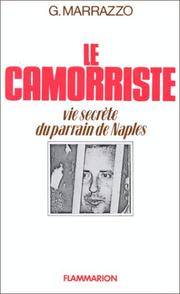
1985réf. 13053Paperback 263 pages 13 NOT ex-library. Noticeably yellowed cover- and page-edges. Interior is clean with unmarked text free of inscriptions and stamps. Faint external grubby marks on outer page edges dusty lower and upper edges. Good secure binding. Creased spine. -- L'irrésistible ascension de Raffaele Cutolo fondateur et chef de la maffia napolitaine dont le procès fleuve a fait grand bruit jusqu'en juillet. Le film devrait sortir en 1986. -- La Sicile a la Mafia Naples a la Camorra qui de folklorique autrefois est devenue tentaculaire dans les années 70. L'artisan du changement: Raffaele Cutolo fils de paysans emprisonné très jeune pour avoir tué un homme au cours d'une dispute. Derrière les barreaux jour après jour il met la main sur la contrebande le racket le trafic de drogue… Et l'imagination populaire fait de lui un nouveau Robin des Bois qui vole aux riches pour donner aux pauvres. Le boss dicte sa loi et même Cosa Nostra s'allie avec lui. Aussi captivant que Le Parrain mais écrit à la première personne de l'intérieur même de la 'conscience' de Cutolo à partir de son témoignage Le Camorriste raconte ses crimes ses trafics ses amours ses faiblesses et les dessous de l'enlèvement du député démocrate-chrétien de Naples qui vit Cutolo être l'intermédiaire entre l'État et les Brigades rouges. Une histoire vraie qui est un grand roman d'action. L'auteur Giuseppe Marrazzo journaliste italien célèbre par ses enquêtes retentissantes sur le crime organisé est mort d'une crise cardiaque le soir de la présentation du livre à Rome. -- Table des matières: 1. Sur la chemin de l'Asinara 2. La recontre avec un vrai boss 3. Entre rêve et réalité 4. Le défi à 'o Malommo 5. Le pacte du sang 6. La cavale 7. Le voyage en Amérique 8. Cartuccia et Turatello sont condamnés à mort 9. Les dessous de l'enlèvement de Cirillo 10. La décapitation du criminologue Semerari 11. Le 'scandale' Cutolo explose 12. L'Asinara et la trahison de 'o Nerone; Postface Flammarion paperback
2001réf. 75302AB2001. Buenos Aires Bifronte 2001. 23 cm x 21.5 cm. 127 pages. Original Hardcover. Excellent condition with only very minor signs of external wear. Volume presenting photograph illustrations of Buenos Aires Argentina. Appended with text in English and Spanish. Photographs printed in both colour and black and white. Photographs by Jorge Luis Campos Martin Gomez Alzaga Enrique Limburnner Ron Lovelace Stefano Nicolini and Melito Cerezo. hardcover
2018réf. 8443Mayreni Publishing 2018. Hardcover. Near Fine/Near Fine. Hardcover xxx 503 pages NOT ex-library. Limited light handling wear faint dusty marks. Else clean and bright throughout with unmarked text free of inscriptions and stamps firmly bound. In a bright untorn dust jacket. Weight 900g. Mayreni Publishing hardcover
2015réf. 10081Helsinki Finland: Musta Taide Aalto University School of Arts Design and Architecture 2015. 1st Edition . Hardcover. Good. Good. Small format hardcover 17x16 cm fully bilingual 303 pages illustrated throughout glossy paper NOT ex-library. Very good interior clean and bright with unmarked text free of inscriptions and stamps firmly bound. Boards show small grubby marks a touch of rubbing short creases; non-sticky yellowed residue of a removed sticker on the back. Issued without a dust jacket. -- Published in conjunction with a retrospective exhibition on photographer Hannele Rantala in the Finnish Museum of Photography that includes works from 1975 to 2015 offering a comprehensive overview of her artistic career. Although it spans four decades there is clear continuity in the themes as the works explore departures homelessness and changes along with borders and liminal situations. Rantala a long-time expatriate possesses a great deal of experience in such issues. Structured in part chronologically the book illustrates the changes that have taken place in her own oeuvre. Each section includes an explanatory often autobiographical text by Rantala. -- Contents: Foreword; 1. Golden Section The Black and White Photograph Series Early Pictures; Finish Series; French Series; European Series; Tallinn; Natasha; 2. Baroque Square Entre monde et paradis; 432 Clouds; Rose and Nail; 3. The Map of Europe 47 Departures; Passport Pictures; On the Other Side; Shadows. Names and Numbers I; Shadows Names and Numbers II; Blue Scarf; Blue Scarf Instructions for Tying the Scarf; 4. Ruptures; 5. Invisible Boundary The Lost Country Less Than Nothing; Have You Seen This Woman Tukholma / Stockholm; Viipuri / Vyborg; Helsinki; Have You Seen This Woman New York; The Bridge; Epilogue; Biography; Thanks -- "I was born in Helsinki in 1952 but nothing really began with me. It all started much earlier. Both my parents fled with their families from Karelia after the Second World War from areas ceded to the Soviet Union - along with 400000 other Finns. My father and mother came from such different backgrounds and different parts of the surrendered part of Karelia that if it were not for the war they would never have met and I would never have been born. My parents didn't speak about the horrors of the war. It was only in her final years that my mother began increasingly to go back over her own experiences of it. So I too endlessly went through all the heart-breaking episodes that she carried inside her. If I couldn't get her to stop at the Truce then on top of the Winter War I also listened my way through the Continuation War in all its horror again and again week after week. My father's mother's family ended up on the Karelian Isthmus in Vyborg having left Poland as a consequence of the upheavals in Russia at the end of the 19th century. The hardships that this involved were never mentioned. I suppose the content of my work was shaped out of these elements very early on. I have wondered whether I have really been able to choose my own subjects. All of my works come about a bit by stealth. I plan to do something else and suddenly I notice I have made a big work about some minor fracture in my unconscious. My works and my art try to make something small into something big. As an artist I am in a conflicted situation because when faced with my works my own psyche - and my inner being - are supposed to fill a big space. And yet I am often gripped by fear and uncertainty. Each work springs from the overcoming of this state." Musta Taide, Aalto University School of Arts, Design and Architecture hardcover
2007réf. 11439Berghahn Books 2007. 1st Edition . Hardcover. Very Good. Hardcover xxvi 340 pages b&w photos in text NOT ex-library. Missing the front blank endpaper. Book is clean and bright with unmarked text free of inscriptions and stamps firmly bound. Gentle external handling wear. Issued without a dust jacket. -- The book offers an interdisciplinary mosaic of Armenian identity in the modern world through biographical and thematic essays spanning literature politics religion art and memory. It charts the trajectories of 41 Armenians across the global diaspora and Armenia proper. It is structured in four thematic parts - introduction individual portraits memory and trauma and institutional efforts - and interlaced with personal testimonies. The introductory chapters contextualize Armenian historical experience and identity. Topics include the Armenian genocide its denial by Turkey Germany's complicity and the evolving Armenian-Turkish relationship. Some chapters dissect the genocide's foundational role in shaping modern Armenian consciousness and the persistent obstacles to political and historical reconciliation. The core of the book presents profiles of individuals grouped by vocation and geography such as scholars writers artists religious leaders musicians and public figures. These include notable personalities such as genocide scholar Vahakn Dadrian poet Peter Balakian media critic Michael J. Arlen singer Charles Aznavour director Atom Egoyan and editor Hrant Dink. The essays trace how these individuals confront questions of memory trauma identity exile and return often linked to the genocide and its aftereffects. Several portraits focus on individuals whose personal histories are entwined with collective memory such as Madame Anahit a street musician in Istanbul or Van Leo a photographer in Cairo. Figures like Zori Balayan and Anna Hakobyan also demonstrate how political engagement and cultural activism serve as responses to historical injustice. Religious identity and the role of the church are examined in chapters on major clerics from Echmiadzin Antelias and Istanbul. These explore how faith institutions balance tradition with modernization while often operating as cultural custodians amid fractured geographies. Another central theme is the tension between personal reconciliation and historical justice. Several subjects engage with the trauma of genocide through literature oral history or psychological reflection. One section focuses on a couple who documented over 100 survivor testimonies linking their research to similar efforts in Rwanda. Institutional initiatives such as the Zoryan Institute's scholarly projects and its Genocide and Human Rights University Program illustrate how Armenians have contributed to comparative genocide studies. These efforts show a deliberate shift from isolated memorialization to transnational engagement aiming to situate the Armenian experience within broader human rights discourses. The final essays underscore Armenia's current geopolitical situation especially in relation to Turkey and Azerbaijan. The unresolved conflict over Nagorno-Karabakh and closed borders highlight the precarity of Armenian sovereignty and the ongoing implications of denied history. At the same time the portraits reflect efforts to transcend national trauma through education cultural production and global advocacy. Portraits of Hope can be used as a resource in fields such as diaspora studies genocide studies cultural memory postcolonial theory and transnational identity. It bridges genres - biography historiography political reflection - and offers a pluralistic account of how historical experience informs contemporary subjectivity while illuminating contradictions within Armenian identity: nationalism and cosmopolitanism religious tradition and secular modernity victimhood and resilience. Berghahn Books hardcover
1852réf. 26156London: Longman Brown Green Etc 1852. reddish cloth lightly sunned at spine area binding cocked gilt title on spine clearly legible 313pp generally sound copy. First Edition. Hard Cover. Very Good/No Jacket. 12mo - over 6¾" - 7¾" tall. Longman Brown Green Etc Hardcover
2015réf. 9133Ankara Turkey: Kadim Yayinlari 2015. 1st Edition . Hardcover. Near Fine/Fine. Scarce large format cloth hardcover housed in a decorative cloth box fully bilingual English & Turkish; most poems also presented in scripts of Islamic calligraphy: Naskh Thuluth Riqa Taliq or Diwani 413 pages illustrated throughout NOT ex-library. Weight 2.68kg please note: extra shipping will be required. Book shows minor handling wear clean and bright throughout with unmarked text free of inscriptions and stamps firmly bound. In a fine crisp and bright dust jacket. The cloth box shows short creases to corners a bit of rubbing faint dusty handling marks.-- During their time the sultans were known as hukumdar ruler. That is one who rules one who holds authority in their hands. It is arguable whether every sultan was a ruler; but there is no doubt that every ruler lived in his own poetry as the sultan of the word. The Sultans of Poetry ruled during the Ottoman centuries enlivening the corridors of history with dize lines beyit couplets gazel lyric poems and kaside eulogies; now all these words have given us an eagerness to undertake an uplifting journey through the royal gardens where the poems of the sultans used to resound. Kadim Yayinlari hardcover
2009réf. 8369Muza 2009. 1st Edition . Hardcover. Near Fine. Large-format hardcover 30 x 24 cm 358 pages copiously illustrated pictorial endpapers NOT ex-library. Weight 1815g / 4lbs please note: extra shipping will be required. Minor handling wear. Book is clean and bright throughout with unmarked text free of inscriptions and stamps firmly bound. Small scuff-marks on the boards; blacked-out price on the rear panel. Issued without a dust jacket. -- The musicologist Janusz Ekiert is known for his columns essays reports magazines music reviews radio and television series and regular pieces for the Polish daily Express Wieczorny. He has worked as a correspondent for leading newspapers in Amsterdam Vienna Helsinki and Zagreb and been a guest of many renowned music festivals and centres in Europe and America. The present album is not a factual chronicle but a collection of 17 essays which shed new light on situations and figures from Chopin's milieu. The text focuses on scenes and images that portray his character and behaviour and inform an assessment of his oeuvre. We encounter Chopin as a satirist a dreamer and a great patriot. The author shows us this outstanding composer as a man of many talents not only musical - an accomplished drawer and brilliant parodist. There emerges from these essays a picture of Chopin as a caricaturist a dandy and a man blessed with extraordinary sensitivity and a sense of humour; a picture of a creative artist who with his personality entertained the salons of both Warsaw and Paris. -- Contents: -- Warsaw: -- Growing Up; Father; Milieu; Satirist; Dreamer; Konstancja; Patriot; -- Paris: -- In the Shadows; In the Limelight; Delfina; Maria; George; In Summer; In Winter; Shock; Requiem; From a Distance; -- Chronicle of Chopin's Life; List of Compositions; List of Illustrations; Index Muza hardcover
1975réf. 11306McGraw-Hill 1975. 1st Edition . Soft cover. Good. Good. Paperback xix 306 pages NOT ex-library. Mildly age-toned interior is clean throughout with unmarked text free of inscriptions and stamps; no foxing no age-spotting. Text block split in a couple of places all leaves remain firmly attached. Faint marks on the front cover; a small area of dark spots on the side page edges. Gentle chipping and long creases on spine. -- What if Hitler wasn't just a dictator - but the frontman for a secret cult operating behind the scenes of Nazi Germany In The Occult and the Third Reich Jean-Michel Angebert pulls back the curtain on one of history's most disturbing enigmas: the hidden spiritual forces that shaped the ideology and rise of the Nazis. This is not your typical history book. This is a jaw-dropping journey into the world of forbidden knowledge lost civilizations ancient magic and dark religions that inspired some of the most powerful men of the 20th century. Forget what you've heard in school textbooks. Behind the uniforms and speeches there was something much stranger going on: secret societies with mystical symbols an obsession with the Holy Grail the worship of the sun and a belief that the Aryan race descended from a lost world called Hyperborea. Hitler Himmler and their circle were not just political fanatics - they were believers in a cosmic war between light and darkness and they saw themselves as spiritual warriors destined to bring about the next phase of human evolution. Angebert shows how Nazi leaders were deeply influenced by Gnostic teachings the Cathar heresy and ancient Eastern philosophies. They believed that the world was locked in a spiritual battle between divine light and corrupt matter - and that by purifying the world even through horror they could return mankind to a lost golden age. The SS wasn't just a military organization - it was designed as a secret initiation order. Their symbols weren't decorative - they were magical tools in a ritual of transformation. And places like Monts gur in France weren't random tourist sites - they were sacred landmarks tied to a hidden history of power and knowledge. From swastikas to sun-worship bloodlines to prophecy nothing was accidental. Every gesture every myth every architectural plan had a deeper esoteric meaning. This book doesn't just suggest that occultism was one part of the Nazi worldview - it argues that it was central to it. Packed with documented evidence rare historical connections and terrifying philosophical ideas that seem torn from the pages of a Dan Brown novel - but are chillingly real - The Occult and the Third Reich invites readers to ask: how much of what we think we know about history is just the surface layer What dark beliefs still linger beneath the politics of power And what if some of those beliefs never really went away Angebert's work has the feel of a forbidden manuscript revealing how myths were weaponized and how symbols became tools of domination. The Nazi dream of a thousand-year Reich wasn't just about territory or economics - it was about spiritual conquest a vision of remaking reality itself. In a time when conspiracy theories lost knowledge and secret societies are at the center of popular fascination this book delivers the ultimate historical rabbit hole. This isn't fiction. This is the secret story of the Nazi empire - the one they tried to bury. If you've ever wondered whether symbols matter whether secret societies shape world events or whether history hides more than it reveals this book is your red pill. Prepare to see the Third Reich like never before - through the eyes of mystery myth and the occult forces that still ripple through our world today. McGraw-Hill paperback
2012réf. 12658Hardcover 18 x 13cm 192 pages copiously illustrated NOT ex-library. Book is clean and bright with unmarked text free of inscriptions and stamps firmly bound. Minor handling wear only. Issued without a dust jacket. -- This elegant volume celebrates the unique fusion of Tuscan winemaking and contemporary art through the storied Artist Labels series from Fattoria Nittardi a historic estate in Chianti Classico. Since 1981 the winery has commissioned renowned artists - including luminaries like Friedensreich Hundertwasser Mimmo Paladino Günter Grass Dario Fo Yoko Ono Miguel Berrocal Paul Wunderlich Horst Janssen Tomi Ungerer and Pierre Alechinsky - to design original labels for its premium Casanova di Nittardi wines. The book showcases these collectible artworks alongside insights into Fattoria Nittardi's legacy from its medieval origins once owned by Michelangelo's nephew to its modern-day commitment to organic viticulture. With a preface by gallerist Peter Femfert this book offers a rare glimpse into how wine becomes a canvas for creativity. -- Fattoria Nittardi: Nestled in the hills between Florence and Siena this estate blends centuries-old heritage with avant-garde artistry. Its wines crafted in harmony with nature reflect the same passion for innovation seen in its collaborations with numerous international artists. Dott. Stefania Canali & Fattoria Nittardi hardcover
1970réf. 454986Oxford University Press ; Cambridge University Press 1970. First Edition. Hardcover. Fine cloth copy in an equally fine dust-wrapper. Not price-clipped. Well-preserved overall; tight bright clean and especially sharp-cornered. Series; The Bible: a new English translation. Physical description; xiv 362 pages ; 23 cm. Notes; Prepared by the Joint Committee on the New Translation of the Bible. Subjects; Bible. Apocrypha. English. New English Bible 1970. Apocryphal books Old Testament English Versions. Deuterocanonical literature. Biblical studies English translations. Oxford University Press ; Cambridge University Press hardcover