52 résultats
2018réf. 8443Mayreni Publishing 2018. Hardcover. Near Fine/Near Fine. Hardcover xxx 503 pages NOT ex-library. Limited light handling wear faint dusty marks. Else clean and bright throughout with unmarked text free of inscriptions and stamps firmly bound. In a bright untorn dust jacket. Weight 900g. Mayreni Publishing hardcover
2012réf. 11178Palgrave Macmillan 2012. 1st Edition . Hardcover. Very Good. Hardcover viii 329 pages NOT ex-library. A short corner crease to a portion of leaves. Book is clean and bright with unmarked text free of inscriptions and stamps firmly bound. Issued without a dust jacket. -- "This is the first volume in the trilogy 'Many Peaces' on transrational peace and elicitive conflict transformation. It proposes an innovative analysis of peace interpretations in global history and contemporary cultures of peace the so-called five families of energetic moral modern post-modern and transrational." -- Contents: Foreword / Christopher Mitchell; 1. Introduction 2. Energetic Interpretations of Peace 3. Moral Interpretations of Peace 4. Modern Interpretations of Peace 5. Postmodern Interpretations of Peace 6. Transrational Interpretations of Peace 7. Conclusion of the First Volume; Notes; Bibliography; Index Palgrave Macmillan hardcover
1848réf. 28035Dublin: Celtic Society 1848. modern rebinding in green cloth-covered boards new endpapers binding sound and strong some wear and scuffing to outer leaves book was disbound when I acquired it a few marks in pencil by previous scholarly owner pp xvi 515. Apart from Kelly's introduction Lynch's text is in Latin and English on facing pages. First Edition. Hard Cover. Good/No Jacket. 8vo - over 7¾" - 9¾" tall. Celtic Society Hardcover
2000réf. 3866Paperback 14 178 pages NOT ex-library. A couple of creases to lower outer corners throughout the book cover and pages. Else little used clean and bright throughout with tight binding and unmarked text: no writing no highlighting of any kind. Short horizontal creases to upper and lower spine edges.--- This book is the outcome of a seminar hosted by the Africa Institute of South Africa to provide a platform for Congolese and South African representatives of differing political persuasions to present their views on the multi-dimensional and complex nature of the present crisis in the Democratic Republic of Congo; and debate strategies for peace and reconstruction. The Congolese representatives came from both the government controlled area Kinshasa; and the territory under rebel administration Kivu. Both groups provide coverage of the conflict discuss issues of nationality and emphasise the need for inclusion in national and local dialogue. The papers also debate peace-keeping and peace-enforcement; military ethnic political and economic constraints to peace building and how these may be overcome; and demilitarisation and disarmament of militias operating in the eastern Congo. They analyse the state of the economy in the DRC in the periods of the Mobutu era during the Kabila-led take-over and since the eruption of the war; and consider the possibilities for sustainable economic reconstruction. They expose the impacts of the war on women and children and outline the role of women in the peace efforts. -- CONTENTS Part One: Internal and International Challenges to Peace-Making and Peace Building in the Democratic Republic of Congo Peace and Security in the DRC / Shannon Field and Ebrahim Ebrahim; The Democratic Republic of Congo: The Quest for Sustainable Peace / Claude Kabemba; Discussions; Part Two: Background to the Conflict and the Quest for Democracy and Good Governance Background to the Conflict and Instability in the African Great Lakes Region / Wildor Makonero; The Inter-Congolese Dialogue and Constitution-Making / Denis Kadima; Transforming the Political System in the DRC / Kabasubabo Katulondi; Discussion; Part Three: Civil Society in Kinshasa: War Peace Gender and Elections The Impact of the War on Women and Children / Anne-Marie Mukwayanzo; The Role of Women in Constructing and Maintaining Peace / Marie-Curie Makutu; Instituting Democratic Elections in the DRC / Paul Nsapu; Discussion; Part Four: Demilitarisation and Disarmament of Renegade Militias Should the Mai Mai Militia Be Disarmed / Augustin B. Mutambala; Regional Perspectives on Security and Peace After the War / Musimwa B. Partiel; Discussion; Part Five: Economic and Social Reconstruction After the War Reconstructing the Congolese Economy After the War / Joseph M. Kabwe Africa Institute of South Africa paperback
2020réf. 10993Peter Lang 2020. 1st Edition . Hardcover. Very Good. Hardcover 475 pages copiously illustrated with colour and b&w photos maps plans and drawings NOT ex-library. Limited gentle wear. Book is clean and bright with unmarked text free of inscriptions and stamps firmly bound. Issued without a dust jacket. -- The book presents the discoveries made by the Polish archaeological mission in Saqqara the central part of the largest ancient Egyptian royal necropolis. The area adjacent to the Pyramid of King Djoser on the monument's west side so far neglected by archaeologists turned out to be an important burial place of the Egyptian nobility from two periods of Pharaonic history: the Old Kingdom the late third millennium BC and the Ptolemaic Period the late first millennium BC. The earlier lower cemetery yielded rock-hewn tombs with splendid wall decoration in relief and painting. The book also describes methods of conservation applied to the discovered artefacts and episodes from the mission's life. -- Contents: Introduction; Bibliography; Chronological table; 1 History and archaeology: Saqqara in Egyptian history 2 From Edfu to Saqqara: Polish archaeology in the Nile Valley 3 First steps 4 The vizier's revenge 5 A testimony to stormy times 6 In the realm of Osiris 7 Cult of the dead 8 The vizier's posthumous neighbour 9 Behind the scenes of family bliss 10 Renaissance of the necropolis after two thousand years 11 Primum non nocere or the medicine of artefacts 12 The rest is silence; Extroduction; Glossary of deities; Glossary of archaeological terms; Glossary of foreign expressions and words; List of figures; Illustrations; Photographs; Figures Authors of the drawings; Authors of the photographs; Deities Peter Lang hardcover
1997réf. 5542Faridabad Harayana India: Jiva Institute 1997. Hardcover. Good. Scarce hardcover x 262 pages NOT ex-library. No ISBN. Book is undamaged in overall good condition clean with unmarked text and firm secure binding free of inscriptions and stamps however the manufacturing quality of paper and binding is somehow not on par with Western standards: boards are a bit crooked with creases and uneven wrinkly texture; there is also slight wrinkling of pastedowns and some of the pages book is not moisture-damaged. -- "Hitopadesa or 'Good instructions' is famous for its wisdom and is one of the most popular books on ethics and polity from Niti-sastra. Many verses can be traced to the Puranas and Itihasas. It uses the story-within-a-story-format with animals as the main characters. The first book Mitralabha 'Acquisition of Friends' defines the characteristics of real friends and shows the importance of having them. Hitopadesa is an especially helpful tool in decision-making as it teaches one the valuable art of discrimination. During moments of decision fate is written. In movements of indecision and doubt Hitopadesa can illuminate one's intelligence inspire one to face problems as well as help one overcome obstacles on the path o enlightenment." "About 1500 vears ago the King of Iran got a book with the secret of how to raise the dead by means of a rasayana an elixir of life. The book explained how the elixir was extracted from herbs and trees growing on the high mountains of India. Eager to sample this elixir the King sent his chief minister on a quest for the prescribed herbs and trees. In India the minister was well-received and aided by sages he scoured the mountains for the herbs and trees to make the elixir. No mixture they made however could bring the dead back to life. Finally the disappointed minister concluded that the information was false. Greatly distressed about returning empty-handed and disappointing his king the minister asked his hosts what he should do. They led him to a famous philosopher who once searched in vain for the same elixir and in the end discovered hat the elixir was actually a book. The philosopher explained that the story about the elixir was allegorical. The high mountains in the story represented the wise and learned men of lofty intellect; the trees and herbs which are products of the mountains indicated the various writings of those sages; the elixir indicated the wisdom extracted from the sages' writings which revived the dead intelligence and buried thoughts of ignorant materialistic men. Relieved and elated the minister begged a copy of the book from the philosopher translated it and returned to his king. That book we know today as the Pancatantra of Visnu Sarma; it is the basis of the Hitopadesa. As Visnu Sarma is the narrator in both books he was thought the author of Hitopadesa. Study of old hand-written manuscripts reveal however that Narayana Pandit who lived in 14th-century Bengal wrote the book on the request of King Dhavalacandra drawing heavily from Pancatantra. It is common knowledge that beginning students learn more effectively by singing rhymes since this evokes emotions and aids memorization. Though this method is employed today using nursery rhymes these are generally inane and of no practical value. In contrast ancient Vedic teachers taught simple melodious Sanskrit verses. These hold invaluable wisdom which blossomed as the child matured; indeed as the years passed the verses became more meaningful. It should be noted that Sri Narayana Pandita uses a dialectic technique called purva-paksa-presenting a piece of conventional wisdom which is actually detrimental to spiritual progress and is the antithesis to what he wants to establish. After giving the antithesis he systematically refutes it and presents the actual conclusion siddhanta. This method is used in the Srimad-Bhagavatam and other Vedic literatures." from the Introduction Jiva Institute hardcover
1985réf. 13053Paperback 263 pages 13 NOT ex-library. Noticeably yellowed cover- and page-edges. Interior is clean with unmarked text free of inscriptions and stamps. Faint external grubby marks on outer page edges dusty lower and upper edges. Good secure binding. Creased spine. -- L'irrésistible ascension de Raffaele Cutolo fondateur et chef de la maffia napolitaine dont le procès fleuve a fait grand bruit jusqu'en juillet. Le film devrait sortir en 1986. -- La Sicile a la Mafia Naples a la Camorra qui de folklorique autrefois est devenue tentaculaire dans les années 70. L'artisan du changement: Raffaele Cutolo fils de paysans emprisonné très jeune pour avoir tué un homme au cours d'une dispute. Derrière les barreaux jour après jour il met la main sur la contrebande le racket le trafic de drogue… Et l'imagination populaire fait de lui un nouveau Robin des Bois qui vole aux riches pour donner aux pauvres. Le boss dicte sa loi et même Cosa Nostra s'allie avec lui. Aussi captivant que Le Parrain mais écrit à la première personne de l'intérieur même de la 'conscience' de Cutolo à partir de son témoignage Le Camorriste raconte ses crimes ses trafics ses amours ses faiblesses et les dessous de l'enlèvement du député démocrate-chrétien de Naples qui vit Cutolo être l'intermédiaire entre l'État et les Brigades rouges. Une histoire vraie qui est un grand roman d'action. L'auteur Giuseppe Marrazzo journaliste italien célèbre par ses enquêtes retentissantes sur le crime organisé est mort d'une crise cardiaque le soir de la présentation du livre à Rome. -- Table des matières: 1. Sur la chemin de l'Asinara 2. La recontre avec un vrai boss 3. Entre rêve et réalité 4. Le défi à 'o Malommo 5. Le pacte du sang 6. La cavale 7. Le voyage en Amérique 8. Cartuccia et Turatello sont condamnés à mort 9. Les dessous de l'enlèvement de Cirillo 10. La décapitation du criminologue Semerari 11. Le 'scandale' Cutolo explose 12. L'Asinara et la trahison de 'o Nerone; Postface Flammarion paperback
2023réf. 11168Intervalles 2023. 1st Edition . Soft cover. Very Good. Bulky paperback 20x15x4cm weight over 1kg 592 pages illustrated throughout with b&w photos NOT ex-library. Mild wear a gently bumped corner of the rear cover a bit of rubbing to cover edges. Book is clean and bright with unmarked text free of inscriptions and stamps firmly bound. -- "Tribes represent 350 million persons on our planet. They populate our continents and while very different they are all united around the love of their earth and a strong attachment to their ancestors. The relationship of their hands and their gestures with nature is exemplary. The passing on of their cultural knowledge is unique. They are the last sentinels of the Earth. Through her photographic work Anne de Vandi re shows the fragility and the beauty of these peoples who for centuries even millennia have made the choice of being self-sufficient in their environment. They only take what they need from surrounding nature. The greedy race for natural resources is the greatest danger threatening them but they are resilient. Especially since they live in the only areas where biodiversity is respected. Their intuitive and ancestral ecology commands respect. Photographer Anne de Vandi re has gathered with great care the images and testimonies of these populations on the edge of the world. Preface by rik Orsenna texts by Priscilla Telmon Jean-Patrick Razon Florent Maubert Serge Bahuchet Anne de Vandi re." -- "From Australia to Senegal from Peru to Quebec from Laos to Ethiopia from Greenland to Ladakh from Lapland to Malaysia Anne de Vandi re has met skills philosophies harmonious and altruistic lifestyles all of which are based on an affinity between men and the Earth and lead to the future as much as others. The faces she's met the outstretched hands she's captured let us hear singular voices ancient wisdoms a humanism that we could all learn from. Driven by an insatiable curiosity by a willingness to learn and to understand the other Anne de Vandi re makes these small endangered peoples - at the edge of the world often misunderstood tribes and ethnic groups - the sanctuary of our planet. In other words she makes them our invaluable treasure." Intervalles paperback
2012réf. 8617Encyclopedia of China Publishing House 2012. 1st Edition . Soft cover. Very Good. Scarce English-language paperback vi 400 pages NOT ex-library. Light wear book is clean and bright with unmarked text free of inscriptions and stamps firmly bound. Encyclopedia of China Publishing House paperback
2017réf. 8338Sassi 2017. Hardcover. Very Good/Very Good. Large-format hardcover bilingual 176 pages copiously illustrated with colour photos and paintings many full-page images pictorial endpapers NOT ex-library. Weight 1760g. Gentle wear book is clean and bright with unmarked text free of inscriptions and stamps firmly bound. Boards show creases to edges a touch of rubbing. In a bright untorn dust jacket price blacked-out on the back. -- Contents: Introduzione / Introduction; Verona: -- Villa Della Torre - Villa Allegri Arvedi - Villa Serego - Villa Pompei Carlotti; Vicenza: -- Villa Porto Colleoni - Villa Godi Malinverni - Villa Caldogno - Villa Almerico Capra detta 'La Rotonda' - Villa Valmarana detta 'Ai Nani' - Villa Loschi Zileri Dal Verme - Villa Cordellina Lombardi; Padova / Padua: -- Villa Contarini - Villa Cornaro - Villa Marcello - Villa Grimani Vendramin Calergi; Venezia / Venice: -- Villa Pisani - Villa Foscarini Negrelli Rossi - Villa Foscari detta 'La Malcontenta' - Villa Widmann; Treviso: -- Villa Emo - Villa Barbaro - Villa Spineda Gasparini Loredan - Villa Zenobio; Rovigo: -- Villa Badoer; Belluno: -- Villa Vescovile al Belvedere Sassi hardcover
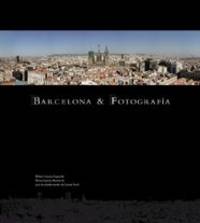
2005réf. 12895Large-format hardcover 30 x 28 cm 309 pages copiously illustrated NOT ex-library. Catalan language English text pages 275-309. Weight 2.5kg. Very good clean condition with unmarked text free of inscriptions and stamps firmly bound. Limited signs of gentle handling wear. -- Catalogue of the exhibition held from November 18 2005 to March 19 2006 at the Museum of the History of the City of Barcelona. -- Co-authored by Albert García Espuche a prominent Catalan architect and urban historian who previously directed exhibitions at the Centre de Cultura Contemporània de Barcelona CCCB this volume examines the historical evolution of the city through the lens of documentary photography. Lunwerg Editores hardcover
2009réf. 8352Barcelona: Lunwerg 2009. 1st Edition . Hardcover. Near Fine/Near Fine. Large-format hardcover 229 pages copiously illustrated NOT ex-library. Weight 1635g. Book looks unread minor handling wear: clean and bright throughout with unmarked text free of inscriptions and stamps firmly bound. In a bright untorn dust jacket. -- English translation of the essays on pages 199-227. All captions in bilingual format Spanish & English. -- Contents: Presentaci n / Ibercaja; El Palacio sede del Museo / Carmen G mez Urd ez La historia m s reciente; La casa del infanz n Jer nimo C sida en el siglo XVI; La remodelaci n del Museo Ibercaja Cam n Aznar / Antonio-Ignacio Mel ndez Alonso; Renacimiento y Barroco / Jes s Ferm n Criado Mainar Entre los siglos XV y XVI; El renacimiento ; El barroco; Pintura y Arte de la poca de la Ilustraci n: Goya / Arturo Ans n Navarro; Arte Contempor neo en le Museo Ibercaja Cam n Aznar / Manuel Garc a Guatas; Presentation; Museum Building / Carmen G mez Urd ez Recent History; House of Jer nimo C sida in the 19th Century; Refurbishment of the Ibercaja Cam n Aznar Museum / Antonio-Ignacio Mel ndez Alonso; Renaissance and the Baroque / Jes s Criado Mainar Between the 15th and 16th Centuries; Renaissance; Baroque; Enlightenment Art and Painting: Goya / Arturo Ans n Navarro; Contemporary Art in the Ibercaja Cam n Aznar Museum / Manuel Garc a Guatas Lunwerg hardcover
1961réf. 377997Oxford : Oxford University Press ; Cambridge : Cambridge University Press 1961. First Edition. Hardcover. Near fine copy in the original gilt-blocked boards. Slightest suggestion only of dust-dulling to the spine bands and panel edges. Remains particularly well-preserved overall; tight bright clean and strong. Physical description; xiii 446 pages 24 cm. Subjects; Bible Versions Catholic. Bible - N.T. English Versions. Bible. New Testament. Bible. English. Bible. New Testament Interpretations. Oxford : Oxford University Press ; Cambridge : Cambridge University Press hardcover
1993réf. 7728Cambridge UK: Polity Press 1993. Hardcover. Very Good/Very Good. Hardcover ix 168 pages b&w illustrations in text NOT ex-library. Limited mild wear book is clean and tight with unmarked text free of inscriptions and stamps. A tiny nick to the upper edge of a few leaves. Dust jacket is gently shelfworn with sunning to the spine and flap edges light creasing to edges a touch of rubbing. -- This book is a concise history of the use and interpretation of time written by one of the foremost historians in Europe today. Arno Borst examines the various ways that time has been calculated by numbers and measured by instruments through the ages from the "computus" - an ancient method of determining times and dates - to the present-day computer. In a wide-ranging discussion he analyses the classical Greek concepts of divine natural and human time; the universal time of ancient Rome; the Easter cycle of the Middle Ages; the development of the mechanical clock in the fourteenth and fifteenth centuries; early modern chronology; and twentieth-century data processing. Borst argues that although many centuries and countless different instruments - sundials horologia abaci astrolabes calendars and calculating machines - separate the "computus" from the modern computer each generation throughout the ages has had to answer the same question: how can we make the best use of our available time to improve our lives The computer he suggests is merely a new instrument employed for an ancient purpose. Lively and accessible The Ordering of Time will be welcomed by students and researchers in social and cultural history the history of science and mathematics as well as anyone interested in the history of time and numbers. Polity Press hardcover
2011réf. 12902Limited edition of 570 hand-numbered copies this is no. 565. Bilingual German & English large format hardcover 99 pages colour plates pp 35-87 NOT ex-library. Gentle handling wear book is clean and bright with unmarked text and firm binding free of inscriptions and stamps. Issued without a dust jacket. -- Austria has a remarkably rich artistic landscape. Within it Monika Pichler - an artist with a deep love of fabric in every sense - often finds her surroundings too comfortable even a little complacent. To challenge herself she has spent the past fifteen years exploring the idea of women travellers in literature drawing inspiration from writers like Ida Pfeiffer and Annemarie Schwarzenbach. Rather than staying within familiar settings Pichler treats the wider world as her classroom for the art of living. Her work both digital and tangible turns toward far off places and imagined worlds inviting her to see her own story from a new outsider's perspective - as if becoming a guest in her own life. By travelling to what is foreign she discovers that this 'otherness' is in fact part of herself. -- "Österreichs Kulturlandschaft ist durchaus reichhaltig. Als eine im doppelten Wortsinn in Stoffe verliebte Person bewegt sich Monika Pichler in dieser Szenerie nicht ohne deren Ruhebettcharakter als wenig herausfordernd zu erleben. Deshalb widmet sich die Künstlerin seit 15 Jahren dem Thema "Reisende Frauen" in der Literatur wie sich dies durch die Bücher von Ida Pfeiffer oder Annemarie Schwarzenbach vermittelt. Statt heimischer Gefilde dient Pichler die Welt an sich als Schule der Lebenskunst. Ihr künstlerisches Denken und Handeln widmet sich - virtuell und real - exotischen Welten und europäischen Phantasien um dabei zu erleben wie die eigene Biografie als "Andere" als Gast zu sich selbst zurückkehrt. Das bedeutet fremde Gegenden aufzusuchen um das "Andere" als Teil der eigenen Identität zu empfinden." Bibliothek der Provinz hardcover
1970réf. 289064London : Oxford University Press : Cambridge University Press 1970. First Edition. Hardcover. Near fine copy in the original gilt-blocked cloth. Slightest suggestion only of dust-dulling to the spine bands and panel edges. Remains particularly well-preserved overall; tight bright clean and strong. Physical description: xxi 336p. ; 21cm. Subjects: Bible -- Old and New Testaments -- English translation. London : Oxford University Press : Cambridge University Press hardcover
2012réf. 12658Hardcover 18 x 13cm 192 pages copiously illustrated NOT ex-library. Book is clean and bright with unmarked text free of inscriptions and stamps firmly bound. Minor handling wear only. Issued without a dust jacket. -- This elegant volume celebrates the unique fusion of Tuscan winemaking and contemporary art through the storied Artist Labels series from Fattoria Nittardi a historic estate in Chianti Classico. Since 1981 the winery has commissioned renowned artists - including luminaries like Friedensreich Hundertwasser Mimmo Paladino Günter Grass Dario Fo Yoko Ono Miguel Berrocal Paul Wunderlich Horst Janssen Tomi Ungerer and Pierre Alechinsky - to design original labels for its premium Casanova di Nittardi wines. The book showcases these collectible artworks alongside insights into Fattoria Nittardi's legacy from its medieval origins once owned by Michelangelo's nephew to its modern-day commitment to organic viticulture. With a preface by gallerist Peter Femfert this book offers a rare glimpse into how wine becomes a canvas for creativity. -- Fattoria Nittardi: Nestled in the hills between Florence and Siena this estate blends centuries-old heritage with avant-garde artistry. Its wines crafted in harmony with nature reflect the same passion for innovation seen in its collaborations with numerous international artists. Dott. Stefania Canali & Fattoria Nittardi hardcover
2003réf. 12747Hardcover fully bilingual German & English 240 pages copiously illustrated with b&w images NOT ex-library. Book is clean and bright with unmarked text free of inscriptions and stamps firmly bound. Untorn dust jacket shows extensive faint staining on the inner panels. -- Contents: Preface; Introduction; -- Locomotive profiles -- 1900-1909: - 1903 World speed record - 1905 Seebach-Wettingen experimental locomotive No. 2 - 1906 Electric services through the Simplon Tunnel; 1910-1919: - 1911 Prussia's ES 2 high speed locomotive - 1913 Be 5/7 high speed Alpine locomotive - 1914 Prussia's EG 511-537 articulated freight locomotives - 1915 Sweden's Oa and Ob iron ore locomotives; 1920-1929: - 1920 The legendary Swiss 'Crocodile' - 1921 Switzerland's Ae 3/6 and Ae 4/7 express locomotives - 1926 Germany's E 21 express locomotive - 1926 Class D Da-Ds Sweden's great 'all-rounder' - 1928 Italy's E 625 heavy-duty freight locomotive; 1930-1939: - 1933 Germany's E 44 universal electric locomotive - 1935 The streamlined E 18 express locomotive - 1936 Germany's first electric locomotive for 50 Hz - 1938 E 19 high performance express locomotive - 1939 Swiss giant: Ae 8/14 twin-unit locomotive - 1939 Swedish Class Bk bogie locomotive - 1939 'Tunnel worm' for open-cast lignite mines; 1940-1949: - 1940 E 94: the German 'Crocodile' - 1944 Ae 4/4 locomotive with no trailing wheelsets - 1944 Re 4/4 lightweight express locomotive; 1950-1959: - 1952 E 10 004 and E 10 005 prototype locomotives - 1955 Ae 6/6 heavy-duty Gotthard locomotive - 1955 Heavy-duty open-cast mining locomotive for 6 kV AC 50 Hz - 1955 Sweden's Class Ra lightweight express locomotive - 1956 Germany's E 41 lightweight locomotive; 1960-1969: - 1965 E 03 express locomotive - 1966 E 410 four-system locomotive - 1967 Success story: Sweden's Rc 1 thyristor-controlled locomotive - 1967 EL 10 and EL 20: 'Jumbos' for open-cast ore mines; 1970-1979: - 1974 Re 6/6 heavy-duty multi-purpose locomotive - 1975 Italy's E 444 005 'Tortoise' with chopper - 1976 E 1200 ground-breaking industrial locomotive - 1979 Breakthrough: BR 120 with three-phase propulsion technology; 1980-1989: - 1983 EL 17 and EA 3000 export hits - 1984 11 E heavy-duty freight locomotive for Africa - 1985 ICE: Germany's first high speed trainset; 1990-1999: - 1990 Power car for Sweden's X2 high speed tilting train - 1990 The 'Loco 2000' family - 1994 12X high-performance universal locomotive - 1994 ESL 9000 Eurotunnel shuttle locomotive - 1996 Germany's Class 101 high-performance locomotive - 1997 The Class 145 146 and 185 locomotive family; 2000-2003: - 2000 The heavy-duty IORE twin-unit ore railway locomotive - 2001 ALP 46 multi-system locomotive for the USA; Timetable; Acknowledgements and Sources. BWV Berliner Wissenschafts Verlag hardcover
2003réf. 8557Korea Democracy Foundation 2003. Soft cover. Good. Scarce paperback 432 pages NOT ex-library. Moderate internal creasing a small indentation in the lower outer corner of rear cover and last pages; book is clean and bright with unmarked text free of inscriptions and stamps firmly bound. Gentle external handling wear. Korea Democracy Foundation paperback
2015réf. 10081Helsinki Finland: Musta Taide Aalto University School of Arts Design and Architecture 2015. 1st Edition . Hardcover. Good. Good. Small format hardcover 17x16 cm fully bilingual 303 pages illustrated throughout glossy paper NOT ex-library. Very good interior clean and bright with unmarked text free of inscriptions and stamps firmly bound. Boards show small grubby marks a touch of rubbing short creases; non-sticky yellowed residue of a removed sticker on the back. Issued without a dust jacket. -- Published in conjunction with a retrospective exhibition on photographer Hannele Rantala in the Finnish Museum of Photography that includes works from 1975 to 2015 offering a comprehensive overview of her artistic career. Although it spans four decades there is clear continuity in the themes as the works explore departures homelessness and changes along with borders and liminal situations. Rantala a long-time expatriate possesses a great deal of experience in such issues. Structured in part chronologically the book illustrates the changes that have taken place in her own oeuvre. Each section includes an explanatory often autobiographical text by Rantala. -- Contents: Foreword; 1. Golden Section The Black and White Photograph Series Early Pictures; Finish Series; French Series; European Series; Tallinn; Natasha; 2. Baroque Square Entre monde et paradis; 432 Clouds; Rose and Nail; 3. The Map of Europe 47 Departures; Passport Pictures; On the Other Side; Shadows. Names and Numbers I; Shadows Names and Numbers II; Blue Scarf; Blue Scarf Instructions for Tying the Scarf; 4. Ruptures; 5. Invisible Boundary The Lost Country Less Than Nothing; Have You Seen This Woman Tukholma / Stockholm; Viipuri / Vyborg; Helsinki; Have You Seen This Woman New York; The Bridge; Epilogue; Biography; Thanks -- "I was born in Helsinki in 1952 but nothing really began with me. It all started much earlier. Both my parents fled with their families from Karelia after the Second World War from areas ceded to the Soviet Union - along with 400000 other Finns. My father and mother came from such different backgrounds and different parts of the surrendered part of Karelia that if it were not for the war they would never have met and I would never have been born. My parents didn't speak about the horrors of the war. It was only in her final years that my mother began increasingly to go back over her own experiences of it. So I too endlessly went through all the heart-breaking episodes that she carried inside her. If I couldn't get her to stop at the Truce then on top of the Winter War I also listened my way through the Continuation War in all its horror again and again week after week. My father's mother's family ended up on the Karelian Isthmus in Vyborg having left Poland as a consequence of the upheavals in Russia at the end of the 19th century. The hardships that this involved were never mentioned. I suppose the content of my work was shaped out of these elements very early on. I have wondered whether I have really been able to choose my own subjects. All of my works come about a bit by stealth. I plan to do something else and suddenly I notice I have made a big work about some minor fracture in my unconscious. My works and my art try to make something small into something big. As an artist I am in a conflicted situation because when faced with my works my own psyche - and my inner being - are supposed to fill a big space. And yet I am often gripped by fear and uncertainty. Each work springs from the overcoming of this state." Musta Taide, Aalto University School of Arts, Design and Architecture hardcover
1999réf. 9825Belmont MA: Ford & Bailie 1999. Soft cover. Good. Paperback xxxv 387 pages b&w illustrations NOT ex-library. Interior is clean and bright untanned with unmarked text and firm binding free of inscriptions and stamps. Faint dusty and handling marks on page edges externally. A touch of wear to tips of corners. -- Contents: Preface; Introduction; Origins of Poets The Boyhood Deeds of Finn; The Story of Gwion Who Became Taliesin; Athirne and Amairgen; The Spirit of Poetry; Sinann: The Shannon River; Imbas Forosnai: Illuminating Inspiration; Poets on Tour Athirne the Insistent; Lomna Finn's Fool; The Battle of Allen; Llywelyn and the Fool; The Siege of Howth; Guaire's Greedy Guests; The Vision of Mac Con Glinne; Satire on Rhys Meigen; -- Welsh Poems: -- Summertime / Anonymous; Taliesin: - Cynan Garwyn son of Brochfael - The Battle of Gwen Ystrad - In Praise of Llwyfenydd; The Gododdin: selections / Aneirin; Llywarch Hen: - The Sick One of Aber Cuawg - Song of the Old Man - On Urien and the Gogledd - The Desolation of Erechwydd - Gnomes; -- The Poets of the Princes: -- Elegy for Gruffudd ap Cynan / Meilyr Brydydd; Elegy for Llywelyn de Gruffudd / Bleddyn Fardd; Elegy for Llywelyn de Gruffudd / Gruffudd ab yr Ynad Coch; Hywel's Boast / Hywel ab Owain Gwynedd; Gwalchmai's Boast / Gwalchmai ap Meilyr; Ieuan's Boast / Ieuan ap Rhydderch; Prydydd y Moch: - To Gwenlliant - A Threat to Dafydd ab Owain Gwynedd - A Threat to Gruffudd ap Cynan ab Owain - In Praise of Gruffudd ap Cynan ab Owain - An Elegy for Gruffudd ap Cynan ab Owain - In Praise of Llywelyn ap Iorwerth 1 - In Praise of Llywelyn ap Iorwerth 2 - A Prayer for the Health of Madog ap Gruffudd - The White-hot Iron; Dafydd ap Gwilym: - To Ifor Hael 1 - To Ifor Hael 2 - Basaleg - Elegy for Ifor and Nest - In Praise of Summer - May - Summer - The Holly Grove - The Woodland Mass - A House All of Leaves - The Ruin - Secret Love - The Seagull - The Star - Under the Eaves - The Girls of Llanbadarn - The Minor - The Sunshine Girl - Trouble in a Tavern - A Reluctant Girl - Looking for a Nun - The Magpie's Advice - The Poet and the Gray Friar - The Poet's Shadow; Complaint against Dafydd / Gruffudd Gryg; Reply to Gruffudd Gryg / Dafydd ap Gwilym; -- Irish Poems: -- Irish Bardic Poetry: -- Giolla Brighde Mac Con Midhe: - A Vision of Emain Macha - A Response to a Threat against Poetry; Tadhg Dall hUiginn: - Christmas in Creeve - Longing for Enniskillen; Laments: I-X / Gormlaith Daughter of Flann Sinna; Bibliography Ford & Bailie paperback
2000réf. 9041Moscow Russia: Interbook-Business 2000. 1st Edition . Hardcover. Very Good/Near Fine. Large format hardcover 136 pages illustrated throughout pictorial endpapers glossy paper NOT ex-library. Weight 1.3kg. Book is clean and bright with unmarked text free of inscriptions and stamps firmly bound. Bright untorn dust jacket shows minor wear. Interbook-Business hardcover
2000réf. 9740Springer 2000. Hardcover. Near Fine/Good. Large-format cloth hardcover 36 x 26 cm 195 pages 157 colour illustrations pictorial endpapers NOT ex-library. Weight 2410g please note: extra shipping will be required. No slipcase. Minor light wear book is crisp clean and bright with unmarked text free of inscriptions and stamps firmly bound. Good dust jacket sunned spine corners and spine ends rubbed white with short creases and edge-nicks. -- Contents: Buddhist Buildings: Photographs North China; Central China; Western Localities; Formation and Development of Chinese Buddhism: Explaining Buddhism by Mysticism and Supplementing Mysticism with Buddhism Initial Spread of Buddhism; Beginnings and the Translation of Scripture; Establishment and Prosperity of the Buddhist Sect; Tibetan Buddhism Lamaism; Founding and Evolution of the Buddhist Monastery in China: From the Establishment of the Baima Temple to the Forest-like Buddhist Monasteries of the Sui and Tang Dynasties Origin of the Monastery; Structural Evolution of the Chinese Monastery; Transformation and Evolution of the Pagoda; Stone Cave Monastery; Building of the Lamasery; Artistic Characteristics of Buddhist Architecture in China: The Blending of Western Buddhist Culture and Chinese Innate Culture Varied Natural Settings Chosen for the Location of the Buddhist Monastery; Treatment of Space in the Buddhist Monastery on Han Territory; Characteristics of the Architectural Art of the Lamasery; Decoration Artistic Creation etc.; Appendices General Plan and Section of the Nan-Chan Monastery and Restored Elevation and Section of the Great Hall; General Plan and Section of the Foguang Monastery and Front Elevation and Section of the Great Hall; Schematic Drawing of the Beam Structure of the Great Hall in the Foguang Monastery; Elevation and Section of the Mahayana Pavilion in the Puning Monastery; General Plan of the Putuozongsheng Monastery and Plan Elevation and Section of the Dahong Platform; Drawings of the Great Hall in the Lower Guangsheng Monastery and Its Framework Structure; Illustration of the Principal Features of the Chinese Buddhist Pagoda; A Comparison of the Different Plans of Chinese Buddhist Pagodas; Sketch of Grotto Plan and Comparison with Cave Style Evolution; Plan Elevation and Section of the Tianlongshan Grotto 16; Imaginary Sketch of the Original State of the 4th Maijishan Grotto; Sketch of Stone-Sculptured Tang Dynasty Buddhist Building and Buddhist Monastery; Dougong Bracket Inner Lintel and Square Pillar; Glossary; Notes on the Photographs; Map and Chronology Map of Distribution of Buddhist Buildings; Tourist Map of Buddhist Buildings in Northern Shanxi; Chronology of Major Events in the History of Chinese Architecture -- From the end of the Han Dynasty onwards Buddhism took root in China spreading and developing over a period of more than 1000 years. The original teachings from India became imbued with native Chinese thought on heaven and man; a foreign religion therefore with Chinese modifications. As far as its architecture was concerned is gradually integrated with that of China in style hardly differing from that stipulated by central government law. In addition to the wooden or brick and stone temple gate the main hall and other Buddhist buildings the Buddhist pagoda or tomb pagoda often took on various forms in the monasteries. Unique forms including those to be found in the stone cave and the lamasery are also to be seen chiefly in Northern China and western localities. To facilitate identification the monasteries and their location in what is a vast land have roughly been arranged into three regions: Northern China Central China and the western localities. Not only is their appearance described but the reader is also given an insight into their internal structure their fittings as well as the exquisitely sculptured statues all an expression of the dignified beauty of Buddhist architecture. Springer hardcover
2000réf. 8618Edward Elgar Publishing 2000. Hardcover. Very Good/Good. Hardcover xiii 223 pages. Cancelled foreign university library stamps on first pages. Book is clean and bright with unmarked text firmly bound. Dust jacket shows creases to edges. Edward Elgar Publishing hardcover
2017réf. 11095Hart Publishing 2017. 1st Edition . Hardcover. Very Good. Hardcover x 169 pages NOT ex-library. Limited signs of minor wear book is clean and bright throughout with unmarked text free of inscriptions and stamps firmly bound. Issued without a dust jacket. -- "In international relations IR some states often deny the legal status of others stigmatising their practices or even their culture. Such acts of deliberate humiliation at the diplomatic level are common occurrences in modern diplomacy. In the period following the breakup of the famous 'Concert of Europe' many kinds of club-based diplomacy have been tried all falling short of anything like inclusive multilateralism. Examples of this effort include the G7 G8 G20 and even the P5. Such 'contact groups' are put forward as if they were actual ruling institutions endowed with the power to exclude and marginalise. Today the effect of such acts of humiliation is to reveal the international system's limits and its lack of diplomatic effectiveness. The use of humiliation as a regular diplomatic action steadily erodes the power of the international system. These actions appear to be the result of a botched mixture of a colonial past a failed decolonisation a mistaken vision of globalisation and a very dangerous post-bipolar reconstruction. Although this book primarily takes a social psychology approach to IR it also mobilizes the resources of the French sociological tradition mainly inspired by Emile Durkheim." -- Contents: Introduction; Part One: Humiliation in the History of International Relations: The Discovery of a New Form of Social Pathology 1. Pitfalls of the Ordinary Lives of People Tectonics of Societies; Lack of Integration; The Uncertainties of Status; The End of the Cold War and Beyond 2. Humiliation or Power without RulesPower Against Humiliation; How Power Goes Wrong 3. Types of Humiliation and their Diplomacies Constructing a Typology; Type 1: Humiliation by Lowering of Status; Type 2: Humiliation through Denial of Equality; Type 3: Humiliation by Relegation; Type 4: Humiliation through Stigmatisation; Part Two: An International System Fed by Humiliation 4. Constitutive Inequality: The Colonial Past Exceptions and Outrages; Pathways of Humiliation; New forms of Patronage 5. Structural Inequality: To be Outside the Elite The Broken Dream of the 'Middle Powers'; Emergent Powers and the Bonds of Past Humiliations; Small Countries' Narrow Range of Action 6. Functional Inequality: Being Excluded from Governance Minilateralism; Oligarchic Pressure; A Certain Diplomatic Paternalism; Part Three: The Dangerous Repercussions that Follow Humiliation: Towards an Anti-System 7. The Mediating Role of Societies The International Mobilisation of Societies; Neo-Nationalism and Fundamentalism; The Insoluble Contradictions of the Arab Spring 8. Are there Anti-System Diplomacies Oppositional Diplomacies; Diplomacies of Deviance 9. Uncontrolled Violence New Conflicts New Violence; Violence and Social Integration; Conclusion Hart Publishing hardcover