27.799 risultati
1976rif. 191608n.p.: USLA 1976. 18x24 inch poster sketch of a face with splattered blood streaming from its nose artist identified as "R. Castro" artwork is signed as Berkeley '76 but unknown if the poster was made later. The US Senate report "Trotskyite Terrorist International" notes that the USLA was a front of the Socialist Workers Party. USLA unknown books
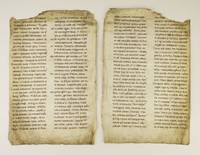
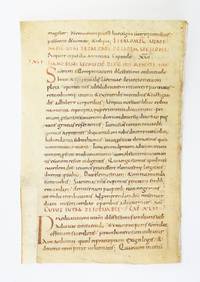
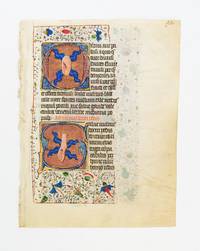
rif. ST15769aPerhaps France mid-12th century. Each leaf measures approximately 370 x 240 mm. 14 1/2 x 9 1/2". Double column 32 lines in a fine proto-gothic hand. See: Thompson "An Introduction to Greek and Latin Paleography" p. 436. ◆Recovered from a binding and thus with one side of each leaf somewhat browned soiled and with a few creases one leaf with several small blotches of red paint in the text not affecting overall legibility one corner of each leaf torn away affecting running title and one to two lines of text other trivial defects but still very nice specimens with clear and legible script and one side of each leaf quite clean and well preserved. Once part of a large and elegant Romanesque Bible these leaves are excellent examples of a high quality proto-gothic book hand. Sometimes referred to as "praegothica" or "late Caroline" the proto-gothic script is characterized by letterforms that are more or less unchanged from Caroline minuscule but with a number of traits starting to show elements of gothic script--most notably the addition of feet appearing here as an upward flick of the pen on the bottom of minims but also including the use of more abbreviations the fusion of certain letter combinations a more elongated "o" and a straight-backed "a." Whatever the level of its evolution the script here has very pleasing rounded letterforms that are highly legible and generously spaced. Though the vellum is not unmarred by its former life as binding material the script here has not lost any of its beauty revealing a hand that is practiced regular and distinctly pleasing to the eye. As Thompson notes "In the twelfth century the scribes seem to have vied with each other in producing the best types of book-writing of which they were capable with the result that remarkable precision in the formation of the letter was attained and that the century may be named as excelling all others for the beauty of its MSS." Our leaves come from Deuteronomy the Old Testament book consisting primarily of three sermons made by Moses just before entering the Promised Land. One leaf contains brief summaries of chapters 2-18 with some chapters numbered in the margins while the other leaf contains part of the first of Moses' speeches in which he recalls the Israelites' 40-year journey through the wilderness. unknown books
1954rif. 308726Berkeley: North American Congress on Latin America 1954. paperback. very good. Illustrated with b/w images throughout. 264 pages. Narrow 4to pictorial wrappers. Berkeley: North American Congress on Latin America 1954. A very good copy with light sunning to spine some minor discolorations to rear cover. North American Congress on Latin America unknown books
1969rif. 346958New York: Harper & Row 1969. Softcover. Very Good. Reprint. 326pp. Trade paperback. Very good with underlining and marginalia on nine pages rubbing and spine creasing. Harper & Row unknown books
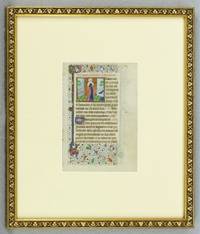
1465rif. ST11151bBruges ca. 1465. 181 x 127 mm. 7 1/8 x 5". Single column 19 lines in a careful pleasing gothic book hand. In a very attractive new gilt wooden frame. Rubrics in pink or faded red one two-line initial in blue magenta and burnished gold two lines with undulating line fillers in blue and gold both sides of the leaf with a three-quarter panel border incorporating foliage blossoms and ivy leaves on hairline stems the vertical part of this frame with a bar border composed of colors and burnished gold terminating at top and bottom in colorful acanthus leaves and WITH TWO SMALL BUT VERY PLEASING MINIATURE PAINTINGS SAINT ELIZABETH ON THE RECTO AND SAINT GERTRUDE ON THE VERSO. ◆Tiny wormhole in fore edge where it has done negligible damage small portions of the blue paint in the Elizabeth miniature eroded gray paint slightly smeared as well but apparently at the time of painting otherwise in fine clean fresh condition. This leaf is characteristic work from the circle of Willem Vrelant the leading purveyor of books of private devotion in Bruges during the third quarter of the 15th century. His leading position among Flemish illuminators of the time is indicated by the considerable number of manuscripts illustrated in his manner by other miniaturists both in Bruges and in nearby cities in Flanders. The illuminator of our Book of Hours shows a number of distinctive stylistic traits. Among these are a preference for boldly patterned cloth backdrops tessellated flooring landscapes filled with stylized bushes and trees and persisting prominent architectural constructions that frame the subject frequently in a corner in these leaves it is a waist-high outdoor wall or an indoor feature resembling wainscoting. The inclination for strong geometrical patterning is manifested in the artist's angular treatment of human figures and their garments. Dressed in pink and blue Elizabeth is depicted with a sweet round face. She is saluted here as the woman worthy to be the mother of John the Baptist the forerunner of the Redeemer. Gertrude is dressed in monastic black although a pink undergarment is visible and her inky habit is trimmed in gold. This shimmering feature is a reminder that Gertrude 626-59 was the daughter of Pepin I of Landen Mayor of the Palace for the Frankish realm of Austrasia and the forebear of Charlemagne. Gertrude is a natural choice for illustration by an artist of Bruges since she was the patron of nearby Nivelles. The saint was routinely invoked for aid in coping with mice and is here shown surrounded by four animated rodents as black as her habit. No legend survives to explain why she had such power over the creatures who seem here to be more her pets one climbs her staff of office than her victims. unknown books
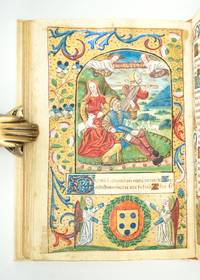
1516rif. ST20620Northern France late 15th or early 16th century. 176 x 128 mm. 7 x 5". Single column 23 lines in a neat batârde hand. i blank 101 ii blank leaves. Lacking one leaf after f. 87 possibly containing a miniature otherwise complete. Contents: Calendar f. 1r; Gospel Lessons f. 7r; Passion according to John f. 10v; Hours of the Virgin f. 15v; Penitential Psalms and Litany f. 45r; Office of the Dead f. 54v; Hours of the Cross f. 68v; Hours of the Holy Spirit f. 70v; Prayers to the Trinity St. Veronica "Obsecro Te" "O Intemerata" and "Stabat Mater" f. 72v; Suffrages f. 79r; Prayers in French to be said on various occasions f. 86v; verse prayer in French beginning "Royne des cieulx glorieuse" f. 90r; additional prayers in French and Latin f. 93v. Attractive 19th century vellum with lacy gilt border raised bands ruled in gilt gilt lettering tan silk endleaves all edges gilt. Housed in a felt-lined reddish-brown pebbled morocco clamshell box with gilt lettering on spine. Rubrics in red numerous one- and two-line initials in painted gold on burgundy or blue ground WITH 27 SMALL MINIATURES one miniature of Christ Carrying the Cross measuring 60 x 68 mm. the rest depicting saints and measuring between eight and nine lines each surrounded by a full border of acanthus flowers and small dots on bare or painted vellum and 14 LARGE MINIATURES EACH OPENING WITH A FULL BORDER either with acanthus and flowers as before or architectural some borders embellished with figures animals or hybrids two with a small scene in the lower margin and about a dozen with the added coats of arms and/or mottos of Jean Boutin. The subjects of the large miniatures include the following: St. John of Patmos f. 7r; Annunciation f. 15v; Visitation f. 23r; Nativity f. 27v; Annunciation to the Shepherds f. 29v; Adoration of the Magi f. 31v; Presentation in the Temple f. 33v; Flight into Egypt f. 35v; Death of the Virgin f. 38v; Bathsheba bathing f. 45r; Funeral Mass f. 54v; Crucifixion f. 68v; Pentecost f .70v; Trinity f. 72v. See: Fairfax-Murray "French" p. 265-266. Vellum binding soiled but perfectly sound. Small portions of some border figures and perhaps three or four miniatures touched up in the 16th century see below occasional chipping to white paint small hole in the border of ff. 11 & 29 light scattered spotting fading thumb soiling and other minor issues but an attractive and substantially complete manuscript the illumination extensive and mostly well preserved. This heavily illustrated Book of Hours is a lovely example of provincial illumination; it calls attention in an interesting way to the influence of printed books on manuscript art; and it contains intriguing traces of an early prominent owner. Our manuscript contains a total of 41 large and small miniatures by a skilled artist who clearly had some training and familiarity with the prevailing styles of the time. The overall appearance of the work suggests the artist or workshop was located in Northern France and although the figures and backgrounds are indicative of a provincial hand the rich colors profuse use of liquid gold and sumptuous borders are unmistakable marks of luxury. The image of the Trinity is particularly lovely demanding the viewer's attention with God the Father's piercing gaze and conveying the majesty of the subject with a patterned throne set against a starry sky. Of special interest here are the compositions of the large miniatures many of which seem to have been copied from printed Books of Hours of the period. When we talk about the transition from manuscripts to print culture in the late-15th and 16th centuries the discussion often focuses on how the art of manuscripts influenced the appearance of printed works. There is no better example than Books of Hours which in printed editions often mimic the look of their manuscript predecessors in appearance and the way many were finished by hand. However as the present example demonstrates the opposite was also true as printed works inevitably made their way into the hands of manuscript artists. Some even worked simultaneously both as illustrators for publishers working with metal- and woodcuts and as manuscript painters. As a reflection of this point in the present work we find distinct similarities between our miniatures and a series of metalcuts used by Philippe Pigouchet for the publisher Simon Vostre beginning in 1496 Fairfax-Murray's set 2. According to Fairfax-Murray "These cuts . . . were evidently very favourably received by Pigouchet's rivals and imitators for one finds several close copies and adaptations in the various productions of other presses" including a very close imitation of woodcut images commissioned by the publisher Antoine Vérard. Evidently the popularity of these plates extended to manuscript artists and it is fascinating to see the adaptation of each composition to suit the painter's own style and the patron's needs. Most of the compositions in our manuscript are essentially simplified versions of the printed miniatures retaining the central figures their gestures garments and props but with complex backgrounds eschewed as are extra figures deemed unnecessary to fulfill the narrative. The resulting miniatures are far less busy than their printed counterparts allowing the viewer to focus on the central story. In a few instances the artist has added small scenes beneath the large miniatures. An example on f. 35 depicts the so-called "Miracle of the Wheat" featuring harvesters misleading Herod's soldiers by truthfully saying that the fleeing Holy Family passed by when their now miraculously matured crop was just being sown. This kind of inclusion may have been influenced by the copious small metalcut scenes that decorate the borders of numerous printed Books of Hours of this period. The text here follows a fairly typical structure but includes prayers in French to be said for each day of the week and on various occasions such as when one awakens or when one leaves a house. Also in French are additional verses to the Virgin--one of which is credited to the Franciscan preacher Jean Tisserand d. 1497 who founded an order for repentant women. Another accessory prayer included here f. 98 appeared in both prayer books and conjuring manuals of the period straddling the line between religion and popular magic. Based on an apocryphal encounter between Pope Leo III and Charlemagne during the Battle of Roncevaux this prayer was often used as a protective amulet against all manner of evil; here it is said to "conquer demons and one's enemies." Although we do not know for whom this manuscript was originally made the book shows a number of marginal customizations in the form of different coats of arms the motto "Soit avenu" "Let it come to pass" and the name of Jean Boutin written on ff. 23 and 35. This owner could have been Jean Boutin Sieur de la Court et de Chamballan and Mayor of Nantes from 1575-76. In addition to the marginal customizations the manuscript may possibly have some very neat replenishing of white facial paint in a handful of marginal figures and perhaps in a very small number of the miniatures. Using magnification and strong light we are unable to find convincing evidence that this retouching took place at least in the miniatures and if it was we think it was done quite early perhaps in the 16th century. Worst case it would necessarily be termed subtle and skillful enough to cause uncertainty now and whatever the verdict is in this respect the manuscript remains very fresh and attractive features attractively executed paintings is complete but for one leaf and would provide ample room for additional research. unknown books
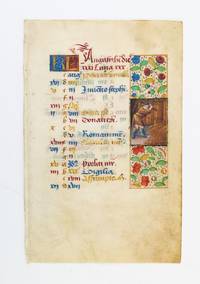
1470rif. ST17245-09Northern France probably Rouen ca. 1470. 180 x 117 mm. 7 x 4 5/8". Single column 18 lines text in a bâtarde hand. Text in red blue and gold two-line "KL" in shell gold on blue and red ground both sides with panel border composed of flowers and ink dots WITH TWO SMALL MINIATURES each centered in the middle of the panel borders featuring the labor of the month Threshing and the zodiac sign a young woman for Virgo. Vellum a bit soiled and slight wrinkling in margins small area of rubbing at bottom of the Virgo miniature but in excellent condition overall the fine details in the miniatures well preserved. Situated among the flowers of the panel borders here are two small but charming miniatures depicting the labor of the month "Threshing" and the zodiac sign for August. According to Roger Wieck far fewer than half the Books of Hours of the period contain illustrated calendars "even in manuscripts with otherwise lavish cycles of miniatures"; when they do appear they are invariably charming as is the case here. In the threshing scene a young layman brings down his grain flail two hinged pieces of wood the longer one called a helve and the other a beater joined by a thong in an effort to separate the grain while neatly gathered bushels of straw appear just behind him. On the verso we see a representation of Virgo as a young woman holding appropriately two long stalks of grain in her hands. The rich palette used in these miniatures allows the delicate gold highlighting on the harvested crop and garments to shine through adding a fine sense of detail to each image. unknown books
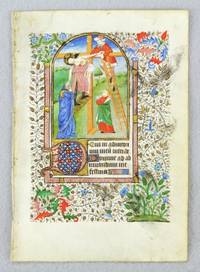
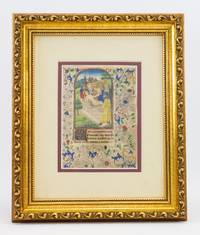
1420rif. ST12005fFrance probably Paris ca. 1420. 210 x 146 mm. 8 1/4 x 5 3/4". Single column recto with five lines of text verso with 16 lines all in a very pleasing very regular gothic book hand. Attractively matted. Rubrics in red verso with a one-line and two two-line initials as well as a line filler in colors and burnished gold recto with a one-line initial and a line filler in the same style and with a quite large five-line "D" in pink and white with enclosed floral diapering all on a burnished gold ground the same side WITH A LOVELY FULL BORDER of swirling hairline stems bearing numerous leaves and berries of burnished gold and with sprays of acanthus leaves and flowers in multiple colors spilling from the corners this ENCLOSING A POIGNANT ARCH-TOPPED MINIATURE OF THE REMOVAL OF CHRIST FROM THE CROSS measuring approximately 85 x 60 mm. the miniature within a thin gold frame and enclosed in turn on three sides by bars in colors and gold the scene showing two men on ladders unfastening Christ's lifeless body from the cross while Joseph of Arimathea waits below clutching cloth to be used for a burial shroud as the Madonna at the lower left of the picture reaches up to clasp her son's bloody arm. With a small cross stitched in white thread in each upper corner. ◆A little soiling right along hinge edge a few smudges in the border a couple of tiny flakes of paint missing from the cross and the sky otherwise fine the vellum clean and fresh the colors rich and the gold lustrous. This is an especially sorrowful scene depicted with power grace and sensitivity by an artist demonstrating very considerable skill in composition and execution. The scene is well designed with the cross providing a device for focus at the center of the miniature. Nicodemus identified by his expensive attire is atop a ladder behind the cross lowering Christ's limp body onto the shoulder of another man probably a servant whose ladder is set against the front. Despite the fact that the corpse is more bones than flesh the artist has made it seem a heavy burden draped over the shoulder of the man as he walks backward down his ladder. Fully stretched out Christ's left arm is held for balance by Nicodemus at the top right while the other arm hangs down toward the Virgin. While we can only see her back her image evokes great pathos as she reaches up with both hands to grasp the mangled arm of her son his blood running from his hand onto hers. Joseph of Arimathea whose position anchors the right side of the picture looks on with concern tightly holding linen to shroud the body. St. John and Mary Magdalen conventional participants in the Deposition are not present in this miniature. While it is possible and even likely that the same artist produced this scene and the miniature of Christ Carrying the Cross this one is better as the faces are more deftly painted and the folds in the various garments are more clearly defined. unknown books
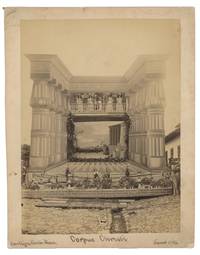
1890rif. List1326Costa Rica 1890. Albumen photographs 9 x 7 ½ inches on larger mounts with credits to Rudd y Paynter and the Paynter Bros. Near Fine. H.N. Rudd and the Paynter Brothers Richard and John were photographers who were active in Costa Rica in the 1890s operating out of San Jose. Five of these views show the Rudd y Paynter mark on versos with their address at the Parque Central in San Jose. The Paynters were from the United States arriving in 1874 and first establishing Rudd y Paynter out of a shop in the Parque Central where they also sold marble and art objects. In 1895 the studio changed its name to Paynter Bros. Collected here are nine scarce albumen views of Costa Rica from the 1890s. Five of them document a trip up Mt. Turrialba these bear the Rudd y Paynter mark. Of the other other four one image shows a building likely in San Jose with a gathered crowd; one shows a very striking mural and is captured “Corpus Christi / Cartaga Costa Rica June 4 / 96 this shows no photographers mars though the size and format are identical to the others and we presume the photographers to be the Paynter brothers; One shows industrial coffee machinery on “El Canada” the last shows a group of people in front of the bridge over the Rio Grande with a platform showing the markings of the Hamlin Car and Wheel Company of Catwissa PA. The group with the exception of the Corpus Christi image are mounted on uniform heavy cardstock mounts with gilt edges and remain in particularly fine condition with excellent contrast and some light wear to mounts. Overall a scarce group documenting Costa Rica at a time when few photographers operated. unknown books
rif. ST17767BEGermany second quarter of ninth century. Each leaf approximately 305 x 205 mm 12 x 8". Single column 29-30 lines in a large and extremely legible Caroline minuscule. Rubrics in red each leaf with one or more large initials in red. Text with a few contemporary corrections and erasures. Accompanied by a copy of a letter from Bernhard Bischoff dating the manuscript leaves. ◆Vellum a little toned and soiled one leaf with an old repair to the bottom third of the outer margin minor folds small stains and other trivial imperfections but IN EXTREMELY FINE CONDITION the lettering clear and legible the vellum in excellent shape and the margins surprisingly comfortable. These are nothing short of magnificent specimens and remarkable survivals with wide borders all around with entirely clear and distinct script with only minimal overall dust soiling and with strength and freshness to the vellum; the leaves present a powerful redolence of a time as far in the past as one could optimistically hope to encounter among Western manuscript artifacts in the marketplace. The script here is an outstanding example of the highly legible Caroline minuscule that dominated Europe in the ninth century characterized by clear letter forms ample spacing between letters and between lines and very few abbreviations the most common occurrence being "&" for "et" occurring anywhere in a word. The parent manuscript was almost certainly a Homiliary containing sermons by various Christian authors to be said throughout the year with the present leaves containing passages from part of Leo I Sermo XCV and parts of a tractatus on Luke by Ambrose as well as other lections readings for the Vigil of the Feast of St Peter and the Feast of the Octave of Pentecost and the opening of a sermon of Leo I for Feria IV mensis IV; four other sister leaves are known and contain additional passages from Leo I and Ambrose as well as Pope Gregory I and readings for various feast days. The presence of these texts suggest that the leaves might have come from a Homiliary originally composed by Paul the Deacon at the behest of Charlemagne a version that was widely circulated throughout the Carolingian Empire in the eighth and ninth centuries. Although the scriptorium in which these leaves were produced has yet to be determined we can say with confidence that they date to the second quarter of the ninth century due to the style of the script as stated in the accompanying letter by esteemed paleographer Bernard Bischoff. Much of their history over the last 12 centuries remains a mystery but we do know that three of the extant leaves were in the possession of dealer Bruce Ferrini by 1989 with his stock number beginning "VM" and two bear the stock numbers and price codes of Quaritch. All were acquired by Martin Schøyen and became part of the renowned Schøyen collection MS 587. Very early leaves such as these often survive only because they come from manuscripts that were dismembered with the leaves then being reused as binding scrap; when later recovered they are typically in lamentable condition. The present leaves by contrast met no such fate--they have always been intact and untouched by the binder and so show none of the staining and trimming that are almost always present with repurposed leaves from demolished manuscripts. This notably fine state of preservation is rarely seen on the market. As a consequence these specimens are not only among the earliest leaves we have ever offered for sale but also some of the most extraordinary survivals we have ever acquired. We have bought and sold only a handful of ninth century leaves in our 45 years in business; in the present case because we were extremely lucky to acquire a small collection of six leaves from a single source we are able to offer them here at an advantageous price point. unknown books
1465rif. ST17243bBruges ca. 1465. 193 x 145 mm. 7 5/8 x 5 3/4". Single column 21 lines in a gothic book hand. Rubrics in red one two-line initial in gold filled with blue on pink ground WITH THREE LARGE HISTORIATED INITIALS: ONE FEATURING AN OVAL-SHAPED PIECE OF FLESH WITH A GASH IN THE CENTER AND TWO WITH CHRIST'S DISEMBODIED FOOT SHOWING THE PUNCTURE WOUND FROM THE CRUCIFIXION each initial in pink or blue with white tracery filled with dark pink and thin gilt lines and dots four wavy blue rays radiating from behind each appendage all within a thin gilt frame both sides with a three-quarter border consisting of hairline vines gold bezants and a few colorful flowers. ◆Vellum a shade less than bright faint marginal rumpling trivial paint transfer on one initial BUT IN FINE CONDITION the initials richly painted and extremely well preserved. From a manuscript probably produced in Bruges for the English market this leaf contains arresting initials that direct the viewer's attention to the wounds endured by Christ during the Passion. According to Roger Wieck Passion Cycle images enjoyed a particular vogue in 15th century Dutch Flemish and English Books of Hours including those that were exported to England. In the present example the strikingly unusual imagery includes the wounds of the left and right foot as well as the spear injury to Christ's side depicted as an oval piece of flesh with a laceration across the center. A sister leaf to the present item features three additional initials showing a portrait of Christ wearing the Crown of Thorns his gaze fixed directly at the viewer and in separate initials his left and right hands appear disembodied and displaying the stigmata. The parent manuscript containing the present leaf sold at Christie's on 15 November 2006 lot 16 the description for which gives us additional information about the book's contents and provenance: it was made for the Use of Sarum included a calendar with the English saint Thomas Becket and Popes Gregory and Silvester with their names crossed out indicating that it was in England through at least the time of the Reformation and contained an early ownership inscription of a woman named Bridget Lowe with a Middle English inscription on the pastedown. Christie's also attributed the parent manuscript to the workshop of William Vrelant with miniatures possibly by his chief assistant the Master of the "Vraie Cronique Descoce." They note that this work is "of higher quality than many of the works that satisfied the English demand for Netherlandish illumination" and that it "demonstrates why Vrelant appealed to the great bibliophiles of the Burgundian Netherlands." Vrelant was the leading purveyor of books of private devotion in Bruges during the third quarter of the 15th century and his prominent position among Flemish illuminators of the time is indicated by the considerable number of manuscripts illustrated in his manner by other miniaturists both in Bruges and in nearby cities in Flanders. Similar examples to the present leaf can be found in intact Books of Hours at the Philadelphia Free Library MS Widener 3 and the Huntington HM 1086--both of which were produced in Flanders or the Netherlands around the same time as the present work. The present leaf surpasses both of these examples in terms of excellence of the artistic hand and attention to detail. unknown books
1755rif. CA011424531 pages with engraved allegorical frontispiece and index. Small folio 11 1/2" x 8 1/2" bound in original full leather with raised spine bands and decorative gilt lettering. Palau 266572. Sabin 70785 First edition. Full of original documents respecting the establishment of the Church in the Indies and the protection of the Indians together with all the bulls referred to from that of Alexander VI to the time of publication. With the additional 24 preliminary leaves not in all printings. The ancestors of Rivadeneira on both sides had served the Crown for centuries in the Reconquista in high positions of Church and State and in the conquests of Mexico and the Darién. Among his relatives is the Marquis de Moncada lieutenant colonel of the Puebla Regiment. Rivadeneira received a bachelor's degree in Philosophy and Law from the University of Mexico. He obtained a scholarship at the Colegio Mayor de Todos Santos on November 11 1731 served in various positions competed for the Chair of Institutes and remained in residence until 1746. The Audiencia de México approved him to practice as a lawyer in 1733. While still in Todos Santos Rivadeneira began serving in various positions. He was an advisor to the mayors of the city and town of Carrión in Valle Atrisco. The interim viceroy-archbishop Juan de Bizarrón appointed him a lawyer for the poor of the Courtroom of the Audiencia in 1739 with similar capacity in the Tribunal del Santo Oficio the city of Puebla and the Agustino Convent of Mexico. In 1744 Rivadeneira became fiscal agent of the room of the Crime. He served as an advisor to the viceroy Duke of the Conquest and was commissioned to settle a dispute over land by his successor the Count of Fuenclara. In 1746 Rivadeneira decided to go to Spain for family businesses and to secure a position. For a payment of 13000 pesos he obtained the appointment as supernumerary judge of the Audiencia de Guadalajara by decree of January 30 and title of February 20 1748. Without occupying this position he obtained the criminal prosecution of the Audiencia de Mexico on December 22 of 1753. He obtained a license to sail to New Spain with the servants José Ostos of Écija; Diego Ibiricu from Cádiz; Antonio de la Cruz from Zacatecas and Manuel Tagle a "free black". Rivadeneira returned to New Spain in 1755 in the same vessel in which the new viceroy Marquis de las Amarillas went and assumed his post on October 30 1755. As a prosecutor he opposed the activities of the Tribunal de Acordada. Assigned to the civil prosecutor's office to replace Luis de Mosquera and Aranda by consultation of April 28 and title of June 21 1760 the following year by consultation of May 14 and title of August 15 was appointed to replace the deceased Francisco López Adán as judge of the Audiencia. He served until his death. While he was an oidor he was denounced for possessing forbidden books. While in Spain in 1752 Rivadeneira published El Pasatiempo for the use of Ex.mo Señor Carvajal and Lancaster a history of the world from creation to Fernando VI in three volumes. This long didactic and religious poem was an effort to obtain a position and Beristain perhaps not knowing of the payment of 13000 pesos by Rivadeneira considered his first appointment of audience due to the sponsorship of José de Carvajal. As a prosecutor in 1755 Rivadeneira wrote the Handbook compendium of the Indian Board of Trustees which traced the royal patronage to the Book of Genesis an achievement for which the Crown gave him 4000 pesos. He also wrote the Defense of Royal Jurisdiction in 1763 the remarkable newspaper of His Excellency Marquise de las Amarillas and the draft of the protest sent to Spain by the City Council of Mexico City in 1771 on a claim of appointments for Americans. Condition: Missing some of spine label small crack along the heal font hinge spine ends chipped light rubbing to extremities with the corners rubbed through internally very nice over all a very good copy. Antonio Marín hardcover books
1540rif. 49324Paris: F. Gryphius 1540. Two parts in one volume 16mo in 8s. 199 1 blank; 136 16 indexff. "Novvm testamentum" in cartouche vignette at title-page along with Gryphius' griffin device Renouard 413; 90 three-quarter page including repeats and 15 smaller woodcut illustrations including repeats; 21 historiated initials and woodcut lettrines; cartouche vignettes with book titles; printed marginalia; half-title for the second part Epistles and the Book of Revelation. Text not divided into verses; occasional quotations in Greek. Later vellum over boards; manuscript title at the spine faded; speckled paper endleaves; edges stained red. Light dampstain at bottom margins extending up into text and gutter at the later leaves; small puncture at leaf 140 resulting in slight loss of text. A good complete copy of a very scarce illustrated New Testament with clean woodcut illustrations throughout. Collation: a-z8 &8 Aa8 A-T7 blank leaf 200; lacks final blank T8. Third Gryphius New Testament in 16mo format. Arranged in two parts with the Epistles and the Book of Revelation presented separately it reproduces the Vulgate text edited by Robert I Estienne for his Latin Bible edition of 1532. While some of the woodcuts appear in Gryphius' complete octavo Bible of 1541 this separate Testament is even more lavishly illustrated. Based upon Mortimer's description of the 1541 Bible we can ascertain that at least some of the Apocalypse woodcuts in the present volume are based on Holbein while most of the other illustrations whose blocks had been completed by 1539 "are relatively independent of earlier sets" Mortimer. An important shift in Bible illustration occured in the Netherlands in the late 1520s as printers began to focus on copiously illustrated small format editions of the New Testament to better explain the text and assist private devotion. The subtitle in our volume "cum ad ueritatem historiae tum ad uenustatem singulari artificio expressis" with the truth of history as well as beauty expressed by a singular artifice is clearly suggestive of this shift. Adopting this new format François Gryphius became the "first Paris printer to illustrate a Bible in the Renaissance style" Johnson quoted in Mortimer. These illustrations first appeared in the Acts of the Apostles and the Book of Revelation in Gryphius' pocket New Testament edition of 1537 Novum Testamentum additis picturis in Acta Apost. et Apocalipsin quibus miracula et visiones exprimuntur The New Testament with added illustrations in the Acts of the Apostles and the Book of Revelation depicting miracles and visions. Subsequent editions would include an expanding suite of woodcuts and were published at Paris by Gryphius under the present title in 1539 1540 1541 and 1542; Antwerp editions appeared in 1542 and 1545. The suite of illustrations in the present work is identical in placement and inventory with the data cited by Mortimer for the 1541 edition 90 cuts by repetition of 58 blocks from the larger set and 15 cuts by repetition of 6 small blocks and confirmed by inspection of the digitized version of the 1541 edition at the Bibliothèque de la Ville de Lyon. The only notable differences in graphic materials between the two editions appears occasionally in the selection of woodcut initials; the later edition also has several more unset initials indicated by guide letters than appear in our 1540 edition. All editions are quite scarce with only a handful of copies of each surviving. Provenance and annotations: Old entries at paste-down and front endleaf of George Woodhouse with his note about prior provenance dated May 1875; E. Holwell noting "This curious edition published in A.D. 1540" References: Cf. Deleveau & Hillard Bibles imprimées Paris 1539 and 1542; Antwerp 1542; Le Long/Masch 2.3 1783 p.279 Paris ed. 1542; R. Mortimer French 16th Century Books no.70 ed. 1541 illustrating woodcuts on a3 recto and P3 recto as per our copy and no. 69 8vo Bible 1541. For a discussion of the development of the woodcut series in these Gryphius pocket bibles see: A.F. Johnson "Some French Bible illustrations" Gutenberg Jahrbuch 1935 p.190. Full title and imprint: Novvm testamentum illvstratum insignium simulacris cum ad ueritatem historiae tum ad uenustatem singulari artificio expressis. Excudebat Fran. Gryphius An. M.D.XL. Cum priuelegio Regio. Typeface: Gryphius's own Brevier Roman or Petite-Text with scattered Greek. U. Aberdeen note via OCLC. F. Gryphius unknown books
1950rif. 31955Evanston Illinois: Northwestern University Press 1950. Reprint. Hardcover. g. Quarto. XXI 5 288 2pp. Original blue cloth with gold lettering on spine. Frontispiece portrait of Galileo Galilei. Decorative head- tailpieces and initials. This work written during the last years of Galileo's life incorporates the work that he had done much earlier and is a summary of his work on mechanics. The first part of this book deals with statics and what we might now call "strength of materials" and the latter part deals with dynamics. This work is profusely illustrated with 126 in-text figures. Moderate soiling on binding. Gold lettering faded on spine. Lower corners bumped thus slightly affecting pages throughout. Front hinge slightly starting. Binding in overall fair interior in good to very good condition. Northwestern University Press hardcover books
1940rif. 68346London: Warburg Institute 1940. First edition thus. Hardcover. Very Good. Volume I. 92pp. Slim quarto 27 cm Light gray cloth over boards. Text block just starting to crack at the rear but remains very solid. Latin text. Paris-born Raymond Klibansky 1905-2005 the son of Jewish parents was a philosopher historian and activist. He was a towering figure in twentieth-century philosophy and a prominent member of the Warburg circle. Klibansky spent a great part of his career studying the history of Platonism and the Platonic tradition. Warburg Institute hardcover books
1973rif. 65563New York: Alfred A. Knopf 1973. First edition. Hardcover. Near Fine/Very Good. 436pp. Octavo 22 cm Burgundy cloth over boards with gilt lettering on the backstrip and front board. Publisher's blue topstain. Minor bruising at the head of the spine. In a price-clipped dust jacket with rubbing to the surface and light edge wear. Translated from the Spanish by Frances Partridge. Introduction by Emir Rodriguez Monegal. Interviews with Pablo Neruda Jorge Luis Borges Miguel Angel Asturias Octavio Paz Julio Cortazar Gabriel Garcia Marquez Guillermo Cabrera Infante. This copy is inscribed by the author to the American businessman and politician Nelson Rockefeller shortly after publication on the title page. Alfred A. Knopf hardcover books
1762rif. 63526Prague: Reimpressa Pragæ in Aula Regia apud Jacobum Schweiger Archi-Episcopalem Typographum 1762. Edition with new index. Leather bound. Very good. 234pp. Small quarto 24 cm Full brown mottled leather. Spine in 6 compartments with a red leather title label and decorative gilt floral tooling. Red page edges. Marbled endpapers. Head- and tailpieces. Includes index. The boards are a bit warped. There are a handful of brief contemporary notations on the preliminary pages including the title page. There is also a numerical notation in red on the front pastedown and an ink stamp foreign bookseller on the front flyleaf. A well preserved copy. Reimpressa Pragæ in Aula Regia apud Jacobum Schweiger Archi-Episcopalem Typographum unknown books
1762rif. 63531Prague: Reimpressa Pragæ in Aula Regia apud Jacobum Schweiger Archi-Episcopalem Typographum 1762. Edition with new index. Leather bound. Very good. 234pp. Small quarto 24 cm Full brown mottled leather. Spine in 6 compartments with a red leather title label and decorative gilt floral tooling. Red page edges. Marbled endpapers. Head- and tailpieces. Includes index. The leather at the spine ends is chipped with loss. The larger loss is from the foot of the spine measuring 1 inch wide by just over 1/4" deep. There are several areas of insect nibbling to the covers exposing the underlying boards. There is a contemporary gift inscription on the front flyleaf and there is a contemporary owner's name at the head of the title page. Reimpressa Pragæ in Aula Regia apud Jacobum Schweiger Archi-Episcopalem Typographum unknown books
rif. ST19540bSouthern Netherlands Bruges third quarter of 15th century. Matted leaf: 150 x 150 mm. 5 7/8 x 4 3/8". Frame: 307 x 258 mm. 12 x 10 1/4". Single column with four lines below the miniature and the obverse with 17 lines in a batarde hand. Attractively matted and framed the leaf slightly shifted in the mat revealing top and side edges but in no danger of damage. Rubrics in red four one-line initials and three three-line initials all but one in burnished gold on blue and red ground with white tracery the initial beneath the miniature painted pink on a burnished gold ground and filled with painted ivy vines AN ARCH-TOPPED LARGE MINIATURE DEPICTING THE ENTOMBMENT the body of Christ surrounded by seven other people depicted in an outdoor setting with the turrets of a walled city in the background the miniature in a double frame of gold and pink surrounded by A FULL BORDER composed of hairline vines acanthus colorful flowers and gilt bezants and inhabited by a small bird. Minor soiling and a faint thumb print to borders but IN VERY FINE CONDITION THE MINIATURE BEAUTIFULLY PRESERVED. This is a beautifully rendered and deeply touching scene depicting the entombment of the crucified Christ and the pathos experienced by those at his side. Holding the sheet on which the body is lowered into the sarcophagus are on the far left the richly clothed Joseph of Arimathea and on the far right Nicodemus who dons an especially lovely yellow garment with delicate embroidery. Between the two men in the foreground but behind the body are the Virgin Mary who presses the hand of her deceased son to her lips; John the Evangelist whose body is turned toward the Virgin in a gesture of support but whose gaze is focused on the Savior; and Mary Magdalene who holds a small ointment jar. Two other women with halos stand closely behind them consoling one another. The artist has done a masterful job at creating a composition that captures the emotional gravity of the scene: Christ's body gently cradled in a white sheet is on full display with blood still trickling from the wounds on his head and side. Despite there being seven people crowded around him our attention is drawn to the action between Christ and the Virgin who gently grasps his hand with motherly affection and bids him a final farewell. Flickers of different emotions appear on the faces of his followers including pity sorrow stoicism and disbelief--echoing perhaps the viewer's own range of feelings upon viewing this image. The level of detail excellence of composition care seen in the molded bodies and faces and the convincing setting suggest that the artist was quite practiced and that the original manuscript from which the leaf comes was of very high quality. unknown books
1519rif. 2682Lyon: Jacques I Mareschal for Simon Vincent 1519. 8vo 180 x 126 mm. 30 500 54 pp. with pagination errors. Title and first table printed in red and black text in two columns with printed marginalia indices and summary in 3 columns. Colophon on fol. RR4v. Publisher’s woodcut device Baudrier no. 2 on title and final verso full-page woodcut showing the six days of Creation within ornamental border historiated woodcut initials throughout; red paragraph marks to opening page and red highlighting to the facing woodcut. Mainly faint marginal dampstain in upper margins light discoloration to outer margins. Contemporary Flemish blind-tooled calf over wooden boards sides with leafy roll-tool border enclosing central panel with intersecting triple fillets forming a saltire design the compartments filled with a repeated foliate tool arranged symmetrically one of two fore-edge clasps two catches; many deckle edges preserved worn a few small chips to leather pastedown endpapers renewed. Provenance: early ownership inscriptions on title: Mrr Cornelius Adamus ter Borch; and Siba Lÿken; contemporary marginal notes and some text markings crosses in margins and underlinings in first few books Genesis-Deuteronomy; abundant 17th and/or 18th-century philological annotations in Genesis and Exodus and in the indices including full page of notes on blank page 2E5v. A complete portable Bible printed in very small types containing an ample scholarly apparatus and finding aids for the use of theology students and scholars; this copy with contemporary annotations and in a contemporary blind-tooled calf binding probably Flemish. This compact glossed Bible densely and economically printed with no break between the Old and New Testaments is enlivened by hundreds of historiated woodcut initials from woodcut alphabets designed by Guillaume Leroy who also designed the six-part full-page woodcut of the Creation. Mareschal’s useful “pocket” Bibles were bestsellers this being the fourth of six octavo editions from his press. They were among the first Bible editions to include a rhyming mnemonic Biblical summary by the minorite friar Franciscus Gothi in which each four-line verse summarizes a Biblical chapter. Occupying here the final two quires and called for in the colophon it is not recorded by Baudrier or Gültlingen. Possibly buyers had the choice of including it or not in their copies. Otherwise the text of Mareschal’s octavo Bibles follows that of the Bible printed in Basel in 1509 by Johann Petri and Froben using the text edited by the Dominican Alberto Castellano and supplying for the first time marginal notes citing canon law. The apparatus includes four tables and a glossary of Hebrew names. As in the Petri editions a six-line commendatory poem by Matthias Sambucellus is printed on the title here with the first word of the last line incorrectly given as “Omne” instead of “Omine.” The publisher Simon Vincent belonged to Lyon’s powerful booksellers' guild the Compagnie des Libraires whose members helped Mareschal during his early years impressed by his skill conscientiousness and sobriety ”a rare trait among printers of this period” notes Baudrier qualities which contrasted markedly with those of the printer Michel Topie whose press Mareschal had acquired in 1512 Baudrier 11:383. USTC 145003; Adams B-997; Pettegree & Walsby French Vernacular Books III: 57271. Darlow & Moule II: 6093 note; Baudrier Bibliographie lyonnaise 11: 401 and pp. 380 397 & 448; Gültlingen Bibliographie des livres imprimés à Lyon 2:209 no. 56. Jacques I Mareschal [for Simon Vincent] unknown books
1989rif. 306795npl: A Mayor 1989. Magazine. 17p. English 31p. Spanish single issue in both Spanish and English; newsprint style wraps slightly toned perhaps a bit of wrinkling from water damage else very good condition. A Mayor unknown books
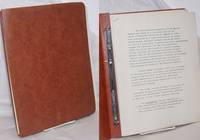
1967rif. 258590New York: NACLA 1967. Stiff Wraps. Various pagination over 100 pages In plain brown folder with metal struts through the reports and letters 8.5x11 inches this collection was published a year after NACLA's founding in 1966. It includes some of the early newsletters of the organization including Newsletters 1-8 various reports and newspaper articles bearing on it's work of providing a resource for the North American radical left data and information on the upsurges of the class struggle throughout Latin America. Laid in is a 10 page history & funding prospective with names of the collective members etc. includes a short mention of it's relationship with SDS. NACLA unknown books
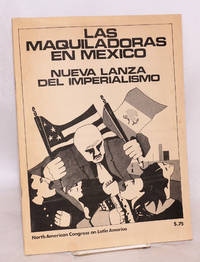
1975rif. 247782New York; Berkeley: NACLA 1975. Pamphlet. 31p. stapled wraps 8.5x11 inches paper toned else very good condition. Text in Spanish. NACLA unknown books
1975rif. 221803New York; Berkeley: NACLA 1975. Pamphlet. 31p. pamphlet 8.5x11 inches paper toned with some foxing. Text in Spanish. NACLA unknown books
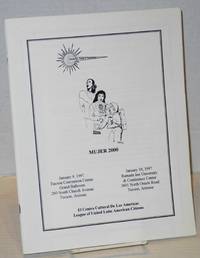
1997rif. 201723Tucson: El Centro Cultural de las Americas & League of United Latin American Citizens 1997. Magazine. 28p 8.5x11 inches biographical sketches and b&w photos of participants resources schedules events ads very good event program in stapled white pictorial wraps. El Centro Cultural de las Americas & League of United Latin American Citizens unknown books