26.071 risultati
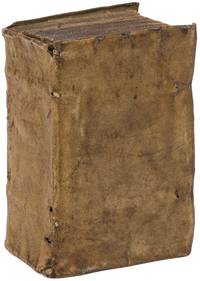
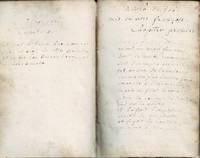
rif. 6651Manuscript on paper bound. 19th century. Good. Octavo 18 cm; 1 78 leaves paginated in manuscript. Latin and French text on facing pages. Bound in waste vellum manuscript in French no longer easily legible. Pages thumbed and toned at edges. Interlinear corrections in text as well as tipped in overleavers with corrected text. All we know of this manuscript book derives from examination of the physical evidence. The text does not correspond to any known French verse translation of the Book of Job so it seems to be a private endeavor. The unprofessional cursive orthography accords stylistically with handwriting typical of the 19th century but the structure and materials of the binding could indicate an earlier origin. The Latin text of the Vulgate appears on the pages facing the translation. Manuscript on paper, bound. hardcover books
1609rif. 625650Ginevra: Apud Iohan 1609. Hardcover. Very Good. Thick 32mo. 8 894pp. 40 index. Contemporary vellum flexible boards with the title faintly written on the spine. Parallel text in Greek and Latin. Boards worn and rubbed some soiling to the page edges pastedowns worn with some contemporary writing in pen minor edgewear to the pages and two pages of the index with tears still very good with the binding sound. Apud Iohan hardcover books
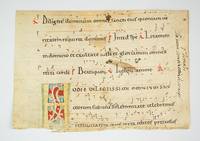
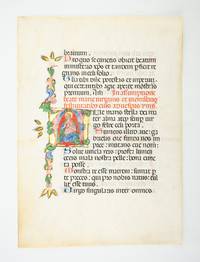
rif. ST20978Italy probably Tuscany first half of 12th century. Each half approximately 134 x 198 mm. 5 1/4 x 8 3/4". Single column 13 lines of text with neumes in a rounded proto-gothic hand. Rubrics and clef line in red two one-line initials in red A THREE-LINE ROMANESQUE WHITE-VINE INITIAL measuring 50 mm. tall in a pale yellow wash enclosing scrolling white-vines on a ground of green blue and red. Each half with a long closed tear one marginal the other touching text the part with the initial trimmed at top apparently cutting off all or part of a line lower end of initial a little faded and slightly trimmed the recto of the lower half rather faded but text discernible with close observation several small stains a small hole and other minor problems associated with being used as binding material; nevertheless in presentable condition with a once lovely and still pleasing initial. The refined Romanesque white-vine initial here opens the responsory "Hodie dilectissimi omnium" "Today the most beloved of all" for the feast of All Saints. Composed of light color washes paired with a vibrant red and featuring vines with acanthus-like curls the initial is simple but very elegant. The leaf probably comes from an antiphonary or similar manuscript containing the music to be sung for Mass with neumes organized around a single stave above each line of text. Unlike earlier notation which functioned as more of an aide-mémoire for singers who had already memorized the melody the notation here actually allows the singer to "read" the music: diastematic neumes show changes in melodic direction and the stave here labeled either "A" "C" or "F" clef for further clarity indicates the relative pitch of each note. The upper half of a leaf from the same parent manuscript was sold at Van de Wiele Auctions on 9 March 2024 lot 867 and was attributed to Tuscany based on the style its decoration which like our initial included distinctive acanthus sprays as well as muted washes of yellow green and blue. unknown books
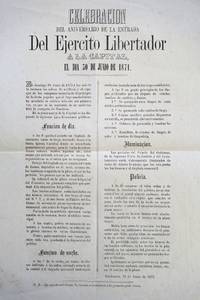
1872rif. List1815Guatemala City 1872. Broadside measuring 17 ¼ x 13 ½ inches. Vertical fold to center some loss and foxing to left upper portion very good plus overall. An unrecorded broadside announcing the first celebration of the Día del Ejército de Guatemala a holiday celebrating the defeat of the dictator Vicente Perna. This broadside also mentions the success of the campaign in Honduras as a reason for the celebration. The text gives an extensive description of the day's festivities with celebrations including the military band and a puppet theater for children. The rules for the evening include no selling of alcoholic beverages and no one entering the plaza on horseback. The holiday still exists today and became a center of controversy following the Guatemalan Civil War. unknown books
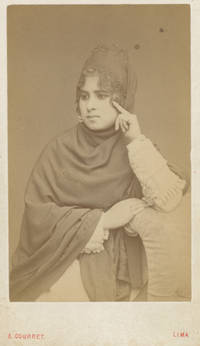
1870rif. List1327Lima 1870. Albumen photographs measuring 2 x 3 ½ inches on larger mounts. Some slight fading a few spots to one image including one with loss about very good overall. A striking pair of early carte-de-visite portraits of Peruvian women from the Courret studios at 197 Calle de la Union one bearing the Courret Hermanos imprint and the other with just Eugenio Courret's credit from the same studio. Eugenio formed the Courret Hermanos firm in 1863 with his brother Aquiles. The portrait of the woman and child is particularly uncommon for the Courret catalog as most of the photographs they took were of single wealth patrons. unknown books
1430rif. ST20979aParis ca. 1430. 191 x 140 mm. 7 1/2 x 5 1/2". Single column 16 lines in an elegant gothic book hand. Rubrics in gold line-fillers with color foliate and geometric designs on burnished gold ground two one-line initials and three two-line initials in blue or pink enclosing colored vines with foliage on gold ground one four-line initial in blue with white decoration enclosing a lattice pattern each compartment with an orange or blue leaf on gold ground BOTH SIDES WITH A DENSE RINCEAUX BORDER consisting of colorful acanthus flowers and many hairline vines terminating in gold leaves ivy and seed pods and with numerous gilt bezants. With just a couple tiny scuffs to paint and with slight rubbing to some of the small gold details but in lovely condition. This is an opulently decorated leaf from a Book of Hours offered in fine condition with glittering rinceaux borders delicate initials and luxurious gold rubrics. These sumptuous details and the high quality of the work indicate that this leaf was part of a costly manuscript commissioned by a wealthy patron. Other leaves from the same parent manuscript were sold at Bloomsbury on 6 December 2017 lots 63 and 64. One of these leaves showed St. Genèvieve leading the female saints in the Litany pointing to Paris as the place of origin. unknown books
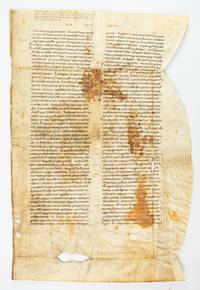
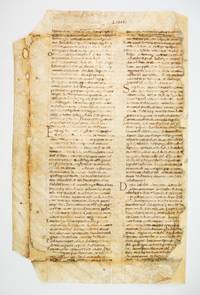
rif. ST20967aItaly late 11th or early 12th century. 485 x 124 mm. 19 1/8 x 12 3/4". Measured at widest part. Double column 53 lines in a rounded proto-gothic hand. Running titles in red. With contemporary or slightly later marginal notations; later inscriptions from its reuse as binding scrap dated 1557 and 1560 noting the volume "no. 181." Recovered from a binding and thus the vellum somewhat wrinkled soiled and with multiple folds some dark staining affecting legibility of several lines--though sense easily recoverable on one side and with effort on the other--a few tiny holes and two larger ones slightly affecting the text. Showing the usual problems associated with re-use but a grand and greatly appealing leaf nevertheless with its handsome script and imposing presence readily apparent. Partly because of its re-use in what obviously would have been a very large binding and more especially because of its age and early script this vast Romanesque Bible leaf is of there is no other way to say it but immense interest. Measuring nearly 20 inches tall it is almost large enough to be considered a so-called "Atlantic Bible" leaf a distinctive modern designation reserved for massive Bibles produced in the 11th and 12th centuries. The script here consists of a highly legible proto-gothic book hand with elegant rounded letter forms. Its overall appearance has much in common with Caroline miniscule including clubbed ascenders a strong "st" ligature and an "f" that extends below the baseline. In addition there are very few abbreviations and the ampersand symbol is used exclusively rather than the Tironian "et" favored in later scripts. The text here is from Deuteronomy 20:5-23:24 containing the final laws that Moses gives to the Israelites before entering the Promised Land. These "second laws" as they are often called include an array of statutes pertaining to sexual relations marriage divorce slavery warfare and inheritance as well as rules for agriculture clothing and diet. Our leaf previously belonged to the renowned Schøyen Collection one of the largest and most distinguished private manuscript collections in the world. Started in the 1920s by Norwegian engineer M. O. Schøyen and expanded by his son Martin the collection is particularly strong in paleography and biblical texts. Among its many unique and important manuscript pieces are treasures such as the St. Cecilia Bible the only Carolingian Bible in private hands and fragments of the Dead Sea Scrolls. unknown books
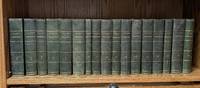
1824rif. 71329Parisiis Paris: Treuttel et Würtz 1824. First edition. Leather Bound. Very Good. Octavo 21 cm 1/4 green leather with bluish-green and black speckled paper over boards. On spines in gilt: "A. De Candolle. Prodromus." Extremities rubbed to varying degrees. "Conservatoire Botanique Ville de Genève" ink stamp on the title pages. Pages lightly foxed however occasionally the foxing is more pronounced. Periodic neat brief contemporary markings and manuscript notations in the text of the first half of the volumes these markings are quite unobtrusive consist primarily of x's or dashes and do not distract from the text. Markings most abundant in volumes 1 and 2. Marks all but completely disappear in the second half of the volumes. Stitching visible in the inside margins every now and then. Very infrequent staining to the pages. Pp. 85-92 in volume 3 are hanging on by a thread. Else bindings very tight and sturdy. With indexes at the rear of each volume but not containing the index that was issued in 1874. Known as "The Prodromus" this is Candolle's monumental descriptive classification of all heretofore known seed plants. Augustin Pyramus de Candolle prepared the first seven volumes of "Prodromus Systematis Naturalis Regni Vegetabilis" with his son Alphonso completing the work with the help of various authors. Swiss botanist Augustin Pyramus de Candolle 1778-1841 is often described as one the greatest Swiss botanists of the early nineteenth-century. He is known for establishing scientific structural criteria for determining natural relations among plant genera. After Charles Darwin introduced the principles of organic evolution Candolle's criteria furnished the empirical foundation for a modern evolutionary history of plants. In his writings he argued that plant anatomy not physiology must be the only basis of classification for which he coined the term taxonomy. In addition to being credited with supplanting Linnaean classification Candolle is also remembered for pioneering the study of phytogeography the biogeography of plants. Treuttel et Würtz unknown books
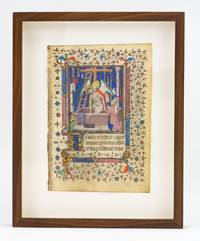
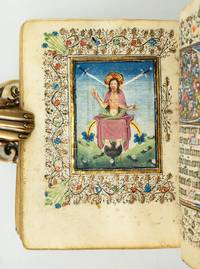
1415rif. ST17763Paris ca. 1415-20. Leaf: 160 x 110 mm. 6 1/4 x 3/8"; Frame: 232 x 185 mm. 9 1/8 x 7 1/4". Recto with three lines single column in a gothic book hand verso not inspected due to frame. Mounted in a wooden frame. Recto with a three-line initial in blue on gold ground embellished with ivy leaves A HALF-PAGE MINIATURE DEPICTING THE MASS OF ST. GREGORY the recently crucified Christ depicted emerging from a tomb supported by an angel and surrounded by the Arma Christi St. Gregory kneeling at the corner of the image the text and miniature framed by thick bar borders of pink blue and gold on three sides all SURROUNDED BY A FULL BORDER of hairline vines gilt ivy leaves and bezants and a few colorful flowers and acanthus. A little faint smudging in top and bottom borders very small scarcely noticeable area of blue background retouched not affecting the figures but A BEAUTIFUL LEAF the colors bright and the detail in the miniature very well preserved. Featuring carefully realized detail intriguing iconography and artistry that shows a very high degree of skill this is an important and early example of the work of the Master of the Harvard Hannibal. The subject of the present work is a well-known story about the sixth century Pope Gregory ca. 540-604 commonly known as St. Gregory the Great. According to legend Gregory was saying Mass when one of his deacons expressed a doubt in the doctrine of Transubstantiation whereby the communion bread actually becomes the body of Christ. Gregory prayed to God for a verifying sign whereupon Christ appeared in the guise of the Man of Sorrows clad in a loincloth and displaying the bloody wounds he incurred during the Crucifixion. Most Medieval miniatures depict Gregory kneeling before an altar as he says Mass accompanied by one or more deacons or assistants who bear witness to the miraculous event. In a notable departure from this norm the present miniature depicts the saint alone at the edge of the picture plane; in place of the chalice host and altar that would normally occupy the center of the scene is a considerable open tomb from which a larger-than-life-size Christ emerges. With blood still rushing from his wounds he places one hand on the edge of the tomb to steady himself while an angel supports him from behind. Christ's expression conveys both physical and mental pain as he struggles to support his own bodyweight; the angel who assists him spreads his wings protectively around the body of Christ while looking down at Gregory with a sorrowful expression knitted into his brow. The fine detail work seen in the figures' faces the angel's wings and the careful delineation of each slender finger is also carried over into more than a dozen objects crammed into the spaces in and around the tomb the rope is especially remarkable in the representation of its detail. Known as the "Arma Christi" or "Instruments of the Passion" these objects are meant to symbolize Christ's suffering. Seen here are: the cross nails and hammer that were used to crucify Christ the ladder used in the Deposition the disembodied hand symbolizing the one which slapped Christ's face the dice used by soldiers to see who would claim his seamless robe a lantern used by the soldiers who arrested Christ the 30 pieces of silver from Judas' betrayal a purple robe used in the mockery of Christ and other items that appear as part of the Passion narrative. It is also interesting to note that although a St. Gregory miniature usually appears at the beginning of the Hours of the Cross the Penitential Psalms or before the Seven Prayers of St. Gregory here rather unusually it opens a reading from John chapter 19 beginning "In illo tempore adprehendit Pilatus Iesum et flagellavit" describing the events of the Passion. This miniature can be attributed to an artist known as the Master of the Harvard Hannibal so-named for a splendid miniature painting of the "Coronation of Hannibal" prefacing a Livy in the Harvard College Library. Active from about 1415-30 in Paris and later possibly Rouen it is believed that our illuminator was a pupil of the Boucicaut Master with whom he is thought to have collaborated on several manuscripts both secular and religious. The present miniature would probably have been executed early in his career and while it certainly shows the influence of his teacher it also reveals certain stylistic tendencies that would become staples of the Master of the Harvard Hannibal's more mature work such as his preference for rich colors heavy molding of the faces and interest in decorative details. With its clever composition meticulous detail work and emotive figures that engage the viewer the present miniature is not only a beautiful work of art it also documents the precocious talent of an emerging master early in his professional career. unknown books
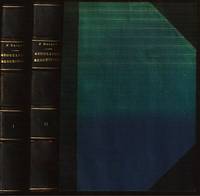
1934rif. CA02472 volumes: 427 pages with facsimile title and index; 513 pages with two facsimile pages appendix and index. Royal octavo 9 1/2" x 7" bound in three quarter blue leather with raised spine bands and gilt lettering to spine. From the library of George M Foster. Second edition. The two chronicles by Francisco de Burgoa easily hold first place for inflated style and bombastic phraseology especially the opening remarks to various chapters. Yet for the important area of Oaxaca and the numerous subjects he treats Burgoa's works are indispensable and irreplaceable sources. Burgoa born in Oaxaca was related to numerous local colonial families. He took his final vows in 1625 and by 1649 was provincial of his Order. In that post he made a special effort to visit various parts of Oaxaca especially seeking notices of Zapotecan antiquities with the aim of writing a history of Oaxaca. Before his death in 1681he did not complete it but left two prolix yet valuable published treatises. The two chronicles are the usually abbreviated Palestra historial and Geográfica descripción. Burgoa conceived of them as a single work but they differ in contents. The Palestra historial is a typical chronicle. It begins with the arrival in 1526 of Dominicans in Mexico City and shortly thereafter their appearance in Oaxaca. Burgoa rehearses the lives of many missionaries already biographized by Davila Padilla but Burgoa emphasizes their apostolate in the Oaxaca areas even before formal establishment of the Province of San Hipolito 1592. These lives are uniformly eulogistic but scattered through them are important bits of information on the numerous Indian groups of Oaxaca. The Geográfica descripción has 80 chapters. They detail the histories of the Monasteries and the work of their friars among the Indians with much less attention to biographical detail than in the Palestra historial. The data run to about mid-17th century in both. Handbook of Middle American Indians George McClelland Foster Jr born in Sioux Falls South Dakota on October 9 1913 died on May 18 2006 at his home in the hills above the campus of the University of California Berkeley where he served as a professor from 1953 to his retirement in 1979 when he became professor emeritus. His contributions to anthropological theory and practice still challenge us; in more than 300 publications his writings encompass a wide diversity of topics including acculturation long-term fieldwork peasant economies pottery making public health social structure symbolic systems technological change theories of illness and wellness humoral medicine in Latin America and worldview. The quantity quality and long-term value of his scholarly work led to his election to the National Academy of Sciences in 1976. Virtually all of his major publications have been reprinted and/or translated. Provenance from the executor of Foster's library laid in. Condition: Some occasional pencil marginalia by Foster. Foster's date of acquired on front paste down of volume one. Some rubbing to extremities else a very good set. Archivo General de la Nacion hardcover books
rif. ST20968-01Italy second half of 11th or opening of 12th century. 497 x 294 mm. 19 5/8 x 11 5/8". Double column 58 lines in a late Caroline hand. Running titles in red three two-line initials in red. Recovered from a binding and thus with some general soiling and staining to vellum recto illegible except for part of the headline modern reinforcement to the gutter and margins affecting a couple of letters at the end of a number of lines but the verso quite legible in most places and easily recoverable in the few places where it's not. This impressive leaf was once part of an immense lectern Bible that would have been prominently displayed at a church or monastery ca. 1075-1100. Measuring just under 500 mm. tall its dimensions are almost big enough to be considered an "Atlantic Bible" a distinctive modern designation reserved for massive Bibles produced in the 11th and 12th centuries. Despite the loss of legibility on one side due to the leaf's reuse as binding material the other side displays a lovely rounded Caroline hand with few abbreviations. The text comes from Exodus 23:11-24:18 expounding parts of civil law and Moses' journey to Mount Sinai. Our leaf was most recently part of the renowned Schøyen Collection one of the largest and most distinguished private manuscript collections in the world. Started in the 1920s by Norwegian engineer M. O. Schøyen and expanded by his son Martin the collection is particularly strong in paleography and biblical texts. Among its many unique and important manuscript pieces are treasures such as the St. Cecilia Bible the only Carolingian Bible in private hands and fragments of the Dead Sea Scrolls. unknown books
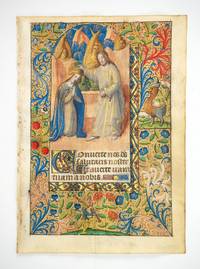
1500rif. ST20810RParis ca. 1500. 163 x 115 mm. 6 1/2 x 4 1/2". Single column 18 lines in a gothic book hand. Rubrics in red line fillers in blue and pink with gold bezant six one-line initials in burnished gold on pink and blue ground two two-line initials in blue on gold ground with a flower in the center one three-line initial in blue filled with ivy on gold ground verso with panel border of colorful flowers and acanthus recto with A LARGE ARCH-TOPPED MINIATURE OF THE CORONATION OF THE VIRGIN with an "L" shaped frame of burnished gold and painted flowers and A FULL BORDER of acanthus flowers a man playing a bagpipe and a hybrid creature wearing a hat all on a painted gold ground. Very minor wrinkling to vellum but the leaf IN LOVELY CONDITION with the gold everywhere gleaming brightly. From a luxuriously appointed Book of Hours this leaf features a handsome miniature of the Coronation of the Virgin attributed to the workshop of Jean Pichore fl. ca. 1502-20 a major figure among illuminators of the period and one of the most sought-after artists in France at the turn of the 16th century. Executed with imagination and delicacy the miniature features the traditional subject associated with the hour of Compline showing the Virgin being crowned Queen of Heaven following her Death and Assumption. The composition here is quite intimate with the Virgin kneeling before her son as she accepts with humility the crown he lays upon her head. Christ is depicted barefoot and slightly bowed toward his mother in a gentle display of respect. The artist creates a wonderful backdrop for this scene composed entirely of seraphim painted gold blue light pink and green closely packed together. Two of the seraphim hold up light pink draperies behind the central figures as if to shield this tender moment from prying eyes. The borders here are a source of delight featuring a figure wearing a jester-like cap and playing the bagpipe as well as a creature with the body of a bird and the face of a human donning a rather fashionable bycocket cap. The illumination here is of high quality features a liberal use of gold and contains unique marginal details suggesting that the original manuscript must have been a costly commission for a wealthy patron. unknown books
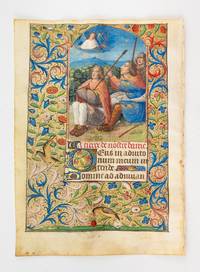
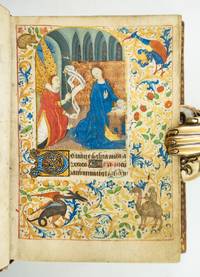
1500rif. ST20810PParis ca. 1500. 165 x 117 mm. 6 1/2 x 4 5/8". Single column 18 lines in a gothic book hand. Rubrics in red line fillers in blue and pink with gold bezant five one-line initials in burnished gold on pink and blue ground one two-line initial in blue on gold ground with a flower in the center one three-line initial in blue filled with ivy on gold ground recto with panel border of colorful flowers vase and acanthus verso with A LARGE ARCH-TOPPED MINIATURE OF THE ANNUNCIATION TO THE SHEPHERDS surrounded by A FULL BORDER of acanthus flowers and two birds all on a painted gold ground. Slight soiling to vellum but a very well-preserved leaf in fine condition. From what was surely a costly Book of Hours this leaf features a charming and skillfully painted miniature of the Annunciation to the Shepherds attributable to the workshop of Jean Pichore fl. ca. 1502-20 a major figure among illuminators of the period and one of the most sought-after artists in France at the turn of the 16th century. Depicting the traditional subject associated with the hour of Terce our miniature portrays as usual an angel appearing to shepherds tending their flock bringing news of the birth of Christ. Although the biblical narrative suggests that the shepherds were startled by the angel's appearance the three figures in this miniature appear remarkably unmoved--in fact only one of them seems to take any notice at all. The first shepherd sits on the ground looking straight ahead; the second holds his hands in prayer but looks little more than well prayerful at the angel in the sky; and a third figure maintains a slightly aloof expression taking no particular interest in the unfolding miraculous event. What may seem to be indifference can be explained easily enough by the artist's successful portrayal of nighttime cold! All three shepherds are thickly dressed one with his arms pressed tightly against his chest another with a hood partly covering his face and the sheep are tightly huddled together into one woolly white cluster. Another manifestation of the artist's success here is seen in the particularly well done molding of the faces with subtle shading attractively rendered features and clear individuation. Moreover although the shepherds seem essentially unmoved their garments are dusted with a glistening gold radiance from above a further subtle touch revealing a high level of achievement on the part of the painter. Finally the borders are one last source of delight with a small bird shown in mid-flight and a second one investigating a single strawberry that seems to have been placed there just for him. All of these indications of sophistication suggest that the original manuscript must have been commissioned by a patron able to pay a premium for the work of a highly skilled atelier. unknown books
rif. ST20973Italy 15th century. 364 x 260 mm. 14 3/8 x 10 1/4". Single column 22 lines in a rounded gothic book hand. Rubrics in red versal initials alternating red and blue with purple penwork one three-line initial in blue with purple penwork A SIX-LINE "A" DEPICTING THE ASSUMPTION OF THE VIRGIN the initial painted pink with red green and blue nodes and acanthus on a burnished gold ground with extensions running the length of the text column incorporating more acanthus and small gold embellishments with sprays of the gold leaves at the top bottom and center. A little rubbing to the paint negligible soiling and small spots to margins but in excellent condition overall. This very large handsomely preserved leaf features a strikingly attractive initial of the Virgin opening the beloved hymn "Ave Maris Stella" "Hail Star of the Sea". Dating back to at least the ninth century and traditionally associated with the hour of Vespers on Marian feast days as here the hymn praises the Virgin's purity meekness and mercy calling upon her as the "Nurturing Mother of God" to dispel evil and free us from our sins. Inside the gilt and painted initial is a lovely portrait of the Virgin who is depicted seated against a red mandorla dressed in pink and wrapped in a green and blue mantle--perhaps a reference to the colors of the ocean. Her hands are raised in prayer fingers lightly touching above her heart and her well-defined features appear both strong and serene. Judging from the size of the initial liberal use of gold and the wide margins of this leaf the original manuscript must have been a costly item produced for a wealthy church or monastery. unknown books
1907rif. CA0241A509ix pages. Octavo 8 3/4" x 6 1/2" bound in quarter leather with raised spine bands over marbled boards gilt lettering to spine. Published under the direction of Bishop Plancarte y Navarrete with a brief bibliographical note by Nicolas Leon. From the library of George Foster. Second edition. Juan Gonzalez de la Puente born a Spaniard undertook to chronicle the Augustinians in Michoacan and to write the lives of nine "apostolic varones". Part 1 of his Chronica appeared not long after its composition about 1623. In 1630 the chapter meeting of his province in Tiripitio Michoacan authorized him to publish the second part but no trace of part 2 has to date been uncovered. In the extant manuscript he wrote the biographies of the nine friars scattered over three books. They are Juan Bautista de Moya Juan de Median Rincon Diego de Chaves Sebastian de Trasierra Francisco de Acosta Juan de Montalvo Francisco Lopez Pedro de Vera and Diego de Villarubia. As a matter of fact none of these belonged to the Michoacan province but were from Santisimo Nombre in Mexico City; but as they had been active in Michoacan before the latter was an officially established province Puente included them. Book 1 contains no lives of these men but instead is devoted to a wide range of topics. Among them is the discovery of the New World the conquest of Mexico and Augustinian activities in Mexico after arrival as well as in Persia and the Orient. Book 2 contains biographies of the first five missionaries and recounts in entire chapters Augustinian efforts among the Indians of Michoacan as well as to missions in China and Japan. The remaining four missionaries appear in book 3 which completes the account to his times of the Augustinian ministry to the Tarascans. At the edge of the text Puente indicates his main sources. His ideas are easy to follow but occasionally he lapses into a diffuse style especially when extolling the virtues of his brethren. He also has a predilection for the unusual and the extraordinary. His Choronicaof Michoacan appeared in the same year 1624 as Grijalva's of Mexico although the latter province had been founded some 67 years earlier. A relative rare work the 1624 edition of which this was reissue. George McClelland Foster Jr born in Sioux Falls South Dakota on October 9 1913 died on May 18 2006 at his home in the hills above the campus of the University of California Berkeley where he served as a professor from 1953 to his retirement in 1979 when he became professor emeritus. His contributions to anthropological theory and practice still challenge us; in more than 300 publications his writings encompass a wide diversity of topics including acculturation long-term fieldwork peasant economies pottery making public health social structure symbolic systems technological change theories of illness and wellness humoral medicine in Latin America and worldview. The quantity quality and long-term value of his scholarly work led to his election to the National Academy of Sciences in 1976. Virtually all of his major publications have been reprinted and/or translated. Provenance from the executor of Foster's library laid in. Condition: Spine sunned some shelf wear and fore edge wear points rubbed pages age toned George Foster's stamp to title else about very good. Tip. de R.C. Miranda hardcover books
1972rif. 1412298Cambridge London and New York: Cambridge University Press 1972. Hardcover. Octavo x xii 581 pages. In Very Good minus condition with a Good dust jacket. Dust jacket protected with a mylar covering clipped front flap corners and ex-library sticker to mylar at spine. Spine yellow with black and red lettering. Exterior has slight plus wear including mild sunning to the spine and few minor chips to the head/tail edges with price clipped front flap. Boards have slight plus wear including faint sunning and slight cocking to the spine. Text block has slight plus wear including mild age toning to the edges and few instances of ex-library markings to the interior. Illustrated. Text in English and Latin. NOTE: Shelved in Locked Annex Column CC. 1412298. FP New Rockville Stock. Cambridge University Press hardcover books
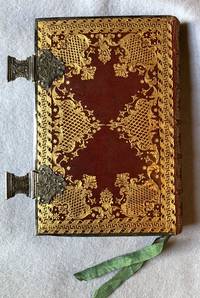
1756rif. 2896Rome: Gioacchino & Giovanni Giuseppe Salvioni 1756. 8vo 208 x 133 mm. 24 407 1 pp. 2 parts the Office of the Dead separately titled. Printed in red and black. Engraved frontispiece and 12 full-page engravings by Arnold Van Weserhout and Jacob Frey after Joseph Passarus Giuseppe Passaro two engraved title vignettes 12 engraved tailpiece vignettes a few unsigned others by Frey after Passaro or by M. Schedi engraver 3 engraved capital initials numerous red-printed woodcut initials. Foxing occasionally severe short marginal tear to fol. Z7. Slightly later eighteenth-century Roman gold-tooled red goatskin covers with large dentelle border composed of a triple neo-classical roll-tooled outer frame enclosing six large ornaments each with a basketweave design of diagonally crossing gilt fillets framed in volutes and leafy sprigs a few tiny petal or star tools board edges protected with a probably later frame of silver or silver-plated metal discreetly nailed to the binding two elaborately chased silver fore-edge clasps and catches spine in six uniformly gold-tooled compartments gilt edges with gauffred border design pair of green ribbon page markers marbled endpapers; 20th-century black morocco felt-lined case. Provenance: with Gumuchian Catalogue XII/1930/225; Maurice Burrus bookplate purchased from Gumuchian in 1934 purchase notes at end. A striking rococo binding in fine condition on a luxuriously printed and illustrated Office of the Virgin from the official Vatican press. From the mid- to late eighteenth century the Salvioni press used one or more bookbinding workshops that produced finely gold-tooled bindings for their Vatican publications. Although often referred to as the “Salvioni bindery” this appellation is circumstantial: ”the Salvioni firm was responsible for promoting the bindings but it is not known which workshop produced them” British Library Database of Bookbindings. Some of these “Vatican” bindings incorporated variously colored or mottled leather. This example with its basketweave cartouches relies purely on tooling for its effect. An example evidently from the same workshop on a book printed at Rome in 1791 by Salomini using analogous cartouches as corner-pieces as well as a similar “spiraling” border design and some of the same leafy spray and star tools is reproduced in Legature papali no. 264. “Whereas the . more flamboyant bindings produced by the Salvioni Bindery rely frequently on polychrome enamel heightening these Vatican bindings strike a somewhat more sober note with their very fine dark-red morocco and rich gold-tooling of high quality” Martin Breslauer Catalogue 107/428. Gumuchian Catalogue de Reliures du XVe au XIXe siecle no. 225 plate 68. Cf. British Library Database of Bookbindings Shelfmark c27e18; For other “Salvioni” bindings see Miner / Walters Art Gallery The History of Bookbinding no. 523; Biblioteca Apostolica Vaticana Legature papali da Eugenio IV a Paolo VI no. 264 plate CXCIII. Gioacchino & Giovanni Giuseppe Salvioni unknown books
1470rif. ST20836Western France Angers ca. 1470. 122 x 88 mm. 4 3/4 x 3 1/2". Single column 15 lines in a neat bâtarde hand. 152 leaves first and last three are ruled blank leaves; leaf count does not include the first blank endleaf erroneously included in the modern pencil foliation. COMPLETE. Contents: early ownership inscriptions f. 2v Calendar f. 5r Hours of the Virgin f. 17r Extract from the Gospel of John f. 55v Obsecro Te f. 57r Penitential Psalms and Litany f. 61r Office of the Dead f. 78r series of devotional prayers in Latin to the Virgin Mary Christ and the Archangel Michael f. 115r O Intemerata f. 134v series of devotional prayers in Latin f. 138r ruled blank leaves with family records of Jacques Bille f. 150v. Pleasing early 19th century caramel colored straight-grain morocco covers bordered with a double gilt rule smooth spine gilt in compartments divided with a double gilt rule and dotted roll and cross centerpieces neat early repair to head of spine turn-ins gilt marbled endpapers all edges gilt. Housed in a 20th century felt-lined slipcase with a gilt monogram on front. Ruled in red rubricated in red and blue two one-line burnished gold initials on a blue or pink ground one three-line blue and red penwork initial eight three- to four-line initials in pink and blue filled with ivy leaves on a burnished gold ground these pages with three-quarter borders of acanthus leaves dense rinceaux colorful fruit and flowers gold ivy leaves and bezants and WITH FOUR ARCH-TOPPED MINIATURES above a three- or four-line initial painted blue or pink on gold ground each surrounded by a full border of painted gold and brightly colored acanthus leaves vines and flowers studded with burnished gold bezants three borders inhabited with fantastical creatures the subjects of the miniatures including the Annunciation f. 17r; King David in Prayer f. 61r; a funeral procession f. 78r; and the Pietà f. 115r. Verso of first leaf with signature of Jacques Bille or Billes and the following page with a note in a different contemporary hand with the day and year erased and written over: "Ces presentes heures sont a iaques bille qui les trouvera si les luy Rende et il paiera voluntriers le VIII le jour de la sainct martin. Tesmoion son seign manuel cy mis le huytiesme jour de Avril L'an mil cinqcens et seze" "These present hours belong to Jaques Bille; whoever finds them should return them to him and he will gladly pay on the eighth the day of Saint Martin. Witness his manual signature placed here on the eighth day of April in the year one thousand five hundred and sixteen" followed by Bille's signature; third blank leaf with the ownership inscription "Tussanus Philippus Adeline Presbyter anno 1763"; verso of final text leaf and next three blanks with family records see below. Superficial crease to spine other insignificant signs of use to the leather but the binding sound and attractive. A hint of thumbing at lower corners of first half of the manuscript miniatures with a few isolated minor spots of rubbing not affecting faces otherwise in very fine condition internally the paint bright and fresh and the vellum clean. Almost certainly made in western France and with early ownership inscriptions tying it to that area this Book of Hours contains four extraordinarily high-quality miniatures by an accomplished artist very likely related to one of the greatest French manuscript illuminators of the period. Stylistic markers here include drapery with crisp folds figures with pale skin and high foreheads simple but perfectly executed scenery and a flair for detail. The latter talent is particularly evident on the various textiles and garments which include almost impossibly fine gold trimmings and sophisticated draping. It was in fact on the basis of the extraordinary drapery that the manuscript had previously been associated with the circle of Jean Fouquet called by Avril and Reynaud "the greatest French painter and illuminator of the 15th century." In a case of twin summits recent scholarship suggests an alternative attribution to the similarly illustrious circle of Maître de Jouvenel des Ursins a contemporary of Fouquet who according to Avril and Reynaud was "the most important illuminator of the mid 15th century in western France." Around him sprung up a group of artists collectively referred to as the "Jouvenel group" who were based primarily in the area between Tours Nantes and Angers. The illuminations in the present work are so skillful that with additional research it may be possible to pin down an attribution with more certainty; whatever the identity of the artists the level of finishing in these illuminations--from the careful molding of the faces and bodies to the expertly balanced compositions and elegant brushwork--are the hallmarks of a superior hand. When this item was sold at Sotheby's on 13 July 1977 the auction catalogue said that the miniatures "are painted with fine clear colours with great delicacy in the modelling of faces and costumes. The finest miniature is that of the Pietà set against a deep green hill with a fiery sun setting behind dark mountains and buildings and lighting up the evening sky." Indeed this image is a quiet masterpiece of illumination and an excellent example of this artist's work. The naked figure of Christ exhibits a real command of anatomy and proportion while subtle details such as the foreshortening to Christ's face and the whisper-thin cloth clinging to the lower body are done with an exquisite touch. The miniature of the funeral procession also stands out for its superior quality. The composition is quite different from the Pietà being a large group of people rather than an intimate portrait of two figures but it is approached with equal rigor and devotion to detail. The faces turning toward the viewer all show impressive individualization with the figure dressed in blue being particularly well formed and highly differentiated from the crowd--so much so that this could possibly be considered a patron portrait. Three of the miniatures in this work contain borders with delightful examples of marginalia including a court jester a hedgehog a male and female centaur wielding weapons a monkey riding a camel another monkey rubbing his posterior and other whimsical hybrid creatures. These stand out because they are rendered with the characteristic skill and attention to detail found in the larger miniatures so it is possible that they could also be the work of the miniature artist. Although the Calendar in this manuscript is fairly sparse at least two unusual entries in red point toward western France: St. Julian Bishop of Le Mans 27 January; and St. Maurilius patron saint of Angers 13 September. Significantly the Translation of St. Maurilius also appears on both 16 August and 19 of October in black. Strengthening this association with the west are the early ownership inscriptions tying to the Bille family from at least the early 16th century and possibly before. The final three leaves contain family records that include the date of Jacques Bille's wedding 8 April 1516 and the births of 15 children written in two or three hands between approximately 1520 and 1549. The name of our former owner was difficult to trace with certainty but we find mention of a Jacques Bille in the French National Archives where he is listed as a notary in Bourg in southwestern France. This would make sense given Bille's complex signatures found on the first two leaves--the extra flourishes may well reflect notarial signatures that he used in his work. In modern times our manuscript was sold at Sotheby's on 25 February 1946 lot 57 to Maggs who may well have sold it to Sven Ericcson who is listed as the owner of this and four other 15th century illuminated Books of Hours when it was sold at Sotheby's in 1977 for £3200. According to RBH it was purchased at that auction by "Malle" almost certainly Bernard Malle 1929-2008 brother of filmmaker Louis Malle and an eminent collector and bibliographer. In an elegant tribute to his late friend and mentor Bernard Clavreuil calls Malle "one of the most discerning . . . collectors of the postwar era" someone who "never ceased to refine and improve in order to achieve an impossible perfection." Malle also acted as a private advisor to more than one major collection and it is possible that he purchased the present manuscript on behalf of an unknown collector rather than his own library. These former owners clearly looked after this Book of Hours carefully over the years and for good reason: it is a work of considerable craftsmanship and beauty with illuminations distinguished by very substantial artistic skill. unknown books
1450rif. ST20835Flanders ca. 1450. 109 x 81 mm. 4 1/4 x 3 1/8". Single column 14 lines in a gothic book hand. 161 leaves. COMPLETE. Contents: Calendar f. 1r; Mass of the Holy Spirit f. 14r; Mass of the Holy Cross f. 23r; Requiem Mass f. 30r; Prayer on the Seven Last Words of Christ by the Venerable Bede f. 36v; Passion according to John f. 40v; blank f. 53; Hours of the Holy Cross f. 55r; Mass of the Virgin Mary f. 60r; Gospel Lessons f. 66v; Hours of the Virgin f. 73r; Penitential Psalms f. 126r; Litany f. 138r; Office of the Dead f. 144r. PLEASING NEAR-CONTEMPORARY BLIND-ROLLED CALF apparently with some old skilled restoration to joints spine and corners covers with rolled vine border surrounding a panel of three columns bearing a roll with parts of the inscription "AVE MARIA GRACIA PLENA" each word separated by one of four small motifs a flower a human profile the lamb of god and a sitting animal--perhaps a lion raised bands compartments with part of the same inscription roll. Lacking the original ties. Housed in a very attractive custom-made brown calf folding case with blind-stamped lettering on the spine interior lined in suede the whole within a calf-lipped suede-lined matching slipcase. Rubrics in red numerous one-line initials in blue with red penwork or gold with dark blue penwork many two-line initials in burnished gold on pink and blue ground with white embellishments several larger "I" initials between four and 11 lines in burnished gold on pink and blue ground with white embellishments 12 six- to seven-line initials some painted pink or blue with white embellishments and filled with flowers and tendrils on a gold ground or the initial in burnished gold on pink and blue ground with white embellishments EIGHT LARGE MINIATURES each inside a thin gold frame and with a three-quarter border of gilt leaves hairline vines and floral spays each facing page with a similar three-quarter border the subjects of the miniatures being: the Holy Spirit in the form of a dove f. 13v; St. Helena and the True Cross f. 22v; Raising of Lazarus f. 29v; Crucifixion f. 54v; Virgin and Child Enthroned f. 59v; Annunciation f. 72v; Last Judgment f. 125v; Funeral Mass f. 143v. Prickings visible in fore margins. See: Defoer et. al "The Golden Age of Dutch Manuscript Illumination" pp. 75-86. Just minor wear to the solid very pleasing early binding. A little chipping almost always mild to four of the miniatures with square frames the fifth the Annunciation somewhat rubbed and faded the three domed miniatures perfectly intact vellum with minor soiling and thumbing in places especially in lower corners of leaves in second half other trivial imperfections but overall a very well-preserved manuscript with no major issues. This enchanting little prayer book features eight attractive miniatures large gleaming burnished gold initials and a pleasing period binding--all in an excellent state of preservation. The miniature program here can be attributed to the so-called Masters of Otto van Moerdrecht the name given to a variety of Dutch artists active in the 1430s and '40s all working in a similar mode rather than to a specific master or workshop. According to Defoer et al. the work of these miniaturists "exhibit varied compositional formulas and bright highly contrasting colors . . . . The small somewhat doll-like figures appear rather wooden but their expressive gestures give the scenes a varied and vivid character." Two artistic hands are responsible for the present miniatures. The artist behind the first three miniatures all set within domed gilt frames the Holy Spirit St. Helena and Raising of Lazarus shows particular skill with a very smooth application of color figures with long eloquent hands and faces with subtle white highlighting. A second artist was responsible for the remaining five miniatures set within square golden frames Crucifixion Virgin and Child Enthroned Annunciation Last Judgment and Funeral Mass. Though this hand is less polished and the miniatures slightly smaller in size the scenes are all quite charming and attractively colored with vivid splashes of bright orange bubblegum pink sky blue and pale green. It is worth noting that the miniatures differ not only because of the artists' degree of success but also because of their condition: whereas the five are generally well preserved the other three are in a virtually perfect state. In addition to the central text of the Hours of the Virgin this manuscript contains several Masses each of which is preceded by a miniature. Perhaps the most interesting of these is the Mass of the Holy Cross which is paired with a miniature of St. Helena mother of Constantine the Great. According to Christian tradition Helena found the wooden cross used in the Crucifixion while she was travelling in Jerusalem in the fourth century. Constantine built the Basilica of the Holy Sepulchre in its honor and installed the relic there to be venerated. Britannica says that the adoration of the True Cross led to wide-spread sale of its fragments sought after as objects of devotion. It is unusual to find St. Helena depicted in a Book of Hours and this image is especially appealing with Helena in a beautiful red robe crown and halo embracing a large wooden cross in the center of the composition. The background is reminiscent of the work of the Gold Scrolls group with small swirls of liquid gold swimming in a scarlet sky the same scrolling motif graces the Holy Dove miniature. There is no indication of former ownership in this manuscript although the Calendar presents a few unusual saints that confirm a Flanders connection. These include St. Amandus in red known as the "Apostle of Flanders" on 2 February; St. Guido known as the "Poor Man of Anderlecht" on 9 September; St. Bavo in red patron saint of Ghent where a Cathedral is named in his honor on 10 October; and St. Eligius patron saint of goldsmiths and metalworkers on 1 December. The binding here is very close to contemporary and probably dates to the late 15th century. Neither the floral roll nor the "Ave Maria" roll seems to appear in EBDB. Similar rolls include r001954 r000623 and r000670 but ours is the only one with four different and charming tools one of each used between every "Ave" and "Maria." For a manuscript only slightly bigger than the palm of one’s hand this Book of Hours has a great deal to offer. In addition to its early binding and lovely illumination by an influential group of artists great care has been put into its preservation so that it resolutely endures for our pleasure and for owners in the centuries to come. unknown books
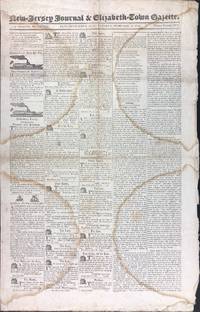
1825rif. 41367Elizabethtown NJ: J. & E. Sanderson 1825. First edition. Self wrappers. A very good- copy with 4 large semi-circular dampstain marks throughout. Unpaged 4 pp. Illus. with b/w in-text drawings. 20 3/4 x 13 inches. Contents include: a full column on the Liberation of Peru led by General Sucre; the first meeting at the new seat of Government in Florida where the governor states "No part of North America is so little known.Visitors.had pronounced it a bank of sand not worth the money paid for it"; republished letters from Andrew Jackson John Quincy Adams and Henry Clay. This issue not at the American Antiquarian Society. Uncommon. J. & E. Sanderson unknown books
1959rif. 34895México: Naciones Unidas Departamento de Asuntos Económicos y Sociales 1959. First edition. Cloth. A very good or better copy with light soiling and owner's name on original wrapper leaves clean. xiii 129 pp. Sm. 4to. A pioneer contribution to the economy of Argentina in the first half of the 20th c. Naciones Unidas Departamento de Asuntos Económicos y Sociales hardcover books
1959rif. 339931959. First editions. Stapled self wrappers. Very good copies. 4to. Includes: Bibliography in the Americas by Arthur E. Groop Courses on Latin America their merits and Problems by J.V.D. Saunders Centro Latinoamericanao Sobre Documentacion Historica by Carlos Victor Penna El Problema de la Fuentes Bibliograficas by Jose Alcina Franch Prospectus for a Permanenet Organization of Latin American Studies plus three more articles and seven meeting minutes and discussions. unknown books
1922rif. List2026N.P. 1922. Oblong 8vo wraps 9 x 6 inches. Rear wrap detached tears and chips to front wrap fine contents very good overall. Very Good. An uncommon first edition copy of Manuel Gomez Miralles’ photographic survey of Costa Rica. Miralles was one of Costa Rica’s most prolific photographers operating for many decades and this book is an early collection of his work. Miralles work is compositionally advanced and his large format images are reproduced effectively in the volume. This book was the only survey of Miralles’ work to appear in his lifetime and after his death his negatives were sold to a foreign photographer. We find no records of this book in the trade or auction records at the time of this listing. unknown books
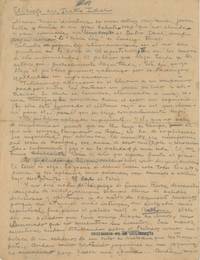
1923rif. List2852Mexico City 1923. Double-sided 8 ½ x 11 inch sheet handwritten with signature. Stained and slightly torn at fold. Excellent. Julio Enrique Ãvila 1892–1968 was a Salvadoran science professor journalist and poet. He is best known for his poetry anthology El mundo de mi jardín 1927. Offered here is a review of María Teresa Montoya in a production of Linares Rivas’ La Mala Ley at Mexico City’s Ideal Theater in 1923. In it Ãvila is captivated not by the play or Montoya’s performance but by the theater’s blind pianist. Translated from Spanish the review reads in part: “Staggering slightly and supported by a companion's shoulder a pale introspective young man makes his way between the seats. His hair is striking illuminated by a serene sadness and bears the color of dusk—as if the last ray of sunlight that once shone for him remained trapped within it… for him who is blind completely blind! “The audience claps impatiently… And he—who knows nothing of impatience—for whom time is endless who knows no early or late cannot understand this restless eagerness to push minutes forward this relentless dissatisfaction this desperate craving to experience everything—both suffering and joy—within the brevity of a lifetime. . “He must be a dreamer whose illusions lie far beyond reach a man of fantasy who cannot grasp his dream… His sensitive hands move over the keys as if searching for a path for a thread of melody to carry them away… They wander gathering jasmine in a harmonious garden to make an offering… They are like fledgling birds that have mistaken the moon bathing in the pond for their mother… And they follow it endlessly yet never reach it… and weep because they have been left alone… . “And through the music my soul has longed to embrace the soul of that lonely man that artist who dwells in sound who builds palaces and horizons out of melodies… The soul of that pale withdrawn young man who knows nothing of impatience for whom there is no early or late.” Overall a striking work by a significant figure in Latin American literature. unknown books
1976rif. 191608n.p.: USLA 1976. 18x24 inch poster sketch of a face with splattered blood streaming from its nose artist identified as "R. Castro" artwork is signed as Berkeley '76 but unknown if the poster was made later. The US Senate report "Trotskyite Terrorist International" notes that the USLA was a front of the Socialist Workers Party. USLA unknown books