Bible. LatinABAA

25 549 résultats
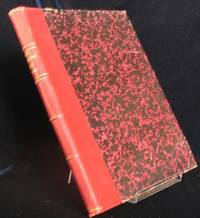
1527réf. 318283Coloniae: Petrus Quentel excudebat 1527. First Protestant Bible printed in Latin. Title-page with large woodcut vignette of arms of Cologne lion and gryphon rampant with and three crowns; numerous illustrations by Anton Woensam and ornamental initials throughout. Ff. 8 CCCXXV 1 LXXXVII i.e. 85 5. 1 vols. Folio. Recent half calf and marbled boards. Title page soiled old remargining tissue repairs on verso; some marginal worming and soiling generally clean with generous margins. Stamps of Cambridge Public Library in ink or in blind on four leaves. First Protestant Bible printed in Latin. Title-page with large woodcut vignette of arms of Cologne lion and gryphon rampant with and three crowns; numerous illustrations by Anton Woensam and ornamental initials throughout. Ff. 8 CCCXXV 1 LXXXVII i.e. 85 5. 1 vols. Folio. Cologne 1527 : Quentel's Protestant Bible in Latin. The first Protestant Bible in Latin edited by Johan Rüdel Rudelius printed in Cologne by Peter Quentel or Quentell and notable for the wood engraved illustrations by Anton Woensam Anton von Worms particularly those at the head of each of the four gospels. Matthew faces an angle who is touching his stylus; a lion is seated beside Mark; a bull with Luke; and an eagle stands beside John. Quentel was the printer of Tyndale's quarto Cologne English New Testament known from a single surviving fragment in the Grenville Collection where this same illustration to Matthew appears. It is a reasonable inference that each of the four gospels would have carried an illustration. The project which had "'got as far as the letter K' the signature that would have taken the work well into Mark" ODNB was unfinished at the time of Tyndale's flight from Cologne in 1525. Quentel's print shop was raided but sheets of the first gospel translated from the original Greek and printed in English soon began to circulate in England. Tyndale settled in Worms where Schöffer completed an octavo printing of the first complete English New Testament in 1526 a facsimile of the Grenville fragment and its illustration were published in 1871. The blocks for the illustrations evidently survived the raid on the Quentel's shop and are used here at the head of each of the four gospels. A notable edition in the history of the printing of the Bible. Adams 1007; not in Darlow & Moule but see note to 6107; VD16 B2589.OCLC: 22847218 Petrus Quentel excudebat unknown books
1609réf. 301886Venezia: Antonio Pinelli 1609. Engraved title pages in red and black; text in four columns 24-1102 2 ; 8-674-2 p. ; 8-326-34 p. 2 vols. Folio. Contemporary pigskin with ms. lettering on spine. Covers a bit soiled but binding is solid and text near immaculate. Handsome copy ex-library deaccessioned in 1873 from a library in Bologna with occasional stamps. Engraved title pages in red and black; text in four columns 24-1102 2 ; 8-674-2 p. ; 8-326-34 p. 2 vols. Folio. A gathering of Latin translations: The Vulgate printed after an edition printed in Antwerp in 1605; the translation from the Hebrew by St. Pagnini after the Lyon edition of 1528; and the Septuagint after the edition of Rome 1508. Scarce in institutions: OCLC locates 3 copies in Italy 2 in France 1 in Switzerland and none in Great Britain or the United States. Not in Darlow and Moule; OCLC 800915086 Antonio Pinelli unknown books
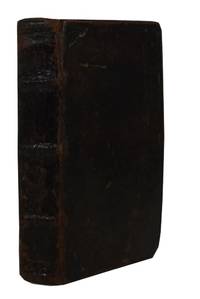
1557réf. 254216Basilaea Basel: Nicolaum Bryling Nicolaus Brylinger 1557. Woodcut border and printer's device on title. INCOMPLETE. 8 479 of 500 8 leaves. Lacking ff. 46-56 & 61-70. 1 vols. 8vo. Bound in contemporary blind panel-stamped pigskin over bevelled wooden boards clasps removed binding worn exposing boards on rear cover title page detached contemporary marginalia by Johannes Weneken throughout. Woodcut border and printer's device on title. INCOMPLETE. 8 479 of 500 8 leaves. Lacking ff. 46-56 & 61-70. 1 vols. 8vo. Brylinger published the only 16th century edition of Luther's Bible in Switzerland published one of the earliest Greek and Latin diglot Bibles and published a series of 8vo editions of the Bible with diglot and Greek-only text which was popular with students. Darlow & Moule makes no mention of this or any other Latin-only edition by Brylinger. Front paste-down endpaper and front free endpaper display extensive annotations in Greek and Latin presumably by Johannes Weneken. The marginal annotations provide a fascinating insight into how this book was used. Not in Darlow & Moule but cf. 4621; Adams 1056; OCLC: 46973017 6 copies only 3 of which in U.S. Nicolaum Bryling [Nicolaus Brylinger] unknown books
1558réf. 303259Lugduni: Apud Haered. Seb. Gryphi 1558. 478 p.; 333 1 16 pp. 108 woodcut vignettes by repetition of 78 blocks by Jacques Le Fevre. Printer's griffin device on title-page. 2 vols. 16mo. 19th-century polished calf; joints starting spine of first volume chafed; vol. I title soiled worn and remargined at gutter some toning and soiling to text throughout. 478 p.; 333 1 16 pp. 108 woodcut vignettes by repetition of 78 blocks by Jacques Le Fevre. Printer's griffin device on title-page. 2 vols. 16mo. Published by Sebastian Gryphius a German bookseller and printer who settled in Lyon in the 1520s. Described by Febvre and Martin as the "Prince of the Lyon book trade" in the 1540s he supported local humanist culture and used the italic type developed by Aldus Manutius to print compact beautiful books. A famous illustrated New Testament important "chiefly because of its influence on Bernard Salomon's New Testament cuts". Baudrier VIII 290; Mortimer French 16th Century Books 90 edition of 1560; OCLC: 551931968 locates one copy Apud Haered. Seb. Gryphi unknown books
1959réf. 339931959. First editions. Stapled self wrappers. Very good copies. 4to. Includes: Bibliography in the Americas by Arthur E. Groop Courses on Latin America their merits and Problems by J.V.D. Saunders Centro Latinoamericanao Sobre Documentacion Historica by Carlos Victor Penna El Problema de la Fuentes Bibliograficas by Jose Alcina Franch Prospectus for a Permanenet Organization of Latin American Studies plus three more articles and seven meeting minutes and discussions. unknown books
1973réf. 28947New York: Alfred A. Knopf 1973. FIRST AMERICAN EDITION. Minor spotting to page edges. Near fine in dust jacket with a few minor nicks at edges but with spine completely unfaded. The seven writers are Jorge Luis Borges Gabriel Garcia Marquez Julio Cortazar Octavio Paz Pablo Neruda Miguel R. Asturias and G. Cabrera Infante. Alfred A. Knopf unknown books
1892réf. A0818265-480 pages with 2 plates illustrations tables. Quarto 11 1/2" x 8 3/4" bound in quarter red leather marbled boards and gilt lettering to spine. From the library of Professor George M Foster. Pagination follows its publication in a volume of the Anales del Museo Nacional de Mexico. First edition. Jacinto de la Serna was a 17th-century priest who recorded extensive information regarding the survival of native religious customs. Born in Mexico he gained a doctorate in theology at the University of Mexico of which he was later rector three times. As a young priest he served for 14 years in parishes of the Indians during the same time that Ruiz de Alarcon was making his investigations. He spent most of his later career in Mexico City where he was one of the curates of the cathedral during three periods. He held important offices in the administrations of the archdiocese. He served as visitor general of the archdiocese under two archbishops. In 1656 he composed a work entitled Manual de ministros de indios para el conocimiento de sus idolatrias y extirpacion de ellas first published in 1892 in which he drew together the fruits of his own experience and the results of his studies. The purpose of the work was to acquaint the religious ministers with the superstitions of the Indians so that they could better instruct their Indian charges. The work may be divided into four parts. In chapters 1-5 he traces the history of the efforts to put an end native religious practices. In this section he gives valuable details of his own activities and of those of his predecessors such as Pedro Ponce de Leon and Hernando Ruiz de Alarcon. Chapters 6-11 are a study of the Aztec calendar for which he drew heavily on Martin de Leon. Boturini later used some of his material. Chapters 12-27 treat of religious beliefs and practices of the Indians. Large sections were take directly or in paraphrase from Ruiz de Alarcon including the latter's translations of Indian chants and prayers. Chapters 28-33 propose remedies against the continued practice of the native religions. George McClelland Foster Jr born in Sioux Falls South Dakota on October 9 1913 died on May 18 2006 at his home in the hills above the campus of the University of California Berkeley where he served as a professor from 1953 to his retirement in 1979 when he became professor emeritus. His contributions to anthropological theory and practice still challenge us; in more than 300 publications his writings encompass a wide diversity of topics including acculturation long-term fieldwork peasant economies pottery making public health social structure symbolic systems technological change theories of illness and wellness humoral medicine in Latin America and worldview. The quantity quality and long-term value of his scholarly work led to his election to the National Academy of Sciences in 1976. Virtually all of his major publications have been reprinted and/or translated. Provenance from the executor of Foster's library laid in. Condition: Foster's stamp to title. Some extremity rubbing boards slightly bowed else a very good copy. Imprenta del Museo Nacional hardcover books
1946réf. CA0057xxiv549 pages with 120 facsimile pages. Folio 13" x 9 1/2" bound in original publisher's wrappers. Originally written in English by Dr. Wagner it was published only in Spanish. Translated by Joaquin Garcia Pimentel and Federico Gomez de Orozco. Limited to 1000 copies of which this is number 285 on "fulva charta de Coyoacan" a yellow-tinted paper manufactured in Coyoacan. First edition. This monumental work was ten years in preparation. It contains a description of the books printed in Mexico before 1601 and in most cases includes a reproduction of the title page references to other bibliographies census of copies in public and private hands and prices and dates of sale. The author modestly calls this a supplement to the bibliographies of Joaquin Garcia Icazbalceta Jose Toribio Medina and Nicolas Leon. Actually it is the most complete and detailed work on printing in Mexico from 1539 to 1600 ever published. Condition: Edge wear to wrappers with some closed tears else a very good copy still unread. Editorial Polis paperback books
1652réf. 85679Amsterdam: sumptibus regiis L. Elzevier 1652. Editio nova ab auctore sucta et recognita. Hardcover. Very Good. 499p. Later old leather. 14 cm. No cover titling. Edges and joints rubbed. Backstrip crazed. Outer blanks partially pasted down. Old name Daniel Keim inked on a couple of leaves. Narrowly margined. Latin text. This defense of Charles I and of the divine right of kings was first published in the year 1649 that Charles I was executed. This "Edition nova" appears to be rather scarce. sumptibus regiis [L. Elzevier] hardcover books
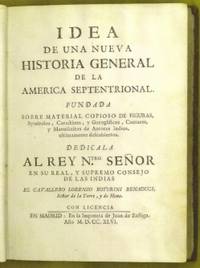
1746réf. A0068xxxvi167viii96 pages. Octavo 8 1/4" x 6 1/4" bound in full leather with decorative gilt and lettering to spine. From the library of George M Foster. First edition. Lorenzo Boturini Benaducci born in Italy of noble parentage studied in Milan and lived in Trieste and Vienna. He was a knight of the Holy Roman Empire. Forced to flee Austria because of the war with Spain Boturini arrived in Spain via England and Portugal. In Madrid he met the Condesa de Santibáñez oldest daughter of the Condesa de Moctezuma. The mother authorized him to collect a pension due her as a descendant of the Aztec Emperor Moctezuma II from the royal treasury in New Spain. Boturini went to New Spain in 1736 where he remained eight years. During those years he assembled a vast collection of paintings maps manuscripts and native codices. He copied more than 500 pre-Columbian inscriptions and made his own drawings of monuments and sculptures and he investigated the history of the apparition of the Virgin of Guadalupe on the hill of Tepeyac. He traveled widely and on his travels brought together the largest collection of Mexican antiquities assembled to that time by a European. Not only did he intend to write the history of the Virgin of Guadalupe but he also had plans to crown her image with a gold crown. For that purpose he sought donations from the bishops and from the public. This brought him to the attention of the colonial government which was suspicious of the motives of a foreigner making this proposal. On June 2 1743 after an investigation the recently arrived viceroy Pedro Cebrián y Agustín had him imprisoned and impounded his collection. He was accused of entering New Spain without license from the Council of the Indies and of introducing papal documents without a royal permit. After eight months in prison Boturini was sent to Spain. He fell into the hands of pirates who eventually released him at Gibraltar. From there he traveled to Madrid in miserable conditions. In Madrid he met Mariano Fernández de Echeverría y Veytia another passionate collector of Indian antiquities. Fernández de Echeverría y Veytia offered Boturini a place to live and financial support and got the Council of the Indies to reconsider his case. Boturini was absolved. The king named him royal chronicler of the Indies ordered that his collection be returned to him and extended an invitation for him to return to New Spain. Boturini however declined to return to New Spain and his collection was never restored. It appears that he was granted recompense and a stipend to work on his projected history of the colony. In Madrid he wrote a history of ancient Mexico unpublished at the time of his death in 1753. The library at the Basílica de Nuestra Señora de Guadalupe is named for him. The Boturini Collection was formed between 1735 and 1743 to serve as the basis of a projected Historia de América Septentrional. It consisted of many valuable documents the majority of them of Indian provenance. Among these were hieroglyphic paintings that had belonged to Juan de Alva Ixtlilxochitl a descendant of the rulers of Texcoco. Ixtlilxotchitl bequeathed these documents to Carlos de Sigüenza y Góngora. The collection was confiscated by Viceroy Pedro Cebrián y Agustín at the time of Boturini's arrest in 1743. It was deposited in the office of the secretary of the viceroyalty. The documents were neglected there for years and suffered considerable pilferage. The subsequent viceroy Juan Francisco de Güemes 1st Count of Revillagigedo granted the historian and antiquary Fernández de Echeverría y Veytia Boturini's friend from Madrid the paintings and documents he solicited for his own studies. On Fernández de Echeverría y Veytia's death they passed to Antonio de León y Gama. He died in 1802 and the collection passed to his heirs. Shortly thereafter 16 paintings were obtained by Alexander von Humboldt during his visit to Mexico in 1802-03. He published them in Vues des cordillères et monuments des peuples indigènes d'Amérique. The originals of these are now in the Berlin State Library. Part of the remainder of the collection may have passed to Father José Pichardo an amateur antiquarian. Joseph Alexis Aubin beginning in 1827 or shortly thereafter obtained important parts of the collection from a variety of sources. He sold his collection to Eugène Goupil who was of French and Mexican descent. This part of the collection passed by donation or purchase to the National Library in Paris where it remains under the name Aubin-Goupil Collection. George McClelland Foster Jr born in Sioux Falls South Dakota on October 9 1913 died on May 18 2006 at his home in the hills above the campus of the University of California Berkeley where he served as a professor from 1953 to his retirement in 1979 when he became professor emeritus. His contributions to anthropological theory and practice still challenge us; in more than 300 publications his writings encompass a wide diversity of topics including acculturation long-term fieldwork peasant economies pottery making public health social structure symbolic systems technological change theories of illness and wellness humoral medicine in Latin America and worldview. The quantity quality and long-term value of his scholarly work led to his election to the National Academy of Sciences in 1976. Virtually all of his major publications have been reprinted and/or translated. Provenance from the executor of Foster's library laid in. Condition: Lacks frontispiece portrait. Lacks Foster's stamp or date of purchase. some damp stains to end papers neat old marginalia in Spanish to back end paper worm hole ant head and heal of spine going through spine extremities bumped and rubbed old owner's label to front paste down 1" chip at back head hinge and name to front end paper scuffed else a good copy of a rare item. En la Imprenta de Juan de Zuniga hardcover books
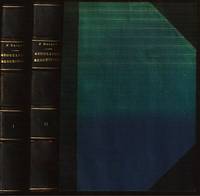
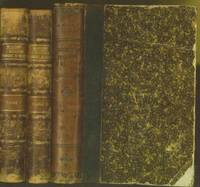
1934réf. CA0247Description: 2 volumes: 427 pages with facsimile title and index; 513 pages with two facsimile pages appendix and index. Royal octavo 9 1/2" x 7" bound in three quarter blue leather with raised spine bands and gilt lettering to spine. From the library of George M Foster. Second edition. The two chronicles by Francisco de Burgoa easily hold first place for inflated style and bombastic phraseology especially the opening remarks to various chapters. Yet for the important area of Oaxaca and the numerous subjects he treats Burgoa's works are indispensable and irreplaceable sources. Burgoa born in Oaxaca was related to numerous local colonial families. He took his final vows in 1625 and by 1649 was provincial of his Order. In that post he made a special effort to visit various parts of Oaxaca especially seeking notices of Zapotecan antiquities with the aim of writing a history of Oaxaca. Before his death in 1681he did not complete it but left two prolix yet valuable published treatises. The two chronicles are the usually abbreviated Palestra historial and Geográfica descripción. Burgoa conceived of them as a single work but they differ in contents. The Palestra historial is a typical chronicle. It begins with the arrival in 1526 of Dominicans in Mexico City and shortly thereafter their appearance in Oaxaca. Burgoa rehearses the lives of many missionaries already biographized by Davila Padilla but Burgoa emphasizes their apostolate in the Oaxaca areas even before formal establishment of the Province of San Hipolito 1592. These lives are uniformly eulogistic but scattered through them are important bits of information on the numerous Indian groups of Oaxaca. The Geográfica descripción has 80 chapters. They detail the histories of the Monasteries and the work of their friars among the Indians with much less attention to biographical detail than in the Palestra historial. The data run to about mid-17th century in both. Handbook of Middle American Indians George McClelland Foster Jr born in Sioux Falls South Dakota on October 9 1913 died on May 18 2006 at his home in the hills above the campus of the University of California Berkeley where he served as a professor from 1953 to his retirement in 1979 when he became professor emeritus. His contributions to anthropological theory and practice still challenge us; in more than 300 publications his writings encompass a wide diversity of topics including acculturation long-term fieldwork peasant economies pottery making public health social structure symbolic systems technological change theories of illness and wellness humoral medicine in Latin America and worldview. The quantity quality and long-term value of his scholarly work led to his election to the National Academy of Sciences in 1976. Virtually all of his major publications have been reprinted and/or translated. Provenance from the executor of Foster's library laid in. Condition: Some occasional pencil marginalia by Foster. Foster's date of acquired on front paste down of volume one. Some rubbing to extremities else a very good set. Archivo General de la Nacion hardcover books
1911réf. CA0100a3 volumes. Volume 1. vi314 with frontispiece and plates; volume 2. 372 pages with frontispiece and plates. volume 3. 518 pages with frontispiece and one plate. Royal octavo 9 1/4" x6 1/4" Bound in quarter leather with gilt lettering to spine and raised spine bands; marbled boards. Preface par M. le Cte de MoüyFirst edition. Mémoires: L'Intervention Française au Mexique by Charles Blanchot. This very rare memoir by Charles Blanchot was aide-de-camp to General Bazaine Supreme Commander of French Forces in Mexico during Mexico's Second Empire. There is so much in here that has never seen light in either Spanish or English for instance: the powerful if behind-the-scenes role of Doña Juliana de Gómez Pedraza widow of Manuel Gómez Pedraza and the vicious if as Blanchot suggests unfounded rumors circulating in Mexico City about Bazaine in 1866-7. Blanchot who married an American of French origin in Mexico City also offers a detailed and lively portrait of Mexico City society at the time. Condition: First signature of volume one detached with some edge wear along the fore-edges title to volume two detached binding edges and hinges rubbed spines darkened. A good copy of a very rare and scarce work. Librairie Emile Nourry hardcover books
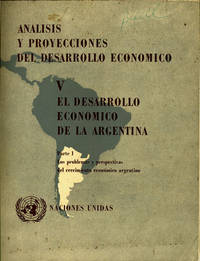
1959réf. 34895México: Naciones Unidas Departamento de Asuntos Económicos y Sociales 1959. First edition. Cloth. A very good or better copy with light soiling and owner's name on original wrapper leaves clean. xiii 129 pp. Sm. 4to. A pioneer contribution to the economy of Argentina in the first half of the 20th c. Naciones Unidas Departamento de Asuntos Económicos y Sociales hardcover books
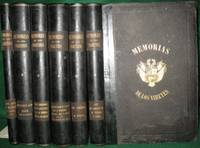
1859réf. CA02406 volumes. xxx379index pages; 426index pages; 388index pages; 51620 tables and index pages; 39317 tables and index pages; 39456 tables and index with large fold out map at back and 12 plates. Folio 12 1/4" x 8 1/4" bound in original publisher's dark brown pebbled cloth ruled in blind with front boards with armorial gilt device. New spines with original title in gilt laid on. Palau 95426 Sabin 26119 First editions. These memoirs prepared by ten of the viceroys were intended to apprise each successor of the nature and duties of his post of the distribution of offices and presidencies of the privileges of the natives their hereditary customs and character. The work forms a glorious monument of statesmanship; and it may be conjectured that if the Spaniards had always formed their conduct according to these Memorias they would never had lost their colonies in the New World. Bibliographico-Linguistica 312 part III The series was edited under the direction of the Ministerio de Hacienda. Some foxing in all volumes some water staining varying in degrees in volumes worming to some volumes in varying degrees a few affecting text but all readable. Spine replaced with original spine labels affixed else a good set of a scare colonial item. Due to the size and/or weight of this lot extra shipping and/or handling charges may apply. Libreria Central de Felipe Baily hardcover books
1800réf. E0068viii514 pages with frontispiece map. Quarto 10 1/2" x 8 3/4" housed in a custom slipcase. Translated by Maurice Keatinge. First English edition.Bernal Dïaz del Castillo was a conquistador who wrote an eyewitness account of the conquest of Mexico by the Spaniards under Hernan Cortes himself serving as a rodelero under Cortes. Born in Medina del Campo Spain he came from a family of little wealth and he himself had received only a minimal education. He sailed to Cuba in 1514 to make his fortune but after two years found few opportunities there. Much of the native population of the island had already been killed by epidemics and forced labor and in 1517 an expedition was sent to the smaller Caribbean islands to find alternative sources of labor. Dïaz joined this group under the command of Francisco Hernandez de Cordoba. It was a difficult venture and although they discovered the Yucatan coast by the time the expedition returned to Cuba they were in disastrous shape. Nevertheless Dïaz returned to the coast of Yucatan the following year on an expedition led by Juan de Grijalva with the intent of exploring the newly discovered lands. Upon returning to Cuba he enlisted in a new expedition this one led by Hernan Cortes. In this third effort Dïaz took part in one of the legendary military campaigns of history bringing an end to the Aztec empire in Mesoamerica. During this campaign Dïaz spoke frequently with his companions in arms about their experiences collecting them into a coherent narration. The book that resulted from this was Historia verdadera de la conquista de la Nueva Espana English: The True History of the Conquest of New Spain. In it he describes many of the 119 battles in which he claims to have participated culminating in the fall of the Aztec Empire in 1521.As a reward for his service Dïaz was appointed governor of Santiago de los Caballeros present-day Antigua Guatemala. He began writing his history in 1568 almost fifty years after the events described in response to an alternative history written by Cortes's chaplain who had not actually participated in the campaign. He called his book the Verdadera Historia True History in response to the claims made in the earlier work. Dïaz died in 1585 without seeing his book published. A manuscript was found in a Madrid library in 1632 and finally published providing an eye-witness account of the events often told from the perspective of a common soldier. Today it is one of the most important sources in understanding the campaign that led to the collapse of the Aztec Empire and the Spanish conquest of Mexico.Condition:Spine renewed with new period spine label and original boards which the corners and edges are heavily rubbed some foxing to early pages. Frontispiece map repaired. Custom made red slipcase with Japanese toggles and leather spine label in gilt lettering else about a very good copy in a near fine case. Printed for J Wright by John Dean hardcover books
1987réf. 70138NY: Farrar Straus Giroux 1987. First edition first prnt. Inscribed by Walcott on the front free endpage. "for _ March 93." Unread copy in Fine condition in a Fine dustjacket with an archival cover. Inscribed by Author. First Edition. Hardcovers. 8vo - over 7¾" - 9¾" tall. The images are of the book described and not stock photos Farrar Straus Giroux hardcover books
1628réf. EPL88Antwerp: Plantin 1628. Paperback. Very Good. Double ruled column. Pages 831-848. Comprising nine leaves of Maccabees. Size: 180 x 120mm. Plantin paperback books
1883réf. E0564Title leaf & 13 leaves of maps being mounted albumen photograph reductions of the original map. Photographs are approximately 7¼" x 8¾" on card stock leaves. Oblong royal octavo 9 "x 12½" bound in original red cloth rebacked with modern leather with original gilt-lettered leather spine laid on. References: P-LG 5121. El Territorio Mexicana Vol II p 457 reproduces 5th map of 1st edition. International Geographical Exposition and Congress of London. Geographical and Exploring Commission of the Mexican Republic. Catalogue of the Exhibits presented by the Commission with a short sketch of its organization and labors by the Directing Engineer Julio Alvarado C. E. Mexico 1895. p 32 First and only edition. Rare atlas of photographs of the map of the region around Puebla southwest of Mexico City. Warren Heckrotte describes the atlas and the enterprise that produced it: "The Comision Geografica-Explordora was established by a decree of December 13 1877. It was directed to prepare a map of the Republic with all the scientific accuracy desirable. The region around the town of Puebla southwest of Mexico City was the first effort of the Commission. The surveying was done by astronomical determinations and triangulation. Between 1879 and 1882 the planned nine sheets lithographed in Mexico City were issued at a scale of 1:20000. Elevations are shown by contour lines. For this atlas the sheets were issued as photographs the maps reduced in scale to 1:50000. A photographic edition at the scale of 1:100000 was also issued. Other areas of the country were mapped. The ultimate goal was to produce a map of the country at a scale of 1:100000 in 1100 sheets. At the time the Commission closed shop in 1914 a little over 200 sheets had been completed. This mode of production suggests that a small number of these atlases were produced." Indeed OCLC/WorldCat locates only two copies at the University of California Berkeley and Dartmouth College. Condition: Some soiling to covers; expertly rebacked by Sandra Good; new endpapers; internally fine or nearly so a bit of darkening to margins of mounts. Comisión Geográfico-Exploradora hardcover books
1828réf. WRCLIT85121Edinburgi: No Publisher 1828. 42791pp. Small octavo. Three quarter black calf and marbled boards gilt label. Mid 19th century ownership inscription gradually receding discoloration in upper forecorner of text block some occasional handsoiling and a few ink x's on title-leaf; a good sound copy. First and evidently only edition of this classics textbook with the minuscule binder's ticket of William Smith 269 High St. Edinburgh on the rear pastedown. The 'Ad Lectorum' is signed at the end 'J.P.' at Edinburgh 1827. OCLC and COPAC locate the same sole copy at Edinburgh University Library. OCLC 606455052. [No Publisher] hardcover books
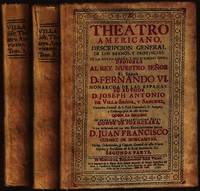
1952réf. CA0250Description: 2 volumes. Royal octavo 9 1/4" x 6 3/4" bound in facsimile velum with title printed in red and black on covers and horizontally ink lettered. Introduction by Francisco Gonzalez de Cossio. From the library of George M Foster. Second edition limited to 500 copies of which this is number 13.José Antonio Villaseñor y Sánchez was an 18th-century geographer historian and mathematician in New Spain. He was born in San Luis Potosí México and studied at San Ildefonso in Mexico City. He became an accountant and later official cosmographer geographer of New Spain. By order of Philip V the viceroy of New Spain Conde de Fuenclara was commanded in 1740 to have a report prepared on the true condition of the provinces of his jurisdiction. He commissioned José Antonio Villaseñor y Sánchez to prepare the report. Villaseñor occupied a number of important posts: official mayor of the Contaduria de Reales Tributos contador general de la azogues and cosmographer of New Spain. He wrote a number of works of mathematical and astronomical interest. The outcome of this commission by Fuenclara was the Theatro Americano descripción general de los reinos y provincias de la Nueva España y sus jurisdicciones. It appered in two volume in 1746 and 1748. The first volume contains introductory chapters on pre-Spanish and Spanish history of Mexico followed by a jurisdiction-by jurisdiction description of the archdiocese of Mexico and diocese of Puebla. The second volume continues the description for the diocese of Puebla. The second volume continues the description for the diocese of Michoacán Oaxaca Guadalajara and Durango. The work comprehends a great mass of data regarding the ethnology and population of the Mexican provinces in the mid-18th century. Handbook of Middle American Indians.George McClelland Foster Jr born in Sioux Falls South Dakota on October 9 1913 died on May 18 2006 at his home in the hills above the campus of the University of California Berkeley where he served as a professor from 1953 to his retirement in 1979 when he became professor emeritus. His contributions to anthropological theory and practice still challenge us; in more than 300 publications his writings encompass a wide diversity of topics including acculturation long-term fieldwork peasant economies pottery making public health social structure symbolic systems technological change theories of illness and wellness humoral medicine in Latin America and worldview. The quantity quality and long-term value of his scholarly work led to his election to the National Academy of Sciences in 1976. Virtually all of his major publications have been reprinted and/or translated. Provenance from the executor of Foster's library laid in.Condition: Foster's stamp to front limited page some wear to edges small linear tear at spine head of volume 2 else a very good copy. Editora Nacional paperback books
1981réf. 37442Old Chatham:: Sachem Press. Fine. 1981. Paperback. 0937584029 . Bilingual edition: Spanish and English. Translated with an essay by H. R. Hays. Edited with an introduction by Louis Hammer. First paperback edition. Fine in pictorial wraps.; 122 pages . Sachem Press, paperback books
1838réf. List601Most Latin America 1838. Mostly Latin America 1809 - 1838. Over 150 pieces comprising over 280 pages .5 linear feet. The Massachusetts merchant Captain Eliphalet Smith Jr. 1780-1838 was a merchant trading primarily in Latin America during the Revolutionary Period. Described by the Chilean historian Diego Barros Arana as "an unscrupulous adventurer who saw in the countries struggling for independence nothing more than a field for his speculations" Smith bore witness to many seminal events in the continent's political history. These letters offer first-hand accounts of such events as the Sieges of Cadiz and Montevideo Admiral William Brown's victories in the Argentinian Independence War the Peruvian silver trade Simon Bolivar's arrival in Guayaquil and the battles of Real Felipe Fortress. Smith's business correspondence from the period sheds light on the pro-Regency networks active in the Americas during the period as his loyalties - like most merchants - were based on the Spanish Armada's control of trade. The tensions between Smith and the nascent Chilean government came to a head when goods from Smith's ship the Brig Macedonian were seized by Lord Cochrane Vice Admiral of the Chilean Squadron in two separate incidents in 1818 and 1821. The ensuing legal disputes would cast a long shadow over relations between the United States and Chile until the cases were resolved by international tribunal. The collection includes several original documents relating to the episodes including Smith's recollections of the events and several letters to investors describing the confiscated goods. Smith's efforts and their tacit support by the U.S. government make him a key figure in early relations between the United States and the new Latin American regimes. In 1822 an agent of the United States State Department acknowledged that "the Brigs Canton and Macedonian were for more than three years constantly violating blockades neutral and belligerent rights and supplying the royalists and flew the Spanish flag." Likewise historian Patricia Marks writes that Smith had business connections with Spanish merchants in Peru and refers to a quote from Viceroy to Peru Joaquín de la Pezuela: "Smith and the Macedonian became anathemas to the patriots. San Martín is reputed to have said that he did more damage to the cause of liberty than any other man." Historian Joseph Byrne Lockey points out that Smith's actions had greater implications regarding the perception of the United States in revolutionary-era Latin America: "The conduct of Captain Smith supported in so far as it was legal by the government at Washington contributed together with other incidents of a similar sort not a little to the dimming of the earlier impression of the Patriots that the United States would be in the struggle their friend and ally." The collection here consists of 153 documents from Smith's estate including letters received by Smith mercantile inventories and holograph copies of letters sent by Smith during the period. Correspondents include Smith's contacts in Latin America and his creditors in the United States. As a collection the documents relay scarce firsthand accounts of several seminal political events and map an extensive network of mercantile contacts and inventories. They are worthy of further research by scholars of the political history of Latin America and Spain and of early United States / Latin American relations as well as scholars of trade between China and Latin America. Overall the collection presents an uncommon opportunity to acquire primary source material from Latin America's Revolutionary Period. We find records from the Macedonian and Smith in the Forbes family collection at Harvard as well as some later documents relating to Smith's claims at the University of Virginia Special Collections. We find no publicly held examples of Smith's personal correspondence or papers prior to 1820. A full write-up and inventory is available in our PDF catalog. unknown books
1981réf. 1334515Milwaukee: Marquette University Press 1981. Softcover. Octavo; pp 106; G/paperback; black spine with gilt text; no jacket; cloth shows some smudges to exterior; slight sticker residue to front; intact panels; text block has light tone to exterior edges; interior clean; illustrated. 1334515. FP New Rockville Stock. Marquette University Press unknown books
1977réf. 1335018Kalamazoo MI: Cistercian Publications Inc 1977. Hardcover. Octavo; G/G; pp 291; blue spine with white text; scarce in HB; dust jacket has rubbed exterior; minor chipping to edges; slight soiling to front; some foxing inside dj and flaps; cloth shows slight foxing to exterior; strong boards; text block edges have slight tone; some foxing to endpapers; interior clean; tight binding; inscribed by artist; arts - American. 1335018. FP New Rockville Stock. Cistercian Publications Inc hardcover books
1967réf. 31038Carbondale: Southern Illinois University Press 1967. Reprint. Hardcover. Fine/near fine. Three hardbound octavos in dustwrappers. Sold here together. All are from this publisher's Latin American Travel series of books. 102 174 and 196 pp respectively. All three books were edited and with an introduction by C. Harvey Gardiner. Fine books in dustwrappers save for corner price-clips on all three. Southern Illinois University Press hardcover books