545 resultados
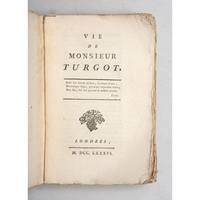
1786ref. 83882London: no publisher 1786. One of four printings of 1786 Gerits's edition D with no Avis de l'éditeur and no errata and the misprints corrected: "Contrary to what is suggested by the title this book was not a biography but rather an exposé of Turgot's educational political and economic ideas" Gerits. This work together with Dupont de Nemours's biography is the chief contemporary account of the renowned financial reformer and friend of the physiocrats. It contains in a footnote Condorcet's early attempt to apply mathematics to economics. On pp. 178-184 he discusses the various mathematical ways "in which indirect taxation could be replaced by direct taxation and the effects of such a change" Theocharis Early developments in mathematical economics p. 65. Condorcet 1743-1794 was secretary to the Académie and was a prolific author. Although more celebrated for his studies in philosophy literature and politics "his mathematical treatment of probabilities and his discussion of differential equations and finite differences show an ability which might have put him in the first rank had he concentrated his attention on mathematics" W.W. Rouse Ball A Short Account of the History of Mathematics p. 388. Octavo 214 x 135 mm. Contemporary papier dominoté wrappers paper spine label hand-written in black ink. Short closed tear to pages 245-246 neatly repaired without loss occasional light spotting; a very good uncut copy in an attractive decorated paper wrapper. Kress B.1033. Gerits: "Condorcet's Vie de Monsieur Turgot" in Harvard Library Bulletin. unknown
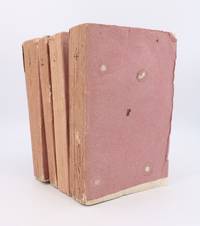
1788ref. 264649Paris: Chez Froullé libraire quai des Augustins 1788. First edition. 4 xvi 383 1; 4 259 1; 4 292; 4 366 pp. 4 vols. 8vo. Contemporary quarter leather pastepaper boards french tips flat spines with red leather title and volume labels. Spines rubbed some minor starting of joints to two volumes small loss to head of vol. I a very good contemporary set. First edition. 4 xvi 383 1; 4 259 1; 4 292; 4 366 pp. 4 vols. 8vo. Mazzei emigrated to America from Italy in 1773 and introduced the cultivation of grapes and olives to the United States. He became a neighbor of Jefferson in Virginia settling near Monticello at Jefferson's request and this association led to their long friendship and the author's acquaintance with Franklin and Adams. A staunch Republican Mazzei took an active role in the Independence movement. In this work he outlines the history of the American colonies the causes of the Revolution and the economy and government of the United States. Also discussed are Indians slavery emigration and the Society of the Cincinnati. The book was a contemporary success and remains an important work which Malone characterizes as "probably the most reliable of all the works of the period on the United States" Thomas Jefferson 2:109-110. Jefferson aided Mazzei in the compilation of the work while acting as American minister in Paris. Sabin 47206; Leclerc 957; Howes M456; Monaghan 1052; Muller 1612; Fay 24; Einaudi 3807; Reese Revolutionary 87 Chez Froullé, libraire, quai des Augustins unknown
1788ref. 264649Paris: Chez Froullé libraire quai des Augustins 1788. First edition. 4 xvi 383 1; 4 259 1; 4 292; 4 366 pp. 4 vols. 8vo. Contemporary quarter leather pastepaper boards french tips flat spines with red leather title and volume labels. Spines rubbed some minor starting of joints to two volumes small loss to head of vol. I a very good contemporary set. First edition. 4 xvi 383 1; 4 259 1; 4 292; 4 366 pp. 4 vols. 8vo. Mazzei emigrated to America from Italy in 1773 and introduced the cultivation of grapes and olives to the United States. He became a neighbor of Jefferson in Virginia settling near Monticello at Jefferson's request and this association led to their long friendship and the author's acquaintance with Franklin and Adams. A staunch Republican Mazzei took an active role in the Independence movement. In this work he outlines the history of the American colonies the causes of the Revolution and the economy and government of the United States. Also discussed are Indians slavery emigration and the Society of the Cincinnati. The book was a contemporary success and remains an important work which Malone characterizes as "probably the most reliable of all the works of the period on the United States" Thomas Jefferson 2:109-110. Jefferson aided Mazzei in the compilation of the work while acting as American minister in Paris. Sabin 47206; Leclerc 957; Howes M456; Monaghan 1052; Muller 1612; Fay 24; Einaudi 3807; Reese Revolutionary 87 Chez Froullé, libraire, quai des Augustins unknown books
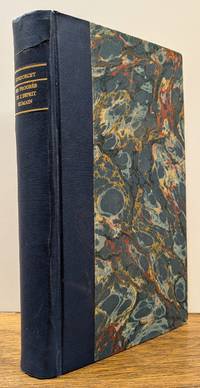
1795ref. 168984Paris: Chez Agasse 1795. Second. hardcover. very good. 389pp. 4pp. of advertisments 8vo untrimmed rebound in cloth-backed marbled boards spine neatly repaired. Paris: Chez Agasse L'An III 1795. Second Edition. Very good . Printing and the Mind of Man 246; Robinet 382. Considered to be Condorcet's most original and most important work. Considered to be Condorcet's most original and most important work. In it he divided history into ten epochs the first nine dealing with history upto the time in which he himself lived whereas the tenth is his prophetic view of the future. It is the most original part of the book in which Condorcet forecasts among others the future moral intellectual and physical improvement of man. '. PMM Chez Agasse unknown
1795ref. 168984Paris: Chez Agasse 1795. Second. hardcover. very good. 389pp. 4pp. of advertisments 8vo untrimmed rebound in cloth-backed marbled boards spine neatly repaired. Paris: Chez Agasse L'An III 1795. Second Edition. Very good . Printing and the Mind of Man 246; Robinet 382. Considered to be Condorcet's most original and most important work. Considered to be Condorcet's most original and most important work. In it he divided history into ten epochs the first nine dealing with history upto the time in which he himself lived whereas the tenth is his prophetic view of the future. It is the most original part of the book in which Condorcet forecasts among others the future moral intellectual and physical improvement of man. '. PMM Chez Agasse unknown books
1775ref. CLL-817"In-8 de 12 pp. ; 63 pp. ; 70 pp., vélin vert, tranches rouges (reliure de l'époque)."
1786ref. CLL-229Londres, 1786 In-8 de (2)ff., 322pp., veau rose, chainette dorée d'encadrement sur les plats, fleurons aux angles, dos lisse orné de lyres dorées dans des caissons dorés, pièces de maroquin vert foncé, roulette dorée sur les coupes, bordures ornées d'une dentelle à froid, tranches pailles (reliure de l'époque).
ref. 8721"P., Panckoucke,; Liège, Plomteux; 1784-1792. Trois volumes in 4° + un atlas petit in folio veau marbré de l’ép. (petites différences dans les reliures) dos à nerfs orné de fleurons dorés, tr. rouges (quelques épidermures). 2 ff. on ch-CXIV pp. (discours préliminaire)-721 pp. et errata-787pp. 184 pp. + [IV-316 pp. et 16 planches], dictionnaire des jeux-Atlas de 43 planches. "
1827ref. 45081827 Paris, Dalibon, 1827, 14,5x23, huit volumes. Élégante reliure en demi basane bleue. Dos orné à 5 nerfs, titre, auteur et tomaison en lettres dorées. Plats et tranches marbrées. Portrait en frontispice et une page d'écriture en fac-similé, bon exemplaire malgré quelques rousseurs. Envoi de photographies sur demande.
1786ref. 38306In-8 (219 x 144 mm), demi-veau blond, dos lisse orné de doubles filets dorés en place des nerfs, titre doré, (reliure Laurenchet), (4), 299 p. et (1) p. d'errata (exemplaire imprimé sur grand papier). Londres, 1786.
ref. 8490Véritable édition originale, sans mention d'édition. Printing and the Mind of Man, 246; En Français dans le Texte, 196. Le texte fondamental de Condorcet. À la suite se trouve relié : Dernier écrit de Condorcet précédé d'une notice sur ses derniers momens par Mme Suard. Paris, Brière, 1825. Avec un portrait lithographique en frontispice. 1/2 parchemin, pièce de titre sur dos long. Reliure début XIXè. Très bon Paris Agasse An III 1 volume in-8°
1788ref. 89325Froullé | Paris Colle 1788 | 13.5 x 21 cm | 4 volumes Brochés
1788ref. 89325Paris Colle: Froullé 1788. Fine. Froullé Paris Colle 1788 13.5 x 21 cm 4 volumes Brochés First edition cf. Sabin 47206. Leclerc 952.Some joints cracked at head and tail minor marginal losses of no consequence to the temporary wrappers.The author Italian by birth emigrated to America before the Revolution and settled in Virginia near Monticello.His book written in collaboration with Condorcet is of particular interest with regard to the history of independence and the government of the United States cf. Fay pages 24-25: ""Compilation très exacte qui réfute les théories de Mably et de Raynal et constitue un répertoire précieux de renseignements de tous ordres sur les États-Unis.""Rare and appealing copy preserved in its original stitching and in plain pink temporary wrappers. Froullé unknown
ref. 8759P., Royez, 1805, un volume in 8 relié en demi-basane, dos orné de filets dorés (reliure de la deuxième moitié du XIXe siècle), (étiquettes de titre légèrement frottées), 12pp., 210pp.
1795ref. 65358Paris: Chez Agasse 1795. Can Man Become Perfect" CONDORCET Marie Jean Antoine Nicolas Caritat Marquis de. Esquisse d'un tableau historique des progrès de l'esprit humain. Ouvrage posthume de Condorcet. Paris: Chez Agasse L'an III. de la République 1795. First edition of Condorcet's philosophical masterpiece. Octavo 7 7/8 x 4 13/16 inches; 201 x 123 mm. viii 389 1 blank pp. Contemporary quarter calf over dark blue paste-paper boards spine gilt with dotted bands and ornaments gilt red morocco lettering piece. Old owner's signature on half-title. A quarter-inch marginal tear at the bottom of leaf M42 that does not affect the text. Light foxing throughout. A blue ink stain on top edge from signature Z to the end. Overall a clean and attractive copy. "It was the gospel of the nineteenth century that mankind is destined for indefinite future progress. Condorcet 1743-1794 looking back and then forward saw proof of this in the growing equality between classes and nations the intellectual physical and moral improvement of man; and he prophesied that popular education on correct principles would strengthen and assure this progress.In the Esquisse 'An Historical Outline of the Progress of the Human Mind' published after his death Condorcet traces the history of man through epochs the first three covering his progress from savagery to pastoral community and thence to the agricultural state. The next five span the growth of civilizations and knowledge down to Descartes and the ninth describes the revolution of Condorcet's own lifetime from Newton to Rousseau. The prophetic view of the tenth epoch shows Condorcet at his most original. He forecasts the destruction of inequality between nations and classes and the improvement intellectual moral and physical of human nature.it is as the most fully developed exposition of the progress of man that Condorcet's work is now remembered and it is this which has given its lasting appeal" Printing and the Mind of Man. Printing and the Mind of Man 246. HBS 65358. $2000. Chez Agasse unknown
1795ref. 65358Paris: Chez Agasse 1795. Can Man Become Perfect" CONDORCET Marie Jean Antoine Nicolas Caritat Marquis de. Esquisse d'un tableau historique des progrès de l'esprit humain. Ouvrage posthume de Condorcet. Paris: Chez Agasse L'an III. de la République 1795. First edition of Condorcet's philosophical masterpiece. Octavo 7 7/8 x 4 13/16 inches; 201 x 123 mm. viii 389 1 blank pp. Contemporary quarter calf over dark blue paste-paper boards spine gilt with dotted bands and ornaments gilt red morocco lettering piece. Old owner's signature on half-title. A quarter-inch marginal tear at the bottom of leaf M42 that does not affect the text. Light foxing throughout. A blue ink stain on top edge from signature Z to the end. Overall a clean and attractive copy. "It was the gospel of the nineteenth century that mankind is destined for indefinite future progress. Condorcet 1743-1794 looking back and then forward saw proof of this in the growing equality between classes and nations the intellectual physical and moral improvement of man; and he prophesied that popular education on correct principles would strengthen and assure this progress.In the Esquisse 'An Historical Outline of the Progress of the Human Mind' published after his death Condorcet traces the history of man through epochs the first three covering his progress from savagery to pastoral community and thence to the agricultural state. The next five span the growth of civilizations and knowledge down to Descartes and the ninth describes the revolution of Condorcet's own lifetime from Newton to Rousseau. The prophetic view of the tenth epoch shows Condorcet at his most original. He forecasts the destruction of inequality between nations and classes and the improvement intellectual moral and physical of human nature.it is as the most fully developed exposition of the progress of man that Condorcet's work is now remembered and it is this which has given its lasting appeal" Printing and the Mind of Man. Printing and the Mind of Man 246. HBS 65358. $2000. Chez Agasse unknown books
1814ref. 1410251Paris 1814. Second Edition. Octavo 75 pages. In Good condition. Original wrap present but repaired with tape. Moderate age toning and wear to cover with chipping along edges. Textblock shows moderate age toning and miild scattered foxing. Inscribed to Sophie de Condorcet "a Madame de Condorcet de la part de l'auteur" inside cover with additional inscription on front cover. Shelved at Rockville Room E. Benjamin Constant 1767-1830 was one of the most influential liberal political theorists of the early nineteenth century and a prominent figure in French intellectual life after the Revolution and the fall of Napoleon. A gifted writer journalist and parliamentarian Constant argued for constitutional government civil liberties and freedom of expression. His writings-including essays political speeches and novels-helped shape modern liberal thought especially his distinction between the "liberty of the ancients" and the "liberty of the moderns" emphasizing individual rights and representative government. His 1814 work De la liberté des brochures des pamphlets et des journaux defended freedom of the press at a moment when France was transitioning from Napoleonic rule to the Bourbon Restoration making the book an important statement in the early struggle over modern political freedoms. Sophie de Condorcet 1764-1822 the Marquise de Condorcet was a leading intellectual and salonnière of late-eighteenth- and early-nineteenth-century France. Widowed during the French Revolution after the death of her husband the philosopher Marquis de Condorcet she became an important guardian and editor of his works while maintaining a prominent Paris salon that attracted many liberal thinkers and political reformers. A writer and translator in her own right-most notably translating the works of Adam Smith into French-she advocated educational reform women's intellectual advancement and Enlightenment ideals of reason and progress. Her intellectual circle overlapped with many of the liberal political figures active during the Restoration period making a presentation copy from Constant to Madame de Condorcet a meaningful association within the broader network of early modern liberal thought. 1410251. Special Collections - Upstairs. unknown
1814ref. 1410251Paris 1814. Second Edition. Octavo 75 pages. In Good condition. Original wrap present but repaired with tape. Moderate age toning and wear to cover with chipping along edges. Textblock shows moderate age toning and miild scattered foxing. Inscribed to Sophie de Condorcet "a Madame de Condorcet de la part de l'auteur" inside cover with additional inscription on front cover. Shelved at Rockville Room E. Benjamin Constant 1767-1830 was one of the most influential liberal political theorists of the early nineteenth century and a prominent figure in French intellectual life after the Revolution and the fall of Napoleon. A gifted writer journalist and parliamentarian Constant argued for constitutional government civil liberties and freedom of expression. His writings-including essays political speeches and novels-helped shape modern liberal thought especially his distinction between the "liberty of the ancients" and the "liberty of the moderns" emphasizing individual rights and representative government. His 1814 work De la liberté des brochures des pamphlets et des journaux defended freedom of the press at a moment when France was transitioning from Napoleonic rule to the Bourbon Restoration making the book an important statement in the early struggle over modern political freedoms. Sophie de Condorcet 1764-1822 the Marquise de Condorcet was a leading intellectual and salonnière of late-eighteenth- and early-nineteenth-century France. Widowed during the French Revolution after the death of her husband the philosopher Marquis de Condorcet she became an important guardian and editor of his works while maintaining a prominent Paris salon that attracted many liberal thinkers and political reformers. A writer and translator in her own right-most notably translating the works of Adam Smith into French-she advocated educational reform women's intellectual advancement and Enlightenment ideals of reason and progress. Her intellectual circle overlapped with many of the liberal political figures active during the Restoration period making a presentation copy from Constant to Madame de Condorcet a meaningful association within the broader network of early modern liberal thought. 1410251. Special Collections - Upstairs. unknown books
ref. 2362recueil politique et d’économie sociales qui paraissait sous les auspices et avec le concours de 14 écrivains Patriotes,dont chacun était chargé d’une partie distincte, Clavière avait les finances,Condorcet la législation,et l‘instruction publique,Kersaint la marine et les colonies, Garran de Coulon la jurisprudence etc… à Paris de l’imprimerie du Cercle Social rue du Théâtre n°4 parution de novembre 1791 à juillet 1793 la collection forme 21 recueils.Premier recueil Novembre 1791 an 3 de la liberté 46 pages et titre,deuxième recueil Décembre 1791,troisième recueil janvier 1792 titre et 136 pages,quatrième recueil février 1792 an 4 de la Liberté titre,124 pages,cinquième recueil mars 1792 titre,88 pages Sixièmerecueil Avril 1792 titre, 116 pages,(pâle mouillure en marge extérieure pages 34 à 64),septième recueil Mai 1792 titre et 104 pages (mouillure en marge extérieure pages 89 à 104 sans gravité) huitième recueil juin 1792 titre,100 pages.Dixième recueil août 1792 titre,80 pages,+ intéressant catalogue,onzième recueil septembre 1792 titre et 80 pages plus supplément de 52 pages."du nouvel ordre social"par Henry BANCAL député du Puy de Dôme à la Convention Nationale(avec cette remarque:le supplément de ce cahier ayant été imprimé la nuit,on y a employé par erreur du papier destiné à un autre ouvrage)douzième recueil Octobre 1792 An Premier de la République,treizième recueil Novembre 1792 titre, 106 pages plus 80 pages par Guy KERSAINT député à la Convention "de la Constitution et du Gouvernement qui pourroie convenir à la République Françoise" quatorzième recueil Novembre décembre 1792 titre,72 page.Rarissime réunion de 13 recueils sur 21 devenue très difficile à rencontrer même en recueil isolé. L’ensemble en 4 volumes reliure cartonnée modeste, mais d’époque avec étiquette manuscrite et avec grandes marges "ces recueils contiennent des travaux solides d’un haut intérêt"
1847ref. 11057Paris, Firmin Didot frères, 1847-1849. 12 vol. grand in-8 de (6)-CLXXXVI-(2)-652 pp. ; (6)-VIII-672 pp. ; (6)-664 pp. ; (6)-644 pp. ; [6]-575 ; (6)-662 pp. ; (6)-575 pp. ; (6)-662 pp. ; (6)-547 pp. ; (6)-616 pp. ; (6)-676 p. ; (6)-690 pp., percaline grise.
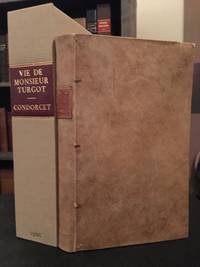
1786ref. 003London s.e. 1786; 8vo. 299 pp. 1 pp.n.ch. d'errata full vellum with flaps from the 19th century smooth spine tan title piece speckled edges. The true first edition of Condorcet's life of Turgot Gertis's edition A the first of four editions published with a London imprint in 1786. one of four published under the date 1786; this print corresponds to Einaudi's collation 2 ff. 299 pp. 1 p. d'errata which presents it as the first and therefore differs from the 287 pp. edition. with portrait reported by INED under n ° 1186. Condorcet was a strong supporter of Turgot who had attempted to implement physiocratic ideas as the French finance minister from 1774 to 1776. His biography seeks to vindicate Turgot's thought and work and is a powerful defence of Enlightenment economic ideas. Seven editions appeared within two years making it one of the best-selling works of economics of its day. From the Thomas Carnegy of Craigo library armorial ex-libris. A beautiful copy well preserved. Housed in a cloth clamshell box with leather label. Published by London: [no publisher stated] hardcover
1778ref. 263011Paris: Not Identified 1778. hardcover. near fine. Title with ornamental borders; title vignette and ornamental head/tail pieces throughout. Illustrated with a portrait of Pascal engraved by L. Demeuse. XII 316 pages. 8vo handsomely bound in full contemporary mottled calf with gilt decorated spine and marbled page edges. Paris i.e. Geneva: Publisher Not Identified Grasset 1778. Nouvelle edition. Scarce. According to BN the imprint is false; this edition was printed in Geneva by Grasset. A reprint of Condorcet's selection from the Pensees. he added to his own notes a selection from the "Remarques sur les Pensees de Pascal" by Voltaire who's notes are signed "Note du present editeur." -- Bengescu 1910; BN 5391. Page 163 is misnumbered 139; page 193 is misnumbered 391. Not Identified unknown
1778ref. 263011Paris: Not Identified 1778. hardcover. near fine. Title with ornamental borders; title vignette and ornamental head/tail pieces throughout. Illustrated with a portrait of Pascal engraved by L. Demeuse. XII 316 pages. 8vo handsomely bound in full contemporary mottled calf with gilt decorated spine and marbled page edges. Paris i.e. Geneva: Publisher Not Identified Grasset 1778. Nouvelle edition. Scarce. According to BN the imprint is false; this edition was printed in Geneva by Grasset. A reprint of Condorcet's selection from the Pensees. he added to his own notes a selection from the "Remarques sur les Pensees de Pascal" by Voltaire who's notes are signed "Note du present editeur." -- Bengescu 1910; BN 5391. Page 163 is misnumbered 139; page 193 is misnumbered 391. Not Identified unknown books
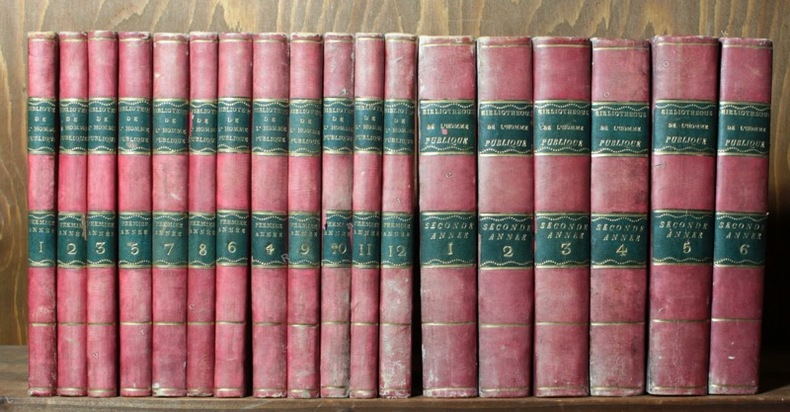
1790ref. 9307A Paris, chez Buisson, 1790-1791. 24 tomes en 18 volumes petit in-8, demi-vélin teinté rouge à coins, dos lisses ornés de roulettes et filets dorés, étiquettes de titre et tomaison vertes. Reliures un peu frottées, dos légèrement passés, minimes manques à quelques étiquettes, quelques taches au papier des plats, très rares rousseurs, quelques auréoles. A noter que les étiquettes de titre orthographient "public" avec la terminaison -que. Les 12 numéros de la première années sont reliés indépendamment, les 12 de la seconde sont reliés à raison de 2 numéros par volume, sous la même reliure toutefois.
1788ref. 51530No place: no publisher 1788. The abolition of taxes First edition the first four numbers of Le Moniteur a political journal edited by Brissot de Warville Clavière and Condorcet all published. Issues two and four consider taxation proposing the abolition of all existing taxes and their replacement by equally distributed voluntary subsidies. In this volume the fourth number is the 50-page edition. Garrett notes: "The Bibliothèque nationale has the only complete collection of Le Moniteur. The British Museum has a 38-page edition of the fourth number and Cornell University has versions of the same pamphlet in 48- and 50-page editions. Among the other major collections of French revolutionary pamphlets in this country i.e. USA Le Moniteur is to be found only at Harvard University 48-page edition of the fourth number Princeton University 50-page edition of the fourth number and the New York Public Library an edition of the third number differing slightly from that in the Bibliothèque nationale" Garrett. 4 parts in one vol. octavo 188 x 119 mm pp. 14 2 bl.; 20; 32; 50. Ownership stamp of Thomas Valletau de Chabresy to title verso of the fourth part. Modern dark red quarter morocco spine lettered in gilt patterned paper boards old red edges to first 3 parts. Boards rubbed at lower outer edges some dampstaining to part 4 very good copies. Hatin 92; INED 815. Clarke W. Garrett "The Moniteur of 1788" in French Historical Studies vol. 5 no. 3 Spring 1968 pp. 263-73. hardcover