De Condorcet, Jean Antoine NicolasBiblio.com

444 résultats
2010réf. DADAX116076610XKessinger Publishing 2010-03-19. paperback. New. 6.00x1.34x9.00. Buy with confidence. Excellent Customer Service & Return policy. Kessinger Publishing paperback
réf. 2812405104.Gpaperback. Good. Access codes and supplements are not guaranteed with used items. May be an ex-library book. paperback
2009réf. DADAX1104076365Kessinger Publishing 2009-02-16. paperback. New. 6.00x1.12x9.00. Buy with confidence. Excellent Customer Service & Return policy. Kessinger Publishing paperback
2009réf. DADAX1104076357Kessinger Publishing 2009-02-16. paperback. New. 6.00x1.07x9.00. Buy with confidence. Excellent Customer Service & Return policy. Kessinger Publishing paperback
1955réf. C67623London: Weidenfeld & Nicolson 1955. First Edition Of This Translation. Hardback. Dust Jacket. Hardcover Hardcover. Fair. First Edition Of This Translation. Hardback. Dust Jacket. 8vo. pp 202. Original publisher's red cloth lettered gilt at the spine. The publisher's own retained copy with their stamp on the half title reading 'file copy'. Introduction by Stuart Hampshire. Very slight lean otherwise very good indeed in slight used very good minus dust jacket with abrasion from label removal. Weidenfeld & Nicolson, hardcover
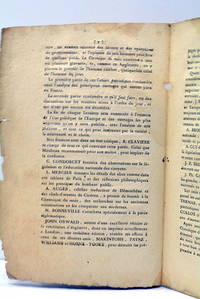
réf. 67764A la fin: Paris Imprimerie du Cercle Social 1791. 4 pages. 23x145 Cm. Broché. Rarissime prospectus de parution de ce célèbre périodique paru entre 1791 et 1793. On y trouve la philosophie de la publication la rubrique assurée par chaque auteur les conditions d'abonnement etc. Petits manques. Taches et rousseurs. (A la fin:) Paris, Imprimerie du Cercle Social (1791). unknown
réf. 42721S.l.n.d. 1789. 8 pages. 195x125 Cm. Dérelié. Position politique de Condorcet sur le problème des biens ecclésiastiques. Ce sont les réflexions "d'un homme qui n'a jamais passé pour aimer le Clergé mais qui a toujours aimé la justice et la paix qui lorsqu'un Corps est détruit ne voit plus dans ceux qui le composaient que des individus. ayant les mêmes droits que les autres hommes.". Mouillure angulaire avec petits manques sans atteinte au texte. Traces de plis. S.l.n.d. (1789). unknown
1788réf. 264649Paris: Chez Froullé libraire quai des Augustins 1788. First edition. 4 xvi 383 1; 4 259 1; 4 292; 4 366 pp. 4 vols. 8vo. Contemporary quarter leather pastepaper boards french tips flat spines with red leather title and volume labels. Spines rubbed some minor starting of joints to two volumes small loss to head of vol. I a very good contemporary set. First edition. 4 xvi 383 1; 4 259 1; 4 292; 4 366 pp. 4 vols. 8vo. Mazzei emigrated to America from Italy in 1773 and introduced the cultivation of grapes and olives to the United States. He became a neighbor of Jefferson in Virginia settling near Monticello at Jefferson's request and this association led to their long friendship and the author's acquaintance with Franklin and Adams. A staunch Republican Mazzei took an active role in the Independence movement. In this work he outlines the history of the American colonies the causes of the Revolution and the economy and government of the United States. Also discussed are Indians slavery emigration and the Society of the Cincinnati. The book was a contemporary success and remains an important work which Malone characterizes as "probably the most reliable of all the works of the period on the United States" Thomas Jefferson 2:109-110. Jefferson aided Mazzei in the compilation of the work while acting as American minister in Paris. Sabin 47206; Leclerc 957; Howes M456; Monaghan 1052; Muller 1612; Fay 24; Einaudi 3807; Reese Revolutionary 87 Chez Froullé, libraire, quai des Augustins unknown
réf. 1610Kehl: De L'imprimerie De La Société Littéraire Typographiques 1789. Hardcover. Good. Octavo. iv 374pp. 2 a8-z8; aa4 - aa4 blank. Half-title present. Quarter vellum over marbled boards. All edges marbled red. Cioranescu I 20418. All edges stamped by an academic institution's name and stamped 'Withdrawn.' [Kehl]: De L'imprimerie De La Société Littéraire Typographiques, 1789. hardcover
réf. 1248A Paris: Chez Agasse An V 1797. Hardcover. Good. Octavo. viii 392pp. 4 A8-Z8 Aa8 Bb4. Half-title present. Third edition published by Sophie Condorcet and Daunou. Later quarter calf over boards by GKB Pynaker Bookbinders at the Hague with their small bookplate. A. Martin & G. Walter Catalogue de l'histoire de la Révolution Française 8083. A Paris: Chez Agasse, An V (1797). hardcover
1976réf. BN155695Suhrkamp 1976. 1976. Softcover. Entwurf einer historischen Darstellung der Fortschritte des menschlichen Geistes suhrkamp taschenbuch wissenschaft stw 175 Entwurf einer historischen Darstellung der Fortschritte des menschlichen Geistes suhrkamp taschenbuch wissenschaft stw 175 Jean Antoine Nicolas de Caritat de Condorcet Suhrkamp paperback
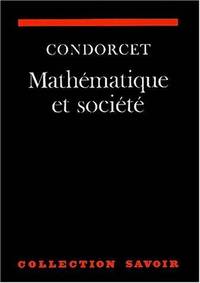
1974réf. BN510058Editions Hermann 1974. 1974. Softcover. Mathématique et société Mathématique et société Condorcet et Roshdi Rashed Editions Hermann paperback
1994réf. BN646377Promeneur 1994. 1994. Vie de Voltaire Vie de Voltaire Condorcet Promeneur unknown
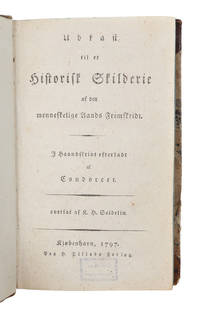
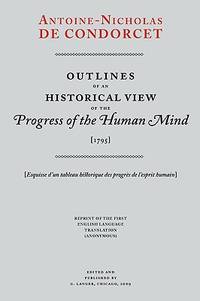
1797réf. 61971København Tikiøbs Forlag 1797. 8vo. Bound in a contemporary half calf binding with gilt spine and gilt title label. Minor cracks to spine. Insignificant wear to capitals. Edges of boards worn. Corners bumped. Bibliographical notes to front free endpaper. Small ownership stamp to verso of title page. Evenly browned. XII23681: errata pp. The extremely rare first Danish edition of Condorcet's main work "Esquisse d'un tableau historique des progrès de l'esprit humain.1795" "the most fully developed exposition of the progress of man" Printing and the Mind of Man p. 149 and a main work of the Enlightenment as well as of historical thought in general. The author was the creator of what came to found the basis for the modern French system. The great French philosopher political thinker and mathematician M.J.A. Condorcet 1743 - 1794 played a seminal role in 18th century France. He was friends with the likes of d'Alembert Voltaire Turgot etc. and he greatly contributed to the social and political debates of politically turbulent France. As one of the few he advocated a liberal economy equality in public education as well as in gender and race etc. He preached constitutionalism and his thoughts that are still influential today embody those of the Enlightenment and rationalism."A belief in the ultimate perfectibility of man lies at the root of all progressive thinking about the human condition. The "philosophes" and Godwin had familiarized the reading public with this notion; it was left to Condorcet to give it its finest and most durable expression. It was the gospel of nineteenth century that mankind is destined for indefinite future progress. Condorcet looking back and then forward saw proof of this in the growing equality between classes and nations the intellectual physical and moral improvement of man; and he prophesied that popular education on correct principles would strengthen and assure this progress." PMM 246.During the French Revolution Condorcet came to play a dominating role advocating a rationalist reconstruction of society and he championed many liberal causes. In 1791 he became secretary of the Legislation Assembly and the institution adopted his scheme for comprehensive state education which later became the basis of the modern French system. In the struggle between the two political parties the Girondists and the Montagnards Condorcet occupied an independent role but when he opposed the death penalty under the trial of King Louis XVI still supporting the actual trial and the radical Montagnards gained more power Condorcet was branded a traitor and in October 1793 a warrant was issued for his arrest. He now went into hiding for several months almost a year and it is during these months that he writes the work that was to become his most important the main work "Esquisse." "Sketch for a Historical Picture of the Progress of the Human Mind" which was published posthumously the year after his death. In 1794 Condorcet was arrested and two days later he was found dead in his cell -it is unknown whether he committed suicide or was murdered because of fear of fierce reactions that would definitely have occurred had the beloved man been officially sentenced to the death penalty."In the Esquisse" published after his death Condorcet traces the history of man through epochs the first three covering his progress from savagery to pastoral community and thence to the agricultural state. The next five span the growth of civilizations and knowledge down to Descartes and the ninth describes the revolution of Condorcet's own lifetime from Newton to Rousseau. The prophetic view of the tenth epoch shows Condorcet at his most original. He forecasts the destruction of inequality between nation and classes and the improvement intellectual moral and physical of human nature. it exercised considerable influence on Comte. But it is as the most fully developed exposition of the progress of man that Condorcet's work is now remembered and it is this which has given it its lasting appeal." PMM 246. hardcover
réf. 6254623-nnew. unknown
1802réf. 56417Kiøbenhavn: A. Soldin 1802. 8vo. Indbundet i et samtidigt hldrbd. med rygforgyldning. Titeletiket i skind med forgyldt titel. Kantslid. Øvre kapitæl slidt. Hjørner stødte. Et brændemærke på forpermermen har afgivet en brunplet på de første 6 blade. Enkelte brunpletter ellers ren og pæn. Trykt på godt papir. Ex libris Nicolai Bøgh. Titeloplag idet indholdet er identisk med førstetrykket fra 1798. unknown
1795réf. 42119Paris Agasse l'an III de la République une et indivisible 1795. 8vo. Bound in a very nice newer pastiche-binding in full mottled calf. Five raised bands and gilt title-label to spine. A very nice clean fresh and attractive copy. VIII 389 pp. The rare first edition of Condorcet's main work "the most fully developed exposition of the progress of man" Printing and the Mind of Man p. 149 and a main work of the Enlightenment as well as of historical thought in general. The author was the creator of what came to found the basis for the modern French system. The great French philosopher political thinker and mathematician M.J.A. Condorcet 1743 - 1794 played a seminal role in 18th century France. He was friends with the likes of d'Alembert Voltaire Turgot etc. and he greatly contributed to the social and political debates of politically turbulent France. As one of the few he advocated a liberal economy equality in public education as well as in gender and race etc. He preached constitutionalism and his thoughts that are still influential today embody those of the Enlightenment and rationalism."A belief in the ultimate perfectibility of man lies at the root of all progressive thinking about the human condition. The "philosophes" and Godwin had familiarized the reading public with this notion; it was left to Condorcet to give it its finest and most durable expression. It was the gospel of nineteenth century that mankind is destined for indefinite future progress. Condorcet looking back and then forward saw proof of this in the growing equality between classes and nations the intellectual physical and moral improvement of man; and he prophesied that popular education on correct principles would strengthen and assure this progress." PMM 246.During the French Revolution Condorcet came to play a dominating role advocating a rationalist reconstruction of society and he championed many liberal causes. In 1791 he became secretary of the Legislation Assembly and the institution adopted his scheme for comprehensive state education which later became the basis of the modern French system. In the struggle between the two political parties the Girondists and the Montagnards Condorcet occupied an independent role but when he opposed the death penalty under the trial of King Louis XVI still supporting the actual trial and the radical Montagnards gained more power Condorcet was branded a traitor and in October 1793 a warrant was issued for his arrest. He now went into hiding for several months almost a year and it is during these months that he writes the work that was to become his most important the main work "Esquisse." "Sketch for a Historical Picture of the Progress of the Human Mind" which was published posthumously the year after his death. In 1794 Condorcet was arrested and two days later he was found dead in his cell -it is unknown whether he committed suicide or was murdered because of fear of fierce reactions that would definitely have occurred had the beloved man been officially sentenced to the death penalty."In the Esquisse" published after his death Condorcet traces the history of man through epochs the first three covering his progress from savagery to pastoral community and thence to the agricultural state. The next five span the growth of civilizations and knowledge down to Descartes and the ninth describes the revolution of Condorcet's own lifetime from Newton to Rousseau. The prophetic view of the tenth epoch shows Condorcet at his most original. He forecasts the destruction of inequality between nation and classes and the improvement intellectual moral and physical of human nature. it exercised considerable influence on Comte. But it is as the most fully developed exposition of the progress of man that Condorcet's work is now remembered and it is this which has given it its lasting appeal." PMM 246. hardcover
réf. 6021672-nnew. unknown
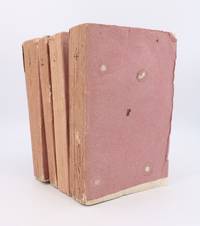
1788réf. 89325Paris Colle: Froullé 1788. Fine. Froullé Paris Colle 1788 13.5 x 21 cm 4 volumes Brochés First edition cf. Sabin 47206. Leclerc 952.Some joints cracked at head and tail minor marginal losses of no consequence to the temporary wrappers.The author Italian by birth emigrated to America before the Revolution and settled in Virginia near Monticello.His book written in collaboration with Condorcet is of particular interest with regard to the history of independence and the government of the United States cf. Fay pages 24-25: ""Compilation très exacte qui réfute les théories de Mably et de Raynal et constitue un répertoire précieux de renseignements de tous ordres sur les États-Unis.""Rare and appealing copy preserved in its original stitching and in plain pink temporary wrappers. Froullé unknown
1823réf. 060320Paris: Librairie De Brissot-Thivars 1823. 3rd Edition . Hardcover. Near Fine. 466 Ii Pp. Half Green Morocco Spine Gilt Four Bands Gilt Green Marbled Boards Blue Marbled Endpapers And Edges Of Page Block. Third Edition. A Small But Very Attractively Bound Volume. Near Fine Although Small Frays At Tips. Librairie De Brissot-Thivars, hardcover
réf. 64326382Papeback. New. pp. 434 unknown
2009réf. 141405Paris: Le Monde Flammarion 2009. Broché. Bon état. in-12. 248 pp. Collection "Les livres qui ont changé le monde". Le Monde, Flammarion unknown
réf. 54641314like new. unknown
réf. 51734382like new. unknown
réf. 45441330-nnew. unknown