545 risultati
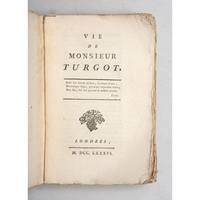
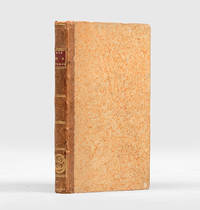
1786rif. 126469London: no publisher 1786. From the library of Empress Joséphine True first edition of Condorcet's life of Turgot Gerits's Edition A; a superb copy from the library of Empress Joséphine de Beauharnais with her Bibliothèque de la Malmaison stamp on the title page and her initials to the spine. This work together with Dupont de Nemours's biography is the chief contemporary account of the renowned financial reformer and friend of the physiocrats. It contains in a footnote Condorcet's early attempt to apply mathematics to economics. On pp. 178-184 he discusses the various mathematical ways "in which indirect taxation could be replaced by direct taxation and the effects of such a change" Theocharis p. 65. Condorcet 1743-1794 secretary to the Académie and a prolific author was a strong supporter of Turgot who had attempted to implement physiocratic ideas as the French finance minister from 1774 to 1776. The present work seeks to vindicate Turgot's thought and work and is a powerful defence of Enlightenment economic ideas. "Contrary to what is suggested by the title this book was not a biography but rather an exposé of Turgot's educational political and economic ideas. In fact Stanley Jevons has called it one of the earliest works on 'économie pure'" Gerits. Seven editions of Condorcet's Vie de Monsieur Turgot appeared within two years making it one of the best-selling works of economics of its day. The first four editions all bear a London imprint dated 1786 though Gerits notes that it seems that all but Edition A were printed in France. Octavo 202 x 125 mm. Contemporary speckled quarter calf smooth spine ruled in gilt with red morocco label monogram "JB" gilt-tooled to penultimate compartment paste paper sides red silk bookmarker. Bibliothèque de la Malmaison stamp to title page. Spine ends and corners a touch worn a few light spots to title leaf scattered marginal pencil marks; a notably fresh and crisp copy beautifully bound. Einaudi 1217; Goldsmiths' 13128; Kress B.1032; Sraffa 1062 "first edition first issue". Anton Gerits "Condorcet's Vie de Monsieur Turgot" Harvard Library Bulletin 3 4 Winter 1992-93 pp. 35-37; Reghinos D. Theocharis Early Developments in Mathematical Economics 1961. unknown
rif. 699307326Voltaire Foundation . Other. New. pp. vii 238 Voltaire Foundation unknown
1786rif. 83882London: no publisher 1786. One of four printings of 1786 Gerits's edition D with no Avis de l'éditeur and no errata and the misprints corrected: "Contrary to what is suggested by the title this book was not a biography but rather an exposé of Turgot's educational political and economic ideas" Gerits. This work together with Dupont de Nemours's biography is the chief contemporary account of the renowned financial reformer and friend of the physiocrats. It contains in a footnote Condorcet's early attempt to apply mathematics to economics. On pp. 178-184 he discusses the various mathematical ways "in which indirect taxation could be replaced by direct taxation and the effects of such a change" Theocharis Early developments in mathematical economics p. 65. Condorcet 1743-1794 was secretary to the Académie and was a prolific author. Although more celebrated for his studies in philosophy literature and politics "his mathematical treatment of probabilities and his discussion of differential equations and finite differences show an ability which might have put him in the first rank had he concentrated his attention on mathematics" W.W. Rouse Ball A Short Account of the History of Mathematics p. 388. Octavo 214 x 135 mm. Contemporary papier dominoté wrappers paper spine label hand-written in black ink. Short closed tear to pages 245-246 neatly repaired without loss occasional light spotting; a very good uncut copy in an attractive decorated paper wrapper. Kress B.1033. Gerits: "Condorcet's Vie de Monsieur Turgot" in Harvard Library Bulletin. unknown
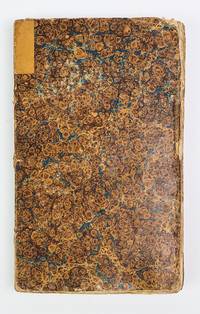
1774rif. 127684Paris: Chez Couturier père 1774 but 1775. First edition of Condorcet's defence of the free trade of grain. Turgot's liberalisation of the grain trade in 1774 coinciding with bad harvests and rocketing prices led to a fierce pamphlet war between proponents of the mercantilist and free trade schools of thought. Condorcet had written the present tract prior to Turgot's enactment of the policy perhaps to anticipate it but the work was not published until April 1775 in the midst of the troubles and the month before the outbreak of bread riots in Paris. Condorcet would elaborate his ideas further in his 1776 treatise Réflexions sur le commerce des bleds the year in which Turgot was dismissed and liberalisation of the grain trade scaled back. Octavo 181 x 118 mm. Recent marbled boards black calf label. Half-title present. Some offsetting from type a few minor creases discreet repair to tear on p. 8 else a very good copy. INED 1171 bis; Kress 7003. Williams Condorcet and Modernity p. 19. hardcover
1790rif. 127340Paris: Imprimeur de l'Assemblee Nationale 1790. First edition of Condorcet's critique of the assignats. Condorcet was Inspector of the Coins from 1775 to 1790 and had consequently participated in the great monetary debates of the reign of Louis XVI. Partly invigorated by these debates he was a fierce opponents of the assignats an opposition which would be vindicated as their value plummeted. Octavo 189 x 121 mm. Recent marbled boards red morocco label to spine. A few foxing marks but generally clean. A very nice copy. hardcover
1997rif. x-0714644048Frank Cass & Co 1997. Paperback. New. 1st edition. 168 pages. 9.50x6.25x0.75 inches. Frank Cass & Co paperback
rif. 699380870Other. New. pp. ix 370 unknown
rif. 64326382Papeback. New. pp. 434 unknown
rif. B9781606189849Paperback / softback. New. paperback
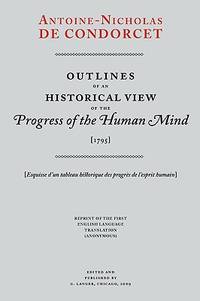
1955rif. 024126New York: The Noonday Press 1955. First Thus . Hardcover. Very Good/Very Good-. 12mo - over 6¾" - 7¾" tall. Translated by June Barrclough. Introduction by Stuart Hampshire. Library of Ideas. First published and translated 1795. Edge wear to dust jacket. The Noonday Press hardcover
1788rif. 264649Paris: Chez Froullé libraire quai des Augustins 1788. First edition. 4 xvi 383 1; 4 259 1; 4 292; 4 366 pp. 4 vols. 8vo. Contemporary quarter leather pastepaper boards french tips flat spines with red leather title and volume labels. Spines rubbed some minor starting of joints to two volumes small loss to head of vol. I a very good contemporary set. First edition. 4 xvi 383 1; 4 259 1; 4 292; 4 366 pp. 4 vols. 8vo. Mazzei emigrated to America from Italy in 1773 and introduced the cultivation of grapes and olives to the United States. He became a neighbor of Jefferson in Virginia settling near Monticello at Jefferson's request and this association led to their long friendship and the author's acquaintance with Franklin and Adams. A staunch Republican Mazzei took an active role in the Independence movement. In this work he outlines the history of the American colonies the causes of the Revolution and the economy and government of the United States. Also discussed are Indians slavery emigration and the Society of the Cincinnati. The book was a contemporary success and remains an important work which Malone characterizes as "probably the most reliable of all the works of the period on the United States" Thomas Jefferson 2:109-110. Jefferson aided Mazzei in the compilation of the work while acting as American minister in Paris. Sabin 47206; Leclerc 957; Howes M456; Monaghan 1052; Muller 1612; Fay 24; Einaudi 3807; Reese Revolutionary 87 Chez Froullé, libraire, quai des Augustins unknown
rif. 1610Kehl: De L'imprimerie De La Société Littéraire Typographiques 1789. Hardcover. Good. Octavo. iv 374pp. 2 a8-z8; aa4 - aa4 blank. Half-title present. Quarter vellum over marbled boards. All edges marbled red. Cioranescu I 20418. All edges stamped by an academic institution's name and stamped 'Withdrawn.' 0 [Kehl]: De L'imprimerie De La Société Littéraire Typographiques, 1789. hardcover
rif. 1248A Paris: Chez Agasse An V 1797. Hardcover. Good. Octavo. viii 392pp. 4 A8-Z8 Aa8 Bb4. Half-title present. Third edition published by Sophie Condorcet and Daunou. Later quarter calf over boards by GKB Pynaker Bookbinders at the Hague with their small bookplate. A. Martin & G. Walter Catalogue de l'histoire de la Révolution Française 8083. 0 A Paris: Chez Agasse, An V (1797). hardcover
2019rif. 429062019. ISBN-13: 9781584776543; ISBN-10: 1584776544. Translated by Thomas Jefferson Destutt de Tracy Antoine Louis Claude Comte. Jefferson Thomas. A Commentary and Review of Montesquieu's Spirit of Laws Prepared For Press From the Original Manuscript in the Hands of the Publisher. To Which Are Annexed Observations on the Thirty-First Book by the Late M. Condorcet: And Two Letters of Helveticus on the Merits of the Same Work. Philadelphia: Duane 1811. viii 292 pp. Reprinted 2006 2019 by The Lawbook Exchange Ltd. ISBN-13: 9781584776543; ISBN-10: 1584776544. Hardcover. New. $75. Commentaire sur l'Esprit des Lois de Montesquieu 1806 is a critique of Montesquieu's pessimistic appraisal of democracy in De l'Esprit des Lois. While minister to France in the 1780s Jefferson saw this work in manuscript. It so impressed him that he arranged for its publication in France and translated it anonymously for publication in America. Looking back at this work in a letter from 1811 Jefferson commended it for correcting De l'Esprit des Lois. While other studies "nibbled only at its errors" he told his correspondent this work rebutted them "with a depth of thought precision of idea of language and of logic which will force conviction into every mind. I declare to you Sir in the spirit of truth and sincerity that I consider it the most precious gift the present age has received.": The Writings of Thomas Jefferson V:566-571. CONTENTS: Of laws in England; Of laws originating directly from the nature of the government; Of the principles of the three forms of government; The laws relating to education should be congenial with the principles of the government; Laws formed by the legislative should be consistent with the principles of the government; Consequences of the principles of different governments in relation to the simplicity of civil and criminal laws the forms of judicial proceedings and the apportionment of punishments; Consequences of the different principles of the three forms of government relative to sumptuary laws to luxury and to the condition of women; Of the corruption of the principle in each of the three forms of government -- Of laws relative to the defensive force; Of laws relative to the offensive force. unknown
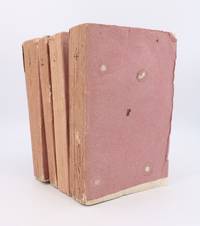
1788rif. 89325Paris Colle: Froullé 1788. Fine. Froullé Paris Colle 1788 13.5 x 21 cm 4 volumes Brochés First edition cf. Sabin 47206. Leclerc 952.Some joints cracked at head and tail minor marginal losses of no consequence to the temporary wrappers.The author Italian by birth emigrated to America before the Revolution and settled in Virginia near Monticello.His book written in collaboration with Condorcet is of particular interest with regard to the history of independence and the government of the United States cf. Fay pages 24-25: ""Compilation très exacte qui réfute les théories de Mably et de Raynal et constitue un répertoire précieux de renseignements de tous ordres sur les États-Unis.""Rare and appealing copy preserved in its original stitching and in plain pink temporary wrappers. Froullé unknown
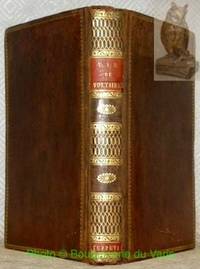
1789rif. 102441Sans lieu : Imprimerie de la Société Littéraire-Typographique 1789. Marquis de CONDORCET.Vie de Voltaire par le marquis de Condorcet suivie des mémoires de Voltaire écrits par lui-même. Sans lieu Imprimerie de la Société Littéraire-Typographique1789 205x125mm 354 pages reliure veau marbré de l’époque. Pièce de titre doré ornementations et fleurons doré au dos. Encadrements dorés sur les deux plats. Bordures fleuries. Bel exemplaire. No hidden customs fees for orders shipped to the U.S.A with a value of up to 800 USD PDDP shipping we pay the VAT in advance Imprimerie de la Société Littéraire-Typographique unknown
2009rif. 141405Paris: Le Monde Flammarion 2009. Broché. Bon état. in-12. 248 pp. Collection "Les livres qui ont changé le monde". Le Monde, Flammarion unknown
1787rif. 1418415Berne: Kirchberger & Hatter 1787. Softcover. Octavo 2 258 2 pages. In Fair condition. Bound in contemporary marbled paper wraps with 20th century paper outer wrap numbered "46". Covers have chipping to edges age-toning and light foxing; front cover nearly detached from text block; front cover has light penciling to inside corner. Text block has deckled edges; has light foxing and light age-toning throughout. Shelved in room F box 1. . This is a Swiss reprint of the 1786 original edition which was illicitly printed in Paris with the imprint A Londres London to bypass strict French censorship laws. 1418415. Special Collections - Upstairs. Kirchberger & Hatter unknown
rif. 6021672-nnew. unknown
rif. 51734382like new. unknown
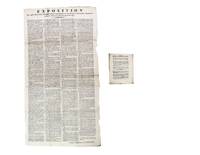
1792rif. 1418507Limoges: Gueret; A.; François Dalesme 1792. Other. Broadside and Side-sewn pamphlet 14 pages. In Very Good condition. Broadside consists of three three sheets of paper pasted together vertically. Broadside has adhesive toning to boundary between sheets scattered light foxing a small closed tear to top titling legibility unaffected and light scuffing to edges. Pamphlet has light scuffing to margins of first page and rear page 1 has a black mark that penetrates to page 4 text legibility unimpacted and leaves are age-toned and have light foxing and light creasing throughout. Text in French. Shelved in room F. . One of the most pivotal documents of the French Revolution this broadside document explains the National Assembly's reasoning behind bringing an end to the constitutional monarchy suspending King Louis XVI and calling for the creation of the National Convention which declared France a Republic the following month. Both items here represent regional printings from the city of Limoges where a courier arrived three days after the suspension of Louis XVI in August 1792 to inform the city government of the news. Printers quickly got to work producing broadsides and pamphlets such as these so the public could read the text of the order. 1418507. Special Collections - Upstairs. Gueret; A.; François Dalesme unknown
2010rif. DADAX1166620530Kessinger Publishing 2010-09-10. paperback. New. 6.00x0.93x9.00. Buy with confidence. Excellent Customer Service & Return policy. Kessinger Publishing paperback
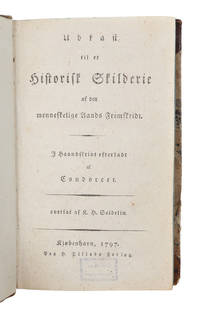
1797rif. 61971København Tikiøbs Forlag 1797. 8vo. Bound in a contemporary half calf binding with gilt spine and gilt title label. Minor cracks to spine. Insignificant wear to capitals. Edges of boards worn. Corners bumped. Bibliographical notes to front free endpaper. Small ownership stamp to verso of title page. Evenly browned. XII23681: errata pp. The extremely rare first Danish edition of Condorcet's main work "Esquisse d'un tableau historique des progrès de l'esprit humain.1795" "the most fully developed exposition of the progress of man" Printing and the Mind of Man p. 149 and a main work of the Enlightenment as well as of historical thought in general. The author was the creator of what came to found the basis for the modern French system. The great French philosopher political thinker and mathematician M.J.A. Condorcet 1743 - 1794 played a seminal role in 18th century France. He was friends with the likes of d'Alembert Voltaire Turgot etc. and he greatly contributed to the social and political debates of politically turbulent France. As one of the few he advocated a liberal economy equality in public education as well as in gender and race etc. He preached constitutionalism and his thoughts that are still influential today embody those of the Enlightenment and rationalism."A belief in the ultimate perfectibility of man lies at the root of all progressive thinking about the human condition. The "philosophes" and Godwin had familiarized the reading public with this notion; it was left to Condorcet to give it its finest and most durable expression. It was the gospel of nineteenth century that mankind is destined for indefinite future progress. Condorcet looking back and then forward saw proof of this in the growing equality between classes and nations the intellectual physical and moral improvement of man; and he prophesied that popular education on correct principles would strengthen and assure this progress." PMM 246.During the French Revolution Condorcet came to play a dominating role advocating a rationalist reconstruction of society and he championed many liberal causes. In 1791 he became secretary of the Legislation Assembly and the institution adopted his scheme for comprehensive state education which later became the basis of the modern French system. In the struggle between the two political parties the Girondists and the Montagnards Condorcet occupied an independent role but when he opposed the death penalty under the trial of King Louis XVI still supporting the actual trial and the radical Montagnards gained more power Condorcet was branded a traitor and in October 1793 a warrant was issued for his arrest. He now went into hiding for several months almost a year and it is during these months that he writes the work that was to become his most important the main work "Esquisse." "Sketch for a Historical Picture of the Progress of the Human Mind" which was published posthumously the year after his death. In 1794 Condorcet was arrested and two days later he was found dead in his cell -it is unknown whether he committed suicide or was murdered because of fear of fierce reactions that would definitely have occurred had the beloved man been officially sentenced to the death penalty."In the Esquisse" published after his death Condorcet traces the history of man through epochs the first three covering his progress from savagery to pastoral community and thence to the agricultural state. The next five span the growth of civilizations and knowledge down to Descartes and the ninth describes the revolution of Condorcet's own lifetime from Newton to Rousseau. The prophetic view of the tenth epoch shows Condorcet at his most original. He forecasts the destruction of inequality between nation and classes and the improvement intellectual moral and physical of human nature. it exercised considerable influence on Comte. But it is as the most fully developed exposition of the progress of man that Condorcet's work is now remembered and it is this which has given it its lasting appeal." PMM 246. hardcover
1802rif. 56417Kiøbenhavn: A. Soldin 1802. 8vo. Indbundet i et samtidigt hldrbd. med rygforgyldning. Titeletiket i skind med forgyldt titel. Kantslid. Øvre kapitæl slidt. Hjørner stødte. Et brændemærke på forpermermen har afgivet en brunplet på de første 6 blade. Enkelte brunpletter ellers ren og pæn. Trykt på godt papir. Ex libris Nicolai Bøgh. Titeloplag idet indholdet er identisk med førstetrykket fra 1798. unknown
1795rif. 42119Paris Agasse l'an III de la République une et indivisible 1795. 8vo. Bound in a very nice newer pastiche-binding in full mottled calf. Five raised bands and gilt title-label to spine. A very nice clean fresh and attractive copy. VIII 389 pp. The rare first edition of Condorcet's main work "the most fully developed exposition of the progress of man" Printing and the Mind of Man p. 149 and a main work of the Enlightenment as well as of historical thought in general. The author was the creator of what came to found the basis for the modern French system. The great French philosopher political thinker and mathematician M.J.A. Condorcet 1743 - 1794 played a seminal role in 18th century France. He was friends with the likes of d'Alembert Voltaire Turgot etc. and he greatly contributed to the social and political debates of politically turbulent France. As one of the few he advocated a liberal economy equality in public education as well as in gender and race etc. He preached constitutionalism and his thoughts that are still influential today embody those of the Enlightenment and rationalism."A belief in the ultimate perfectibility of man lies at the root of all progressive thinking about the human condition. The "philosophes" and Godwin had familiarized the reading public with this notion; it was left to Condorcet to give it its finest and most durable expression. It was the gospel of nineteenth century that mankind is destined for indefinite future progress. Condorcet looking back and then forward saw proof of this in the growing equality between classes and nations the intellectual physical and moral improvement of man; and he prophesied that popular education on correct principles would strengthen and assure this progress." PMM 246.During the French Revolution Condorcet came to play a dominating role advocating a rationalist reconstruction of society and he championed many liberal causes. In 1791 he became secretary of the Legislation Assembly and the institution adopted his scheme for comprehensive state education which later became the basis of the modern French system. In the struggle between the two political parties the Girondists and the Montagnards Condorcet occupied an independent role but when he opposed the death penalty under the trial of King Louis XVI still supporting the actual trial and the radical Montagnards gained more power Condorcet was branded a traitor and in October 1793 a warrant was issued for his arrest. He now went into hiding for several months almost a year and it is during these months that he writes the work that was to become his most important the main work "Esquisse." "Sketch for a Historical Picture of the Progress of the Human Mind" which was published posthumously the year after his death. In 1794 Condorcet was arrested and two days later he was found dead in his cell -it is unknown whether he committed suicide or was murdered because of fear of fierce reactions that would definitely have occurred had the beloved man been officially sentenced to the death penalty."In the Esquisse" published after his death Condorcet traces the history of man through epochs the first three covering his progress from savagery to pastoral community and thence to the agricultural state. The next five span the growth of civilizations and knowledge down to Descartes and the ninth describes the revolution of Condorcet's own lifetime from Newton to Rousseau. The prophetic view of the tenth epoch shows Condorcet at his most original. He forecasts the destruction of inequality between nation and classes and the improvement intellectual moral and physical of human nature. it exercised considerable influence on Comte. But it is as the most fully developed exposition of the progress of man that Condorcet's work is now remembered and it is this which has given it its lasting appeal." PMM 246. hardcover