CONDORCET Nicolas deLivre Rare Book

454 résultats
réf. QWA-2887Paris, Ponthieu, 1824, XII-363 p., in-8 rel. 1/2 peau, tome 1 seul, dos frotté et épidermé, coiffe inférieure endommagée, rousseurs éparses, état moyen
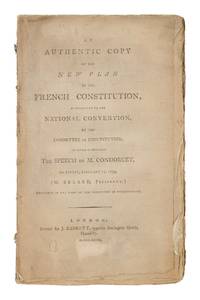
1793réf. 863891793. The Blueprint That Cost a Philosopher His Life: Condorcet's Tragic 1793 French Constitution Plan Condorcet Marquis de Jean-Antoine-Nicolas de Caritat 1743-1794. An Authentic Copy of the New Plan of the French Constitution as Presented to the National Convention by the Committee of Constitution.: To which is Prefixed the Speech of M. Condorcet on Friday February 15 1793 M. Breard President Delivered in the Name of the Committee of Constitution. London: Printed for J. Debrett Opposite Burlington House Piccadilly 1793. ii li 1 58 pp. Octavo 9" x 5-1/4"; 22.5 x 14 cm. Disbound. Uncut. Outer leaves worn and chipped at edges but text remains broad-margined and stable. Light age-toning. Internally clean and crisp. A good unsophisticated copy. $450. First English edition. This text represents the intellectual peak of the French Revolution by turning abstract Enlightenment theory into a working legal framework. Known as the "Plan Condorcet" it served as the ultimate manifesto of the moderate Girondin faction. Its rejection by the National Convention marked the precise moment the Revolution swung from rational legal reform into the radical violent Reign of Terror. Shortly after presenting this plan the Jacobins ordered Condorcet's arrest forcing him into hiding where he wrote his famous philosophical masterpiece on human progress before dying mysteriously in a prison cell days after his capture. Published by John Debrett this specific London edition highlights how closely and anxiously the British public followed the political collapse of their neighbor across the Channel. English Short-Title Catalogue T22771. unknown
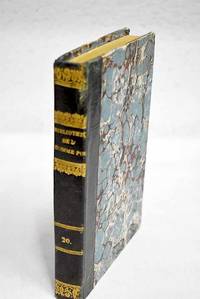
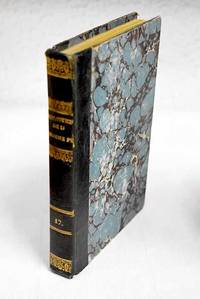
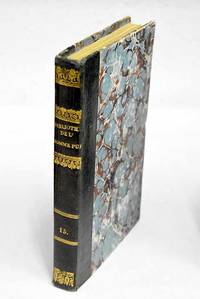
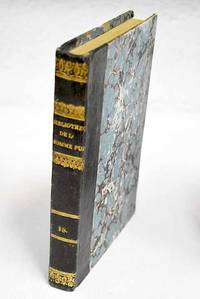
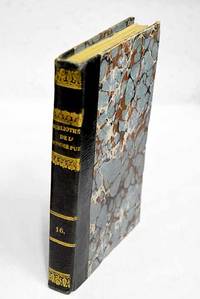
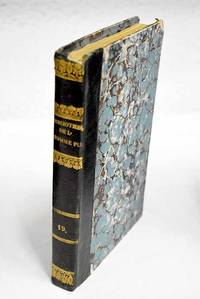
1791réf. 3304771Paris.: Buisson. 1791. Hardcover. Cubierta deslucida. Good. 19 cm. 280 p. Encuadernación en tapa dura artesanal lomo en piel. Idioma francés . Cubierta deslucida. Buisson. hardcover
1791réf. 3304768Paris.: Buisson. 1791. Hardcover. Cubierta deslucida. Good. 19 cm. 260 p. Encuadernación en tapa dura artesanal lomo en piel. Idioma francés . Cubierta deslucida. Buisson. hardcover
1791réf. 3304766Paris.: Buisson. 1791. Hardcover. Cubierta deslucida. Good. 19 cm. 262 p. Encuadernación en tapa dura artesanal lomo en piel. Idioma francés . Cubierta deslucida. Buisson. hardcover
1791réf. 3304769Paris.: Buisson. 1791. Hardcover. Cubierta deslucida. Good. 19 cm. 268 p. Encuadernación en tapa dura artesanal lomo en piel. Idioma francés . Cubierta deslucida. Buisson. hardcover
1791réf. 3304767Paris.: Buisson. 1791. Hardcover. Cubierta deslucida. Good. 19 cm. 264 p. Encuadernación en tapa dura artesanal lomo en piel. Idioma francés . Cubierta deslucida. Buisson. hardcover
1791réf. 3304770Paris.: Buisson. 1791. Hardcover. Cubierta deslucida. Good. 19 cm. 270 p. Encuadernación en tapa dura artesanal lomo en piel. Idioma francés . Cubierta deslucida. Buisson. hardcover
réf. 2322543829.Gpaperback. Good. Access codes and supplements are not guaranteed with used items. May be an ex-library book. paperback
1795réf. Biblio239THE PERFECTIBILITY OF MAN. 8vo. Early half red morocco. Near fine. FIRST EDITION. A distinguished mathematician and friend of Voltaire d'Alembert and Turgot Condorcet played a major role in promoting the Revolution's democratic principles. In the Esquisse An Historical Outline of the Progress of the Human Mind he traces the history of man through ten epochs moving from savagery through the development of civilization and knowledge up to Descartes in the eighth epoch. The ninth epoch spans the Enlightenment from Descartes to the Revolution. For the tenth epoch Condorcet predicts that equality of opportunity will prevail among all classes and nations and that man will improve intellectually morally and physically. "A belief in the ultimate perfectibility of man lies at the root of all progressive thinking about the human condition. The philosophes and Godwin had familiarized the reading public with this notion but it was left to Condorcet to give it its finest and most durable expression. . . . Unlike Godwin he does not preach absolute equality but equality of opportunity" Printing and the Mind of Man 246. A'gasse, L'An III hardcover
1795réf. 42119Paris Agasse l'an III de la République une et indivisible 1795. 8vo. Bound in a very nice newer pastiche-binding in full mottled calf. Five raised bands and gilt title-label to spine. A very nice clean fresh and attractive copy. VIII 389 pp. The rare first edition of Condorcet's main work "the most fully developed exposition of the progress of man" Printing and the Mind of Man p. 149 and a main work of the Enlightenment as well as of historical thought in general. The author was the creator of what came to found the basis for the modern French system. The great French philosopher political thinker and mathematician M.J.A. Condorcet 1743 - 1794 played a seminal role in 18th century France. He was friends with the likes of d'Alembert Voltaire Turgot etc. and he greatly contributed to the social and political debates of politically turbulent France. As one of the few he advocated a liberal economy equality in public education as well as in gender and race etc. He preached constitutionalism and his thoughts that are still influential today embody those of the Enlightenment and rationalism."A belief in the ultimate perfectibility of man lies at the root of all progressive thinking about the human condition. The "philosophes" and Godwin had familiarized the reading public with this notion; it was left to Condorcet to give it its finest and most durable expression. It was the gospel of nineteenth century that mankind is destined for indefinite future progress. Condorcet looking back and then forward saw proof of this in the growing equality between classes and nations the intellectual physical and moral improvement of man; and he prophesied that popular education on correct principles would strengthen and assure this progress." PMM 246.During the French Revolution Condorcet came to play a dominating role advocating a rationalist reconstruction of society and he championed many liberal causes. In 1791 he became secretary of the Legislation Assembly and the institution adopted his scheme for comprehensive state education which later became the basis of the modern French system. In the struggle between the two political parties the Girondists and the Montagnards Condorcet occupied an independent role but when he opposed the death penalty under the trial of King Louis XVI still supporting the actual trial and the radical Montagnards gained more power Condorcet was branded a traitor and in October 1793 a warrant was issued for his arrest. He now went into hiding for several months almost a year and it is during these months that he writes the work that was to become his most important the main work "Esquisse." "Sketch for a Historical Picture of the Progress of the Human Mind" which was published posthumously the year after his death. In 1794 Condorcet was arrested and two days later he was found dead in his cell -it is unknown whether he committed suicide or was murdered because of fear of fierce reactions that would definitely have occurred had the beloved man been officially sentenced to the death penalty."In the Esquisse" published after his death Condorcet traces the history of man through epochs the first three covering his progress from savagery to pastoral community and thence to the agricultural state. The next five span the growth of civilizations and knowledge down to Descartes and the ninth describes the revolution of Condorcet's own lifetime from Newton to Rousseau. The prophetic view of the tenth epoch shows Condorcet at his most original. He forecasts the destruction of inequality between nation and classes and the improvement intellectual moral and physical of human nature. it exercised considerable influence on Comte. But it is as the most fully developed exposition of the progress of man that Condorcet's work is now remembered and it is this which has given it its lasting appeal." PMM 246. hardcover
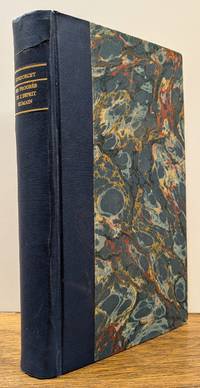
1795réf. 65358Paris: Chez Agasse 1795. Can Man Become Perfect" CONDORCET Marie Jean Antoine Nicolas Caritat Marquis de. Esquisse d'un tableau historique des progrès de l'esprit humain. Ouvrage posthume de Condorcet. Paris: Chez Agasse L'an III. de la République 1795. First edition of Condorcet's philosophical masterpiece. Octavo 7 7/8 x 4 13/16 inches; 201 x 123 mm. viii 389 1 blank pp. Contemporary quarter calf over dark blue paste-paper boards spine gilt with dotted bands and ornaments gilt red morocco lettering piece. Old owner's signature on half-title. A quarter-inch marginal tear at the bottom of leaf M42 that does not affect the text. Light foxing throughout. A blue ink stain on top edge from signature Z to the end. Overall a clean and attractive copy. "It was the gospel of the nineteenth century that mankind is destined for indefinite future progress. Condorcet 1743-1794 looking back and then forward saw proof of this in the growing equality between classes and nations the intellectual physical and moral improvement of man; and he prophesied that popular education on correct principles would strengthen and assure this progress.In the Esquisse 'An Historical Outline of the Progress of the Human Mind' published after his death Condorcet traces the history of man through epochs the first three covering his progress from savagery to pastoral community and thence to the agricultural state. The next five span the growth of civilizations and knowledge down to Descartes and the ninth describes the revolution of Condorcet's own lifetime from Newton to Rousseau. The prophetic view of the tenth epoch shows Condorcet at his most original. He forecasts the destruction of inequality between nations and classes and the improvement intellectual moral and physical of human nature.it is as the most fully developed exposition of the progress of man that Condorcet's work is now remembered and it is this which has given its lasting appeal" Printing and the Mind of Man. Printing and the Mind of Man 246. HBS 65358. $2000. Chez Agasse unknown
1795réf. 168984Paris: Chez Agasse 1795. Second. hardcover. very good. 389pp. 4pp. of advertisments 8vo untrimmed rebound in cloth-backed marbled boards spine neatly repaired. Paris: Chez Agasse L'An III 1795. Second Edition. Very good . Printing and the Mind of Man 246; Robinet 382. Considered to be Condorcet's most original and most important work. Considered to be Condorcet's most original and most important work. In it he divided history into ten epochs the first nine dealing with history upto the time in which he himself lived whereas the tenth is his prophetic view of the future. It is the most original part of the book in which Condorcet forecasts among others the future moral intellectual and physical improvement of man. '. PMM Chez Agasse unknown
réf. 1248A Paris: Chez Agasse An V 1797. Hardcover. Good. Octavo. viii 392pp. 4 A8-Z8 Aa8 Bb4. Half-title present. Third edition published by Sophie Condorcet and Daunou. Later quarter calf over boards by GKB Pynaker Bookbinders at the Hague with their small bookplate. A. Martin & G. Walter Catalogue de l'histoire de la Révolution Française 8083. 0 A Paris: Chez Agasse, An V (1797). hardcover
2000réf. __0828402523Chelsea Pub Co 2000. Hardcover. New. 304 pages. 10.25x7.00x1.25 inches. Chelsea Pub Co hardcover
réf. 6021672like new. unknown
réf. 6021672-nnew. unknown
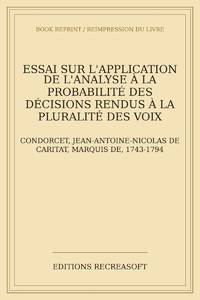
2026réf. LRB31006168Paris: Editions Recreasoft 2026 Langue : Français. Environ 514 pages. Français : Réimpression à la demande. Édition originale : 1785. Ouvrage en français. Cet ouvrage de Condorcet mathématicien et philosophe des Lumières explore l'application de l'analyse mathématique à la théorie des décisions collectives. Il s'agit d'une contribution fondamentale à la science politique et à la théorie du vote où l'auteur examine les probabilités liées aux décisions prises à la majorité. L'étude reste d'actualité dans les débats sur les systèmes électoraux et les mécanismes de prise de décision démocratique. Images du livre non contractuelles English: Print-on-demand reprint. Original edition : 1785. Text in French. This work by Condorcet a mathematician and Enlightenment philosopher explores the application of mathematical analysis to the theory of collective decisions. It is a foundational contribution to political science and voting theory where the author examines the probabilities related to decisions made by majority. The study remains relevant in debates on electoral systems and decision-making mechanisms in democracy. Book images are non-contractual. Editions Recreasoft. Softcover. New. Editions Recreasoft paperback
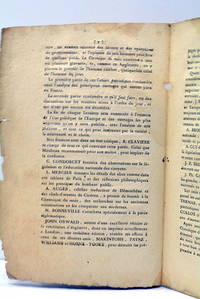
1785réf. 169550Paris: Imprimerie Royale 1785. Calculating the wisdom of crowds First edition of Condorcet's pioneering application of probability theory to collective decision-making "the first large-scale attempt to apply mathematics to knowledge of human phenomena" DSB. Condorcet investigated the probability that the majority decision of an assembly or tribunal was correct and whether rational individual choices produce coherent collective decisions. While recognizing limitations and contradictions it is ultimately a defence of democratic decisions and the wisdom of crowds and a seminal work in social choice theory. "It is mainly to the Essai a ground-breaking investigation into the relationship between voting procedures and collective outcomes that Condorcet owes his modern standing as the founder of social choice. His theory of voting and political decision-making constitutes one of the most sustained elements to be found in the whole corpus of his writings" Williams pp. 207-8. Quarto 247 x 183 mm pp. 2 cxci 1 304. Contemporary mottled calf spine lettered and decorated in gilt marbled endpapers red edges. Slight rubbing ink splash to title page contents browned. A very good copy. David Williams Condorcet and Modernity 2004. unknown
réf. 6244651like new. unknown
1785réf. 66958Paris: De k'Imprimerie Royale 1785. The First Large-Scale Attempt to Apply Mathematics to Knowledge of Human Phenomena" CONDORCET Marie Jean Antoine Nicolas Caritat Marquis de. Essai sur l'application de l'analyse à la probabilité des décisions rendues à la pluralité des voix. Paris: De l'Imprimerie Royale 1785. First edition. Quarto. 2 cxci 1 blank 304 pp. Decorative woodcut head- and tail-pieces. Contemporary French mottled calf spine decorated in gilt with five raised bands. Marbled endpapers all edges red. First and last few pages browned at edges . gathering K is browned a Q and 2G is toned. Otherwise very good and very scarce. "Condorcet's most significant and fruitful endeavor was in a field entirely new at the time. The subject was one that departed from the natural sciences and mathematics but nevertheless showed the way toward a scientific comprehension of human phenomena taking the empirical approach of natural science as its inspiration and employing mathematics as its tool. Condorcet called this new science 'social mathematics.' It was apparently intended to comprise.a statistical description of society a theory of political economy inspired by the Physiocrats and a combinatorial theory of intellectual processes. The great work on the voting process published in 1785 is related to the latter. Condorcet there sought to construct a scheme for an electoral body the purpose of which would be to determine the truth about a given subject by the process of voting and in which each elector would have the same chance of voicing the truth.No doubt the results obtained in the Essai d'application de l'analyse were modest ones. 'In almost all cases' Condorcet said 'the results are in conformity with what simple reason would have dictated; but it is so easy to obscure reason by sophistry and vain subtleties that I should feel rewarded if I had only founded a single useful truth on a mathematical demonstration' Essai p. ii. One must nevertheless recognize in this work.the first large-scale attempt to apply mathematics to knowledge of human phenomena" D.S.B. Brunet VI col. 472. HBS 66958. $7500. De k'Imprimerie Royale unknown
réf. 3050044616.Ghardcover. Good. Access codes and supplements are not guaranteed with used items. May be an ex-library book. hardcover
réf. 67764A la fin: Paris Imprimerie du Cercle Social 1791. 4 pages. 23x145 Cm. Broché. Rarissime prospectus de parution de ce célèbre périodique paru entre 1791 et 1793. On y trouve la philosophie de la publication la rubrique assurée par chaque auteur les conditions d'abonnement etc. Petits manques. Taches et rousseurs. (A la fin:) Paris, Imprimerie du Cercle Social (1791). unknown
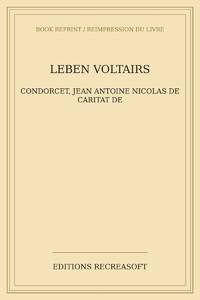
2026réf. LRB28010674Paris: Editions Recreasoft 2026 Sprache: Deutsch. Ca. 573 Seiten. Deutsch : Nachdruck auf Anfrage. Originalausgabe : 1791. Werk auf Deutsch. Diese Biographie von Jean Antoine Nicolas de Caritat de Condorcet bietet eine detaillierte Darstellung des Lebens und Werkes von Voltaire. Das Werk ist eine wichtige Quelle für die Erforschung der Aufklärung und der intellektuellen Geschichte des 18. Jahrhunderts. Buchbilder sind unverbindlich English: Print-on-demand reprint. Original edition : 1791. Text in German. This biography by Jean Antoine Nicolas de Caritat de Condorcet provides a detailed account of the life and work of Voltaire. The work is an important source for the study of the Enlightenment and the intellectual history of the 18th century. Book images are non-contractual. Editions Recreasoft. Softcover. New. Editions Recreasoft paperback