[CONDORCET (Jean-Antoine-Nicolas Caritat de)]Livre Rare Book

548 résultats
réf. 224055S.l., 1788 2 vol. in-8, 196 pp., 54 pp. ; 328 pp., 106 pp., avec 7 tableaux dépliants hors texte, veau fauve marbré, dos lisses cloisonnés et fleuronnés, pièces de titre et de tomaison brique et vertes, encadrement de simple filet à froid sur les plats, simple filet doré sur les coupes, tranches rouges (reliure de l'époque). Nombreux ff. roussis.
réf. 8047P., Imprimerie Royale, 1785, un volume in 4 relié en demi-basane marron, dos orné de filets dorés (reliure de l'époque), (filets dorés partiellement effacés, 1 cahier assez fortement roussi comme souvent), (1), 191pp., 304pp.
1795réf. 25074Paris: Agasse ans III 1795. First edition 8vo pp. viii 389; contemporary full calf black morocco label on gilt-decorated spine; front joint cracked binding rubbed and scuffed; a good copy. See PMM 246: "It was the gospel of the nineteenth century that mankind is destined for indefinite future progress. Condorcet 1743-1794 looking back and then forward saw proof of this in the growing equality between classes and nations the intellectual physical and moral improvement of man; and he prophesied that popular education on correct principles would strengthen and assure this progress. In the Esquisse An Historical Outline of the Progress of the Human Mind published after his death Condorcet traces the history of man through epochs the first three covering his progress from savagery to pastoral community and thence to the agricultural state. The next five span the growth of civilizations and knowledge down to Descartes and the ninth describes the revolution of Condorcet's own lifetime from Newton to Rousseau. The prophetic view of the tenth epoch shows Condorcet at his most original. He forecasts the destruction of inequality between nations and classes and the improvement intellectual moral and physical of human nature it is as the most fully developed exposition of the progress of man that Condorcet's work is now remembered and it is this which has given its lasting appeal." Agasse, ans III unknown books
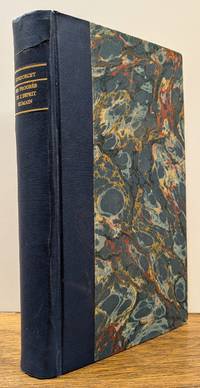
1795réf. 168984Paris: Chez Agasse 1795. Second. hardcover. very good. 389pp. 4pp. of advertisments 8vo untrimmed rebound in cloth-backed marbled boards spine neatly repaired. Paris: Chez Agasse L'An III 1795. Second Edition. Very good . Printing and the Mind of Man 246; Robinet 382. Considered to be Condorcet's most original and most important work. Considered to be Condorcet's most original and most important work. In it he divided history into ten epochs the first nine dealing with history upto the time in which he himself lived whereas the tenth is his prophetic view of the future. It is the most original part of the book in which Condorcet forecasts among others the future moral intellectual and physical improvement of man. '. PMM Chez Agasse unknown books
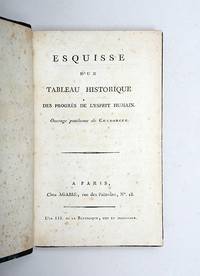
1795réf. 65358ìCan Man Become Perfectî CONDORCET Marie Jean Antoine Nicolas Caritat Marquis de. Esquisse díun tableau historique des progrËs de líesprit humain. Ouvrage posthume de Condorcet. Paris: Chez Agasse Lían III. de la RÈpublique 1795. First edition of Condorcetís philosophical masterpiece. Octavo 7 7/8 x 4 13/16 inches; 201 x 123 mm. viii 389 1 blank pp. Contemporary quarter calf over dark blue paste-paper boards spine gilt with dotted bands and ornaments gilt red morocco lettering piece. Old owner's signature on half-title. A quarter-inch marginal tear at the bottom of leaf M42 that does not affect the text. Light foxing throughout. A blue ink stain on top edge from signature Z to the end. Overall a clean and attractive copy. ìIt was the gospel of the nineteenth century that mankind is destined for indefinite future progress. Condorcet 1743-1794 looking back and then forward saw proof of this in the growing equality between classes and nations the intellectual physical and moral improvement of man; and he prophesied that popular education on correct principles would strengthen and assure this progress.In the Esquisse ëAn Historical Outline of the Progress of the Human Mindí published after his death Condorcet traces the history of man through epochs the first three covering his progress from savagery to pastoral community and thence to the agricultural state. The next five span the growth of civilizations and knowledge down to Descartes and the ninth describes the revolution of Condorcetís own lifetime from Newton to Rousseau. The prophetic view of the tenth epoch shows Condorcet at his most original. He forecasts the destruction of inequality between nations and classes and the improvement intellectual moral and physical of human nature.it is as the most fully developed exposition of the progress of man that Condorcetís work is now remembered and it is this which has given its lasting appealî Printing and the Mind of Man. Printing and the Mind of Man 246. HBS 65358. $2000 Chez Agasse hardcover books
1829réf. 13832Bound in modern light red linen-grain cloth with red leather spine label gilt rules & letters; leaves untrimmed at fore & tail edges; tightly bound; very clean interior. En Français. 8vo 431 pp. Paris: Bibliotheque Choisie hardcover
1988réf. I-630-2581988. Paperback. Very Good. Former library book. Ammareal gives back up to 15% of this item's net price to charity organizations. paperback
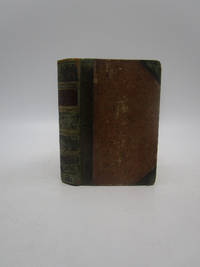
1822réf. 009136Paris: A La Librairie Constitutionnelle de Brissot-Thivers 1822. half leather. Very Good . Small book. marbleized boards with leather corners and spine. Full refund if not satisfied. No marks in text.Condorcet was an important French enlightenment rationalist. A La Librairie Constitutionnelle de Brissot-Thivers hardcover
réf. 2322543829.Gpaperback. Good. Access codes and supplements are not guaranteed with used items. May be an ex-library book. paperback
réf. 2019698447.Gpaperback. Good. Access codes and supplements are not guaranteed with used items. May be an ex-library book. paperback
1795réf. 161166Paris: chez Agasse l'an III de la République 1795. History as progress First edition of the finest and most durable expression of the ultimate perfectibility of man perhaps the clearest and boldest statement of the enlightenment belief in progress demonstrating "man's progressive emancipation first from the arbitrary domination of his physical environment and then from the historical bondage of his own making" Encyclopedia of Philosophy II 184. Condorcet wrote the work in 1794 while in hiding from Robespierre's agents having voted against the execution of the king. Captured by the state he was found dead the next day presumed to have taken his own life to escape the guillotine. His manuscript was published the next year. "In the Esquisse. Condorcet traces the history of man through epochs the first three covering his progress from savagery to pastoral community and thence to the agricultural state. The next five span the growth of civilizations and knowledge down to Descartes and the ninth describes the revolution of Condorcet's own lifetime from Newton to Rousseau. The prophetic view of the tenth epoch shows Condorcet at his most original. He forecasts the destruction of inequality between nations and classes and the improvement intellectual moral and physical of human nature" PMM. Octavo 193 x 119 mm. Early 19th-century blue quarter roan smooth spine lettered and tooled in gilt blue mottled sides brown speckled edges. Front pastedown with early 20th-century bookseller's label of Emile Nourry of Paris and bookplate of Caroli Michel. Light rubbing to binding corners worn spotting to contents marginal loss to foot of G2 not affecting text a few peripheral nicks very good. Printing and the Mind of Man 246; En français dans le texte 196; Martin & Walter 1 8083; Quérard II p. 269. unknown
1795réf. Biblio239THE PERFECTIBILITY OF MAN. 8vo. Early half red morocco. Near fine. FIRST EDITION. A distinguished mathematician and friend of Voltaire d'Alembert and Turgot Condorcet played a major role in promoting the Revolution's democratic principles. In the Esquisse An Historical Outline of the Progress of the Human Mind he traces the history of man through ten epochs moving from savagery through the development of civilization and knowledge up to Descartes in the eighth epoch. The ninth epoch spans the Enlightenment from Descartes to the Revolution. For the tenth epoch Condorcet predicts that equality of opportunity will prevail among all classes and nations and that man will improve intellectually morally and physically. "A belief in the ultimate perfectibility of man lies at the root of all progressive thinking about the human condition. The philosophes and Godwin had familiarized the reading public with this notion but it was left to Condorcet to give it its finest and most durable expression. . . . Unlike Godwin he does not preach absolute equality but equality of opportunity" Printing and the Mind of Man 246. A'gasse, L'An III hardcover
1795réf. 42119Paris Agasse l'an III de la République une et indivisible 1795. 8vo. Bound in a very nice newer pastiche-binding in full mottled calf. Five raised bands and gilt title-label to spine. A very nice clean fresh and attractive copy. VIII 389 pp. The rare first edition of Condorcet's main work "the most fully developed exposition of the progress of man" Printing and the Mind of Man p. 149 and a main work of the Enlightenment as well as of historical thought in general. The author was the creator of what came to found the basis for the modern French system. The great French philosopher political thinker and mathematician M.J.A. Condorcet 1743 - 1794 played a seminal role in 18th century France. He was friends with the likes of d'Alembert Voltaire Turgot etc. and he greatly contributed to the social and political debates of politically turbulent France. As one of the few he advocated a liberal economy equality in public education as well as in gender and race etc. He preached constitutionalism and his thoughts that are still influential today embody those of the Enlightenment and rationalism."A belief in the ultimate perfectibility of man lies at the root of all progressive thinking about the human condition. The "philosophes" and Godwin had familiarized the reading public with this notion; it was left to Condorcet to give it its finest and most durable expression. It was the gospel of nineteenth century that mankind is destined for indefinite future progress. Condorcet looking back and then forward saw proof of this in the growing equality between classes and nations the intellectual physical and moral improvement of man; and he prophesied that popular education on correct principles would strengthen and assure this progress." PMM 246.During the French Revolution Condorcet came to play a dominating role advocating a rationalist reconstruction of society and he championed many liberal causes. In 1791 he became secretary of the Legislation Assembly and the institution adopted his scheme for comprehensive state education which later became the basis of the modern French system. In the struggle between the two political parties the Girondists and the Montagnards Condorcet occupied an independent role but when he opposed the death penalty under the trial of King Louis XVI still supporting the actual trial and the radical Montagnards gained more power Condorcet was branded a traitor and in October 1793 a warrant was issued for his arrest. He now went into hiding for several months almost a year and it is during these months that he writes the work that was to become his most important the main work "Esquisse." "Sketch for a Historical Picture of the Progress of the Human Mind" which was published posthumously the year after his death. In 1794 Condorcet was arrested and two days later he was found dead in his cell -it is unknown whether he committed suicide or was murdered because of fear of fierce reactions that would definitely have occurred had the beloved man been officially sentenced to the death penalty."In the Esquisse" published after his death Condorcet traces the history of man through epochs the first three covering his progress from savagery to pastoral community and thence to the agricultural state. The next five span the growth of civilizations and knowledge down to Descartes and the ninth describes the revolution of Condorcet's own lifetime from Newton to Rousseau. The prophetic view of the tenth epoch shows Condorcet at his most original. He forecasts the destruction of inequality between nation and classes and the improvement intellectual moral and physical of human nature. it exercised considerable influence on Comte. But it is as the most fully developed exposition of the progress of man that Condorcet's work is now remembered and it is this which has given it its lasting appeal." PMM 246. hardcover
1795réf. 65358Paris: Chez Agasse 1795. Can Man Become Perfect" CONDORCET Marie Jean Antoine Nicolas Caritat Marquis de. Esquisse d'un tableau historique des progrès de l'esprit humain. Ouvrage posthume de Condorcet. Paris: Chez Agasse L'an III. de la République 1795. First edition of Condorcet's philosophical masterpiece. Octavo 7 7/8 x 4 13/16 inches; 201 x 123 mm. viii 389 1 blank pp. Contemporary quarter calf over dark blue paste-paper boards spine gilt with dotted bands and ornaments gilt red morocco lettering piece. Old owner's signature on half-title. A quarter-inch marginal tear at the bottom of leaf M42 that does not affect the text. Light foxing throughout. A blue ink stain on top edge from signature Z to the end. Overall a clean and attractive copy. "It was the gospel of the nineteenth century that mankind is destined for indefinite future progress. Condorcet 1743-1794 looking back and then forward saw proof of this in the growing equality between classes and nations the intellectual physical and moral improvement of man; and he prophesied that popular education on correct principles would strengthen and assure this progress.In the Esquisse 'An Historical Outline of the Progress of the Human Mind' published after his death Condorcet traces the history of man through epochs the first three covering his progress from savagery to pastoral community and thence to the agricultural state. The next five span the growth of civilizations and knowledge down to Descartes and the ninth describes the revolution of Condorcet's own lifetime from Newton to Rousseau. The prophetic view of the tenth epoch shows Condorcet at his most original. He forecasts the destruction of inequality between nations and classes and the improvement intellectual moral and physical of human nature.it is as the most fully developed exposition of the progress of man that Condorcet's work is now remembered and it is this which has given its lasting appeal" Printing and the Mind of Man. Printing and the Mind of Man 246. HBS 65358. $2000. Chez Agasse unknown
1795réf. 168984Paris: Chez Agasse 1795. Second. hardcover. very good. 389pp. 4pp. of advertisments 8vo untrimmed rebound in cloth-backed marbled boards spine neatly repaired. Paris: Chez Agasse L'An III 1795. Second Edition. Very good . Printing and the Mind of Man 246; Robinet 382. Considered to be Condorcet's most original and most important work. Considered to be Condorcet's most original and most important work. In it he divided history into ten epochs the first nine dealing with history upto the time in which he himself lived whereas the tenth is his prophetic view of the future. It is the most original part of the book in which Condorcet forecasts among others the future moral intellectual and physical improvement of man. '. PMM Chez Agasse unknown
réf. 1248A Paris: Chez Agasse An V 1797. Hardcover. Good. Octavo. viii 392pp. 4 A8-Z8 Aa8 Bb4. Half-title present. Third edition published by Sophie Condorcet and Daunou. Later quarter calf over boards by GKB Pynaker Bookbinders at the Hague with their small bookplate. A. Martin & G. Walter Catalogue de l'histoire de la Révolution Française 8083. A Paris: Chez Agasse, An V (1797). hardcover
réf. 2012542697.Gpaperback. Good. Access codes and supplements are not guaranteed with used items. May be an ex-library book. paperback
réf. 2012542689.Gpaperback. Good. Access codes and supplements are not guaranteed with used items. May be an ex-library book. paperback
réf. 0364705345.Ghardcover. Good. Access codes and supplements are not guaranteed with used items. May be an ex-library book. hardcover
1822réf. 2206Early copy of "Esquisse d'un Tableau Historique des Progres de L'Esprit Humain" Sketch for a Historical Picture of the Progress of the Human Mind Suive de followed by "Reflexions Sur L'Esclavage des Negres" Reflections on the Slavery of Negroes by Marquis de Condorcet. 1822; Chez Masson et Fils Libraires; Paris. The book is written entirely in French. Leather covers with decorative gilt borders and gilt decorations on the spine; marbled end papers and marbling on all page edges. With a Table of Contents at the back of the book. Condorcet who denounced slavery was a French philosopher and mathematician. His ideas including support for a liberal economy free and equal public instruction constitutional government and equal rights for women and people of all races have been said to embody the ideals of the Age of Enlightenment and Enlightenment rationalism. In "Sketch for a Historical Picture of the Progress of the Human Mind" originally published in 1795 he dealt with theoretical thought on perfecting the human mind and analyzing intellectual history based on social arithmetic. In "Reflections on Negro Slavery" originally published in 1781 he argued against slavery and introduced a program to gradually abolish it. The contents are arranged into the following sections: Esquisse d'un Tableau Historique des Progres de L'Esprit Humain Sketch of a Historical Picture of the Progress of the Human Mind Reflexions Sur L'Esclavage des Negres Reflexions on the Slavery of Negroes by M. Schwartz Condorcet's pseudonym with a "Dedication to Negro Slaves" Au Corps Electoral Contre L'Esclavage des Noirs The Electoral Body Against Black Slavery Sur L'Admission des Deputes des Planteurs de Saint-Domingue dans L'Assemblee Nationale On the Admission of Deputies of Planters from Saint-Domingue to the National Assembly Adresse a L'Assemblee Nationale sur Les Conditions d'Eligibilite Address to the National Assembly on the Conditions of Eligibility Condition: Scuffing/rubbing to the leather covers; the top of the spine is worn down and has 1" tears at the left and right edges; light wear to the bottom 2 corner tips. Tight binding with no cracks and no loose pages. The pages are mostly clean with only some light occasional foxing; worm holes at the lower-inner corners of pages 266-336. Staining along the outer edges of the pastedowns. Chez Masson et Fils, Libraires hardcover
réf. 0243320590.Gpaperback. Good. Access codes and supplements are not guaranteed with used items. May be an ex-library book. paperback
réf. 0332375498.Ghardcover. Good. Access codes and supplements are not guaranteed with used items. May be an ex-library book. hardcover
1795réf. 42119Paris, Agasse, l'an III de la République, une et indivisible (1795). 8vo. Bound in a very nice newer pastiche-binding in full mottled calf. Five raised bands and gilt title-label to spine. A very nice, clean, fresh, and attractive copy. VIII, 389 pp.
1933réf. R160111166BOIVIN ET CIE. 1933. In-12. Broché. Etat d'usage, Couv. convenable, Dos satisfaisant, Intérieur frais. 239 pages. Quelques phrases soulignées au crayons de papier. Coiffes abîmées.. . . . Classification Dewey : 100-PHILOSOPHIE ET DISCIPLINES CONNEXES