(anonymous)ABAA
1.305 resultados
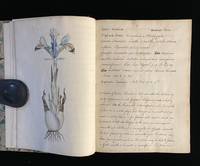
1822ref. 013470anonymously hand-printed and illustrated 1822. Hardcover. Near Fine. Replicas of the first 58 volumes of Curtis Botanical Magazine rendered in hand-colored floral illustrations and holographic text edited from and amended to the original text by an anonymous English artistic hobbyist and rebound likely early 20thC in 24 volumes. William Curtis' first volume was published in 1787; Curtis's volume 59 the last in this hobbyist's project is dated 1832 which coincides when the hobbyist concluded his or her work. The magazine continues still under the auspices of Kew Gardens. The hobbyist here started this ambitious undertaking in 1822 which is known from the notation "Commenced 1822" he or she leaves on the title page of the first volume. The ten-year project concluded sometime in 1832 which the last entry is dated. The monumental work results in replications of illustrations and text for 3024 species. The drawing and hand-coloring aspires to the original works of James Sowerby the first of Curtis's artists. The hobbyist here sometimes copies sometimes adapts Sowerby's style; the result though technically primitive in execution is consistently charming. The amateur's colors are not as vibrant as Sowerby's; supplies of high-quality natural pigments would have been limited to the amateurist. Bound-in after Curtis' Volume 42 is the actual published Part 1 of "General Indexes to the Plants contained in the First Forty-Two Volumed of the Botanical Magazine" printed by Stephen Couchman and published by Sherwood Neely & Jones 1816 40 pp and Part II 1817 pp 41 - 111. Most impressive is the hobbyist's holographed index to all Curtis's 53 volumes which runs approximately 200 double-sided pages. These 58 volumes were collected into 24 bound volumes presumably organized by the hobbyist thusly and were professionally rebound in polished black half leather - with five raised bandstitles and devices in gilt to the spine over green/salmon/ black marbleized boards with marbleized edges - by appearances sometime in the first quarter of the 20thC by an anonymous binder. The bindings are of highest quality. Laid-in to Volume 1 is the original bill of sale for the work from Henry A. Martin print dealer and publisher of Washington DC dated 11/24/1916. The original bindings were likely calf which with age would have called for some kind of rebinding here handsomely executed. anonymously hand-printed and illustrated hardcover books
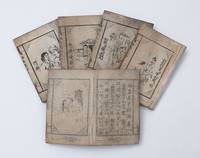
ref. 11459Woodblock-printed throughout in hangul & Chinese characters of different sizes. 350 woodcut illus. 70; 70; 70; 70; 70 folding leaves. Five kwÅn in five vols. of six. 8vo 254 x 177 mm. orig. white paper wrappers with printed title-slips orig. stitching. Korea: late ChosÅn period. One of two known copies of this anonymous Korean erotic book which juxtaposes the vernacularized hagiography of ÅšÄkyamuni with hundreds of erotic prints showing all manners of sexual intercourse and masturbation as well as related scenes of courtship and violence. To our knowledge this is the only known example of a Korean woodblock-printed erotica. Not in WorldCat or KORCIS. The prevailing cultural conservatism in ChosÅn Korea 1393-1910 meant that erotic pictures K. chunhwa 春畫 when they finally emerged as an artistic genre in the late 18th century tended to be painted sparingly for private collectors rather than printed en masse for the marketplace as they were in the neighboring countries of China and Japan. Only a handful surviving painted erotic albums are known today the most famous of which are the KÅn'gon irhoe to ä¹¾å¤ä¸€æœƒåœ– attributed to Sin Yun-bok ç”³æ½¤ç¦ 1758-1813 and the Unu toch'Åp 雲雨圖帖 attributed to Kim Hong-do é‡‘å¼˜é“ 1745-1806. In the 2020 article "A Brief Comparison of Old Erotic Paintings in the Far East" Won Whe Kim notes that "unlike China and Japan no record of erotic woodcut paintings was found in Korea.Korean erotic albums were drawn privately by painters or amateurs and were hidden in the home of the collectors" pp. 6-7. As the editors of Korean Erotic Paintings Seoul: 2001 point out "Korean erotic paintings have either been lost or overlooked before historians could get their hands on them because they were considered obscene. That was due to Korea's narrow-mindedness toward sex. The number of known erotic paintings is very little. It is difficult to do research on them because the ones with any artistic value are hidden in the homes of the collectors" n.p. On the history of erotica in Korea the editors further explain that "the origin of Korean erotic art can be found from the introduction of paintings from China's Ming Dynasty. Eroticism in the late ChosÅn era was likely to have been under the influence of Chinese eroticism. However.eroticism was able to develop its originality. It broke away from being just copies of Chinese paintings and attained a style that reflected ChosÅn's sex culture in a unique way.One of the main characteristics of Korean eroticism is that it realistically reveals the sexual customs of those times through its description of various social classes and situations" n.p. The title of this woodblock-printed erotic album contains two references: the "flowery camp" K. hwayÅng is a well-known euphemism for the brothel and sexual activities more generally and the "biography of ÅšÄkyamuni" K. sÅkpo refers to the WÅrin sÅkpo 月å°é‡‹èœ a 15th-century Korean translation of the Buddha's biography and one of the first documents to be printed with the newly invented hangul alphabet. Our album contains 350 folding leaves bound into five volumes in the Korean style with five rather than four stitch-holes each with a woodcut illustration on the recto and the mixed-script text of the WÅrin sÅkpo on the verso. The faint polygonal lines around some illustrations suggest that they were carved on smaller blocks separate from the larger frame and its WÅrin sÅkpo text and those smaller blocks were either affixed to the larger blocks during printing or impressed separately onto the blank area after the text was printed. Regardless the facing pages that result thus conjure and subvert a typical format of the genre's Chinese and Japanese precedents where erotic pictures are playfully paired with corresponding verses or literary excerpts. Additionally the first illustration of each volume and some interior illustrations have printed "captions" that are fragmentary excerpts from the WÅrin sÅkpo and other Buddhist texts bearing no obvious relation - descriptive or satirical - to the image itself. In contrast to the aforementioned painted albums that reflected the elevated style of renowned artists the printed illustrations in this album are noticeably more rustic if not sometimes comical. Figures and objects appear in monochrome sketches with facial features and limbs traced out in minimal sometimes distorted lines. The stylistic rusticity of the album echoes its various settings and protagonists: sexual activity takes place not in decorated studios or a scenic landscape but within rural farmhouses or in the vicinity of villages; the figures involved are not well-dressed ladies or esteemed officials but ordinary men and women who labored in the fields common soldiers who arrive on horseback and rural gentry without official positions. The female figures always wear a simple knot bun K. tchok that signaled their status as common married women rather than the elaborate wigs K. Ånjŭn mÅri or adolescent braids K. taenggi mÅri worn by courtesans in painted albums. Men with headwear that suggests elevated status appear mostly in plot illustrations see below and they almost always wear a top knot K. sangt'u during the sexual activities. These stylistic and thematic features suggest that this album was produced during the 19th century when as the editors of Korean Erotic Paintings point out erotica was increasingly produced and consumed by people across all social strata and the refined genre painting of earlier times gave way to simpler and popular styles. See also ì´íƒœí˜¸ "조선후기 ì¶˜í™”ì˜ 발달과 퇴조" p. 807. An impressive variety of sexual activities is depicted across the work's 350 illustrations including scenes of seduction initiated by both men and women dressing and undressing voyeurism rope bondage vaginal and oral intercourse in every imaginable position and location heterosexual intercourse and female masturbation with objects dusting wand tree carrot bestiality women with fish dog mouse fellatio and cunnilingus and threesomes two men with a woman two women with a man. The occasional depiction of figures enjoying the sight of copulating animals references a recurring motif in earlier Korean erotic paintings. While typical East Asian erotic albums consisted of isolated images without plot or recurring figures this album is somewhat unusual in that it contains longer sequences of illustrations that seem to constitute coherent narratives although the absence of any verbal description makes the stories quite difficult to discern. In the first volume certain short sequences of images appear to be connected: in one image an undressing woman sitting outside is approached by an enthusiastic dog and in the next image the two engage in sexual intercourse. But starting from the third volume longer sequences of images feature recurring identifiable characters and somewhat legible plot lines. For example at the beginning of Vol. III soldiers bearing swords capture a village woman and convince her depicted in a "bubble" that her lover has been arrested. She is then carried away it is implied to be raped by one of the soldiers. Her lover later returns and watches her bathe through a window and the two - fully dressed - share a romantic moment atop a hill only for the soldiers to reappear and after a brief conflict capture the woman again while her lover protests. Such longer narrative sequences including scenes such as literati drinking parties and official courts in addition to intercourse thus ingeniously weave the erotic life of commoners into their broader social and political lives substantially enriching the erotic album itself. As mentioned above this erotic album belongs to a genre within late ChosÅn popular culture of which few examples are known and about which very little has been written in any language. We refrain here from further conjecturing the significance of the very peculiar image-text pairing in the album or attempting to analyze the complexity of the longer narrative sequences. What is clear is that expert research into these problems will shed light not only on the album itself but also on a long-overlooked aspect of Korean cultural history. The only other copy of this title we find is part of the TaegokhÅn collection gifted by Yi ChÅng-dong to the Yulgok Institute of Korean Studies item #93 in ì›ì£¼ 대곡헌 published by ìœ¨ê³¡ì—°êµ¬ì› in 2024 which contains an additional sixth volume. Very good set with some discoloration and spotting in Vols. III and IV and light worming in the final volume. ⧠ì›ì£¼ 대곡헌 율곡연구ì›: 2024 #93. On Korean erotica see also ì´íƒœí˜¸ "조선후기 ì¶˜í™”ì˜ 발달과 퇴조" 역사학연구 11 1997 pp. 783-810. éŸ“åœ‹ì˜ 春畫 미술사랑: 2001. Won Whe Kim "A brief comparison of old erotic paintings in the Far East" Korean Journal of Sexual Health 4 no. 1 2020 pp. 3-8. 서윤정 "조선후기 춘화春畵: ì ë”ì ê´€ì ì—ì„œ 본 경계와 차별 ìž¬í˜„ì„ 둘러싼 문제" 미술사학보 No. 58 2022: pp. 131-55. unknown books
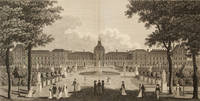
1816ref. 1435761816. PARIS. Graphic Illustrations of the Most Prominent Features of the French Capital; with Characteristic Figures in the Foregrounds comprised in Twelve Stroke Engravings From Accurate Designs Taken in Paris during the Imperial Reign of Buonaparte. With Descriptive Notices and Interesting Anecdotes. 26 pp. illustrated with 12 double-page engravings. Folio 430 x 380 mm. bound in contemporary French three-quarter black morocco over marbled boards gilt title and floral vignettes on spine paper label with ms. number "20" on front cover and spine. London: Harper and Co. 1816. A fine copy of this extremely rare collection of views of Paris consisting of twelve artistically conceived views of Paris engraved by English artists. The large double-page engravings incorporate local Parisians participating in daily routines within the setting of each view. Panoramic views include: the Military School and the Church of the Invalides; View of Paris from the South Boulevard; View of Paris from Montmartre; South View of the Old and New Louvre; The Mint and The Façade of the Louvre; View of La Place de la Concorde; The Garden of the West Front of the Tuileries; Palace of the Tuileries Facing La Place du Carrousel; Garden of the Tuileries; The Luxembourg or Palais du Senat with the Gardens; The Elysian Fields Distant Gardens of the Tuileries; Entrance to Les Champs Élysées and La Place de la Concorde. Each plate is followed by two pages of text giving historical details and anecdotes about the site illustrated. Minor wear to outer edges of binding plates and text clean. Rare: OCLC lists 6 copies worldwide of which only one is held in America Bowdoin College. hardcover books
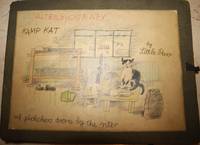
1943ref. 0072801943. Hardcover. Cloth Box. Very Good. Inimitable and disarming tales that represent the pinnacle of outsider art and folk art with the naive drawings richly full of life as they speak of the daily routine at a British army camp during the Second World War from the point-of-view of a camp mascot cat who excels at mangling English in its creative attempts at phonetic spelling. Folios are oblong 41 by 30 cm each. The first folio contains "The Alterbyografy" a 56 pages long unpaginated with 54 illustrations including the folio cover 28 of which are full page 24 of which are half page. The second folio is entitled "Kamp Karacters" . This is 51 leaves with 92 illustrations including the cover 51 of which are full page 40 a third page generally with the area above entirely blank. Illustrations are rendered with colored pencil and crayon. The first manuscript is a continuous narrative of army life its humdrum rhythms and routines its various inanities its social life sports and other activities etc. while the second part is more character sketches. The second folio is even more visually driven than the autobiography. Another distinction between the two is that the autobiography is done with the leaves oblong while the character studies are applied with the leaves vertical. While one part isn't exactly a sequel to the other the two parts are truly complementary. The two folios are of a rough burlap material with a large title sheet mounted on their front cover. The folios have three flap folds to hold the loose sheets in plus ribbon ties on their right sides. hardcover books
ref. TM 466ELEGANT MANUSCRIPT CONTAINING TWO WORKS OF SPIRITUAL AND MORAL EDIFICATION IN FRENCH TRANSLATION. Illuminated manuscript on parchment in French France after 1482 c. 1490. Dimensions 274 x 175 mm. 70 folios written in a Gothic bâtarde bookhand 18 large initials parti-colored in red and/or blue inserted leaf in first quire with FULL-PAGE HERALDIC COMPOSITION IN GOLD SILVER RED BLUE AND BLACK. BINDING: Bound in modern nineteenth-century blue velvet over wooden boards pink paper pastedowns and endleaves edges gilt. TEXT: Manuscript contains two works that reflect the spirituality of fifteenth-century Carthusians and their quest for the contemplative life. The first text Sept fruits de la tribulation is known in only five extant manuscript and is still unedited. A free French version probably dating from the fifteenth century of either the longer Latin Tractatus de tribulacione or an abridged adaptation of the French Livre de tribulacion. The second text Miroir d'or de l'ame pecheresse is a work of spiritual edification which consists of seven sections: on human misery sin especially lechery penance rejection of the world the vanity of human wishes death and hell and heaven. There is neither a modern critical edition of the second text nor a complete census of the existing manuscripts; the copy here was apparently made from an incunable edition of c. 1490. This manuscript begins with a remarkable added full-page illuminated frontispiece with the coat of arms and motto of Louis de Grolée fl. late fifteenth-early sixteenth century the abbot of Bonnevaux and Saint-Pierre de Vienne. PROVENANCE: Copied in France perhaps northeastern based on script and linguistic characteristics as well as internal evidence. It belonged to Louis de Grolée fl. late fifteenth-early sixteenth century. It then belonged Charles Chardin bibliophile. It was later a part of the collection of Sir Thomas Phillipps 1792-1872 who has been described as the greatest private manuscript collector of all time. CONDITION: Gold slightly rubbed some off-setting from heraldic painted composition to opening text page slight staining in upper margin and into three lines of text ff. 68-69. Overall good condition. Full description and pictures available. TM 466 books