[Anonymous]ABAA

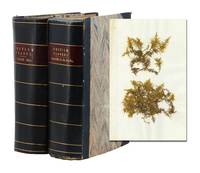
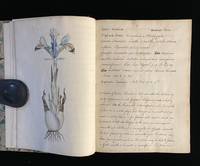
1879ref. 140948304no place: no publisher 1879. Near Fine. An exquisitely compiled herbarium of over 1000 plants native to Europe collected over the course of one year meticulously chronicling the flora's growth throughout the seasons. Approximately 1051 specimens of all manner of flora mounted on 104 sheets further mounted onto leaves some with exact collection dates almost all specimens have been identified in their Latin name except the last 113. At the head of each leaf are sequential month and year. Bound in modern quarter tan calf over green cloth with five raised bands and green leather spine label lettered in gilt; fern patterned end papers. 11 x 17". Folio. Near Fine with only small ratio of loss to specimens 17 to be precise with some breakage to a few leaves and stems. Offsetting from specimens and some wear to edges. A massive assemblage collected by an unidentified fervent botanist over the course of an entire year. The book begins in December 1878 with seasonally humble speedwells white dead nettles and catkins. Slowly but surely winter melts away in the collector's environment and tender spring ephemerals like snowdrops blood root and hellebore are presented with clear excitement. The specimens truly become vivacious in the warmer seasons between May and June where it seems pages are stacked almost artistically with perfectly preserved flag iris large stalks of horsetail bright examples of thistles and spindly tufts of wheat. It seems that toward the end perhaps exhausted after weeks of collecting in the summer heat specimens assembled in the colder months of October and November are more hastily affixed and without species name below. A particularly attractive herbarium that is well-preserved and lovingly assembled. [no publisher] unknown books
1855ref. 613711855. Softcover. Very Good. Holograph Manuscript. Octavo. 42 2pp. Ribbon-tied wrappers. Foredge gilt. Beautifully written in blue ink with decorated initials rubricated. Small chips to the edges of the wrappers a pleasing very good or better manuscript. A fairy tale in both prose and verse. Fair knight Jòan goes on a long journey looking for truth and a princess shadowed by fairies. The fairies dose him with poppies give him sweet dreams and intimate that he shall find "thy silver dove" the Princess Alethia. Apparently unpublished the manuscript is accompanied by a 1936 letter from the Library of Congress Copyright Office replying to an inquiry and stating that the title is not recorded. Additionally none of the word combinations in the title reveal published works in OCLC or other comparable sources. A beautifully rendered complete and unpublished 19th Century fairy story. unknown books
1792ref. 68343London: Printed for S. Woodfall 1792. A Collection of Five Political Tracts from the Years 1792-1793 Anonymous. Six essays on natural rights liberty and slavery consent of the people equality religious establishments the French Revolution which were greatly approved and have been in much request since their original appearance in the Public Advertiser. London Printed for S. Woodfall 1792. First edition. 8 48 pp. We could find no copies at auction and only four are listed at libraries according to ESTC N62745 Bound with ANDERSON George. A general view of the variations which have been made in the affairs of the East-India Company since the conclusion of the war in India in 1784. By George Anderson. London Printed in the Year 1792. First Edition. 8 102 2 blank 11 folding appendix tables pp. With half-title and 11 folding appendix tables. There have been no copies at auction since 1978. George Anderson was a colonial official and writer. In 1792 he published this present highly regarded study as to the condition of Indian trade and finance. ESTC T97303 Bound with Anonymous Callender James T. The political progress of Britain; or an impartial account of the principal abuses in the government of this country from the revolution in 1688. The Whole tending to prove the ruinous Consequences of the popular System of War and Conquest. Part first. Edinburgh Printed for Robertson & Berry 1792. First edition. 80 pp. We could find no copies at auction in over 50 years. Previous owner's contemporary notes on blank verso of title-page which read "It is impossible that Lord Gardenstone could be so great a rogue as to write this tract as has been universally given out." "In February 1792 Callender published in the Edinburgh Bee the first of eight parts of what was to become a very successful pamphlet The Political Progress of Britain. As an inflammatory critique of imperialism war and corruption with a strong Scottish nationalist flavour Callender's work rivalled Thomas Paine's in its radicalism. It sold well although not in the numbers of the Rights of Man." Oxford DNB. ESTC T43967. Bound with CARLYLE Alexander. A sermon on the death of Sir David Dalrymple Bart. Lord Hailles; from Eccles. VII.3. Preached In the Church of Inveresk on Sunday the 9th day of December 1792. By Alexr. Carlyle D. D. F. R. S. E. Chaplain to His Majesty & Minister of that Parish. With an address to the congregation suited to the circumstances of the times. Edinburgh Printed for John Balfour 1792. First edition. 33 1 blank pp. We could find no copies at auction in over 50 years. ESTC T53279. "Carlyle was a Church of Scotland minister and memorialist. During the French Revolution he was equally conservative in regard both to domestic issues.and to foreign issues such as the war with France which he exalted as a divinely sanctioned cause and a test of British virtue and resolve in three published sermons including: Sermon on the Death of Sir David Dalrymple Bart. Lord Hailes 1792." Oxford DNB. Bound with Mallet du Pan M. Jacques. Considérations sur la nature de la révolution de France et sur les causes qui en prolongent la durée. A Bruxelles et se trouve a Londres chez Owen 1793. Early edition. viii 79 1 table pp. ESTC T75704. Mallet du Pan was a Swiss journalist who "Published with the approval of the foreign representatives a work which was to make a prodigious sensation and which is still the best know of his writings his Considerations on the Revolution." Mallet du Pan and the French revolution by Mallet Bernard. He is considered a pioneer of modern political journalism. Octavo 8 1/8 x 4 7/8 inches; 205 x 125 mm. All tracts bound together in contemporary half calf over marbled boards. Red morocco spine label lettered in gilt. Some occasional foxing but otherwise very clean. Previous owners old ink notes on front endpapers. Outer hinges cracked but holding. Top of spine chipped. Otherwise a very good copy. HBS 68343. $3500. Printed for S. Woodfall unknown books
1919ref. 0032531919. Cloth. Very Good. Patriotic World War One poem "The Man who Keeps his Head" illuminated with exquisite vignettes. Oblong 24.5 by 31 cm. With eight plates including title page plus painted vignette on final leaf. These vignette watercolors four to eight per page depict the diversity of British experience whether its variety of industry its trades its modes of farming its ships etc. The effect is panoramic and epic a visual equivalent to Noel Coward's sweep in "Cavalcade" say. Framing it all are Art Nouveau devices and ornament very much true to the period. The book was easily of publishable quality and its creation demonstrates that a strain of patriotism and optimism somehow withstood the bitterness and cynicism engendered by the war. Tissue guards with creases and one with tear. Binding bowed. Other light wear. unknown books
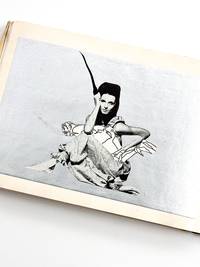
1960ref. 43382np 1960. Very good. An extraordinary and unique handmade artist's book elaborately assembled by an anonymous artist. A kinky but lighthearted celebration of female flagellantism the book appropriates quintessentially 1960s fashion models and recontextualizes them in dozens of original collages so that they are weilding whips switches and various similar tools. Paired with self-referential and irreverant texts as well as black-and-white hand-penned drawings presumably by the assembler of bondage spankings and other S&M-themed scenes the book humorously imagines Mod Girls as doms - a perhaps intentional visual pun. The collages many spanning across page spreads and including one fold-out exhibit a strikingly skillful and stylish retraint suggesting an ambition and audience beyond the merely pruriently personal. An outsider book of rare sophistication and wit: the Swinging Sixties meets Dada. Yeah baby. 6.5'' x 9.25''. Likely commercial scrapbook but possibly ad-hoc collages boards. Containing 66 pages plus covers and one fold-out all mounted both recto and verso with color collages consisting mainly of magazine models with occasional textual elements in German many typed. Spine appears perished. But otherwise sound and apparently complete. Very good. Housed in custom Talas archival clamshell box. unknown books
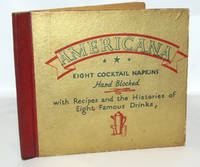
1925ref. TB33810n.p.: n.p circa 1925. First Edition. Good in its original 1/4 red paper and gold jacquard printed covered boards with blue and red text and decorations on the front board. An oblong small octavo of 7 1/2 by 8 3/4 inches with wear to the paper covering all around the edges of the boards. The text is printed on a thin and extremely fragile paper stock which is well tanned with a number of closed tears and minor chips to the margins. All eight cocktail napkins are present and in fine condition in bright colors. 18 pages 17 numbered rectos mounted with illustrated hand-colored cocktail napkins versos with cocktail recipes. Nothing known of author publisher or date or place of publication. However it is rather obvious that this volume was published during the era of Prohibition Jan. 1920 to Dec. 1933 as all of the cocktail recipes call for nonalcoholic beverages. The modified Prohibition ready recipes are for: Manhattan Blue Blazer Deadwood Duck Rip Van Winkle Sleeper Belmont Park Alabama Barbary Coast and New Orleans Drip. The dedication in the book asserts its tongue-in-cheek intent: To Serious Drinkers Everywhere. Of particular interest is the fact that a small 7/8 by 5/16 inch slip of paper with blue and red printing with the word "France" is pasted to the upper fore corner of of the front paste down for each copy that has come to market. The importation laws in the US at the time required all foreign goods to have some indication of where they were coming from. This title was therefore printed in France. The Internet site of Barina Craft in their essay on Barbary Coast Cocktails includes a footnote which reads: "Americana Recipes And The Histories Of Eight Famous Drinks is a rare bartending book not only because of the limited number of copies of its first and only edition but also due to its binding and illustrations. Each of the eight cocktails . were depicted by a hand colored woven fabric cloth cocktail napkin with tassel ends." This rarity is borne out by OCLC reporting only one copy is held by an institution Bowling Green State Univ. n.p hardcover books
ref. 26281. Palau 29755 one record in OCLC: Northwestern; 2. Palau 80255 no OCLC records; 3 4 5 6 7. Palau 259767 NUC records NYPL Hispanic Society no locations in OCLC. NOTE: Palau calls for 13 plates but the two copies listed in the NUC contain only 11; this copy has 12. separate issues: 4. Palau 193624; 5. Palau 156972 20 pp.; 6. Palau 156973 19 pp.; 7. Palau 156974; 8-9. Palau 259934 separate record for 9: Palau 156976 12 pp. Rare illustrated collection of nine ephemeral fête programs documenting three generations of royal entries into Barcelona: Charles III in 1783 his son Charles IV in 1802 and grandson Ferdinand VII in 1827. This group of pamphlets affords a comparison between royal entries staged before and after the French occupation of Catalonia 1808-1823.LIST OF TITLES:1. Bilingue Obsequiosa Consonancia en 92. decimas… y las vistosas Mascaras Moxiganga Luminarias Adornos afectuosas públicas y privadas Festivas Alegrias que tributa al Rey Supremo y al de Espana la Inclita y Fidelisima Barcelona en los dias 8 9 y 10 del mes de Dbre. de 1783. Barcelona Imp. Viuda Piferrer 1783. 31 ff. 2. Epitalami à las Reals Bodas dels serenissims senyors princep y princesa de Asturias Don Fernando y Dona Maria Antonia y dels serenissims senyors princep y princesa de las dos Sicilias Don Francisco y Dona Isabel. Barcelona Imp. Thomas Gorchs 1802. 28 pp. 3. Relacion de las Diversiones Festejos Públicos y otros acaecimientos que lan ocurrido en la ciudad de Barcelona desde el 11 de Setiembre hasta principios de Noviembre de 1802. Barcelona Compania de Jordi Roca y Gaspar 1802. 35 1 pp. with 1 folding plate. 4. Noticia Individual de la Entrada de los Reyes Nuestros Senores y real familia en la ciudad de Barcelona la tarde del once de Setiembre del presente ano de mil ochocientos dos. Barcelona Jordi Roca y Gaspar 1802. 30 pp. 1 blank leaf. 5. Máscara real para la primera noche. Cinco de Octubre. Barcelona Jordi Roca y Gaspar 1802. 12 pp. 5 plates. 6. Máscara real para la Segunda Noche. Seis de Octubre. Barcelona Jordi Roca y Gaspar 1802. 13-23 1 pp. 5 plates. 7. Máscara real para la Noche siete de Noviembre. Barcelona Jordi Roca y Gaspar 1802. 1 f. 6 pp. 1 plate. 8. Relación de la entrada de los Reyes nuestros Senores en la ciudad de Barcelona la manana del 4 de diciembre de 1827 y de los demas festejos públicos. Barcelona la Viuda de D. Agustín Roca 1828. 25 1 pp. 5 plates. 9. Máscara real para la noche del 6 de enero de 1828. Barcelona Imp. Vda. de Agustín Roca 1828. 10 pp. 3 ff. 3 plates. The printing house of Jordi Roca and Gaspar was active in the latter years of the 18th century; its tradition of printing topical works continued at least until the 1830s under the helm of Agustín Roca's widow. Agustín Roca published clandestine leaflets during the Napoleonic invasion and was forced to flee to Tarragona and Mallorca. According to Palau the pamphlets pertaining to both the 1802 and 1827 festivities were issued separately as well as in the collected editions found here. A more detailed description of this item can be supplied on request. books
1950ref. 019790New York 1950. Minor surface wear ink light at a few points with "Bill" on the dark portion of his suit but still visible. Near Fine. A scarce 8" x 10" Black-and-White Formal Photograph SIGNED by Bill Wilson: "To Martie C--/With affection/and thanks/Bill/NY -- 9/50." unknown books
1860ref. 140948358Norfolk UK: No publisher 1860. Very Good. Two large herbaria with hundreds of plant specimens collected in 19th-century Norfolk England pertaining to flowering plants and mosses. Bound in contemporary half leather over marbled boards with morocco spine labels stamped in gilt. British Plants contains approximately 90 specimens with no manuscript identifcations. British Flowers contains 186 specimens with manuscript Latin identifications. 276 specimens all together. Each 15 x 10 x 4.5". Folios. Very Good with rubbing at extremities of each binding toning to marbled boards split at rear joint of Flowers bookplates of Norfolk history enthusiast noted bibliophile and collector of Admiral Lord Nelson materials Ronald C. Fiske d. 2018 on front pastedowns. Plant roster in old hand laid in front of Flowers. All specimens intact with only a few spots of loss heavy rodent gnawing to British Plants at mid-gatherings affecting some plates at edges and manuscript notations. Carefully compiled by an anonymous botanical enthusiast over the course of nearly 25 years each mount is artfully arranged and beautifully preserved. Herbaria of this size from the 19th century are increasingly scarce particularly hailing from one single location. [No publisher] unknown books
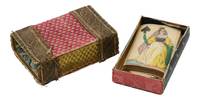
1880ref. 140949222France: Unknown publisher 1880. Very Good. A suggestive set of translucent erotic playing cards likely created in France in the mid-19th century. Set consists of 35 hand-colored playing cards 32 of which are from around 1840 featuring 11 court cards 3.25 x 2.25" and three slightly larger cards 3.5 x 2.5" possibly from the late Victorian period. Housed in a much earlier handmade late-18th century sliding box 4.5 x 2.75" made from thin plywood with pasted decorative paper wrapped in voided velvet and trimmed with gold and silver metal silk woven ribbon. They were once a part of The Stuart and Marilyn Kaplan Playing Card Collection. Very Good. Cards are lightly bowed with general wear and light toning; four of diamonds is the most worn with creasing and small spot of loss to one of the corners.The box they are held in is quite fragile with tarnishing to the metal ribbon and slight soiling to velvet boards. Popular in mid-1800s France and often associated with brothels these cheap seemingly innocuous risque novelties were crafted with two pasteboard layers. When held to light favorably candle light they reveal hidden sensual often pornographic images. While the cards inside were economically manufactured the little box they are held in is rather sumptuously bedecked in high quality velvet and expensive gilt metal thread ribbon. The average layman did not have access to trim or fabric as seen here indicating that this may have been owned by a rather wealthy individual. It should be added that sets as generously populated as this even when mixed are uncommon and desirable curiosa objects. [Unknown publisher] unknown books
ref. 16356Italy: n.p. n.d. Ruled manuscript notebook with engraved frontispiece. Preface and discourse in two parts. Contemporary black roan and preserved in a black roan-backed box. The text is very clean. A handsome copy. With the bookplate of Roberto Gabbani engraved by Costante Costantini. A discourse in the form of a mock-address to an educated and learned public of women. The author is inspired to write this praise after he had accidentally stepped onto a pile of excrement. He addresses the ladies and in the first part theorizes the ancient and noble origins of defecation from the beginning of time with Adam and Eve. The object of his ode is universal and unites all peoples of the world. The second part is devoted to the usefulness and benefits of excrement: it’s healthy nourishes the trees and the soil and provides work to those that transport it from cities to villages. The author ends his tribute talking to ### directly inviting her/him not to blame humans that don’t appreciate her/him. Costantini Florence 1921-2006 was an Italian engraver illustrator and writer. His talent for drawing was sharpened by his studies and by trips abroad in his youth. In Vienna he became a friend of Kokoshka’s and in Paris he followed courses at the Grande Chaumière Academy. He is noted for his elegant woodcuts and his intaglio prints made from punched metal plates. He was awarded several prizes in both fields. n.p. unknown books
1928ref. 002034Hvidore: s. n. 1928. Softcover. Original silver gelatin photographic postcard of the Empress sitting on a padded bench in her garden holding an umbrella and a bouquet of flowers; 5 x 3 1/4; minor wear to corners and image; a bit of age-toning and a manuscript note in pencil to verso; near fine condition. Signed in ink: "Maria Hvidore" in the lower half of the photo. Possibly one of Maria Feodorovna's last photographs the anonymous note on the back stated: "The Empress sent me this not long before she passed away at Hvidore." Empress Consort of Russia Maria Feodorovna 1847 – 1928 christened Dagmar was the wife of Tsar Alexander III and mother of Emperor Nicholas II of Russia whom she outlived by ten years. The second daughter of King Christian IX of Denmark and Louise of Hesse-Cassel she was bethroted to Tsarevich Nicholas Alexandrovich of Russia but after his death from meningitis in 1865 Maria honored his last wish and married his younger brother the future Alexander III. She converted to Orthodoxy and became Grand Duchess Maria Feodorovna of Russia. With Alexander II's assassination in 1881 she and her husband were crowned Emperor and Empress of Russia. After Alexander III's death in 1894 she became Dowager Empress and her son Nicholas II and his wife Alexandra were crowned the new rulers. The outbreak of the Revolution in 1917 forced her to travel to Crimea where she received the devastating news that her sons daughter-in-law and grandchildren had been murdered. She refused to believe it and declared it a rumor. Although the monarchy would be overthrown she would not leave Russia until 1919 - first to London and eventually to her native Denmark where she would settle in Hvidore a former country house near Copenhagen. Maria died on October 13 1928 at the age of 80 having outlived four of her six children. Hvidore: s. n. paperback books
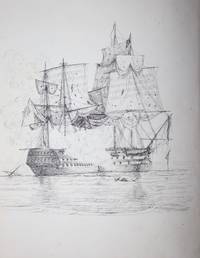
1820ref. 20114England 1820. Half Calf. Marbled paper pastedown on boards. Very Good. A military-related manuscript rife with exquisite drawn and painted illustrations of ships cannon ammunition and other military equipment. 8vo. 25 by 21 cm. 10 223 pp. Not including the blank leaves following which constitute about one fourth of the leaves. In unpaginated pages at the beginning there are a calligraphic title page a full page pen-and-ink drawing of two warships -- basically serving as a frontis -- and a two page index. The illustrations appear throughout the manuscript as do numerous tables -- this being a manual of sorts how else to deal with the niceties of ammunition The illustrations can be renderings of simple geometric principles to realistic depictions of warships facing off. Many of the illustrations are small vignettes of hardware -- the utilitarian purpose of the artwork might not sound especially exciting but the precision of the drawing is such as to inspire awe. There are a number of pages given over to such small illustrations. Rather than a count of the total number of illustrations we would say that there are 40 pages in which there are illustrations that are ones that reflect artistic skill by the creator of this manuscript. The text is written in a very consistent and neat cursive -- one should have no trouble reading any of the text. We would not regard most of the handwriting as calligraphic. Only two title pages feature bona fide calligraphy. Alas we do not know who put together this book or exactly when. It has a resemblance to student notebooks and course summaries of the period both ones created in England but also the United States. But given the length and thrust of the thing we are inclined to see it as the effort of an instructor. Perhaps there was an ambition to publish as well. Not knowing the identity of the creator militates against having a conclusive answer to the mystery. Based on the warships depicted we pin the manuscript as circa 1820. The spine leather is torn rubbed rough. Scattered soiling of the leaves within with browning conspicuous along page edges. Still well-preserved and attractive. unknown books
1727ref. 1405949London: W. Mears 1727. First Edition. Hardcover. Octavo 192 pages. In Very Good condition. Spine marbled paper with red textblock and gilt lettering. Fully bound in later marbled boards. Minor shelfwear and soiling. Textblock toning consistent with age. Minimal soiling. Bookplate pasted to inside of front board. GH consignment. Shelved in Case showcase. This work of early English viticulture printed for W. Mears is presumed to be authored by the 18th century botanical writer Richard Bradley 1688-1732 whose work Mears had published before. This text is exceptionally scarce especially in the original form. 1405949. Shelved Dupont Bookstore. W. Mears hardcover books
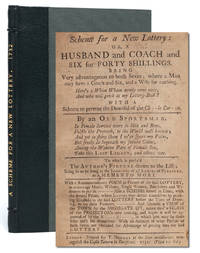
1732ref. 6120London: Printed for T. Dormer 1732. First edition. Modern quarter morocco over cloth with gilt to spine. Measuring 180 x 111mm and collating complete including frontis folding game board and concluding woodcut: 2 62 2. From the collection of stage magician Ricky Jay with his bookplate to upper pastedown. Top margin trimmed close with consistent loss to running headers and occasional loss to page numbers with no other text effected. Pages somewhat toned with minor marginal chips but otherwise unmarked. A scarce satire playing both on the rising popularity of get-rich-quick schemes and on the economics of the marriage market the present is the only example to appear in the auction record. OCLC locates only twelve institutional copies. The present is the only example currently in trade. A Scheme for a New Lottery warns readers against the dangers posed by get-rich-quick schemes targeting large-scale scams like the recently burst South Sea Bubble sometimes called the world's first Ponzi scheme and the pawn-broking swindle of the so-called Charitable Corporation. These scams were appealing to ordinary people at a time when few were "successful in using wealth from trade to found a landed family" Rapp. Mocking both the conmen and the conned A Scheme satirically proposes "Another Lottery which may prove a general benefit to all concern'd; as there is no better Remedy for a Bite from a Mad Dog than the Liver of the Dog that bit." The proposed lottery filled with abstruse rules and convoluted promises ensures that the cycle continues. A Scheme also mocks marriage as a scam in which women could either make a wise match in a rich man or lose it all by marrying down. The lottery provides "Fifty Thousand tickets to be deliver'd to Maids or Widows or any that appear to be such" in the hopes of winning a financially stable husband represented by the tickets drawn. Such a match could be a good one: "A Ware-House Keeper with the Salary of a Hundred Pounds" or "the Governour." It could also by virtue of lottery be a loss: "2 Scotchmen both Pedlars 500 Broken Booksellers" and a range of other ruinous bounders are also listed as prizes. For those who desire an advance attempt the folding game bound in the book invites blindfolded women to stick a pin in the board to claim their prize. The present copy was played gently with pin marks revealing a Blacksmith and a Valet de Chambre among those husbands won The popularity of A Scheme resulted in a reissue the same year with a canceled title page as The Ladies Lottery and falsely attributed to Swift. ESTC N20921. Printed for T. Dormer unknown books
1930ref. 1715341930. HAENZI Erich. Farbenlehre. 23 Original watercolour plates some with multiple images. Folio 340 x 240 mm. original cloth. N.p.: n.d. ca. 1930. A wonderfully executed manuscript on colour theory by a Swiss commercial artist whose objective was to enhance the work of decorators fashion designers graphic artists and set designers. Divided into ten sections comprising colour and achromatic antagonism colour values light-dark antagonism cold-warm antagonism quality contrast intensity contrast quantity contrast complementary contrast simultaneous contrast and successive contrast. According to the seller the work is by a Swiss commercial artist named Erich Haenzi. hardcover books
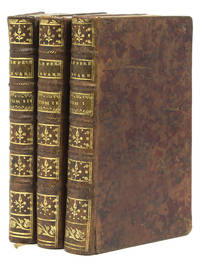
1770ref. 307572Paris: Desventes de Ladoué 1770. First edition. xvi 359 iii; 334; 360pp. 3 vols. 12mo. Bound in full contemporary mottled calf. With the bookplate of the Vicomte de Noailles engraved by Agry in each volume. Upper joint of vol. III with short start at foot otherwise a fine and fresh copy. First edition. xvi 359 iii; 334; 360pp. 3 vols. 12mo. A satirical response to Rousseau's Emile ou l'Education 1762. Where Émile is guided by a wise tutor the author of Le Père avare mocks from the outset Rousseau's dictum "le véritable précepteur est le père" for the narrator's father M. d'Erigny grew up poor and gained wealth through his friendship with a government minister; his child has been spoiled from infancy. While M. d'Erigny is drunk his mistress gets him to sign an order from her jeweler for 20000 francs of precious stones and skips out. The extravagance is discovered and the father becomes miserly in the extreme. The son now 15 years old is entrusted to a unscrupulous précepteur or tutor who involves the youth in a swindle and vanishes with the money. This is a confessional so we learn it all: the narrator soon discovers love and devotes himself to pleasure using the family name to run up accounts everywhere before being deceived and fleeced. M. d'Erigny is furious; Madame intercedes: his debts are paid and he is sent off to exile in a provincial town. He is befriended by a well-connected gentleman but repays this trust with deceit. Besotted with an actress he forges a criminal denunciation of a rival but his scheme is discovered and his in consigned to "une de ces maisons de force" a private prison for the reform of licentious youth. To escape this close confinement the narrator embarks with a flotilla of colonists bound for the island of C in the new world. His mother's continued good influence follows him across the ocean cushioning him from the worst excesses of a brutal colonial regime amply detailed. Florainville a mistress who has managed her money well comes to the colony to rescue him but falls afoul of the corrupt Intendant and her health fails her. She dies but not before she has made him her legatee. The narrator assists the colonial governor in prosecuting the Intendant and returns to France. He retires to a rural abbey and contemplates his experiences. Before long he becomes the benefactor of a village community and sees it thrive. Only edition of this little-known work of fiction set partly in the Americas. OCLC records two copies in N. America Princeton UCLA two in France and one at Trinity College Dublin Desventes de Ladoué unknown books
ref. 6685N.p. but likely New York 1839. Lithograph 10.25” x 12” plus margins. CONDITION: Good narrow margins upper margin expertly extended lightly soiled paper pulp reinforcements on verso. A rare and anonymously-produced political cartoon attacking Henry Clay’s duplicitous position on slavery the issue that was at the fulcrum of so many political moral and legal conflicts in antebellum America. Clay at the time a Senator from Kentucky and one of the country’s most popular politicians grew infamous for his attempts to play both sides of the slavery issue. This cartoon takes the opportunity of one of his 1839 Senate speeches to skewer his views on slavery as he angled for another presidential nomination. The text points out the hypocrisy and contradictions in his words and attitudes. Audiences above the Mason-Dixon Line hear Clay proclaim: “I consider Slavery as a Curse a curse to the Master and a grievous wrong to the Slave” insisting he was “no friend to slavery” while those in the South are assured that as an owner of three-score humans he “will continue to oppose any scheme whatever of emancipation gradual or immediate.” The text also points out his contradictory views on dueling. An illustration of Mason & Dixon’s Line separates his views on slavery. South Carolina’s John Calhoun who with Clay was two-thirds of the Senate’s “Great Triumvirate” and was the country’s most prominent slavery advocate shakes Clay’s hand and promises his support. He assures Clay that abandoning his “‘folly & delusion’ about liberty” and endorsing slavery as the “‘most safe & stable basis for free institutions’” will also secure South Carolina’s support in his next presidential run: “you shall be made President for life.” Both men are mindlessly standing with one foot upon a prone enslaved man. In addition Clay stands upon a torn portion of a Kentucky Convention Bill likely addressing the issue of fugitive slaves and Calhoun’s left foot stands on a torn part of a memorials and resolutions from Vermont and Massachusetts affirming that “All men are created equal and entitled to liberty &c.’” The afflicted and enslaved African-American man on which they trample to the viewer in a quote from the Old Testament Book of Micah 7:8 relating to the rise of Israel: “Rejoice not against me O mine enemy when I fall; I shall arise.” Though this print bears no publication information the style and substance point toward the work of H.R. Robinson of New York who produced a number of sharp political attacks in the form of satirical prints in the 1830s. Not in Reilly. Rare with only three copies recorded in OCLC at the Library of Congress Boston Public Library and the American Antiquarian Society. REFERENCES: Weitenkampf p. 60; OCLC 741723538 and 1038126677. [N.p., but likely New York, 1839] unknown books
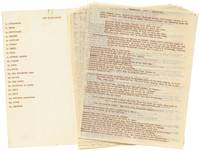
1940ref. 5238661940. Near Fine. An original unpublished typescript of a mid-20th Century minstrelsy together with six mimeographed copies of the typescript. The original typescript consists of 12 quarto pages typed in orange on rectos only paginated in ink by hand and a one-page List of Characters. In fine condition. The six mimeographed copies consist of 12 folio sheets 9" x 14" stapled at the topedge onto a cardboard back cover accompanied by two mimeographed copies of the list of characters on separate quarto sheets. The mimeographed copies are lightly toned three or four copies have some slight staining one copy has an owner name in ink and one is lightly annotated near fine or better overall. The list of 21 characters includes: The Interlocutor Hambones Tambo Shakespeare of Harlem Seven-Up Jackson Suntan Cootie-Locks Dimwit Muskrat Geo. Washington Jones and others. The single-spaced typescript with about 50-60 lines per page is laced with racist language and stereotypes and includes dialogue musical cues stage directions and narration of the Interlocutor; it ends with one of two poems by Shakespeare of Harlem: “Honey dis am Rufus Tappin’ on yoh window-pane … ” and a skit by Seven-Up Jackson: “the only known real live gold-fish swallowing act in history … .” Internal evidence including references to an atomic bomb attack on Tokyo suggests that the play was likely written late in or soon after the Second World War. In 1953 two popular films with similar titles were released: Walt Disney’s Thanksgiving Day Mirthquakes and Merry Mirthquakes featuring a young Liberace as Master of Ceremonies. It is also possible that the character “Shakespeare of Harlem” is an allusion to Langton Hughes whose book of poems “Shakespeare of Harlem” was first published in 1942. An unpublished and unrecorded American minstrelsy well-preserved in near fine condition. The presence of multiple copies inveighs strongly that these scripts were actively used in a group production. unknown books
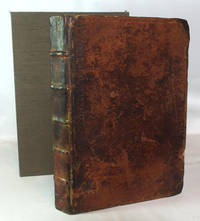
1726ref. TB32377Boston: Benjamin Eliot 1726. First Edition. Very good in a contemporary full leather binding with five raised bands on the spine with no dates or titles and with the boards decorated with blind embossing. The spine appears to be rebacked in a style comparable to the rough nature of the boards. A quarto of 11 1/2 by 7 3/8 inches with damage to the leather at the tips of the boards and scars blemishes and small chips to the leather. The front paste down shows three brief notes from three early prior owners the second one of which notes the date of purchase 1752 from a John Hill Esq. The title page has been professionally backed to protect numerous chips and has been signed by a more recent prior owner in the margins. This charter which was originally dated on May 14 1692 included Massachusetts Bay Colony Plymouth Colony Martha's Vineyard Nantucket the Province of Maine and parts of what is now Nova Scotia. It is bound in with The Acts And Laws of His Majesty's Province of the Massachusetts Bay in New England. This volume is contained and protected within a fine dark brown cloth covered slip case. The Charter is printed in 13 pages which is followed by a two page "Explanatory Charter granted by His Majesty King George" which is followed by "The Table" Index of 17 pages. That is followed by "Acts and Laws Of HIs Majesty's Province Of The Massachusetts Bay In New England printed in Boston in 1716 of 456 pages. Benjamin Eliot hardcover books
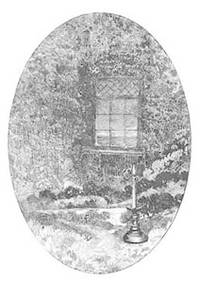
ref. CNAP063bSan Francisco: The Arion Press 2002. First and Limited Edition. Hardcover. New. Conner Bruce. Octavo 10.25 by 7 inches. The type is English Old Style composed and cast in Monotype by Mackenzie & Harris San Francisco. The text paper is Ruysdael an all-cotton machine-made sheet. The paper for the prints is T. H. Saunders buff loan an all-cotton mouldmade sheet. The ink-blot drawings in gray beneath the folios and the rebus on the title page were printed from photopolymer plates. Printing of the type and plates was by letterpress. The book is bound in yellow cloth with an ink-blot pattern in black from a drawing by an anonymous artist that is continuous front to back interrupted by a black cloth spine. The book is enclosed in a black slipcase. Both book and slipcase have yellow spine labels. The six images are photogravures from collages of wood engravings. The original collages are ovals 6.5 by 4.5 inches. The scale of the images for the book is the same as the original collages. Book with suite of six larger photogravures by Conner on handmade paper with prose-poems by Todd. The book is octavo in format 10-1/4 by 7 inches. The six images in the extra suite are 17-1/4 by 12-3/4 inches. The edition of the suite of prints with the book is limited to 30 numbered sets for sale. . "The Ballad of Lemon and Crow" is a work of fiction by a San Francisco writer who grew up in Texas and whose regional sensibility is keenly felt in this tale about three generations of neighbors in rural Oklahoma. This limited edition is its first publication. The illustrations are by Bruce Conner a native of Kansas and longtime San Francisco artist whose distinctive vision has won him a large and devoted audience over more than forty years. The artist and author first met in Omaha in 1953 as members of a Midwestern literary and artistic circle that became associated with the Beat Generation. Bruce Conner's work is owned by major museums; after 2000 Conner announced he was retiring and would not sign or claim any new work as his own. Since then anonymous artists have collaborated to create additional work in a manner similar to that of Bruce Conner. ___POSTAGE: International customers please note that additional postage may apply as the standard does not always cover costs; please inquire for details. ___Swan's Fine Books is pleased to be a member of the ABAA ILAB and IOBA and we stand behind every book we sell. Please contact us with any questions you may have we are here to help. The Arion Press hardcover books
ref. 17877France first half of the 15th century. Single column 21 lines of text written in black and red in a beautiful gothic book hand. Illuminated initial in gold red blue green and white; ruled in red rubrics in red an numerous initials in red and blue. Contemporary blind-stamped calf over wooden boards raised bands two brass fore-edge clasps missing. A very beautiful manuscript from the library of antiquary William Henry Blacking and of George Dunn of Woolley Hall near Maidenhead with their 2 bookplates with coat of arms on paste down. A very attractive collection of sermons and homilies preserved in its original panel-stamped binding with tools. Presumably the personal pocket manuscript of a preacher presbyter Johannes Venuto. Venuto is an Italian originally Tuscan name. The note on the front flyleaf is an invocation to the Lord for having the sins forgiven and removed. The big initial was clearly drawn later as it covers the original text. Originally it is assumed that a calendar occupied the first 77 pages and that calendar has been removed. George Dunn 1865-1912 of Woolley Hall near Maidenhead Berkshire was an English bibliophile and keen student of paleography and early printing. Throughout his life he built up an impressive library at Woolley Hall collecting early English law books medieval manuscripts early printed books including volumes from unusual towns and presses. After his death in 1912 his library was broken up and sold off at Sotheby's between 1913 and 1917 realising over £30000. unknown books
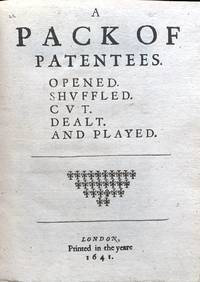
1641ref. 17940London: n.p. 1641. FIRST EDITION. Type ornament device on title and woodcut headpiece. Polished calf signed “F. Bedford triple gilt fillet round sides spine gilt a.e.g. From the library of Lord Fairfax of Cameron with his armorial bookplate and the Huth bookplate lot 5630 Sotheby’s sale of July 17 1917. First edition of the very rare satire on the granting of monopolies. The anonymous author piles on the criticism of monopolies and patents granted on goods such as coal soap starch leather wine salt tobacco and butter. By the reign of James I patents had become so numerous and unfairly granted that they were considered oppressive and unjust to certain classes of people especially tradesmen and manufacturers. Except for “novel inventions” the King was finally forced to revoke all existing monopolies and declare that henceforth patents were only to be used for “projects of new invention.” This “Statute of monopolies” enacted in 1624 became the foundation for all later developments in patent law in England and elsewhere. It was a fundamental landmark in the transition of Britain’s economy from the feudal to the capitalist. Unfortunately James’s successor Charles I continued to abuse the patent system and it was only during the Restoration that the abuse was finally curtailed. The present work written during the reign of Charles I bitterly describes the injustices within certain trades and industries. Wing P156; ESTC locates 4 copies in North America Harvard Huntington NYPL McGill. n.p. unknown books
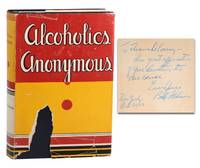
1950ref. 140949962New York: Works Publishing Inc 1950. Thirteenth Printing. Near Fine/Fair. First edition thirteenth printing. Signed by Bill Wilson and warmly inscribed on the front free endpaper "To Florence DeCoursey - In great appreciation of your devotion to our cause. Ever Yours signed Bill Wilson New York - Oct 31/50." Bound in publisher's dark blue cloth with titles stamped in blind on the upper board and in gilt on the spine. Near Fine with light wear and light lean to binding several small light water droplet stains to front cover boards worn through to several spots at top and bottom edges top corner bumped. In a tattered dust jacket missing a large piece from the bottom of the front panel. A foundational text of Alcoholics Anonymous colloquially called The Big Book signed by AA co-founder Bill Wilson. Works Publishing, Inc unknown books
1822ref. 013470anonymously hand-printed and illustrated 1822. Hardcover. Near Fine. Replicas of the first 58 volumes of Curtis Botanical Magazine rendered in hand-colored floral illustrations and holographic text edited from and amended to the original text by an anonymous English artistic hobbyist and rebound likely early 20thC in 24 volumes. William Curtis' first volume was published in 1787; Curtis's volume 59 the last in this hobbyist's project is dated 1832 which coincides when the hobbyist concluded his or her work. The magazine continues still under the auspices of Kew Gardens. The hobbyist here started this ambitious undertaking in 1822 which is known from the notation "Commenced 1822" he or she leaves on the title page of the first volume. The ten-year project concluded sometime in 1832 which the last entry is dated. The monumental work results in replications of illustrations and text for 3024 species. The drawing and hand-coloring aspires to the original works of James Sowerby the first of Curtis's artists. The hobbyist here sometimes copies sometimes adapts Sowerby's style; the result though technically primitive in execution is consistently charming. The amateur's colors are not as vibrant as Sowerby's; supplies of high-quality natural pigments would have been limited to the amateurist. Bound-in after Curtis' Volume 42 is the actual published Part 1 of "General Indexes to the Plants contained in the First Forty-Two Volumed of the Botanical Magazine" printed by Stephen Couchman and published by Sherwood Neely & Jones 1816 40 pp and Part II 1817 pp 41 - 111. Most impressive is the hobbyist's holographed index to all Curtis's 53 volumes which runs approximately 200 double-sided pages. These 58 volumes were collected into 24 bound volumes presumably organized by the hobbyist thusly and were professionally rebound in polished black half leather - with five raised bandstitles and devices in gilt to the spine over green/salmon/ black marbleized boards with marbleized edges - by appearances sometime in the first quarter of the 20thC by an anonymous binder. The bindings are of highest quality. Laid-in to Volume 1 is the original bill of sale for the work from Henry A. Martin print dealer and publisher of Washington DC dated 11/24/1916. The original bindings were likely calf which with age would have called for some kind of rebinding here handsomely executed. anonymously hand-printed and illustrated hardcover books