(anonymous)ABAA
263.207 resultados
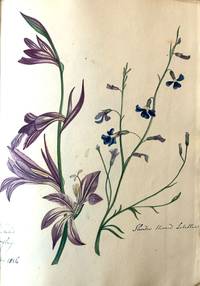
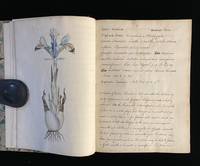
1822ref. 013470anonymously hand-printed and illustrated 1822. Hardcover. Near Fine. Replicas of the first 58 volumes of Curtis Botanical Magazine rendered in hand-colored floral illustrations and holographic text edited from and amended to the original text by an anonymous English artistic hobbyist and rebound likely early 20thC in 24 volumes. William Curtis' first volume was published in 1787; Curtis's volume 59 the last in this hobbyist's project is dated 1832 which coincides when the hobbyist concluded his or her work. The magazine continues still under the auspices of Kew Gardens. The hobbyist here started this ambitious undertaking in 1822 which is known from the notation "Commenced 1822" he or she leaves on the title page of the first volume. The ten-year project concluded sometime in 1832 which the last entry is dated. The monumental work results in replications of illustrations and text for 3024 species. The drawing and hand-coloring aspires to the original works of James Sowerby the first of Curtis's artists. The hobbyist here sometimes copies sometimes adapts Sowerby's style; the result though technically primitive in execution is consistently charming. The amateur's colors are not as vibrant as Sowerby's; supplies of high-quality natural pigments would have been limited to the amateurist. Bound-in after Curtis' Volume 42 is the actual published Part 1 of "General Indexes to the Plants contained in the First Forty-Two Volumed of the Botanical Magazine" printed by Stephen Couchman and published by Sherwood Neely & Jones 1816 40 pp and Part II 1817 pp 41 - 111. Most impressive is the hobbyist's holographed index to all Curtis's 53 volumes which runs approximately 200 double-sided pages. These 58 volumes were collected into 24 bound volumes presumably organized by the hobbyist thusly and were professionally rebound in polished black half leather - with five raised bandstitles and devices in gilt to the spine over green/salmon/ black marbleized boards with marbleized edges - by appearances sometime in the first quarter of the 20thC by an anonymous binder. The bindings are of highest quality. Laid-in to Volume 1 is the original bill of sale for the work from Henry A. Martin print dealer and publisher of Washington DC dated 11/24/1916. The original bindings were likely calf which with age would have called for some kind of rebinding here handsomely executed. anonymously hand-printed and illustrated hardcover books
1812ref. G7542Original Watercolours of Plants Including American Small folio; contemp. half calf with title on spine "drawings of plants". Small folio.On front pastedown: "M.H. Speirs 1820. Beautiful album with 53 high-quality original watercolour drawings mostly with flower names in English or Latin and mainly dated from 1812 to April 1817. - 2 plates folded in the margins. Slightly foxed. Contemporary half leather spine rubbed. Predominantly with flower names in English and Latin and Format ca. 14-24: 10-17 cm; on firm paper chamois format ca. 28 : 18 cm. Illustrations of lilies and aloe as well as numerous American flowers "Virginian Dragonhead" "American Atragen" "Virginian Platonica" and many more "Chinese Epidendrum".
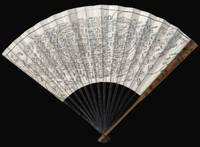
1822ref. 14997Guangzhou c1822. 302 by 500mm. 12 by 19.75 inches. Woodcut on paper mounted on wooden sticks. A rare Chinese fan depicting the provincial city of Guangdong province which is now part of Guangzhou city. Guangzhoufu Guangzhou prefecture is depicted at the centre encircled by city wall. The names of streets bridges temples forts rivers and mountains are marked in Chinese and represented by two-dimensional diagrams. Several famous sites can be identified on the map for example immediately below the middle of the top rim is depicted a pagoda and marked in Chinese: Wucenglou Five-Storied Pagoda which now is known as Zhenhailou Sea-Guardian Building. It is located in Yuexiu Park in central Guangzhou and now houses the Guangzhou Museum. It was first built in 1380 at the beginning of the Ming dynasty by the Yongjia Marquis Zhu Liangzu . The tower is 92 feet 25 meters in height 102 feet 31 meters in width and 52 feet 16 meters in depth. Above the lower rim to the left is a house with two floors symbolising a temple marked as " ". Haitongsi is a Buddhist temple and monastery on Henan Island in Guangzhou. The official English form of the name is 'Hoi Tong Monastery' a transcription of the Cantonese pronunciation of the Chinese translation of the Indian Buddhist monk S garadhvaja. The monastery was first established as the Qianqiu Temple under the Southern Han a tenth century Tang successor state whose capital was at Xingwang now Guangzhou. The walled city lay north of the Pearl River while Henan Island and the monastery lay to its south. By the end of the Ming the temple operated within the private garden of Guo Longyue who was responsible for renaming it after the Buddhist monk S garadhvaja. The temple complex was particularly important to foreign visitors as it was one of the few locations in Guangzhou Canton open to them before the First Opium War. unknown
1732ref. 59418Ca 1732. Hardcover. Very Good Solid Rebacked Retaining Lable Contents Clean Wear At Extremities and Loss To Top Of Original Spine And Along the Hinges Panel Decorated Partial Darkened Suede . Folio Six RAised Bands Suede Leather Royal Emblazonded Binding In Contmporary Calf Boards With Blind Roll-Stamps and Fleurons Coat Of Arms In The Middle Red Sprinkled Edges. Figures Large Lettered Caligraphic Headings. This Extensive Manuscript Appears Designed For Private Tutoring Young Men of Mathematical Calculation Navigation etc. Blank Pages At the rear This is a Rare Important Manuscript That Covers Major Areas Of Science Essential In The Training Of A Young Royal Destined To Be In The Navy. Coat of Arms Has Moto: Dieu et mon droit French for God and my Right. hardcover
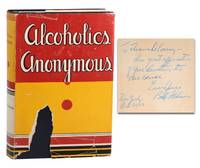
1950ref. 140949962New York: Works Publishing Inc 1950. Thirteenth Printing. Near Fine/Fair. First edition thirteenth printing. Signed by Bill Wilson and warmly inscribed on the front free endpaper "To Florence DeCoursey - In great appreciation of your devotion to our cause. Ever Yours signed Bill Wilson New York - Oct 31/50." Bound in publisher's dark blue cloth with titles stamped in blind on the upper board and in gilt on the spine. Near Fine with light wear and light lean to binding several small light water droplet stains to front cover boards worn through to several spots at top and bottom edges top corner bumped. In a tattered dust jacket missing a large piece from the bottom of the front panel. A foundational text of Alcoholics Anonymous colloquially called The Big Book signed by AA co-founder Bill Wilson. Works Publishing, Inc unknown
1950ref. 140949962New York: Works Publishing Inc 1950. Thirteenth Printing. Near Fine/Fair. First edition thirteenth printing. Signed by Bill Wilson and warmly inscribed on the front free endpaper "To Florence DeCoursey - In great appreciation of your devotion to our cause. Ever Yours signed Bill Wilson New York - Oct 31/50." Bound in publisher's dark blue cloth with titles stamped in blind on the upper board and in gilt on the spine. Near Fine with light wear and light lean to binding several small light water droplet stains to front cover boards worn through to several spots at top and bottom edges top corner bumped. In a tattered dust jacket missing a large piece from the bottom of the front panel. A foundational text of Alcoholics Anonymous colloquially called The Big Book signed by AA co-founder Bill Wilson. Works Publishing, Inc unknown books
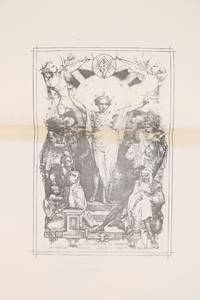
1870ref. 90176Paris: Teissier et Cie 1870. Fine. ""Extremely rare and probably unique collection of 38 lithographed Masonic plates"" Teissier et Cie Paris s. d. 1870 32.5 x 49.5 cm Relié Paris Teissier et Cie undated circa 1868-1870. Folio 38 leaves mounted on guards 32.5 x 49.5 cm. An exceptionally rare collection probably unique in this form comprising thirty-eight proofs and working states of lithographed Masonic plates most designed to be viewed across a double page. Numbered in red pencil from 1 to 40 in a discontinuous sequence including several bis plates. Caillet and Dorbon describe the Rameau d'or d'Éleusis to which part of this iconography relates but record no comparable independent corpus of working plates. Modern full black cloth plain spine printed title label mounted on the front board. Repaired tear in the left margin of plate 10; two marginal corner tears to plate 12 neither affecting the image. The plates bear the imprint of the Masonic bookseller Teissier et Cie and were lithographed principally by J. Rigal et Cie with several by A. Appert. Their preparatory nature is visible in the objects themselves: manuscript numbering bis plates corrections and most strikingly the pencilled instruction ""à effacer"" ""to be deleted"" on several compositions. The volume is therefore more than a collection of illustrations removed from a published book. It preserves traces of their production correction and circulation within the workshop. The opening sheets are dominated by the large allegorical compositions of Charles-Désiré Rambert several dated 1862. Beraldi specifically records a series for the Rameau d'or d'Éleusis under Rambert's name in that year. Jacques-Étienne Marconis de Nègre's work first published in 1861 was conceived as a vast synthesis of Masonic history rites degrees and symbolism. Its author was the leading exponent of the Rite of Memphis one of the so-called Egyptian currents of French Freemasonry. In the published Rameau d'or the illustrative apparatus was limited to a small group of major symbolic lithographs by Rambert. The present collection opens onto a much wider body of material: alongside compositions directly associated with that undertaking are designs for diplomas emblems and ornamental borders intended for other Masonic purposes. It thus allows us to pass from the finished book to the stock of images from which a specialist Masonic publisher could draw. Rambert was particularly suited to such imagery. A draughtsman and lithographer specialising under the Second Empire in allegorical decorative and visionary compositions he had developed since the 1840s a visual language in which symbols accumulate within large moral and philosophical scenes. Jean-Alfred Fournier who knew him remembered a man ""built like Hercules"" with a remarkably expressive face and ""the eyes of an inspired man"" a portrait later recorded by Beraldi. Alongside these images associated with the Rite of Memphis is a second group more directly connected with the institutional practice of Freemasonry. Several are designs for diplomas intended for the Grand Orient of Haiti founded in 1824; others refer to Rome or Venezuela. The same Parisian presses were thus producing both Marconis's initiatory imagery and official documents intended to identify ornament or legitimise brethren and lodges thousands of miles away. The Teissier firm stood at the centre of this circulation. Charles-Adolphe Teissier bookseller publisher and manufacturer and dealer in Masonic regalia was himself an officer of the Grand Orient de France. After his death in 1863 the business continued under the name Teissier et Compagnie. Some sheets still bear the address 37 rue de Grenelle-Saint-Honoré while others give 37 rue Jean-Jacques-Rousseau. The street was officially renamed on 2 April 1868. The coexistence of these addresses helps explain the formation of the collection. Individual compositions may have been drawn and lithographed at differen Teissier et Cie hardcover
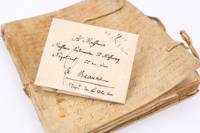
1787ref. 92325Beaune: s. n. 1787. Fine. Rare 18th-century Register of the Burgundy Wine Trade s. n. Beaune 1787 17.8 x 22.1 cm Relié Ledger of wine sales for shipment kept by a Beaune wine-trading house 63 leaves 124 pp. written in ink followed by 26 blank leaves. The entries span the years 1787-1795 followed by a few pages dated 1809 containing draft letters often sent from Koblenz relating to delivery probably drafted by intermediaries. A rare order book from a wine-trading house probably the Patriarche constituting one of the earliest surviving records of their trading activity. This unpublished first-hand source fills gaps in our knowledge of the house's early years shedding light on export routes and the prices charged for the various appellations and vintages. Limp vellum with ties the covers made from a reused skin bearing text in ink the lower cover split in several places with tears affecting the spine in two places. The register covers the years 1787-1795 for a trading house that benefited from an edict issued in 1776 under Turgot's influence which fully liberalized the free circulation and trade of wine throughout the kingdom Jean-Marc Bonnefoy Le monde de la vigne dans la région de Nolay de la fin du XVIIIe siècle à 1914 p. 95. Entries are recorded from September 1787 onward only a few months after Thomas Jefferson's visit to the region during which he delighted in the wines of Meursault Pommard and Volnay as recorded in his travel notes Notes of a Tour into the Southern Parts of France. The eighteenth century saw the founding of some fifteen trading houses among them Patriarche established in 1780. Several elements point to this firm in particular: a bibliographer's note on the paste-down together with an 1809 letter accompanying the register addressed to Patriarche et Misserey by a delinquent debtor pleading for an extension to settle his account. Between 1808 and 1811 the merchants' directory indeed lists Patriarche et Misserey as partners under Beaune. Several grades appear first second and third quality as well as old wine along with the true appellations of origin a practice that became widespread from the 1730s onward: Meursault Beaune Volnay Pommard Chassagne namely. The earliest vintage recorded dates from 1784. The clientele consisted mainly of wine professionals merchants dealers and innkeepers with the remainder drawn from the social elite: holders of offices and official posts wealthy private individuals or clergymen pooling their orders. Trade extended across northern and eastern France occasionally Normandy as well as Paris Vienna Turin Brussels and Switzerland Basel Bern and Neuchâtel. Most orders are recorded in feuillettes bottles or pièces more rarely in quarteaux while prices are generally given according to the quantity of a queue around 500 bottles. Business was brought in through various intermediaries among them Canon Fromageot of Beaune whose reputation was praised throughout Europe by Count von Rosenberg a frequent presence in the register's entries for his numerous wine orders to be sent to Austria: Count Rosenberg tells me that his correspondent for Burgundy wine is Abbé Fromageot canon of Beaune that a pièce costs him 240 livres tournois and that I need only have it brought down the Rhône for him. Europäische Aufklärung Zwischen Wien und Triest. Die Tagebücher des Gouverneurs Karl Graf Zinzendorf 1776-1782. Certain bottles were sometimes to be marked with monograms noted in the margins. Most orders are specific at times cryptic neither old nor new; with body; no vintage specified only the time at which it should be bottled - a full-bodied wine from Beaune or Pommard sic is wanted and include vintages colour or even rather amusing remarks: not good do not ship !. An exceedingly rare wine-trade archival document from the turbulent times of the Revolution and the Directory offering new data on major houses whose s. n. hardcover
1920ref. 845121920. Fine. 1920 15 x 869 cm Un rouleau comportant 12 peintures sur soie Painted handscroll or makimono comprising twelve paintings on silk with a transparent ground mounted end to end to form a long continuous strip measuring 840 cm - that is twelve panels of 70 x 14 cm - laid down on paper and edged with gold along its slips. When fully unrolled the supporting paper strip measures 869 cm. Scroll mounted on a wooden rod and preserved in its original green silk wrapper. Some foxing and localised staining affect certain panels without impairing the harmony of the whole which remains in satisfactory condition. Unsigned this scroll is stylistically related to the circle of Miyagawa Shuntei 1873-1914 a painter and illustrator trained under Tomioka Eisen and may be dated to the early decades of the twentieth century. This scroll belongs to the late production of the makura-e genre the pillow pictures better known today as shunga. After the Meiji Restoration their production declined sharply under the effect of a policy of moral modernisation in Japan. Police raids carried out notably between 1895 and 1905 led to the confiscation and destruction of numerous works; the subject long remained taboo until the Taish era. This scarcity accounts for the singular almost surviving presence of works executed during this period. The hypothesis of a link with the circle of Miyagawa Shuntei is not without foundation. A pupil of the painter and illustrator Tomioka Eisen Shuntei belonged to that milieu of printmaking and painting at the end of the Meiji period in which the elegance of the figures the delicacy of the colours and the suppleness of the line could still be placed at the service of subjects that official morality was already striving to make disappear. Several shunga works attributed to Shuntei and dated to around 1900 are recorded in reference databases on Japanese prints attesting at least to the plausibility of his occasional practice of the genre during his lifetime. The narrow continuous-strip composition proper to the makimono gives the ensemble its distinctive rhythm: the scenes are not offered to the eye all at once; they are discovered gradually as the scroll is unrolled as though the support itself governed expectation restraint and then revelation. A complete and rare ensemble of twelve paintings on silk belonging to late shunga preserved in its original scroll mounting with a refined palette and in overall satisfactory condition. A work discreet by necessity precious by survival whose cautious attribution to the circle of Miyagawa Shuntei further enhances the charm of images that in order to endure had to learn the art of concealment. unknown
1880ref. 859371880. Fine. s. d. 1880 33.50 x 45.50 cm relié Accordion-fold album orihon containing twelve large paintings on silk each measuring 24 x 34.5 cm depicting couples entwined in carnal intimacy. Each scene is skilfully framed by elements of domestic architecture - screens sliding partitions windows - which make the interior itself the theatre of the gaze in a staging of voyeuristic revelation characteristic of Japanese erotic art. The silks are loosely mounted within movable paper frames. Boards covered in patterned green silk; label on the upper board no longer present. Fabric faded a few perforations traces of dampstaining to the lower part of the upper board small losses at the edges splitting at the joint at head and foot of the upper board. These paintings remarkable for their great delicacy of execution and refined compositional elegance display a clear affinity of manner with the work of the painter and illustrator Yamamoto Shun 1870-1965 a transitional figure between late ukiyo-e and shin-hanga particularly celebrated for his bijin prints including the series Ima Sugata 1906-1909. No autograph shunga production by Shun is however documented to date: this attribution should therefore be understood as one of stylistic affinity within the well-attested tradition of erotic albums painted in the manner of or after great names of printmaking. It may be noted that a comparable album of erotic paintings on silk sold at Bonhams under the explicit designation After Yamamoto Shoun was dated to the Shwa era. Painted shunga nikuhitsu shunga intended for a wealthy clientele did indeed continue discreetly well after the end of the Edo period despite the official opprobrium directed at the genre from the Meiji era onwards. A rare complete ensemble of twelve compositions remarkable for their chromatic unity and great elegance of execution standing in the finest tradition of Japanese painted shunga and to be associated with the stylistic world of Yamamoto Shun. hardcover
ref. 17877France first half of the 15th century. Single column 21 lines of text written in black and red in a beautiful gothic book hand. Illuminated initial in gold red blue green and white; ruled in red rubrics in red an numerous initials in red and blue. Contemporary blind-stamped calf over wooden boards raised bands two brass fore-edge clasps missing. A very beautiful manuscript from the library of antiquary William Henry Blacking and of George Dunn of Woolley Hall near Maidenhead with their 2 bookplates with coat of arms on paste down. A very attractive collection of sermons and homilies preserved in its original panel-stamped binding with tools. Presumably the personal pocket manuscript of a preacher presbyter Johannes Venuto. Venuto is an Italian originally Tuscan name. The note on the front flyleaf is an invocation to the Lord for having the sins forgiven and removed. The big initial was clearly drawn later as it covers the original text. Originally it is assumed that a calendar occupied the first 77 pages and that calendar has been removed. George Dunn 1865-1912 of Woolley Hall near Maidenhead Berkshire was an English bibliophile and keen student of paleography and early printing. Throughout his life he built up an impressive library at Woolley Hall collecting early English law books medieval manuscripts early printed books including volumes from unusual towns and presses. After his death in 1912 his library was broken up and sold off at Sotheby's between 1913 and 1917 realising over £30000. unknown
ref. 17877France first half of the 15th century. Single column 21 lines of text written in black and red in a beautiful gothic book hand. Illuminated initial in gold red blue green and white; ruled in red rubrics in red an numerous initials in red and blue. Contemporary blind-stamped calf over wooden boards raised bands two brass fore-edge clasps missing. A very beautiful manuscript from the library of antiquary William Henry Blacking and of George Dunn of Woolley Hall near Maidenhead with their 2 bookplates with coat of arms on paste down. A very attractive collection of sermons and homilies preserved in its original panel-stamped binding with tools. Presumably the personal pocket manuscript of a preacher presbyter Johannes Venuto. Venuto is an Italian originally Tuscan name. The note on the front flyleaf is an invocation to the Lord for having the sins forgiven and removed. The big initial was clearly drawn later as it covers the original text. Originally it is assumed that a calendar occupied the first 77 pages and that calendar has been removed. George Dunn 1865-1912 of Woolley Hall near Maidenhead Berkshire was an English bibliophile and keen student of paleography and early printing. Throughout his life he built up an impressive library at Woolley Hall collecting early English law books medieval manuscripts early printed books including volumes from unusual towns and presses. After his death in 1912 his library was broken up and sold off at Sotheby's between 1913 and 1917 realising over £30000. unknown books
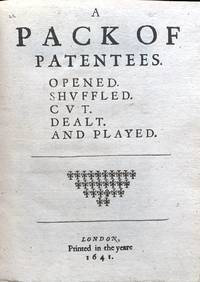
1641ref. 17940London: n.p. 1641. FIRST EDITION. Type ornament device on title and woodcut headpiece. Polished calf signed “F. Bedford triple gilt fillet round sides spine gilt a.e.g. From the library of Lord Fairfax of Cameron with his armorial bookplate and the Huth bookplate lot 5630 Sotheby’s sale of July 17 1917. First edition of the very rare satire on the granting of monopolies. The anonymous author piles on the criticism of monopolies and patents granted on goods such as coal soap starch leather wine salt tobacco and butter. By the reign of James I patents had become so numerous and unfairly granted that they were considered oppressive and unjust to certain classes of people especially tradesmen and manufacturers. Except for “novel inventions” the King was finally forced to revoke all existing monopolies and declare that henceforth patents were only to be used for “projects of new invention.” This “Statute of monopolies” enacted in 1624 became the foundation for all later developments in patent law in England and elsewhere. It was a fundamental landmark in the transition of Britain’s economy from the feudal to the capitalist. Unfortunately James’s successor Charles I continued to abuse the patent system and it was only during the Restoration that the abuse was finally curtailed. The present work written during the reign of Charles I bitterly describes the injustices within certain trades and industries. Wing P156; ESTC locates 4 copies in North America Harvard Huntington NYPL McGill. n.p. unknown
1641ref. 17940London: n.p. 1641. FIRST EDITION. Type ornament device on title and woodcut headpiece. Polished calf signed “F. Bedford triple gilt fillet round sides spine gilt a.e.g. From the library of Lord Fairfax of Cameron with his armorial bookplate and the Huth bookplate lot 5630 Sotheby’s sale of July 17 1917. First edition of the very rare satire on the granting of monopolies. The anonymous author piles on the criticism of monopolies and patents granted on goods such as coal soap starch leather wine salt tobacco and butter. By the reign of James I patents had become so numerous and unfairly granted that they were considered oppressive and unjust to certain classes of people especially tradesmen and manufacturers. Except for “novel inventions” the King was finally forced to revoke all existing monopolies and declare that henceforth patents were only to be used for “projects of new invention.” This “Statute of monopolies” enacted in 1624 became the foundation for all later developments in patent law in England and elsewhere. It was a fundamental landmark in the transition of Britain’s economy from the feudal to the capitalist. Unfortunately James’s successor Charles I continued to abuse the patent system and it was only during the Restoration that the abuse was finally curtailed. The present work written during the reign of Charles I bitterly describes the injustices within certain trades and industries. Wing P156; ESTC locates 4 copies in North America Harvard Huntington NYPL McGill. n.p. unknown books
2013ref. 81725Valencia: Scriptorium S.L s. XIII - -2013. Scriptorium, S.L unknown
1880ref. 85937s. d. [1880] | 33.50 x 45.50 cm | relié
1920ref. 845121920 | 15 x 869 cm | Un rouleau comportant 12 peintures sur soie
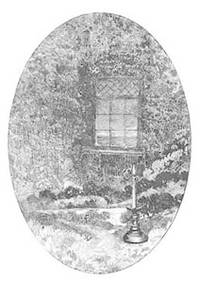
ref. CNAP063bSan Francisco: The Arion Press 2002. First and Limited Edition. Hardcover. New. Conner Bruce. Octavo 10.25 by 7 inches. The type is English Old Style composed and cast in Monotype by Mackenzie & Harris San Francisco. The text paper is Ruysdael an all-cotton machine-made sheet. The paper for the prints is T. H. Saunders buff loan an all-cotton mouldmade sheet. The ink-blot drawings in gray beneath the folios and the rebus on the title page were printed from photopolymer plates. Printing of the type and plates was by letterpress. The book is bound in yellow cloth with an ink-blot pattern in black from a drawing by an anonymous artist that is continuous front to back interrupted by a black cloth spine. The book is enclosed in a black slipcase. Both book and slipcase have yellow spine labels. The six images are photogravures from collages of wood engravings. The original collages are ovals 6.5 by 4.5 inches. The scale of the images for the book is the same as the original collages. Book with suite of six larger photogravures by Conner on handmade paper with prose-poems by Todd. The book is octavo in format 10-1/4 by 7 inches. The six images in the extra suite are 17-1/4 by 12-3/4 inches. The edition of the suite of prints with the book is limited to 30 numbered sets for sale. . "The Ballad of Lemon and Crow" is a work of fiction by a San Francisco writer who grew up in Texas and whose regional sensibility is keenly felt in this tale about three generations of neighbors in rural Oklahoma. This limited edition is its first publication. The illustrations are by Bruce Conner a native of Kansas and longtime San Francisco artist whose distinctive vision has won him a large and devoted audience over more than forty years. The artist and author first met in Omaha in 1953 as members of a Midwestern literary and artistic circle that became associated with the Beat Generation. Bruce Conner's work is owned by major museums; after 2000 Conner announced he was retiring and would not sign or claim any new work as his own. Since then anonymous artists have collaborated to create additional work in a manner similar to that of Bruce Conner. ___POSTAGE: International customers please note that additional postage may apply as the standard does not always cover costs; please inquire for details. ___Swan's Fine Books is pleased to be a member of the ABAA ILAB and IOBA and we stand behind every book we sell. Please contact us with any questions you may have we are here to help. The Arion Press hardcover
ref. CNAP063bSan Francisco: The Arion Press 2002. First and Limited Edition. Hardcover. New. Conner Bruce. Octavo 10.25 by 7 inches. The type is English Old Style composed and cast in Monotype by Mackenzie & Harris San Francisco. The text paper is Ruysdael an all-cotton machine-made sheet. The paper for the prints is T. H. Saunders buff loan an all-cotton mouldmade sheet. The ink-blot drawings in gray beneath the folios and the rebus on the title page were printed from photopolymer plates. Printing of the type and plates was by letterpress. The book is bound in yellow cloth with an ink-blot pattern in black from a drawing by an anonymous artist that is continuous front to back interrupted by a black cloth spine. The book is enclosed in a black slipcase. Both book and slipcase have yellow spine labels. The six images are photogravures from collages of wood engravings. The original collages are ovals 6.5 by 4.5 inches. The scale of the images for the book is the same as the original collages. Book with suite of six larger photogravures by Conner on handmade paper with prose-poems by Todd. The book is octavo in format 10-1/4 by 7 inches. The six images in the extra suite are 17-1/4 by 12-3/4 inches. The edition of the suite of prints with the book is limited to 30 numbered sets for sale. . "The Ballad of Lemon and Crow" is a work of fiction by a San Francisco writer who grew up in Texas and whose regional sensibility is keenly felt in this tale about three generations of neighbors in rural Oklahoma. This limited edition is its first publication. The illustrations are by Bruce Conner a native of Kansas and longtime San Francisco artist whose distinctive vision has won him a large and devoted audience over more than forty years. The artist and author first met in Omaha in 1953 as members of a Midwestern literary and artistic circle that became associated with the Beat Generation. Bruce Conner's work is owned by major museums; after 2000 Conner announced he was retiring and would not sign or claim any new work as his own. Since then anonymous artists have collaborated to create additional work in a manner similar to that of Bruce Conner. ___POSTAGE: International customers please note that additional postage may apply as the standard does not always cover costs; please inquire for details. ___Swan's Fine Books is pleased to be a member of the ABAA ILAB and IOBA and we stand behind every book we sell. Please contact us with any questions you may have we are here to help. The Arion Press hardcover books
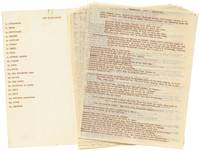
1940ref. 5238661940. Near Fine. An original unpublished typescript of a mid-20th Century minstrelsy together with six mimeographed copies of the typescript. The original typescript consists of 12 quarto pages typed in orange on rectos only paginated in ink by hand and a one-page List of Characters. In fine condition. The six mimeographed copies consist of 12 folio sheets 9" x 14" stapled at the topedge onto a cardboard back cover accompanied by two mimeographed copies of the list of characters on separate quarto sheets. The mimeographed copies are lightly toned three or four copies have some slight staining one copy has an owner name in ink and one is lightly annotated near fine or better overall. The list of 21 characters includes: The Interlocutor Hambones Tambo Shakespeare of Harlem Seven-Up Jackson Suntan Cootie-Locks Dimwit Muskrat Geo. Washington Jones and others. The single-spaced typescript with about 50-60 lines per page is laced with racist language and stereotypes and includes dialogue musical cues stage directions and narration of the Interlocutor; it ends with one of two poems by Shakespeare of Harlem: “Honey dis am Rufus Tappin’ on yoh window-pane … ” and a skit by Seven-Up Jackson: “the only known real live gold-fish swallowing act in history … .” Internal evidence including references to an atomic bomb attack on Tokyo suggests that the play was likely written late in or soon after the Second World War. In 1953 two popular films with similar titles were released: Walt Disney’s Thanksgiving Day Mirthquakes and Merry Mirthquakes featuring a young Liberace as Master of Ceremonies. It is also possible that the character “Shakespeare of Harlem” is an allusion to Langton Hughes whose book of poems “Shakespeare of Harlem” was first published in 1942. An unpublished and unrecorded American minstrelsy well-preserved in near fine condition. The presence of multiple copies inveighs strongly that these scripts were actively used in a group production. unknown
1940ref. 5238661940. Near Fine. An original unpublished typescript of a mid-20th Century minstrelsy together with six mimeographed copies of the typescript. The original typescript consists of 12 quarto pages typed in orange on rectos only paginated in ink by hand and a one-page List of Characters. In fine condition. The six mimeographed copies consist of 12 folio sheets 9" x 14" stapled at the topedge onto a cardboard back cover accompanied by two mimeographed copies of the list of characters on separate quarto sheets. The mimeographed copies are lightly toned three or four copies have some slight staining one copy has an owner name in ink and one is lightly annotated near fine or better overall. The list of 21 characters includes: The Interlocutor Hambones Tambo Shakespeare of Harlem Seven-Up Jackson Suntan Cootie-Locks Dimwit Muskrat Geo. Washington Jones and others. The single-spaced typescript with about 50-60 lines per page is laced with racist language and stereotypes and includes dialogue musical cues stage directions and narration of the Interlocutor; it ends with one of two poems by Shakespeare of Harlem: “Honey dis am Rufus Tappin’ on yoh window-pane … ” and a skit by Seven-Up Jackson: “the only known real live gold-fish swallowing act in history … .” Internal evidence including references to an atomic bomb attack on Tokyo suggests that the play was likely written late in or soon after the Second World War. In 1953 two popular films with similar titles were released: Walt Disney’s Thanksgiving Day Mirthquakes and Merry Mirthquakes featuring a young Liberace as Master of Ceremonies. It is also possible that the character “Shakespeare of Harlem” is an allusion to Langton Hughes whose book of poems “Shakespeare of Harlem” was first published in 1942. An unpublished and unrecorded American minstrelsy well-preserved in near fine condition. The presence of multiple copies inveighs strongly that these scripts were actively used in a group production. unknown books
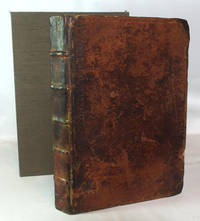
1726ref. TB32377Boston: Benjamin Eliot 1726. First Edition. Very good in a contemporary full leather binding with five raised bands on the spine with no dates or titles and with the boards decorated with blind embossing. The spine appears to be rebacked in a style comparable to the rough nature of the boards. A quarto of 11 1/2 by 7 3/8 inches with damage to the leather at the tips of the boards and scars blemishes and small chips to the leather. The front paste down shows three brief notes from three early prior owners the second one of which notes the date of purchase 1752 from a John Hill Esq. The title page has been professionally backed to protect numerous chips and has been signed by a more recent prior owner in the margins. This charter which was originally dated on May 14 1692 included Massachusetts Bay Colony Plymouth Colony Martha's Vineyard Nantucket the Province of Maine and parts of what is now Nova Scotia. It is bound in with The Acts And Laws of His Majesty's Province of the Massachusetts Bay in New England. This volume is contained and protected within a fine dark brown cloth covered slip case. The Charter is printed in 13 pages which is followed by a two page "Explanatory Charter granted by His Majesty King George" which is followed by "The Table" Index of 17 pages. That is followed by "Acts and Laws Of HIs Majesty's Province Of The Massachusetts Bay In New England printed in Boston in 1716 of 456 pages. Benjamin Eliot hardcover
1726ref. TB32377Boston: Benjamin Eliot 1726. First Edition. Very good in a contemporary full leather binding with five raised bands on the spine with no dates or titles and with the boards decorated with blind embossing. The spine appears to be rebacked in a style comparable to the rough nature of the boards. A quarto of 11 1/2 by 7 3/8 inches with damage to the leather at the tips of the boards and scars blemishes and small chips to the leather. The front paste down shows three brief notes from three early prior owners the second one of which notes the date of purchase 1752 from a John Hill Esq. The title page has been professionally backed to protect numerous chips and has been signed by a more recent prior owner in the margins. This charter which was originally dated on May 14 1692 included Massachusetts Bay Colony Plymouth Colony Martha's Vineyard Nantucket the Province of Maine and parts of what is now Nova Scotia. It is bound in with The Acts And Laws of His Majesty's Province of the Massachusetts Bay in New England. This volume is contained and protected within a fine dark brown cloth covered slip case. The Charter is printed in 13 pages which is followed by a two page "Explanatory Charter granted by His Majesty King George" which is followed by "The Table" Index of 17 pages. That is followed by "Acts and Laws Of HIs Majesty's Province Of The Massachusetts Bay In New England printed in Boston in 1716 of 456 pages. Benjamin Eliot hardcover books
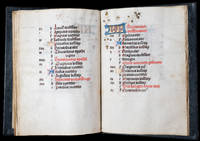
1425ref. 0526> i 12 i leaves ruled in ink written in Gothic textualis in seventeen lines per page in brown and red ink; two-line KL initials in burnished gold on red grounds with blue borders and pen-drawn flourishing of geometric and foliate forms accented with liquid gold. Bound in modern black leather over boards the spine lettered in gilt capitals "16th Century Manuscript Calendar." Dimensions: 147 × 110 mm. Manuscript (Book of Hours) hardcover
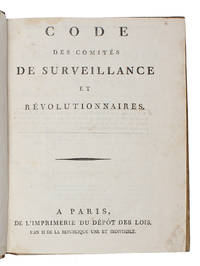
1793ref. 60748Paris Impremerie du depot des lois An II 1793. 4to. In contemporary half calf with gilt lettering and ornamentation to spine. Wear to extremities. Upper part of back hinge split with minor loss of letters. Small dampstain to upper inner margin otherwise a nice copy. 2 VII 2-116 100 8 pp. Exceedingly rare first edition of this highly interesting document being the Code of the Committees of Surveillance containing 106 regulations and guidelines for the functioning of these committees during the French Revolution. The Committees of Surveillance were established during the Reign of Terror September 5 1793 - July 27 1794 as part of the revolutionary government's efforts to identify and suppress counter-revolutionary activities. These committees were tasked with monitoring individuals' behavior enforcing revolutionary laws and ensuring loyalty to the revolutionary government. The document outlines the powers duties and procedures of these committees as well as the penalties for those found to be opposing the revolution providing a unique and fascinating insight into the legal and administrative framework of revolutionary France – arguable one of the most profound and radical moments in modern European history. The Committee of Surveillance in France during 1793 was established as a part of the radical phase of the French Revolution. Its function was to oversee and monitor the activities of suspected counter-revolutionaries and enemies of the Revolution as well as to enforce laws related to internal security and revolutionary principles. The committee was tasked with identifying individuals or groups deemed to be a threat to the revolutionary government often leading to arrests interrogations and in some cases executions by the Revolutionary Tribunal. It played a significant role in the Reign of Terror a period marked by extreme political violence and repression in France. The present work is of the utmost scarcity. We have not been able to trace a single copy at auction and OCLC only lists one copy in Paris. Nadaillac Catalogue d’une Collection Importante Sur la Revolution Francaise 724 unknown