170.472 resultados
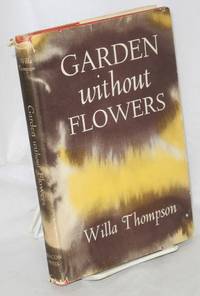
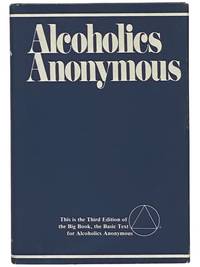
1981ref. 2342333New York: Alcoholics Anonymous World Services Inc 1981. Third Edition. Hard Cover. Very Good/Very Good. 6x1x8. Third edition 10th printing 1981. From foreword footnote: 'In 1981 over 42000 groups in 110 countries. about one-third are women; 14.7% are 30 and under.' Jacket lightly rubbed and soiled. xxx 575 pp. Includes: Preface; Foreword to the First Edition; Foreword to the Second Edition; Foreword to the Third Edition; The Doctor's Opinion; Bill's Story; There is a Solution; More About Alcoholism; We Agnostics; How it Works; Into Action; Working with Others; To Wives; The Family Afterward; To Employers; A Vision for You; PERSONAL STORIES: PIONEERS OF A.A.: Doctor Bob's Nightmare; Alcoholic Anonymous Number Three; He Had to Be Shown; He Thought He Could Drink Like a Gentleman; Women Suffer Too; The European Drinker; The Vicious Cycle; The News Hawk; From Farm to City; The Man Who Mastered Fear; He Sold Himself Short; Home Brewmeister; The Keys of the Kingdom; THEY STOPPED IN TIME: Too Young'; Fear of Fear; Those Golden Years; The Housewife Who Drank at Home; Lifesaving Words; Physician Heal Thyself!; A Teen-Ager's Decision; Rum Radio and Rebellion; Any Day Was Washday; It Might Have Been Worse; A Flower of the South; Calculating the Costs; Stars Don't Fall; Growing Up All Over Again; Unto the Second Generation; Me an Alcoholic'; Doctor Alcoholic Addict; THEY LOST NEARLY ALL: A Five-Time Loser Wins; Promoted to Chronic; Join the Tribe!; Belle of the Bar; Jim's Story; Our Southern Friend; The Prisoner Freed; Desperation Drinking; The Career Officer; Another Chance; He Who Loses His Life; Freedom from Bondage; A.A. Taught Him to Handle Sobriety; APPENDICES: The A.A. Tradition; Spiritual Experience; The Medical View on A.A.; The Lasker Award; The Religious View on A.A.; How to Get in Touch with A.A. Alcoholics Anonymous World Services, Inc hardcover books
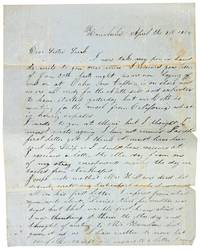
1854ref. 48560Honolulu HI 1854. Very Good. Honolulu HI: April the 19th 1854. Two-page autograph letter written on single sheet of blue paper 25.5x20cm; approximately 500 words. Deep old mail folds slightly obscuring some of the text a few small chips and brief splitting to margins else About Very Good and for the most part still quite legible. Missive from a homesick New Bedford man responding to a letter he received from his sister the day before dating three months earlier in January. "I wrote to you from Maui but thought I must write again" his ship having been delayed by his Captain who was awaiting the mail from California "which is hourly expected." The writer in an attempt to fill the second side of the leaf "for paper is scarce here and it seems a pity to send blank paper" adds a seven lined poem we have been unable to identify maybe his own work and concludes with a quick census of the ship's crew: "we have four Andrews four Henrys four Williams and four Georges there are only three of us that do not take an occasional glass three that do not swear and more than half get occasionally drunk we have four gentlemen of coulor sic four Kenakas or natives of these Islands. unknown books
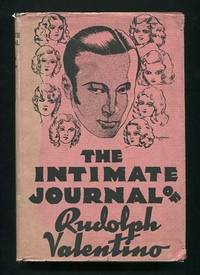
1931ref. 18378New York: William Faro Inc. Very Good in Good dj. 1931. First Edition. Hardcover. a nice clean copy with only minor shelfwear to book; the jacket has a triangular piece torn away at the top left corner of the rear panel and is modestly faded on the spine panel and along the left edge of the front panel. Valentino's utterly fascinating if utterly bogus memoir-from-beyond-the-grave presented in a series of thirty-four portentiously-titled "entries" e.g. "The Eleventh Entry." Purportedly ghost-written by Samuel Roth the book opens with the "Last Entry" Valentino's purported account of the sudden onset of his final fatal illness then proceeds into more or less standard autobiographical mode. There's a good deal about his romance with and marriage to Natascha or Natacha if you prefer Rambova nee Winifred Hudnut which is regarded by many Valentino fans as one of the more unfortunate choices-of-partner that he made during his short life and meteoric career -- although R.V. rebuts this view in The Twenty-Third Entry in which he addresses the rumors that she was controlling manipulative etc. According to dead Rudy she was "a woman of the highest culture with a sane and judicious mind and I know she is loyal to my interests and that she thoroughly knows motion pictures" and that he "would indeed be a fool" if he ignored her advice. Given how well she comes off in this account I don't think we can discount the possibility that Natascha herself might have been behind its publication. . William Faro, Inc. hardcover books
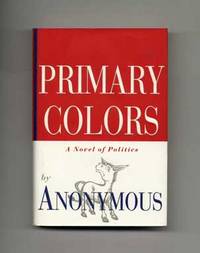
1996ref. 15531New York: Random House. Near Fine in Near Fine dust jacket. 1996. First Edition; First Printing. Hardcover. 0679448594 . A handsome first edition/first printing Near Fine condition in Near Fine dust-jacket; This is a novel about the United States Senate during the early years of the Reagan administration. It is written in the first person by one of the characters Senator Alan Broderick.; 8vo . Random House hardcover books
1760ref. 82070London: Printed for the Author: and Sold by G. Steidel 1760. Paperback. Very Good. First pamphlet: iv 48p. Second pamphlet: 34p. The two softcover pamphlet are here bound together but disbound removed from a larger bound volume with evidence of their removal along the right side. 20 cm. Printed for the Author: and Sold by G. Steidel paperback books
1916ref. 74751Paris: Henri d'Arthez 1916. Hardcover. Very Good. xvi 160p. Rebound in recent 1/4 leather. 17cm. French text. Copy No. 194 of 475 copies "sur papier verge d'Arches" out of an edition of 500 numbered copies. Henri d'Arthez hardcover books
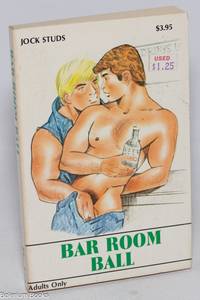
1987ref. 326205New York: Star Dist 1987. 150p. softcover in very good condition; PBO in camp pictorial wraps with old price sticker on front cover and some minor chipping to the back cover. JOCK STUDS JS-146. Star Dist unknown books
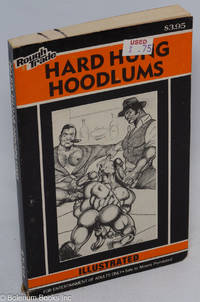
1982ref. 103434New York: Star Dist 1982. Paperback. 180p. explicit drawings price sticker on cover else a very good first printing PBO in camp pictorial wraps. Gay pulp fiction. Rough Trade RT-514. Star Dist paperback books
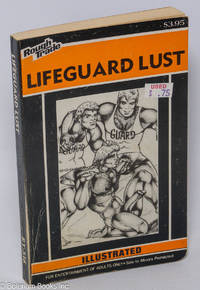
1982ref. 101006New York: Star Distributors 1982. Paperback. 180p. explicit drawings throughout very good first printing PBO in explicit camp pictorial wraps. Gay pulp fiction. Rough Trade RT-516. Star Distributors paperback books
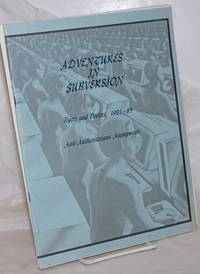
1985ref. 135787San Francisco: Oh! Press 1985. Pamphlet. 36p. staplebound pamphlet 8.5x11 inches; illus. in very good condition. Collection of fake ads and mind-bending posters published by the Oregon-based group; reproductions are in black and white. Oh! Press unknown books
1957ref. 213785Boston: Beacon Press 1957. Hardcover. 186p. bookstore rubberstamp on front pastedown endpaper else very good first edition in lightly-worn red cloth boards and edgeworn unclipped dj. European novel by white Boston author who had an affair with Chester Himes while in France. Himes claimed to have co-written the book threatening a law suit just pre-publication. Beacon Press hardcover books
1891ref. 42843London: Printed and sold by John Baker 1891. 4to. 7 1/2 x 5 1/8 inches. 471p. Garret publisher ad. Original printed wrappers This reprint was limited to 250 copies. First edition 1710 1 folio sheet very rare. Four Iroquois chiefs the fifth died en route were taken to London by Col. Peter Schuyler of Albany. They were presented to Queen Anne on April 19 1710 and entertained for some months. The Tatler no. 171 and The Spectator no 50 as part of Schuyler's policy to strenghten the Iroquois alliance against the French. It provided a great deal of contemporary detail about Native American culture specifically within the Iroquois tribe. ". and attached great observations throughout the kingdom Spectator & Tatler . Dean Swift in his letters to Stella also makes reference to the subject ." Sabin. ". Portraits of these sachems denoting the first best or most important in a set engraved contemporaneously at London in folio did not form a part of this account". Howes. Lande 228; T.P.L.145; Sabin 25282; Howes C-106; Not in Streeter. Printed and sold by John Baker unknown books
1820ref. 330917London: Longman Hurst 1820. First. hardcover. 228 pages full brown morocco decorated in gilt dentelles all edges gilt marbled end-papers. London: Longman Hurst et al 1820. First Edition. Pardoe's anonymous first book. Presentation copy "With the Author's most affectionate regards Longman, Hurst unknown books
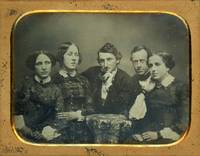
1850ref. List2204N.p. 1850. Half plate daguerreotype in case image measuring 4 7/8 x 3 1/2 inches. Some difficult-to-see scratches to the plate the most offensive across the left eye of Burritt excellent condition overall. Near Fine. A large daguerreotype of Elihu Burritt and a group of friends taken circa 1850 during the height of his career as a peace advocate. Burritt organized a series of international peace conventions during this period. He would later shift his focus to abolition supporting Free Labor Produce Associations and founding the National Compensated Emancipation Society. We are not able to identify the other subjects in the photograph. unknown books
ref. 289719Olympia WA: Genders Anonymous : CrimethInc n.d. Newsletter. Newsletter on tabloid style print 13.5x23 inch sheet in quarter folds 2p. with alternate side revealing a poster; cartoon illus. on inside unfolds to display a poem adapted from Nancy R. Smith in very good condition. Anarchist communiqué on gender abolition. Genders Anonymous : CrimethInc unknown books
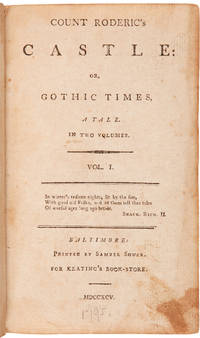
1795ref. 62704Baltimore: Printed by Samuel Sower for Keating's Book-Store 1795. Uncommon American Edition of a Rare Minerva Gothic Novel The first Baltimore printing of this gothic novel first published by the Minerva Press in the UK in 1794 with a second edition appearing the following year. There was also a Philadelphia printing in 1795 Bristol B9069 ESTC W37628 priority unknown. The narrative is set in medieval Lombardy and follows the trials and tribulations of the virtuous Rhinaldo and his beloved Isabel. Rhinaldo's father Count Roderic has been murdered and his throne seized by the usurper Astolpho who has imprisoned Isabel. The story of Rhinaldo's struggle to win back his birthright and save Isabel includes many of the traditional elements of the Gothic novels of the Romantic era including of course a castle complete with dungeon and vengeful spectre. Count Roderic's Castle was well-received by early readers with an 1807 French translation and new editions in the UK in 1840 and 1846. A modern edition with an introduction by Hannah D. Hudson appeared in 2017. Both Minerva Press editions are quite rare with only three copies of the first and two of the second located in ESTC. ESTC locates copies of this Baltimore printing to only six institutions: the American Antiquarian Society Harvard the Library Company of Philadelphia New York Public Library the Library of Congress and the University of Pennsylvania while ten holdings of the New York printing are reported. 12mo. Contemporary sheep spine gilt gilt leather label. Shallow losses at spine ends unobtrusive scrape to rear board. Moderate foxing and some soiling to outer leaves else a good sound copy of an uncommon cheaply printed book. ESTC W37627. EVANS 28486. BLOCK p.49. SUMMERS p.286. BLEILER 1978 p.6. BLAKEY p.164. hardcover books
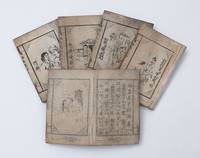
ref. 11459Woodblock-printed throughout in hangul & Chinese characters of different sizes. 350 woodcut illus. 70; 70; 70; 70; 70 folding leaves. Five kwÅn in five vols. of six. 8vo 254 x 177 mm. orig. white paper wrappers with printed title-slips orig. stitching. Korea: late ChosÅn period. One of two known copies of this anonymous Korean erotic book which juxtaposes the vernacularized hagiography of ÅšÄkyamuni with hundreds of erotic prints showing all manners of sexual intercourse and masturbation as well as related scenes of courtship and violence. To our knowledge this is the only known example of a Korean woodblock-printed erotica. Not in WorldCat or KORCIS. The prevailing cultural conservatism in ChosÅn Korea 1393-1910 meant that erotic pictures K. chunhwa 春畫 when they finally emerged as an artistic genre in the late 18th century tended to be painted sparingly for private collectors rather than printed en masse for the marketplace as they were in the neighboring countries of China and Japan. Only a handful surviving painted erotic albums are known today the most famous of which are the KÅn'gon irhoe to ä¹¾å¤ä¸€æœƒåœ– attributed to Sin Yun-bok ç”³æ½¤ç¦ 1758-1813 and the Unu toch'Åp 雲雨圖帖 attributed to Kim Hong-do é‡‘å¼˜é“ 1745-1806. In the 2020 article "A Brief Comparison of Old Erotic Paintings in the Far East" Won Whe Kim notes that "unlike China and Japan no record of erotic woodcut paintings was found in Korea.Korean erotic albums were drawn privately by painters or amateurs and were hidden in the home of the collectors" pp. 6-7. As the editors of Korean Erotic Paintings Seoul: 2001 point out "Korean erotic paintings have either been lost or overlooked before historians could get their hands on them because they were considered obscene. That was due to Korea's narrow-mindedness toward sex. The number of known erotic paintings is very little. It is difficult to do research on them because the ones with any artistic value are hidden in the homes of the collectors" n.p. On the history of erotica in Korea the editors further explain that "the origin of Korean erotic art can be found from the introduction of paintings from China's Ming Dynasty. Eroticism in the late ChosÅn era was likely to have been under the influence of Chinese eroticism. However.eroticism was able to develop its originality. It broke away from being just copies of Chinese paintings and attained a style that reflected ChosÅn's sex culture in a unique way.One of the main characteristics of Korean eroticism is that it realistically reveals the sexual customs of those times through its description of various social classes and situations" n.p. The title of this woodblock-printed erotic album contains two references: the "flowery camp" K. hwayÅng is a well-known euphemism for the brothel and sexual activities more generally and the "biography of ÅšÄkyamuni" K. sÅkpo refers to the WÅrin sÅkpo 月å°é‡‹èœ a 15th-century Korean translation of the Buddha's biography and one of the first documents to be printed with the newly invented hangul alphabet. Our album contains 350 folding leaves bound into five volumes in the Korean style with five rather than four stitch-holes each with a woodcut illustration on the recto and the mixed-script text of the WÅrin sÅkpo on the verso. The faint polygonal lines around some illustrations suggest that they were carved on smaller blocks separate from the larger frame and its WÅrin sÅkpo text and those smaller blocks were either affixed to the larger blocks during printing or impressed separately onto the blank area after the text was printed. Regardless the facing pages that result thus conjure and subvert a typical format of the genre's Chinese and Japanese precedents where erotic pictures are playfully paired with corresponding verses or literary excerpts. Additionally the first illustration of each volume and some interior illustrations have printed "captions" that are fragmentary excerpts from the WÅrin sÅkpo and other Buddhist texts bearing no obvious relation - descriptive or satirical - to the image itself. In contrast to the aforementioned painted albums that reflected the elevated style of renowned artists the printed illustrations in this album are noticeably more rustic if not sometimes comical. Figures and objects appear in monochrome sketches with facial features and limbs traced out in minimal sometimes distorted lines. The stylistic rusticity of the album echoes its various settings and protagonists: sexual activity takes place not in decorated studios or a scenic landscape but within rural farmhouses or in the vicinity of villages; the figures involved are not well-dressed ladies or esteemed officials but ordinary men and women who labored in the fields common soldiers who arrive on horseback and rural gentry without official positions. The female figures always wear a simple knot bun K. tchok that signaled their status as common married women rather than the elaborate wigs K. Ånjŭn mÅri or adolescent braids K. taenggi mÅri worn by courtesans in painted albums. Men with headwear that suggests elevated status appear mostly in plot illustrations see below and they almost always wear a top knot K. sangt'u during the sexual activities. These stylistic and thematic features suggest that this album was produced during the 19th century when as the editors of Korean Erotic Paintings point out erotica was increasingly produced and consumed by people across all social strata and the refined genre painting of earlier times gave way to simpler and popular styles. See also ì´íƒœí˜¸ "조선후기 ì¶˜í™”ì˜ 발달과 퇴조" p. 807. An impressive variety of sexual activities is depicted across the work's 350 illustrations including scenes of seduction initiated by both men and women dressing and undressing voyeurism rope bondage vaginal and oral intercourse in every imaginable position and location heterosexual intercourse and female masturbation with objects dusting wand tree carrot bestiality women with fish dog mouse fellatio and cunnilingus and threesomes two men with a woman two women with a man. The occasional depiction of figures enjoying the sight of copulating animals references a recurring motif in earlier Korean erotic paintings. While typical East Asian erotic albums consisted of isolated images without plot or recurring figures this album is somewhat unusual in that it contains longer sequences of illustrations that seem to constitute coherent narratives although the absence of any verbal description makes the stories quite difficult to discern. In the first volume certain short sequences of images appear to be connected: in one image an undressing woman sitting outside is approached by an enthusiastic dog and in the next image the two engage in sexual intercourse. But starting from the third volume longer sequences of images feature recurring identifiable characters and somewhat legible plot lines. For example at the beginning of Vol. III soldiers bearing swords capture a village woman and convince her depicted in a "bubble" that her lover has been arrested. She is then carried away it is implied to be raped by one of the soldiers. Her lover later returns and watches her bathe through a window and the two - fully dressed - share a romantic moment atop a hill only for the soldiers to reappear and after a brief conflict capture the woman again while her lover protests. Such longer narrative sequences including scenes such as literati drinking parties and official courts in addition to intercourse thus ingeniously weave the erotic life of commoners into their broader social and political lives substantially enriching the erotic album itself. As mentioned above this erotic album belongs to a genre within late ChosÅn popular culture of which few examples are known and about which very little has been written in any language. We refrain here from further conjecturing the significance of the very peculiar image-text pairing in the album or attempting to analyze the complexity of the longer narrative sequences. What is clear is that expert research into these problems will shed light not only on the album itself but also on a long-overlooked aspect of Korean cultural history. The only other copy of this title we find is part of the TaegokhÅn collection gifted by Yi ChÅng-dong to the Yulgok Institute of Korean Studies item #93 in ì›ì£¼ 대곡헌 published by ìœ¨ê³¡ì—°êµ¬ì› in 2024 which contains an additional sixth volume. Very good set with some discoloration and spotting in Vols. III and IV and light worming in the final volume. ⧠ì›ì£¼ 대곡헌 율곡연구ì›: 2024 #93. On Korean erotica see also ì´íƒœí˜¸ "조선후기 ì¶˜í™”ì˜ 발달과 퇴조" 역사학연구 11 1997 pp. 783-810. éŸ“åœ‹ì˜ 春畫 미술사랑: 2001. Won Whe Kim "A brief comparison of old erotic paintings in the Far East" Korean Journal of Sexual Health 4 no. 1 2020 pp. 3-8. 서윤정 "조선후기 춘화春畵: ì ë”ì ê´€ì ì—ì„œ 본 경계와 차별 ìž¬í˜„ì„ 둘러싼 문제" 미술사학보 No. 58 2022: pp. 131-55. unknown books
1930ref. 263202Florence: Giannini 1930. hardcover. fine. Charming illustrations in color and in black and white by Bona Gigliucci. Slim oblong 8vo cloth back pictorial boards. Florence: Giulio Giannini & Figlio 1930. Fine. Text in Italian & English. Giannini unknown books
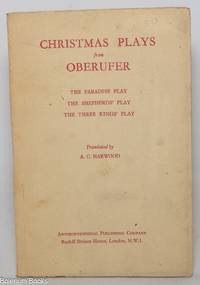
1944ref. 348300London: Anthroposophical Pub 1944. Paperback. 64p. 5x7.25 inches introduction the three plays good condition in soiled covers. First collected by Karl Julius Schröer in the 1840s from the small island village on the Danube. Anthroposophical Pub paperback books
ref. 37257CHIAROSCURO ANONOMYOUS. LA VIERGE ACCOMPAGNEE DE QUELQUES SAINTS after Francesco Mazzuoli Parmigianino. N.P.: n.d. Broadsheet. 11.7 x 8.31 inches. Bartsch 64.24.I. Images of the virgin Mary were very popular for artists of the period. There are two other interpretations of this version by Parmigianino one by Alexandre Ghandini and the other by Niccolo Vicentino that are recorded by Bartsch. Of the three this is more representative of a Renaissance drawing with a simpler and more delicate line block using parallel lines and cross--hatching to produce the shadow effects. The print was made from two blocks using a fairly evenly inked tan for tone. The plate has been damaged with two small areas filled in. Despite this serious defect the print itself is of considerable charm and merit. unknown books
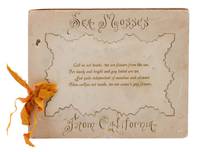
1920ref. 140949212California c. late 19th-early 20th century. Very Good. A lovely sea moss souvenir album with six pressed and mounted specimens from the coast of California. 6 pp. Bound in a commercially produced gilt lettered die-cut booklet with poetical onlay and yellow silk picot ribbon tie. Very Good. Lacking a ribbon fastener extant ribbon is slightly stained and creased covers soiled and lightly worn with tarnishing to gilt lettering. First specimen is crumbling but mostly intact. The other specimens are remarkably bright and sound unusual given the delicate nature of these objects. Souvenir albums of pressed sea mosses or "sea flowers" were sought after keepsakes vended along beach towns and coasts the globe over in the late 19th-century. Though commercially produced this would have likely been made in small quantities and sold to a fashionable Victorian lady. A delightful token from a bygone era in decent condition. unknown books
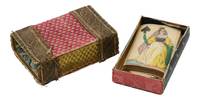
1880ref. 140949222France: Unknown publisher 1880. Very Good. A suggestive set of translucent erotic playing cards likely created in France in the mid-19th century. Set consists of 35 hand-colored playing cards 32 of which are from around 1840 featuring 11 court cards 3.25 x 2.25" and three slightly larger cards 3.5 x 2.5" possibly from the late Victorian period. Housed in a much earlier handmade late-18th century sliding box 4.5 x 2.75" made from thin plywood with pasted decorative paper wrapped in voided velvet and trimmed with gold and silver metal silk woven ribbon. They were once a part of The Stuart and Marilyn Kaplan Playing Card Collection. Very Good. Cards are lightly bowed with general wear and light toning; four of diamonds is the most worn with creasing and small spot of loss to one of the corners.The box they are held in is quite fragile with tarnishing to the metal ribbon and slight soiling to velvet boards. Popular in mid-1800s France and often associated with brothels these cheap seemingly innocuous risque novelties were crafted with two pasteboard layers. When held to light favorably candle light they reveal hidden sensual often pornographic images. While the cards inside were economically manufactured the little box they are held in is rather sumptuously bedecked in high quality velvet and expensive gilt metal thread ribbon. The average layman did not have access to trim or fabric as seen here indicating that this may have been owned by a rather wealthy individual. It should be added that sets as generously populated as this even when mixed are uncommon and desirable curiosa objects. [Unknown publisher] unknown books
1971ref. 140947896No Place: Libertarian Enterprises 1971. Original psychedelic-style poster of American abolitionist lawyer philosopher author and libertarian anarchist Lysander Spooner 1808-1887 with a quote from his best-known work No Treason. Measures 14" x 21.5". Rolled up. Very Good with stain around Spooner's head light edge wear age-toning a pieces of clear tape on verso. Appears to be quite scarce. An artifact of the 1970s boom in libertarianism when radical capitalist philosophers like Spooner almost nearly came back in vogue. While little known today outside of libertarian circles so much so that I've heard otherwise well-informed historians assert that 19th century abolitionism and anarcho-capitalism had nothing in common his work has inspired a small but devoted following. From the collection of Portland conservative activist Ridgway "Dick" Foley. Libertarian Enterprises unknown books
1940ref. 140948117British Columbia: no publisher 1940. Near Fine. A lovely vintage photograph album containing plants that are either native or endemic to the Pacific Northwest likely British Columbia neatly assembled by an amateur botanist. Most images are taken in the wild while several are of pressed plant specimens shot against a white background. The last three images differ from the theme: One depicts a black bear attempting to get into a barrel of Swift'ning Shortening lard a Chicago-based company whose product was later sold in a Canadian shop in Manitoba under the name Swift Canadian Co. a cluster of Lymantria dispar caterpillars on a leaf and a freshly caught trout. Oblong. 8 x 5.5". Commercial string-bound black leatherette photo album with upper cover lettered in gilt. Canadian Kodak Co. "No. A Eaton Special" label to rear pastedown. 78 neatly arranged silver gelatin prints 21 of which are hand-colored ranging in size from 6cm x 8.5 cm to 17.5cm to 12.5cm. Images are corner mounted 5 mounted with glue typically with mounted typed captions at bottom margin. Lacking two photos. Near Fine with light rubbing to covers of album some images silvered. A beautiful collection of images. The first comprehensive field guide to plants of the Pacific Northwest was not published until 1973. [no publisher] unknown books
1879ref. 140948304no place: no publisher 1879. Near Fine. An exquisitely compiled herbarium of over 1000 plants native to Europe collected over the course of one year meticulously chronicling the flora's growth throughout the seasons. Approximately 1051 specimens of all manner of flora mounted on 104 sheets further mounted onto leaves some with exact collection dates almost all specimens have been identified in their Latin name except the last 113. At the head of each leaf are sequential month and year. Bound in modern quarter tan calf over green cloth with five raised bands and green leather spine label lettered in gilt; fern patterned end papers. 11 x 17". Folio. Near Fine with only small ratio of loss to specimens 17 to be precise with some breakage to a few leaves and stems. Offsetting from specimens and some wear to edges. A massive assemblage collected by an unidentified fervent botanist over the course of an entire year. The book begins in December 1878 with seasonally humble speedwells white dead nettles and catkins. Slowly but surely winter melts away in the collector's environment and tender spring ephemerals like snowdrops blood root and hellebore are presented with clear excitement. The specimens truly become vivacious in the warmer seasons between May and June where it seems pages are stacked almost artistically with perfectly preserved flag iris large stalks of horsetail bright examples of thistles and spindly tufts of wheat. It seems that toward the end perhaps exhausted after weeks of collecting in the summer heat specimens assembled in the colder months of October and November are more hastily affixed and without species name below. A particularly attractive herbarium that is well-preserved and lovingly assembled. [no publisher] unknown books