ANONYMOUSABAA
171.111 resultados
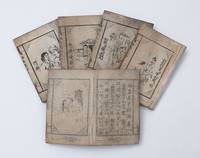
ref. 11459Woodblock-printed throughout in hangul & Chinese characters of different sizes. 350 woodcut illus. 70; 70; 70; 70; 70 folding leaves. Five kwÅn in five vols. of six. 8vo 254 x 177 mm. orig. white paper wrappers with printed title-slips orig. stitching. Korea: late ChosÅn period. One of two known copies of this anonymous Korean erotic book which juxtaposes the vernacularized hagiography of ÅšÄkyamuni with hundreds of erotic prints showing all manners of sexual intercourse and masturbation as well as related scenes of courtship and violence. To our knowledge this is the only known example of a Korean woodblock-printed erotica. Not in WorldCat or KORCIS. The prevailing cultural conservatism in ChosÅn Korea 1393-1910 meant that erotic pictures K. chunhwa 春畫 when they finally emerged as an artistic genre in the late 18th century tended to be painted sparingly for private collectors rather than printed en masse for the marketplace as they were in the neighboring countries of China and Japan. Only a handful surviving painted erotic albums are known today the most famous of which are the KÅn'gon irhoe to ä¹¾å¤ä¸€æœƒåœ– attributed to Sin Yun-bok ç”³æ½¤ç¦ 1758-1813 and the Unu toch'Åp 雲雨圖帖 attributed to Kim Hong-do é‡‘å¼˜é“ 1745-1806. In the 2020 article "A Brief Comparison of Old Erotic Paintings in the Far East" Won Whe Kim notes that "unlike China and Japan no record of erotic woodcut paintings was found in Korea.Korean erotic albums were drawn privately by painters or amateurs and were hidden in the home of the collectors" pp. 6-7. As the editors of Korean Erotic Paintings Seoul: 2001 point out "Korean erotic paintings have either been lost or overlooked before historians could get their hands on them because they were considered obscene. That was due to Korea's narrow-mindedness toward sex. The number of known erotic paintings is very little. It is difficult to do research on them because the ones with any artistic value are hidden in the homes of the collectors" n.p. On the history of erotica in Korea the editors further explain that "the origin of Korean erotic art can be found from the introduction of paintings from China's Ming Dynasty. Eroticism in the late ChosÅn era was likely to have been under the influence of Chinese eroticism. However.eroticism was able to develop its originality. It broke away from being just copies of Chinese paintings and attained a style that reflected ChosÅn's sex culture in a unique way.One of the main characteristics of Korean eroticism is that it realistically reveals the sexual customs of those times through its description of various social classes and situations" n.p. The title of this woodblock-printed erotic album contains two references: the "flowery camp" K. hwayÅng is a well-known euphemism for the brothel and sexual activities more generally and the "biography of ÅšÄkyamuni" K. sÅkpo refers to the WÅrin sÅkpo 月å°é‡‹èœ a 15th-century Korean translation of the Buddha's biography and one of the first documents to be printed with the newly invented hangul alphabet. Our album contains 350 folding leaves bound into five volumes in the Korean style with five rather than four stitch-holes each with a woodcut illustration on the recto and the mixed-script text of the WÅrin sÅkpo on the verso. The faint polygonal lines around some illustrations suggest that they were carved on smaller blocks separate from the larger frame and its WÅrin sÅkpo text and those smaller blocks were either affixed to the larger blocks during printing or impressed separately onto the blank area after the text was printed. Regardless the facing pages that result thus conjure and subvert a typical format of the genre's Chinese and Japanese precedents where erotic pictures are playfully paired with corresponding verses or literary excerpts. Additionally the first illustration of each volume and some interior illustrations have printed "captions" that are fragmentary excerpts from the WÅrin sÅkpo and other Buddhist texts bearing no obvious relation - descriptive or satirical - to the image itself. In contrast to the aforementioned painted albums that reflected the elevated style of renowned artists the printed illustrations in this album are noticeably more rustic if not sometimes comical. Figures and objects appear in monochrome sketches with facial features and limbs traced out in minimal sometimes distorted lines. The stylistic rusticity of the album echoes its various settings and protagonists: sexual activity takes place not in decorated studios or a scenic landscape but within rural farmhouses or in the vicinity of villages; the figures involved are not well-dressed ladies or esteemed officials but ordinary men and women who labored in the fields common soldiers who arrive on horseback and rural gentry without official positions. The female figures always wear a simple knot bun K. tchok that signaled their status as common married women rather than the elaborate wigs K. Ånjŭn mÅri or adolescent braids K. taenggi mÅri worn by courtesans in painted albums. Men with headwear that suggests elevated status appear mostly in plot illustrations see below and they almost always wear a top knot K. sangt'u during the sexual activities. These stylistic and thematic features suggest that this album was produced during the 19th century when as the editors of Korean Erotic Paintings point out erotica was increasingly produced and consumed by people across all social strata and the refined genre painting of earlier times gave way to simpler and popular styles. See also ì´íƒœí˜¸ "조선후기 ì¶˜í™”ì˜ 발달과 퇴조" p. 807. An impressive variety of sexual activities is depicted across the work's 350 illustrations including scenes of seduction initiated by both men and women dressing and undressing voyeurism rope bondage vaginal and oral intercourse in every imaginable position and location heterosexual intercourse and female masturbation with objects dusting wand tree carrot bestiality women with fish dog mouse fellatio and cunnilingus and threesomes two men with a woman two women with a man. The occasional depiction of figures enjoying the sight of copulating animals references a recurring motif in earlier Korean erotic paintings. While typical East Asian erotic albums consisted of isolated images without plot or recurring figures this album is somewhat unusual in that it contains longer sequences of illustrations that seem to constitute coherent narratives although the absence of any verbal description makes the stories quite difficult to discern. In the first volume certain short sequences of images appear to be connected: in one image an undressing woman sitting outside is approached by an enthusiastic dog and in the next image the two engage in sexual intercourse. But starting from the third volume longer sequences of images feature recurring identifiable characters and somewhat legible plot lines. For example at the beginning of Vol. III soldiers bearing swords capture a village woman and convince her depicted in a "bubble" that her lover has been arrested. She is then carried away it is implied to be raped by one of the soldiers. Her lover later returns and watches her bathe through a window and the two - fully dressed - share a romantic moment atop a hill only for the soldiers to reappear and after a brief conflict capture the woman again while her lover protests. Such longer narrative sequences including scenes such as literati drinking parties and official courts in addition to intercourse thus ingeniously weave the erotic life of commoners into their broader social and political lives substantially enriching the erotic album itself. As mentioned above this erotic album belongs to a genre within late ChosÅn popular culture of which few examples are known and about which very little has been written in any language. We refrain here from further conjecturing the significance of the very peculiar image-text pairing in the album or attempting to analyze the complexity of the longer narrative sequences. What is clear is that expert research into these problems will shed light not only on the album itself but also on a long-overlooked aspect of Korean cultural history. The only other copy of this title we find is part of the TaegokhÅn collection gifted by Yi ChÅng-dong to the Yulgok Institute of Korean Studies item #93 in ì›ì£¼ 대곡헌 published by ìœ¨ê³¡ì—°êµ¬ì› in 2024 which contains an additional sixth volume. Very good set with some discoloration and spotting in Vols. III and IV and light worming in the final volume. ⧠ì›ì£¼ 대곡헌 율곡연구ì›: 2024 #93. On Korean erotica see also ì´íƒœí˜¸ "조선후기 ì¶˜í™”ì˜ 발달과 퇴조" 역사학연구 11 1997 pp. 783-810. éŸ“åœ‹ì˜ 春畫 미술사랑: 2001. Won Whe Kim "A brief comparison of old erotic paintings in the Far East" Korean Journal of Sexual Health 4 no. 1 2020 pp. 3-8. 서윤정 "조선후기 춘화春畵: ì ë”ì ê´€ì ì—ì„œ 본 경계와 차별 ìž¬í˜„ì„ 둘러싼 문제" 미술사학보 No. 58 2022: pp. 131-55. unknown books
1930ref. 263202Florence: Giannini 1930. hardcover. fine. Charming illustrations in color and in black and white by Bona Gigliucci. Slim oblong 8vo cloth back pictorial boards. Florence: Giulio Giannini & Figlio 1930. Fine. Text in Italian & English. Giannini unknown books
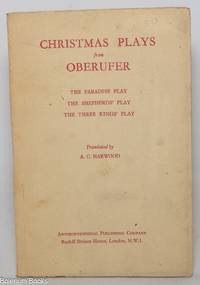
1944ref. 348300London: Anthroposophical Pub 1944. Paperback. 64p. 5x7.25 inches introduction the three plays good condition in soiled covers. First collected by Karl Julius Schröer in the 1840s from the small island village on the Danube. Anthroposophical Pub paperback books
ref. 37257CHIAROSCURO ANONOMYOUS. LA VIERGE ACCOMPAGNEE DE QUELQUES SAINTS after Francesco Mazzuoli Parmigianino. N.P.: n.d. Broadsheet. 11.7 x 8.31 inches. Bartsch 64.24.I. Images of the virgin Mary were very popular for artists of the period. There are two other interpretations of this version by Parmigianino one by Alexandre Ghandini and the other by Niccolo Vicentino that are recorded by Bartsch. Of the three this is more representative of a Renaissance drawing with a simpler and more delicate line block using parallel lines and cross--hatching to produce the shadow effects. The print was made from two blocks using a fairly evenly inked tan for tone. The plate has been damaged with two small areas filled in. Despite this serious defect the print itself is of considerable charm and merit. unknown books
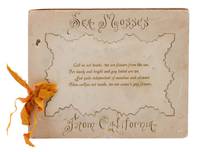
1920ref. 140949212California c. late 19th-early 20th century. Very Good. A lovely sea moss souvenir album with six pressed and mounted specimens from the coast of California. 6 pp. Bound in a commercially produced gilt lettered die-cut booklet with poetical onlay and yellow silk picot ribbon tie. Very Good. Lacking a ribbon fastener extant ribbon is slightly stained and creased covers soiled and lightly worn with tarnishing to gilt lettering. First specimen is crumbling but mostly intact. The other specimens are remarkably bright and sound unusual given the delicate nature of these objects. Souvenir albums of pressed sea mosses or "sea flowers" were sought after keepsakes vended along beach towns and coasts the globe over in the late 19th-century. Though commercially produced this would have likely been made in small quantities and sold to a fashionable Victorian lady. A delightful token from a bygone era in decent condition. unknown books
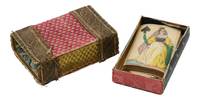
1880ref. 140949222France: Unknown publisher 1880. Very Good. A suggestive set of translucent erotic playing cards likely created in France in the mid-19th century. Set consists of 35 hand-colored playing cards 32 of which are from around 1840 featuring 11 court cards 3.25 x 2.25" and three slightly larger cards 3.5 x 2.5" possibly from the late Victorian period. Housed in a much earlier handmade late-18th century sliding box 4.5 x 2.75" made from thin plywood with pasted decorative paper wrapped in voided velvet and trimmed with gold and silver metal silk woven ribbon. They were once a part of The Stuart and Marilyn Kaplan Playing Card Collection. Very Good. Cards are lightly bowed with general wear and light toning; four of diamonds is the most worn with creasing and small spot of loss to one of the corners.The box they are held in is quite fragile with tarnishing to the metal ribbon and slight soiling to velvet boards. Popular in mid-1800s France and often associated with brothels these cheap seemingly innocuous risque novelties were crafted with two pasteboard layers. When held to light favorably candle light they reveal hidden sensual often pornographic images. While the cards inside were economically manufactured the little box they are held in is rather sumptuously bedecked in high quality velvet and expensive gilt metal thread ribbon. The average layman did not have access to trim or fabric as seen here indicating that this may have been owned by a rather wealthy individual. It should be added that sets as generously populated as this even when mixed are uncommon and desirable curiosa objects. [Unknown publisher] unknown books
1971ref. 140947896No Place: Libertarian Enterprises 1971. Original psychedelic-style poster of American abolitionist lawyer philosopher author and libertarian anarchist Lysander Spooner 1808-1887 with a quote from his best-known work No Treason. Measures 14" x 21.5". Rolled up. Very Good with stain around Spooner's head light edge wear age-toning a pieces of clear tape on verso. Appears to be quite scarce. An artifact of the 1970s boom in libertarianism when radical capitalist philosophers like Spooner almost nearly came back in vogue. While little known today outside of libertarian circles so much so that I've heard otherwise well-informed historians assert that 19th century abolitionism and anarcho-capitalism had nothing in common his work has inspired a small but devoted following. From the collection of Portland conservative activist Ridgway "Dick" Foley. Libertarian Enterprises unknown books
1940ref. 140948117British Columbia: no publisher 1940. Near Fine. A lovely vintage photograph album containing plants that are either native or endemic to the Pacific Northwest likely British Columbia neatly assembled by an amateur botanist. Most images are taken in the wild while several are of pressed plant specimens shot against a white background. The last three images differ from the theme: One depicts a black bear attempting to get into a barrel of Swift'ning Shortening lard a Chicago-based company whose product was later sold in a Canadian shop in Manitoba under the name Swift Canadian Co. a cluster of Lymantria dispar caterpillars on a leaf and a freshly caught trout. Oblong. 8 x 5.5". Commercial string-bound black leatherette photo album with upper cover lettered in gilt. Canadian Kodak Co. "No. A Eaton Special" label to rear pastedown. 78 neatly arranged silver gelatin prints 21 of which are hand-colored ranging in size from 6cm x 8.5 cm to 17.5cm to 12.5cm. Images are corner mounted 5 mounted with glue typically with mounted typed captions at bottom margin. Lacking two photos. Near Fine with light rubbing to covers of album some images silvered. A beautiful collection of images. The first comprehensive field guide to plants of the Pacific Northwest was not published until 1973. [no publisher] unknown books
1879ref. 140948304no place: no publisher 1879. Near Fine. An exquisitely compiled herbarium of over 1000 plants native to Europe collected over the course of one year meticulously chronicling the flora's growth throughout the seasons. Approximately 1051 specimens of all manner of flora mounted on 104 sheets further mounted onto leaves some with exact collection dates almost all specimens have been identified in their Latin name except the last 113. At the head of each leaf are sequential month and year. Bound in modern quarter tan calf over green cloth with five raised bands and green leather spine label lettered in gilt; fern patterned end papers. 11 x 17". Folio. Near Fine with only small ratio of loss to specimens 17 to be precise with some breakage to a few leaves and stems. Offsetting from specimens and some wear to edges. A massive assemblage collected by an unidentified fervent botanist over the course of an entire year. The book begins in December 1878 with seasonally humble speedwells white dead nettles and catkins. Slowly but surely winter melts away in the collector's environment and tender spring ephemerals like snowdrops blood root and hellebore are presented with clear excitement. The specimens truly become vivacious in the warmer seasons between May and June where it seems pages are stacked almost artistically with perfectly preserved flag iris large stalks of horsetail bright examples of thistles and spindly tufts of wheat. It seems that toward the end perhaps exhausted after weeks of collecting in the summer heat specimens assembled in the colder months of October and November are more hastily affixed and without species name below. A particularly attractive herbarium that is well-preserved and lovingly assembled. [no publisher] unknown books
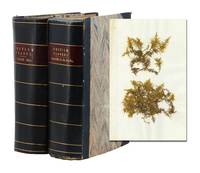
1860ref. 140948358Norfolk UK: No publisher 1860. Very Good. Two large herbaria with hundreds of plant specimens collected in 19th-century Norfolk England pertaining to flowering plants and mosses. Bound in contemporary half leather over marbled boards with morocco spine labels stamped in gilt. British Plants contains approximately 90 specimens with no manuscript identifcations. British Flowers contains 186 specimens with manuscript Latin identifications. 276 specimens all together. Each 15 x 10 x 4.5". Folios. Very Good with rubbing at extremities of each binding toning to marbled boards split at rear joint of Flowers bookplates of Norfolk history enthusiast noted bibliophile and collector of Admiral Lord Nelson materials Ronald C. Fiske d. 2018 on front pastedowns. Plant roster in old hand laid in front of Flowers. All specimens intact with only a few spots of loss heavy rodent gnawing to British Plants at mid-gatherings affecting some plates at edges and manuscript notations. Carefully compiled by an anonymous botanical enthusiast over the course of nearly 25 years each mount is artfully arranged and beautifully preserved. Herbaria of this size from the 19th century are increasingly scarce particularly hailing from one single location. [No publisher] unknown books
ref. 140946234UK: Unknown 1980. Near Fine. Two vintage anarcho-punk/ peace punk armbands from the United Kingdom manufactured circa 1980. Machine sewn white cotton linen with black elastic bands at verso. Screen printed red anarchist designs. Each are 6.5 x 3.5". Near Fine with light fading and minor abrasions at edges. Scarce in-your-face political ephemera from Britain's angry young and poor. Manufactured roughly one year after Margaret Thatcher's 1979 election -- a vote that solidified the anarchist and punk legions in opposition. The "Anarchy in '80" armband shows up around the leg of a guitarist in a photo of an obscure UK punk group The Condemned on the blog Leaders of Men taken in 1979 or 1980. The blogger refers to it as "proto crust" which seems accurate; it likely emanated from the cluster of punks around Crass and Subhumans that would become canonical "crust punk" bands. [Unknown] unknown books
2002ref. 140942987Portland OR: Indymedia 2002. Two 11" x 17" vintage black-and-white flyers protesting then-VP Dick Cheney's 2002 visit to Portland Oregon. Staple holes light wear. Popular Left/antiglobalization site Indymedia's web address written in marker on the bottom margin of one poster; highlighting to text of the other with dates corrected in sharpie Cheney's eyes poked out to give him an even more demonic appearance. Uncommon. A real time capsule of protest in the tense months following 9/11 as dissent went through one of its lowest ebbs in modern memory. The antiglobalization movement had stalled but organizing via the internet through sites like Indymedia was just beginning. The Bush administration was at its historical peak of popularity but even then Dick Cheney was a magnet for derision the Machiavellian grey eminence behind the scenes. To paraphrase a running joke at the time: if Cheney ever died Bush might actually get to be President. Indymedia unknown books
ref. 140943566No Place: No Publisher 1970. 4.25" x 5.5" single-sided handbill flyer. Good horizontally creased missing triangular chips at corners wrinkled toned. No other copies located in commerce or in institutional collections such as University of Washington's Vietnam War Era Ephemera Collection. A scarce piece of propaganda from the American anti-Vietnam War movement demanding the freeing of the protestors that would become famous as The Seattle Seven. On February 17 1970 the Seattle Liberation Front organized a protest of about 2000 people against the imprisonment of the Chicago Seven including Black Panther Bobby Seale converging on the Seattle federal courthouse. About 200 protestors chanting "Free Bobby!" attacked the building with rocks and paint and were reputedly tear-gassed by Seattle Police. Eight protestors would later be indicted: Jeff Dowd Michael Abeles Joe Kelly Michael Lerner Susan Stern Roger Lippman Chip Marshall and Michael Justesen. Jutesen skipped town and was never found so the group became known as The Seattle Seven. Most of the charges would eventually be dropped. Jeff Dowd though would become a film producer and later gain cult fame as an inspiration for "The Dude" in The Coen Brothers' 1998 film The Big Lebowski. Hence The Dude's lines "Ever heard of the Seattle Seven That was me. Well me and six other guys." One was actually a lady but otherwise the reference was quite real. [No Publisher] unknown books
1942ref. 140941284Portland OR: Np 1942. Good. Original 10 3/4" x 14" poster printed in orange and black on cardboard with a racist caricature of Japanese Prime Minister Hideki Tojo stabbing a salmon. Text reads in its entirety: "The Japs are killing Alaska's fish industry / vote 311 X no against this infamous proposition / closing Oregon's coastal streams will kill Oregon's salmon industry / our boys in service need every case of salmon Oregon can produce!" Good with five small holes and a creased scrape crease down middle from being mounted on a stick either for picketing or as a yard sign verso toned and soiled. Colors still very bright. A rare political sign opposed to The Oregon Prohibition of Net Fishing on Coastal Waters Bill also known as Measure 6 with striking graphics typically anti-Japanese in the wake of Pearl Harbor and America's entry into WWII; although a cursory contemporary glance at the bill makes any connection to Japan highly dubious. "The measure would have prohibited all net fishing in coastal streams and bays except those exempted" according to Ballotpedia. It was soundly defeated. Np unknown books
1856ref. 140940710London and New York: H. Bailliere 1856. First Edition. Very Good. First edition. iv 208 pp. Bound in publisher's elaborately blind stamped dark cloth with gilt spine lettering yellow endpapers. Very Good with slightly sunned spine slight wave to text a little foxing to contents former owner's bookplate on paste down. Nice shape overall. The complete run in six issues of an anonymously-edited mid-19th century spiritualist publication scarce in book format. Prophecy ghostly manifestations in London California and the European continent clairvoyance mesmerism fairies "Sir Charles Isham on Spiritualism" and "Loss of the Steamship Pacific" are some of the many topics covered herein. A copy of this book apparently wound up in his Harry Houdini's collection; the famous magician was a skeptic and debunker of spiritualism. H. Bailliere unknown books
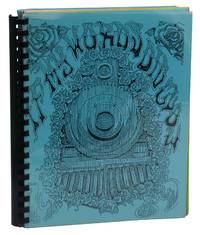
1989ref. 140940817No Place: No Publisher 1989. Near Fine. Comb-bound printed on sheets of various colors. Unpaginated. Near Fine with light wear. A thick collection of Grateful Dead lyrics plus lyrics to songs the Dead often covered. A memento of rabid Deadhead culture at the close of the '80s transcribed by the anonymous Deadeditor by hand from listening to various tapes; tape-trading being one of the most popular pursuits in the subculture. According to said editor in the intro "This book was not xeroxed out of another lyric book nor was it copied out of Dead songbooks. Anything that was taken from another source was looked over and corrected to the best of my ability." Also notable for the time was that it was written on a Macintosh SE computer writing on a computer was a strange new thing for many people then believe it or not and "the final copy was printed on a NEC Silent Writer laser printer." The title is taken from the band's classic song "Ripple" off the 1970 studio LP American Beauty. Rare with a single institutional copy located in a recent OCLC WorldCat search. [No Publisher] unknown books
1944ref. 140939216No Place: No Publisher 1944. Single thin sheet; 4.8" x 7" leaflet printed in red and black. Verso numbered S W 3. Text in English. Very Good folded in fours tiny tear in top edge at fold. An illustrated WWII psychological warfare pamphlet from the Nazi German government aimed at American soldiers in a slightly warped attempt at vernacular English. The recto features an illustration of city life in America a man and a women merrily strolling through a city past one of the ubiquitous "Uncle Sam Wants You" American propaganda posters of the time with a caption and verso that are meant to appeal to US soldiers' political cynicism and skepticism about American elites' motives. The strolling couple are meant to be some of the "Friendly Folks back home those who stimulated the big war boom eager to collect the prosperous profits." The reader is informed "Your job is easy; You just got to die to fill their pockets." The stilted attempts at slang coupled with the irony of the Nazi government attempting to appeal to Americans' pacifism and anti-elitism make this an entertaining psywar pamphlet that showcases various difficulties of getting inside one's enemies' heads and amplifying their doubts. [No Publisher] unknown books
1890ref. 6719London: Dean and Son 1890. Quarto. Original publisher's color pictorial paper covered boards front and back; blue cloth spine. No.4 in Dean's "Surprise Model" Series Features wonderful chromolithograph illustrations including four pages with intricate mechanical pop-up illustrations operated by cotton thread one of which is a double page spread. Minor finger soiling and scuffs to margins some chipping to edges spine somewhat rubbed. A very good copy of a scarce movable with only three held in Institutions. Dean and Son unknown books
1911ref. 1950Boston: Houghton Mifflin Company 1911. 269p. cloth boards with titling in gilt no dustjacket first edition. Rideout author. Houghton Mifflin Company unknown books
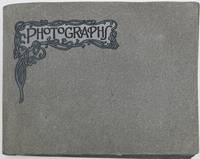
ref. 2113Maine. 24mo oblong 5 1/2" x 7"; 16 leaves. Thirty untitled b&w photos of various sizes in a small purchased construction paper-style album titled "Photographs" on the front and a label on the inside rear wrapper reads: "Ward's Souvenir Album. Made in LIght Gray and Dark Gray Leaves. This Book is No. 111." Photos are both mounted and laid in. The photos are of houses and farmland 3 contain farm animals in one a woman holds a baby 3 feature small boats in the water in one a woman is reading under a tree 3 feature horse and carriages including one with two young girls in a decorated cart and 7 show logging operations and log driving down a river. unknown books
1869ref. 1277New York: McLoughlin Bros. Publisher 30 Beekman Street 1869. Wraps. Very good. 12mo; 7pp; yellow pictorial wrapper relief printed in red and navy rear wrapper publisher's ads for Paper Dolls-Book Form and Paper Furniture; publisher's string binding; ownership in pencil on verso front wrapper; color pictorial title page; color illustrations with verse each page; light overall soiling 2" split at foot of wrapper fold; very good. The date of publication is estimated for McLoughlin Brothers' address on Beekman Street in New York. The life and death of the Little Old Woman is told in ironic rhyming verse and while she may have been pitied for her age and infirmity she was wealthy and lacked in no physical comforts. "This Little Old Woman The story so goes Had nothing to wear but Abundance of clothes. And oh! Let me weep At the dismal news She would have been barefooted But for her shoes.". McLoughlin Bros. Publisher, 30 Beekman [Street] unknown books
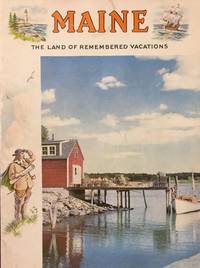
1930ref. 52Augusta Maine: Maine Development Commission 1930. Staplebound wraps. Very good. 8vo; 47 1pp; dark green wrappers embossed with gilt design cut-out window on front revealing color photographic illustration on title page; two staple binding; black and white photographic illustrations throughout and five in color; chip to bottom edge front wrapper a few light stains on pages sunning to cover at spine; very good. Tourism. Nicely produced tourism booklet with many photographic illustrations. Covers the topography natural wonders sports resources and tourist attractions of the state. A promotional blurb by Booth Tarkington a Maine summer resident at the end of the booklet. Maine Development Commission unknown books
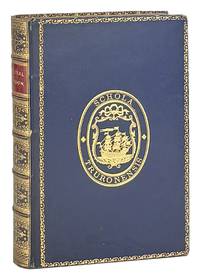
1900ref. 48701London: Walter Scott 1900. Very Good. London: Walter Scott n.d. ca. 1900. Octavo 18cm; full contemporary blue gilt-tooled prize calf by Relfe Brothers of London gilt spine in six compartments with red spine piece all edges marbled marbled endpapers; viii369pp. frontispiece facsimile letter fragment by Gordon tipped in at rear of volume. Leather a bit scuffed at corners and spine ends else a Very Good bright and sound example. A popular account of the life of Charles George Gordon 1833-1885 who participated in the Crimean War and led the Ever Victorious Army of Chinese soldiers who put down the Taiping Rebellion. This copy in a handsome prize binding for the Truro School. Inoffensive mid-20th century ownership ex libris to front pastedown as well. Walter Scott unknown books
1864ref. 2165Boston: Taggard & Thompson 29 Cornhill 1864. JUVENILE ILLUSTRATED. Boston Stereotype Foundry electrotype. Reprint first printed by Taggard & Thompson in 1863. 32mo 4 ¼" x 3"; 48pp; glazed yellow pictorial boards printed in red and green a girl and boy reading a book on the front; rear board publisher's ad for "Popular Juveniles" including "The Martin & Nelly Stories" "The Summer House Series" and "My Uncle Toby's Library"; glazed yellow eps; engraved fp & pictorial title page; publisher's string binding; engraved illustrations throughout; light shelf wear to boards back joint split a few spots; very good minus. A bright and interesting child's book with many subjects but lessons of morality and religious instruction at the heart of all the stories. Taggard & Thompson, 29 Cornhill unknown books
1859ref. 2158New York: Robert Carter & Brothers 530 Broadway 1859. JUVENILE RELIGION. R. CRAIGHEAD Printer Stereotyper and Electrotyper Caxton Building 818385 Centre Street. M.U. Matthew Urlwin SEARS; J. John GILBERT; engravers. 4to 10 ½" x 8 1/8"; 143pp; quarter bound in black cloth with printed brown boards; engraved pictorial of angel with shepherds on the front with lettering; engraved fp with tissue guard 11 additional full-page engravings; pictorial vignette on title page; printer info on verso title page; rubbing to boards with loss corners bumped some staining; very good minus. OCLC locates only 1 copy of the 1859 edition with this printer at UVA. First published in London by James Nisbet in 1855 and in New York the same year by Robert Carter & Brothers. The twelve "Evening" chapters are presented as conversations about the life of Jesus between a mother and her children. Beautiful engravings many signed by Matthew Urlwin Sears 1798-1870 and by Sir John Gilbert 1817-1897. Robert Carter & Brothers, 530 Broadway unknown books