Wehrkamp, WillyBiblio.com

4224 risultati
rif. 44146060-nnew. unknown
rif. 44146060like new. unknown
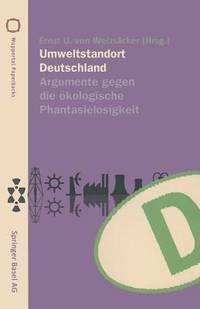
1994rif. BN49245Berlin ; Basel ; Boston : Birkhäuser 1994. Erstauflage EA. Politik Berlin ; Basel ; Boston : Birkhäuser unknown
2009rif. Q-1580890202Charlesbridge 2009-01-01. Hardcover. New. In shrink wrap. Looks like an interesting title! Charlesbridge hardcover
2009rif. Q-1580890784Charlesbridge 2009-01-01. Paperback. New. In shrink wrap. Looks like an interesting title! Charlesbridge paperback
2009rif. Q-1580890873Charlesbridge 2009-02-01. Paperback. New. In shrink wrap. Looks like an interesting title! Charlesbridge paperback
2001rif. Q-1580890601Whispering Coyote Pr 2001-07-06. Paperback. New. In shrink wrap. Looks like an interesting title! Whispering Coyote Pr paperback
2000rif. Q-0439139945Scholastic Paperbacks 2000-06-01. Paperback. New. In shrink wrap. Looks like an interesting title! Scholastic Paperbacks paperback
1995rif. Q-059048298XScholastic 1995-04-01. Library Binding. New. New. In shrink wrap. Looks like an interesting title! Scholastic unknown
1980rif. BN445157Amsterdam : C.J. Aarts 1980. 1980. Softcover. Aarts' Letterkundige Almanak voor 1980-1984 5 delen Aarts' Letterkundige Almanak voor 1980-1984 5 delen Welssink Dick & Willy Tibergien redactie Amsterdam : C.J. Aarts paperback
1931rif. 8401Bielefeld 1931. Ein Bergwelt-Zauber aus Hoch-Rhätiens Sonnenstadt. Erzählung. 2. Aufl. Kl.-8°. Ln. / kt. Raetica unknown
1931rif. 21696Bielefeld 1931. EA Elbracht & Co. 8°. Samt-Ebd. Raetica unknown
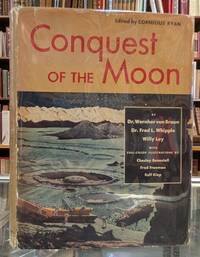
1953rif. 115809Viking 1953. Hardcover. Very good/Good. Chesley Bonstell; Fred Freeman; Rolf Klep. With illustrations by Chesley Bonestell; Fred Freeman and Rolf Klep. Shelfworn. Jacket fragile with chipped edges and a two inch tear on the top edge. Viking hardcover
1953rif. 250824001Viking 1953. Hardcover. Very Good/acceptable . book is vg dust jacket is inserted the dj is all there but needs repair Viking hardcover
1953rif. ZB1329054Gnome Press 1953. Price HAS BEEN REDUCED by 10% until Monday Oct. 26 weekend SALE item first edition first printing; 144 pp. original yellow cloth hardcover some spotting to the covers previous owner's information inked to the bottom margin of the front paste down a few inked numbers to the bottom margin of the rear paste down else very good in a slightly edge-worn dust jacket. - If you are reading this this item is actually physically in our stock and ready for shipment once ordered. We are not bookjackers. Buyer is responsible for any additional duties taxes or fees required by recipient's country. Photos available upon request. Gnome Press hardcover
rif. 3384348354.Ghardcover. Good. Access codes and supplements are not guaranteed with used items. May be an ex-library book. hardcover
rif. DADAX1564021610New unknown
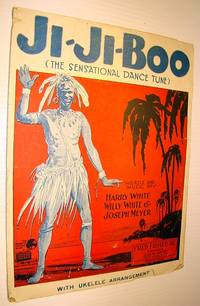
1922rif. 848G0702USA: Fred Fisher Inc. 1922. Sheet music. Fair. Paperback. First Edition. 4to - over 9¾" - 12" tall. 6 pages. Nice cover art. Above-average but not excessive wear. Fred Fisher Inc. Paperback
1991rif. Q-0943173477Roberts Rinehart 1991-03-01. Paperback. New. New. In shrink wrap. Looks like an interesting title! Roberts Rinehart paperback
1996rif. Q-0943173949Roberts Rinehart 1996-01-01. Paperback. New. In shrink wrap. Looks like an interesting title! Roberts Rinehart paperback
rif. 71815Stuttgart Paul Neff Verlag um 1895. Halbleinen gebunden; grüner farbig illustrierter Einband Rückengoldprägung / Anz. Seiten: 181 / 22 x 16 cm Querformat / mit 96 Schwarzweissabbildungen 70 davon auf Tafeln / Zustand: gut leichte bis mässige Gebrauchsspuren; Einband leicht berieben etwas fleckig und leicht gebräunt Ecken und Kanten mässig beschabt hinteres Innengelenk angeplatzt Papier geringfügig gebräunt Vortitel etwas eingerissen Schnitt gebräunt Stuttgart, Paul Neff Verlag, um 1895 unknown
rif. a1011731895 first edition. Sitzungsberichte der Konig. reussischen Akad. der Wissen. zu Berlin. XVIII. Original orange printed octavo wraps. 20p. VG folded in half. Wien was awarded the Nobel in Physics in 1911 . . paperback
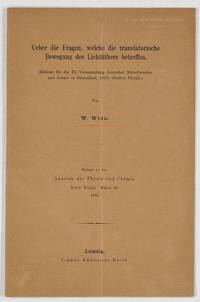
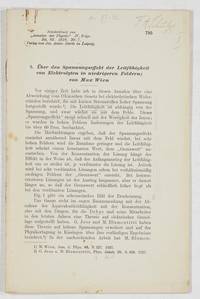
1898rif. 113871898. Ann. Phys. 3. Folge 65. Beilage - Leipzig Verlag von Johann Ambrosius Barth 1898 8° XVIII pp. orig. Broschur; St.a.Tit. Rare Offprint! "Referat für die 70. Versammlung deutscher Naturforscher und Aerzte in Düsseldorf 1898: Section Phys." Wilhelm Wien 1865-1928 "grew up in the east Prussian town of Rastenburg today Ketrzyn Lithuania. He then studied at the prominent universities of Heidelberg and Göttingen before he eventually completed his doctorate in Berlin. In 1900 he succeeded W.C. Röntgen 1901 Physics Laureate as a professor in Würzburg. Wien's research concerned how various metals radiate heat and he received the Nobel Prize for the law of black-body radiation now known as Wien-Planck's law. It was drawn up jointly with Max Planck Physics 1918 and many felt that they should have shared in the award." "When a completely dark body is heated it emits visible light and other electromagnetic radiation. The spectrum of the radiation is entirely dependent on the temperature of the body and not its composition. In 1893 Wilhelm Wien formulated his displacement law which indicates at which wavelength the radiation is most intense at a certain temperature. He subsequently also formulated a law indicating how the radiation spectrum varies as temperature changes. However this does not apply to long wavelengths and in 1900 Max Planck formulated a law that conforms better." Wilhelm Wien - Facts. NobelPrize/org The Nobel Prize in Physics 1911 unknown
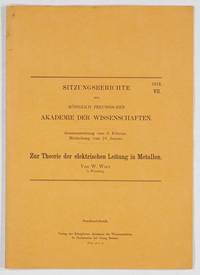
1913rif. 113891913. S.ber. Akad. Wiss. Berl. 1913. - Berlin Verlag der Königlichen Akademie der Wissenschaften / In Commission bei Georg Reimer 1913 Gr.-8° pp.184-200 5 Fig. orig. Broschur. First Edition! "Die Ergebnisse der Strahlungstheorie und die neuere Theorie der spezifischen Wärme haben den Nachweis geliefert daß die Elektronentheorie der Metalle auf eine wesentlich neue Grundlage gestellt werden muß. Man kann nicht mehr die Annahme aufrechterhalten daß die Elektronen in einem Metall wie freie Gasmoleküle herumfliegen und daß ihre mittlere lebendige Kraft der absoluten Temperatur des Metalls proportional ist. Solche Elektronen müssen vielmehr wie Lorentz gezeigt hat eine Wärmestrahlung erzeugen die dem Rayleigh-JEANSschen Gesetz folgt das sich bekanntlich mit der Erfahrung nicht in Übereinstimmung bringen läßt. Man würde nach diesem Gesetz für kürzere Wellenlängen eine viel größere Strahlung erhalten müssen als sie erfahrungsmäßig vorhanden ist. Ebenso zeigt die Theorie der spezifischen Wärme welche die Wärmebewegung in festen Körpern als Schwingungen der Moleküle um feste Zentren auffaßt und diese nach der PLANCKSchen Formel statistisch verteilt durch ihre Übereinstimmung mit den Beobachtungen daß die Elektronen nicht an der Wärmeenergie merklich beteiligt sein können." WienWien Wilhelm Carl Werner Otto Fritz Franz Wien 1864-1928 physicist who in 1893 used theories about heat and electromagnetism to deduce Wien's displacement law which calculates the emission of a blackbody at any temperature from the emission at any one reference temperature. He also formulated an expression for the black-body radiation which is correct in the photon-gas limit. His arguments were based on the notion of adiabatic invariance and were instrumental for the formulation of quantum mechanics. Wien received the 1911 Nobel Prize for his work on heat radiation. unknown
1928rif. 680891928. Ann. Phys. 4. Folge 85/7. - Leipzig Verlag von Johann Ambrosius Barth 1928 8° pp.795-811 5 Fig. orig. Broschur. Rare Offprint! Wilhelm Wien 1865-1928 "grew up in the east Prussian town of Rastenburg today Ketrzyn Lithuania. He then studied at the prominent universities of Heidelberg and Göttingen before he eventually completed his doctorate in Berlin. In 1900 he succeeded W.C. Röntgen 1901 Physics Laureate as a professor in Würzburg. Wien's research concerned how various metals radiate heat and he received the Nobel Prize for the law of black-body radiation now known as Wien-Planck's law. It was drawn up jointly with Max Planck Physics 1918 and many felt that they should have shared in the award." "When a completely dark body is heated it emits visible light and other electromagnetic radiation. The spectrum of the radiation is entirely dependent on the temperature of the body and not its composition. In 1893 Wilhelm Wien formulated his displacement law which indicates at which wavelength the radiation is most intense at a certain temperature. He subsequently also formulated a law indicating how the radiation spectrum varies as temperature changes. However this does not apply to long wavelengths and in 1900 Max Planck formulated a law that conforms better." Wilhelm Wien - Facts. NobelPrize/org The Nobel Prize in Physics 1911 unknown