VOLTAIRELivre Rare Book
8 438 résultats
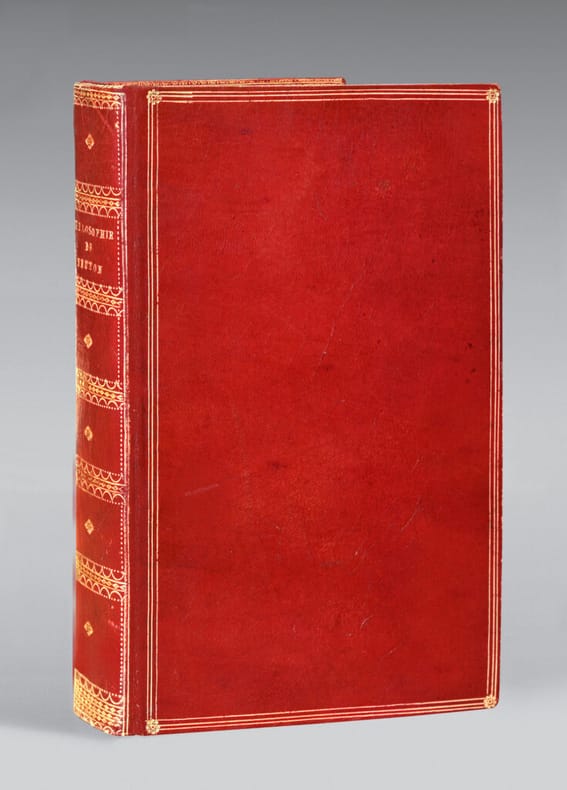
réf. LCS-A4L’introduction des idées de Newton en France et la victoire de l’empirisme sur le cartésianisme. Amsterdam, chez Jacques Desbordes, 1738. In-8 de (1) f. de titre, 399 pp. et (1) p. d’errata; 1 portrait de l’auteur, 1 frontispice, 7 planches hors texte dont une dépliante, 50 culs-de-lampe et vignettes, 60 figures géométriques dans le texte, titre imprimé en rouge et noir, 4 numéros de page grattés. Plein maroquin rouge, triple filet doré encadrant les plats avec fleurons d'angles, dos lisse orné, coupes ornées, roulette intérieure dorée, tranches dorées. Relié par Derome le jeune avec son étiquette. 212 x 132 mm.
1759réf. 752Genève Geneva: Cramer 1759. First Edition. 3 vols. in one 12mo 164 x 100mm pp. 2 291 1; 133 1 35 1. First printing of the great 18th century philosophical narrative with all the points correct. Including the 3 usual cancels the right title page ornament repeated pages 193 and 266 the misprints of “que ce ce fut” page 103 line 4 and “précisément” page 125 line 4 the correction removing a paragraph break page 31 the rewritten lines about the Lisbon earthquake page 41 etc. Contemporary full calf red calf label rebacked with the original spine saved and laid down recornered marbled endpapers gilt rubbed inner paper hinges strengthened old ink signatures on the endpaper and front blank tiny signature on the title page one tissue strengthened tear at the bottom of A2 touching the last 3 lines of text without any loss otherwise internally quite nice clean and very good. Bound without N7 a blank and N8 a notice to the binder as is usual agreeing in all respects to what you would have received if you had purchased a copy in sheets on publication day then bought the sequels and then handed them over to the most local Swiss bindery. Ref: PMM 204. There were 18 editions of Candide in 1759. It took 221 years for a clear and convincing bibliography to first sort them out and then got accepted and once accepted our real 1st edition was confirmed as rare. In the last 15 years however that bibliographical data has been more widely circulated and several 1st editions that weren’t on the original 22–copy census have come into market. It is still scarce more so in a contemporary binding. Candide bides as the epitomic philosophical fable of the French Enlightenment and the genotype of irony without exaggeration and though it’s laced with more salt than the postwar streets of Carthage it repeatedly tolls a reminder that light hearts live long. Most importantly Candide remains remarkably relevant when examined through contemporary frameworks functioning as an incisive proto-postcolonial text that anticipates modern discourse on global inequality systems of oppression and the limitations of Enlightenment rationality. The novel's scathing portrayal of slavery conquest and religious persecution resonates with intersectional analyses that recognize how power structures interlock across racial gender and economic dimensions. The savage irony throughout the text dismantles not just philosophical optimism but also European exceptionalism exposing the hypocrisy of colonial enterprises and religious institutions alike. The narrative's episodic structure—with its global movements between Europe South America and the Ottoman Empire—invites discussions of transnationalism and diasporic experience while Candide's concluding retreat to cultivate his garden has been reinterpreted by ecocritical scholars as both an acknowledgment of environmental interdependence and a potentially problematic withdrawal from systems-level political engagement. “Do you believe” said Candide “that men have always massacred each other as they do to-day that they have always been liars cheats traitors ingrates brigands idiots thieves scoundrels gluttons drunkards misers envious ambitious bloody–minded calumniators debauchees fanatics hypocrites and fools” “Do you believe” said Martin “that hawks have always eaten pigeons when they have found them” –Voltaire Candide. Cramer unknown
1759réf. 752Genève Geneva: Cramer 1759. First Edition. 3 vols. in one 12mo 164 x 100mm pp. 2 291 1; 133 1 35 1. First printing of the great 18th century philosophical narrative with all the points correct. Including the 3 usual cancels the right title page ornament repeated pages 193 and 266 the misprints of “que ce ce fut” page 103 line 4 and “précisément” page 125 line 4 the correction removing a paragraph break page 31 the rewritten lines about the Lisbon earthquake page 41 etc. Contemporary full calf red calf label rebacked with the original spine saved and laid down recornered marbled endpapers gilt rubbed inner paper hinges strengthened old ink signatures on the endpaper and front blank tiny signature on the title page one tissue strengthened tear at the bottom of A2 touching the last 3 lines of text without any loss otherwise internally quite nice clean and very good. Bound without N7 a blank and N8 a notice to the binder as is usual agreeing in all respects to what you would have received if you had purchased a copy in sheets on publication day then bought the sequels and then handed them over to the most local Swiss bindery. Ref: PMM 204. There were 18 editions of Candide in 1759. It took 221 years for a clear and convincing bibliography to first sort them out and then got accepted and once accepted our real 1st edition was confirmed as rare. In the last 15 years however that bibliographical data has been more widely circulated and several 1st editions that weren’t on the original 22–copy census have come into market. It is still scarce more so in a contemporary binding. Candide bides as the epitomic philosophical fable of the French Enlightenment and the genotype of irony without exaggeration and though it’s laced with more salt than the postwar streets of Carthage it repeatedly tolls a reminder that light hearts live long. Most importantly Candide remains remarkably relevant when examined through contemporary frameworks functioning as an incisive proto-postcolonial text that anticipates modern discourse on global inequality systems of oppression and the limitations of Enlightenment rationality. The novel's scathing portrayal of slavery conquest and religious persecution resonates with intersectional analyses that recognize how power structures interlock across racial gender and economic dimensions. The savage irony throughout the text dismantles not just philosophical optimism but also European exceptionalism exposing the hypocrisy of colonial enterprises and religious institutions alike. The narrative's episodic structure—with its global movements between Europe South America and the Ottoman Empire—invites discussions of transnationalism and diasporic experience while Candide's concluding retreat to cultivate his garden has been reinterpreted by ecocritical scholars as both an acknowledgment of environmental interdependence and a potentially problematic withdrawal from systems-level political engagement. “Do you believe” said Candide “that men have always massacred each other as they do to-day that they have always been liars cheats traitors ingrates brigands idiots thieves scoundrels gluttons drunkards misers envious ambitious bloody–minded calumniators debauchees fanatics hypocrites and fools” “Do you believe” said Martin “that hawks have always eaten pigeons when they have found them” –Voltaire Candide. Cramer unknown books
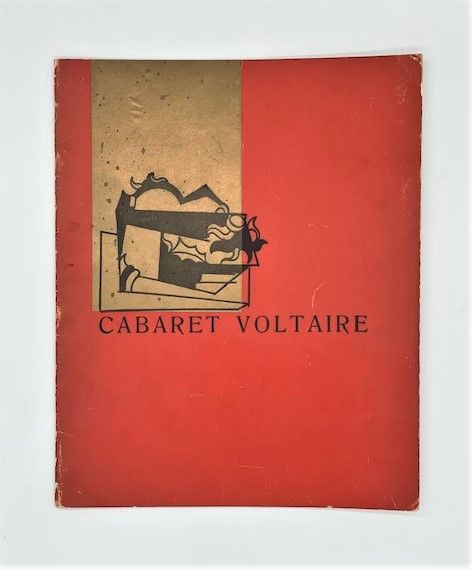
1916réf. 65214Zürich, (Buchdruckerei Jul. Heuberger für) Meierei, Spiegelgasse 1, (1916). 4°. Mit einem mitpag. Orig.-Holzschnitt von M. Slodki u. 12 (7 ganzs.) Textabbildungen. 31 (1) S., Roter OKart.-Bd. m. Goldfolien-Collage von Hans Arp am Vorderdeckel.
réf. LCS-18355La Henriade de Voltaire conservé dans son maroquin de l’époque mosaïqué et armorié, condition d’exception pour un livre imprimé au cours de la Révolution française. Paris, P. Didot, fils aîné de F.A. Didot l’aîné, 1790. Grand in-4 de 1 portrait, 1 pl. hors-texte, xl pp., 222 pp., (1) f., 12 planches hors-texte. Plein maroquin rouge à grain long, plats richement ornés de filets, grecque et roulette dorées, dos à faux-nerfs mosaïqué avec incrustation de bandeaux de maroquin vert, pièces de titre et de tomaison en maroquin vert, chiffre doré du prince Albert de Saxe-Teschen répété cinq fois dans les entre-nerfs, coupes décorées, roulette intérieure, tranches dorées. Reliure armoriée et mosaïquée de l’époque. 308 x 228 mm.
1829réf. 34978Paris Antoine-Auguste Reno 1829 66 volumes in-8, demi-maroquin noir, plats de papier marbr, dos quatre larges nerfs finement orns de roulettes et filets pousss or ou froid; doublures et gardes de papier marbr, non rogns (Thouvenin).Un portrait-frontispice dessin et grav l'eau-forte par Aug. de Saint Aubin d'aprs le buste de Houdon, 113 figures de Moreau graves par Simonet et 48 portraits. Un des trs rares exemplaires sur grand papier. Bel exemplaire reli l'poque par Thouvenin.
Die erste Publikation der Zürcher Dadaisten, zugleich ein bedeutendes Dokument der Dada-Bewegung. In dieser Veröffentlichung ist erstmals der Name "DADA" dokumentarisch belegt. Mit Beiträgen von Guillaume Apollinaire, Hans Arp, Hugo Ball, Francesco Cangiullo, Blaise Cendrars, Emmy Henning, Jacob van Hoddis, Richard Huelsenbeck, Marcel Janco, Wassilij Kandinsky, F.T. Marinetti, L. Modigliani, M. Oppenheimer, Pablo Picasso, O. van Rees, M. Slodki und Tristan Tzara. Eines der wenigen Exemplare mit dem deutschen Titelblatt und Einleitung von Hugo Ball. In 500 Exemplaren erschienen. Sehr schönes Exemplar. - Raabe, Zeitschriften 28.
réf. LCS-18034Cette édition originale de Candide est très rare. S.l. [Genève, Cramer], 1759. [Reliés à la suite] : II- [Maubert de Gouvest, Jean-Henri]. Ephraïm justifié. Mémoire historique et raisonné sur l’état passé, présent et futur des finances de Saxe... adressé par le Juif Ephraïm à son cousin Manasses d’Amsterdam. Nouvelle édition. Erlangen, 1758. III- [Du même]. Lettre du Prince de Prusse mourant, au Roi son frère. Erlangen, 1758. IV- [Rémond de Saint-Sauveur]. Remerciement d’un Particulier à Messieurs les Philosophes du Jour. V-[Coyer, Gabriel-François]. Lettre au R.P. Berthier sur le matérialisme. Genève (Paris), 1759. Soit 5 ouvrages reliés en 1 volumes in-12 de : I/ (1) f.bl., 299 pp. (signatures A-Nh), (1) f.bl. ; II/ viii pp., 103 ; III/ 23 pp. ; IV/ 8 pp. ; V/ 77 pp. L’encre noire a légèrement déchargé en transparence lors de l’impression de Candide. Reliure de l’époque en veau marbré, dos lisse orné de motifs dorés, pièce de titre de maroquin rouge, tranches rouges. Reliure de l’époque. 161 x 93 mm.
réf. LCS-18032« “Candide” se détache comme le chef-d’œuvre voltairien : bref, attractif, expression accomplie d’une pensée et d’un art, par quoi Voltaire, auteur de dizaines de volumes aujourd’hui peu fréquentés, assure sa présence auprès de la postérité » (René Pomeau). S.l. [Genève, Cramer], 1759. [Amsterdam, Marc Michel Rey]. In-12 de 299 pages. Quelques taches, demi-basane brune, dos lisse orné, pièce de titre en maroquin rouge, tranches jaunes. Reliure de l’époque. 163 x 97 mm.
réf. 2038A Londres Fictitious imprint. BN gives place of publication as Amsterdam. Bengesco gives place of publication as Paris.: Pour la compagnie 1747. Hardcover. Very Good. Octavo. iv 172pp. 2 A8-K8 L6. With the half-title. Title-page in red-and-black. Engraved title vignette. Paper boards. Bengesco 1420; BN CCXIV 2973; Cioranescu 64349. From the library of the Fideicommis Bodenstein with their stamp on the title-page. The first published edition of a work by Voltaire which later appeared under the title Zadig ou La destinée. 0 A Londres [Fictitious imprint. BN gives place of publication as Amsterdam. Bengesco gives place of publication as Paris.]: Pour hardcover
1751réf. 2605210193Chez Briasson David Le Breton Durand A Paris; Amsterdam 1751 - 1777 1751. First Edition. Hardcover. Very Good. 0x0x0. The Organization of Enlightenment Thought: The Revolution in Ideas. A first edition of this foundational encyclopedia of 18th century knowledge. A massive thirty-five volume set. Large folios volumes 39.5 x 25 cm. Bound in 18th-century French calf. Spines gilt with raised bands. One volume non-uniformly bound in light calf. The set includes: Encyclopedie Paris: 1751-57 & Neuchatel 1765. 17 volumes; Recueil de planches. Paris: 1762-72. 11 volumes 1 2 part I 2 Part II 3 5 6 7 8 9 10 11; Supplement a l'Encyclopedie. Paris & Amsterdam: 1776-77. 5 volumes including the Suite de recueil de planches; Table Analytique. Paris: 1780. Profusely illustrated with engraved plates. Diderot's famous Encyclopedie was initially a modest translation of Chambers's Cyclopaedia. It grew as a project into a massive project which attempted to collect human knowledge from a rationalistic perspective instead of by nature or theology. In organizing knowledge from a position where human reason was paramount the supremacy of the Church was imperiled. As a result the Encyclopedie was widely controversial and placed on the Index Librorum Prohibitorum by the Catholic Church. In discussing fundamental philosophical issues such as on political authority and natural rights articles in the Encyclopedie shifted the basis of governmental authority from the divine right of Kings to radical concepts popular consent was the basis of legitimacy and the ideals of a social contract. The work was banned by the King of France. It spread the foundational ideas of the French Revolution and enlightenment thinkers. "No encyclopaedia perhaps has been of such political importance or has occupied so conspicuous a place in the civil and literary history of its century. It sought not only to give information but to guide opinion." "It was a war machine; as it progressed its attacks on both the church and still more on despotic government as well as Christianity itself became bolder and more undistinguished and it was met with persecution and opposition unparalleled in the the history of encyclopedias." - Encyclopedia Britannica 11th ed p. 1483. "A monument in the history of European thought; the acme of the age of reason; a prime motive force in undermining the ancien regime and in heralding the French Revolution" Printing in the Mind of Man 200. Refs: Grolier/Horblit 25b; Norman 637; PMM 200. Includes: 17 v. : ill. ; 41 cm. supplement 4 volumes plates 11 volumes plates supplement 1 volume. Table Analytique 1 volume. This is an oversized or heavy book which requires additional postage for international delivery outside the US. Chez Briasson, David, Le Breton, Durand, A Paris; Amsterdam (1751 - 1777) hardcover
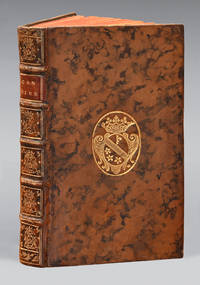
réf. ABAA-75TH-VBF-27N.p. Genève Cramer 1759. 12mo of 299 pages. Signatures A-N4. Full marbled calf coat of arms gilt-stamped in the center of the covers spine decorated with crowned coat of arms repeated five times red edges. Contemporary armorial calf binding. 159 x 93 mm. "Very rare and much sought after"original edition. "There are eight different editions of Candide published in 1759 without the name of the city or the printer all printed in the same format and all having an identical title. Of these eight editions this is the first." Bengesco B.n.F. En Français dans le texte. "Raised in a baron's castle a certain young man named Candide leads the most pleasant life in the company of his tutor Dr. Pangloss. And for good reason: he takes from the latter that the world is absolutely good since any cause brings the best end in an inescapable way until the day when the squire disturbs this quietude: having surprised the dear Candide on the breast of his daughter Cunégonde he sends him on the hour to all the devils of a great kick in the butt. Reduced to rolling his hump the young man travels to various countries that will show him that this world does not respond very well to the wonderful teaching of the good man Pangloss. Whether he finds himself in England France or Italy he is forced to note that evil prevails over good in the most savage way." "It is certain that Voltaire is the master of ironic pessimism. Eugène Marsan observes in this respect: "Of all his veins it is this one that has suffered the least from time. What he had of caduc in his poetry of dry in his history of short in his philosophy ended up repulsing instead of the pessimism of Candide seducing more and more ". This original edition of Candide is rare and very rare in fine condition. A copy of mediocre quality in rubbed calf was sold for 100 000 € 90 000 $ at the time by American booksellers exhibiting at the Salon de la Mutualité in May 2001 22 years ago. A copy in simple roan with arms was sold for 150 000 € in 2009 14 years ago. A precious and beautiful copy - the only one to appear on the market in contemporary marbled calf with arms for half a century - bound with the arms and pieces of arms of the marquis de Caraman 1731-1806. Marie-Jean-Louis de Riquet known as the marquis de Caraman fourth son of Victor-Pierre-François comte de Caraman and Louise-Madeleine-Antoinette Portail born on November 26 1731 became a knight of the order of Saint-Louis in 1760 and a brigadier of the king's armies on April 20 1768; he died in 1806; he had married on August 21 1763 Marie-Charlotte-Eugénie de Bernard de Montessus de Rully. Voltaire and the marquis de Caraman were frequenting each other at the court of Stanislas. In 1738 the treaty of Vienna put an end to the war of Polish Succession. The king Stanislas Leszczynski was exiled. As Louis XV's father-in-law he was given Lorraine and Barrois which were then erected as kingdoms. He was fond of Lunéville where the court led by a "puppet sovereign" attracted brilliant minds with its great freedom. The whole of intellectual Europe met there in particular Voltaire and Madame Du Châtelet. Stanislas took a liking for this couple that he received with all the honors. Voltaire appreciated the relaxed and tolerant atmosphere of Lunéville where he found refuge when he published disturbing works. The two men continued to correspond and remained linked until Stanislas' accidental death in 1766. Among the main guests who came successively to charm and entertain the court of Lunéville we must mention the Prince of Conti the Crown Prince of Hesse-Darmstadt Miss Charolais; the Bishop of Toul Mgr Drouas de Boussey; the count and the marquis de caraman the count of Stainville the marshal of Bercheny an old friend of Stanislas who lives near Châlons; Mgr de Choiseul-Beaupré the marshal of Maillebois and his son etc. etc. His tolerance was the same for all; he welcomed as liberally the philosophers who fled the Bastille as the Jesuits who fled the wrath of the Parliament. At his court everyone had complete freedom of conscience: his first doctors and his treasurer were Protestants. For Stanislaus the greatest pleasure of all was to talk with people whose minds were as lively and cultured as his own; he didn't care about their opinions he loved to discuss. The men of letters as well as the philosophers were not without appreciating the rare honor which their royal fellow-member made to them so good so familiar so accessible; they pleased themselves infinitely in this peaceful court where they were admired as they deserved to be and where they enjoyed in peace the fruit of their work far from the envy and the cabals. Voltaire did not live happier years than those he spent in Lunéville. FR S.l. Genève Cramer 1759. In-12 de 299 pages. Signatures A-N4. Plein veau marbré armoiries frappées or au centre des plats dos à nerfs orné de pièces d'armoiries couronnées répétées cinq fois filet or sur les coupes tranches rouges. Reliure en veau armorié de l'époque. 159 x 93 mm. Edition originale " très rare et très recherchée ". " Il existe de Candide huit éditions différentes publiées en 1759 sans nom de ville ni d'imprimeur toutes tirées dans le même format et ayant toutes un titre identique. De ces huit éditions celle-ci est la première. " Bengesco B.n.F. En Français dans le texte. " Élevé dans le château d'un baron certain jeune homme appelé Candide mène la vie la plus agréable en compagnie de son précepteur le Dr Pangloss. Et pour cause : il tient de ce dernier que le monde est absolument bon vu que toute cause amène la meilleure fin d'une manière inéluctable jusqu'au jour où le châtelain trouble cette quiétude : ayant surpris le cher Candide sur le sein de sa fille Cunégonde il l'envoie sur l'heure à tous les diables d'un grand coup de pied au derrière. Réduit à rouler sa bosse le jeune homme parcourt divers pays qui se chargeront de lui montrer que ce monde répond fort peu au mirifique enseignement du bonhomme Pangloss. Qu'il se trouve en Angleterre en France ou en Italie force lui est de constater que le mal prévaut sur le bien de la manière la plus sauvage. " " Il est certain que voltaire est le maître du pessimisme ironique. Eugène Marsan observe à cet égard : " De toutes ses veines c'est celle-là qui a le moins souffert du temps. Ce qu'il avait de caduc dans sa poésie de sec dans son histoire de court dans sa philosophie a fini par rebuter au lieu que le pessimisme du Candide a de plus en plus séduit ". Cette édition originale de Candide est rare et rarissime en bel état. Un exemplaire de qualité médiocre en veau frotté fut vendu 100 000 € 90 000 $ de l'époque par des libraires américains exposant au Salon de la Mutualité en mai 2001 il y a 22 ans. Un exemplaire en simple basane armoriée fut vendu 150 000 € en 2009 il y a 14 ans. Précieux et bel exemplaire - le seul apparu sur le marché en veau marbré armorié de l'époque depuis un demi-siècle - relié aux armes et pièces d'armes du Marquis de Caraman 1731-1806. Marie-Jean-Louis de Riquet dit le marquis de Caraman quatrième fils de Victor-Pierre-François comte de Caraman et de Louise-Madeleine-Antoinette Portail né le 26 novembre 1731 devint chevalier de l'ordre de Saint-Louis en 1760 et brigadier des armées du Roi le 20 avril 1768 ; il mourut en 1806 ; il avait épousé le 21 août 1763 Marie-Charlotte-Eugénie de Bernard de Montessus de Rully. Voltaire et le marquis de Caraman se fréquentaient à la cour de Stanislas. En 1738 le traité de Vienne met fin à la guerre de Succession de Pologne. Le roi Stanislas Leszczynski est exilé. En tant que beau-père de Louis XV il se voit attribuer la Lorraine et le Barrois alors érigés en royaumes. Il affectionne Lunéville dont la cour animée par un " souverain fantoche " séduit de brillants esprits par sa grande liberté. Toute l'Europe intellectuelle s'y retrouve en particulier Voltaire et Mme Du Châtelet. Stanislas se prend d'amitié pour ce couple qu'il reçoit avec tous les honneurs. Voltaire apprécie l'atmosphère détendue et tolérante de Lunéville où il trouve refuge quand il publie des ouvrages qui dérangent. Les deux hommes continueront à correspondre et resteront liés jusqu'à la mort accidentelle de Stanislas en 1766. Parmi les principaux hôtes qui viennent successivement charmer et distraire la cour de Lunéville il faut citer le prince de Conti le prince héritier de Hesse-Darmstadt Mlle de Charolais; l'évêque de Toul Mgr Drouas de Boussey; le comte et le marquis de Caraman le comte de Stainville le maréchal de Bercheny un vieil ami de Stanislas qui demeure près de Châlons; Mgr de Choiseul-Beaupré le maréchal de Maillebois et son fils etc. etc. Sa tolérance était la même pour tous; il accueillait aussi libéralement les philosophes qui fuyaient la Bastille que les jésuites qui fuyaient les foudres du Parlement. A sa cour chacun avait toute liberté de conscience: ses premiers médecins son trésorier étaient protestants. Pour Stanislas le plus grand de tous les plaisirs était de causer avec des personnes dont l'esprit était 168 comme le sien vif et cultivé; peu lui importait leurs opinions il adorait discuter. Les hommes de lettres aussi bien que les philosophes n'étaient pas sans apprécier l'honneur rare que leur faisait leur royal confrère si bon si familier si accessible; ils se plaisaient infiniment dans cette cour paisible où ils étaient admirés comme ils méritaient de l'être et où ils jouissaient en paix du fruit de leurs travaux loin de l'envie et des cabales. Voltaire n'a pas vécu d'années plus heureuses que celles qu'il a passées à Lunéville. Voltaire est déjà passé par la Lorraine lorsqu'il arrive à Lunéville en février 1748 accompagné d'Emilie du Châtelet sa douce amie depuis quelques années. Stanislas l'accueille avec grand plaisir et lui fait les honneurs de sa cour. Très vite se nouent de bonnes relations entre les deux hommes. Même si Voltaire n'est pas toujours en accord avec les ouvrages que publie Stanislas il apprécie l'atmosphère détendue et tolérante de Lunéville. Il y trouve ce qui lui est le plus cher : " les fêtes et la liberté " comme il en témoigne lui-même dans sa correspondance. La cour lorraine offre à Voltaire un refuge où il peut fuir Paris cette capitale française où il est souvent en délicatesse avec la censure et le pouvoir royal. L'émulation artistique et intellectuelle qui règne à Lunéville fait se succéder jeux concerts et représentations théâtrales au cours desquelles les œuvres du " roi Voltaire " sont applaudies. D'autres auteurs importants sont passés par Lunéville comme le fameux Montesquieu le mathématicien Maupertuis ou le président Hénault dramaturge et historien. En 1749 Voltaire et Emilie du Châtelet sont de retour en Lorraine pour une halte estivale au château de Commercy avant de retrouver Lunéville. C'est là que meurt la " divine Emilie " le 10 septembre 1749. Cette disparition brutale affecte tellement Voltaire qu'il doit abandonner la Lorraine après avoir fait ses adieux à Stanislas qui le quitte en pleurant. hardcover
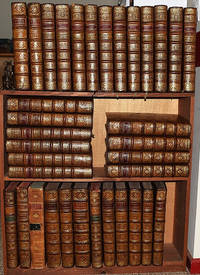
réf. LCS-186414L’un des exemplaires imprimés sur grand papier fin. De l’imprimerie de la Société Littéraire typographique 1784-1789. 70 volumes. Grand in-8, maroquin vert, encadrement doré sur les plats, roulette intérieure et coupes finement ornées, dos lisses ornés de motifs dorés (certains légèrement passés), pièces de titre et de tomaison de maroquin rouge, tranches dorées. Quelques rousseurs inhérentes au papier. Reliure de l’époque. 245 x 150 mm.