34 878 résultats
réf. BN369451Diary JP Oversized Diary JP Oversized Diary JP Oversized unknown
1955réf. 2091502133901160America Maru Passenger Bookmarked 1955. Soft Cover. Fine. Volume: 1 America Maru Passenger Bookmarked paperback
1881réf. 32098aux bureaux du journal 1881 3 années reliées en un volume comporte les Années 1881, 1882, 1883 complètes dans la même reliure
1860réf. 21616Paris, Bohné ; Bruxelles, Van Meenen, 1860 ; in-16, bradel de percaline rouge vif, pièce de titre vert foncé, chiffre couronné doré Philibert de Lombard de Buffières, comte de Rambuteau en pied du dos, date en queue (reliure de l’époque) ; XII-494 pp.
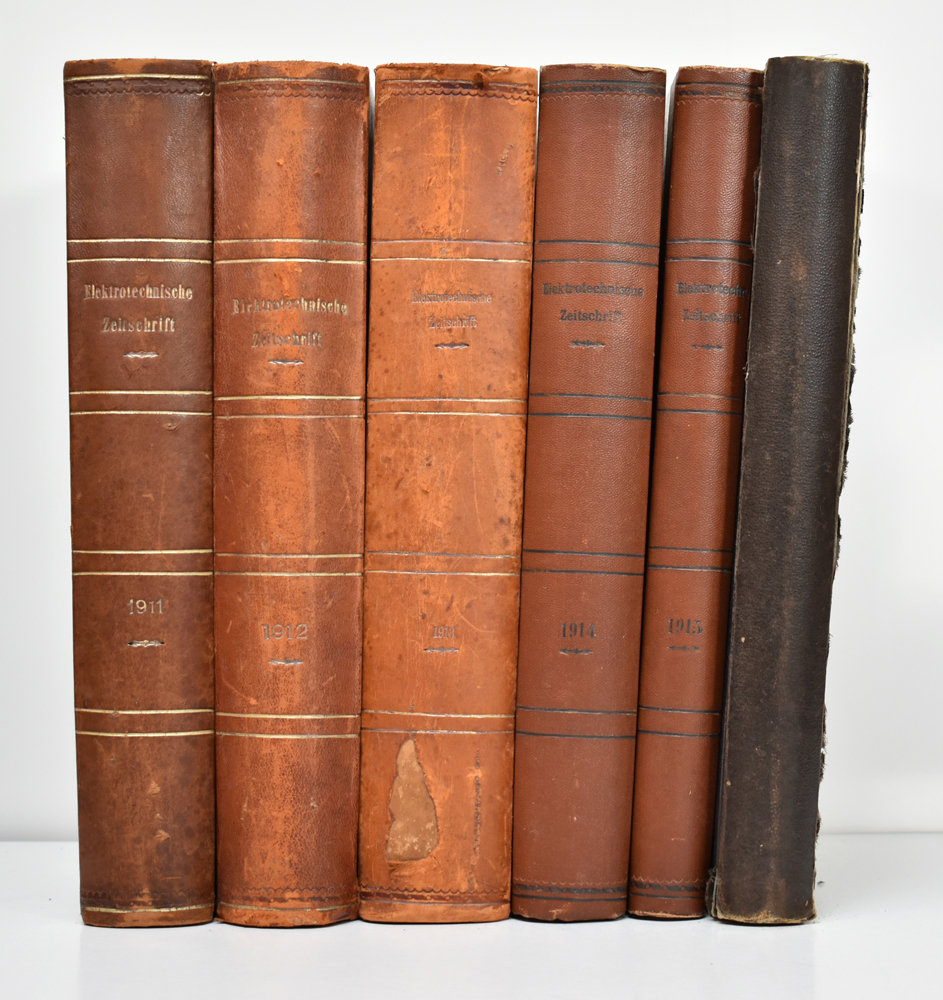
1895réf. 59062BBBerlin und München, Julius Springer Verlag und Verlag R. Oldenbourg, 1895-1915. Groß-4°. 36,5 x 28,0 cm. ca. 15000 Seiten. Braune Halblederbände der Zeit mit goldgeprägtem Rückentitel. Jahrgang 1895 im Pappband der Zeit. [4 Warenabbildungen]
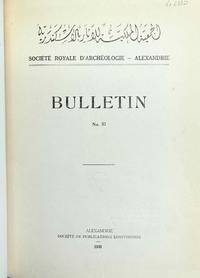
réf. M14392Very rare set of 22 issues bound in 20 volumes. About 10% of the set is in XEROX the rest is in the original first edition. Société Archéologique d'Alexandrie Alexandrie 1900-2003. First edition. In-4 & in-8. Later half-leather for all volumes except vol. 47 which is in its original softcover. A very nice set. From the library of Egyptologist Charles Cornell Van Siclen III VSX. Language: French/Français - English - German/Deutsch - Italian/Italiano. This set ships from the USA shipping costs will be updated accordingly TXR. Relevant subjects: Egypt: Journals Egypt Greco-Roman. unknown
réf. M14468Rare set of 62 issues bound in 30 volumes. Vandenhoeck & Ruprecht Göttingen 1909-1987. First edition. Large in-8. Original cloth some foxing on the spine of a few volumes otherwise a very nice unmarked set. From the library of German scholar Hans-Jürgen Jordan HJJ. Language: German/Deutsch. This set ships from Europe shipping costs will be updated accordingly BCI. Relevant subjects: Rome Greece & Aegean. unknown
1683réf. 59146Paris, Florentin Lambert et Jean Cusson, 1683. 4to. Contemp. full calf. Raised bands. Gilt spine. Wear to spine ends. A crack in leather along upper joint. Corners bumped.
1683réf. 59146Paris Florentin Lambert et Jean Cusson 1683. 4to. Contemp. full calf. Raised bands. Gilt spine. Wear to spine ends. A crack in leather along upper joint. Corners bumped. First edition. hardcover
1952réf. 2092902137703597Nagano Prefecture Food Distribution Public Corporation Journal Publishing Association 1952. Soft Cover. Fine. The book is in fine condition. Nagano Prefecture Food Distribution Public Corporation Journal Publishing Association paperback
1995réf. 2090502113708892Not Available 1995. Soft Cover. Fine. The book is in fine condition. Not Available paperback
1752réf. 35155DBLeipzig, Johann Friedrich Gleditsch, 1752-1762. 8°. Jeder Haupttitel mit einer wiederholten gestochenen Titelvignette. Kalbslederbände der Zeit mit roten goldgeprägten Rückenschildern und reicher Rückenvergoldung. + Wichtig: Für unsere Kunden in der EU erfolgt der Versand alle 14 Tage verzollt ab Deutschland / Postbank-Konto in Deutschland vorhanden + Band I-X in 10 (von 37) Bänden.
1980Numeri 1, 3, 4, 5, 10 - 11, 16, 19, 20 - 22. Esemplari in più che buone condizioni complessive. Conservata nel volume primo la cartelletta fuori testo con “Non Sol Antihertz”, opera di Marco Bagnoli. Il periodico trimestrale, che deve il titolo al celebre sonetto di Rimbaud, diretto da Bruno Corà, dedica ogni numero a un ventaglio di artisti diversi che partecipano alla pubblicazione con approfondimenti testuali, riproduzioni delle proprie opere e interventi artistici ideati ad hoc. Protagonisti della rivista sono spesso gli artisti dell’Arte Povera come è evidente fin dal primo numero che ospita tra gli altri: Jannis Kounellis, Mario Merz, Giulio Paolini e Luciano Fabro. La rivista fu pubblicata a partire dal settembre 1980.
1848Mende al primo fascicolo (al margine sinistro) ma nel complesso ottimo esemplare. Il giornale vide la luce il 25/27 marzo 1848 col numero doppio 1 e 2; cessò le pubblicazioni col n 48 del 16 giugno. Dal numero 28 al sottotitolo si aggiunse: Organo ufficiale del Circolo Patriottico. Moltissimi i collaboratori tra cui: Cesare Cantù, Vincenzo Gioberti, Tullio Dandolo, F. Ugoni, Carlo Cattaneo, Prati con Vincenzo de Castro come responsabile. Non comune giornale che raccolse attorno a se i più convinti sostenitori dell’Italia indipendente. Fogli impressi su carta azzurra.
1933Prima edizione. Ottimo esemplare completo di un allegato bifolio su carta giallognola con réclame editoriali. Volume quinto del periodico polacco «Scena di Lwów» diretto da Wilam Horzyca — manager dell'allora molto attivo «Teatro Municipale» di Lwów — relativo alla stagione teatrale 1932/33, interamente dedicato a Marinetti e al futurismo in occasione della prima polacca di «Prigionieri e Vulcani» e della visita del capo del futurismo nel marzo 1933. Testo in polacco, tranne in copertina e nella dedica in prima pagina. Traduce dal francese il primo capitolo del poema «Monoplan du Pape», e il manifesto sul teatro sintetico futurista. Precede l’introduzione «Marinetti y futuryzm», firmata dalla scrittrice e traduttrice polacca Anna Ludwika Czerny (1891-1968), e chiude la postfazione del direttore «Marinetti a Wyspiański», «indubbiamente il tentativo più valido e originale di approcciare la figura di Marinetti [...] per il confronto col drammaturgo polacco [Stanisław Wyspiański (1869-1907)]. Horzyca inquadra i due quali esponenti del “tempo della realizzazione”, fortemente contrari a un’inclinazione romantica, idealistica e sentimentale» (Ajres, Il futurismo italiano in Polonia nel centenario del Manifesto, in: Italia e Polonia 1919-2019, pp. 217-229). Oggi Lwów si chiama Lviv (Leopoli) ed è nel territorio dell’Ucraina. Cammarota, Marinetti, Marinettiana II, n. 59
1720réf. 97482pierre marteau - demen 1720 A Cologne, chez les Héritiers de Pierre Marteau (4 premiers volumes) chez les Heritiers de Herman Demen (supplément), 1720-1724, 2 tomes + 1 supplément reliés en 5 volumes in-12 de 170x100 mm environ, tomes I.I et I.2 : (1) f., 1 frontispice, 1 titre, (4) ff. (avertissement et table), de 1 à 280, (1) f. suivi de (1) f., 1 frontispice, de 281 à 532 (pagination continue sur les 2 volumes), (13) ff. (table), (1) f., - Tome 2.1 et 2.2 : (2) ff. 1 titre, (1) f. ( table) de 1 à 258, (1) f., suivi de 259 à 516 pagination continue sur les 2 volumes, (13) ff. (table), (1) f., - Tome 3 : (1) f., 1 frontispice, 1 titre, (2) ff. (avis au lecteur, table) 352 pages, (1) f. Reliure plein veau havane, dos à nerfs portant titres et tomaisons dorés sur pièces de titre en maroquin bordeaux et brun, ornés de caissons à riches et délicats motifs dorés, coupes et chasses dorées, gardes marbrées avec ex-libris sur le premier contreplat, tranches rouges. Avec 11/13 portraits, 2 planches manquantes. Des rousseurs et pages brunies, quelques petites mouillures dans les marges, 3 coiffes légèrement ébréchées, coins émoussés, des auréoles et frottements d'usage sur le cuir, sinon bon état, édition rare avec son supplément.
1919Edizione originale molto rara. Minimi segni del tempo marginali, complessivamente un ottimo esemplare. Fondamentale testo teorico di Depero sul teatro plastico, corredato da 12 belle riproduzioni delle marionette e dei disegni preparatori in grande formato.
1927Rarissimo numero d’esordio della prima rivista d’arte inventata e diretta da Raffaello Giolli, «quella che può considerarsi la prima rivista italiana di arte contemporanea, nata come un bollettino dal nome ‘1927. Problemi d’arte attuale’, trasformatasi poi in ‘1928’, ‘1929’, e divenuta, dal novembre del 1929, ‘Poligono’» (DBI s.v. Giolli). Straordinaria esperienza che spazia dall’arte all’interior design con grande attenzione a dettagli tecnici, materiali da costruzione ecc. Gli articoli non sono firmati o lo sono con pseudonimo per scelta esplicita, dichiarata nel manifesto «Mancano le firme» (p. 12). Tra i contenuti, La Milano di Cascella (citato a più riprese Giandante X), Un negozio modello: “La Moda Nuova” dell’Arch. De Finetti, Il mobile di Chessa, la Conversazione classica di Gio Ponti (manifattura di Doccia per Richard Ginori), piatti e vassoi in rame e metallo bianco di «Michaelles (Thayaht)», modello di macelleria di Casorati. Qualche sfrangiatura ai margini della copertina e altri minimi segni del tempo, nel complesso molto ben conservato.
réf. VOY915M1767, Molini, Paris. Première édition française. Trad. de Jean-Baptiste Suard. In-12, reliure plein maroquin rouge signée, dos à nerfs, roulettes encadrant les contreplats, filets sur chasse et coiffes, toutes tranches dorées. Figure en frontispice d'un couple de Géans pantagons. (2) ff., lxviij-335 pp. Infime enfoncement des coins. Intérieur très agréable voire frais malgré de rares épidermures sans incidence sur le texte. Mors du premier plat très légèrement marqué.
réf. 23482Journal de la littérature et des beaux-arts, 2e série, tome 2. Paris, 1839,2eme SÉRIE, TOME 2, 1839,nov. 1838 - avr. 1839. Paris: Bureaux de l’Artiste, 1839. First edition. 4to.contient Jules Janin, « Le Daguerotype »p 145 à 148,Georges Sand le dernier sauvage roman, etc,texte à 2 colonnes .IN FOLIO demi basane à coins,dos lisse romantique orné,tranches marbrées,366p.,33 lithographies et eaux fortes ht reliées in fine avec rousseurs,texte frais ,rare complet.
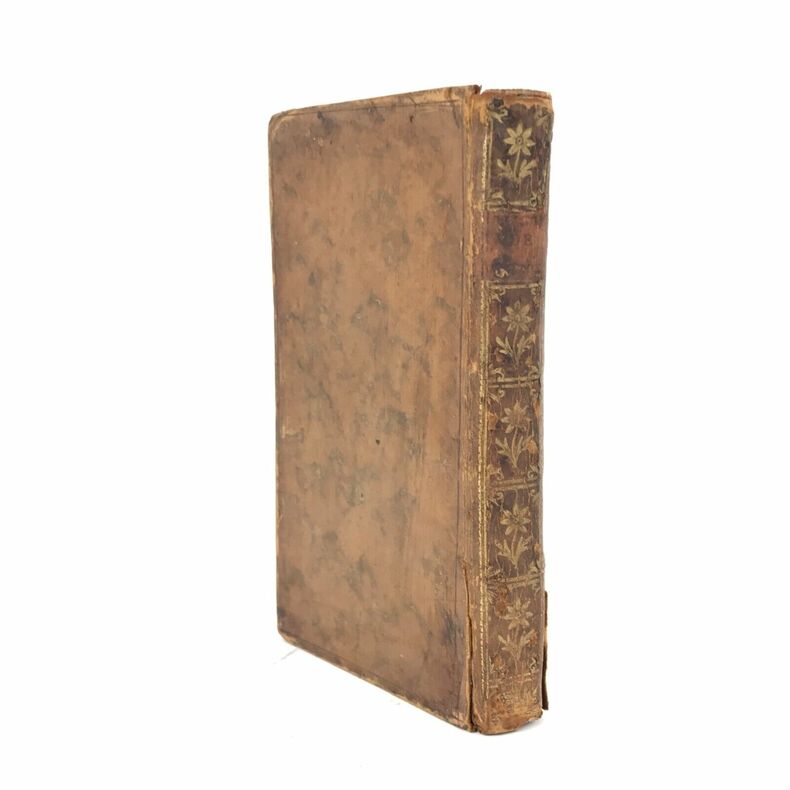
1754réf. PHO-1551Lyon, chez les Frères Duplain, 1754 ,1 volume in-12 (14 x 8 cm), veau marbré (reliure de l'époque), dos lisse orné, filet à froid encadrant les plats, filet doré sur les coupes, tranches rouges, xxviii-233-[1] pages .Coins usés, charnières fendues, coiffes découvertes, rares rousseurs, manque la pièce de titre.
réf. 104719aafLe Figaro, Boussod, Valadon & Cie éditeurs, 1897, in-folio, IV, 244 p. (en continu), les 12 nos. richement ill. en noir et en couleurs, volume avec les couvertures en couleurs celui de Janvier montée sur la reliure et la superbe couverture de ‘Juin’ par Mucha, robuste reliure privé (de bibl.) en d.-parchemin.
réf. 96180aafParis, Mercure de France, 1954-1966, in-8°, brochures originales. Bon état.
1898réf. AUB-9162Genève, Société Genevoise d'Edition de 1898 - 1919. Choix d'ouvrages complets pour une année. 13 beaux ouvrages relié, in-4, environ 300 pages le volume avec table analytique des matières.
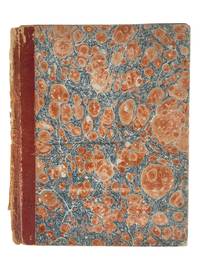
1851réf. 218121851. Science Medicine & TechnologyMilitary & WarLabor Environment & Welfare Manuscript industrial journal documenting the British lead shot industry patent culture and metallurgical manufacturing during the height of the Victorian industrial economy. Primarily England and Wales 1851-1853. Approximately 50 pages written in ink in a highly legible hand bound in an octavo-format notebook measuring 8 x 6.5 inches. Quarter red leather over marbled boards. Ownership inscription to front endpaper: "John R. Tracy / Nov 1852." An unusually detailed firsthand record of mid-19th-century industrial innovation centered on the manufacture of lead shot at a moment when Britain's expanding military infrastructure mining economy and heavy industry were increasingly dependent on large-scale metallurgical production. Compiled by John R. Tracy the manuscript documents the development and attempted commercialization of what he repeatedly identifies as a "Shot Patent" likely an improvement to the production or grading of lead shot associated with the traditional shot tower process. Rather than functioning merely as a technical notebook the volume captures the broader industrial system surrounding invention in Victorian Britain: factory inspections patent negotiations industrial espionage concerns business networking licensing discussions and the competitive culture of ironmasters and lead manufacturers operating across England and Wales. The manuscript opens in October 1852 and proceeds through a sequence of dated entries recording Tracy's travel and meetings with manufacturers engineers and industrial firms. These entries reveal the practical realities of introducing a new industrial process into Britain's established lead trade where manufacturers guarded technical methods closely and approached outside inventors with skepticism. On October 26 Tracy records receiving "letters of introduction to Messrs. A. B. Brown & Green" and to "Platt Bros." illustrating the importance of personal industrial networks and recommendation systems within Victorian manufacturing culture. Another entry dated November 5 describes a meeting arranged through "Mr. Maxwell of Messrs. Norton Theakers" followed by Tracy's note of "Much of 'shot etc.'-a rather funny conversation but on the whole. appointment for tomorrow @ 10 1/2" capturing the uncertain and often informal negotiations surrounding industrial patents. Particularly revealing is Tracy's November 6 account of visiting the Flintshire lead smelting firm Newton Keates & Co. where he describes the guarded and competitive atmosphere surrounding lead shot production. Tracy recounts that permission to inspect the works was "at-first-refused in rather a John Bullish manner" before eventually being granted under supervision. He writes perceptively about the mixture of suspicion and curiosity that surrounded industrial patents noting that the proprietor "wished to know the price upon the Patent" but that he deliberately withheld a valuation because "there was no use to let him have the bait to look at before he was hungry enough to bite." The language throughout reveals how industrial innovation in this period depended not simply on invention itself but on strategic secrecy negotiation and control over proprietary manufacturing knowledge. One of the manuscript's most important sections is a full-page listing titled "Lead Works in the United Kingdom in 1852" identifying more than two dozen lead works and manufacturers across Britain. Firms including Walker Parker & Co. Newton Keates & Co. and Richmond Anchor Co. are listed alongside annotations describing their production specialties including "sheet" "pipes" "shot" "white lead" and "pig." The page functions as a rare industrial survey of Britain's lead industry during a period of rapid military and industrial expansion documenting the interconnected infrastructure supporting ammunition production construction materials piping paint manufacture and metallurgical processing. Later entries contain detailed observations of shot-manufacturing equipment at a Chester lead works including descriptions of shot towers ranging from 76 to 96 feet in height and the use of perforated metal grading systems to regulate molten lead as it fell into spherical form. Tracy records the operation with notable technical specificity: "The shot are dropped through a perforated metal-the holes being smaller at the upper end and increasing in size as you get to the lower cylinder." Accompanying diagrams depict feed bins drop tubes sieves and sorting mechanisms apparently intended to improve efficiency or shot-size consistency beyond earlier tower methods. Tracy critically evaluates the machinery as well remarking that certain sieve boxes "seem inadequate for the work" and comparing the process economically to that employed by "D. De Roy & Co.'s works." The notebook therefore preserves not merely abstract invention but active industrial analysis and comparative manufacturing study. The manuscript is documenting metallurgy patent culture and military-industrial production in the decades preceding the major arms expansions of the later nineteenth century. Lead shot remained essential not only for hunting and civilian markets but for military supply systems deeply tied to imperial expansion and industrial warfare. Tracy's notebook reveals the increasingly professionalized yet still highly personal world through which industrial technologies circulated in Victorian Britain where factory visits guarded conversations handwritten technical sketches and negotiated introductions formed the practical infrastructure of innovation. Spine mostly perished with binding delicately held together; boards rubbed and worn. Interior exceptionally clean and highly legible throughout. A substantial and unusually revealing manuscript documenting Victorian industrial manufacturing patent strategy and the lead shot trade during a formative period in British industrial history. unknown