1782 resultados
1878Original letter penned and signed by Layard after the Bulgarian uprising in the Balkans. The letter measures 7 x 9 inches dated February 23, 1878 while he was HBM Ambassador in Constantinople. The letter provides a reference for a James Long, MA who was a humanitarian. Long was about to go to Bazandjik on the Danube in Bulgaria which had recently been occupied by the Russians during the Russo-Turkish War. Together with the letter is an original portrait photograph of Layard measuring 8 x 10 inches as well as a contemporary bigraphical sketch from the 1880's. Letters from Layard while abroad are rare. Manuscript
1900London, 26 February 1900. Signed Manuscript Letter by Admiral Sir Albert Hastings Markham, naval officer and pioneering arctic explorer, addressed to S. C. J. Freeman-Mathews in Cape Town, South Africa. Small 8vo. Double-leaf measuring approximately 15 x 15cm. Together with original cover, opened on three sides, bearing three postal marks and one stamp, and measuring 11 x 8 cm. Both in very good condition, from the autograph collection of Seymour C.J. Freeman-Matthews. The addressee, Seymour C.J. Freeman-Matthews was a collector of autographs and amassed a sizeable treasure of signatures with solicitations such as which led to this letter and autograph being penned by a great Arctic navigator. The letter reads as follows: "Dear Sir, I have to acknowledge the receipt of your letter of the 5th inst. and, in reply, have much pleasure in complying with your request, Believe me. Yrs. faithfully, A. Markham [signature] Vice Admiral." Manuscript
1842"Histoire Ancienne. Histoire du Moyen Age." [Ancient History. Middle Ages.] Manuscript history of the world from Antiquity to the Middle Ages, being lecture notes written by Maurice de Vernouillet, at the time a pupil of history professor Marc Petit de Baroncourt at the Collège de Bourbon, on the island of Réunion, east of Madagascar. Text is in French. 8vo. 2 volumes, 274, 294 pages, plus title pages to each volume. Bound uniformly in black calf over blue marbles boards, gilt title and tooling to spines. Volumes vary slightly in size, the first measuring approximately 17,5 x 21,5 cm, the second 15,5 x 19,5 cm. Minor wear to boards, otherwise in very good condition, a content-rich work in a fine hand. The origin of these works, Réunion Island, is revealed on the title pages of the second volume, by noting the professor's name, Monsieur [Marc] Petit de Baroncourt, who in 1841 became Professeur agrégé d'histoire au collège de Bourbon [Associate Professor of History at Bourbon College (in 1841)]. Born in Étain, Meuse, De Baroncourt was also a historical writer, beginning with an abridged history of the Middle Ages. The National Library of France holds at least one letter and one book by him. The student and writer is presumably Augustin "Maurice" Marchant de Vernouillet, born 18 April 1829 in Paris, who would later become a Resident Secretary in Madrid, holding the title of "Ministre plénipotentiaire de 1° classe" [a diplomat of ambassador usually with full power over a foreign land]. These volumes provide a rare opportunity to possess and examine the teachings of a notable French professor of the Collège Bourbon, on Isle Bourbon, today called La Réunion, where slavery was still ongoing, as was French colonisation. Manuscript
1851Packet ship broadside for the auction sale of Glasgow schooner called 'London Packet' to take place six days after this announcement, on 7 November 1851, in the harbour of the historic seaport village of St. David's situated very near to Inverkeithing, Fife. 8vo. Single leaf printed document, watermarked, measuring approximately 28 x 20 cm. Slight creasing, one unobtrusive small chip to lower margin, otherwise in Very Good condition, presenting an exceptionally rare example of an in-situ auction for a vessel. Lovely and rare broadside from Scotland during the Golden Age of Sail to announce the sale of a Scottish packet ship which had then been recently stranded on the notorious Beamer Rock. The public auction was to begin at noon, 7 November 1851, in the harbour where the vessel sat in situ, in the historic village of St. David's. The vessel was part of the early sailing fleet of William Sloan & Co., a notable Scottish firm established in 1825 and operating the largest fleet in Glasgow by 1848.
1849London, 28 November 1849. Manuscript Signed Letter to approbate the cocoa served by the Royal Navy to its nearly 200,000 mariners, written by important Scottish chemist Andrew Ure. 8vo. Double-leaf measuring approximately 18.5 x 17 cm. Very good, original condition. A most unusual document of unexpected consequence. Together with a privately printed biography published in London 1874, featuring an original albumen portrait photograph frontis of Dr. Ure. Small 8vo. measuring 10.5 x 14.5 cm. 18, [3] pages, giltedged leafs, gilt tooled and titled green leather boards, minor wear to corners, otherwise in Very Good condition. The favourable result from a formal investigation of a specific company's cocoa purchased and consumed by the British Navy at 400 tonnes per year, Dr. Ure suggests that many English producers were at the time compromising quality during production, however, he confirms the purity of Graham & Hedley's Genuine Roll Cocoa which was manufactured in Liverpool. A new product, the cacao was moulded into rolls and stamped. For a fee of £10.10 and commissioned by the Lords of the Admiralty [Sir James Whitley Deans Dundas, &c.], this analysis may very well have secured enormous profitability and longevity for the chocolate company. Competitors immediately denounced the assessment, such as Taylor Brothers for example, whom stated that public preference or 'taste test' was all that truly mattered. Evidently significant not only to the Navy, but also to the public as a whole, Ure's letter was published in the "Law Times" volume 15, 1850. Subsequently, numerous publications touted Graham & Hedley's product as "the best preparation of cocoa for morning and evening meals.... advantageous for invalids to whom it is essential to have the article genuine... the most economical substance offered to the public... superior homeopathic cocoa..." and so on. Excerpt from the letter: "Having been employed by the Lords Commissioners of the Admiralty to analyze and improve the Cocoa and Chocolate of which 400 tonnes are annually manufactured for Navy at the Deptford Victualling Yard... " "I take pleasure in testifying that the Roll Cocoa of Messrs Graham & Hedley of Liverpool is perfectly pure, and so well prepared as to afford with hot water or milk, a bland, aromatic, salubrious, and highly nutritious an article of diet." End Excerpts. The letter is accompanied by a rare biographical sketch which commemorates Dr. Ure's important works, a lovely volume printed for private distribution only. Excerpts from the book: "... To Dr. Ure belongs the honour of having taken the lead in a movement which has had incalculable power in developing national wealth... In 1809, when the Glasgow Observatory was about to be established, Dr. Ure came to London, commissioned to make the scientific arrangements. Here he met, and acquired the friendship of Maskelyne, Pond, Groombridge, and other Astronomers, and also of Davy, Wollaston, Henry, and other distinguished chemists of that day... in London... appointed in 1834, Chemist to the Board of Customs... important researches on sugar refining... his skill and accuracy as an analytic chemist were well known, as well as the ingenuity of the means employed in his researches..." Dr. Andrew Ure (1778-1857) was a Scottish physician, analytical chemist, and a highly respected professor of chemistry. A foremost (possibly the first) consulting chemist in Britain, doing much work in London where he settled in 1830, his work entailed investigative tours of several industries in England, Belgium and France, various government commissions such as the one outlined above, and speaking as an expert witness. His visits to English textile mills led to his famous publications of "The Philosophy of Manufactures" (1835) and "The Cotton Manufactures of Great Britain" (1836). His exposure to factory conditions led him to consider methods of heating and ventilation, and he is credited with being the first to describe a bi-metallic thermostat. "The Great Dictionary of Arts, Manufactures and Mines" (1837), was Ure's chief and most encyclopaedic work. In 1840 he helped found the Pharmaceutical Society. The Board of Commissioners for the Victualling of the Navy, often called the Victualling Commissioners or Victualling Board, was for 150 years the body responsible under the Navy Board for victualling ships of the British Royal Navy. It oversaw the vast operation of providing serving naval personnel (140,000 men in 1810) with enough food, drink and supplies to keep them fighting fit, sometimes for months at a time, in whatever part of the globe they might be stationed. It was in 1795 that Dr. Joseph Fry of Bristol employed a steam engine to grind cocoa beans, which led to the manufacture of chocolate on a large scale. By 1825 the Royal Navy purchased more cocoa than for the rest of Britain. It was considered perfectly nutritious beverage for sailors on watch duty, being hot and non-alcoholic was of further benefit. Sailors in the Atlantic Ocean and the Baltic Sea coined the term "chocolate gale" in reference to the cold wind from the northwest, which ultimately granted them the comforting treat. By the nineteenth century chocolate was being tested for commercial distribution as a "homeopathic" and "dietetic" product. According to Hassall's survey of British made chocolate, producers of homeopathic chocolates included Graham & Hedley, Taylor Brothers, Leaths, J.S. Fry & Sons, Cadbury, Barry and Company, Epps' and others. Manuscript
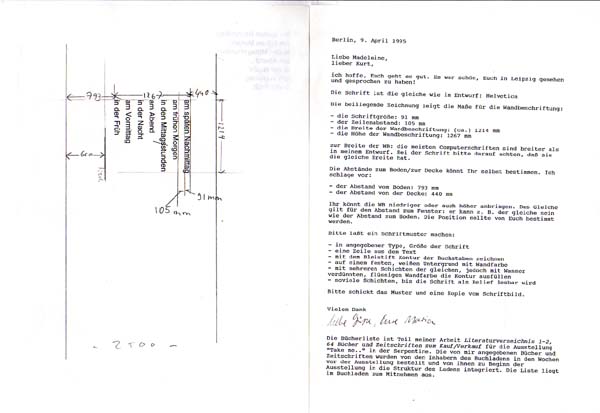
1969ref. 56817ABMönchengladbach., Städtisches Museum., 1969. 20 x 16 cm. 12 unpaginierte S.; 6 lose Karten, 50 Blatt vakat. OPapp-Kassette., 56817AB Auflage 440 Exemplare. Titelblatt etwas gebräunt, sonst sehr gutes Exemplar.
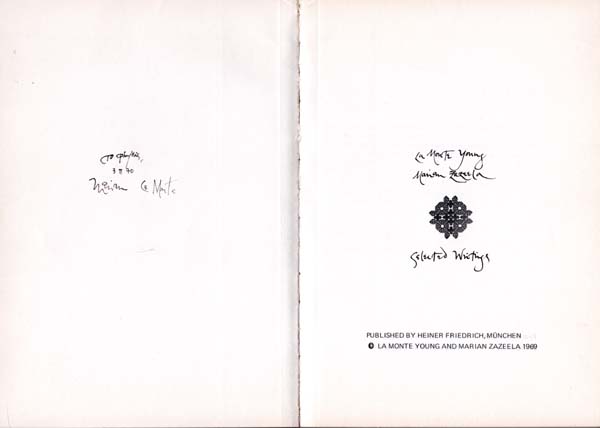
1969ref. 56883ABMünchen., Heiner Friedrich., 1969. 21 x 15 cm. 102 unpaginierte S. OKarton., 56883AB Kapital oben mit sehr geringer Druckstelle, Umschlag minimal nachgedunkelt und angestaubt, sonst sehr gutes Exemplar.
1993ref. 65007ABStuttgart., Edition Cantz., 1993. 26 x 21 cm. 84 (2) S., 1 Blatt. OPappband mit OUmschlag in OPapp-Kassette mit Extrasuite., 65007AB Sehr gutes, frisches Exemplar.
1993ref. 3070EBBerlin., o. V., [1993]. 32,3 x 26,5 x 3 cm. [8] unpaginierte S.; [6] unpaginierte S. Kopien., 3070E Sehr gutes Exemplar.
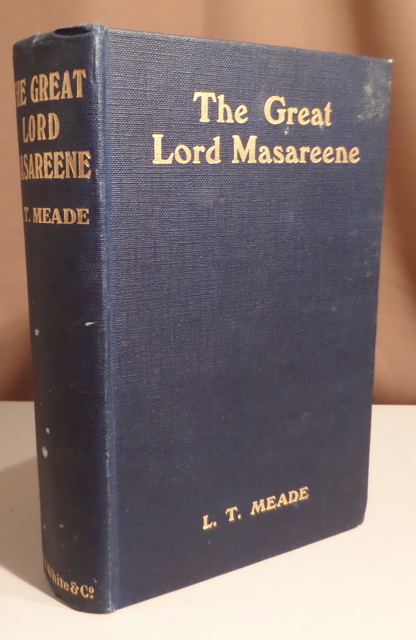
1913ref. 67621London, White 1913. 1913. 4 Bll., 312 S. Dunkelblauer Orig.-Leinen mit goldgeprägtem Titel.
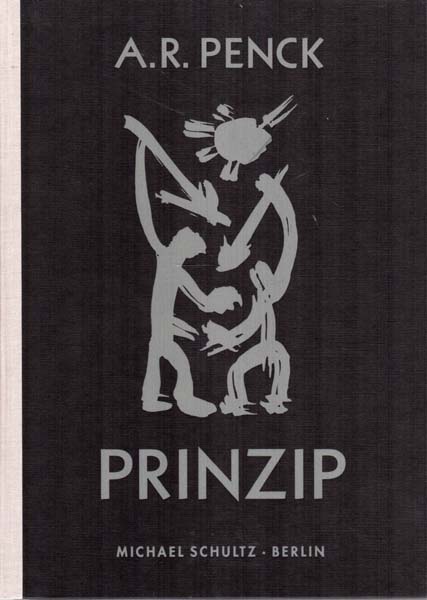
1992ref. 62051ABBerlin., Galerie Michael Schultz., 1992. 30,5 x 22,5 cm. 312 unpaginierte S. OHalbleinen mit Einbandillustration., 62051AB 200 nummerierte Exemplare. Sehr gutes, frisches Exemplar.
18558vo. 32 page German manuscript, a poetic or theatrical composition dealing with California and dedicated to Queen Marie, Consort of King George V of Hanover, during the California Gold Rush. Dedication page, written in French, signed and dated by 'Gontard' who was an affluent art collector and chairman of an elite German art museum, and whom had evidently just met the Queen in person at the Exposition Universelle in Paris. Exquisite red morocco binding by Hof-buchbinders Wilhelm Ermold (binder to the Royal Hanover Court), beautifully finished in gilt with a crowned monogram 'M' for Marie, royal blue cloth endpapers, satin bow dividers. Evidence of an imbedded gift-wrapping ribbon to boards, slight foxing to first few leafs, otherwise very good condition, internally clean and bright, a pleasing work in an elegant binding fit for royalty. Title: Die Reise nach Californien. Nach dem französischen bearbeitet von Eduard Suhren. [A Voyage to California. From the French, edited by Edward Suhren.] The ambiguously titled manuscript may be a German rendition of the French theatrical opera by Dondey Dupré titled "Le voyage en Californie ou notice explicative du panorama" which concerned travels across the United States and explorations in the West - by John Charles Fremont, first explorer to cross the Sierra Nevada in winter, foremost US Senator, abolitionist, who prospered during the California Gold Rush. Content includes the explorer's sighting of pines in the Sierra Nevada oak forest at 3500 feet, melting gold, and so forth. Frémont's father was a native of France, who died only eight years after the French Revolution. As such, his gallant endeavours and accomplishments in the New World would certainly garner much attention in France, as with other European nations with colonies abroad. The French opera was first publicly performed 8 August 1850 in Paris, at the Théâtre des Variétés. Gontard, who met the queen, and dedicates this manuscript to her, may have been involved in a German production, performed for the House of Hanover. A full page dedication inscription, in French, is addressed to the Queen of Hanover, by Huguenot descendant Jakob Friedrich Moritz Gontard (1826-1886), chairman and administrator of the Städel art museum in Frankfurt, officially the Städelsches Kunstinstitut und Städtische Galerie. Queen consort of Hanover from 1851 to 1878, née Princess Marie of Saxe-Altenburg, recipient of this dedicated manuscript, was the wife of King George V of Hanover, the last monarch of the short-lived Kingdom of Hanover. In his dedication, dated Hanover, 12 July 1855, Gontard thanks the monarch for having come to see his panorama at the International Exhibition held on the Champs-Elysées, stating that her visit inspired the work which forms the volume, and which he humbly offers to her. He references materials which were given to her onsite, which would elucidate the obscure details of the creative piece. The date indicates that King George V and Queen Marie of the short-lived Kingdom of Hanover attended the event in its first eight weeks. Queen Victoria of the United Kingdom paid a visit to the Parisian Exhibition in August. Unique manuscript volume, bound in the Royal Court of Hanover, written at the height of the California Gold Rush and featuring historic Americana content. Manuscript
1992ref. 58011ABHamburg., Deichtorhallen., 1992. 33 x 25 cm. 17 S., 54 Tafeln, 1 oranges Blatt. OLeinen-Kassette., 58011AB Auflage 600 Exemplare. Sehr gutes Exemplar.
1998ref. 69240ABBerlin., Galerie Michael Schultz., 1998. 41 x 30,6 cm. [10] unpaginierte Bütten-Doppelblätter. Illustrierter OHalbleinenband mit schwarzem OLeinenschuber., 69240A Erste Auflage. Winzige Kratzspur auf dem Buchdeckel recto, sonst sehr gutes Exemplar.
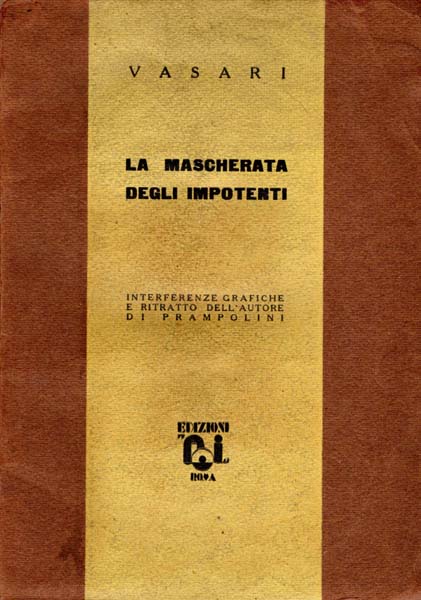
1923ref. 67436ABRoma., Edizioni Noi., 1923. 21,0 x 14,5 cm. 63 S. OBroschur., 67436AB Prima edizione. Kleine Fehlstelle an der hinteren oberen Stoßkante. Diese durchgehend leicht gestaucht. Insgesamt sehr gutes Exemplar.
1972ref. 538FBKöln., DuMont Verlag., 1972. 25 x 20 cm. 281 S. OKarton., 538F 1. Auflage. Sehr gutes Exemplar. DuMont Kunst-Praxis.
1990ref. 69252ABAmsterdam., Edition Aschenbach., 1990. 59,5 x 42,5 x 1,1 cm. [6] unpaginierte Blätter. Illustrierter OPappband mit OLeinenrücken., 69252A Erste Auflage. Einband minimalst angestaubt, sonst sehr gutes Exemplar.
1893Edinburgh, 1893. Letter Book Archive of draft documents made by the law firm Campbell, Martin & Boswell, for private estates and business agreements, neatly preserved in a custom binding, featuring little known details relating to the Dalquharran Castle and Kennedy estate, Scottish investments and links to Australia, and a fascinating connection to the renowned poet Robert Burns by way of a lease made with his descendent for a mansion estate which he, too, had personally visited. 8vo. Approximately 170 documents, most in manuscript and some in typescript, 1166 pages combined, with a scant few integral blanks, plus unpaginated manuscript index listed alphabetically by document type. Very large volume measuring 23 x 35 x 9 cm (WxHxD) and weighing 10 pounds. Quarter calf over brown cloth boards labelled in gilt to spine, original marbled endpapers. Bookbinder's label to front pastedown (Caldwell Brothers of Edinburgh). Very good condition, an excellent depository volume of legal and historical interest. The firm Campbell, Martin & Boswell, consisted of three solicitors, each with the title and privileges of "Writers to the Signet", John Douglas Boswell, W.S.; Patrick William Campbell, W.S.; and Francis John Martin, W.S., the latter of whom became a Fellow of the Royal Society of Edinburgh in 1892. Their office was at 1 North Charlotte Street in Edinburgh, which was the same address as the Royal Bank of Scotland, and situated very near to Charlotte Square. Scots law and legal proceedings of the late nineteenth century, much of which differ today, are well illustrated in this archive of original working documents executed by accomplished patrician lawyers representing some discriminating and aristocratic clients. Many of the documents deal with property conveyance and estate matters, and represent traditions no longer observed, including the obsolete " Trust Disposition and Settlement" procedure for claiming an inheritance. Other documents include assignations, land conveyances, bond and disposition in security, deeds of assumption and discharges, estate inventories, a search for deeds with the Register of Sasines, leases, loan proposals for purchasing commercial space in Edinburgh, records of monetary investments in Highland Railway (HR), Jamaican plantations, property to let in Scotland, Australian banks, and so forth. So exclusive and intertwined were the upper class and wealthy, perhaps not large in number, but surely powerful in society, some interesting genealogical and business connections can be made from examining these papers. Many clients are also relations to the solicitors who often acted as trustees. In one case, we find a multi-generational connection between the Campbell and Burns families, beginning with the Jamaica sugar plantation owner Patrick Douglas and Scotland's celebrated national poet Robert Burns (1759-1796). In addition, these documents shed light on the leasing history of the Dalquharran Castle in South Ayrshire, which included hunting rights for at least one resident, as well as the Kennedy family's monetary investments in Australia. Interesting to note, one of the lawyers from this firm, Mr. Campbell, is related through marriage to the castle's then most recent owner, Mr. Francis Thomas Romilly Kennedy (died in 1892). Some items of special interest: • A twenty page lease agreement was issued to a Glasgow coalmaster named Robert Burns (1844-1896), who was the great-great-grandson and namesake of the famous poet and lyricist Robert Burns (1759-1796) - who had visited the very same Mansion House of Garrallan in his day, being a friend of its proprietor at the time, Dr. Patrick Douglas. A fascinating and detailed document, the lessors were concerned with mining royalties, minerals specifically deemed as belonging to the Marquis of Bute, and minerals raised at the mansion house. [Garrallan was owned by the Campbell family until 1676. The Douglas family followed but it became extinct in the male line. Dr. Patrick Douglas, who died 1819, also owned property in Jamaica and in 1786 he offered Robert Burns a position as a bookkeeper in Port Antonio, but the poet declined. Burns was a visitor at Garrallan. Jane Douglas married Hamilton Boswell and this family retained it until 1914 when it was sold to the Stevenson family of Changue, who still own the property.] • Another fascinating document is headed "Notes on Titles of Charlotte Square," now a World Heritage Site situated in Edinburgh. In this we find reference to feudal tenancy and particulars of construction. Excerpts from the document: "Charter by the Magistrates & Town Council of Edinburgh in favour of Alexander Stevens dated 1st June 1803... no buildings are to be erected... on the foresaid back ground... that the area of the square within the line of the street ways was to become a common property for the accommodation pleasure health or other convenience of the several feuars round said square... For the lot of ground in Charlotte Square X the sum of £6. 18/4 3/12 and further paying the sum of £14. 18/4 3/12 upon the entry of each heir and singular successor or disponee to said Lot Houses or Tenements built thereon... For the foresaid piece of ground on Young Street the sum... Disposition of Sir George Hope to Margaret Kyle of Binghill dated 2nd April 1818. Disposition & assignation of the said Rev'd Dr. James Kyle in favour of Alexander Russell dated 8th January 1868. Disposition Settlement by the said George Bruce [Factor and Law Agent, W.S.] dated 10th July 1891 & recorded in the Books of Council Session 27th July 1892." • At least 8-10 documents pertain to Francis Thomas Romilly Kennedy (1842-1892) and the Dalquharran Castle which he inherited in 1879 and immediately expanded. The castle, which was built for his grandfather and featured a round bastion tower with a drawing room, piano nobile, and a library above, and an exquisite top-lit spiral central staircase, was extended from 1880-81 by Francis Thomas Romilly Kennedy, to accommodate his wife and bedrooms for their nine children. The work was completed at great expense, leaving the Kennedy family almost bankrupt. The family is known to have left Dalquharran for alternative lodgings, and by 1890 they had leased the castle and its lands as a hunting and fishing estate, as seen in this volume. Examples of the papers found herein include: An Agreement of Lease of the Dalquharran Castle as a furnished residence, "excepting the Strong Room retained by the proprietor", to James Paterson of Milton Lockhart, and includes surrounding lands with permission for shooting small game in accordance with the Ground Game Act of 1880. On 24 July 1893, the Scottish Union & National Insurance Company confirming notice of an "assignation" which transfers the estate of Francis Thomas Romilly Kennedy, to his second son "John Campbell Kennedy of the Royal Navy." A two page document which itemizes and places monetary value on the "Additional Inventory of the Personal Estate... of the late Mr. Kennedy", including the surrender value of a life insurance of sorts, from which are deducted debts and funeral expenses. A list of debentures, borrowed from institutions in Australia, Canada, and Oregon, also documents relating to his investments with the British and Australasian Trust and Loan Company. Matters concerning his executrix and widow Eliza Barbara Colina (née Campbell) Kennedy. • An agreement permitting a John Ernest Orr to manufacture and sell a certain steam trap which was patented in 1892 by a millwright named John Mackie. As members of the elite society of Scottish solicitors, the Writers to the Signet, and thus holding special signing authorities and privileges, the firm of three attracted some notable clients, some of which were long-standing clients from generations past. A cursory gander through the volume finds these examples: • William Jardine Herries Maxwell (1852-1933), a Liberal Unionist politician in Scotland. Maxwell was elected at the 1892 general election as the Member of Parliament (MP) for Dumfriesshire in 1895, but lost it very narrowly when his Liberal Party opponent had a majority of only 13 votes. He regained his seat in 1900, but stood down at the 1906 general election. • William Caven Lockhart-Mure of Livingston in the Stewartry of Kirkcudbright, Lieutenant in the 4th Bombay Cavalry (Poona Horse), Indian Army, who later rose to the rank of Major, and died in died in 1913. [With a lease herein the lieutenant agreed to a term of five years, letting and maintaining the Livingstone House, gamekeeper's house, garden and orchard in Kirkcudbright. It was owned by Colonel John Stewart (died 1726), a Scottish professional soldier who served in the Scottish Army and, after the Union with England, in the British Army, who also held a seat in the House of Commons of Great Britain from 1708 to 1715, and who had inherited the property from his father. • James Oswald (1779-1853), an influential merchant and Member of Parliament (MP) for Glasgow from 1832 to 1837 , who inherited the estate of his cousin Richard Alexander Oswald (1771-1841), a Scottish Liberal Party politician who sat in the House of Commons from 1832 to 1835. [Again a family connection, his son, also named Richard, married Lady Mary Kennedy.] • Alexander Oswald (1811-1868), a Conservative Party politician and Member of Parliament (MP) for Ayrshire from 1843 to 1852, as well as his father Richard Alexander Oswald, a Glasgow merchant. • Robert Haldane Scott, a Scottish attorney in Jamaica who filed returns for slaves by plantation owners in Trelawny, and his daughter Eliza Scott who married Reverend Edward Holland of New South Wales and died intestate June 1890. [A detailed document assigns a woman named Margaret Jane Wakeford, resident of Falmouth, Jamaica, as Power of Attorney for the estate of the late Eliza Scott.] • William Hume, technical chemist and innovative instrument maker, who was very active in the 1880s and 1890s designing and manufacturing magic lanterns, glass lantern slides, oxy-hydrogen lime-light apparatuses, a cantilever enlarging apparatus, a half-plate camera, rapid rectilinear lenses, and other photographic equipment, from his shop at 1 Lothian Street in Edinburgh. [A loan proposal herein indicates that he also purchased the property of 31 Lothian Street.] • Annabella Alexandrina Campbell Boswell (1826-1914), gentlewoman, born at Yarrows, Bathurst Plains, New South Wales, having a maternal lineage linked to the Campbells. She was a prolific diarist, horsewoman, skilled watercolourist and pianist. In 1849 Annabella met Patrick Charles Douglas Boswell, a free settler from Ayrshire, Scotland, accountant for the Bank of New South Wales (later becoming manager), who was related to James Boswell the biographer, and presumably also Mr. Boswell of this firm. Together Annabella and Patrick returned to Scotland in 1865, where Patrick had inherited the family estate in Ayrshire. • The only actual "will" recorded here is that of Bengal Army Major General Robert Farquhar Webster's widow, Janetta Annan Webster (née Dewar), which bequeaths the estate to her son, and permits the trustee to invest funds and heritable securities into in stocks of Great Britain, any British Colony or Dependency, until such time as he reaches the age of maturity. [Her husband was educated at the Edinburgh Academy before joining the British Army in India in 1843. He retired in 1878 as a Major General in the Bengal Staff Corps.] • Major Archibald Hume of Auchendolly and Spitalside, born 27 Dec 1843, and recognized by the Society of Antiquaries of Scotland for having presented the museum with a bronze enamelled harness ornament of British Celtic origin. • William Fullarton of Fullarton (1754-1808), a Scottish soldier in the Bengal Staff Corps who participated in the Second Anglo-Mysore War, a statesman, agriculturalist, author, and son of a wealthy Ayrshire gentleman for whom he was named - William Fullarton of Fullarton. • Reverend Samuel Smith, attached to the church and parish of Borgue in the Stewartry of Kirkcudbright. • Lieutenant General Sir Thomas Maitland (176-1824), a British soldier who served in St. Domingue, and colonial Governor of British Ceylon. Historical Scottish minutiae through and through, with over 170 documents to explore, the opportunity of finding little-known information or unravelling early questions of lineage and heritable rights is indeed great! Dalquharran Castle: In the spring of 1819 Thomas Francis Kennedy (1788-1879) of Dalquharran Castle and Dunure, Ayr, (Whig aristocrat and commissioner of woods, forests, land revenues, works and buildings), succeeded his estranged father to the encumbered Ayrshire estates. The principal properties were the Dalquharran Castle near Dailly, and the coastal estate of Dunure, situated between Dalquharran and Ayr. He died at Dalquharran in 1879 and was succeeded by his only child, Francis Thomas Romilly Kennedy (1842-1892). At great expense Francis Thomas Romilly Kennedy made expansions to the mansion, leaving the Kennedy family almost bankrupt. Recent studies suggest that external construction work was finally finished in the summer of 1890, relating this to a note made by Kennedy on documents bearing this date, and existing records regarding the exterior paving and roofing work being completed. The family is known to have left Dalquharran for alternative lodgings, and by 1890 they had leased the castle and its lands as a hunting and fishing estate. The castle had several tenants over the next 45 years, whilst staying in the hands of the Kennedy family. Eventually, the castle and the estate were put up for auction. It was bought by a Timber Merchant from Troon, who set about stripping the timber from the estate and who leased the castle to the Scottish Youth Hostel Association. Dalquharran remained a youth hostel until the Second World War, when the Langside School for the Deaf, evacuated from Glasgow, moved in. During the war, the Castle and lands were sold to one John Stewart, a produce merchant from Girvan, who later moved into Dalquharran with his family, and farmed the estate. The Stewart family co-habited the house with friends, but still the house proved too large and expensive to maintain, and was abandoned. The castle was inhabited as recently as 1967, but was unroofed to allow the then owners to avoid payment of high tax rates. It is now a ruin, with only the masonry shell remaining intact. The Society of Writers to Her Majesty’s Signet is a private society of Scottish solicitors, dating back to 1594 and part of the College of Justice. Writers to the Signet originally had special privileges in relation to the drawing up of documents which required to be signeted, but these have since disappeared and the Society is now an independent, non-regulatory association of solicitors. The Society maintains the Category A listed Signet Library, part of the Parliament House complex in Edinburgh, and members of the Society are entitled to the postnominal letters, WS. Wills/Testaments and Inheritance (Scotland): Heritable property, also known as immoveable or 'heritage' property and real estate, included land and buildings. Up to 1868 real estate was automatically inherited by the eldest son (the law of primogeniture) or daughter if there was no son unless there had been a specific disposition or bequest. The law of primogeniture applied to heritage until 1964. This meant that an eldest son might not appear named in the will. Likewise, a wife, who would automatically get the widow's part, may not be mentioned. The right to inherit was established by Retours of Services of Heirs or by a Trust Disposition and Settlement ('deed of settlement'). The actual register of the transfer or other change in ownership was recorded in Sasines. Manuscript
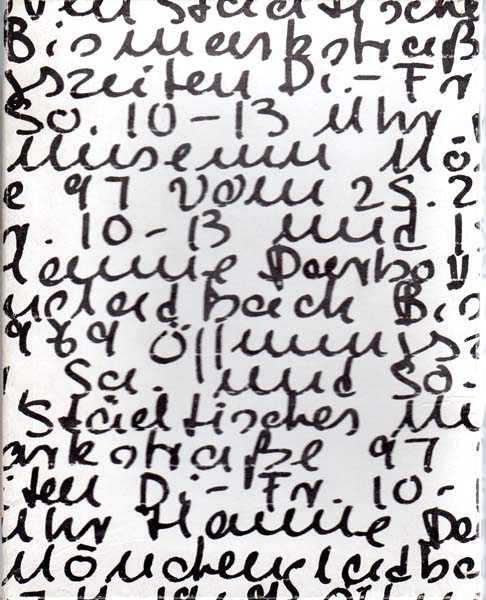
30 January 1868. Manuscript Signed Letter by Sir John Kirk, British administrator in Zanzibar and co-explorer with David Livingstone, in which leading explorers of the Dark Continent are mentioned. 8vo. Double-leaf mourning stationery, measures approximately 18cm x 11cm. Creased, otherwise in very good condition, interesting correspondence on the procurement of significant autographs. The letter reads as follows: "Dear Mrs. Carnegie, Please give to Mrs. Baradaille the enclosed autographs of Livingstone and Du Chaillu. Of Murchison I have not one now but so frequently am in correspondence with him that it cannot be long time before I can add it also. Give her my best regards and believe me I am Yours sincerely. John Kirk" Manuscript
1923Visitors book for guests of the Hythe Golf Club, founded in 1894, with 78 manuscript signatures penned on 10 leafs. 8vo. Full calf binding, with impressed heraldic seal to front, raised lettering "CCW The Links Hythe" also to front, five raised bands to spine, untrimmed leafs. Volume measures approximately 21 x 26,5 x 2,5 cm. Wear to boards, front bowed slightly, otherwise in very good condition, containing some notable signatures. Members of the British monarchy's household are featured in the volume, with signatures made on 8 August 1823, including Albert, Duke of York, (later King George VI). His new bride, Elizabeth, Duchess of York (later the Queen Mother) evidently accompanied him, he signing on her behalf. Also with them, and signing in the original, was lady-in-waiting Katharine Meade, as well as the Duke's advisor Sir Louis Greig. Sir Clement Anderson Montague-Barlow, 1st Baronet, who at the time was Minister of Labour and a member of the Privy Council, also signed on the same day, as well as six others. Having just been married in April, during the summer of 1923 Albert and Elizabeth, future King and Queen of the United Kingdom, were travelling a fair bit. They first settled into White Lodge, in Richmond Park. They were spotted at the Richmond Show, and shortly after that at the Hendon Air Show. They visited Holyrood House in Edinburgh in July. Their social life was beginning on a grand scale. At the end of the season, they went to stay at Molecomb and attended the races at Goodwood. The present volume reveals a little-known and rather private event at the Hythe Links Golf Course on 8 August 1923. Among other elite visitors whose signatures are present in the volume, we find: - Antarctic explorer Herbert G. Ponting - Sir William Letts a pioneer of the British motor industry and founder member of the Automobile Association - City of London Alderman Sir Maurice Jenks, and family - Sir Samuel George Shead Esq. who was appointed one of the two Sheriffs of London in 1915 - Sir Herbert Benjamin Cohen 2nd Baronet Cohen of Highfield - Colonel J.V. Delahaye, first president of the WOSB. Manuscript
1972ref. 66393ABStuttgart. London. Reykjavik., Edition Hansjörg Mayer., 1972. 23 x 17 cm. 222 S. 8 Blatt. Illustrierter OKarton mit (8 von 9) illustrierten OUmschlägen., 66393AB Erste Ausgabe. Sehr gutes Exemplar. Gesammelte Werke Band 20.
1979ref. 66591ABStuttgart. London., Edition Hansjörg Mayer., 1979. 24,5 x 18,0 cm. 234 unpaginierte S. Gelbes OLeinen mit illustriertem OUmschlag in gelbem Leinen-Schuber., 66591AB English edition of 1000 clouthbound in slipcase. Nahezu makellos frisches Exemplar.
1967ref. 13913BBWien / München, Verlag für Jugend und Volk, 1967. Luxusausgabe (numeriert, signiert). LUXUSAUSGABE! Eines von 200 Exemplaren! Numeriertes Exemplar (Nr. 28)! Der vorliegende Band enthält eine dreiteilige Originalradierung "Eva Triptychon" (Werksnummer 116/III; in allen drei Teilen von Ernst Fuchs handsigniert!). Zusätzlich enthält der vorli
1889Manuscript telegraph letter sent from Governor of Hong Kong Sir George William Des Voeux, in cipher, to Colonial Administrator Sir William MacGregor, which offers to the post of Colonial Secretary of Hong Kong, on the same day which Colonial Secretary Frederick Stewart died. Together with a manuscript decipherment, and a signed letter from the decipherer of the message, Sir Henry Wylie Norman, Governor of Queensland. 8vo. Single-leaf telegraph on the stationery of the Telegraph Office Queensland completed in manuscript and dated 29 September 1889; Double leaf manuscript letter on the stationery of the Queensland Government House Brisbane dated 1 October 1889; hand trimmed manuscript note measuring approximately 17,5 x 11,5 cm. All three documents fastened together with a brass pin. Some creasing, minor wear at folds, otherwise in very good condition, a fascinating disclosure of of Hong Kong administrative history perhaps previously unknown to anyone but the parties involved. This is a little-known and private correspondence, concealed for delivery with a colonial cipher language, between two important colonial administrators, concerning the title of Colonial Secretary of Hong Kong. A telegraph from Hong Kong reveals that an offer was made to MacGregor to work in China in 1889. The sender does not reveal himself, and the message in written in code, however a contemporary manuscript decipherment fastened with a brass brad discloses the contents. Sir George William Des Voeux, Governor of Hong Kong is the sender. Des Voeux knew MacGregor well from his time as Governor of Fiji from 1880-1885, during which period he worked with MacGregor who was Treasurer then Colonial Secretary of Fiji. Manuscript
1982ref. 65063ABKöln., Edition Dietmar Werle., 1982. 61,0 x 43,5 cm. OLeinen-Kassette., 65063AB Auflage 10 Exemplare und 2 Künstlerexemplare. Sehr gutes Exemplar.