Albert SAMAIN - Alphonse ALLAIS - UZESBiblio.com
932 Ergebnisse
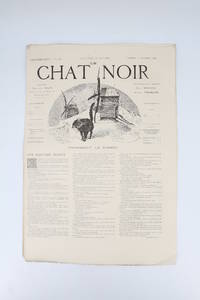
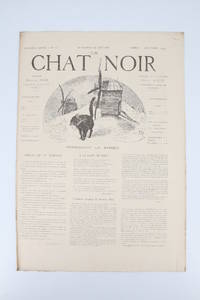
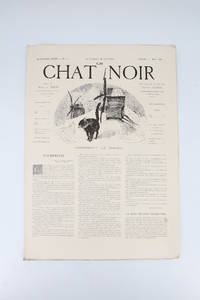
1885Best.-Nr. 83162Paris: Au cabaret Le Chat noir 1885. Fine. Au cabaret Le Chat noir Paris 1885 31 x 45 cm en feuillets First edition one of the rare copies printed on laid paper. The issue consists of 4 pages and is illustrated with a comic strip by Uzès: ""There is no drawing this week"". Literary contributions by Alphonse Allais ""Modernisme"" two poems by Albert Samain ""Le chat noir"" and ""Biscuit"" Louis Marsolleau ""La mort de mon grand-père"" Rodolphe Salis. Handsome copy. Le Chat noir is a weekly review created by Rodolphe Salis and Emile Goudeau published from 1882 to 1897 with the aim of promoting the famous cabaret of the same name of which it intended to be the record. It published texts recited during performances. It is moreover an important literary and artistic testimony of the end of the 19th century centered around bohemia and the Parisian effervescence that was characteristic of it. Au cabaret Le Chat noir unknown
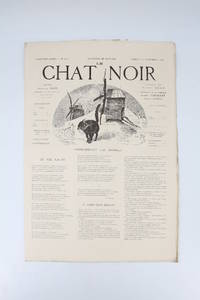
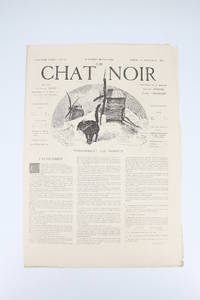
1886Best.-Nr. 83280Paris: Au cabaret Le Chat noir 1886. Fine. Au cabaret Le Chat noir Paris 1886 31 x 45 cm en feuillets First edition one of the rare copies printed on laid paper. The issue consists of 4 pages and is illustrated with a comic strip by Henry Somm: ""Dévouement et repentir"". Literary contributions by Rodolphe Salis ""La dévotion de Jacques de Pissardière illustré de 2 dessins de Théophile Alexandre Steinlen"" text dedicated to Jules Barbey d'Aurevilly Alphonse Allais ""Une mauvaise blague"" George Auriol. Handsome copy. Le Chat noir is a weekly magazine created by Rodolphe Salis and Emile Goudeau published from 1882 to 1897 with the aim of promoting the famous cabaret of the same name serving as its chronicle. It published texts recited during performances. It also forms an important literary and artistic testimony of the late nineteenth century centered around bohemian life and the Parisian effervescence that characterized it. Au cabaret Le Chat noir unknown
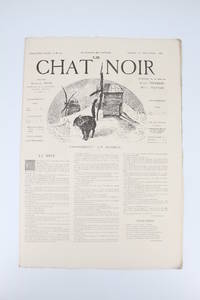
1886Best.-Nr. 83275Paris: Au cabaret Le Chat noir 1886. Fine. Au cabaret Le Chat noir Paris 1886 31 x 45 cm en feuillets First edition one of the rare copies printed on laid paper. This issue consists of 4 pages and is illustrated with a comic strip by Henry Somm "". Et que Boudha t'accompagne ! ."" Literary contributions by Alphonse Allais ""Le temps bien employé"" Jean Ajalbert ""Paysages de femmes"" Pierre Mille George Auriol. Le Chat noir is a weekly review created by Rodolphe Salis and Emile Goudeau published from 1882 to 1897 with the aim of promoting the famous cabaret of the same name serving as its memory. It published texts recited during the performances. It constitutes moreover an important literary and artistic testimony of the end of the 19th century centered around bohemian life and the Parisian effervescence that characterized it. Au cabaret Le Chat noir unknown
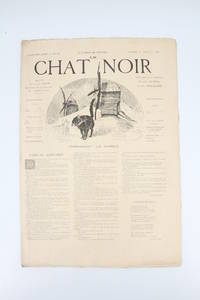
1886Best.-Nr. 81927Paris: Au cabaret Le Chat noir 1886. Fine. Au cabaret Le Chat noir Paris 1886 31 x 45 cm en feuillets First edition one of the rare copies printed on laid paper. The issue consists of 4 pages and is illustrated with a comic strip by Louis Blombed: ""Un coup de roulis"". Literary contributions by Alphonse Allais ""La mère"" Rodolphe Salis Victor Meusy Albert Tinchant ""Passe-temps"". Handsome copy. Le Chat noir is a weekly magazine created by Rodolphe Salis and Emile Goudeau published from 1882 to 1897 with the purpose of promoting the famous cabaret of the same name of which it serves as a record. It published the texts recited during the performances. It is moreover an important literary and artistic testimony of the end of the 19th century centered around bohemia and the Parisian effervescence characteristic of that era. Au cabaret Le Chat noir unknown
1886Best.-Nr. 81937Paris: Au cabaret Le Chat noir 1886. Fine. Au cabaret Le Chat noir Paris 1886 31 x 45 cm en feuillets First edition one of the rare copies on laid paper. This issue includes an unpublished poem by Charles Baudelaire ""Chanson du scieur de long"" originally intended for ""L'ivrogne"". The issue is also illustrated with a drawing by Théophile Alexandre Steinlen ""Les deux cochers"". Other contributions include Charles Cros ""Conquérant"" Alphonse Allais ""Comices agricoles"" Rodolphe Salis. A handsome copy. Le Chat noir was a weekly review founded by Rodolphe Salis and Emile Goudeau published from 1882 to 1897 with the aim of promoting the famous cabaret of the same name of which it sought to be the living record. It published the texts declaimed during performances and stands as a major literary and artistic document of the late 19th century reflecting the Parisian bohemian spirit and effervescence that defined it. Au cabaret Le Chat noir unknown
1884Best.-Nr. 81921Paris: Au cabaret Le Chat noir 1884. Fine. Au cabaret Le Chat noir Paris 1884 31 x 45 cm en feuillets First edition one of the rare copies on laid paper. The issue consists of 4 pages and is illustrated with a comic strip by Adolphe Willette on an interior page: ""Monstres de Paris. Les peintres incompris : M. Carolus Durand"". Literary contributions by Alphonse Allais ""Moeurs de ce temps-ci"" Georges d'Esparbès ""Les juges"" Jean Lorrain ""Miss Miser"" Camille de Sainte-Croix ""La chanson de la mer de Victor Margueritte"" under the semi-pseudonym of Xernand Fau ""La guerre aux abus"". Handsome copy. Le Chat noir is a weekly review created by Rodolphe Salis and Emile Goudeau published from 1882 to 1897 with the aim of promoting the famous cabaret of the same name whose memory it sought to preserve. The texts declaimed during performances were published there. It constitutes moreover an important literary and artistic testimony of the late nineteenth century centered around bohemian life and the Parisian effervescence that characterized it. Au cabaret Le Chat noir unknown
1886Best.-Nr. 81973Paris: Au cabaret Le Chat noir 1886. Fine. Au cabaret Le Chat noir Paris 1886 31 x 45 cm en feuillets First edition one of the rare copies printed on laid paper. The issue consists of 4 pages and is illustrated with a comic strip by Théophile Alexandre Steinlen: ""Les mésaventures d'Auguste"". Literary contributions by Alphonse Allais ""L'avancement"" Maurice Mac Nab ""La vue de Naples"" Eugène Godin ""Ronds de cuir"". Fine copy. Le Chat noir is a weekly magazine created by Rodolphe Salis and Emile Goudeau published from 1882 to 1897 with the aim of promoting the famous cabaret of the same name of which it intended to be the record. It published texts declaimed during the performances. It is moreover an important literary and artistic testimony of the late nineteenth century around the bohemia and the Parisian effervescence that was its own. Au cabaret Le Chat noir unknown
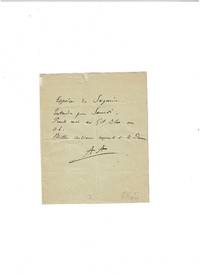
1880Best.-Nr. 756851880. Fine. s. d. circa 1880 11.60 x 14.20 cm un billet Autograph letter signed by Alphonse Allais mounted on fine cardboard. Traces of transverse folds small lacks and marginal tears. ""Espèce de sagouin. / Entendu pour samedi. / Prends moi au Gil Blas vers 6h / Mille cordiaux respects à ta dame. A.A."" ""You rascal. / Agreed for Saturday. / Pick me up at Gil Blas around 6pm / A thousand cordial respects to your lady. A.A."" unknown
1956Best.-Nr. 72216Paris: Grasset 1956. Fine. Grasset Paris 1956 12 x 19 cm broché First edition one of 479 numbered copies on châtaignier paper the only deluxe copies after 1 Madagascar and 20 pur fil. Preface by Anatole de Jakovsky photographic portrait of Alphonse Allais as frontispiece. Handsome copy retaining its publisher's wraparound band the spine soiled and discolored. Grasset unknown
1955Best.-Nr. 69961Paris: Les quatre jeudis 1955. Fine. Les quatre jeudis Paris 1955 14 x 20.50 cm broché First edition one of 20 numbered copies on pur fil paper the only deluxe copies along with 10 on Holland paper. Presentation by Anatole Jakovsky followed by 7 unpublished letters by the author. Handsome copy. Les quatre jeudis unknown
1956Best.-Nr. 58844Paris: Les quatre jeudis 1956. Fine. Les quatre jeudis Paris 1956 14.50 x 19 cm broché First edition one of 950 numbered copies on royal Bellegarde laid paper. Handsome copy. Les quatre jeudis unknown
1866Best.-Nr. 596571866. Fine. 1866 27.50 x 43.50 cm autre Charcoal black stone and white chalk drawing with wash highlights. Signed lower left in white chalk ""de St Allais 1866"". Thick rigid cardboard of 4 mm. Very fine condition despite a slight lack of 7mm at the upper left corner. Dry stamp lower right corner: Papier Pellée. Slight toning. Finely worked lake and grove landscape. NB: This work is available at the bookstore on request within 48 hours. unknown
Best.-Nr. 6323934104Oxford University Press OUP . Hardback. New. pp. 358 Index Oxford University Press OUP hardcover
1893Best.-Nr. 42997Paris: Paul Ollendorff 1893. Fine. Paul Ollendorff Paris 1893 12 x 19 cm relié First edition for which there is no mention of large paper copies. Contemporary Bradel binding in half khaki cloth over marbled paper boards the spine with gilt floral motif a double gilt fillet at foot of spine red shagreen title label small marginal scratches one lower corner rubbed. A rare and precious autograph inscription from Alphonse Allais to his publisher Paul Ollendorff : "". le seul éditeur vraiment digne de ce nom hommage d'un auteur qui n'est pas non plus dans une potiche the only publisher really worthy of that name homage from an author who is also not on a sinecure"". Provenance : library of Paul Ollendorff. Paul Ollendorff hardcover
1809Best.-Nr. 35406Paris: Imprimerie Impériale 1809. Fine. Imprimerie Impériale Paris 1809-1829 71 x 54 cm une feuille Original unshaved full-page etching from the Imperial edition of the Description de l'Égypte or Recueil des observations et recherches faites en Égypte pendant l'expédition française publié par les ordres de Sa Majesté l'Empereur Napoléon le Grand A Collection of the observations and research carried out in Egypt during the French expedition published on the orders of his Majesty the Emperor Napoleon the Great'.Produced between February 1802 and 1830 on the orders of Naopleon Bonaparte and published between 1809 and 1828 1000 copies were printed and distributed to institutions on vergé paper with an 'Égypte ancienne et moderne' watermark visible when held up to the light. Light marginal spotting not touching image otherwise in very fresh fine condition. An engraving from the Description de l'Egypte one of the masterpieces of French printing and the birth of a new field: Egyptology. A gigantic survey of Egypt at the time of Bonaparte's conquests in 1798 and 1799 the work is divided into 13 volumes of engravings making up 892 plates of which 72 colored as well as presenting the splendors of the Egypt of the Pharaohs in 9 volumes. The other volumes discuss natural history and present a fascinating portrait of Coptic and Islamic Egypt as it was seen by Bonaparte's Eastern Armies. The Egyptian campaign' militarily a disaster demonstrates through the engravings of the Description d'Egypte the scientific success it nonetheless became thanks to the 167 expert members of the Commission of the Sciences and Arts of the Institut d'Egypte Egyptian Institute who followed Napoleon's army. The Institut gathered together in Egypt the mathematician Monge the chemist Berthollet the naturalist Geoffroy Saint-Hilaire as well as numerous artists engineers architects and doctors. They were tasked with re-discovering modern and ancient Egypt and displaying its natural treasures as well as the know-how of its inhabitants.This edition the so-called Imperial edition of the plates for the Description de l'Egypte was printed in four large formats two of which were specially created for it and christened Moyen-Egypte and Grand-Egypte. A special press was built to print it the process extending over 20 years from 1809 to 1829. The Imperial edition proved so popular that a second edition this time in black and white and without the Egypte ancienne et moderne watermark known as the Royal Edition was published during the Restoration by the printing house of C.-L.-F. Panckoucke Paris.The engravings of the Description d'Egypte owe a great deal to Baron Dominique-Vivant Denon illustrator diplomat collector and later Director of the Musée Napoléon the Louvre. His exploration of the South of Egypt gave Bonaparte the idea of sending the experts of the Institut there thus creating a faithful and complete portrait of the area. This was the research gathered together from 1802 in the mammoth Description de L'Egypte.Denon embarked on this story of archeological exploration at the age of 51 reaching first Alexandria and then Cairo before exploring Upper Egypt. Along with the members of the Institut d'Egypte the Natural History Museum's painter H.J. Redouté brother of Pierre-Joseph Redouté author of Roses the mineralogist Dolomiue and the draughtsman Joly Denon then explored the Nile Delta and Lower Egypt. When however he joined the 21st Light Infantry Regiment as it marched across Upper Egypt in pursuit of the retreating Mameluks in November 1798 he found himself the only civilian. In the very midst of the battle itself he reeled off sketches of the works of art that peppered his path right up to the threshold of the Sudan. He said that he had crossed a country that is apart from its name entirely unknown to Europeans and therefore everything was worth describing Voyages dans la Basse et la Haute Egypte pendant les campagnes de Imprimerie Impériale unknown
1809Best.-Nr. 26226Paris: Imprimerie Impériale 1809. Fine. Imprimerie Impériale Paris 1809-1829 53.50 x 71 cm une feuille Original unshaved full-page etching from the Imperial edition of the Description de l'Égypte or Recueil des observations et recherches faites en Égypte pendant l'expédition française publié par les ordres de Sa Majesté l'Empereur Napoléon le Grand A Collection of the observations and research carried out in Egypt during the French expedition published on the orders of his Majesty the Emperor Napoleon the Great'.Produced between February 1802 and 1830 on the orders of Naopleon Bonaparte and published between 1809 and 1828 1000 copies were printed and distributed to institutions on vergé paper with an 'Égypte ancienne et moderne' watermark visible when held up to the light. Light marginal spotting not touching image otherwise in very fresh fine condition. An engraving from the Description de l'Egypte one of the masterpieces of French printing and the birth of a new field: Egyptology. A gigantic survey of Egypt at the time of Bonaparte's conquests in 1798 and 1799 the work is divided into 13 volumes of engravings making up 892 plates of which 72 colored as well as presenting the splendors of the Egypt of the Pharaohs in 9 volumes. The other volumes discuss natural history and present a fascinating portrait of Coptic and Islamic Egypt as it was seen by Bonaparte's Eastern Armies. The Egyptian campaign' militarily a disaster demonstrates through the engravings of the Description d'Egypte the scientific success it nonetheless became thanks to the 167 expert members of the Commission of the Sciences and Arts of the Institut d'Egypte Egyptian Institute who followed Napoleon's army. The Institut gathered together in Egypt the mathematician Monge the chemist Berthollet the naturalist Geoffroy Saint-Hilaire as well as numerous artists engineers architects and doctors. They were tasked with re-discovering modern and ancient Egypt and displaying its natural treasures as well as the know-how of its inhabitants.This edition the so-called Imperial edition of the plates for the Description de l'Egypte was printed in four large formats two of which were specially created for it and christened Moyen-Egypte and Grand-Egypte. A special press was built to print it the process extending over 20 years from 1809 to 1829. The Imperial edition proved so popular that a second edition this time in black and white and without the Egypte ancienne et moderne watermark known as the Royal Edition was published during the Restoration by the printing house of C.-L.-F. Panckoucke Paris.The engravings of the Description d'Egypte owe a great deal to Baron Dominique-Vivant Denon illustrator diplomat collector and later Director of the Musée Napoléon the Louvre. His exploration of the South of Egypt gave Bonaparte the idea of sending the experts of the Institut there thus creating a faithful and complete portrait of the area. This was the research gathered together from 1802 in the mammoth Description de L'Egypte.Denon embarked on this story of archeological exploration at the age of 51 reaching first Alexandria and then Cairo before exploring Upper Egypt. Along with the members of the Institut d'Egypte the Natural History Museum's painter H.J. Redouté brother of Pierre-Joseph Redouté author of Roses the mineralogist Dolomiue and the draughtsman Joly Denon then explored the Nile Delta and Lower Egypt. When however he joined the 21st Light Infantry Regiment as it marched across Upper Egypt in pursuit of the retreating Mameluks in November 1798 he found himself the only civilian. In the very midst of the battle itself he reeled off sketches of the works of art that peppered his path right up to the threshold of the Sudan. He said that he had crossed a country that is apart from its name entirely unknown to Europeans and therefore everything was worth describing Voyages dans la Basse et la Haute Egypte pendant les campagnes Imprimerie Impériale unknown
1809Best.-Nr. 23435Paris: Imprimerie Impériale 1809. Fine. Imprimerie Impériale Paris 1809-1829 70 x 51.50 cm une feuille Original unshaved full-page etching from the Imperial edition of the Description de l'Égypte or Recueil des observations et recherches faites en Égypte pendant l'expédition française publié par les ordres de Sa Majesté l'Empereur Napoléon le Grand A Collection of the observations and research carried out in Egypt during the French expedition published on the orders of his Majesty the Emperor Napoleon the Great'.Produced between February 1802 and 1830 on the orders of Naopleon Bonaparte and published between 1809 and 1828 1000 copies were printed and distributed to institutions on vergé paper with an 'Égypte ancienne et moderne' watermark visible when held up to the light. Light marginal spotting not touching image otherwise in very fresh fine condition. An engraving from the Description de l'Egypte one of the masterpieces of French printing and the birth of a new field: Egyptology. A gigantic survey of Egypt at the time of Bonaparte's conquests in 1798 and 1799 the work is divided into 13 volumes of engravings making up 892 plates of which 72 colored as well as presenting the splendors of the Egypt of the Pharaohs in 9 volumes. The other volumes discuss natural history and present a fascinating portrait of Coptic and Islamic Egypt as it was seen by Bonaparte's Eastern Armies. The Egyptian campaign' militarily a disaster demonstrates through the engravings of the Description d'Egypte the scientific success it nonetheless became thanks to the 167 expert members of the Commission of the Sciences and Arts of the Institut d'Egypte Egyptian Institute who followed Napoleon's army. The Institut gathered together in Egypt the mathematician Monge the chemist Berthollet the naturalist Geoffroy Saint-Hilaire as well as numerous artists engineers architects and doctors. They were tasked with re-discovering modern and ancient Egypt and displaying its natural treasures as well as the know-how of its inhabitants.This edition the so-called Imperial edition of the plates for the Description de l'Egypte was printed in four large formats two of which were specially created for it and christened Moyen-Egypte and Grand-Egypte. A special press was built to print it the process extending over 20 years from 1809 to 1829. The Imperial edition proved so popular that a second edition this time in black and white and without the Egypte ancienne et moderne watermark known as the Royal Edition was published during the Restoration by the printing house of C.-L.-F. Panckoucke Paris.The engravings of the Description d'Egypte owe a great deal to Baron Dominique-Vivant Denon illustrator diplomat collector and later Director of the Musée Napoléon the Louvre. His exploration of the South of Egypt gave Bonaparte the idea of sending the experts of the Institut there thus creating a faithful and complete portrait of the area. This was the research gathered together from 1802 in the mammoth Description de L'Egypte.Denon embarked on this story of archeological exploration at the age of 51 reaching first Alexandria and then Cairo before exploring Upper Egypt. Along with the members of the Institut d'Egypte the Natural History Museum's painter H.J. Redouté brother of Pierre-Joseph Redouté author of Roses the mineralogist Dolomiue and the draughtsman Joly Denon then explored the Nile Delta and Lower Egypt. When however he joined the 21st Light Infantry Regiment as it marched across Upper Egypt in pursuit of the retreating Mameluks in November 1798 he found himself the only civilian. In the very midst of the battle itself he reeled off sketches of the works of art that peppered his path right up to the threshold of the Sudan. He said that he had crossed a country that is apart from its name entirely unknown to Europeans and therefore everything was worth describing Voyages dans la Basse et la Haute Egypte pendant les campagnes Imprimerie Impériale unknown
1809Best.-Nr. 23431Paris: Imprimerie Impériale 1809. Fine. Imprimerie Impériale Paris 1809-1829 70 x 51.50 cm une feuille Original unshaved full-page etching from the Imperial edition of the Description de l'Égypte or Recueil des observations et recherches faites en Égypte pendant l'expédition française publié par les ordres de Sa Majesté l'Empereur Napoléon le Grand A Collection of the observations and research carried out in Egypt during the French expedition published on the orders of his Majesty the Emperor Napoleon the Great'.Produced between February 1802 and 1830 on the orders of Naopleon Bonaparte and published between 1809 and 1828 1000 copies were printed and distributed to institutions on vergé paper with an 'Égypte ancienne et moderne' watermark visible when held up to the light. Light marginal spotting not touching image otherwise in very fresh fine condition. An engraving from the Description de l'Egypte one of the masterpieces of French printing and the birth of a new field: Egyptology. A gigantic survey of Egypt at the time of Bonaparte's conquests in 1798 and 1799 the work is divided into 13 volumes of engravings making up 892 plates of which 72 colored as well as presenting the splendors of the Egypt of the Pharaohs in 9 volumes. The other volumes discuss natural history and present a fascinating portrait of Coptic and Islamic Egypt as it was seen by Bonaparte's Eastern Armies. The Egyptian campaign' militarily a disaster demonstrates through the engravings of the Description d'Egypte the scientific success it nonetheless became thanks to the 167 expert members of the Commission of the Sciences and Arts of the Institut d'Egypte Egyptian Institute who followed Napoleon's army. The Institut gathered together in Egypt the mathematician Monge the chemist Berthollet the naturalist Geoffroy Saint-Hilaire as well as numerous artists engineers architects and doctors. They were tasked with re-discovering modern and ancient Egypt and displaying its natural treasures as well as the know-how of its inhabitants.This edition the so-called Imperial edition of the plates for the Description de l'Egypte was printed in four large formats two of which were specially created for it and christened Moyen-Egypte and Grand-Egypte. A special press was built to print it the process extending over 20 years from 1809 to 1829. The Imperial edition proved so popular that a second edition this time in black and white and without the Egypte ancienne et moderne watermark known as the Royal Edition was published during the Restoration by the printing house of C.-L.-F. Panckoucke Paris.The engravings of the Description d'Egypte owe a great deal to Baron Dominique-Vivant Denon illustrator diplomat collector and later Director of the Musée Napoléon the Louvre. His exploration of the South of Egypt gave Bonaparte the idea of sending the experts of the Institut there thus creating a faithful and complete portrait of the area. This was the research gathered together from 1802 in the mammoth Description de L'Egypte.Denon embarked on this story of archeological exploration at the age of 51 reaching first Alexandria and then Cairo before exploring Upper Egypt. Along with the members of the Institut d'Egypte the Natural History Museum's painter H.J. Redouté brother of Pierre-Joseph Redouté author of Roses the mineralogist Dolomiue and the draughtsman Joly Denon then explored the Nile Delta and Lower Egypt. When however he joined the 21st Light Infantry Regiment as it marched across Upper Egypt in pursuit of the retreating Mameluks in November 1798 he found himself the only civilian. In the very midst of the battle itself he reeled off sketches of the works of art that peppered his path right up to the threshold of the Sudan. He said that he had crossed a country that is apart from its name entirely unknown to Europeans and therefore everything was worth describing Voyages dans la Basse et la Haute Egypte pendant les campagnes Imprimerie Impériale unknown
1809Best.-Nr. 25826Paris: Imprimerie Impériale 1809. Fine. Imprimerie Impériale Paris 1809-1829 54 x 71 cm une feuille Original unshaved full-page etching from the Imperial edition of the Description de l'Égypte or Recueil des observations et recherches faites en Égypte pendant l'expédition française publié par les ordres de Sa Majesté l'Empereur Napoléon le Grand A Collection of the observations and research carried out in Egypt during the French expedition published on the orders of his Majesty the Emperor Napoleon the Great'.Produced between February 1802 and 1830 on the orders of Naopleon Bonaparte and published between 1809 and 1828 1000 copies were printed and distributed to institutions on vergé paper with an 'Égypte ancienne et moderne' watermark visible when held up to the light. Light marginal spotting not touching image otherwise in very fresh fine condition. An engraving from the Description de l'Egypte one of the masterpieces of French printing and the birth of a new field: Egyptology. A gigantic survey of Egypt at the time of Bonaparte's conquests in 1798 and 1799 the work is divided into 13 volumes of engravings making up 892 plates of which 72 colored as well as presenting the splendors of the Egypt of the Pharaohs in 9 volumes. The other volumes discuss natural history and present a fascinating portrait of Coptic and Islamic Egypt as it was seen by Bonaparte's Eastern Armies. The Egyptian campaign' militarily a disaster demonstrates through the engravings of the Description d'Egypte the scientific success it nonetheless became thanks to the 167 expert members of the Commission of the Sciences and Arts of the Institut d'Egypte Egyptian Institute who followed Napoleon's army. The Institut gathered together in Egypt the mathematician Monge the chemist Berthollet the naturalist Geoffroy Saint-Hilaire as well as numerous artists engineers architects and doctors. They were tasked with re-discovering modern and ancient Egypt and displaying its natural treasures as well as the know-how of its inhabitants.This edition the so-called Imperial edition of the plates for the Description de l'Egypte was printed in four large formats two of which were specially created for it and christened Moyen-Egypte and Grand-Egypte. A special press was built to print it the process extending over 20 years from 1809 to 1829. The Imperial edition proved so popular that a second edition this time in black and white and without the Egypte ancienne et moderne watermark known as the Royal Edition was published during the Restoration by the printing house of C.-L.-F. Panckoucke Paris.The engravings of the Description d'Egypte owe a great deal to Baron Dominique-Vivant Denon illustrator diplomat collector and later Director of the Musée Napoléon the Louvre. His exploration of the South of Egypt gave Bonaparte the idea of sending the experts of the Institut there thus creating a faithful and complete portrait of the area. This was the research gathered together from 1802 in the mammoth Description de L'Egypte.Denon embarked on this story of archeological exploration at the age of 51 reaching first Alexandria and then Cairo before exploring Upper Egypt. Along with the members of the Institut d'Egypte the Natural History Museum's painter H.J. Redouté brother of Pierre-Joseph Redouté author of Roses the mineralogist Dolomiue and the draughtsman Joly Denon then explored the Nile Delta and Lower Egypt. When however he joined the 21st Light Infantry Regiment as it marched across Upper Egypt in pursuit of the retreating Mameluks in November 1798 he found himself the only civilian. In the very midst of the battle itself he reeled off sketches of the works of art that peppered his path right up to the threshold of the Sudan. He said that he had crossed a country that is apart from its name entirely unknown to Europeans and therefore everything was worth describing Voyages dans la Basse et la Haute Egypte pendant les campagnes de Imprimerie Impériale unknown
1894Best.-Nr. 7284Paris: Paul Ollendorff 1894. Fine. Paul Ollendorff Paris 1894 11.50 x 18.50 cm relié First edition of which there were no deluxe copies. Bradel binding in sand half cloth smooth spine corners slightly bumped contemporary binding. Paul Ollendorff hardcover
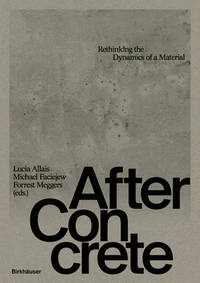
2026Best.-Nr. __3035628416Birkhäuser 2026. perfect. New. 256 pages. 9.45x2.00x6.69 inches. Birkhäuser unknown
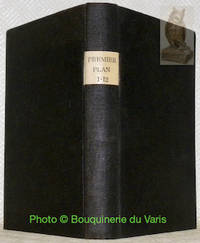
1959Best.-Nr. 99461Lyon 1959 - 1960. BUACHE Freddy. - MARDORE. - GUYON François D. - DELAHAYE Michel. - COLPI Henri. - KAST Pierre. - ALLAIS Jean-Claude. - LE BOLZER Guy. - CURTELIN Jean. - BORDE Raymond. - GAUTIER Henri. - RENZI Renzo.Premier Plan. Hommes oeuvres problèmes du cinéma. Nos. 1 - 12. Sept. n.° 1 1959 Georges Franju. - Oct. n.° 2 1959 Roger Vadim. - Nov. n.° 3 1959 Ingmar Bergman. - Dec. n.° 4 1959 Hiroshima Resnais. - N.° 5 Jean Crémillon. - N.° 6 John Huston. - N.° 7 Alfred Hitchcock. - N.° 8 Gérard Philippe. - N.° 9 nouvelle vague I. Marée Montante. - N.° 10 nouvelle vague II. Cinéma d’aujourd’hui. - N.° 11 jazz et cinéma. - N.° 12 Federico Fellini. Lyon 1959 - 1960 215x135mm photos n/b relié pleine toile noir. Etiquette de titre imprimé au dos. Couvertures conservées. Bel exemplaire. No hidden customs fees for orders shipped to the U.S.A with a value of up to 800 USD PDDP shipping we pay the VAT in advance unknown
Best.-Nr. 49982136-20BRILL. Used - Good. Former library copy. Pages intact with minimal writing/highlighting. The binding may be loose and creased. Dust jackets/supplements are not included. Includes library markings. Stock photo provided. Product includes identifying sticker. Better World Books: Buy Books. Do Good. BRILL unknown
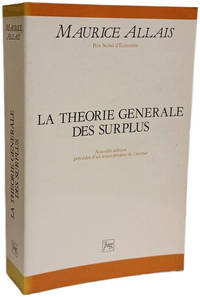
1989Best.-Nr. 100145657Pug 1989. proche du très bon état intérieur propre bonne tenue. in8. 1989. Broché. 716 pages. Pug unknown
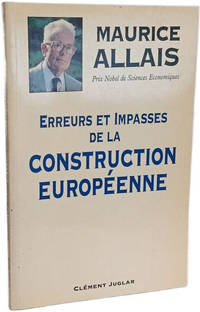
1992Best.-Nr. 100145681Clément Juglar 1992. Très bon état. 381x69x559cm. 1992. Broché. Dans cet essai Maurice Allais prix Nobel d'économie analyse les défauts structurels du projet européen. Il identifie les erreurs et impasses de la construction européenne et propose des pistes de réflexion pour une meilleure intégration notamment en révisant les traités sur les institutions l'union économique et monétaire et la protection du marché Maurice Allais construction européenne critique européenne union économique monnaie unique traités européens intégration européenne défauts structurels Prix Nobel économie institutions européennes Essai économique Critique politique Construction européenne Analyse institutionnelle Politique monétaire Intégration européenne Clément Juglar unknown