TheophrastusBiblio.com
ref. 623804like new. unknown
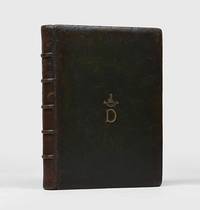
1824ref. 166494London: Josiah Taylor 1824. First Taylor edition of Theophrastus' timeless gallery of personality traits translated into English and beautifully illustrated with caricatures. The English translation is followed by the Greek text and notes. Taylor 1787-1865 was a philosophical and historical writer artist and inventor. Born into a family of engravers he initially followed this trade before turning to literature. This edition was welcomed with enthusiastic reviews the Literary Chronicle highlighting that "The sketches are bold and spirited full of character; there is scarcely an extraneous or unnecessary line in their whole engraving". This copy was bound for Sotheran's in London for Joseph Cockfield Dimsdale 1849-1912 with his gilt monogram stamp on the front cover. Dimsdale was a British banker and Conservative politician who served as Lord Mayor of London from 1901 to 1902. Quarto 270 x 193 mm. With 50 mounted wood-engraved illustrations. Late 19th-century green morocco over bevelled boards spine with raised bands gilt lettering in compartments monogram stamp "D" surmounted by a griffin's head and motto "quod Deus vult fiet" of Joseph Cockfield Dimsdale 1849-1912 on front cover marbled endpapers edges gilt. Spine and extremities faded to brown a few spots of wear at extremities front joint partly cracked short splits at rear joint ends and inner hinges but firm a little peripheral skinning to endpapers from adhesion margins of rear blanks toned occasional spot of foxing to contents otherwise clean. A very good wide-margined copy. hardcover
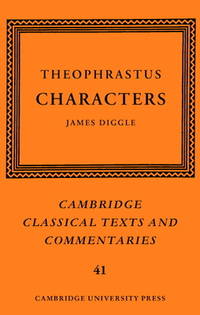
2004ref. x-0521839807Cambridge Univ Pr 2004. Hardcover. New. revised edition. 612 pages. 8.75x5.75x1.50 inches. Cambridge Univ Pr hardcover
2010ref. 1-9707830581Berbera Editores 2010. Paperback. New. 2nd. edition edition. 342 pages. Spanish language. 8.27x5.51x0.79 inches. Berbera Editores paperback
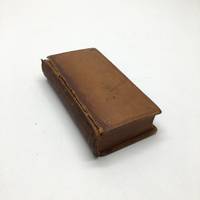
1632ref. C35028Lugduni Batavorum 1632. Binding slightly rubbed with loose front board. Otherwise clean and tight. 71 1 98 237 2pp. Small octavo 9 x 4 cm. Greek and Latin texts of Theophrastus's Characters with the very seldom seen commentary of Johann Angelius Werdenhagen 1581-1652. Full plain calf. The binding and endpapers are about early nineteenth-century. unknown
2007ref. x-0521045762Cambridge Univ Pr 2007. Paperback. New. 1st edition. 608 pages. 8.27x5.51x1.65 inches. Cambridge Univ Pr paperback
1997ref. x-0820319201Univ of Georgia Pr 1997. Hardcover. New. 282 pages. 9.75x6.75x1.00 inches. Univ of Georgia Pr hardcover
1793ref. 48534Coburg Ioh. Caroli Findeisii 1793. 8vo. Contemp. full calf. Raised bands richly gilt spine. Titlelabel with gilt lettering. 56166118;2406 pp. Text in Greek and latin. With the noted commentaries by Casaubon. hardcover
1644ref. 50986Amsterdam Heinric Laurentius 1644. Folio. Contemporary full vellum with neat later 19th century rebacking. Six raised bands and gilt title to spine. Some wear to extremities. Internally a fresh and clean copy with only a bit of occasional brownspotting. Endpapers with a bit of soiling. 2 bookplates to inside of front board: Gilbert Redgrave London dated 1894 & Gorden M. Jones Virginia. Text in Greek and Latin. Woodcut title-page numerous woodcut intials throughout and more than 600 woodcut illustrations in the text. 20 1187 1 88 - Index pp. First edition thus being the most important and influential edition of Theophrastus' seminal work "Enquiry into Plants" - the first systematization of the botanical world and the most important contribution to botanical science up until the Renaissance. Bodaeus von Stapel's groundbreaking edition constitutes the first illustrated edition of Theophrastus' masterpiece as well as the first with both Greek and Latin text. Furthermore von Stapel has not only collected all relevant commentaries and knowledge he has also added corrections and much foundational information turning the work into one of the most influential botanical works of the 17th century profoundly influencing the likes of Linnaeus and contributing significantly to the development of modern scientific botany. "This edition displays great care and research; the notes are numerous and learned and all botanical information to be gleaned from Aristotle Pliny Dioscorides and other ancient writers seems to be embodied in this work. The Greek text is Heinsius's; the Latin version is that of the editor who has placed Gaza's in the margin with frequent corrections. The conjectures of Scaliger Constantine and Salmasius are also incorporated. it has collected into one body the opinions of the old writers on the subject of the PLANTS. It contains some wood-cuts of the rarer species which are much better uncoloured than coloured." Dibdin II:498. The numerous woodcut plant illustrations were partly copied from other sources and partly made especially for this edition. Thus apart from being "one of the best and most thoughtfully prepared of all the editions of Theophrastos" Hunt our editor has also made original contributions that are of great importance. "It is interesting not only because of the brilliance of the editing but curiously enough to the American botanist as well for involving in the discussion certain species from Virginia other parts of the New World and Asia. The illustrations of these plants have been largely overlooked in botanical history because of their incidental presence in a work which might not be expected to contain anything of the sort. Some were merely borrowed from l'Ecluse or de Lobel but others seem original in this work" H.H. Bartlett: Fifty-five Rare Books - quoted by Hunt.At the height of the Renaissance with the expansion of the known world and the spreading of the book due to the invention of the printing press many new publications on plants appeared. Most of these publications however were primarily concerned with the medicinal qualities of individual plants and only few authors or editors took an interest in the general nature of the plants and how they could systematically be classified. One of the few exceptions was Bodaeus von Stapel. With his seminal 1644 edition of "Historia Plantarum" he focused on the overarching classification system of plants and took Theophrastus' work a step further adding essential commentaries and illustrations - illustrations that were to be copied for centuries after. These illustrations remain the standard illustrations of Theophrastus' foundational work. This edition of Theophrastus' "Historia Plantarum" became the standard edition of that earliest work on systematic botany and the edition that all serious scientific botanists of the 17th and 18th centuries will have studied. "Linnaeus in the practice of his favourite art of systematizing classified not only plants but the writers about them. The writers he distinguishes primarily as Botanists and Plant Lovers recognizing as Botanists only such as treat of plants from some philosophic or scientific point of view. Choosing his illustrations from annals of remote antiquity he names among the earliest of the Greeks who wrote of plants Hippocrates; but because he wrote of plants only in the interests of medicine Linnaeus styles him Father of Medicine. Similarly Aristotle. is down in the Linnaean list of ancient celebrities as Prince of Philosophers. To Theophrastus however he accords the title Father of Botany. From this opinion far from having been newly promulgated in Linnaeus's time there has been no dissenting voice. On the contrary Albert Haller one of the most learned men in Europe in his day and a botanist of such renown that Linnaeus held him in reverence and also in some fear denominates Theophrastus "the first of real botanists in point of time." Kurt Sprengel in the nineteenth century having rehearsed the names of a long line of ancient authors who had written more or less concerning plants says: "But the most illustrious of them all and the true father of botany was Theophrastus Eresius…." Greene Landmarks of Botanical History I:128.It is no wonder that Linnaeus should find in Theophrastus the Father of his own field - The "Historia Plantarum" was not only the earliest work on systematic botany it also contained Theophrastus' description of the formation of the plant seed the earliest account known and the best that was made for 2000 years.Hunt: 240; Pritzel: 9197; BM: V:2091; Dibdin: II:498. hardcover
1786ref. 35101Parmae Ex Regio Typographeo 1786. 4to. Orig. blank boards. Spine missing. Bdg. and bookblock tight. Minor occasional soiling; lacking a small part of corners of some leaves far from affecting text. An overall good and solid copy. Engr. frontispiece-portrait engr. title-vignette. Printed on good and thick paper. 10 128 6 pp 1 leaf errata. The rare editio princeps of Theophrastus' 29th and 30th characters. Greek and Latin text.The work is renowned not only for containing the very first printing of Theophrastus' two last "characteres" but also for the beautiful printing of it and Amadutius' excellent and instructive foreword and notes. "A very splendid edition exhibiting only two chapters cap. 29 and 30 of this work from a Vatican MS. of the eleventh century. It is mentioned in order that the student may consult the very learned prolegomena which it contains." Dibdin II:503. Brunet 5:798. hardcover
1763ref. 46668Coburg Ioh. Caroli Findeisii 1763. Contemp. full calf. Raised bands titlelabel with gilt lettering. 56166 pp. Index and 24010 pp. A small stamp on titlepage. Internally clean and fine. First edition of Fischer's excellent edition with Casaubon's commentaries."The Commentary of Casaubon with the useful observations of Gale and Needham - a copious and accurate index - and an excellent review of MSS and previous editions displaying every where great critical sucumen as well as just taste."Dibdin p.502. hardcover
1534ref. 29859Colophon: Basel apud Andream Cratandrum 1534. Folio. Nice hcalf from ab. 1750 richly gilt back gilt title-label. Corners a bit bumped. Slightly rubbed. Woodcut printer's device to title and last leaf. 282642 pp. With many smaller and larger woodcut initials. Small stamp at lower corner of the first 2 leaves. Some rather faint dampstainings to first and last leaves otherwise clean and with broad margins. Engraved book-plate inside front board Bibliotheque du comte Le Moyne de Martigny. Very scarce edition of Theophrastus' two main works. It is one of the earliest Latin editions of Gaza's esteemed translation in reality it is the third printing of the first Latin edition first issued 1483 then 1529 in 8vo and now 1534 of the works which together constitute the foundation of scientific botany. By Linnaeus Theophrastus is called "the father of Botany". This edition comprises both botanical works The History of Plants and The Causes of Plants which have survived in their entirety and are the earliest books of this kind in world literature."It is very strange that so much botanic knowledge should have been accumulated by the end of the fourth century and that so little if anything was added to it in ancient times. Theophrastos is not only the first botanic writer but also the greatest until Renaissance of the sixteenth century in Germany.The botany of Theophrastos and the zoölogy of Aristotle represents the climax of natural history in antiquity." Sarton in A History.Vol. I p. 558. "No study of plants of such breadth and quality had previously been conceived: botany now first appears as a distinct science with a comprehensive yet clearly defined field of enquiry." A.G. Morton. - Stillwell No. 702 Note - Hunt No. 26 listing the 1529-edition in 8vo - Pritzel: 9189. - Not in Choulant Handbuch der Bücherkunde für die Ältere Medicin. unknown
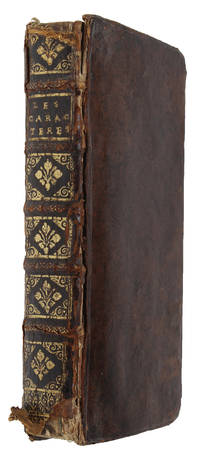
1688ref. 27999Paris Estienne Michallet 1688. Cont. full calf. 5 raised bands on back back richly gilt all edges of boards gilt. Lacking leather at capitals front-hinge cracked so cords are showing. Second or third printing of the original edition. The title-page states "seconde edition" but it is probably the third printed in the same year as the first and second being a page-by-page re-impression of the second except for the fact that corrections have been made and the errata-leaf is thus not printed in the third. Both the second and third original editions are from the same year and by the same printer as the first. "La seconde édition également impr. en 1688 n'offre que quelques légers changements. et la troisième sous la même date ne qu'une simple réimpression de la seconde." Brunet III:720. This work includes the first French translation of Theophrast's Characters and probably the first translation into any modern language. "Theophraste a eu le grand honneur comme on sait d'être ttraduit au XVIIe siècle par La Bruyère: et c'est pourquoi en France plus que dans tout autre pays en dehors même du cercle des érudits son nom et son opuscule sont populaires." navarre Budé-edition of "Caractères" Paris 1920.Jean de la Bruyère 1639/1644 - 1996 was a very famous French moralist and writer. "C'est au commencement de 1688 que parut la premiere édition des "Caractères de Théophraste traduits du grec ou les Mæurs de ce siècle." L'auteur mettait ses propres observations sur la société moderne sous le patronage d'un ancien." N.B.G. p. 427. The "Characters" gave La Bruyère quite a few enemies and created furor in the learned world. In Denmark Holberg calls him "trivial and simple" Epistle 404. "Mais si en effet la malignité contemporaine applaudissant aux traits satiriques de l'ouvrage a peu contribuer à sa vogue le jugement de la postérité l'a consacré comme un des meilleurs livres de notre langue." N.B.G. p. 427. This work is thus still considered to be one of the greatest French books. Voltaire writes in "Siecle de Louis XIV c. XXXII": "On peut compter parmi les productions d'un genre unique les "Caractères" de La Bruyère. Un style rigide concis nerveaux des expressions pittoresques un usage tout nouveau de la langue mais qui n'en bless pas les règles frappèrent le public". Bruyère's work with the translation really did cause astonishment and had an immense impact on late 17th century Europe and onwards; it created a new literary genre in Europe and the age of Enlightenment was delighted with the short precise characterizations of people and their customs. For an analysis of the contents and the impact on the time of La Bruyère see Nouvelle Biographie Generelle N.B.G. pp. 426-39. Brunet V:798 III:721 Graesse 4:61. hardcover
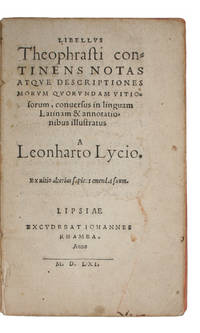
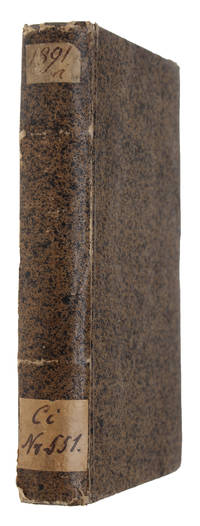
1561ref. 28328Lipsiae Excudebat Iohannes Rhamba 1561. Small 8vo. Later blue boards ab. 1800. Spine with minor loss and a few cracks. First few leaves with minor soiling but otherwise a nice and clean copy. 19th century owner's inscription to inside of front cover: "Colegii Thomani". Lovely woodcut opening initial. Beautiful Greek script. 48 ff. Extremely scarce first edition thus containing all of Theophrastus' 23 characters in Greek and Latin being the first edition of Auberius' excellent Latin translation and first edition with Lycio's interesting commentaries. "This very rare edition which presents us with the Greek text of H. Stephan Stephanus contains a new Latin version by Claudius Auberius who was scarcely twenty years of age when he composed it. The notes are critical and historical; sometimes bold but always erudite. This version and these notes were republished in Zuinger's edition of Aristotle's "Ethics" at Basil. fol. 1582." Dibdin II:500. This version of Theophrastus' milestone work the first recorded attempt at systematic character writing became hugely influential and is still referred to in modern editions of the text as Auberius' translation is regarded as one of the best and most important interpretations of the text. Claude Aubery or Claudius Auberius ca. 1540-1596 was a noted philosopher and medical doctor professor of Philosophy in Lausanne. He translated several Greek texts into Latin but is best remembered for his excellent version of Theophrastus' "Characters" which was highly influential throughout the Renaissance and which was incorporated into later Renaissance Aristotle-editions as the standard-version of Theophrastus' text. Theophrastus ca. 371- ca. 287 BC Aristotle's successor at the Lyceum and probably the most famous Aristotelian of all times successfully presided over the Peripatetic School for 36 years and here wrote a number of works. The most famous of them is arguably his great moral opus "The Characters" which continues to amaze readers to this day. It introduced the "character sketch" which became the core of the Character as a genre and as such it influenced the entire literay tradition of the Western world. The fabulous very witty astute harsh and insightful characteristics of type characters of the human race have been formative for our understanding of moral virtues and vices and how they come to be expressed in man for our understanding of human nature in general. It is no wonder that the work became so popular and widely read during the Renaissance the era of man as the centre of the universe. "Le texte est le celui de Henri Estienne insére dans l'édition d'Aristote de 1557 mais dans la version il suit pour la plupart ses propres conjectures" Graesse 7: 125. Dibdin II:500 Graesse VII:125. hardcover
1688ref. 28099Paris Estienne Michallet Se vend à Bruxelles chez Jean Leonard 1688. Later ca. 1800 cardboardbdg. w. marbled peper. Library-labels on back. Hinges capitals and corners w. traces of use. Occationally brownspotted. 56 226 1 pp. This is the reimpression of the original second edition with the words "Se vend à Bruxelles chez Jean Leonard" on title-page from the same year as the first original edition. "Cette réimpression assez belle a 28 ff. prélim. et 226 pp. de texte plus un f. pour le privilége; l'errata n'y est pas reproduit bien que les corrections qu'il indique n'aient pas été faites dans le texte." Brunet III p.720. This work includes the first French translation of Theophrast's Characters and probably the first translation into any modern language. "Theophraste a eu le grand honneur comme on sait d'être ttraduit au XVIIe siècle par La Bruyère: et c'est pourquoi en France plus que dans tout autre pays en dehors même du cercle des érudits son nom et son opuscule sont populaires." navarre Budé-edition of "Caractères" Paris 1920.Jean de la Bruyère 1639/1644 - 1996 was a very famous French moralist and writer. "C'est au commencement de 1688 que parut la premiere édition des "Caractères de Théophraste traduits du grec ou les Mæurs de ce siècle." L'auteur mettait ses propres observations sur la société moderne sous le patronage d'un ancien." N.B.G. p. 427. The "Characters" gave La Bruyère quite a few enemies and created furor in the learned world. In Denmark Holberg calls him "trivial and simple" Epistle 404. "Mais si en effet la malignité contemporaine applaudissant aux traits satiriques de l'ouvrage a peu contribuer à sa vogue le jugement de la postérité l'a consacré comme un des meilleurs livres de notre langue." N.B.G. p. 427. This work is thus still considered to be one of the greatest French books. Voltaire writes in "Siecle de Louis XIV c. XXXII": "On peut compter parmi les productions d'un genre unique les "Caractères" de La Bruyère. Un style rigide concis nerveaux des expressions pittoresques un usage tout nouveau de la langue mais qui n'en bless pas les règles frappèrent le public". Bruyère's work with the translation really did cause astonishment and had an immense impact on late 17th century Europe and onwards; it created a new litterary genre in Europe and the age of Enlightenment was delighted with the short precise characterisations of people and their customs. For an analysis of the contents and the impact on the time of La Bruyère see Nouvelle Biographie Generelle N.B.G. pp. 426-39. Brunet V:798 III:721 Graesse 4:61. unknown
1592ref. 50012Lyon Franciscus le Preux 1592. Small 8o. Early 19th century half calf with gilt title-label to spine. A bit of wear to hinges and corners but fine and tight. Internally exceptionally nice and clean. P. Rubow's owner's signature to front free end-paper. Woodcut vignettes to title-pages and woodcut initials at beginning of both parts. 8 88; 270 pp 1 blank leaf 16 ff. of indexes and errata at end. Scarce first edition thus being the editio princeps of Casaubon's milestone-edition of the seminal work that is Theophrastus' "Characters" containing apart from the original Greek text and Casaubon's translation of it into Latin also Casaubon's highly important commentary of the text. "This edition which was frequently reprinted 1598-1612-1617-1638 &c. is in every respect worthy of the high reputation of Casaubon. Both the text and the notes have served almost every subsequent editor. The Commentary is a rich mine of Grecian literature. The editor availed himself of the use of four MSS. in the Palatine library". Dibdin.Theophrastus ca. 371- ca. 287 BC Aristotle's successor at the Lyceum and probably the most famous Aristotelian of all times successfully presided over the Peripatetic School for 36 years and here wrote a number of works. The most famous of them is arguably his great moral opus "The Characters" which continues to amaze readers to this day. It introduced the "character sketch" which became the core of the Character as a genre and as such influenced the entire literary tradition of the Western world. The fabulous very witty astute harsh and insightful characteristics of type characters of the human race have been formative for our understanding of moral virtues and vices and for how man expresses them for our understanding of human nature in general. It is no wonder that the work became so popular and widely read during the Renaissance the era of man as the centre of the universe. The French-English classical scholar and philologist Isaac Casaubon 1559 - 1614 was regarded by many of his time as the most learned man in Europe. He is famous for his magnificent commentaries and deep understanding of the texts that he edited translated and commented. His edition of Theophrastus's Characters is considered a work of breakthrough as it constitutes the first example of his peculiar style of illustrative commentary at once apposite and profuse. This work is generally considered to exhibit his most characteristic excellences as a commentator.The present edition came to exercise a profound influence upon the interpretation of Theophrastus' great work. Casaubon's commentary served as the standard commentary for centuries and his translation remains a standard translation of the text. The present work thus remains a primary reference and a primary source when reading the work today.The commentary provided much commentary on Athenian society and the translation popularized the text making it available to modern Renaissance readers. Due to the excellent manner of translation into Latin the first English and French translations of this foundational text were enabled.The work was reprinted numerous times and kept appearing for centuries. "Nouvelle revision du texte sur 4 mss. Palatins accompagnée d'une nouvelle trad. latine et d'un commentaire excellent." Graesse VII:125. Dibdin II:501. unknown
2010ref. SONG1162890940Kessinger Publishing 2010-09-10. paperback. Used: Good. 6.00x0.11x9.00. Buy with confidence. Excellent Customer Service & Return policy. Kessinger Publishing paperback
2005ref. DADAX0521839807Cambridge University Press 2005-01-17. Revised ed. hardcover. New. 5.75x1.50x8.75. Buy with confidence. Excellent Customer Service & Return policy. Cambridge University Press hardcover
2005ref. SONG0521839807Cambridge University Press 2005-01-17. Revised ed. hardcover. Used: Good. 5.75x1.50x8.75. Buy with confidence. Excellent Customer Service & Return policy. Cambridge University Press hardcover
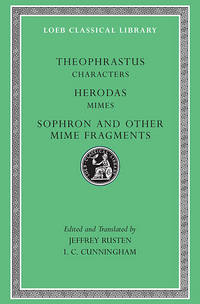
ref. 6827439Harvard University Press . Hardback. New. pp. 608 Harvard University Press hardcover
1990ref. SONG0674995244Harvard University Press 1990-01-01. hardcover. Used: Good. 4.56x0.92x6.66. Buy with confidence. Excellent Customer Service & Return policy. Harvard University Press hardcover
1573ref. 622841573. Argentorati = Basel Petrus Perna 1573 2° 12 223 1 28; 2 250 36 pp.; 2 263 5 pp Ledereinband d.Zeit mit Rückenvergoldung; vereinzelt fleckig feines Expl. Erste Ausgabe! PHILIPPI AVREOLI THEOPHRASTI PARACELSI BOMBAST EREMITAE SVMMI INter Germanos Medici & Philosophi. CHIRVRGIA MAGNA in duos tomos digesta. . Nunc recens à IOSQVINO DALHEMIO OSTOFRANCO Medico Latinitate donata. Tomus I : De vulneribus et fracturis libri III. De ulceribus libri III. De tumoribus et aperturis libri III. Tomus II : De Tumoribus Pustulis & Ulceribus / Morbi Gallici Lib. X. De Curatione & Imposturis Morbi / Gallici Lib. Octo. & Aureoli Philippi THEOP. PARACELSI CHYRVRGIA MINOR QVAM ALIAS BERTHEONEAM INTITVLAVIT. CVI ETIAM SEQVENTES TRACTAtus accesserunt eiusdem authoris. De Apostematibus Syronibus & Nodis. De cutis apertionibus. De vulnerum & ulcerum curis. De Vermibus Serpentibus 6c. ac amculis à natiuitrate ortis. Dieser Band enthält die "Chirurgia magna" in zwei Tomi in lateinischer Übersetzung von Josquinus Dalhemius tätig 2. H. 16. Jh. humanistischer Übersetzer paracelsischer Schriften sowie die kürzere "Chirurgia minor" "Bertheonea" in der lateinischen Fassung des flämischen Arztes Alchemisten und Paracelsisten Gerhardus Dorn ca. 1530-ca. 1584. - Gedruckt von dem aus Lucca stammenden seit den 1540er-Jahren in Basel tätigen Humanisten- und Reformationsverleger Petrus Perna ca. 1519-1582. Die Chirurgia magna ist das zentrale chirurgische Werk Paracelsus' und dokumentiert seine praktische Wundarznei ebenso wie seine Reinterpretation traditioneller Krankheitslehren. In ihr treten seine Abkehr von der bloßen Galen Exegese sein empirisches Vorgehen am Krankenbett und sein Einsatz chemischer Präparate deutlich hervor; sie ist für das Verständnis der paracelsischen "Reformation der Medizin" unverzichtbar. Paracelsus betont systematisch die Bedeutung gründlicher Wundreinigung Drainage und Verhinderung von Fäulnis; die "gute Eiterung" der traditionellen Chirurgie wird kritisch relativiert und der Fokus stärker auf rasche "spezifische" Heilung gerichtet. Er beschreibt Trauma Frakturen Ulzera und Tumoren in enger Verbindung mit Umwelt und Stoffeinflüssen; damit wird die spätere Toxikologie vorbereitet Stichwort "Die Dosis macht das Gift" und eine spezifische substanzgebundene Krankheitsauffassung gefördert. Von besonderem Interesse auch für die frühe Geschichte der Neurochirurgie: Paracelsus behandelt in der Chirurgia magna Kopf- und Schädelverletzungen inkl. Indikationen zur Trepanation im Rahmen einer empirisch orientierten Wundchirurgie und verknüpft traumabedingte Lähmungen und Krampfzustände mit lokalen Strukturverletzungen statt ausschließlich mit humoral-systemischen Ursachen. Die Chirurgia minor ist der Teil des paracelsischen chirurgischen Werkes der am ehesten dem späteren Feld der Dermato-chirurgie und der frühen plastisch-rekonstruktiven Bemühungen entspricht - durch ihren Fokus auf Haut Weichteile Wunden Verbrennungen und Narbenführung immer vor dem Hintergrund von Paracelsus' chymischer Pathologie und spezifischer Arzneitherapie. Die Perna-Ausgabe von 1573 ist die erste große lateinische Gesamtausgabe der paracelsischen Chirurgie: Sie überführt die ursprünglich deutschsprachigen Wundarznei-Schriften Große und Kleine Chirurgie in ein gelehrtes europaweit rezipierbares Format und ist damit ein Schlüsselstück der frühen Paracelsus-Rezeption. Chirurgiegeschichtlich markiert der Band den Übergang von handwerklich-zunftgebundener Wundbehandlung zu einer spezifischen substanzgebundenen Therapieauffassung Toxikologie organspezifische Wirkungen Kritik an der "guten Eiterung" und ist für die Geschichte der Chirurgie wie der Pharmakologie gleichermaßen bedeutend. First major Latin edition of Paracelsus' surgical works containing the two tomes of the "Chirurgia magna" and the shorter "Chirurgia minor" in one folio volume. Translated into Latin by Josquinus Dalhemius and Gerard Dorn and printed by the Basel humanist printer Petrus Perna in 1573. Covers wounds fractures ulcers tumours and related conditions combining practical wound surgery with Paracelsus' innovative chymical pathology. Key document in the spread of Paracelsian medicine from German vernacular surgery into the international learned medical world. VD16 P 469; VD16 P 479 Sudhoff "Bibliographia Paracelsica" Nr. 146-148 unknown
1573ref. 622821573. Argentorati = Basel Petrus Perna 1573 Folio 10 223 1 28; 2 250 36 pp. alter Halbledereinband; Titelblatt aufgelegt etwas fleckig; mit alten Marginalien; feines Expl. mit ExLibris von Kenneth Harvey Abbott. Erste Ausgabe! PHILIPPI AVREOLI THEOPHRASTI PARACELSI BOMBAST EREMITAE SVMMI INter Germanos Medici & Philosophi. CHIRVRGIA MAGNA in duos tomos digesta. . Nunc recens à IOSQVINO DALHEMIO OSTOFRANCO Medico Latinitate donata. Tomus I : De vulneribus et fracturis libri III. De ulceribus libri III. De tumoribus et aperturis libri III. Tomus II : De Tumoribus Pustulis & Ulceribus / Morbi Gallici Lib. X. De Curatione & Imposturis Morbi / Gallici Lib. Octo. Dieser Band enthält die "Chirurgia magna" in zwei Tomi in lateinischer Übersetzung von Josquinus Dalhemius tätig 2. H. 16. Jh. humanistischer Übersetzer paracelsischer Schriften. - Gedruckt von dem aus Lucca stammenden seit den 1540er-Jahren in Basel tätigen Humanisten- und Reformationsverleger Petrus Perna ca. 1519-1582. Die Chirurgia magna ist das zentrale chirurgische Werk Paracelsus' und dokumentiert seine praktische Wundarznei ebenso wie seine Reinterpretation traditioneller Krankheitslehren. In ihr treten seine Abkehr von der bloßen Galen Exegese sein empirisches Vorgehen am Krankenbett und sein Einsatz chemischer Präparate deutlich hervor; sie ist für das Verständnis der paracelsischen "Reformation der Medizin" unverzichtbar. Paracelsus betont systematisch die Bedeutung gründlicher Wundreinigung Drainage und Verhinderung von Fäulnis; die "gute Eiterung" der traditionellen Chirurgie wird kritisch relativiert und der Fokus stärker auf rasche "spezifische" Heilung gerichtet. Er beschreibt Trauma Frakturen Ulzera und Tumoren in enger Verbindung mit Umwelt und Stoffeinflüssen; damit wird die spätere Toxikologie vorbereitet Stichwort "Die Dosis macht das Gift" und eine spezifische substanzgebundene Krankheitsauffassung gefördert. Von besonderem Interesse auch für die frühe Geschichte der Neurochirurgie: Paracelsus behandelt in der Chirurgia magna Kopf- und Schädelverletzungen inkl. Indikationen zur Trepanation im Rahmen einer empirisch orientierten Wundchirurgie und verknüpft traumabedingte Lähmungen und Krampfzustände mit lokalen Strukturverletzungen statt ausschließlich mit humoral-systemischen Ursachen. Die Perna-Ausgabe von 1573 ist die erste große lateinische Gesamtausgabe der paracelsischen Chirurgie: Sie überführt die ursprünglich deutschsprachigen Wundarznei-Schriften Große und Kleine Chirurgie in ein gelehrtes europaweit rezipierbares Format und ist damit ein Schlüsselstück der frühen Paracelsus-Rezeption. Chirurgiegeschichtlich markiert der Band den Übergang von handwerklich-zunftgebundener Wundbehandlung zu einer spezifischen substanzgebundenen Therapieauffassung Toxikologie organspezifische Wirkungen Kritik an der "guten Eiterung" und ist für die Geschichte der Chirurgie wie der Pharmakologie gleichermaßen bedeutend. First major Latin edition of Paracelsus' surgical works containing the two tomes of the "Chirurgia magna" in one folio volume. Translated into Latin by Josquinus Dalhemius and printed by the Basel humanist printer Petrus Perna in 1573. Covers wounds fractures ulcers tumours and related conditions combining practical wound surgery with Paracelsus' innovative chymical pathology. Key document in the spread of Paracelsian medicine from German vernacular surgery into the international learned medical world. VD16 P 469 Sudhoff "Bibliographia Paracelsica" Nr. 146-147 unknown
1617ref. 015348Lyon: Lugduni Lyon : Apud viduam Ant. De Harsy Ad insigne Scuti Coloniensis 1617. Book measures 16.5x12.cm. 16367132pp. Characters. Latin & Greek. Bound in period full calf raised bands. Binding heavily worn top board detached. Internally lacking front endpaper minor loss to margin of title without loss of text inscription on top margin of title. Some minor annotations or underlining annotations heavy to a few pages. Pages in good condition. A good copy. Leather. Good Plus. Small 8vo. Lugduni [Lyon] : Apud viduam Ant. De Harsy, Ad insigne Scuti Coloniensis
1589ref. 676841589. Conraf Waldkirch 1589-1599 4° mit 10 sich wiederholenden Portraits und Textholuschnitte im letzten Teil Astrologica. 5 geprägte Schweinsledereinbände d.Zt.; vereinzelt Wurmlöcher ohne Textverlust sehr geines Exemplar. Erster bis Zehender Theil der Bücher und Schrifften. Jetzt auffs new auß den Originalien und Theophrasti eigner Handschrifft an tag geben: durch Joh. Huserum. 10 Teile und die Appendices zu Teilen V und X letzterer in 2 Teilen in 5 Bänden. Mit 12 ganzseitigen wiederholten Porträtholzschnitten des Autors mehrfach wiederholten Wappenholzschnitten Druckermarken und 62 Textholzschnitten im Appendix zu Teil X. Titel in Rot und Schwarz. Reich blindgeprägtes Schweinsleder der Zeit Basel Conrad Waldkirch 1589-1591. Seltene erste deutsche Gesamtausgabe der Werke des Theophrast Bombast von Hohenheim genannt Paracelsus 1493-1541 die sog. "Huser'sche Quartausgabe" in der zahlreiche Schriften zum ersten Mal im Druck erschienen und deren Text für alle späteren Ausgaben maßgeblich wurde. Sie kam mit Unterstützung des Kurfürsten und Kölner Erzbischofs Ernst Prinz von Bayern zustande und wurde von dem Paracelsisten Johann Huser 1545-1600 Arzt aus Waldkirch im Breisgau und kurfürstlich-kölnischem Rat herausgegeben vgl. Hirsch-Hübotter III 350. "Wenn man ohne Voreingenommenheit diese Huser'schen Darlegungen über die bei der Sammelausgabe angewendeten Grundsätze und Massnahmen überblickt so kann man ihm die Anerkennung nicht versagen dass er mit Umsichte und Gründlichkeit an die Lösung seiner Aufgabe gegangen ist" Sudhoff S. 374. Die Ausgabe gliedert sich in medizinische Werke Teile I-VI dann die "Bücher in welchen fürnemlich die Kräfft Tugenden und Eigenschafften Natürlicher dingen auch derselben Bereitdungen betreffend die Artzeney beschriben werden neben eingemischten sachen zur Alchemey dienstlich" Teil VII. Es folgen die philosophischen Schriften Teile VIII-X. Der 5. Teil enthält ein Sudhoff unbekannt gebliebenes Sonderblatt eine "Schedula" zu S. 290 sowie einen 228 Seiten und 21 umfassenden Appendix. Mit der häufig fehlenden Foliotafel im 10. Teil zu S. 68 ferner dem Appendix und einem zweiten Anhang mit dem "Fasciculus Prognosticationum Astrologicarum". Zum Appendix gehören auch die Textfiguren und Holzschnitte davon 30 zur "Auslegung der Magisten Figuren im Carthäuser Kloster zu Nürnberg" und 32 "Figurae Magicae Theophrasti" zur "Prognostication auf XXIIII Jahr zukünfftig". Das vorliegende Exemplar enthält alle erschienenen Teile bis auf den Appendix zu Teil VIII jedoch die Appendices zu Teilen V und vor allem X mit dem genannten "Fasciculus prognosticationum astrologicarum". Kollation: Band I Teil I: 10 Bl. 426 S. 1 Bl.; Teil II: 342 S. 1 w. 28 Bl.; Teil III: 4 Bl. 420 S. 51 Bl.; Teil IV: 417 S. 53 Bl.; Teil V: 4 Bl. 332 S. 48 Bl.; 228 S. 21 Bl.; Teil VI: 4 Bl. 440 S. 12 Bl.; Teil VII: 6 Bl. 439 S. 4 Bl.; Teil VIII: 6 Bl. 363 S. 4 Bl. ohne S. 365-428 Appendix zu VIII; Teil IX: 4 Bl. 459 S. 4 Bl.; Teil X: 4 Bl. 491 S.; 275 S. 4 Bl. letztes weiß 106 S. 1 Bl. VD16 P 365 367 369 371 373 375-379. Mook 154-163. Sudhoff 216-225 220a und 225a. Hirsch-Hübotter IV 499. Garrison-Morton 57 Anm. Durling 3514 unvollständig. - Nicht bei Osler Wellcome Waller. Not in Neville Historical Library; not in Maggs 520 and Ferguson; Durling 3514 imperfect; Heirs of Hippocrates only later complete editions not in Osler Wellcome Waller. unknown