124,334 results
1526ref. 000453Rare German Anti-Ottoman Propaganda Pamphlet on the Defense of Christendom Germany 1526. 12mo. One title leaf and 17 ff. 36 pp. Text in early New High German Frühneuhochdeutsch. Nineteenth-century marbled boards. Very Good. Ex-library with two small marginal stamps. Extremely rare sixteenth-century political and military propaganda tract directed against the Ottoman Empire printed at the height of Ottoman expansion into Central Europe following the Battle of Mohács 1526. No printer or place stated. According to Carl Göllner Turcica: Die europäischen Türkendrucke des XVI. Jahrhunderts only one copy is recorded dated 1526 VD 16 no. 1881 underscoring the exceptional rarity of this work. The pamphlet addresses the urgent question of how the Holy Roman Empire Deutsches Reich should organize its defense against the Ottomans. While it discusses military preparedness and strategic resistance to the Turks the core focus of the text lies in the economic and social burden of war specifically: How the costs of military defense should be financed The responsibility of the Christian Church and the Vatican Contributions expected from the German territorial states The allocation of financial obligations among different social classes within German society The work reflects contemporary anxieties surrounding the Ottoman threat and provides valuable insight into early modern fiscal-military thought confessional politics and the rhetoric of defending Christendom against Islam. It is an important source for the study of Reformation-era political discourse anti-Ottoman propaganda and the social history of warfare in sixteenth-century Europe. A remarkably scarce survival of early German political printing concerning the Ottoman question. hardcover
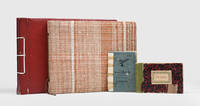
1936ref. 142062Spain & northern Europe: 1936-44. Auf-zum! so ging es tagtäglich" "Off we go! That's how it went every day" An exceptional and unusually complete archive documenting the career of Leutnant Konrad Ellermann a decorated airman who served with the Condor Legion in Spain and later in flying-boat operations on the Eismeer Front. Centred on two meticulously compiled photograph albums and augmented by scarce supporting documents it offers a rare coherent visual record of theatres where comprehensive personal archives seldom survive. The first album charts his Condor Legion service beginning with 43 tourist views of Spain and 25 informal images of squadron life followed by sequences showing Heinkel 59 flying boats in preparation and in flight with aerial views of enemy positions and bomb damage. Ellermann dedicates a page to comrades killed in March 1938 almost certainly the crew of the HE 59 downed near Cambrils and records their funerals and repatriation. Additional images include Condor Legion fighters He 51 He 112 Bf 109 long-range raids from Portbou to Oropesa and bombed railway lines. A section headed "Einiges von den Taten!" depicts two merchant vessels sunk by his unit - the British SS Jean Weems and the Danish SS Edith - alongside further action shots. The album closes with off-duty scenes and high-quality aerial photographs of Pollença Tangier and Portbou. The second album covers northern service. It opens with trials of the Dornier Do 26 flying boat in late 1938 with fine airborne views images of the second prototype and photographs of Dornier staff at work. Other aircraft represented include the Blohm & Voss Ha 139 the Latécoère 521 and the Dornier Do 18. Around 20 aerial views of Norway follow including encounters with He 111s and Ellermann's aircraft moored in Rombaken fjord culminating in a medal ceremony featuring Oberleutnant Karl Otto Max Barth. A final section documents his posting with Flussklärungsfliegerstaffel 1/125 in Finland with portraits of his Heinkel HD 114 scenes in Helsinki and Turku maintenance shots and a concluding portrait of Ellermann. Born in Geisingen in 1915 Ellermann began as a funkmeister before becoming an observer in 1938. He received the Iron Cross First and Second Class the Narvikschild the Frontflugspange für Kampfflieger in gold and silver the Luftwaffe Honour Cup and the Deutsches Kreuz in Gold. His service included AS-88 in Spain 1937-38 Sonderstaffel Tr. O 1939-41 Küstenflieger-Staffel 1/406 in Norway 1942-43 and Seeaufklärungsgruppe 131 1943-45. His surviving logbook records 484 flights between October 1937 and March 1944 378 of them operational including 62 Condor Legion sorties on ships and towns such as Barcelona Sagunto and Alicante. Later missions encompassed reconnaissance and anti-submarine patrols over the North Sea and Norwegian coast one section countersigned by Captain Martin Harlinghausen later the Luftwaffe's leading ship-killer of the Second World War. 4 items. Album 1: 245 x 320 mm original pale red and white rough-weave cloth punch holes at spine golden brown fastening cord bookseller's ticket of Otto Memmert Kiel; 222 original photographs on 24 black card leaves mainly deckle-edged snapshot images most 60 x 90 mm some larger up to 110 x 170 mm manuscript "title page" in coloured chalks with crossed Spanish and Nazi flags. Album 2: 250 x 330 mm original dark red faux leather punch holes to spine white coated-wire fastening tape bookseller's ticket of Bohrer & Co Kiel; 171 original photographs 50 x 60 mm to 240 x 180 mm on 24 tan card leaves glassine guards; manuscript "title page" with illustration of Nazi eagle above legend; 2 divisional pages first with watercolour drawing of unit insignia ram's skull above title; second with watercolour drawing of unit insignia penguin wearing clogs and flying over sea above title. Soldbuch: 28 pp 145 x 100 mm original blue card printed wrappers Ellermann's photograph mounted on inside front cover punch holes with metal eyelets to front cover. Log book: 100 x 155 mm pp. 114. Original marbled sides green cloth spine paper label on front cover. Album 1 in very good condition; Album 2 with a little wear to binding shallow indentations to covers leaf loose; Soldbuch: general signs of handling paper sometime taped around spine; Log book with some loss of marbled paper from front cover a little finger soiling. A well-preserved group. Sebastian Cox & Peter Gray eds Air Power History: Turning Points from Kitty Hawk to Kosovo 2002. hardcover
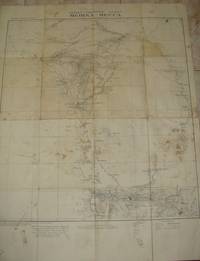
ref. 000041Paper on cloth 114 × 89 cm. The British Expedition in the Arabian Hejaz during the First World War – Arab Revolt Medina–Mecca. Reprint of the first provisional issue with large corrections. Published by the Survey of Egypt for the Arab Bureau under authority of the War Office November 1916. This map is a collection of sketches compiled by Egyptian pilgrimage officers and members of the Sharif's forces. An attempt was made to verify the information using local native sources but without success. The coastline is derived from Admiralty charts. The Jedda–Taif area is taken from G.S.G.S. sources. Some light staining but generally in good condition.
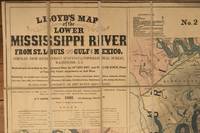
1862ref. 005181New York: J.T. Lloyd 1862. First Edition . No Binding. Very Good. Civil War Map. FIRST EDITION. 38.5 x 54.5 inches. Full Title:"Lloyd's map of the Lower Mississippi River from St. Louis to the Gulf of Mexico. Compiled from government surveys in the Topographical Bureau Washington D.C. Revised and corrected to the present time by Captains Bart and William Bowen pilots of twenty years' experience on that River. Exhibiting the sugar and cotton plantations cities towns landings sand bars islands bluffs bayous cut-offs the steamboat channel mileage fortifications railroads. &c. along the River. J.T. Lloyd Publisher. 164 Broadway New York 1862. Entered . 1862 by J.T. Lloyd . New York." Pocket Edition with linen backs folded dimension 8 x 5 inches. Lithograph map on five sheets joined 37.25h x 51w at line plus margins hand colored laid on linen housed folded in the ORIGINAL marbled paper covered SLIPCASE with printed label. An exceedlingly SCARCE FIRST EDITION printing of Lloyd's richly informative strip map of the lower Mississippi River from St. Louis to its outlet in the Gulf of Mexico. A valuable record of the Southern plantation economy and the Steamboat age. The map is divided into 5 numbered strips beginning with St. Louis at top left and ending with the Gulf of Mexico at bottom right. There is extensive detail of waterways county and parish lines roads and railroads mines forts and towns of various sizes. Perhaps most importantly however are the names of landowners and the locations of their lots along the Mississippi River that are identified. Provenance: held in private family collection for generations acquired from the Alga Schloss Estate. Alga's husband's first wife was a Morley of the Cleveland Morley Family and a descendant of General G.W. Morgan. Map is clean with only light expected wear and toning. Stephenson 28 41 1862 and 1863 editions; Mapline 28; Modelski 139; Phillips Maps of America p. 441. J.T. Lloyd unknown
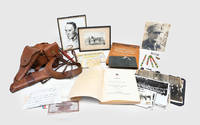
1945ref. 172534Various dates primarily 1945-47. The end of the war in south-east Asia A collection reflecting Fuller's important role in South East Asia Command including proof copy number 142 of Mountbatten of Burma's post-war official report inscribed by Mountbatten to Fuller as well as a short snorter signed by General Raymond Wheeler and other members of the US delegation to the Japanese surrender of Singapore. Also present is Fuller's copy of a photographic portfolio documenting the ceremony. A member of West Point's class of 1909 Fuller 1886-1966 gained command of the 41st Infantry Division in 1941 and was promoted to the temporary rank of major-general in December. In late 1944 he succeeded Wedemeyer as deputy chief of staff at SEAC under Mountbatten holding the position during the crucial closing period of the war in Asia. The proof copy of Mountbatten's report is inscribed on the inner front cover "To Horace Fuller Deputy Chief of Staff SEAC in gratitude and appreciation of his loyal support and friendship from Mountbatten of Burma." An accompanying letter from Mountbatten to the general addresses the recent publication of a book mentioning differences between Mountbatten and Stilwell. "I discussed this matter with General of the Army Eisenhower when he was in London in 1946 and he agreed that I should not now omit reference in my Report to any controversial matter published. The two Governments may well not wish the whole of this Report to be published. I would therefore impress upon you that this is a personal copy to enable you to make any last minute comments if you find any factual inaccuracy." On 10 September 1945 Fuller travelled to Singapore as a member of General Wheeler's official party for the signing of the instrument of surrender. The souvenir portfolio of US Army photographs lettered with Fuller's name on the front cover chronicles events between 9 and 13 September. The images show the arrival of Wheeler's group at Kallang Airfield - in a group portrait in front of their C-54 transport plane Fuller stands next to Wheeler - and Wheeler's inspection tour of Changi prison and other sites. Photographs also show the surrender ceremony and a dinner given in Wheeler's honour at Raffles Hotel during which Fuller sat between Brigadier-General Thomas S. Timberman SEAC and Margaret "Peggy" Wheeler a civilian employee of OSS and the general's daughter. Accompanying the portfolio is another souvenir: a banknote signed on 12 September 1945 by members of Wheeler's party perhaps at the Raffles dinner. Among the signatories are Wheeler himself Brigadier-General William H. Tunner Air Transport Command Margaret Wheeler Major-General Thomas J. Hanley United States Air Force and Lieutenant-Colonel Walter H. Skielvig Fuller's executive officer. The note is also signed on the reverse by members of the C-54's flight crew. Alongside these core items is a gelatin silver portrait of General Douglas MacArthur inscribed "To Horace Fuller. With the affectionate regards of his old comrade-in-arms. Douglas MacArthur" and recalling Fuller's command of the 41st Infantry as well as a charcoal portrait of Fuller by McClelland Barclay 1891-1943 executed after Fuller's promotion to major-general. A full listing of the other items in this archive such as ribbon racks photographs and badges is available on request. Together 6 core items: quarto report original buff wrappers front cover lettered in black inscribed by Mountbatten of Burma to Fuller; single-sheet typed letter signed 250 x 200 mm from Mountbatten to Fuller; Japanese Invasion Money 100-dollar banknote 170 x 85 mm inscribed "Singapore Surrender 12 September 1945" at head and signed by Fuller and 16 other individuals on one side and further 6 individuals on other and known as a "short snorter"; Fuller's souvenir portfolio of US Army Signal Corps photographs from surrender of Singapore original wooden boards with photostat reproduction of Instrument of Surrender 36 large gelatin silver photographs 210 x 270 mm 4 leaves duplicated typescript captions; gelatin silver portrait 247 x 197 mm of General Douglas MacArthur inscribed by MacArthur to Fuller; charcoal portrait of Fuller contemporary frame and glaze 260 x 220 mm. Together with material concerning Fuller's military career full inventory available on request. Wrappers of report repaired Mountbatten letter with small loss top-left not affecting text boards of portfolio somewhat worn and caption leaves browned MacArthur portrait with some silver mirroring charcoal portrait with wear to frame other material showing signs of handling: generally a very good collection. hardcover
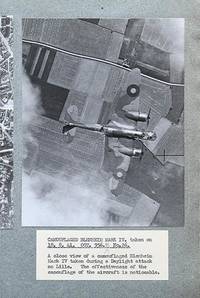
1942ref. 173506London: Royal Air Force 1942. A turning point in the air war A high-quality comprehensively captioned album likely prepared in early 1942 for high-level review documenting RAF bombing and reconnaissance operations from May to December 1941 - the pivotal months in which the Luftwaffe lost the initiative and the RAF began to strike deep into Axis territory. The photographs cover Western and Central Europe North Africa and the Middle East recording attacks on major cities and strategic targets - including Berlin Cologne Hamburg naval and military bases factories and infrastructure - together with a stark reconnaissance view of Dachau and two large photo-mosaics of Persian oil facilities. The album demonstrates the breadth of the RAF's offensive and intelligence-gathering capability at the moment when its position in the air was rapidly strengthening. The accompanying commentary situates these operations in the critical pre-American phase of the air war when Britain and its Commonwealth allies faced the Luftwaffe alone. Despite Germany's early technical and tactical superiority - honed through clandestine rearmament the Spanish Civil War and a substantial training programme - its advantages eroded through strategic miscalculations: the failure to win the Battle of Britain the ineffectual Blitz and the diversion of resources to the Russian front. By late 1941 the RAF with improved materiel and better-trained crews was able to conduct long-range raids and detailed reconnaissance deep into increasingly thinly defended airspace. The album's index singles out 13 photographs as exemplary though the technical precision throughout renders such distinctions narrow. Particularly striking sequences include low-level obliques around Flushing analysing camouflage on local defences; large-scale "dicing" images at Étaples revealing dummy gun positions and trench systems; night photographs of Berlin and Kassel illuminated by flak searchlights and incendiaries; daylight images of Blenheim attacks on Cologne power stations some framed by the photographing aircraft; and a sequence tracking the movements of the Admiral Scheer from Denmark to Swinemünde. Two photographs of the December 1941 Halifax bomber raid on Gneisenau Scharnhorst and Prinz Eugen at Brest taken seconds apart show the attack unfolding with exceptional immediacy. The album concludes with the first photographic coverage of Iceland nine images illustrating its striking terrain. A full list of images is available on request. Landscape folio 300 x 380 mm 4 pp. indexes by place and subject full-page mounted photo-reproduced "Sketch-map shewing Locations of Places" 159 silver gelatin original photographs mounted either side of 51 leaves of pale green light card stock formats ranging between 260 x 325 mm and 90 x 135 mm the majority between these at around 200 x 170 mm all with meticulous typescript captions logging date location and the nature of the operation with detailed interpretation of the image Original black morocco-grain roan lettered "VOL I" in gilt on the spine with gilt ruled compartments concentric panels in blind to covers blue endpapers with green hinge supports. Binding a little rubbed slightly shaken contents a little toned with occasional light soiling the photographs remain pin-sharp and dark retaining excellent definition and tone. In very good condition. unknown
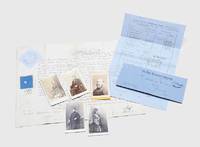
1879ref. 169244Onboard ship and in southern Africa: 1879. I should not like to say how many kraals we burnt Such warfare is not very glorious This substantial archive of largely unpublished correspondence - around 21000 words written in the field - offers a vivid and unusually frank primary source for the Zulu War only partially treated in existing historiography. Captain Fitzwilliam Elliot youngest son of the 3rd Earl of Minto and a perceptive officer on special service writes with sharp intelligence admiration for the Zulu and unguarded criticism of British command. Addressed to his mother the well-read and formidable Nina Countess of Minto the letters track his movements from the aftermath of Isandlwana to the campaign's close often with acute reflections on strategy discipline and morale. Elliot sailed shortly after the disasters of early 1879 joining General Crealock's coastal column. He denounces the confused state of operations deplores the "sensational" reporting of the Prince Imperial's death and is consistently scathing of Crealock as "an old woman" and Chelmsford for the "feebleness" of his reports. His march from Durban to Fort Chelmsford and northwards is marked by slow progress foul weather and disorganization. He gives sharp portraits of officers and units praising the veteran 57th and dismissing the 88th as "a real rowdy lot of Irishmen but good to fight friend or foe". He describes kraal raids with discomfort acknowledging the logic of destroying Zulu resources while feeling "rather a scoundrel" at the spectacle of looted food and driven captives. Yet his admiration for the Zulu is striking: "they are always so thoroughly manly never appearing angry nor even humiliated at the loss of homes cattle women every thing indeed which they possess". He reports the VC ceremony for Rorke's Drift doubting the award to Chard and remarks acidly that Colonel Pearson lionized at home after the siege of Eshowe is regarded in the field as "one of the greatest muffs this war has produced". His final letters follow the victory at Ulundi where the "streams are now full of dead Zulus" a scene he describes with evident distress and sanitary alarm. On 12 August he writes from Ulundi to wish his family good sport on the Glorious Twelfth and the next day notes departure "for a dart after Cetewayo better game than grouse". The archive is accompanied by cartes-de-visite of Elliot his parents and John Dunn; Elliot's commission as captain; and his 1867 record of services. 14 autograph letters signed 11 retaining envelopes pale blue paper generally 200 x 125 mm written largely in pencil but also in ink; Record of Services printed on pale blue paper with envelope; commission dated 29 October 1878; 5 carte de visite 2 of the young Elliot in uniform one each of his parents one of John Robert Dunn. Some tears to envelopes otherwise well preserved. John Buchan Lord Minto: A Memoir 1924. unknown
ref. 140946501Southeast Asia: Various 1975. A substantial fascinating archive relating to Civil Air Transport and its subsidiaries and spin-offs such as Air America and Air Asia. The airlines were front companies for the American Central Intelligence Agency infamously involved in covert ops all over Southeast Asia especially Laos during the Vietnam War including drug smuggling. Archive includes rare internal company memos reports budgets manuals some remarkable vernacular photographs ephemera and other items such as meticulous designs for uniforms of CAT employees to make it seem like a "real" airline. Spans over 30" of shelf space. Very Good condition overall. The archive's compiler Joseph Louis Orlowski was an engineer by trade who worked in China before the country's 1949 revolution leaving for Taiwan and then rising through the ranks of CAT as it became Air America to become Vice President in the 1960s. He began using his wife's maiden name Madison as an alias eventually legally changing his name to it. His journey through the ranks of these airlines-- with their ever-present need to pretend to be regular airlines while paradoxically carrying out espionage drug dealing and acts of outright war-- is chronicled in these stacks of documents mostly minutiae. His black and white photos many of which are labeled or housed in envelopes with locations and context are particularly fascinating offering a vivid glimpse of wild dangerous lives belied by all the technical specs and dull documents: landing strips on plateaus in remote jungles parachuters in mid jump sacks of what may very well be heroin being loaded into a plane soldiers in jeeps Asian peasants and acrid plumes of black smoke rising above French colonial mansions and palm trees. CONTENTS ARE AS FOLLOWS: BOUND MATERIALS 1. Civil Air Transport Company Circular Manual No. 68 Traffic Office Kaitak HKG. Thick gray binder with gilt lettering to front board. Soiling to binder some light foxing and marking to contents. Roughly. 400 pages mostly printed on rectos only. Spans the years 1952-1957 with most docs being from 1954 and 1955. 2. Civil Air Transport Company Circular Manual No. 75 Office of A/VPAGM. Thick gray binder with gilt lettering to front board. Light soiling to binder. Roughly 250 pages mostly printed on rectos only. 3. Air America Circular 3. Black leatherette binder with silver lettering. Roughly 150 pages spanning from the 1960s to the early 1970s. 4. Personnel Manual Civil Air Transport. Black leatherette brad-bound file lettered in gilt Asian patterned endpapers. Roughly 100 pages. Spans the early 1950s covering procedures for CAT hiring and firing sick leave etc. 5. Air America Organization - 1951. Bradbound leatherette with silver lettering. Contains two copies of the company's organizational chart with some pencil markings. 2 4 22 10 pp. printed on rectos only. 6. Operations Manual No. 115 Operations Division CAT Incorporated. Red leatherette with gilt lettering title label taped onto front board. Approx. 200 pages. Contents consist of the "Operations Manual" "Operations Circular" "Operations Bulletin" and "Flight Manual." 7. General Maintenance Manual Civil Air Transport General Maintenance Division. Dark green leatherette with gilt lettering. Roughly 150-200 pages. Contents span from the mid '50s to the late '60s including a section of Air Asia Maintenance Division info ca. 1968. 8. Tokyo Organization-Personnel Survey and Recommendations to Regional Director J.L. Orlowski December 1953. Civil Air Transport Japan-Korea Region. Submitted by Henry T. Samson Personnel Consultant. 2 215 pp. printed on rectos only. Bound in black leatherette with spine label. Additional photocopied memos laid in. 9. Sales Manual Sales Division Civil Air Transport. Bound in black leatherette with title label. Contents dated from the late '50s to 1968. Includes instructions for measuring unspecified "tied packages" weighed in kilos for freight shipment. 10. Aircraft Accident and Incident Rates Graphs and Tables from 1960. Black leatherette with gilt lettering to front board. Roughly 100 pp. Contents consist of accident and incident rate tables for Air Asia from 1960 to 1969. 11. Air America Base Manual Thailand 2. Bound in black leatherette with silver lettering. Mid '60s to '70s. Primarily a base manual for Udorn Thailand including emergency procedures for the base accounting personnel etc. with info about Club Rendezvous a vacation spot for Air America employees and Bangkok and Chiang Mai bases as well. 12. Air America Base Manual Laos 42. Bound in black leatherette with silver lettering. Contents generally date from early '70s. Roughly 100 pages. 13. Supply Manual Civil Air Transport. Stringbound with handmade wrappers. Roughly 300 pp. 14. Uniform Manual Personnel Division Civil Air Transport July1 1956. Bound with sliding metal brads. Roughly 50 pages. Covers the proper uniforms for CAT personnel. 15. Proposal: Technical Services Building - VTE. Company leatherette wraps with silver lettering. Roughly 25 pp. Includes laid in memo from Frank L. Dunn signed and dated April 8 1968. 16. Compensation and Rules of Employment for Vietnamese National Pilots of Air America Inc. January 29 1973. Brad bound in wraps. vi 76 pp. 17. Compensation and Rules of Employment for Philippine National Pilots of Air Asia Company Limited. January 29 1973. Brad bound in wraps. vi 73 pp. 18. Compensation and Rules of Employment for Chinese National Pilots of Air Asia Company Limited. January 29 1973. Brad bound in wraps. vi 75 pp. Stamp to front wrap. 19. Fiscal Reports to Base Managers March 1970. Stapled wraps. 20. Statistical Reports Intercompany Contracts: Air Asia Company Limited Civil Air Transport Company Limited Air America Inc. October 1970. Prepared by Air Asia Company Ltd. Brad bound. Front wrap stamped "Company Confidential." 21. Cost and Revenue Statement Intercompany Contracts September 1970. Prepared by Air Asia Company Limited. Staple bound. Front wrap stamped "Company Confidential." 22. Financial Statements Intercompany Contracts: Air Asia Company Limited Civil Air Transport Company Limited Air America Inc. March 1971. Prepared by Air Asia Company Ltd. Brad bound. Front wrap stamped "Company Confidential." 23. Financial Statements Intercompany Contracts: Air Asia Company Limited Civil Air Transport Company Limited Air America Inc. March 1970. Prepared by Air Asia Company Ltd. Brad bound. Front wrap stamped "Company Confidential." 24. Financial Statements Intercompany Contracts: Air Asia Company Limited Civil Air Transport Company Limited Air America Inc. March 1968. Prepared by Air Asia Company Ltd. Brad bound. Front wrap stamped "Company Confidential." 25. Appropriations Proposed for Six Months Ended March 31 1967. Intercompany Contracts: Air Asia Company Limited Civil Air Transport Company Limited Air America Inc. Prepared by Air Asia Company Ltd. Brad bound. Front wrap stamped "Confidential." 26. Statistical Reports Intercompany Contracts: Air Asia Company Limited Civil Air Transport Company Limited Air America Inc. March 1971. Prepared by Air Asia Company Ltd. Brad bound. Front wrap stamped "Company Confidential." 27. Financial Statements Intercompany Contracts: Air Asia Company Limited Civil Air Transport Company Limited Air America Inc. October 1970. Prepared by Air Asia Company Ltd. Brad bound. Front wrap stamped "Company Confidential." 28. Cost and Revenue Statement Intercompany Contracts March 1970. Prepared by Air Asia Company Limited. Staple bound. Front wrap stamped "Company Confidential." 29. Fiscal Reports to Base Managers September 1970. Stapled wraps. Front wrap stamped "Company Confidential." 30. Cash Forecast for Twelve Months Ending March 31 1967. Intercompany Contracts: Air Asia Company Limited Civil Air Transport Company Limited Air America Inc. Book III. Prepared by Air Asia Company Ltd. 2 pp. Brad bound. Front wrap stamped "Confidential." 31. Fiscal Reports to Base Managers October 1970. Stapled wraps. Front wrap stamped "Company Confidential." 32. Fiscal Reports to Base Managers March 1971. Prepared by Treasurer-Controller's Office. Stapled wraps. Front wrap stamped "Company Confidential." 33. Pay Standards and Allowances. Brad bound in manila folder with stamped title tabbed pages. Revised April 1 1958 according to Table of Contents. 34. Personnel Manual. Brad bound in manila folder with stamped title tabbed pages. Revised August 12 1958 according to Table of Contents. 35. Employment. Brad bound collection of documents relating to Orlowski's career and travels around the world with Civil Air Transport. 36. Proposal for the Administration's Participation in a Board of Trustees of the Rehabilitation . Committee of the Council for the Far East. November 14 1947. 30 pp. printed on rectos only. Corner stapled sheets. Orlowski's name written on front wrap. 37. Action of Central Committee at 62nd Meeting re Board of Trustees. Committee of the Council for the Far East. November 19 1947. 2 pp. printed on rectos only. Corner stapled sheets. Orlowski's name written on front wrap. 38. Yokota Daily Performance 15 Dec. 1970. Corner stapled sheets. LOOSE DOCUMENTS: 1. Approximately 150-200 vernacular photos presumably by Orlowski mostly black and white housed in envelopes that loosely describe settings and contents: "Destroyed Planes" "1969 Laos" "Air America Danang Vietnam" "Saigon 1965" "Air America" "Air America Laos" etc. There are some remarkable images in here of combat Air America's airplanes air fields explosions parachuting soldiers and interesting large sacks of some sort of materials being loaded into planes. Generally in Very Good to Near Fine although a four or five pictures show wear and have paper stuck to them. 2.Collection of General Maintenance Manuals for Civil Air Transport from the 1950s. Roughly 200-250 pp. Unbound temporarily housed in a vintage Ziploc bag. Contents date to the '50s. Includes info on maintaining automobiles as well as a schematics of a barge suggestively named "Buddha" and a seagoing vessel dubbed Narcissus. 3. Small collection of documents relating to the Taiwanese unveiling of a statue for Flying Tigers head and co-founder of Civil Air Transport Claire Chennault including two TLS from his widow Anna. 4. S.A.M.E. folder. Folder of documents relating to the Society of American Military Engineers minutes of meeting with handwritten notes diagrams of airports two pieces of Asian artwork by an unknown artist. 5. Collection of patterns mockups and prototypes for Civil Air Transport uniforms. Approximately 49 items. Includes designs for captain's wings stewardesses' handbags aircraft maintenance workers' overalls and more. 6. Two bags of loose document relating to Orlowski's life and CAT including signed documents TLS from various people within organization materials relating to S.A.M.E. 7. Around six documents relating to the American Association of Shanghai slightly oversized. [Various] unknown
ref. 140946501Southeast Asia: Various 1975. A substantial fascinating archive relating to Civil Air Transport and its subsidiaries and spin-offs such as Air America and Air Asia. The airlines were front companies for the American Central Intelligence Agency infamously involved in covert ops all over Southeast Asia especially Laos during the Vietnam War including drug smuggling. Archive includes rare internal company memos reports budgets manuals some remarkable vernacular photographs ephemera and other items such as meticulous designs for uniforms of CAT employees to make it seem like a "real" airline. Spans over 30" of shelf space. Very Good condition overall. The archive's compiler Joseph Louis Orlowski was an engineer by trade who worked in China before the country's 1949 revolution leaving for Taiwan and then rising through the ranks of CAT as it became Air America to become Vice President in the 1960s. He began using his wife's maiden name Madison as an alias eventually legally changing his name to it. His journey through the ranks of these airlines-- with their ever-present need to pretend to be regular airlines while paradoxically carrying out espionage drug dealing and acts of outright war-- is chronicled in these stacks of documents mostly minutiae. His black and white photos many of which are labeled or housed in envelopes with locations and context are particularly fascinating offering a vivid glimpse of wild dangerous lives belied by all the technical specs and dull documents: landing strips on plateaus in remote jungles parachuters in mid jump sacks of what may very well be heroin being loaded into a plane soldiers in jeeps Asian peasants and acrid plumes of black smoke rising above French colonial mansions and palm trees. CONTENTS ARE AS FOLLOWS: BOUND MATERIALS 1. Civil Air Transport Company Circular Manual No. 68 Traffic Office Kaitak HKG. Thick gray binder with gilt lettering to front board. Soiling to binder some light foxing and marking to contents. Roughly. 400 pages mostly printed on rectos only. Spans the years 1952-1957 with most docs being from 1954 and 1955. 2. Civil Air Transport Company Circular Manual No. 75 Office of A/VPAGM. Thick gray binder with gilt lettering to front board. Light soiling to binder. Roughly 250 pages mostly printed on rectos only. 3. Air America Circular 3. Black leatherette binder with silver lettering. Roughly 150 pages spanning from the 1960s to the early 1970s. 4. Personnel Manual Civil Air Transport. Black leatherette brad-bound file lettered in gilt Asian patterned endpapers. Roughly 100 pages. Spans the early 1950s covering procedures for CAT hiring and firing sick leave etc. 5. Air America Organization - 1951. Bradbound leatherette with silver lettering. Contains two copies of the company's organizational chart with some pencil markings. 2 4 22 10 pp. printed on rectos only. 6. Operations Manual No. 115 Operations Division CAT Incorporated. Red leatherette with gilt lettering title label taped onto front board. Approx. 200 pages. Contents consist of the "Operations Manual" "Operations Circular" "Operations Bulletin" and "Flight Manual." 7. General Maintenance Manual Civil Air Transport General Maintenance Division. Dark green leatherette with gilt lettering. Roughly 150-200 pages. Contents span from the mid '50s to the late '60s including a section of Air Asia Maintenance Division info ca. 1968. 8. Tokyo Organization-Personnel Survey and Recommendations to Regional Director J.L. Orlowski December 1953. Civil Air Transport Japan-Korea Region. Submitted by Henry T. Samson Personnel Consultant. 2 215 pp. printed on rectos only. Bound in black leatherette with spine label. Additional photocopied memos laid in. 9. Sales Manual Sales Division Civil Air Transport. Bound in black leatherette with title label. Contents dated from the late '50s to 1968. Includes instructions for measuring unspecified "tied packages" weighed in kilos for freight shipment. 10. Aircraft Accident and Incident Rates Graphs and Tables from 1960. Black leatherette with gilt lettering to front board. Roughly 100 pp. Contents consist of accident and incident rate tables for Air Asia from 1960 to 1969. 11. Air America Base Manual Thailand 2. Bound in black leatherette with silver lettering. Mid '60s to '70s. Primarily a base manual for Udorn Thailand including emergency procedures for the base accounting personnel etc. with info about Club Rendezvous a vacation spot for Air America employees and Bangkok and Chiang Mai bases as well. 12. Air America Base Manual Laos 42. Bound in black leatherette with silver lettering. Contents generally date from early '70s. Roughly 100 pages. 13. Supply Manual Civil Air Transport. Stringbound with handmade wrappers. Roughly 300 pp. 14. Uniform Manual Personnel Division Civil Air Transport July1 1956. Bound with sliding metal brads. Roughly 50 pages. Covers the proper uniforms for CAT personnel. 15. Proposal: Technical Services Building - VTE. Company leatherette wraps with silver lettering. Roughly 25 pp. Includes laid in memo from Frank L. Dunn signed and dated April 8 1968. 16. Compensation and Rules of Employment for Vietnamese National Pilots of Air America Inc. January 29 1973. Brad bound in wraps. vi 76 pp. 17. Compensation and Rules of Employment for Philippine National Pilots of Air Asia Company Limited. January 29 1973. Brad bound in wraps. vi 73 pp. 18. Compensation and Rules of Employment for Chinese National Pilots of Air Asia Company Limited. January 29 1973. Brad bound in wraps. vi 75 pp. Stamp to front wrap. 19. Fiscal Reports to Base Managers March 1970. Stapled wraps. 20. Statistical Reports Intercompany Contracts: Air Asia Company Limited Civil Air Transport Company Limited Air America Inc. October 1970. Prepared by Air Asia Company Ltd. Brad bound. Front wrap stamped "Company Confidential." 21. Cost and Revenue Statement Intercompany Contracts September 1970. Prepared by Air Asia Company Limited. Staple bound. Front wrap stamped "Company Confidential." 22. Financial Statements Intercompany Contracts: Air Asia Company Limited Civil Air Transport Company Limited Air America Inc. March 1971. Prepared by Air Asia Company Ltd. Brad bound. Front wrap stamped "Company Confidential." 23. Financial Statements Intercompany Contracts: Air Asia Company Limited Civil Air Transport Company Limited Air America Inc. March 1970. Prepared by Air Asia Company Ltd. Brad bound. Front wrap stamped "Company Confidential." 24. Financial Statements Intercompany Contracts: Air Asia Company Limited Civil Air Transport Company Limited Air America Inc. March 1968. Prepared by Air Asia Company Ltd. Brad bound. Front wrap stamped "Company Confidential." 25. Appropriations Proposed for Six Months Ended March 31 1967. Intercompany Contracts: Air Asia Company Limited Civil Air Transport Company Limited Air America Inc. Prepared by Air Asia Company Ltd. Brad bound. Front wrap stamped "Confidential." 26. Statistical Reports Intercompany Contracts: Air Asia Company Limited Civil Air Transport Company Limited Air America Inc. March 1971. Prepared by Air Asia Company Ltd. Brad bound. Front wrap stamped "Company Confidential." 27. Financial Statements Intercompany Contracts: Air Asia Company Limited Civil Air Transport Company Limited Air America Inc. October 1970. Prepared by Air Asia Company Ltd. Brad bound. Front wrap stamped "Company Confidential." 28. Cost and Revenue Statement Intercompany Contracts March 1970. Prepared by Air Asia Company Limited. Staple bound. Front wrap stamped "Company Confidential." 29. Fiscal Reports to Base Managers September 1970. Stapled wraps. Front wrap stamped "Company Confidential." 30. Cash Forecast for Twelve Months Ending March 31 1967. Intercompany Contracts: Air Asia Company Limited Civil Air Transport Company Limited Air America Inc. Book III. Prepared by Air Asia Company Ltd. 2 pp. Brad bound. Front wrap stamped "Confidential." 31. Fiscal Reports to Base Managers October 1970. Stapled wraps. Front wrap stamped "Company Confidential." 32. Fiscal Reports to Base Managers March 1971. Prepared by Treasurer-Controller's Office. Stapled wraps. Front wrap stamped "Company Confidential." 33. Pay Standards and Allowances. Brad bound in manila folder with stamped title tabbed pages. Revised April 1 1958 according to Table of Contents. 34. Personnel Manual. Brad bound in manila folder with stamped title tabbed pages. Revised August 12 1958 according to Table of Contents. 35. Employment. Brad bound collection of documents relating to Orlowski's career and travels around the world with Civil Air Transport. 36. Proposal for the Administration's Participation in a Board of Trustees of the Rehabilitation . Committee of the Council for the Far East. November 14 1947. 30 pp. printed on rectos only. Corner stapled sheets. Orlowski's name written on front wrap. 37. Action of Central Committee at 62nd Meeting re Board of Trustees. Committee of the Council for the Far East. November 19 1947. 2 pp. printed on rectos only. Corner stapled sheets. Orlowski's name written on front wrap. 38. Yokota Daily Performance 15 Dec. 1970. Corner stapled sheets. LOOSE DOCUMENTS: 1. Approximately 150-200 vernacular photos presumably by Orlowski mostly black and white housed in envelopes that loosely describe settings and contents: "Destroyed Planes" "1969 Laos" "Air America Danang Vietnam" "Saigon 1965" "Air America" "Air America Laos" etc. There are some remarkable images in here of combat Air America's airplanes air fields explosions parachuting soldiers and interesting large sacks of some sort of materials being loaded into planes. Generally in Very Good to Near Fine although a four or five pictures show wear and have paper stuck to them. 2.Collection of General Maintenance Manuals for Civil Air Transport from the 1950s. Roughly 200-250 pp. Unbound temporarily housed in a vintage Ziploc bag. Contents date to the '50s. Includes info on maintaining automobiles as well as a schematics of a barge suggestively named "Buddha" and a seagoing vessel dubbed Narcissus. 3. Small collection of documents relating to the Taiwanese unveiling of a statue for Flying Tigers head and co-founder of Civil Air Transport Claire Chennault including two TLS from his widow Anna. 4. S.A.M.E. folder. Folder of documents relating to the Society of American Military Engineers minutes of meeting with handwritten notes diagrams of airports two pieces of Asian artwork by an unknown artist. 5. Collection of patterns mockups and prototypes for Civil Air Transport uniforms. Approximately 49 items. Includes designs for captain's wings stewardesses' handbags aircraft maintenance workers' overalls and more. 6. Two bags of loose document relating to Orlowski's life and CAT including signed documents TLS from various people within organization materials relating to S.A.M.E. 7. Around six documents relating to the American Association of Shanghai slightly oversized. [Various] unknown books
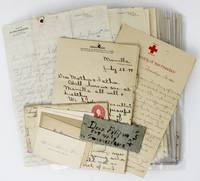
1901ref. 5206San Francisco and various locations in the Philippine Islands 1901. Very good. 101 manuscript letters totaling approximately 360pp. around 38000 words plus an assortment of related correspondence and documents. Original mailing folds general overall wear with a few letters closely trimmed and four of the letters incomplete. An important archive documenting the experiences of a young soldier from Omaha Nebraska named Louis C. Swartzlander during his time in training in California and at war in the Philippines at the turn of the 20th century. After graduation from Omaha High School seventeen-year-old Louis Carver Swartzlander 1882-1922 lied about his age to enlist for three years in an Omaha cavalry troop recruited to suppress the Aguinaldo Insurrection also known as the Philippine-American War following U.S. colonial occupation of the Philippines in 1898. Sixty-five of the present letters were written by Private Swartzlander to his family including over twenty from the Presidio in San Francisco while awaiting transport to the Philippines and over forty from military posts during his time in Manila Balinag Bayambang Dagupan and other locations on Luzon before during and after combat against the Aguinaldo insurgents. All of the letters were written during the heart of the conflict between May 17 1899 and September 15 1901. Swartzlander's letters ultimately shed light on this controversial though obscure episode of the United States's imperialist activities in the Philippines as well as Louis's other military and battle experiences his impressions of Philippine life culture and internal politics his racial attitudes and much more. In one letter on June 15 1900 Louis mentions the burning of the insurgent town of Dasal Luzon by the 25th Colored Infantry a notable but still-obscure moment in African-American military history. In another letter Louis mentions to his brother that he plans to send him a patch of cloth from a dead insurgent soldier; the collection includes a small rectangular swatch of cloth with the following inscription: "Dead Filipino cut off by Swartzlander 4th Cav." The archive also includes over thirty letters written to Louis from his father Dr. Frederick Swartzlander his mother and brother; many of these letters concern their efforts to have Louis discharged from service before his enlistment had ended so that he might join his brother a medical student at Stanford University which the family ultimately accomplished. Following Louis's final letter here on September 15 1901 is a printed special order granting his discharge. Louis then traveled to Palo Alto where he enrolled at Stanford though he apparently did not graduate from there; his obituary in 1922 states that he obtained a medical degree from Creighton University before dying unexpectedly from a short illness. The following excerpts from just five of Louis's letters provide an overall picture of his writing style and the content of his letters. 1 Louis Swartzlander to his parents San Francisco Ca. May 30 1899: "Today another one of the boys.and I took in Chinatown and it is the dirtiest hole I have ever been in. The streets are of ordinary width although some are about like alleys. All along the sidewalks are chinamen fixing and making opium pipes. You can see Chinese men women and children all the way from 1 to 60 or 70 yrs of age. One street or alley is devoted to the fish market and you can smell it for two blocks and fish! Why I never saw so many fish in a pile in my life all kinds from a devil fish which looks exactly like an octopus only smaller to a shark. Also live turtles by the bushel and all kinds of stuff that nobody but a chinaman could eat. I was vaccinated again today as the other two vaccinations did not take." 2 Louis Swartzlander to his parents Manila P.I. July 28 1899: "Well here we are at Manilla all well and healthy. We had an excellent voyage with a peaceful ocean. I saw lots of small flying fish sea gulls sharks etc. We left San Francisco June 24 at 6 oclock and arrived at Honolulu July 2nd. Most of the boys succeeded in going ashore but I could not. We arrived at Manilla July 25th. When about 10 days out after leaving Honolulu we saw an active volcano in the Ladrone Islands. We are stationed about 2 miles from the heart of Manilla. We are stationed in large bamboo barracks each of which will hold about 25. I was in the old walled city and it is a queer place. It is composed mostly of immense cathedrals. The city walls are about 10 feet thick and 15 high but are beginning to crumble as they were built before this century. All stone used in this country is made of cement. There seems to be lots of good fishing here. Yesterday I went out to the famous bone pile that you read about in Omaha. It is a terrible sight with bones piled up and skulls lining the walls but these people don't seem to care for their dead at all. If the deceased has money he can have a vault if not he goes to the bone pile. It is not so very hot here. At a guess I would say it is about 100 in the sun and 90 in the shade. Tobacco is very cheap here. I can buy a box of good 10 ct cigars for 50 cts American money. I have seen the Pasig river. It separates old Manilla from new Manilla. It is a muddy stream about 200 feet wide with almost no current. This country is covered with palms banana trees etc. All the banana trees are covered with green bananas but none are good to eat as they are too green. The native horses here are about like Shetland ponies and it looks queer to see a troop of the 4th Cavalry mounted on such small horses. We are having the best of eating the best I have had since I enlisted." 3 Louis Swartzlander to his brother Manila P.I. December 22 1899: "You seem to think that I am a great fellow just because I came out here. Of course it was hard very hard at first but it is easy now. I am more than pleased to hear that you are doing so fine with your studies and now just keep at them and you will turn out a finely educated man. I am also pleased to hear that you think you will be a doctor as I long ago decided I should. If I can get back to the states and get my discharge we can both study medicine together. Well I have been.in the hospital with the itch but it is now O.K. I will soon again join my troop Fighting K. I am feeling good though not so strong as when I was in the states. Our troop is I believe east of the railroad about 20 miles from here. Say Joe the first chance I get I am going to kill a goo goo niggar for you and if I can I will get a piece of his uniform such as it is and send it to you. I'd get a piece of his doggoned hide if it didn't stink. Remember this goo goo is to be plugged for you. On the firing line we have a pretty good time. You see when things are quiet we get up at 6 oclock care for our horses eat breakfast lay around until 8 oclock then if we neither go out scouting or drill we have nothing to do until 4 oclock when we again look after our horses eat at 5 answer retreat at 6 oclock and nothing until taps at 9 when we must all be in quarters and lights out. Sometimes we are divided up so that about 3 men are in a shack and then if we can get a candle we play cards tell stories play a mouth organ or whatever there is to pass away the time. Every once in a while the niggars will fire a volley into the town and then we turn out and give them what they need. In the morning we generally find from 5 to 15 dead goo goos laying around. They very seldom hit any of us because they cant shoot and so soon as we yell we charge and they don't know any thing but to get. Our troop commander will let us get all the chickens we want the pigs are no good but the caribou are O.K. just like beef and so you bet we don't go hungry so very long at a stretch." 4 Louis Swartzlander to his parents Bayambang P.I. June 15 1900: "We are still at Bayamban. We are doing just the same duty as when we first arrived here last November that is two posts to walk one serving as an out post and the other the stables guard. From the present outlook of things we will stay here for the rainy season as our shacks are being repaired and a bamboo stable is being built for our horses. The stable is about 300 feet long by 40 wide and will shelter 11 horses and 15 mules besides 12 native ponies. To give you a description of one of our trips through the country.I don't claim to be a writer or reporter so you must excuse my poor attempt. As our last trip was a fairly good one.I will attempt to tell you about it. We first received orders on the morning of April 15th to be ready for a trip within the next 24 hours and by a little hustling and packing we were soon ready. On the morning of the 16th we saddled up and within a half hour were off.we rode about seven miles to a small town called Urbiztando. At that place we unsaddled our horses first the saddles and other equipments except our guns on three small rafts which were pulled across the river. The command was then given to mount and having done so we started in and in five minutes time every man and horse was safe on the west side of the Agno river. We again saddled up and by riding two miles further arrived at a pretty little town called Mangaterem. The town covers about four square blocks and contains a large church besides several fair sized houses. In front of the church is a large plaza which is about a block square. In one corner of this plaza and beneath a large stone monument are or were buried two American soldiers who were killed while taking the town. We stayed in Mangaterem overnight sleeping out on the plaza. The next morning at 530 we were aroused by first call. We then fell in line for roll call and after this fed and brushed off our horses then ate a breakfast of two slices of bacon four hardtack and a half a cup of coffee. At 615 we saddled up and started for another fair sized town 12 miles distant called Salasa. This town is as well as Mangaterem garrisoned by the 36th U.S.V. There at Salasa you get a fine ocean breeze as we were then getting close to the coast. Upon arriving at Salasa we unsaddled and turned our horses loose in herd and made preparations for the night. At four oclock we caught up our hoses fed and groomed them after which we got our own supper. After this the most of us went down to a river close by and had a fine swim after which we all turned in for a good rest. In the morning after being joined by 50 men of M troop of the Fourth Cavalry we started for Sual a town about 11 miles distance and on the Gulf of Lingayen. We arrived at Sual at about 1 oclock. We were then quartered in the church which was made of bamboo and mud. That evening after having a good dip in the Gulf we rolled in for another good nights rest. In the morning we started for the town of Alaminos which is about the same size as Maregaterem. Here we had to water our horses out of a well as there is no river within two miles distance. We here slept in what appeared to be an old school house or cottage of some sort. Here I bought a package of smoking tobacco and a pipe also a can of jam which came in handy with the hardtack. Well the next morning left for Dasol a town about 17 miles. We arrived at a small town called Balincagin at about 11oclock where we rested a half hour and then started on to Dasal here we arrived at about 3 oclock. Dasal never was a town of much importance but now it is no town at all or at least it was not when we arrived there. The 25th Infantry Colored had a fight there and after driving every insurgent not dead or wounded over the hills and far away they set the town on fire and it has always been an insurgents place of meeting and once before when we were there they shot into us doing no harm however. Well we here slept out on the old plaza and in the morning started to Santa Cruz arriving there at about noon after crossing about forty small rivers. Santa Cruz is a pretty little town situated on the bay. The town itself covers about eight square blocks and contains a large stone church and convent also a school house and several large houses. That is large for this country about the size of a barn in the states. It also contains like all other towns hundreds of little nipa shacks." 5 Louis Swartzlander to his parents Bayambang P.I. October 31 1900: "Well the 17th Infantry had another scrap last night at a small town beyond Camaling. I do not as yet know just where it took place but I am told about 20 miles from here. It seems that there were just sixteen American soldiers in the town and when the goo-goos opened up they grabbed their guns and rushed outside their quarters. They then returned the fire hot and heavy for about 5 minutes when they saw that the goo-goos were advancing. At once the command 'fill magazines' was given and then charge. With a yell they were after the goo-goos firing as they charged. Well now no goo-goo can face a hot fire and worse of all the Americans yell and they broke and ran every goo-goo for himself. Our boys could not get close to them as they can run like a deer but when the thing was over 5 dead goo-goos lay dead with holes in them while on our side only one man had been hurt and he only slightly - a Mauser ball had passed through his arm including between the elbow and wrist. He was sent to the Dongupan hospital today. It is estimated that there were 200 bolo men and 25 rifle men and so you can see how easy it is for us to put largely superior numbers to flight. It has been rumored here that after the presidential election is over that the U.S. soldiers are going to make a grand cleaning up of this island and its goo-goos. That will mean that we will show them no mercy and every time we see a goo-goo we will 'soak it to him' you know that that means but I have great doubts as to whether or not they will do any such thing as that would end their trouble too quickly and some of those muck a mucks in Manila would lose a good job. If they wanted to end this trouble all they would have to do is turn the soldiers loose and we wouldn't do a thing to them. As it is we are not allowed to lay a hand on them or to touch a hair of their heads. We will capture 50 or so of them then our officers turn around and put them on confinement for 3 or 4 days and then turn them loose. How are we ever going to end this war when they do that way. I would like to know. But such is the case and I have seen it done several. In all probability if we should capture Aggie they would take him to Manila and give him some good government position. They finally captured Genl. Del Pilar and what did they do turned around and told him if he would take the oath of allegiance to the U.S. that they would turn him loose. Of course he did so for what do these people care for the oath of allegiance and today he is again with the insurgents. I tell you that the people in the U.S. have the wool pulled over their eyes in regards to this matter on Luzon and they will learn after a few thousand more of our boys are killed or die of sickness. This whole thing could have been ended in less than six months at the start but the officers had too good a thing of it and the longer it lasts the better it suits them. When I started to write this I did not intend to criticize the authorities and so will quit writing on this subject. Be sure and do not print in a newspaper what I have here written as I might get into serious trouble." 6 Louis Swartzlander to his parents Dagupan P.I. April 18 1901: "I have just returned from an open air concert which was given by the 17th Infantry band on the plaza which is located in the center of Dagupan. The band is composed of nearly thirty pieces and all its members are good musicians. Several of Sousa's pieces were played.as well as.the Star Spangled Banner. The concert lasted nearly two hours.very enjoyable. I am still at 3rd District Headquarters Dagupan as orderly for General Smith. The General himself is at present in the town of Iba to which place he went three days ago for the purpose of inspecting the military prison. The two of Iba is situated in the Zambales province and is about 65 miles from here.we used to pass through Iba on your hikes to Subig.in the early part of 1900. K troop is.on a hike in the mountains in the vicinity of the town of Camaling which is about 12 miles south of Bayambang. I am glad that I am not with them as I have had about all the goose chases that I care to take part in.all the rest of the men in K troop are tired of hiking but that makes no difference for if Captain Benson wishes to go out in the mountains he details about 60 men and they have to go whether they want to or not. Should any man having been detailed to on any such hike fail to do so when hot prevented by sickness or other necessary cause he would be thrown into the guard house and be tried by a general court martial. There was a public hanging in the town of Bennmollie which is three miles west of here.the accused murdered some friendly natives some time ago and when caught was tried by the military authorities found guilty of murder in the 1st degree and was sentenced to hang. The victim dropped at 1023am and was pronounced dead in just 7 minutes. I wished very much to go myself but it being as I was on duty that day I could not; however I will yet have plenty of chances as natives who have been convicted of murders are being hung in different parts of these islands nearly every Friday. I never as yet have witnessed a hanging and I wish to do so before returning to the U.S. Never since last August when you first made application for my discharge did I have the least expectation that it would be granted as I know too too well how hard it is for a soldier in the regular army to obtain a discharge by favor purchase or any other way before his time of enlistment has expired. I also know that unless the soldier has a very strong pull in Washington it is almost impossible. I think it best to drop all hopes of my discharge before May 11 '02 at which date they are compelled to let me go and then I will lose no time between here and San Francisco. Heaven help the poor lads who were enlisted in Omaha for the 10th Cavalry and sent to the Philippines. In all probability they will have to serve their entire enlistment over here/ Where the sun is as hot as fire/ Mosquitoes as large as bumble bees/ Where all is mud and mire/ Where nothing grows but mango trees/. And I fear that before they are over here very long they will be singing Army turn backward turn backwards tonight. Out of these islands out of these fights with mosquitoes. Out of these mud holes with mud that will stick to your old army rags until it bakes into brick." Louis's letters as well as his family's are generally long and detailed with all but five of them totaling at least two pages and almost half of the letters clocking in at four pages or more. As such this correspondence constitutes a deep and intensely researchable collection documenting Louis's military activities and experiences in the Philippines during an important time in the history of U.S.-Filipino relations as well as how his family dealt with his service on the home front. A wonderful archive with outstanding research potential. unknown
1901ref. 5206San Francisco and various locations in the Philippine Islands 1901. Very good. 101 manuscript letters totaling approximately 360pp. around 38000 words plus an assortment of related correspondence and documents. Original mailing folds general overall wear with a few letters closely trimmed and four of the letters incomplete. An important archive documenting the experiences of a young soldier from Omaha Nebraska named Louis C. Swartzlander during his time in training in California and at war in the Philippines at the turn of the 20th century. After graduation from Omaha High School seventeen-year-old Louis Carver Swartzlander 1882-1922 lied about his age to enlist for three years in an Omaha cavalry troop recruited to suppress the Aguinaldo Insurrection also known as the Philippine-American War following U.S. colonial occupation of the Philippines in 1898. Sixty-five of the present letters were written by Private Swartzlander to his family including over twenty from the Presidio in San Francisco while awaiting transport to the Philippines and over forty from military posts during his time in Manila Balinag Bayambang Dagupan and other locations on Luzon before during and after combat against the Aguinaldo insurgents. All of the letters were written during the heart of the conflict between May 17 1899 and September 15 1901. Swartzlander's letters ultimately shed light on this controversial though obscure episode of the United States's imperialist activities in the Philippines as well as Louis's other military and battle experiences his impressions of Philippine life culture and internal politics his racial attitudes and much more. In one letter on June 15 1900 Louis mentions the burning of the insurgent town of Dasal Luzon by the 25th Colored Infantry a notable but still-obscure moment in African-American military history. In another letter Louis mentions to his brother that he plans to send him a patch of cloth from a dead insurgent soldier; the collection includes a small rectangular swatch of cloth with the following inscription: "Dead Filipino cut off by Swartzlander 4th Cav." The archive also includes over thirty letters written to Louis from his father Dr. Frederick Swartzlander his mother and brother; many of these letters concern their efforts to have Louis discharged from service before his enlistment had ended so that he might join his brother a medical student at Stanford University which the family ultimately accomplished. Following Louis's final letter here on September 15 1901 is a printed special order granting his discharge. Louis then traveled to Palo Alto where he enrolled at Stanford though he apparently did not graduate from there; his obituary in 1922 states that he obtained a medical degree from Creighton University before dying unexpectedly from a short illness. The following excerpts from just five of Louis's letters provide an overall picture of his writing style and the content of his letters. 1 Louis Swartzlander to his parents San Francisco Ca. May 30 1899: "Today another one of the boys.and I took in Chinatown and it is the dirtiest hole I have ever been in. The streets are of ordinary width although some are about like alleys. All along the sidewalks are chinamen fixing and making opium pipes. You can see Chinese men women and children all the way from 1 to 60 or 70 yrs of age. One street or alley is devoted to the fish market and you can smell it for two blocks and fish! Why I never saw so many fish in a pile in my life all kinds from a devil fish which looks exactly like an octopus only smaller to a shark. Also live turtles by the bushel and all kinds of stuff that nobody but a chinaman could eat. I was vaccinated again today as the other two vaccinations did not take." 2 Louis Swartzlander to his parents Manila P.I. July 28 1899: "Well here we are at Manilla all well and healthy. We had an excellent voyage with a peaceful ocean. I saw lots of small flying fish sea gulls sharks etc. We left San Francisco June 24 at 6 oclock and arrived at Honolulu July 2nd. Most of the boys succeeded in going ashore but I could not. We arrived at Manilla July 25th. When about 10 days out after leaving Honolulu we saw an active volcano in the Ladrone Islands. We are stationed about 2 miles from the heart of Manilla. We are stationed in large bamboo barracks each of which will hold about 25. I was in the old walled city and it is a queer place. It is composed mostly of immense cathedrals. The city walls are about 10 feet thick and 15 high but are beginning to crumble as they were built before this century. All stone used in this country is made of cement. There seems to be lots of good fishing here. Yesterday I went out to the famous bone pile that you read about in Omaha. It is a terrible sight with bones piled up and skulls lining the walls but these people don't seem to care for their dead at all. If the deceased has money he can have a vault if not he goes to the bone pile. It is not so very hot here. At a guess I would say it is about 100 in the sun and 90 in the shade. Tobacco is very cheap here. I can buy a box of good 10 ct cigars for 50 cts American money. I have seen the Pasig river. It separates old Manilla from new Manilla. It is a muddy stream about 200 feet wide with almost no current. This country is covered with palms banana trees etc. All the banana trees are covered with green bananas but none are good to eat as they are too green. The native horses here are about like Shetland ponies and it looks queer to see a troop of the 4th Cavalry mounted on such small horses. We are having the best of eating the best I have had since I enlisted." 3 Louis Swartzlander to his brother Manila P.I. December 22 1899: "You seem to think that I am a great fellow just because I came out here. Of course it was hard very hard at first but it is easy now. I am more than pleased to hear that you are doing so fine with your studies and now just keep at them and you will turn out a finely educated man. I am also pleased to hear that you think you will be a doctor as I long ago decided I should. If I can get back to the states and get my discharge we can both study medicine together. Well I have been.in the hospital with the itch but it is now O.K. I will soon again join my troop Fighting K. I am feeling good though not so strong as when I was in the states. Our troop is I believe east of the railroad about 20 miles from here. Say Joe the first chance I get I am going to kill a goo goo niggar for you and if I can I will get a piece of his uniform such as it is and send it to you. I'd get a piece of his doggoned hide if it didn't stink. Remember this goo goo is to be plugged for you. On the firing line we have a pretty good time. You see when things are quiet we get up at 6 oclock care for our horses eat breakfast lay around until 8 oclock then if we neither go out scouting or drill we have nothing to do until 4 oclock when we again look after our horses eat at 5 answer retreat at 6 oclock and nothing until taps at 9 when we must all be in quarters and lights out. Sometimes we are divided up so that about 3 men are in a shack and then if we can get a candle we play cards tell stories play a mouth organ or whatever there is to pass away the time. Every once in a while the niggars will fire a volley into the town and then we turn out and give them what they need. In the morning we generally find from 5 to 15 dead goo goos laying around. They very seldom hit any of us because they cant shoot and so soon as we yell we charge and they don't know any thing but to get. Our troop commander will let us get all the chickens we want the pigs are no good but the caribou are O.K. just like beef and so you bet we don't go hungry so very long at a stretch." 4 Louis Swartzlander to his parents Bayambang P.I. June 15 1900: "We are still at Bayamban. We are doing just the same duty as when we first arrived here last November that is two posts to walk one serving as an out post and the other the stables guard. From the present outlook of things we will stay here for the rainy season as our shacks are being repaired and a bamboo stable is being built for our horses. The stable is about 300 feet long by 40 wide and will shelter 11 horses and 15 mules besides 12 native ponies. To give you a description of one of our trips through the country.I don't claim to be a writer or reporter so you must excuse my poor attempt. As our last trip was a fairly good one.I will attempt to tell you about it. We first received orders on the morning of April 15th to be ready for a trip within the next 24 hours and by a little hustling and packing we were soon ready. On the morning of the 16th we saddled up and within a half hour were off.we rode about seven miles to a small town called Urbiztando. At that place we unsaddled our horses first the saddles and other equipments except our guns on three small rafts which were pulled across the river. The command was then given to mount and having done so we started in and in five minutes time every man and horse was safe on the west side of the Agno river. We again saddled up and by riding two miles further arrived at a pretty little town called Mangaterem. The town covers about four square blocks and contains a large church besides several fair sized houses. In front of the church is a large plaza which is about a block square. In one corner of this plaza and beneath a large stone monument are or were buried two American soldiers who were killed while taking the town. We stayed in Mangaterem overnight sleeping out on the plaza. The next morning at 530 we were aroused by first call. We then fell in line for roll call and after this fed and brushed off our horses then ate a breakfast of two slices of bacon four hardtack and a half a cup of coffee. At 615 we saddled up and started for another fair sized town 12 miles distant called Salasa. This town is as well as Mangaterem garrisoned by the 36th U.S.V. There at Salasa you get a fine ocean breeze as we were then getting close to the coast. Upon arriving at Salasa we unsaddled and turned our horses loose in herd and made preparations for the night. At four oclock we caught up our hoses fed and groomed them after which we got our own supper. After this the most of us went down to a river close by and had a fine swim after which we all turned in for a good rest. In the morning after being joined by 50 men of M troop of the Fourth Cavalry we started for Sual a town about 11 miles distance and on the Gulf of Lingayen. We arrived at Sual at about 1 oclock. We were then quartered in the church which was made of bamboo and mud. That evening after having a good dip in the Gulf we rolled in for another good nights rest. In the morning we started for the town of Alaminos which is about the same size as Maregaterem. Here we had to water our horses out of a well as there is no river within two miles distance. We here slept in what appeared to be an old school house or cottage of some sort. Here I bought a package of smoking tobacco and a pipe also a can of jam which came in handy with the hardtack. Well the next morning left for Dasol a town about 17 miles. We arrived at a small town called Balincagin at about 11oclock where we rested a half hour and then started on to Dasal here we arrived at about 3 oclock. Dasal never was a town of much importance but now it is no town at all or at least it was not when we arrived there. The 25th Infantry Colored had a fight there and after driving every insurgent not dead or wounded over the hills and far away they set the town on fire and it has always been an insurgents place of meeting and once before when we were there they shot into us doing no harm however. Well we here slept out on the old plaza and in the morning started to Santa Cruz arriving there at about noon after crossing about forty small rivers. Santa Cruz is a pretty little town situated on the bay. The town itself covers about eight square blocks and contains a large stone church and convent also a school house and several large houses. That is large for this country about the size of a barn in the states. It also contains like all other towns hundreds of little nipa shacks." 5 Louis Swartzlander to his parents Bayambang P.I. October 31 1900: "Well the 17th Infantry had another scrap last night at a small town beyond Camaling. I do not as yet know just where it took place but I am told about 20 miles from here. It seems that there were just sixteen American soldiers in the town and when the goo-goos opened up they grabbed their guns and rushed outside their quarters. They then returned the fire hot and heavy for about 5 minutes when they saw that the goo-goos were advancing. At once the command 'fill magazines' was given and then charge. With a yell they were after the goo-goos firing as they charged. Well now no goo-goo can face a hot fire and worse of all the Americans yell and they broke and ran every goo-goo for himself. Our boys could not get close to them as they can run like a deer but when the thing was over 5 dead goo-goos lay dead with holes in them while on our side only one man had been hurt and he only slightly - a Mauser ball had passed through his arm including between the elbow and wrist. He was sent to the Dongupan hospital today. It is estimated that there were 200 bolo men and 25 rifle men and so you can see how easy it is for us to put largely superior numbers to flight. It has been rumored here that after the presidential election is over that the U.S. soldiers are going to make a grand cleaning up of this island and its goo-goos. That will mean that we will show them no mercy and every time we see a goo-goo we will 'soak it to him' you know that that means but I have great doubts as to whether or not they will do any such thing as that would end their trouble too quickly and some of those muck a mucks in Manila would lose a good job. If they wanted to end this trouble all they would have to do is turn the soldiers loose and we wouldn't do a thing to them. As it is we are not allowed to lay a hand on them or to touch a hair of their heads. We will capture 50 or so of them then our officers turn around and put them on confinement for 3 or 4 days and then turn them loose. How are we ever going to end this war when they do that way. I would like to know. But such is the case and I have seen it done several. In all probability if we should capture Aggie they would take him to Manila and give him some good government position. They finally captured Genl. Del Pilar and what did they do turned around and told him if he would take the oath of allegiance to the U.S. that they would turn him loose. Of course he did so for what do these people care for the oath of allegiance and today he is again with the insurgents. I tell you that the people in the U.S. have the wool pulled over their eyes in regards to this matter on Luzon and they will learn after a few thousand more of our boys are killed or die of sickness. This whole thing could have been ended in less than six months at the start but the officers had too good a thing of it and the longer it lasts the better it suits them. When I started to write this I did not intend to criticize the authorities and so will quit writing on this subject. Be sure and do not print in a newspaper what I have here written as I might get into serious trouble." 6 Louis Swartzlander to his parents Dagupan P.I. April 18 1901: "I have just returned from an open air concert which was given by the 17th Infantry band on the plaza which is located in the center of Dagupan. The band is composed of nearly thirty pieces and all its members are good musicians. Several of Sousa's pieces were played.as well as.the Star Spangled Banner. The concert lasted nearly two hours.very enjoyable. I am still at 3rd District Headquarters Dagupan as orderly for General Smith. The General himself is at present in the town of Iba to which place he went three days ago for the purpose of inspecting the military prison. The two of Iba is situated in the Zambales province and is about 65 miles from here.we used to pass through Iba on your hikes to Subig.in the early part of 1900. K troop is.on a hike in the mountains in the vicinity of the town of Camaling which is about 12 miles south of Bayambang. I am glad that I am not with them as I have had about all the goose chases that I care to take part in.all the rest of the men in K troop are tired of hiking but that makes no difference for if Captain Benson wishes to go out in the mountains he details about 60 men and they have to go whether they want to or not. Should any man having been detailed to on any such hike fail to do so when hot prevented by sickness or other necessary cause he would be thrown into the guard house and be tried by a general court martial. There was a public hanging in the town of Bennmollie which is three miles west of here.the accused murdered some friendly natives some time ago and when caught was tried by the military authorities found guilty of murder in the 1st degree and was sentenced to hang. The victim dropped at 1023am and was pronounced dead in just 7 minutes. I wished very much to go myself but it being as I was on duty that day I could not; however I will yet have plenty of chances as natives who have been convicted of murders are being hung in different parts of these islands nearly every Friday. I never as yet have witnessed a hanging and I wish to do so before returning to the U.S. Never since last August when you first made application for my discharge did I have the least expectation that it would be granted as I know too too well how hard it is for a soldier in the regular army to obtain a discharge by favor purchase or any other way before his time of enlistment has expired. I also know that unless the soldier has a very strong pull in Washington it is almost impossible. I think it best to drop all hopes of my discharge before May 11 '02 at which date they are compelled to let me go and then I will lose no time between here and San Francisco. Heaven help the poor lads who were enlisted in Omaha for the 10th Cavalry and sent to the Philippines. In all probability they will have to serve their entire enlistment over here/ Where the sun is as hot as fire/ Mosquitoes as large as bumble bees/ Where all is mud and mire/ Where nothing grows but mango trees/. And I fear that before they are over here very long they will be singing Army turn backward turn backwards tonight. Out of these islands out of these fights with mosquitoes. Out of these mud holes with mud that will stick to your old army rags until it bakes into brick." Louis's letters as well as his family's are generally long and detailed with all but five of them totaling at least two pages and almost half of the letters clocking in at four pages or more. As such this correspondence constitutes a deep and intensely researchable collection documenting Louis's military activities and experiences in the Philippines during an important time in the history of U.S.-Filipino relations as well as how his family dealt with his service on the home front. A wonderful archive with outstanding research potential. unknown books
1418ref. 190144Zurich: Vertriebsstelle deutscher Zeitungen 1914-18. A unique visual record of the German experience in the First World War Two large albums containing a fine selection of double-size double-weight prints of press photographs attractively laid out and with a well-organized chronology. A remarkable overview of the First World War documenting seven European theatres between 1914 and 1918. The images are press photographs distributed through the Vertriebsstelle deutscher Zeitungen the Zurich-based German wartime office that circulated press and pictorial propaganda in neutral Switzerland. Many of the images are doubtless by official photographers - the portraits of officers group portraits and the like all suggest so - but others show Germans troops in distress and do not shy away from the hardships and horrors of war. The striking large format images are rare and unusual for this period. The photographs are organized geographically with each section marked by a corresponding laid in map of the region. Images of aerial reconnaissance large-scale battle scenes downed aircraft both English and German tanks bridges bombings and obliterated landscapes sit beside more intimate and amusing shots of recreational and ceremonial activities including dancing musicians and what might be half the winning half of a "tug-o-war". Furthermore we gain insight to the experience of troops on the ground. There are shots of soldiers fighting marching in trenches an Italian POW camp a paratrooper caught in a tree wounded soldiers recuperating in hospital and men hastily constructing wooden crosses to mark graves. Included is a rare photograph of a soldier of African descent and another of a soldier apparently being executed. There are pictures of German planes coming to and from bombing raids and English naval targets. Furthermore civilians are depicted: French peasants farmers driving cattle women children refugees and an elaborate funeral procession. This is a grand attempt to document every aspect of the war in Europe. Although the compiler of the album remains anonymous it was doubtless someone who worked for the company or perhaps one of the photographers whose work is included here. The album was probably put together in the years immediately following the war. The entirety of the first album is devoted to the Western Front. Commencing in the north of France Calais Dunkirk and Ostende then inland to Arras and Valenciennes to Montdidier St. Quentin and Meziers finally the area incorporating Chalons Bar le Duc Nancy and Remiront. It includes 321 photographs of which 69 are large size 106 are mid-size and there are 146 smaller size images. Northern Italy and Austria "Die Front am Insonzo" and "Zu den Kämpfen an der Kärntner-Grenze": 129 photographs of which 34 large size 53 mid-size and 42 smaller size images. This commences with two images "Uebesichtskarte über die Isonsofront" and "Insonzo-Offensive: Uebersichtsplan des Durchbruchgebietes." Russia and Poland : 146 photographs including 25 large size 46 mid-size and 75 smaller size images. Black Sea : 23 photographs of which 4 large size 9 mid-size and 10 smaller size images. Caucasus and Persian border "Der Kaukasus und die persischen Grenzgebiete": 20 photographs including 9 large size 3 mid-size and 8 smaller size images. Great Britain "Karte um Fliegerangriff auf London am 13.6.1917." 46 photographs including 9 large size 19 mid-size and 18 smaller size images. Baltic states : 11 photographs including 9 large size and 2 mid-size images. A fascinating collection which also covers political events meetings and conventions portraits of politicians among others a portrait of Leo Trotzky during these four years. A fascinating collection which also covers political events meetings and conventions portraits of politicians among others a portrait of Leo Trotzki during these four years. Two landscape folio albums 360 x 505 mm. Containing 696 photographs with some copyprints most with images numbered on the negative various sizes. All tipped onto the album leaves many stamped "Vertriebsstelle deutscher Zeitungen". With a manuscript list of photographs loosely laid in. Contemporary half calf coated with a synthetic material. Extremities slightly rubbed. In very good condition. unknown
1861ref. 48993Richmond: West & Johnston 1861. Beautiful Confederate Map of the Battle of Bull Run Printed in Richmond A handsome and historic map depicting the First Battle of Manassas or Bull Run depicting troop positions and movements roads railroads houses and other significant geographical features. First Manassas was the first significant engagement of the Civil War and the place where Thomas J. Jackson became "Stonewall" Jackson when his brigade stood their ground against disorganized Union forces. The Confederate troops won the battle raising hopes in the South and signaling to the North that the war would not be won so easily. The map indicates that it was "made from observation" by Solomon Bamberger and lithographed by the firm of Hoyer & Ludwig in Richmond. It appears that at least two issues of this map exist this being the most vividly pictorial that we have found and thus perhaps the later of the two. Rather than a simple plan of the battle the present map lays out the same information augmenting the background with shading and pictorial scenery. The title is likewise enclosed in a simple border setting it off from the rest of the map and though the title is the same the typeface of some of the title lettering has been changed slightly. Parrish & Willingham do not indicate any differentiation of issues but the details and graphics make this by far the most desirable. A rare and interesting map of this important battle and one of the most dramatic graphics produced in the Confederacy. Without the means to produce suitable paper few pieces on a comparable scale were created. Sheet map 19¾ × 26 inches. Old fold lines. Some separation at two folds on the right edge. Light wear minor toning. Very good. PARRISH & WILLINGHAM 6148. unknown
1861ref. 48993Richmond: West & Johnston 1861. Beautiful Confederate Map of the Battle of Bull Run Printed in Richmond A handsome and historic map depicting the First Battle of Manassas or Bull Run depicting troop positions and movements roads railroads houses and other significant geographical features. First Manassas was the first significant engagement of the Civil War and the place where Thomas J. Jackson became "Stonewall" Jackson when his brigade stood their ground against disorganized Union forces. The Confederate troops won the battle raising hopes in the South and signaling to the North that the war would not be won so easily. The map indicates that it was "made from observation" by Solomon Bamberger and lithographed by the firm of Hoyer & Ludwig in Richmond. It appears that at least two issues of this map exist this being the most vividly pictorial that we have found and thus perhaps the later of the two. Rather than a simple plan of the battle the present map lays out the same information augmenting the background with shading and pictorial scenery. The title is likewise enclosed in a simple border setting it off from the rest of the map and though the title is the same the typeface of some of the title lettering has been changed slightly. Parrish & Willingham do not indicate any differentiation of issues but the details and graphics make this by far the most desirable. A rare and interesting map of this important battle and one of the most dramatic graphics produced in the Confederacy. Without the means to produce suitable paper few pieces on a comparable scale were created. Sheet map 19¾ × 26 inches. Old fold lines. Some separation at two folds on the right edge. Light wear minor toning. Very good. PARRISH & WILLINGHAM 6148. unknown books
1899ref. 0012049Donsol Pilar Manila Philippines New York Malta. Poor with no dust jacket. 1899-1901. Other. On offer is an unbelievable handwritten account of 19 months of action on the frontlines of the Philippine Insurrection the Philippine-American War between November 1899 and June 1901. An unknown American soldier writes of his experiences in a level of detail that cannot be overstated. This diary places the reader in the Philippines with shocking realism making this diary exceedingly rare. The 139 pages of this journalled account of events have been removed from a larger document and someone has pinned these loose pages together. This writing begins at the end of a sentence penned on presumably November 17 1899 and concludes half way through a sentence written on June 23 1901. There seem to be very few missing pages from within the journal and it reads very smoothly. The content is outstanding. The diary opens with our soldier diarist sailing from New York to the Philippines via the British Naval base at Gibraltar and the Suez Canal. He describes his experiences sailing sharing about a stop ashore in Malta a Thanksgiving spent at sea a concert enjoyed aboard the gunboat Nashville on the way to Manila and more. He arrives with his regiment in Manila on Dec 22 1899. The troops explore Manila and meet Filipino locals. In early January of 1900 they receive orders to head to southern Luzuon on the Kobbe Expedition which refers to General William Kobbes Expedition to Bicolandia. This expedition was in response to an urgent order from Washington to open up hemp ports of Southern Luzon due to an American hemp shortage. The problem was the port towns were largely controlled by Filipino Insurgents. Our diarist provides absolutely remarkable detail about Americas role in defeating the Insurgents and the tragedy of the Filipino peoples experience. Context indicates that our diarist was possibly a member of the 43rd Volunteer Infantry Regiments USV Company A. An excerpt that provides a sense of how our soldier explains the circumstances in the Philippines follows: Jan 16th we got the order to pack up and get ready to leave Mikata and to proceed to the Southern part of Luzon we were put aboard the transport Hancock which was at anchor in the Bay of Manila All combined we were named the Kobbe Expedition to the Southern Luzon to open up the Hemp ports and protect the natives from the Insurgents down there On the 21st of Jan 1900 our boats dropped anchor in a bay named the bay of Sorsogon in the Province of Albay All over this province there are large gangs of Insurgents holding the towns so at many towns our boys had a hard fight with the Insurgents before they could take the towns and the gun boat had to shell many of the towns. Our Regt. Occupied nine towns. Our detachment of A and D. Co. Were taken to a town named Donsol the gunboat Helena took us ashore from the Hancock On their arrival ashore they were met by a crowd of Philippinos. They had an order from the officers of the Insurgents it read saying that they would not haul down their colors nor surrender for three days. So our Major returned to the gunboat and a short conversation was held with the officers of the gun-boat and it was decided to prepare the gun boat for action and land all of us. If the Insurgents fired one shot at us the gun-boat would shell the town The hills were full of fleeing people. A detail of men were sent out on the hills at once then the Insurgents fired their first shot at us. Our boys had a warm fight for 15 minutes. They found the hills well entrenched and also found one big cannon. Lots of spears Bolas and wooden guns. They returned to town bringing in a few prisoners. A scouting party was seent and they saw a lot of Philippinos fleeing to the mountains. This town had a population of 10000 and three hundred were Insurrectors. The next thing we done was to find ourselves some good houses to live in. Outposts were put out all around the town. A few natives came across our post for a few nights and on the 22th Jan the Insurgents paid our town a visit setting fire to one of the big houses where our men were sleeping. Our men got out of the house without anyone being hurt. We surrounded the town fired a few volleys . Later in January our soldiers regiment goes on the first of many missions all of which he describes in glaring detail. On this mission the troops attempt to leave Donsol for Pilar when they run into trouble as the connecting bridge was destroyed by Insurgents. They make it to Pilar and find the town has been deserted. As they march back to Donsol they find someone has lit the bridge ablaze: Jan 28th We had a very hard time crossing the bridge burning our shoes and legs but we got safely on the Donsol side before the bridge fell with a crash into the river. We marched on we heard several shots from the Mauser and Remington rifles. Next we discovered a big fire and a call to arms and fire call was sounded The fire of the Insurgents got heavier. Our Major gave an order not to fire. He was going out in the front of our lines. He went out with a detail of men and discovered that our town was surrounded and the hills were full of Insurgents. He fired a few volleys then he came into town. The Insurgents answered him by firing a cannon. Then the Insurgents gave a yell and started to advance and we kept quiet and let them get close to our lines. Then we got the order to commence firing and the boys opened up all around the town and we soon put the Insurgents to flight firing a few shots as they ran. Next morning we discovered a few dead Insurgents close to our lines. The Insurgents almost always carry their dead and wounded along with them in their flight Our soldier does an absolutely phenomenal job of describing not only the day-to-day in Donsol where he spends majority of his time but also the various missions in which he participates. His words paint a fulsome picture of the war: 21st Feb at noon our Major asked for a detachment of men to volunteer to go up the river on a scouting expedition. I along with 12 more men went out of our company and 12 out of D. Co. Along with Capt. Hart of D. Co. And our Major left Donsol in a hard paddle boat and one white boat in tow On our way up the river we could see high hills on each side and the river was very narrow. There were many Insurgents outposts in the high trees all the way up and we fired at every one we saw. We went up a distance of 8 miles before we thought of coming home as it was getting late We had traveled one mile on our homeward way when the Insurgents fired on us from the left hand ashore. Our men in the rear boat fired a volley into the two Insurgents and were taking good aim for a second volley when the hills fairly echoed with the yells from the Insurgents. They then opened up on the right hand side which was aimed at the white boat hitting one of our men our company in the head and he was killed instantly. Then we answered their shots from each of our boats and from that time until we got back to Donsol we were under the hot fire of the Insurgents we could see the hills full of Insurgents and we had plenty to shoot at. We made every shot count. The insurgents even fired rocks at us from the high hills . More texture is added when our soldier discusses aspects of the war that dont involve active fire. Some examples follow: March 5th Gen Kobbe of the 8th Army Cor was here on a visit and he said these two companies were a very industrious lot of men and that the building of the stocade and trenches was a very sensible work he also brought us 17 of the Battery G 3rd Artillery men and one Hotch Kiss gun for reinforcements. April 10th the mail boat was here bringing the report of Gen. Pawa likely Jose Ignacio Paua an Insurgent Gen in Command of the Insurgent troops through this province. He surrender to our Colonel in Legaspi Legazpi and was sent to the Military Prison in Manila. April 21st We took a long march across the hills in a round about manner to a town named Sevilla merely an Insurgent camp. The town was deserted on our arrival. Fires were still burning in the houses. Everything was just as they had dropped it in their flight. We passed through the town and discovered many traps laid in the roads for us. One trap was an arrow trap on each side of the path in the bushes and by pulling a strong the arrows would stick into anyone going down the path. None of their traps caught us. Our soldier writes frequently about expeditions for which he volunteers. He describes a mission to Banningaran sic. En route the men captured Captain Hernandiz sic; possibly Adriano Hernández y Dayot and his family before being caught unprepared by the Insurgents who severely injured one of the American sargeants. On their hike back to Donsol they are again attacked by the Insurgents this time caught off guard as they attacked from the rear. And so it goes for many more months. Our author describes the movements of the men with whom he is stationed his commanding officers and the various wins and setbacks of both the Americans and the Insurgents. In May of 1901 our soldier and his regiment begin the process of boarding a ship to return to America. There is of course never a straightforward path and there are many bumps in the road. However our soldier does eventually board a ship and begins again to describe his journey in detail. The diary cuts off abruptly mid-sentence on June 23 1901 as our soldier is describing being at sea with nothing but a sailboat in sight for miles. While we do not know our soldiers identity we do know he was safely heading home at the conclusion of his diary. We know he was a highly motivated volunteer soldier who displayed total buy-in to the mission of the Americans in the Philippines and we know he was a gifted writer penning his experiences with such texture and realism that the reader feels as though they too have been on the front lines of a bloody wet miserable war in the Philippines - fighting for America and for the displaced Philippino people forced to flee from the Insurgents to the mountains. This journal measures 8x5 inches and contains 139 single-sided sheets. The pages were all loose so the author has pinned them together with a single round-headed fastener post. There are no covers to this journal. As a result the first and last few pages show obvious and significant wear and tear including a large corner of the first page being completely ripped off obstructing the text. The handwriting is quite legible. Overall Fair to Poor. ; Manuscripts; 8vo 8" - 9" tall; 139 pages . unknown
1899144 voll.; in folio; rara collezione in sequenza, senza lacune, dal 1899 (primo anno) al 1973 (74° anno). Tutti i volumi (40 x 30 cm ca.) possiedono leg. diverse in mezza o tutta tela. I volumi fino al 1951 constano di 52 fascicoli di 8/16 pagine ca. ciascuno. Le annate successive sono raccolte in 2 o 3 o 4 volumi perchè comprendono fascicoli di un centinaio di pagine ca. Il settimanale all’epoca proseguì fino al 1989: il periodo veramente apprezzabile nella raccolta offerta è quello degli anni dei due conflitti mondiali e del 1945/1946 (quando le uscite della "Domenica degli Italiani", dal 27 maggio 1945 al 24 marzo del 1946, sostituiscono provvisoriamente la testata "originale", perché ritenuta fascista; queste ultime sono spesso introvabili). In questo settimanale è raccontata la vita e la storia popolare italiana, attraverso migliaia di immagini (le copertine magistralmente illustrate da Achille Beltrame - 1899/1944 - e poi da Walter Molino - dal 1945 in poi - sono le più famose) ed articoli (sulle sue pagine scrissero anche le grandi firme del Corriere, come Paolo Monelli, Arnaldo Fraccaroli, Renato Simoni, Indro Montanelli, Giovannino Guareschi, Bruno Roghi, Luigi Barzini jr e molti altri); essa è un’importante documentazione del panorama editoriale e giornalistico italiano
1850ref. 82568Hartford:: S. Drake and Company 1850-1852. original half morocco and marbled sides 1851 edition and publisher's gilt cloth 1852 edition. . Very attractive original condition. 8vo. Illustrated. Also included are nine maps on four sheets of Mexican War operations never bound into any volume. . In about 75 words Lee very generously offers to meet the author at his house or any other at any time convenient. The letter is framed with a carte-de-visite portrait of the young Gen. Lee. Brantz Mayer's own copy of the 1851 edition 2 vols. interleaved and bearing his signature "Brantz Mayer 7th March 1851 in each volume with several paragraphs of text cancelled at the end of Chapter IX and several minor textual corrections Vol. I and with four newspaper clippings with brief pencil annotations and one textual correction plus additional pencil notes on blank at rear Vol. II. The 1852 edition was annotated by a Mayer family friend who apparently served in the Baltimore Batallion of Volunteers including a note on the title page of Vol. I Feb. 25 1879 on attending Brantz Mayer's funeral and later receiving an invitation from Mrs. Mayer to attend her daughter's wedding reception; and ink notes on the batallion's activities Christmas 1846 not covered in the text several marginal marks of emphasis and comments "X" "Yes" and "" in Vol. I; and one textual correction one marginal "X" and some pencil annotations to the second Appendix and the rear endsheet "July 4th 1860 un dia feliz despues muchas infelices" in Vol. II. S. Drake and Company, hardcover
1882ref. H-104A very rare signed edition of privately printed 100 copies of Captain Francis W Dawson's memoir by The News and Courier Book Press. Blue-gray cloth binding decorated with red stamped C.S.A and embellishments. 240 x 150 mm. 9 3/8 x 5 7/8". 180 pp. Author signed: "Mr. W.L. Daggett from F.W. Dawson Jan 1883". The author inscribed this book to William L. Daggett 1824-1889 a printer working for the Charleston's News and Courier with Dawson. Presumably Mr. Daggett was responsible for printing this book making this a presentation copy. This very rare book is a remarkable account of an Englishman traveling to the American South to join the Southern Confederacy. His book includes 18 wartime letters to his friends and family in England. Note: A few pages pp 9-16 inside are loosening from spine not completely detached there is also no loss to text or tear hence we have adequately reduced the price. Overall this book is in great condition and would be a beautiful addition to the library of someone passionate about the American Confederacy. hardcover
ref. LCS-186405Il s’agit du seul ouvrage contemporain des faitspublié en France sur le sujet. Paris, Ponce, s.d. [vers 1783]. Grand in-4 de 16 planches gravées, plein maroquin vieux rouge, triple filet doré autour des plats, dos à nerfs richement orné, double filet or sur les coupes, roulette dorée intérieure, tranches dorées. Reliure signée Zaehnsdorf, England. 202 x 224 mm.
1899ref. 182470South Africa: 1899-1902. A unique snapshot of Boer War Cape Town A highly unusual accomplished series of pen-and-ink and watercolour sketches - landscapes and social and military subjects - covering many aspects of life both high and low in Cape Town during the conflict including depictions of indigenous people Malays and Boers. These attractive well-finished sketches in an unusual and flamboyant style seem professional and illustrative rather than "fine art" and captioned in a decorative and very well-formed hand. The artist may well have been a working illustrator: his captions are certainly in the manner used by such periodicals as the Black & White and The Graphic and the style is that employed for lightly "humoresque" reportage. However we have been unable to trace any published versions and of course he may have been simply an observant talented well-placed amateur. The captioning reveals him to be probably British but possibly American - he makes references to the British soldier as "Tommy" and refers to "Australian and Canadian" troops. The album opens with a bird's eye view of Cape Town from Leeuwen Street and is followed by three military subjects. "Poor Tommy passes in his check" shows a British soldier struck in the head by a bullet as fellow infantrymen take cover behind rocks. "Passed in his check" was a slang expression for dying used mainly in America where there was considerable sympathy for the Boer cause and the unsentimental rendering of a Tommy's death may indicate that the artist is indeed American. Similarly the following picture "An intercepted despatch" shows a mounted courier being picked off by a Boer marksman. This is followed by "Cronje's barkers at Green Point - captured at Paardeberg" with a British sentry guarding artillery and a Maxim gun taken at that hard-fought battle 18-27 February 1900. The camp at Green Point Common was established for British troops before being used to house Boer prisoners of war. Of the dozen appealing watercolours five are landscapes the remainder portraits except for "On the Terrace Dix's" which shows a well-to-do trio seated at a table at Dix's Café the place to be seen in fin de siècle Cape Town it's "leading café during the South African War. When the Duke and Duchess of Cornwall and York later King George V and Queen Mary visited Cape Town the Mayor's banquet was held at Dix's" Green. Particularly striking is the very nicely rendered full-length portrait of a young black woman entitled "The girl aint coloured she was born that way". This is much more of a likeness than a "type" and is echoed to some extent in the preceding image "Tommy's substitute for Maria" which shows a British soldier conversing with two well-dressed black women. These may well be "sly girls" a term for women who supplemented their income with occasional sex work. At home and among the higher echelons of the Army there was deep concern about the loose morals of troops in South Africa and "one problem was considered to be their preference for black prostitutes" Kuitenbrouwer p. 203. The artist's rendering of horses is particularly adept as illustrated by "Every man his own horse breaker - Buckjumbers sic from Argentina" a buckjumper is a horse that habitually bucks; many British cavalry mounts were imported from Argentina during the war and an untitled sketch showing a Yeomanry trooper on a prancing mount. Around nine subjects are military including Boer prisoners being escorted under guard at Green Point and soldiers carousing in a mule cart entitled "When the Canadians and Australians went home". Local scenes include several images of refugees from the fighting a nicely rendered portrait of a smartly dressed Indian trader drunks on Bree Street and "doppers" members of the Reformed Churches in South Africa. "Ricksha" is a spirited sketch showing a young Zulu rickshaw-puller fancifully dressed and adorned with horns and wings - an outfit intended to attract custom and often seen in tourist album photographs into the 20th century - pulling a fashionably dressed lady. The artist's eye for costume is also notable even when a little exaggerated for effect giving the images the hallmark of verisimilitude. The album closes on a humorous note with "Our friends the enemy: the mosquito the bug and the nimble flea the African horrors" showing a trio of anthropomorphized insects. Landscape octavo 145 x 245 mm. With 39 original pen-and-ink drawings and 12 watercolours of scenes and people. Contemporary dark brown hard-grain morocco gilt lettered "Sketch Book" on front cover and initialled "A.H." or "F.H." within border of gilt paired fillets gilt milled edge roll gold-veined Double Marble pattern endpapers. Custom brown quarter morocco solander box. Some abrasions to covers a few pale stains to back cover inner hinges cracked but firm expert repairs to edges of first 8 leaves general toning and finger soiling. Overall in very good condition. Lawrence Green Tavern of the Seas 1947; Vincent Kuitenbrouwer War of Words: Dutch Pro-Boer Propaganda and the South African War 1899-1902 2010. unknown
1865ref. 353265Vp New York South Carolina Georgia and Virginia 1865. Approx. 260pp. Variously written in pencil or ink on a variety of paper but generally quite legible. A few with original envelopes. With: Haskell's manuscript discharge dated Nov. 18 1864 partly-printed discharge of the same date a cdv of Maj. Gen. Hunter and Haskell's 1865 marriage certificate. 8vo or 4to. Usual folds. Approx. 260pp. Variously written in pencil or ink on a variety of paper but generally quite legible. A few with original envelopes. With: Haskell's manuscript discharge dated Nov. 18 1864 partly-printed discharge of the same date a cdv of Maj. Gen. Hunter and Haskell's 1865 marriage certificate. 8vo or 4to. Haskell 1836-1877 enlisted at Canandaigua Ontario County New York on November 18 1861 and mustered for a three year enlistment in Company F of the 1st New York Engineers. At the start of the war the Army Corps of Engineers was severely underpopulated; Civil Engineer Edward Serrell began recruiting for the specialized service in October 1861 with promises of pay one-third greater than infantry service. The first five letters of this archive are written by Haskell from Camp Washington on Staten Island as the regiment was formed trained and awaited orders. The letters describe his daily routine quarters the batteries and harbor and relate news that he has passed as an engineer. Among the most interesting of these letters is one dated January 22 1862 in which he details a visit to Central Park with a lengthy description of the landscape and ongoing construction. The 1st New York was deployed to Port Royal Sound and was formed as the 10th Corps Engineers in the Department of the South. Haskell and his company are sent to Hilton Head arriving at the end of February 1862. The next six months are spent on the island working on its wharves and fortifications. He describes his quarters and rations inspection and drills his work on a powder magazine flood gate and surveying for new fortifications. He writes at length about the number "contrabands" i.e. the freed or escaped slaves from Confederate plantations coming to Hilton Head. He writes on March 1 1862 soon after arriving: "There are a plenty of contrabands slaves here. They chop and raft logs for the wharves that they are building. The women & children are around among the soldiers selling sweet potatoes oysters and such to them. There are a good many soldiers here on the island and there was a good many that have just left on an expedition and they keep coming." On April 1 1862 he adds: "The government is making preparation to put in a cotton crop here. The negroes are preparing the ground. Contrabands come in every day. Two came in yesterday who said that they had nothing to eat for 4 days." On May 10 1862: "There is a good many contrabands and they keep coming in all the time. When they first arrived they are very ragged both men and women but they are all provided with suitable clothes. The soldiers are down on them because the negroes are used better than they are and have more privilege granted to them by the authorities. And the soldier vents his spite on the negro every chance he can get. Most of the negroes are employed. General Hunter has just commenced getting up a negro regiment of 1500 men to do guard duty through the night and to garrison some of the forts. The officers are to be white men and are to be taken from our regiment. There is quite an effort by some northern society to educate them to work; a job which they have but a slight idea." On October 5 1862 he notes the work General Mitchel among the formerly enslaved: "I went yesterday Sunday to the ordination of the Negro Church Baptist. Our chaplain read the ordination service of the Episcopal church and made a few remarks but General Mitchell done most of the talking . He told them that he was going to have them time by themselves and was going to educate them and make them good citizens. He has a squad of 50 men building houses for them about 3 miles from head quarters called the negro villages." In April 1862 he participates in the Battle of Fort Pulaski giving a lengthy account on April 15: "We fell in and marched through the rain to the docks stood in the rain all of an hour and then went on board pretty well soaked. At 9 o'clock the steamboat started. About noon we anchored off Tybee Island in full sight of Fort Pulaski . at seven o'clock the next morning the bombardment of Fort Pulaski commenced. Before the firing commenced Gen. Benham sent a flag of truce and demanded the surrender of the fort in the name of the U.S. " After describing the bombardment he continues: "At sunset the firing ceased on both sides and the two companies of engineers was divided into squads of 8 or 10 men each and sent out to repair the batteries. We worked all night. " He details the work of mounting two 10-inch columbiads "which dismounted themselves the very first shot they made. One of these guns the boys mounted after sunrise and as soon as they discovered from the fort what they was about they directed all of the guns which they could bring to bare upon that particular place. But the boys stuck to their gun and mounted it while the cannon balls was flying over their heads. A feat which they received considerable praise for. " In November 1862 Haskell's company is transferred to Fort Pulaski where they work on repairing the damage to the fort remounting the artillery and building a new magazine. He tells news of the war related to his department including a November expedition to destroy railroad bridges between Charleston and Savannah and the death of General Mitchel: "Our Generals called it a partial result and considerable gained by it. But it was such results as I do not believe in for we got tremendously whipped and lost 225 men in killed wounded and missing. But our company succeeded in tearing up some 200 feet of rails on the reach and cutting the telegraph while they were guarded by a few companies of infantry and they all barely escaped being taken prisoner. They found the bridges all guarded by strong batteries. Just as our company and 4 companies of infantry came up to tracks there was a train of open cars going pass loaded with troops. Our men hid behind the fence and when the train came up fired into it and they think they killed a good many. Since then General Mitchel has died and two or three of the other head men . some think that they had yellow fever . others think they was poisoned by eating fish that they bought of the negroes." Much of his war commentary during his nine months on Fort Pulaski includes descriptions of the iron clads and monitors. On March 5 1863 for example he writes: "The rebel steamer Nashville was destroyed last Saturday by one of the Monitors The Passaic. She ran by a 13 gun battery and run up the river where she lay and fired two shots into her the first went clear through and the second a shell burst in the magazine and this blew the Nashville to atoms." On June 21 1863 he writes: "The rebel ram Fingal i.e. CSS Atlanta that was built at Savannah and which has kept us in a sweat for nearly a year here and at Hilton Head was captured by one of our monitors last Tuesday without firing a shot." He details the action and movements of the ships before continuing sarcastically: ".The means for building the ram was furnished by the ladies of Savannah and there was two boat loads of them followed the ram down to see her destroy our battery and gun boats but they went back closely followed by one of our gun boats and you must imagine their joy." Haskell provides news of the Battle of Fort Wagner on Morris Island including the role of African American troops. He writes on July 15 1863: ". Gen. Gilmour is working his way toward Ft. Sumter and Charleston. There has been some hard fighting on Morris Island." On the 24th he writes: ". our forces had taken eleven batteries on Morris Island and there was two that they had not got possession of yet and that our forces had taken 700 prisoners . yesterday it was reported by some fellows that came from the head that there had been more fighting on Morris Island that the two remaining batteries had been stormed three times and our forces had been repulsed each time with tremendous slaughter. The 55 i.e. 54th Mass. color reg. was one of the storming parties. They were 1200 strong. They lost 700 in killed wounded and missing and the NY 48 was another." Interestingly that same letter includes a commentary on the New York draft riots: "I see by the late NY papers that there is a riot in NY city to resist the draft . I should say that it was to burn buildings murder and to plunder the city. I hope that they will be put down." At the end of July 1863 his company is transferred to Morris Island South Carolina to participate in the shelling of Fort Sumter and Charleston where he remains until February 1864. His letters provide great detail of the shelling his work on the artillery and the condition of Fort Sumter. For example: "We are hard at work building batteries and mounting guns . We have just finished a three gun battery on a small island about two miles from our camp. All of the material except the sand had to be boated guns and all. The guns are pointed toward Charleston and the city may feel the effects of them . Two sides of Ft. Sumter are knocked down and the other sides are full of holes and badly shattered & she has not fired a gun in a number of days but we cannot get possession of her until our forces take Fort Wagner . Our regiment is what is called sapping Fort Wagner that is digging trenches in the ground and they are within 100 ft of the fort. We have some killed by grape and canister and by the sharp shooters . The rebels had rifle pits outside of the fort and from these pits they annoyed our boys very much. The 24 Reg. Mass. made a charge on these pits and took 80 prisoners and drove the rest of them into the fort ." In January 1864: "You must remember that it takes a tremendous force to throw a hundred lb shell over four miles and it is with the utmost difficulty that we can elevate our guns sufficiently to do it. It requires from 36 deg. to 40 deg. and this elevation allows but little recoil to the gun and the consequence is that we are using up more guns than the damage to the city amounts to. But our Colonel has invented a new wooden gun carriage and day before yesterday one of our men with myself laid the platform and put the carriage . on it and the artillery fellows mounted the gun and tried it. It works first rate and yesterday fired 175 shells into the city and got smoke to rising in a number of places." At the end of April 1864 with the shelling of Charleston continuing his regiment is reorganized and he is sent up the James River toward Richmond to join the Army of the Potomac in the Richmond-Petersburg Campaign writing on April 27: "the second battalion which includes our regiment starts for Fortress Monroe tonight . the whole of the 10th army corps are going to operate with the army of the Potomac . The report is that there will be no movement the present season and that all but the most important places will be evacuated and that those will be garrisoned by colored troops." Arriving at Bermuda Hundred Virginia in May he writes: "The infantry landed and had a skirmish and took 600 prisoners. Then we built docks to land the cavalry and artillery. The troops advanced some 12 miles our battalion stayed at the landing until most of the stuff was landed which took 24 hours and then we followed on . built fortifications and obstructions then we again advanced and had quite a severe fight and torn up the railroad between Richmond and Petersburg . they said that in one of the battles the 25th SC Reg lost all but three men . We hear that Meade has licked Lee and that he is falling back to Richmond . We are now about 14 miles below Richmond." After fortifying the breastworks at Bermuda Hundred his company is moved to Dutch Gap to work on the canal being built to flank the Confederate battery on the river. He writes on August 13 1864: "The river here is very crooked. It runs around five miles and comes within 200 yards of meeting again. The rebels have the most of this five miles filled in with torpedoes and obstruction and a powerful battery to protect them." After describing the topography he continues: "We are digging across here so as to let the monitors go through and thus cut off the rebels battery and their obstructions. But the working party has had a rough time of it today. The rebels have shelled us from their batteries and their iron clads. There has been some killed and quite a number wounded . I think that Gen. Grant will stick to them until he fetches them out of Petersburg and Richmond . There will be some hard fighting in northern Virginia and Maryland ." He adds the following week: "We are at work on the canal. Not exactly at the canal but on the fortifications to protect the canal and are building a corduroy road across a swamp able to get to the canal. We are encamped on the opposite side of the river from the canal and have to cross the river in small boats to our work; the negroes does most of the work on the canal and it does not progress very fast." In October he is moved forward to Deep Bottom writing on the 16th: ". Our reg was in the late advance on the north side of the James toward Richmond and have seen some rather rough times . Our company are at work on the advance line. They say about 5 miles from Richmond. I am with four other engineers in charge of building a ten gun fort. We have about 300 men helping us. I have charge of 75 who are cutting away the wood around the fort and carrying timber for it and obstructions to put around it . The rebels are about a mile from this line of works . Wednesday the 12th there was quite a fight here but there was nothing materially accomplished on either side save the killing and wounding of quite a number of men . things indicate a forward movement very soon." His letters from Deep Bottom at the end of October and the beginning of November largely concern the presidential and local elections sending his father his ballot to ensure that his vote would be cast. On November 18 1864 with his 3 year term up Haskell is discharged at Varina Virginia and the archive includes both a manuscript discharge and the official partly-printed one he subsequently received. The archive includes one additional letter dated May 19 1865 written from City Point Virginia suggesting he re-upped for another shorter term. He writes: ". For the past ten days we have been busy from 4-1/2 o'clock in the morning until dark at night fitting up boats for transporting troops and horses. The twenty-fifth corps colored are going to Texas to settle the hash with Kerby Smith. One division has already gone and the boats are being fitted up as fast as possible for the rest . I have been to Richmond and Petersburg ." A very good Civil War archive of letters by an enlisted man serving as an artificer and engineer on the Georgia and Carolina coast participating in the the Battle of Fort Pulaski and the bombardment and siege of Charleston and Fort Wagner and along the James River in the Richmond-Petersburg campaign. unknown
1865ref. 353265Vp New York South Carolina Georgia and Virginia 1865. Approx. 260pp. Variously written in pencil or ink on a variety of paper but generally quite legible. A few with original envelopes. With: Haskell's manuscript discharge dated Nov. 18 1864 partly-printed discharge of the same date a cdv of Maj. Gen. Hunter and Haskell's 1865 marriage certificate. 8vo or 4to. Usual folds. Approx. 260pp. Variously written in pencil or ink on a variety of paper but generally quite legible. A few with original envelopes. With: Haskell's manuscript discharge dated Nov. 18 1864 partly-printed discharge of the same date a cdv of Maj. Gen. Hunter and Haskell's 1865 marriage certificate. 8vo or 4to. Haskell 1836-1877 enlisted at Canandaigua Ontario County New York on November 18 1861 and mustered for a three year enlistment in Company F of the 1st New York Engineers. At the start of the war the Army Corps of Engineers was severely underpopulated; Civil Engineer Edward Serrell began recruiting for the specialized service in October 1861 with promises of pay one-third greater than infantry service. The first five letters of this archive are written by Haskell from Camp Washington on Staten Island as the regiment was formed trained and awaited orders. The letters describe his daily routine quarters the batteries and harbor and relate news that he has passed as an engineer. Among the most interesting of these letters is one dated January 22 1862 in which he details a visit to Central Park with a lengthy description of the landscape and ongoing construction. The 1st New York was deployed to Port Royal Sound and was formed as the 10th Corps Engineers in the Department of the South. Haskell and his company are sent to Hilton Head arriving at the end of February 1862. The next six months are spent on the island working on its wharves and fortifications. He describes his quarters and rations inspection and drills his work on a powder magazine flood gate and surveying for new fortifications. He writes at length about the number "contrabands" i.e. the freed or escaped slaves from Confederate plantations coming to Hilton Head. He writes on March 1 1862 soon after arriving: "There are a plenty of contrabands slaves here. They chop and raft logs for the wharves that they are building. The women & children are around among the soldiers selling sweet potatoes oysters and such to them. There are a good many soldiers here on the island and there was a good many that have just left on an expedition and they keep coming." On April 1 1862 he adds: "The government is making preparation to put in a cotton crop here. The negroes are preparing the ground. Contrabands come in every day. Two came in yesterday who said that they had nothing to eat for 4 days." On May 10 1862: "There is a good many contrabands and they keep coming in all the time. When they first arrived they are very ragged both men and women but they are all provided with suitable clothes. The soldiers are down on them because the negroes are used better than they are and have more privilege granted to them by the authorities. And the soldier vents his spite on the negro every chance he can get. Most of the negroes are employed. General Hunter has just commenced getting up a negro regiment of 1500 men to do guard duty through the night and to garrison some of the forts. The officers are to be white men and are to be taken from our regiment. There is quite an effort by some northern society to educate them to work; a job which they have but a slight idea." On October 5 1862 he notes the work General Mitchel among the formerly enslaved: "I went yesterday Sunday to the ordination of the Negro Church Baptist. Our chaplain read the ordination service of the Episcopal church and made a few remarks but General Mitchell done most of the talking . He told them that he was going to have them time by themselves and was going to educate them and make them good citizens. He has a squad of 50 men building houses for them about 3 miles from head quarters called the negro villages." In April 1862 he participates in the Battle of Fort Pulaski giving a lengthy account on April 15: "We fell in and marched through the rain to the docks stood in the rain all of an hour and then went on board pretty well soaked. At 9 o'clock the steamboat started. About noon we anchored off Tybee Island in full sight of Fort Pulaski . at seven o'clock the next morning the bombardment of Fort Pulaski commenced. Before the firing commenced Gen. Benham sent a flag of truce and demanded the surrender of the fort in the name of the U.S. " After describing the bombardment he continues: "At sunset the firing ceased on both sides and the two companies of engineers was divided into squads of 8 or 10 men each and sent out to repair the batteries. We worked all night. " He details the work of mounting two 10-inch columbiads "which dismounted themselves the very first shot they made. One of these guns the boys mounted after sunrise and as soon as they discovered from the fort what they was about they directed all of the guns which they could bring to bare upon that particular place. But the boys stuck to their gun and mounted it while the cannon balls was flying over their heads. A feat which they received considerable praise for. " In November 1862 Haskell's company is transferred to Fort Pulaski where they work on repairing the damage to the fort remounting the artillery and building a new magazine. He tells news of the war related to his department including a November expedition to destroy railroad bridges between Charleston and Savannah and the death of General Mitchel: "Our Generals called it a partial result and considerable gained by it. But it was such results as I do not believe in for we got tremendously whipped and lost 225 men in killed wounded and missing. But our company succeeded in tearing up some 200 feet of rails on the reach and cutting the telegraph while they were guarded by a few companies of infantry and they all barely escaped being taken prisoner. They found the bridges all guarded by strong batteries. Just as our company and 4 companies of infantry came up to tracks there was a train of open cars going pass loaded with troops. Our men hid behind the fence and when the train came up fired into it and they think they killed a good many. Since then General Mitchel has died and two or three of the other head men . some think that they had yellow fever . others think they was poisoned by eating fish that they bought of the negroes." Much of his war commentary during his nine months on Fort Pulaski includes descriptions of the iron clads and monitors. On March 5 1863 for example he writes: "The rebel steamer Nashville was destroyed last Saturday by one of the Monitors The Passaic. She ran by a 13 gun battery and run up the river where she lay and fired two shots into her the first went clear through and the second a shell burst in the magazine and this blew the Nashville to atoms." On June 21 1863 he writes: "The rebel ram Fingal i.e. CSS Atlanta that was built at Savannah and which has kept us in a sweat for nearly a year here and at Hilton Head was captured by one of our monitors last Tuesday without firing a shot." He details the action and movements of the ships before continuing sarcastically: ".The means for building the ram was furnished by the ladies of Savannah and there was two boat loads of them followed the ram down to see her destroy our battery and gun boats but they went back closely followed by one of our gun boats and you must imagine their joy." Haskell provides news of the Battle of Fort Wagner on Morris Island including the role of African American troops. He writes on July 15 1863: ". Gen. Gilmour is working his way toward Ft. Sumter and Charleston. There has been some hard fighting on Morris Island." On the 24th he writes: ". our forces had taken eleven batteries on Morris Island and there was two that they had not got possession of yet and that our forces had taken 700 prisoners . yesterday it was reported by some fellows that came from the head that there had been more fighting on Morris Island that the two remaining batteries had been stormed three times and our forces had been repulsed each time with tremendous slaughter. The 55 i.e. 54th Mass. color reg. was one of the storming parties. They were 1200 strong. They lost 700 in killed wounded and missing and the NY 48 was another." Interestingly that same letter includes a commentary on the New York draft riots: "I see by the late NY papers that there is a riot in NY city to resist the draft . I should say that it was to burn buildings murder and to plunder the city. I hope that they will be put down." At the end of July 1863 his company is transferred to Morris Island South Carolina to participate in the shelling of Fort Sumter and Charleston where he remains until February 1864. His letters provide great detail of the shelling his work on the artillery and the condition of Fort Sumter. For example: "We are hard at work building batteries and mounting guns . We have just finished a three gun battery on a small island about two miles from our camp. All of the material except the sand had to be boated guns and all. The guns are pointed toward Charleston and the city may feel the effects of them . Two sides of Ft. Sumter are knocked down and the other sides are full of holes and badly shattered & she has not fired a gun in a number of days but we cannot get possession of her until our forces take Fort Wagner . Our regiment is what is called sapping Fort Wagner that is digging trenches in the ground and they are within 100 ft of the fort. We have some killed by grape and canister and by the sharp shooters . The rebels had rifle pits outside of the fort and from these pits they annoyed our boys very much. The 24 Reg. Mass. made a charge on these pits and took 80 prisoners and drove the rest of them into the fort ." In January 1864: "You must remember that it takes a tremendous force to throw a hundred lb shell over four miles and it is with the utmost difficulty that we can elevate our guns sufficiently to do it. It requires from 36 deg. to 40 deg. and this elevation allows but little recoil to the gun and the consequence is that we are using up more guns than the damage to the city amounts to. But our Colonel has invented a new wooden gun carriage and day before yesterday one of our men with myself laid the platform and put the carriage . on it and the artillery fellows mounted the gun and tried it. It works first rate and yesterday fired 175 shells into the city and got smoke to rising in a number of places." At the end of April 1864 with the shelling of Charleston continuing his regiment is reorganized and he is sent up the James River toward Richmond to join the Army of the Potomac in the Richmond-Petersburg Campaign writing on April 27: "the second battalion which includes our regiment starts for Fortress Monroe tonight . the whole of the 10th army corps are going to operate with the army of the Potomac . The report is that there will be no movement the present season and that all but the most important places will be evacuated and that those will be garrisoned by colored troops." Arriving at Bermuda Hundred Virginia in May he writes: "The infantry landed and had a skirmish and took 600 prisoners. Then we built docks to land the cavalry and artillery. The troops advanced some 12 miles our battalion stayed at the landing until most of the stuff was landed which took 24 hours and then we followed on . built fortifications and obstructions then we again advanced and had quite a severe fight and torn up the railroad between Richmond and Petersburg . they said that in one of the battles the 25th SC Reg lost all but three men . We hear that Meade has licked Lee and that he is falling back to Richmond . We are now about 14 miles below Richmond." After fortifying the breastworks at Bermuda Hundred his company is moved to Dutch Gap to work on the canal being built to flank the Confederate battery on the river. He writes on August 13 1864: "The river here is very crooked. It runs around five miles and comes within 200 yards of meeting again. The rebels have the most of this five miles filled in with torpedoes and obstruction and a powerful battery to protect them." After describing the topography he continues: "We are digging across here so as to let the monitors go through and thus cut off the rebels battery and their obstructions. But the working party has had a rough time of it today. The rebels have shelled us from their batteries and their iron clads. There has been some killed and quite a number wounded . I think that Gen. Grant will stick to them until he fetches them out of Petersburg and Richmond . There will be some hard fighting in northern Virginia and Maryland ." He adds the following week: "We are at work on the canal. Not exactly at the canal but on the fortifications to protect the canal and are building a corduroy road across a swamp able to get to the canal. We are encamped on the opposite side of the river from the canal and have to cross the river in small boats to our work; the negroes does most of the work on the canal and it does not progress very fast." In October he is moved forward to Deep Bottom writing on the 16th: ". Our reg was in the late advance on the north side of the James toward Richmond and have seen some rather rough times . Our company are at work on the advance line. They say about 5 miles from Richmond. I am with four other engineers in charge of building a ten gun fort. We have about 300 men helping us. I have charge of 75 who are cutting away the wood around the fort and carrying timber for it and obstructions to put around it . The rebels are about a mile from this line of works . Wednesday the 12th there was quite a fight here but there was nothing materially accomplished on either side save the killing and wounding of quite a number of men . things indicate a forward movement very soon." His letters from Deep Bottom at the end of October and the beginning of November largely concern the presidential and local elections sending his father his ballot to ensure that his vote would be cast. On November 18 1864 with his 3 year term up Haskell is discharged at Varina Virginia and the archive includes both a manuscript discharge and the official partly-printed one he subsequently received. The archive includes one additional letter dated May 19 1865 written from City Point Virginia suggesting he re-upped for another shorter term. He writes: ". For the past ten days we have been busy from 4-1/2 o'clock in the morning until dark at night fitting up boats for transporting troops and horses. The twenty-fifth corps colored are going to Texas to settle the hash with Kerby Smith. One division has already gone and the boats are being fitted up as fast as possible for the rest . I have been to Richmond and Petersburg ." A very good Civil War archive of letters by an enlisted man serving as an artificer and engineer on the Georgia and Carolina coast participating in the the Battle of Fort Pulaski and the bombardment and siege of Charleston and Fort Wagner and along the James River in the Richmond-Petersburg campaign. unknown books
1951ref. BBO25Korean War Commemorative Album of Photographs on the Second Year Anniversary of the Korean War. Ministry of National Defense Republic of Korea 1951. Oblong 4to 31 leaves with protective tissue; with commemorative text: 6.25 Korean War emblem: winged five-point star and anchor 2nd Year D.N.D. R.O.K. flanked by Birds of Paradise executed in mother of pearl woven silver silk tie. Containing 77 original photographs documenting the events and players in the war including President Syngman Rhee Douglas MacArthur etc. with typed captions a page of dedication with presentation To Ambassador De Tervarent … Tao-Yong Shinn Minister of National Defense Republic of Korea . An official album presented to the Belgian Ambassador and Plenipotentiary Minister in Japan Chevalier Guy de Schoutheete de Tervarent 1891-1969 Belgium being one of the 17 countries which furnished military forces in support of the United Nations Security Council resolution to defend South Korea. Most likely each of the Allied nations received such an album as a souvenir. Ministry of National Defense hardcover
1951ref. BBO25Korean War Commemorative Album of Photographs on the Second Year Anniversary of the Korean War. Ministry of National Defense Republic of Korea 1951. Oblong 4to 31 leaves with protective tissue; with commemorative text: 6.25 Korean War emblem: winged five-point star and anchor 2nd Year D.N.D. R.O.K. flanked by Birds of Paradise executed in mother of pearl woven silver silk tie. Containing 77 original photographs documenting the events and players in the war including President Syngman Rhee Douglas MacArthur etc. with typed captions a page of dedication with presentation To Ambassador De Tervarent … Tao-Yong Shinn Minister of National Defense Republic of Korea . An official album presented to the Belgian Ambassador and Plenipotentiary Minister in Japan Chevalier Guy de Schoutheete de Tervarent 1891-1969 Belgium being one of the 17 countries which furnished military forces in support of the United Nations Security Council resolution to defend South Korea. Most likely each of the Allied nations received such an album as a souvenir. Ministry of National Defense hardcover books
1945ref. 264850Krems Austria 1945. 4to and smaller. Some toning overall very good. 4to and smaller. Identity documents and ephemera of American Air Force tail gunner Sgt. Gerald McDowell 1923-2002. McDowell and the flight crew of the B17 nicknamed Hell's Belle survived being shot down over Germany in 1943 and were interned at Stalag 17B in Austria. At the war's end the camp guards marched American prisoners west to meet the U.S. Armored Division at Braunau and avoid the Soviet troops occupying eastern Austria. McDowell wrote a memoir of his war experiences A Tail Gunner's Tale 1991. Stalag 17 gained notoriety from the 1953 Hollywood film of the same name staring William Holden. Comprising: 1. Camp identification document for Gerald McDowell no. 100478 with two photographs side and profile with chalk board identity number. Old fold splt repaired on verso. With corresponding stamped metal badge. Illustrated at p. 114 of his book 2. Broadside: Kgf.-M.-Stammlager XVII B. Teillager der Luftwaffe. Lagerführung. Gneixendorf June 11th 1944. Warning ! 1. Any P.o.W. touching or crossing warning wire during day-time will be fired upon immediately. . Stencil printed signed in ink by "E-" above stencil legend: Hauptmann and 1st Lageroffizier. Old folds. Tipped onto card. Illustrated at p. 90 of his book. Of extreme rarity. 3. BATCH D.B. Pencil portrait of Gerald McDowell Signed and dated lower right D.B. Batch P.O.W. 13/1/45 Krems Austria. 9 x 6 inches. Tipped onto card. Framed. 4. Recipes for "D-Bar Spread" "Chocolate Cream Pudding" "Gallop" and other P.O.W. dishes using D-Bars C-Rations "Jerry" sugar etc. 5 small cards closely written on versos of typed prisoner ID fiches 4 x 2 inches. Tipped onto card. Toned. with: 5. PHELPER Ben H. Kriegie Memories title from cover. Photographs and handwritten text. 64 pp. Aurora Illinois: Printed by Barker printing Co. 1946. Blue leather grained cloth upper cover titled in gilt. OCLC: 85169189 4 copies. Inscribed by the author on the first blank "Jerry: May you always be free and happy. Good luck Ben". Rare privately printed account of experiences inside Stalag 17B by "Luftgangster No. 113204" with photographs of camp life and of the march towards liberation in May 1945. With a dozen annotations by McDowell usually in red ink indicating himself or other fellow inmates in the photographs including a picture in the "Cardboard Playhouse" of McDowell in a dress captioned in the text "a glamour shot of one of our boy actors . Some of the lads sure did look good when they made up as a girl." Presentation copy of an astonishing illustrated narrative 6. MCDOWELL Gerald. E. A Tail Gunner's Tale. Vantage Press 1991. Review copy as new. unknown