1.271 Ergebnisse
1980Best.-Nr. 2083002117801290Aki Shobo 1980. Soft Cover. Fine. Number of pages: 57p Size: 28cm Aki Shobo paperback
1978Best.-Nr. 2111902160602882SIS 1978. Soft Cover. Fine. The book is in fine condition. SIS paperback
1973Best.-Nr. 2091202133404226Hiroshima Soil History Study Group A5 size 1973. Soft Cover. Fine. Number of pages: 350p Size: 21cm Hiroshima Soil History Study Group A5 size paperback
1986Best.-Nr. 2092902138301666Hiroshima City Board of Education 1986. Soft Cover. Fine. Number of pages: 359p Size: 21cm Hiroshima City Board of Education paperback
2016Best.-Nr. 2090202120411354Gyosei 2016. Soft Cover. Fine. Number of books: 1 Gyosei paperback
1996Best.-Nr. 2090202120101419Chugoku Shimbun 1996. Soft Cover. Fine. Number of pages: 187p Size: B5 size Number of books: 1 Chugoku Shimbun paperback
1996Best.-Nr. 2090202120301418Chugoku Shimbun 1996. Soft Cover. Fine. Number of pages: 187p Size: B5 size Number of books: 1 Chugoku Shimbun paperback
2002Best.-Nr. 2083002117801339Chugoku Shimbun 2002. Soft Cover. Fine. Number of pages: 157p Size: 21cm Chugoku Shimbun paperback
1993Best.-Nr. 2090202120404031Kotsu Nihon-sha 1993. Soft Cover. Fine. Number of books: 1 Kotsu Nihon-sha paperback
1989Best.-Nr. 2090202120410102Kotsu Nihon-sha 1989. Soft Cover. Fine. Number of books: 1 Kotsu Nihon-sha paperback
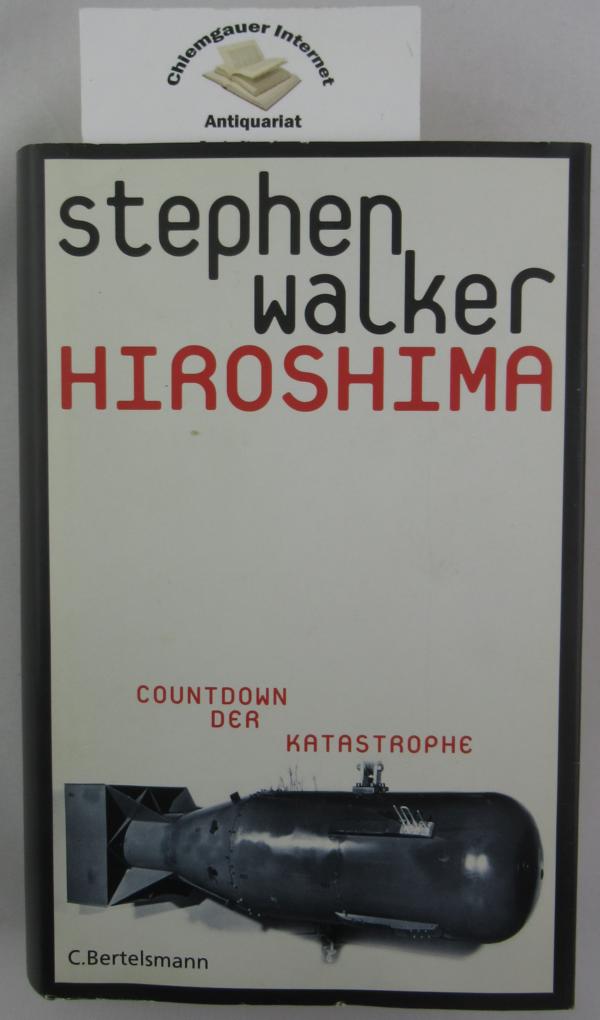
2005Best.-Nr. 255522München : Bertelsmann, 2005. 399 Seiten. 22 cm Originalpappband mit Original-Schutzumschlag.
194974 pages. Articles: The Secret Boss of Californa - Artie Samish (part 1 of 2); "Hurry" Cain Out of the West - Senatory Harry Cain of Washington state; Bringing Up a Movie Moppet; Yankee Yogi Berra - "I'm Human, Ain't I?" - article with great one-page color photo; The Biggest Blast of Them All (part 2 of 2) - Untold secrets of the Hiroshima bombing - article with photos; I Was Run Over by a Carrier - Emil Skocpol's plane crashed in front of the 45,000 ton carrier Midway; Farewell to Benzedrine Benders - disturbed by thrill-seekers who misused Benzedrine inhalers, the laboratory producing them has found a substitute with the bounce taken out; Belles of the Ball Game - women's baseball - article with nice colour photo of Twila Shively of the Peoria Redwings. Fiction: The Two Loves of Victor Fenlon; How to Swap Horses; Design for Vengeance; The Merry Assassin; The Legal Bride (part 3 of 6); Spelling Bee. Nice vintage ads for: Studebaker; Bell telephone (big things to come in service); Zenith radios (nice color one-page ad); Good Year; Plymouth cars; Pabst Blue Ribbon beer ad featuring color photo of Douglas Fairbanks, Jr.; Chevrolet; Hunter Whiskey - nice centerfold; The Douglas Super DC-3; Puerto Rican Rum; U.S. Army & Air Force Recruiting; Gordon's gin; Camel cigarettes - back cover ad with photos of celebrities including Lew Worsham, Mrs. Orson Munn, Jr., Johnny vander Meer, Pete Desjardins and singer Michael Douglas. Average wear. Unmarked. A sound vintage copy. Book
1960Features/Photos: General De Gaulle breaks away from his security guards in Algeria; Rioting in Algiers - disagreement with President De Gualle's plans for an Algerian Republic; Photos of the atom bombs dropped upon Hiroshima and Nagasaki recently released; The Roman Bath the Tenth Legion built at Ramat Rahel, Jerusalem; Three Royal Naval Aircraft Carriers together in the Mediterranean; University College of the West Indies, Kingston, Jamaica; and more. Moderate wear. Clean and unmarked. Small closed tear to lower right corner of front cover. Sound copy. Book
1947Features: Construction photos of the Hams Hall electrical generating plant; The German Hotel Ship St. Louis; Blockade running in the Aegean; Attempted destruction of the Flak Tower in the Berlin Tiergarten; a conference on the future of Japan; Photos of the second anniversary of the atomic bombing of Hiroshima; Massacres in a divided Punjab; Terrified refugees of the Punjab; Life in Korea; Photos from India - Hyderabad; Two photos of Jewish illegal immigrants aboard the Runnymede Park, due at Hamburg from Port de Bouc - these people had attempted to land in Palestine in the President Warfield; newly found at Amman - Transjordan's finest classical sculpture. Average wear. Sound copy. Book
1972Best.-Nr. 2090202120415522Mizomoto sekizen-kan 1972. Soft Cover. Fine. Number of books: 1 Mizomoto sekizen-kan paperback
1956Mm 160x240 Prima edizione italiana, a cura di Carlo Izzo - Due volumi in copertina rigida con fregi e titoli in oro al piatto e al dorso, mancanti di sovraccoperta, 701 + 640 pagine con solo il taglio superiore rifilato, numerose tavole fotografiche in nero fuori testo e ritratto a colori protetto da velina all'antiporta del primo volume. Opera in ottime condizioni. SPEDIZIONE IN 24 ORE DALLA CONFERMA DELL'ORDINE.
1936Best.-Nr. 2090202120408077Shinsyurin Meishinkai 1936. Soft Cover. Fine. Number of books: 1 Shinsyurin Meishinkai paperback
2001Mm 140x210 Saggi blu. Brossura editoriale con bandelle di pp. 402, in ottimo stato. SPEDIZIONE IN 24 ORE DALLA CONFERMA DELL'ORDINE.
in-8, 315 pages, illustrations h.t. n/b, broche, couverture illustree.- ISBN 2714411673 Bon etat. [NV-38]
19778vo., First Edition, with plates; black cloth, backstrip lettered in silver, red top, a near fine copy in unclipped dustwrapper.
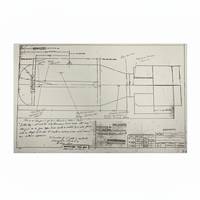
1945Best.-Nr. 125961945. World War IIAtomic Bomb Van Kirk Theodore J. "Dutch". Single blueprint copy inscribed and signed dated "6 Aug 1945." Single blueprint sheet. Annotated blueprint of "Little Boy" the uranium-235 atomic bomb detonated over Hiroshima on August 6 1945 inscribed and explained by Theodore Van Kirk navigator of the B-29 Enola Gay during the first wartime use of a nuclear weapon. Developed under the direction of the Manhattan Project the bomb marked a decisive technological and geopolitical rupture at the close of World War II inaugurating the nuclear age and reshaping global military doctrine. Approximately 70000 people were killed as a direct result of the blast with comparable numbers injured rendering the event one of the most consequential military actions of the twentieth century. Black-and-white blueprint copy approximately 18 x 24 inches illustrating the internal configuration of "Little Boy" employing the gun-type assembly method in which a sub-critical uranium-235 projectile was fired into a hollow uranium-235 target to achieve supercritical mass and initiate a nuclear chain reaction. Van Kirk has added detailed manuscript notations in pencil and ink identifying principal components including the "Neutron Source" "Steel Tamper" "Gunpowder" "Explosion Device" "Highly Sensitive Radio Antennae" "Uranium 235 'Bullet' Fired into Target to Create a Critical Mass" and "Uranium 235 Hollowed out Target." Along the margin in black ink he writes: "This is a blue print of our Hiroshima Atomic bomb 'Little Boy.' It was the only uranium bomb made. The bomb was designed as a gun type bomb with a bullet of U-235 fired into a U-235 target to create a critical mass." Signed below in blue ink: "Theodore J 'Dutch' Van Kirk Navigator - Enola Gay 6 Aug 1945." The design of "Little Boy" was finalized by early 1945 and reflected a conservative engineering approach intended to ensure detonation reliability despite the unprecedented nature of atomic warfare. As a navigational officer on the mission Van Kirk occupied a critical operational role in delivering the weapon to its target and his explanatory annotations reveal how participants later articulated the bomb's mechanics and singular status as the only uranium-based device used in combat. Minor edge wear and light handling marks; blueprint lines sharp and legible; manuscript annotations and signature clear and strong. Overall very good to near fine condition. unknown books
1945Best.-Nr. 129771945. Hecht Selig. Explaining the Atom signed and inscribed by Theodore Van Kirk framing the atomic bombing of Hiroshima within a longer intellectual history of atomic theory and modern physics. As navigator of the Enola Gay during the August 6 1945 mission Van Kirk contributed directly to the operational execution of nuclear warfare and his inscription frames that event as the culmination of developments beginning with ancient atomism and extending through 20th-century scientific breakthroughs. By referencing figures such as Democritus and Einstein alongside the Manhattan Project the inscription integrates scientific theory with wartime application offering a condensed narrative linking philosophical origins of atomic thought to its realization in military technology. Hecht Selig. Explaining the Atom. New York: Viking Press 1947. 205 pages. Hardcover with dust jacket. Signed and extensively inscribed on the inside title page by Theodore Van Kirk. The inscription reads: "'Page 9; In 400 B.C. Deocritus theoryed the existence of atoms. In 1905 Einstein theorized E=MC squared. In 1943 Oppenheimer heads the Manhattan Project. In 1945 our 'Enola Gay' crew drops the atomic bomb on Hiroshima - Theodore 'Dutch' Van Kirk Navigator - Enola Gay August 6 1945." The text presents a chronological sequence of scientific and historical developments culminating in Van Kirk's own role in the Hiroshima mission. Published in the immediate postwar period Explaining the Atom aimed to make atomic science accessible to a broad audience at a time when nuclear technology had reshaped global politics and warfare. Van Kirk's inscription reflects how participants in the atomic mission interpreted their actions within a broader scientific and historical continuum linking abstract theory to its most consequential application. The juxtaposition of popular scientific exposition with firsthand annotation from a mission participant offers a layered artifact for the study of nuclear history scientific communication and the integration of intellectual and military developments in the mid-20th century. Dust jacket shows moderate wear; volume itself remains clean and well-preserved with strong legible inscription. Overall very good. unknown books
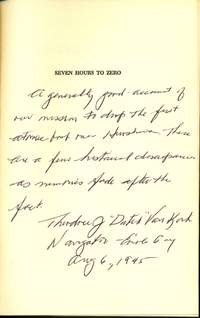
1945Best.-Nr. 114571945. Marx Joseph L. Seven Hours to Zero. 1967 account of the planning and execution of the atomic bombing of Hiroshima containing a signed annotation by Theodore J. "Dutch" Van Kirk navigator of the B 29 bomber Enola Gay. The book addresses the events leading to the United States' use of atomic weapons against Japan on August 6 1945 the mission that introduced nuclear warfare into modern military history and contributed directly to the end of the Second World War in the Pacific. Van Kirk one of the three principal crew members aboard the aircraft that delivered the uranium bomb over Hiroshima inscribed the title page with a critical assessment of the narrative: "A generally good account of our mission to drop the first atomic bomb over Hiroshima. There are a few historical discrepancies as memories fade after the fact. Theodore J 'Dutch' Van Kirk Navigator Enola Gay August 6 1945." The inscription provides a firsthand comment by a participant whose navigational calculations guided the aircraft to its target during the mission. Marx Joseph L. Seven Hours to Zero. New York: Putnam 1967. Signed commentary by Theodore J. "Dutch" Van Kirk on the title page. Hardback with dust jacket. The volume presents a narrative reconstruction of the hours leading to the Hiroshima bombing and the military planning undertaken by the United States Army Air Forces during the closing phase of the Pacific War. Van Kirk's handwritten note identifies his role as navigator of the Enola Gay and directly addresses the historical accuracy of the work. The Hiroshima mission represented a turning point in twentieth century military and political history demonstrating the destructive capacity of nuclear weapons and initiating the nuclear age that shaped Cold War international relations. Theodore J. "Dutch" Van Kirk served as navigator under pilot Paul W. Tibbets and bombardier Thomas Ferebee during the mission determining the flight path that brought the aircraft over Hiroshima on the morning of August 6 1945. Inscribed copies of historical works by individuals directly involved in the atomic bombing provide documentary testimony from participants whose recollections and interpretations continue to influence debates over nuclear warfare military decision making and the closing stages of the Second World War. Light handling wear to dust jacket and boards consistent with age. Overall condition very good. unknown books
1945Best.-Nr. 117821945. Van Kirk Theodore J. "Atomic Bomb Explosion Over Hiroshima" signed statement recounting the August 6 1945 atomic bombing mission documents direct eyewitness testimony from the navigator of the Enola Gay the aircraft that delivered the first atomic bomb used in warfare. The document supports research into World War II air operations atomic warfare and firsthand participant narratives of the Hiroshima mission. As navigator Van Kirk occupied a central operational role in the execution of the flight and his account provides detailed observational evidence of the bombing sequence targeting and immediate visual aftermath. Van Kirk Theodore J. Signed statement titled "Atomic Bomb Explosion Over Hiroshima." 1 page. The typed document includes handwritten corrections and additions in blue ink by Van Kirk including the insertion "Over Hiroshima" in the title. The narrative records precise operational timing and targeting details stating: "Our plane was over Hiroshima at 0815 hours. The bomb fell away from the aircraft at 0915:17 Tinian time. It hit right on target on the Aioi Bridge in Hiroshima." Van Kirk further describes the visual effects immediately following detonation: "The first thing we saw was a big white cloud. It was probably 40000 feet already and around the base of that cloud the entire city of Hiroshima was covered with smoke and dust and you couldn't observe a thing down there." The statement also includes reflective commentary on the mission's intended strategic purpose noting pilot Paul Tibbets' assertion that the weapon could "shorten or end the war." Signed in full "Theodore J 'Dutch' Van Kirk." The document originates from one of the most consequential military actions of the twentieth century the atomic bombing of Hiroshima which marked the introduction of nuclear weapons into warfare and directly preceded Japan's surrender. As a participant-generated account it offers primary evidence of crew understanding mission execution and immediate perception of the bomb's effects complementing official military records and later historical analyses. The inclusion of precise times named targets and observational detail enhances its value for reconstructing the operational chronology of the mission. Light handling wear; otherwise well-preserved with clear text and signature. Overall very good condition. unknown books
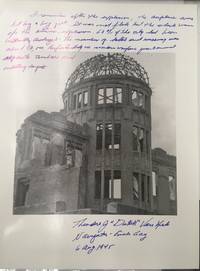
1945Best.-Nr. 127381945. Van Kirk Theodore J. signed and inscribed photograph of the Hiroshima Atomic Dome created post-1945 represents a direct visual and textual reflection by the navigator of the B-29 Enola Gay on the devastation wrought by the first atomic bomb used in warfare. Theodore "Dutch" Van Kirk 1921-2014 responsible for navigation during the 6 August 1945 mission from Tinian here annotates an image of the ruined cityscape transforming a documentary photograph into a vehicle for personal recollection and justification. The item supports research into World War II memory culture strategic bombing doctrine and the ways in which atomic bomb participants publicly framed civilian casualties and the ethics of total war in subsequent decades. Van Kirk Theodore J. Inscribed photograph. 8 ½ x 11 inches. Black-and-white photograph depicting the Hiroshima Atomic Dome standing amid surrounding devastation the skeletal structure isolated against a flattened urban landscape. In ink Van Kirk writes: "I remember after the explosion the airplane was hit with a big jolt It was not flak but the shock wave effect of an atomic explosion. 60% of the city had been instantly destroyed. The number of killed and missing was 80000. Unfortunately in modern warfare you cannot separate civilian and military targets. - Theodore J. 'Dutch' Van Kirk Navigator - Enola Gay 6 August 1945." The inscription combines operational memory-the shock wave striking the aircraft-with statistical casualty figures and a broader statement about the nature of twentieth-century warfare. Signed within the text. Produced decades after the event and dated to the day of the mission the photograph reflects the enduring historical reckoning with Hiroshima's destruction and the moral arguments advanced by those who carried out the bombing. Van Kirk's juxtaposition of physical sensation in the aircraft with quantified urban devastation links technical execution to human consequence while his statement regarding the inseparability of civilian and military targets situates the image within debates over strategic bombing and nuclear ethics. Minor surface wear and light handling marks; image clear with strong tonal contrast; inscription bold and fully legible. Overall very good to near fine condition. A significant inscribed image uniting one of the most recognizable architectural remnants of Hiroshima with a candid reflection by a principal participant in the first atomic bombing mission. unknown books