1.061 Ergebnisse
1938Best.-Nr. 2083002116200051Daisan Shobo Hiroshima 1938. Soft Cover. Fine. The book is in fine condition. Daisan Shobo (Hiroshima) paperback
1981Best.-Nr. 2090202120412506Hiroshima Historical Museum 1981. Soft Cover. Fine. Number of books: 1 Hiroshima Historical Museum paperback
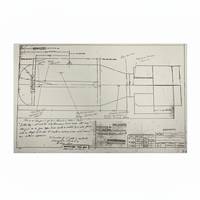
1945Best.-Nr. 125961945. World War IIAtomic Bomb Van Kirk Theodore J. "Dutch". Single blueprint copy inscribed and signed dated "6 Aug 1945." Single blueprint sheet. Annotated blueprint of "Little Boy" the uranium-235 atomic bomb detonated over Hiroshima on August 6 1945 inscribed and explained by Theodore Van Kirk navigator of the B-29 Enola Gay during the first wartime use of a nuclear weapon. Developed under the direction of the Manhattan Project the bomb marked a decisive technological and geopolitical rupture at the close of World War II inaugurating the nuclear age and reshaping global military doctrine. Approximately 70000 people were killed as a direct result of the blast with comparable numbers injured rendering the event one of the most consequential military actions of the twentieth century. Black-and-white blueprint copy approximately 18 x 24 inches illustrating the internal configuration of "Little Boy" employing the gun-type assembly method in which a sub-critical uranium-235 projectile was fired into a hollow uranium-235 target to achieve supercritical mass and initiate a nuclear chain reaction. Van Kirk has added detailed manuscript notations in pencil and ink identifying principal components including the "Neutron Source" "Steel Tamper" "Gunpowder" "Explosion Device" "Highly Sensitive Radio Antennae" "Uranium 235 'Bullet' Fired into Target to Create a Critical Mass" and "Uranium 235 Hollowed out Target." Along the margin in black ink he writes: "This is a blue print of our Hiroshima Atomic bomb 'Little Boy.' It was the only uranium bomb made. The bomb was designed as a gun type bomb with a bullet of U-235 fired into a U-235 target to create a critical mass." Signed below in blue ink: "Theodore J 'Dutch' Van Kirk Navigator - Enola Gay 6 Aug 1945." The design of "Little Boy" was finalized by early 1945 and reflected a conservative engineering approach intended to ensure detonation reliability despite the unprecedented nature of atomic warfare. As a navigational officer on the mission Van Kirk occupied a critical operational role in delivering the weapon to its target and his explanatory annotations reveal how participants later articulated the bomb's mechanics and singular status as the only uranium-based device used in combat. Minor edge wear and light handling marks; blueprint lines sharp and legible; manuscript annotations and signature clear and strong. Overall very good to near fine condition. unknown
1945Best.-Nr. 125961945. World War IIAtomic Bomb Van Kirk Theodore J. "Dutch". Single blueprint copy inscribed and signed dated "6 Aug 1945." Single blueprint sheet. Annotated blueprint of "Little Boy" the uranium-235 atomic bomb detonated over Hiroshima on August 6 1945 inscribed and explained by Theodore Van Kirk navigator of the B-29 Enola Gay during the first wartime use of a nuclear weapon. Developed under the direction of the Manhattan Project the bomb marked a decisive technological and geopolitical rupture at the close of World War II inaugurating the nuclear age and reshaping global military doctrine. Approximately 70000 people were killed as a direct result of the blast with comparable numbers injured rendering the event one of the most consequential military actions of the twentieth century. Black-and-white blueprint copy approximately 18 x 24 inches illustrating the internal configuration of "Little Boy" employing the gun-type assembly method in which a sub-critical uranium-235 projectile was fired into a hollow uranium-235 target to achieve supercritical mass and initiate a nuclear chain reaction. Van Kirk has added detailed manuscript notations in pencil and ink identifying principal components including the "Neutron Source" "Steel Tamper" "Gunpowder" "Explosion Device" "Highly Sensitive Radio Antennae" "Uranium 235 'Bullet' Fired into Target to Create a Critical Mass" and "Uranium 235 Hollowed out Target." Along the margin in black ink he writes: "This is a blue print of our Hiroshima Atomic bomb 'Little Boy.' It was the only uranium bomb made. The bomb was designed as a gun type bomb with a bullet of U-235 fired into a U-235 target to create a critical mass." Signed below in blue ink: "Theodore J 'Dutch' Van Kirk Navigator - Enola Gay 6 Aug 1945." The design of "Little Boy" was finalized by early 1945 and reflected a conservative engineering approach intended to ensure detonation reliability despite the unprecedented nature of atomic warfare. As a navigational officer on the mission Van Kirk occupied a critical operational role in delivering the weapon to its target and his explanatory annotations reveal how participants later articulated the bomb's mechanics and singular status as the only uranium-based device used in combat. Minor edge wear and light handling marks; blueprint lines sharp and legible; manuscript annotations and signature clear and strong. Overall very good to near fine condition. unknown books
1981Best.-Nr. 2090202120407645Keisuisha 1981. Soft Cover. Fine. Number of books: 1 Keisuisha paperback
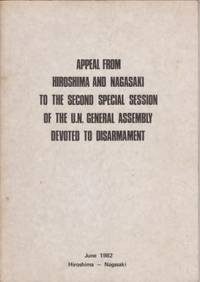
1982Best.-Nr. bing009tma101Nakamotosogo Printing Co. Ltd 1982. paperback. good. Prompt shipment with tracking. we ship in CLEAN SECURE NEW boxes Good trade paperback. Clean pages. Light discoloring on cover. Nakamotosogo Printing Co., Ltd paperback
2026Best.-Nr. x-1032670371Taylor & Francis Ltd 2026. Paperback. New. 188 pages. 6.14x0.44x9.21 inches. Taylor & Francis Ltd paperback
Best.-Nr. A9783110403503Hardback. New. This is the second updated and extended edition of the successful book on Feynman-Kac theory. It offers a state-of-the-art mathematical account of functional integration methods in the context of self-adjoint operators and semigroups using the concepts and tools of modern stochastic analysis. In the second volume these ideas are applied principally to a rigorous treatment of some fundamental models of quantum field theory. hardcover
Best.-Nr. ria9783110403503_inpHardcover. New. New Book; Fast Shipping from UK; Not signed; Not First Edition; N/A hardcover
Best.-Nr. 33622150-nnew. unknown
Best.-Nr. 33622150like new. unknown
2020Best.-Nr. BN676814De Gruyter 2020. 2020. Applications in Rigorous Quantum Field Theory De Gruyter Studies in Mathematics 34/2 Band 2 Applications in Rigorous Quantum Field Theory De Gruyter Studies in Mathematics 34/2 Band 2 Lörinczi József and Fumio Hiroshima De Gruyter unknown
1983Best.-Nr. 2090202120411520Hiroshima Association of Architects 1983. Soft Cover. Fine. Number of books: 1 Hiroshima Association of Architects paperback
1983Best.-Nr. 2090202118200836Association of Hiroshima Prefecture Architects 1983. Soft Cover. Fine. The book is in fine condition. Association of Hiroshima Prefecture Architects paperback
1989Best.-Nr. 2090202120411055Not Available 1989. Soft Cover. Fine. Number of books: 1 Not Available paperback
2008Best.-Nr. 2090202120416072Victor Entertainment 2008. Soft Cover. Fine. Number of books: 1 Victor Entertainment paperback
Best.-Nr. 68856Traduit du japonais, Gallimard, Haute enfance, 1996, 234 pp., broché, légères traces de plis sur le dos, couverture insolée, état correct.
2021Best.-Nr. 2090202120412401Hiroshima City Cultural Foundation 2021. Soft Cover. Fine. Number of books: 1 Hiroshima City Cultural Foundation paperback
1990Best.-Nr. 2080502106915342Not Available 1990. Soft Cover. Fine. The book is in fine condition. Not Available paperback
1994Best.-Nr. 2081002108300974Hiroshima Historical Museum 1994. Soft Cover. Fine. Number of pages: 155p Size: 30cm Number of books: 1 Hiroshima Historical Museum paperback
1945Best.-Nr. 129721945. Field Marshall III publisher. The Chicago Sun August 7 1945 documents the first full day of American press coverage following the atomic bombing of Hiroshima and the sudden public disclosure of the secret wartime program that produced the weapon. The United States dropped the uranium bomb "Little Boy" on Hiroshima on August 6 and President Harry S. Truman announced its use the same day disclosing the existence of the atomic bomb and declaring that the release of atomic energy opened a new era in humanity's understanding of natural forces. The issue is particularly significant for showing how a mass-circulation American newspaper initially presented the bomb through three interconnected narratives: the destructive results of atomic science the formerly secret industrial infrastructure of the Manhattan Project and expectations for the peacetime uses of atomic power. It provides primary-source evidence for the study of Hiroshima World War II journalism the public revelation of the Manhattan Project nuclear technology and the opening of the atomic age. The Chicago Sun. Chicago: The Chicago Sun Tuesday August 7 1945. 22 pages printed recto and verso. Complete issue. The front page contains extensive atomic-bomb coverage including "Story of Our Secret Weapon"; "Scientists Tell Of Watching First Blast. Steel Tower is Vaporized; Cloud Rises 8 Miles"; and "Truman Visions New Era Powered by Atomic Force." A large photograph depicts an atomic-production facility at the Clinton Engineer Works at Oak Ridge Tennessee giving readers a first visual introduction to part of the immense industrial system that had operated under wartime secrecy. The Clinton Engineer Works served as the Manhattan Project's administrative headquarters and contained the K-25 S-50 and Y-12 facilities used in uranium-isotope separation; enriched uranium produced at Oak Ridge contributed directly to the Hiroshima weapon. The juxtaposition of the first atomic test industrial production Hiroshima and Truman's predictions for atomic energy illustrates how quickly American newspapers began constructing a public explanation for technology that had remained secret throughout most of the war. The August 7 date gives the issue considerable documentary immediacy: American readers were encountering the scale scientific origins industrial production and possible future applications of atomic energy almost simultaneously with learning of its use against a populated city. Truman's August 6 statement itself moved rapidly between military destruction and predictions that atomic energy might eventually supplement coal oil and hydroelectric power a dual framing closely echoed by the headlines preserved here. Oak Ridge's appearance on the front page is equally significant because the sprawling Tennessee installation had been created under extraordinary secrecy beginning in 1942 and encompassed several parallel processes for uranium enrichment. Light age toning and spotting with slight wear to edges; otherwise complete and well preserved. Very good. An unusually immediate newspaper record of the transition from a secret wartime weapons program to a publicly recognized atomic age published one day after Hiroshima and preserving the first explanations offered to American readers of the bomb its production and its anticipated consequences. unknown
1945Best.-Nr. 129721945. Field Marshall III publisher. The Chicago Sun August 7 1945 documents the first full day of American press coverage following the atomic bombing of Hiroshima and the sudden public disclosure of the secret wartime program that produced the weapon. The United States dropped the uranium bomb "Little Boy" on Hiroshima on August 6 and President Harry S. Truman announced its use the same day disclosing the existence of the atomic bomb and declaring that the release of atomic energy opened a new era in humanity's understanding of natural forces. The issue is particularly significant for showing how a mass-circulation American newspaper initially presented the bomb through three interconnected narratives: the destructive results of atomic science the formerly secret industrial infrastructure of the Manhattan Project and expectations for the peacetime uses of atomic power. It provides primary-source evidence for the study of Hiroshima World War II journalism the public revelation of the Manhattan Project nuclear technology and the opening of the atomic age. The Chicago Sun. Chicago: The Chicago Sun Tuesday August 7 1945. 22 pages printed recto and verso. Complete issue. The front page contains extensive atomic-bomb coverage including "Story of Our Secret Weapon"; "Scientists Tell Of Watching First Blast. Steel Tower is Vaporized; Cloud Rises 8 Miles"; and "Truman Visions New Era Powered by Atomic Force." A large photograph depicts an atomic-production facility at the Clinton Engineer Works at Oak Ridge Tennessee giving readers a first visual introduction to part of the immense industrial system that had operated under wartime secrecy. The Clinton Engineer Works served as the Manhattan Project's administrative headquarters and contained the K-25 S-50 and Y-12 facilities used in uranium-isotope separation; enriched uranium produced at Oak Ridge contributed directly to the Hiroshima weapon. The juxtaposition of the first atomic test industrial production Hiroshima and Truman's predictions for atomic energy illustrates how quickly American newspapers began constructing a public explanation for technology that had remained secret throughout most of the war. The August 7 date gives the issue considerable documentary immediacy: American readers were encountering the scale scientific origins industrial production and possible future applications of atomic energy almost simultaneously with learning of its use against a populated city. Truman's August 6 statement itself moved rapidly between military destruction and predictions that atomic energy might eventually supplement coal oil and hydroelectric power a dual framing closely echoed by the headlines preserved here. Oak Ridge's appearance on the front page is equally significant because the sprawling Tennessee installation had been created under extraordinary secrecy beginning in 1942 and encompassed several parallel processes for uranium enrichment. Light age toning and spotting with slight wear to edges; otherwise complete and well preserved. Very good. An unusually immediate newspaper record of the transition from a secret wartime weapons program to a publicly recognized atomic age published one day after Hiroshima and preserving the first explanations offered to American readers of the bomb its production and its anticipated consequences. unknown books
1972Best.-Nr. 2090202120411091Not Available 1972. Soft Cover. Fine. Number of books: 1 Not Available paperback
1968Best.-Nr. 2090502113718151Not Available 1968. Soft Cover. Fine. The book is in fine condition. Not Available paperback
1965Best.-Nr. 2082702114910729Asahishinbunsha 1965. Soft Cover. Fine. Number of pages: 259 pages plate size: 19cm Asahishinbunsha paperback